





















































































Short answer: The Sheikh Zayed Grand Mosque in Abu Dhabi is open to visitors of every faith, but in 2026 the visit works differently from what many older guides say. Sightseeing visitors now book an online access pass and pay a small entry fee, abayas are no longer lent at the door, and the mosque closes to visitors around Friday midday prayer. If you are planning a Sheikh Zayed Mosque Abu Dhabi visit from Dubai, dress in loose clothing that covers your arms and legs (women also cover their hair), book your slot on the official site, and aim to arrive in the late afternoon so you see the white marble by daylight and again under its night lighting.
This guide is for first-time visitors to the UAE, day-trippers based in Dubai, families travelling with grandparents or small children, and Nepali travellers and Nepalis living in the Gulf who want to see the Grand Mosque Abu Dhabi without being turned away at the gate. Every rule, hour and fee below was checked on the Sheikh Zayed Grand Mosque Centre's own website (szgmc.gov.ae) and on Visit Abu Dhabi, and we say plainly where official pages disagree with each other. If the mosque is one stop on a longer UAE holiday, our complete Dubai travel guide covers seasons, areas and money matters for the wider trip.
Checked: 16 Nov 2026, Sheikh Zayed Grand Mosque Centre (szgmc.gov.ae, visitor FAQ, visiting hours, mosque manners, cultural tours and transport pages) and visitabudhabi.ae.
| Sheikh Zayed Grand Mosque at a glance | What the official sources say |
|---|---|
| Who can visit | Everyone, with or without a guide; worshippers have their own entrance |
| Booking | Visitors pre-book an online access pass; worshippers enter without a ticket |
| Entry fee for sightseeing | AED 10 for visitors from outside the UAE, AED 5 for Emirates ID holders, AED 8 through tour operators (official FAQ, checked 16 Nov 2026) |
| Usual visiting hours | 9:00 AM to 8:30 PM, last entry 8:00 PM (Saturday to Thursday) |
| Friday | 9:00 AM to 11:30 AM, then 2:30 PM to 8:30 PM |
| Dress code | Loose clothing to the ankles and wrists; women cover their hair fully |
| Abayas | No longer lent; one can be bought at the on-site shops, as reported in 2023 and again in September 2026 |
| Guided tours | Free walk-in cultural tours in English and Arabic |
| Photos | Allowed for personal use at designated photo stops; no professional kit without a permit |
What is the Sheikh Zayed Grand Mosque in Abu Dhabi?
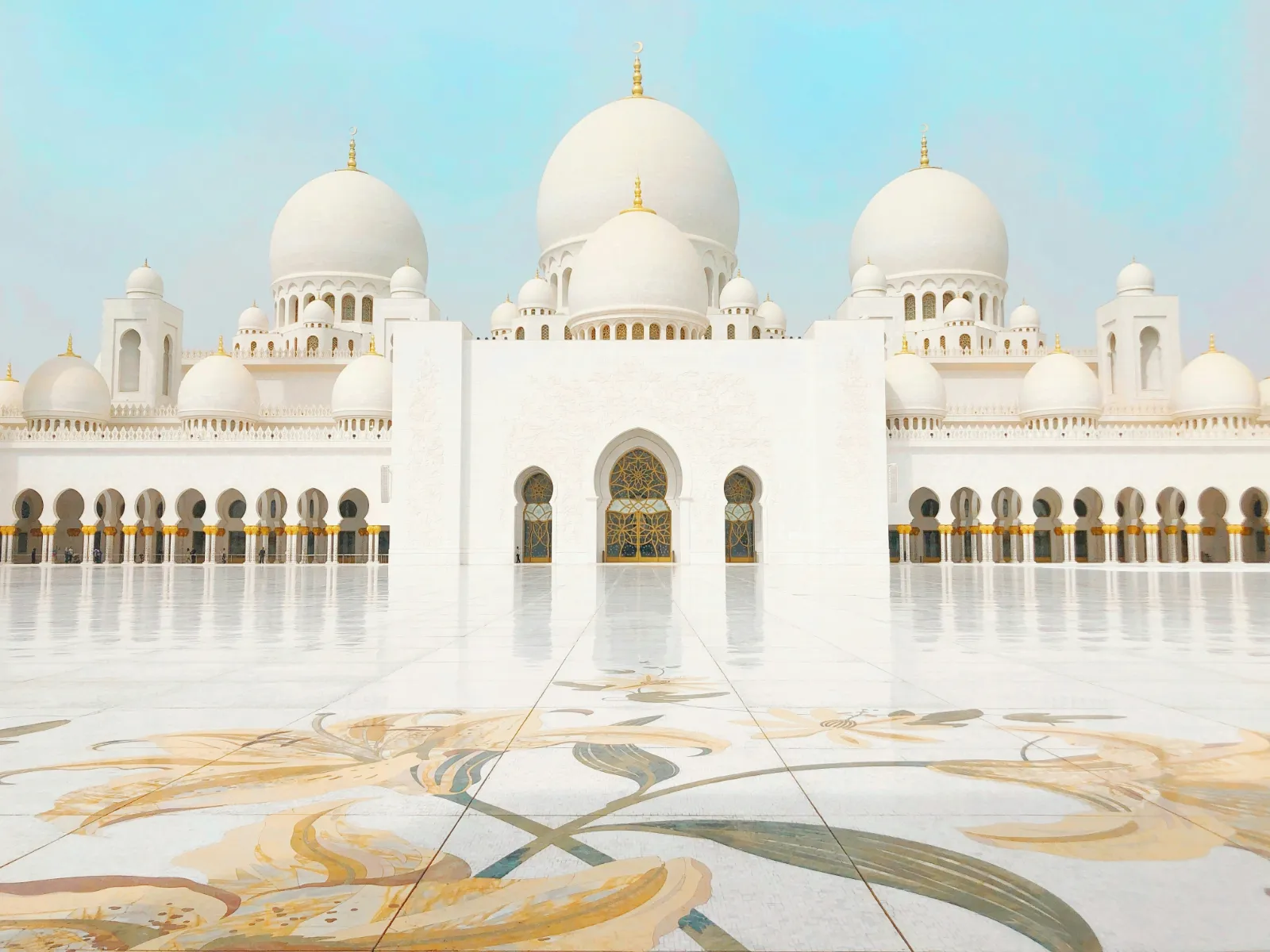
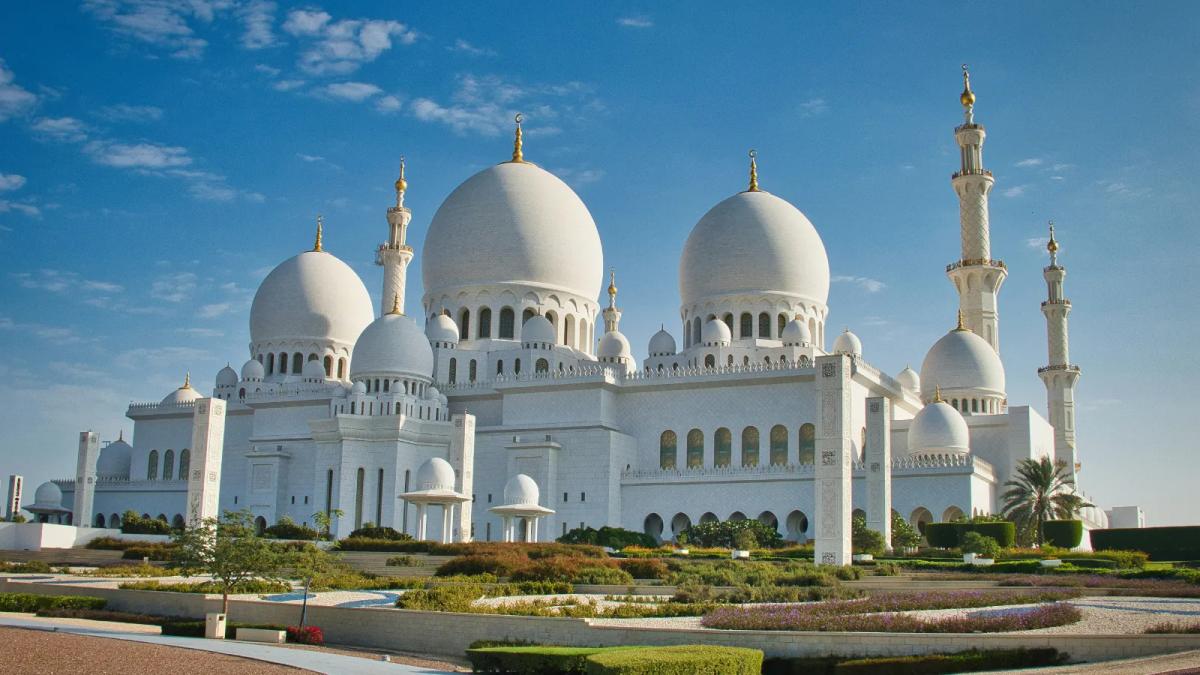
The Sheikh Zayed Grand Mosque is Abu Dhabi's national mosque and one of the largest mosques in the world, built in white marble on raised ground at the main entrance to the city. It is named after Sheikh Zayed bin Sultan Al Nahyan, the founder of the United Arab Emirates, who wanted a mosque that would show the moderate and welcoming face of Islam. Construction began on 5 November 1996 and the prayer halls first opened for worship at Eid Al Adha in 2007.
Sheikh Zayed was born in 1918 and died in 2004. He is buried beside the mosque, and the Centre says certified reciters take turns to recite the Qur'an at his resting place around the clock. That gives the site a feeling Nepali visitors may recognise from a samadhi or a royal memorial: it is a national monument and a working place of prayer at the same time, so it is treated with real seriousness.
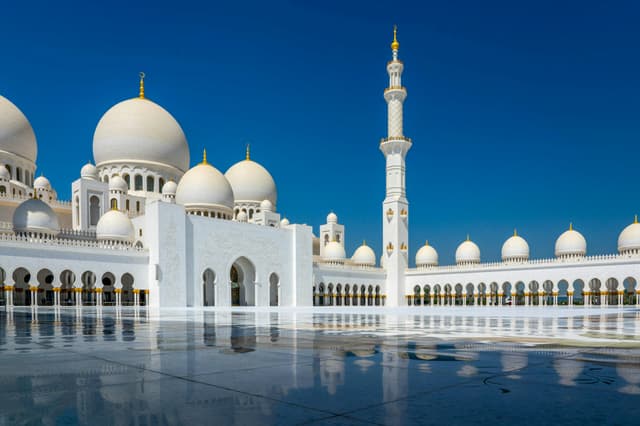
The Centre describes the building as a meeting point of styles from across the Islamic world, with Moroccan and Mughal influences that South Asian visitors often spot straight away in the onion-shaped domes and arches. Craftspeople and materials came from many countries, including Italy, Germany, Morocco, India, Turkey, China, the United Kingdom, New Zealand and Greece. More than 3,000 workers and 38 contracting companies worked on it.
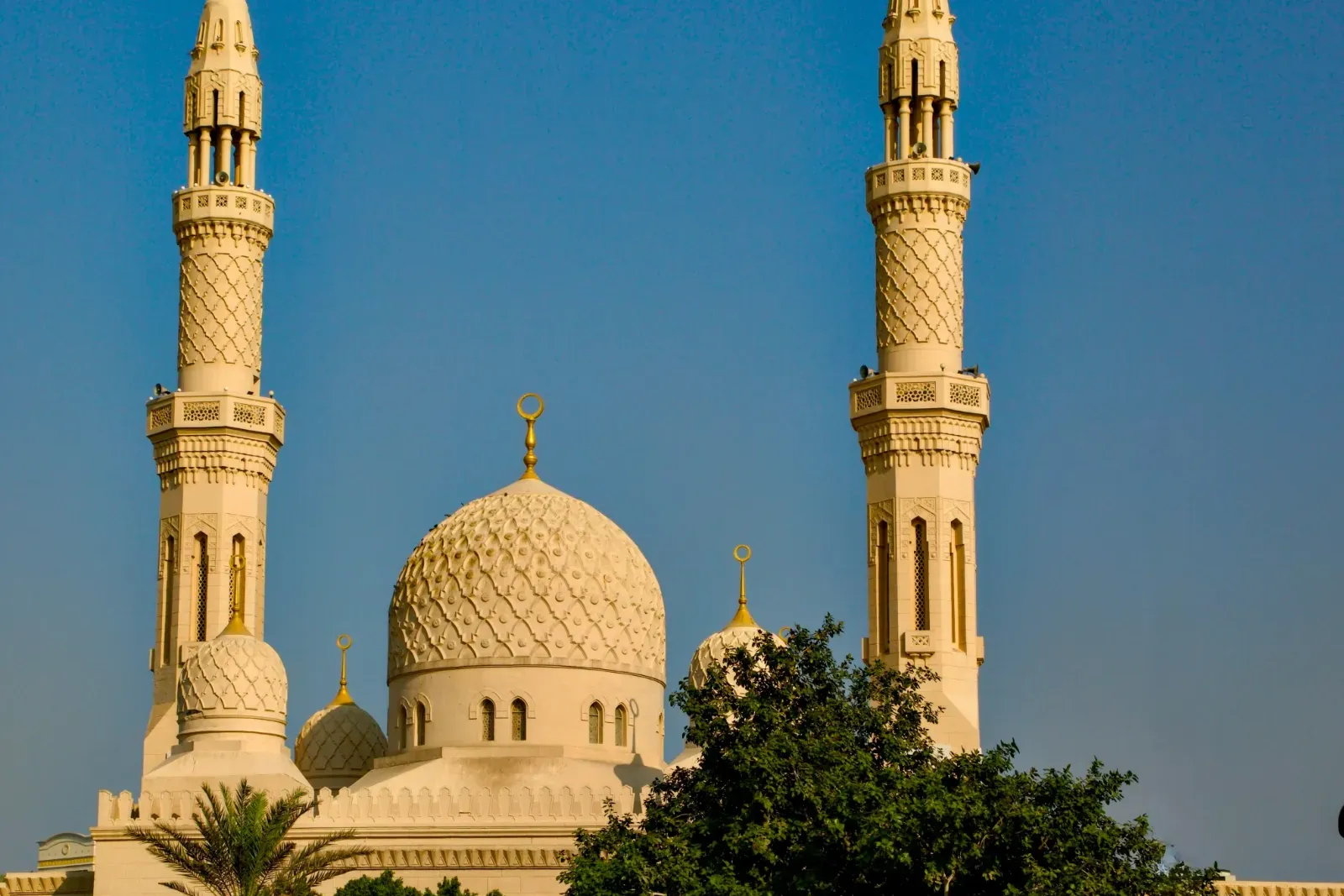
People sometimes search for it as the Abu Dhabi Sheikh Zayed Masjid, the Grand Mosque Abu Dhabi UAE, or simply the Grand Mosque. These all mean the same building. It should not be confused with the smaller Jumeirah Mosque in Dubai.
The numbers below come only from the Centre's official architecture pages. Where two official pages give different figures, both are shown.
Table note: figures from szgmc.gov.ae architecture and "The Mosque and the Founder" pages, checked 16 Nov 2026.
| Feature | Official figure |
|---|---|
| Total site area | More than 555,000 square metres, on land raised about 10 metres |
| Capacity | About 55,000 worshippers (architecture overview and 2025 visitor brochure); the "Mosque and the Founder" page says about 50,000 |
| Domes | 82 domes; the largest is about 32.6 metres across and 84 metres high |
| Minarets | Four, at the corners of the courtyard, rising about 107 metres |
| Main prayer hall | About 7,800 worshippers, plus two smaller halls of about 1,500 each |
| Carpet | Recognised by Guinness World Records in 2007 as the world's largest hand-knotted carpet: 5,400 square metres, 35 tonnes, made by about 1,200 artisans |
| Chandeliers | Seven; the largest is 12 metres across and 15.5 metres high, with 15,500 LEDs |
| Courtyard (Sahan) | 17,400 square metres, room for up to 31,000 worshippers |
| Reflective pools | 10 pools with nearly 7,000 square metres of water |
| Exterior marble | More than 165,000 square metres of white SIVEC marble from Macedonia |
| Night lighting | More than 840 lighting units and 22 light towers |
A few details are worth knowing before you walk in, because guides point them out and they make the visit richer:
- The carpet: it was made in nine pieces, flown to Abu Dhabi and joined on site. About 70 percent is New Zealand wool and 30 percent cotton. Raised lines shaved into the pile mark where worshippers stand in rows.
- The chandeliers: the Centre says the design is inspired by the date palm, with coloured crystal globes standing for the dates. They are made of stainless steel gilded with 24-carat gold and set with Swarovski crystals.
- The courtyard: the floral marble inlay was designed by British artist Kevin Dean, using flowers such as tulips, lilies and irises. More than 30 types of marble were used, from Italy, India, Greece and China among others.
- The domes: inside, they carry Qur'anic verses in Naskh, Thuluth and Kufi calligraphy.
Can non-Muslims visit the Sheikh Zayed Mosque Abu Dhabi?
Yes. Non-Muslims are welcome at the Sheikh Zayed Grand Mosque during visitor hours, and the Centre states that the mosque welcomes all individuals and groups, with or without a guide. You follow the visitor route, book an access pass and keep to the mosque manners. Muslims coming to pray use a separate worshippers' entrance and do not need a ticket.
The Centre presents the mosque as a place for cross-cultural understanding, and its free cultural tours are designed for people who know little about Islam. Hindu, Buddhist, Christian and non-religious visitors come every day. Nepali visitors often find the experience familiar in spirit: you lower your voice, cover up, take off your shoes where asked and accept that some areas are for worship only, much as non-Hindus accept the rules at Pashupatinath.
Being welcome is not the same as having access everywhere. During prayer and on Friday around midday prayer, visitors are kept out of worship areas. Security staff may also redirect you because of weather, crowds or maintenance, and the Centre asks visitors to follow those instructions. Treat any closed door or rope as final.
One small point that surprises some visitors: the Centre's lunar lighting page itself notes that marking time by the moon is shared by many cultures, and names the Hindu lunar calendar among them. For travellers who plan festivals by tithi at home, that is a nice link to look out for when you see the night lighting change through the month.
Do you need to book a visit, and is entry still free?
Yes, you need to book, and no, sightseeing entry is no longer free. The Centre asks every visitor to pre-book and get an online access pass before arriving, and its FAQ now lists an admission fee for sightseeing visitors. Worshippers still enter directly at no charge and without a ticket.
This is the biggest change for 2026. For years the mosque was famous for free entry, and many travel pages still say so, including the Visit Abu Dhabi attraction page when we checked it on 16 Nov 2026. The Centre's own FAQ, which is the authority, now lists the fees below. UAE news outlets reported the change on 17 September 2026.
Table note: Checked: 16 Nov 2026, szgmc.gov.ae visitor FAQ ("Is there an entry fee?"). Fees can change; confirm on the booking page.
| Visitor type | Entry fee listed by the Centre |
|---|---|
| Visitors from outside the UAE (tourists) | AED 10 |
| Emirates ID holders (UAE residents) | AED 5 |
| Visitors coming through tour operators | AED 8 |
| Official delegations | Set according to the relevant entity |
| Worshippers | Free, no ticket needed |
Exemptions: UAE news outlets (The National, Gulf News, Khaleej Times and Gulf Today) reported in September 2026 that visitors aged 60 and over do not pay, and Gulf News and Khaleej Times added children under three and people of determination. The Centre's FAQ does not publish these exemptions, although its booking form asks for each visitor's age group and whether they are a person of determination, and shows exemption columns. So treat the exemptions as reported, not official, and confirm the amount for your group on the booking page. The free cultural tours remain free, according to the Centre's tours page.
Other paid extras exist on site, such as the Light and Peace Museum and the Diya immersive experience. They are ticketed separately and are optional.
How to book the access pass
The Centre's 2025 visitor brochure sets out three steps, and the booking site is visit.szgmc.gov.ae:
- Open the official booking site (or scan the QR code on the Centre's material).
- Fill in your details and choose your visit.
- Keep a copy of your confirmation on your phone to show on arrival.
The mosque manners also say that a visit is not confirmed without a prior booking, and that tour groups and private visits must finish all booking steps before they arrive. The Centre also reserves the right to cancel visits at any time without notice, so check the site again on the day.
Two practical points for travellers from Nepal: book with the name exactly as it appears in your passport, and carry the passport itself (or your Emirates ID if you live in the UAE). All visitors pass a security check with separate lanes for women and men.
What is the dress code at the Sheikh Zayed Grand Mosque?
The dress code is modest, loose and long for everyone. Women need clothing that is loose down to the ankles with sleeves to the wrists, and must cover their hair fully. Men should cover their legs fully and avoid sleeveless, tight or see-through tops. Nobody should wear clothing with slogans or offensive pictures.
The Centre also asks visitors to avoid heavy make-up, excessive jewellery and very bright colours. That last request is gentle wording rather than a ban on colour, but it is a hint: a bright party outfit is likely to attract a second look from staff, while a plain kurta or long dress will not.
Table note: Checked: 16 Nov 2026, szgmc.gov.ae Mosque Manners and the Centre's 2025 visitor brochure.
| Item | Women | Men |
|---|---|---|
| Length | Loose to the ankles; no skirts above the ankle | Full-length trousers preferred; no shorts |
| Sleeves | Down to the wrists | No sleeveless shirts |
| Fit | Loose; nothing tight or see-through | Loose; nothing tight or see-through |
| Head | Hair fully covered with a scarf | No head covering required |
| No slogans, profanity or inappropriate drawings | No slogans, profanity or inappropriate drawings | |
| Extras | Avoid heavy make-up, excessive jewellery, very bright colours | Same request applies |
Are abayas provided at the mosque?
No, not any more. The mosque used to lend abayas free of charge, but What's On Dubai reported in April 2023 that the Centre had stopped, and The National reported in September 2026 that an abaya can be bought at Souq Al Jami' because the Centre no longer lends them. The official pages we checked say nothing about lending clothes, so plan to arrive already dressed correctly.
If you book through a tour company, the mosque manners say the operator must provide suitable attire for its guests and brief them on the rules in advance. Ask your operator what they bring before the day.
Dress code checklist for Nepali travellers
Most Nepali travellers already own clothes that pass the rules. These suggestions follow the Centre's written wording:
- Kurta suruwal or salwar kameez with a dupatta: a good choice for women, as long as the kurta has full sleeves, the suruwal is loose, and the dupatta is pinned so it covers all your hair, not just the back of the head.
- Sari: a sari with a short blouse leaves the midriff and arms uncovered, which does not meet the rules. If you wear one, add a long-sleeved top or a full-length cover, and a scarf for your hair.
- Daura suruwal, or trousers with a long-sleeved shirt: fine for men. A topi or cap is not required, but it is not against the rules either.
- Jeans: loose, ankle-length jeans with a long, loose top are generally in line with the rules; skinny or tight jeans are not, because the rule is about fit, not fabric.
- Leggings: only under a long dress or kurta that reaches the ankles.
- Scarf: bring a large scarf that will not slip in wind; the courtyard can be breezy.
- Shoes: wear shoes that are easy to slip off and on, as mosques generally ask visitors to remove footwear before carpeted prayer areas; follow the signs and staff.
The Centre's rules also ban carrying flags, slogans and "all kinds of symbols". We could not find official guidance on personal religious marks such as tika, a janai or a rudraksha mala. Our suggestion is to keep them low key, and to ask staff politely if you are unsure, rather than assume.
When is the mosque open, and when is it closed to visitors?
The Sheikh Zayed Grand Mosque is open to visitors every day, usually from 9:00 AM to 8:30 PM with last entry at 8:00 PM. On Fridays it closes to visitors between 11:30 AM and 2:30 PM for Friday prayer, and during Ramadan the hours change completely. Plan to be at the gate by 8:00 PM at the latest on any day.
The Centre's website has more than one version of its hours. The visitors' page and the FAQ give a closing time of 8:30 PM. A separate page on the same site, written for tour operators, gives 9:00 PM closing with last entry at 8:30 PM, and the Centre's 2025 printed brochure shows Friday afternoon opening at 3:00 PM rather than 2:30 PM. Because of this, the safest plan uses the earliest times shown.
Table note: Checked: 16 Nov 2026, szgmc.gov.ae visitors' visiting hours page and FAQ. A tour-operator page on the same site lists 9:00 PM closing; the 2025 brochure lists Friday afternoon from 3:00 PM.
| Day | Visiting hours | Last entry |
|---|---|---|
| Saturday to Thursday | 9:00 AM to 8:30 PM | 8:00 PM |
| Friday morning | 9:00 AM to 11:30 AM | 11:00 AM |
| Friday prayer break | Closed to visitors | Not applicable |
| Friday afternoon and evening | 2:30 PM to 8:30 PM | 8:00 PM |
Older guides often say the mosque is closed to tourists on Friday mornings. That is not what the official timetable shows: Friday morning visiting runs from 9:00 AM, and the break is around the midday Friday prayer. Visit Abu Dhabi words it slightly differently, saying the main prayer hall is closed to visitors from 12 PM to 3 PM on Fridays. Either way, avoid Friday midday.
What about the five daily prayers?
The Centre publishes the daily prayer times on its website, but the visitor pages we checked do not describe a fixed daily closure for each prayer. What you can expect is that worshippers have priority at prayer time, some areas may be restricted for a while, and staff will direct visitors. If your plan is tight, check the prayer times on the official site for your date and avoid arriving right at Maghrib (sunset), which is also the busiest time for photographers.
Ramadan hours and Ramadan 2027
During Ramadan the mosque keeps shorter daytime hours and, for the first 20 days, adds a late-night session. The Centre has not tied these hours to specific dates, so treat them as the pattern to expect.
Table note: Checked: 16 Nov 2026, szgmc.gov.ae visiting hours page, Ramadan section. Last-entry times are not given for Ramadan.
| Period | Saturday to Thursday | Friday |
|---|---|---|
| First 20 days of Ramadan | 9:00 AM to 6:00 PM, and 9:30 PM to 1:00 AM | 2:30 PM to 6:00 PM, and 9:30 PM to 1:00 AM |
| Last 10 days of Ramadan | 9:00 AM to 6:00 PM | 2:30 PM to 6:00 PM |
Ramadan 2027 is expected to begin around 8 February 2027, based on the UAE Astronomy Centre's projection reported by The National on 6 October 2026, with Eid Al Fitr expected around 9 or 10 March 2027. The real start depends on moon sighting, so the date can move by a day. The UK government's UAE travel advice (updated 27 October 2026) reminds visitors that eating, drinking or smoking in public during daylight in Ramadan can cause offence, and that dress codes matter even more in that month.
Ramadan is a beautiful time to see the mosque, with large iftar gatherings and evening prayers, but visitor tours are reduced (none on Fridays in Ramadan, according to the tours page) and the last ten days are the busiest for worshippers. If your February or March 2027 trip falls in Ramadan, keep the visit to the daytime window or the first-20-days late session, and dress even more conservatively than usual.
What are the rules for photos, children and behaviour?
Photos and videos for personal use are allowed, but only at the designated photo stops and only with non-professional equipment. Children are welcome if a parent supervises them at all times. Visitors must stay quiet, avoid any display of affection, and not bring food or drinks into the mosque.
The full list sits in the Centre's mosque manners, and staff do enforce it. The Centre warns that it may confiscate phones or cameras used to film or photograph in breach of the rules. The points most likely to catch out ordinary travellers are below.
Table note: Checked: 16 Nov 2026, szgmc.gov.ae Mosque Manners and visitor FAQ.
| Rule | What it means on the day |
|---|---|
| Photos only at designated photo stops | Look for the marked stops on the visitor route; do not stop the flow elsewhere for selfies |
| No professional equipment without a permit | Phones and small cameras are fine; tripods, big rigs and commercial shoots need the Centre's filming permit |
| No drones | Flying any aircraft or flying object over the mosque is prohibited |
| No lying down or posing on the floor | The Centre bans lying down and "misbehaving" while taking photos |
| No food or drinks | The FAQ says not even water, to protect the marble and carpets (one line of the mosque manners appears to allow water; follow the stricter rule) |
| No smoking or e-cigarettes | Anywhere on the grounds |
| Banned items | Lighters, sharp objects, laser pointers, whistles, loudspeakers, flags, masks, dolls and stuffed toys |
| Quiet and calm | Lower your voice and set phones to silent |
| No display of affection | The rules ban expressing intimacy in any form, so couples should avoid even hand-holding and hugging inside |
| Children | Welcome, but parents are fully responsible for them at all times |
| Night parking | Vehicles may not stay in mosque car parks between 11:00 PM and 4:00 AM |
Beyond the mosque's own rules, the UK government's UAE travel advice reminds visitors not to photograph people without their permission. Inside the mosque that means being careful not to point your phone at people praying, at families, or at women without asking.
For families, the ban on dolls and stuffed toys is the one that most often causes tears at the security check, so leave the favourite teddy at the hotel. The marble floors can be slippery and hot in the sun, so hold small hands on the steps, and use the baby changing and nursing rooms marked on the official visitor map. Our guide to Dubai with family has more ideas for pacing a UAE trip with children and grandparents.
For older parents, the Centre provides wheelchairs on request from security staff, and electric club cars run between the car parks and the tour starting point. That makes the mosque one of the easier big sights in the UAE for a parent with knee trouble, as long as you allow time.
Are guided tours available at the mosque?
Yes. The Centre runs free walk-in cultural tours every day in English and Arabic, led by its own cultural guides, and you can also walk the visitor route on your own. Tours start on the east side of the mosque; arrive about 15 minutes early and staff will help you join.
The tour is the best way to understand what you are looking at: the guide explains the courtyard, the carpet, the chandeliers and the basics of Islamic prayer, and answers questions politely. The Centre's own pages give two lengths, 30 to 45 minutes on one page and 45 to 60 minutes on another, so allow an hour.
Table note: Checked: 16 Nov 2026, szgmc.gov.ae Cultural Tours page. Times are tour start times.
| Tour | Saturday to Thursday | Friday |
|---|---|---|
| Free cultural tour (normal months) | 11:00 AM, 1:00 PM, 5:00 PM | 11:00 AM, 5:00 PM |
| Free cultural tour (Ramadan) | 11:00 AM, 1:00 PM | No tours |
| Unseen Glimpses tour | Listed starts at 10:00 AM, 12:00 PM, 2:00 PM, 4:00 PM, 6:00 PM, 8:00 PM | Listed starts at 10:00 AM, 4:00 PM, 6:00 PM, 8:00 PM |
The Unseen Glimpses tour appears on the official tours page, but the page does not explain what it includes or whether it is charged. The National reported in September 2026 that a prayer hall tour is a paid extra. Check the details when you book.
Other official options include a multimedia e-guide, private cultural tours for groups, and the Sura night tour listed on the FAQ for after normal visiting hours. The Sura tour has its own booking page; read its timing and conditions there before you plan a late visit, because the FAQ gives only a short listing.
Souq Al Jami' and the underground visitor entrance
Sightseeing visitors do not walk straight in from the road. The Centre's visitor brochure shows the visitor route as: enter by Al Salam gate opposite Arabian Gulf Street, park in the underground car parks, then go in through Souq Al Jami', the visitor shopping and dining centre beside them. From there you pass security and come up to the mosque.
Souq Al Jami' has 51 outlets, according to the Centre, with shops, restaurants and a family entertainment area, and the official visitor map shows ATMs, toilets, a cloakroom and a clinic along the visitor route. This is where The National says an abaya can be bought if you arrive without suitable clothing, and where you can have a meal before or after your visit (food is not allowed inside the mosque). Parking at the mosque is free, according to the Centre's services page.
What is the best time for photos at the Grand Mosque?
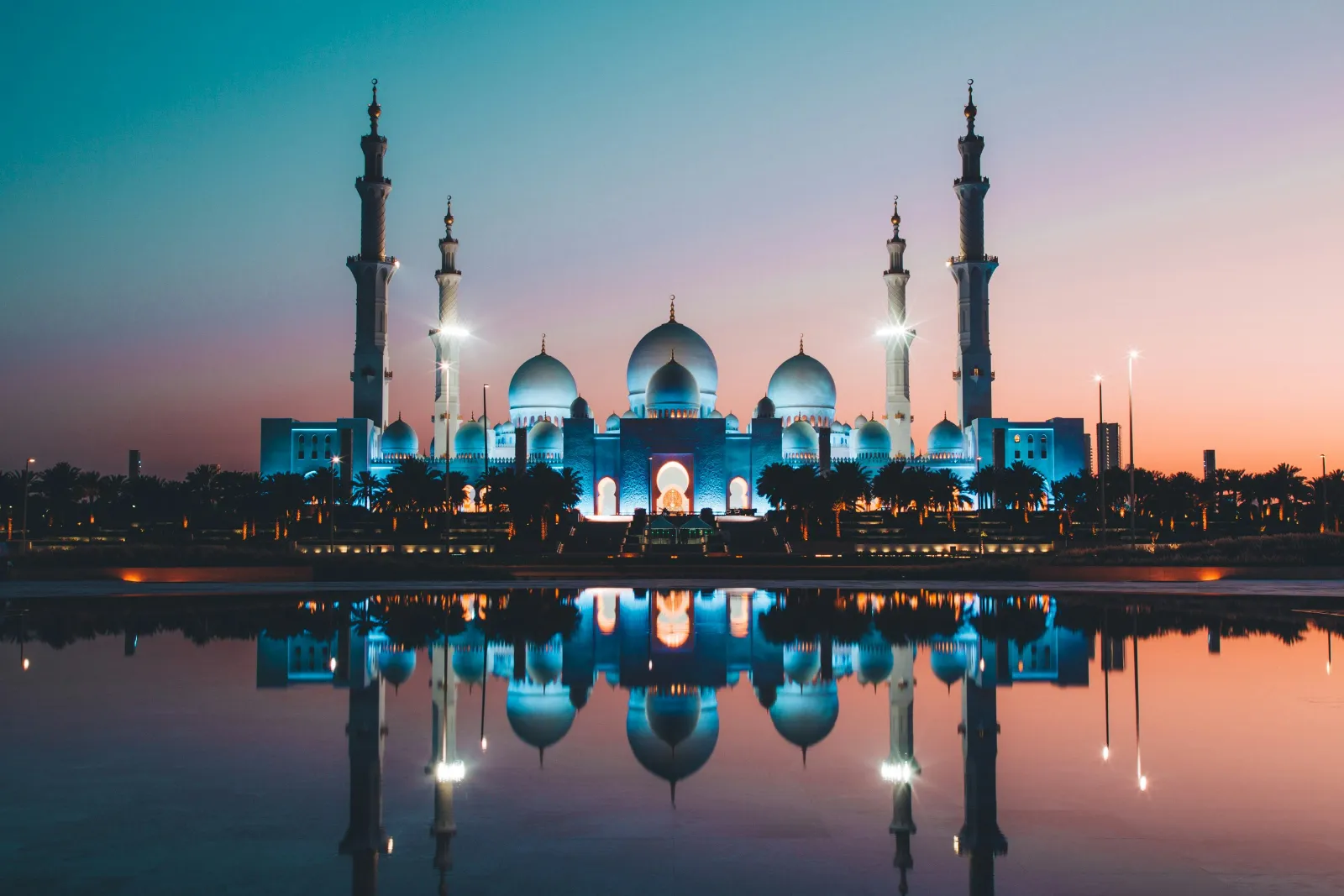
The best time for photos is the late afternoon into early evening. Arrive about an hour before sunset to shoot the white marble in warm light, stay through dusk, and then see the domes reflected in the pools under the night lighting. Mornings are quieter and cooler, which suits families and anyone who dislikes crowds.
The night lighting is not just floodlights. The Centre calls it a lunar lighting system: bluish-grey cloud shapes are projected onto the white walls and domes, starting darker at the beginning of each Hijri (Islamic lunar) month and becoming brighter as the moon grows towards full. So a visit near full moon gives the brightest effect. More than 840 lighting units and 22 light towers create it. Visit Abu Dhabi also recommends an evening visit to see the glow on the white facade.
Table note: suggested timing based on the official visiting hours checked 16 Nov 2026; sunset times change through the year.
| Time of day | What you get | Who it suits |
|---|---|---|
| 9:00 AM to 11:00 AM | Fewer people, softer heat, bright white marble | Families, older parents, anyone visiting in hot months |
| Midday | Harsh light and hot marble; Friday midday closed | Avoid if you can |
| Late afternoon to sunset | Warm light on the domes, the 5:00 PM tour | Photographers, couples, first-time visitors |
| After dark until last entry | Lunar lighting and reflections in the pools | Anyone who wants the classic night view |
A few photo tips that respect the rules: use the designated photo stops, keep the frame on the architecture rather than on people praying, and leave the tripod at home. The reflective pools around the perimeter give the classic mirrored shot, and the courtyard's floral marble inlay works well from a low angle without lying on the floor.
Weather matters more than most visitors expect. Marble reflects heat and glare, so the cooler months are much more comfortable for a long walk around the courtyard. Our month-by-month guide to the best time to visit Dubai applies to Abu Dhabi too, since the two cities share the same climate.
How do you get to the Sheikh Zayed Grand Mosque from Dubai?
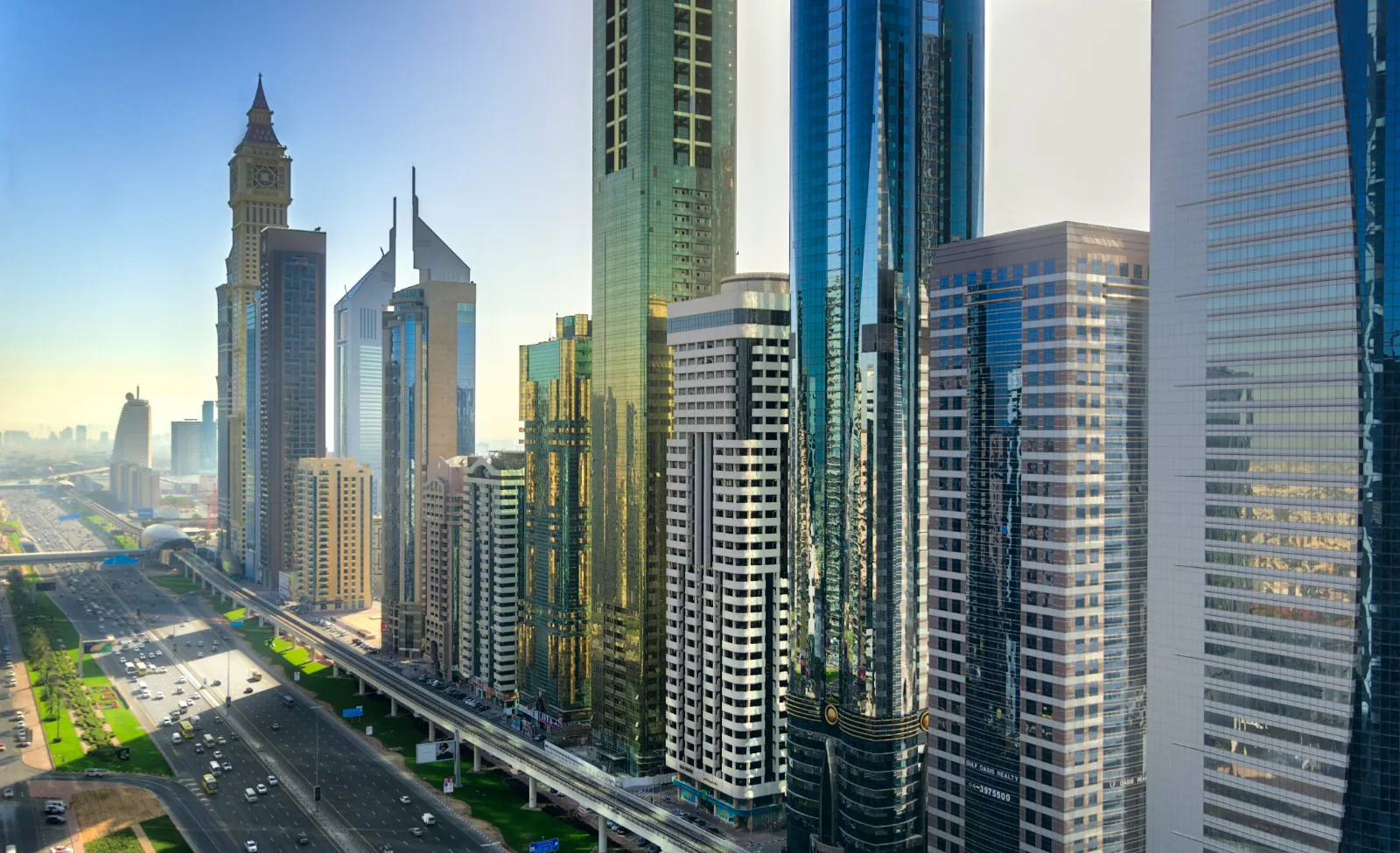
From Dubai, most visitors go by car, taxi or organised tour along Sheikh Zayed Road (E11) towards Abu Dhabi, and the mosque is near the point where the road reaches Abu Dhabi island. Public buses run from Dubai to Abu Dhabi, and from Abu Dhabi a taxi or local bus takes you to the mosque. The mosque itself does not provide transport.
The Centre places the mosque between the three main bridges that link Abu Dhabi island to the mainland (Maqta, Mussafah and Sheikh Zayed bridges), so coming from Dubai you reach it before the city centre. Its published coordinates are 24.41557 N, 54.47516 E, which you can paste into any map app. Visitors enter by Al Salam gate.
Table note: transport facts from szgmc.gov.ae (Transportation and Getting There pages) and RTA, checked 16 Nov 2026. Journey times are our planning estimates, not official figures; check a live map on the day.
| Option | How it works | Planning time from central Dubai |
|---|---|---|
| Private car or rental | E11 to Abu Dhabi, follow signs to the mosque, free parking in the underground car parks | Roughly 1 to 1.5 hours, longer at rush hour |
| Taxi or ride-hailing | Door to door; a taxi rank operates at the mosque during working hours | Roughly 1 to 1.5 hours |
| Intercity bus plus taxi | RTA route E101 runs from Ibn Battuta Bus Station in Dubai to Abu Dhabi Central Bus Station; then a taxi or local bus to the mosque | Allow well over 2 hours each way |
| Etihad Rail plus taxi | Train from Al Yalayis Station in Dubai to Mohamed bin Zayed City Station in Abu Dhabi, then a taxi to the mosque | Check Etihad Rail timetables; allow time for the taxi legs |
| Organised day tour | Transport, booking and timing handled by the operator, who must also provide suitable clothing | Depends on the tour |
Buses: the RTA confirmed route E101 between Ibn Battuta Bus Station and Abu Dhabi Central Bus Station when it restarted the service, run with Abu Dhabi's Integrated Transport Centre. Other intercity routes (often listed as E100 and E102) are widely reported, but we did not confirm their current stops on an official page, so check the RTA's Wojhati journey planner or the S'hail app for live times before you travel. The Centre says Abu Dhabi's Department of Transport runs a public bus service with a stop near the mosque.
Taxis in Abu Dhabi: the Centre points visitors to TransAD, Abu Dhabi's taxi service, for pick-up and drop-off, and there is a taxi area at the mosque during working hours.
Shuttles: the Centre runs a shuttle with Wahat Al Karama, the national memorial across the road, every 30 minutes from 10:00 AM to 7:15 PM. It also mentions free shuttle buses run by the Department of Culture and Tourism Abu Dhabi; routes are on that department's site.
Train: Etihad Rail's national passenger network officially launched on 30 September 2026, linking Abu Dhabi, Dubai, Al Dhaid and Fujairah, as The National and Khaleej Times reported on 30 October 2026. Khaleej Times says the Dubai station is Al Yalayis, joined by a footbridge to Jumeirah Golf Estates Metro Station, and that Abu Dhabi trains use Mohamed bin Zayed City Station, which has shuttle buses to central areas. Gulf News gave the Abu Dhabi to Dubai journey as about 57 minutes. We found no official link from the station to the mosque, so check timetables on Etihad Rail's own site and plan a taxi for the last leg.
Flying into Abu Dhabi: if you are coming from Nepal, our Kathmandu to Dubai flight guide explains which airlines fly from Kathmandu to Dubai, Sharjah and Abu Dhabi. Landing in Abu Dhabi puts you much closer to the mosque than landing in Dubai.
Entry to the UAE: depending on your passport, you may need a UAE visa or entry permit before you travel. Our visa services page is the place to start; the mosque visit itself needs no extra permit beyond the access pass.
What else is nearby in Abu Dhabi?
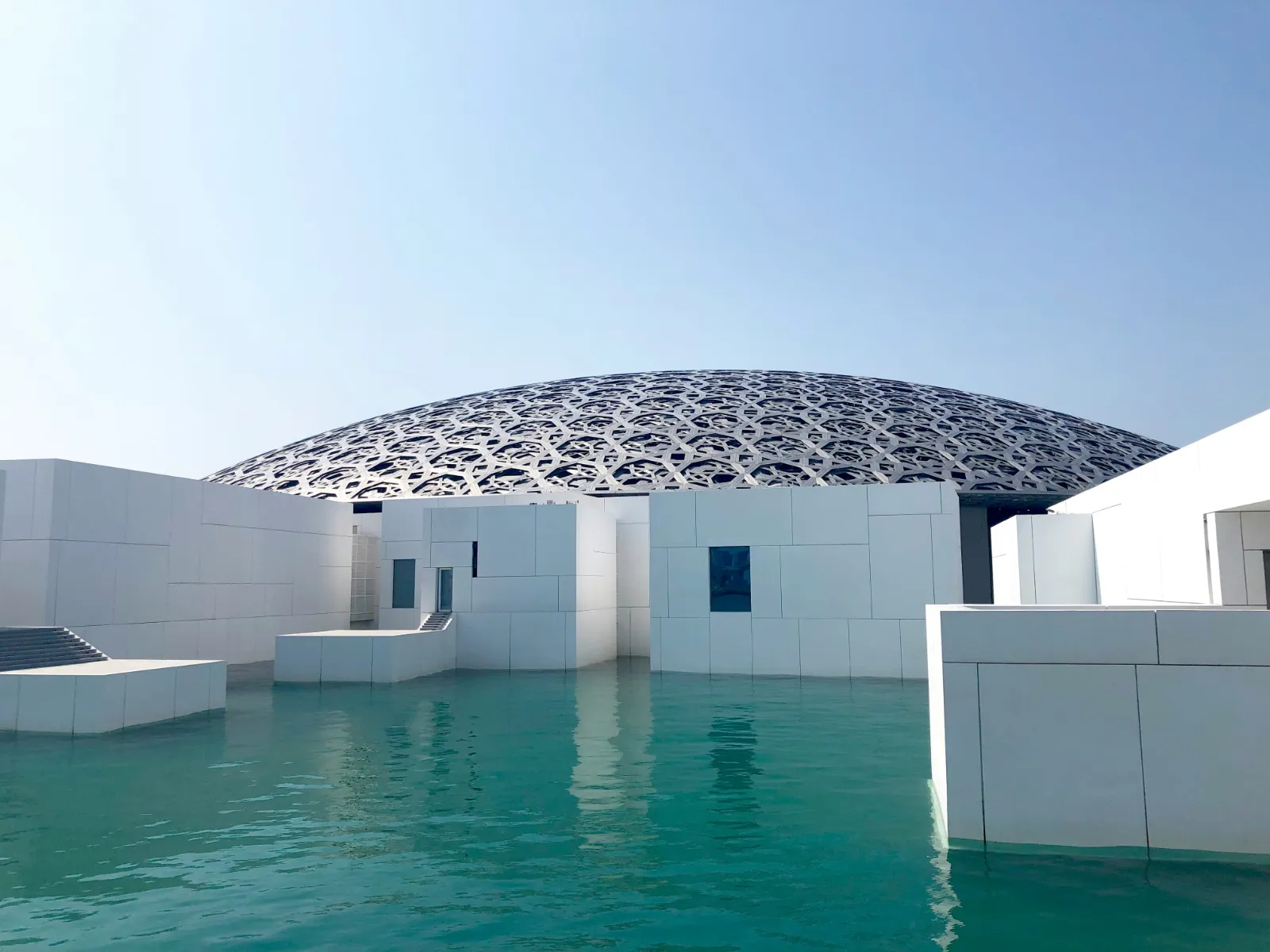
Several of Abu Dhabi's main sights sit within a short taxi ride of the Grand Mosque, so it is easy to build a full day around it. The closest is Wahat Al Karama, a national memorial linked to the mosque by the Centre's shuttle. For culture, art and Hindu darshan, the Louvre Abu Dhabi and the BAPS Hindu Mandir are the two most popular add-ons.
- Wahat Al Karama: a national memorial served by a shuttle from the mosque every 30 minutes during the day. Visit Abu Dhabi suggests pairing the two and then having dinner in the nearby Al Qana waterfront district.
- Louvre Abu Dhabi: the art museum under a lattice dome on Saadiyat Island; we cover it, along with Qasr Al Watan and the Corniche, in our Abu Dhabi day trip from Dubai guide.
- Light and Peace Museum and Diya: the Centre's own museum and immersive light show, inside the mosque complex and ticketed separately.
- Al Jami' Library: the mosque's library, shown on the official visitor map.
BAPS Hindu Mandir Abu Dhabi
For Nepali Hindu travellers, the BAPS Hindu Mandir makes a meaningful second stop on the same trip. Its official site gives the location as Exit 366 on the E11, the main Dubai to Abu Dhabi road, so it fits naturally on the drive. It is open to visitors, but it has strict rules of its own.
Table note: Checked: 16 Nov 2026, mandir.ae (official BAPS Hindu Mandir site).
| BAPS Hindu Mandir | Official rule |
|---|---|
| Open | Tuesday to Sunday, 9:00 AM to 8:00 PM |
| Closed | Mondays |
| Registration | Mandatory; unregistered visitors are refused entry |
| When to register | Only after you arrive in the UAE |
| ID | Physical Emirates ID or passport required |
Because the mandir is closed on Mondays and the mosque breaks for Friday prayer, a Tuesday, Wednesday or Thursday is the easiest day to do both. Our guide to Hindu temples abroad for Nepali travellers explains the mandir's dress rules and compares it with temples in Bali, Malaysia and Singapore.
What should Nepali travellers know before visiting?
Nepali travellers are as welcome as anyone else, and a little preparation makes the visit smooth: book the access pass with your passport name, dress to the written code, carry your passport, and remember that this is a place of worship first and a sight second. Families with parents and children should plan for heat, walking and security checks.
Most of what follows comes from questions our team hears from travellers and from Nepalis living in the UAE who take visiting relatives to the mosque.
- Book after you have firm dates: the access pass is tied to a visit, so book once your Abu Dhabi day is fixed, and check again the day before in case of closures.
- Carry the passport, not a photocopy: you go through a security check, and the BAPS mandir nearby insists on the original ID.
- Residents pay the resident rate: Nepalis working in the UAE with an Emirates ID fall into the AED 5 category on the official fee list, and parents visiting on a tourist visa fall into the AED 10 category unless an age exemption applies (reported for over-60s; confirm on booking).
- Dress the whole family: teenagers in shorts or a sleeveless top are the most common reason a family is delayed at the entrance. Pack a full-sleeved kurta or shirt and a scarf for each woman and girl.
- Eat before you go in: food and drinks are not allowed inside, so have a meal at Souq Al Jami' or before you arrive, especially with diabetic parents or small children.
- Keep voices low: group selfies and loud calls home are where Nepali groups most often get a polite reminder. Set phones to silent and step outside to make video calls.
- Couples and honeymooners: no hand-holding or affectionate poses inside the mosque, even for photos. Save those for the Corniche.
- Respect for faith: you are not expected to pray or join any ritual. Simply standing quietly at the back of an area while people pray is respectful.
For Buddhist and Hindu visitors, the guide-led tour is worth joining even if you know mosques from Kathmandu's Jame Masjid or from travel in India. The guides explain the meaning of the courtyard, the prayer direction (qibla) and the calligraphy in plain language, and they are used to questions from people of every faith.
How should you plan your visit?
Plan the Grand Mosque as a half-day: book the access pass, dress before you leave, arrive by mid-afternoon on a day other than Friday, join the 5:00 PM tour if it suits you, and stay for the lights after dark. From Dubai, leave plenty of time for the road, and add Wahat Al Karama, the Louvre Abu Dhabi or the BAPS mandir if you have a full day.
Table note: a planning checklist based on the official rules checked 16 Nov 2026.
| Before you go | Done? |
|---|---|
| Access pass booked on the official site, name as in passport | Check |
| Day chosen: not Friday midday; not a Monday if adding the BAPS mandir | Check |
| Clothes: loose, ankles and wrists covered; scarf for women | Check |
| Passport or Emirates ID in your bag | Check |
| No food, drinks, lighters, drones, tripods, dolls or soft toys | Check |
| Transport back to Dubai arranged for after dark | Check |
| Ramadan dates checked if travelling in February or March 2027 | Check |
A typical Dubai-based plan looks like this: leave Dubai after lunch, stop at the BAPS mandir in the afternoon if it is open that day, reach the mosque around 4:00 PM, walk the courtyard and join a tour, eat at Souq Al Jami', then watch the lunar lighting over the pools before driving back. If you prefer mornings, reverse it and finish at the Louvre Abu Dhabi.
If Abu Dhabi is part of a wider first visit, our list of places to visit in Dubai and our guide to things to do in Dubai for first-timers help you balance one cultural day with the beaches, desert and malls. If you would rather have flights, hotels and an Abu Dhabi day arranged as part of a trip, see our Dubai tour packages.
Sources we checked on 16 Nov 2026: Sheikh Zayed Grand Mosque Centre (visiting hours, mosque manners, cultural tours, transportation and architecture pages), Visit Abu Dhabi, BAPS Hindu Mandir, the RTA's E101 route notice, and the UK government's UAE travel advice. News reports used for the 2026 fee change and Ramadan 2027 projection are named in the text.
Frequently asked questions
Do you need to book to visit the Sheikh Zayed Grand Mosque?
Yes. The Sheikh Zayed Grand Mosque Centre asks all sightseeing visitors to pre-book an online access pass on its official booking site before arriving, and its rules say a visit is not confirmed without a prior booking. Worshippers coming to pray can enter directly without a ticket. Keep your confirmation on your phone.
Is the Sheikh Zayed Grand Mosque still free to enter?
Not for sightseeing. When we checked the official FAQ on 16 Nov 2026, the Sheikh Zayed Grand Mosque listed AED 10 for visitors from outside the UAE, AED 5 for Emirates ID holders and AED 8 for visitors through tour operators. Worshippers enter free, and the cultural tours are free. News reports say visitors aged 60 and over are exempt, but the FAQ does not list this, so check the amount when you book. Some travel sites still say entry is free, which is out of date.
Can women wear jeans to the Sheikh Zayed Grand Mosque?
Only if they are loose and reach the ankles. The Grand Mosque's rule for women is loose clothing to the ankles, sleeves to the wrists and hair fully covered, with nothing tight or see-through. Skinny jeans fail that rule. Loose trousers, a long skirt or a kurta suruwal with a long-sleeved top and a scarf is the safer choice.
Are abayas provided at the Sheikh Zayed Grand Mosque?
No. The Sheikh Zayed Grand Mosque used to lend abayas, but that stopped in 2023, and in September 2026 The National reported that an abaya can be bought at Souq Al Jami' because the Centre no longer lends them. Arrive already dressed to the code. Tour operators must provide suitable clothing for their own guests.
Is the Sheikh Zayed Grand Mosque open to visitors on Fridays?
Yes, but with a break. On Fridays the Sheikh Zayed Grand Mosque is open to visitors from 9:00 AM to 11:30 AM and again from 2:30 PM to 8:30 PM, closing in between for Friday prayer. The Centre's 2025 brochure shows Friday afternoon opening at 3:00 PM, so avoid Friday midday entirely.
Can children visit the Sheikh Zayed Grand Mosque?
Yes. Children are welcome at the Sheikh Zayed Grand Mosque, but the Centre says they must stay under their parents' constant supervision, and parents are responsible for them. Dolls and stuffed toys are not allowed inside, so leave them at the hotel. Nursing and baby changing rooms are shown on the official visitor map.
Are guided tours available at the Sheikh Zayed Grand Mosque?
Yes. The Sheikh Zayed Grand Mosque Centre runs free walk-in cultural tours daily in English and Arabic, starting on the east side of the mosque. Outside Ramadan they start at 11:00 AM, 1:00 PM and 5:00 PM, with no 1:00 PM tour on Fridays. Arrive about 15 minutes early and allow up to an hour.
Can you take photos inside the Sheikh Zayed Grand Mosque?
Yes, for personal use, with a phone or ordinary camera, at the designated photo stops. The Sheikh Zayed Grand Mosque bans professional equipment and commercial filming without a permit, drones, and lying down or posing improperly for photos. Avoid photographing people at prayer, and ask before photographing anyone.
What is the best time to visit the Sheikh Zayed Grand Mosque?
The best time to visit the Sheikh Zayed Grand Mosque is late afternoon on a day other than Friday, staying until after dark to see the lunar lighting. Weekday mornings from 9:00 AM are quieter and cooler for families. The cooler months are far more comfortable, as the white marble reflects strong heat and glare.
How far is the Sheikh Zayed Grand Mosque from Dubai?
The Sheikh Zayed Grand Mosque sits at the entrance to Abu Dhabi island, before the city centre when you come from Dubai. By car or taxi, plan roughly 1 to 1.5 hours from central Dubai depending on your start point and traffic. By intercity bus plus a taxi, allow well over two hours each way.
Is the Sheikh Zayed Grand Mosque lit up at night?
Yes. The Sheikh Zayed Grand Mosque has a lunar lighting system that projects bluish-grey clouds onto its white walls and domes, growing brighter as the moon waxes through each Islamic month. Visitors can see it until visiting hours end at 8:30 PM (last entry 8:00 PM), and the reflective pools double the effect.
Can Hindus and Buddhists visit the Sheikh Zayed Grand Mosque?
Yes. The Sheikh Zayed Grand Mosque welcomes visitors of all faiths during visitor hours, including Hindu and Buddhist travellers from Nepal. You are not expected to take part in any prayer. Follow the dress code, keep quiet, and keep personal religious items low key. The BAPS Hindu Mandir nearby makes a good second stop.