














































































Short answer: the Terracotta Warriors are an army of thousands of life-size clay soldiers, horses and chariots buried beside the tomb of Qin Shi Huang, the first emperor of a unified China, who died in 210 BCE. Farmers found them while digging a well on 29 March 1974, and the site has been on the UNESCO World Heritage List since 1987. They stand in three excavated pits inside the Emperor Qinshihuang's Mausoleum Site Museum, about 35 km northeast of central Xi'an in Shaanxi province. Entry is by real-name advance booking with your passport, and a visit takes half a day.
This guide is written for first-time visitors, including travellers flying in from Kathmandu and the Nepali diaspora in the Gulf, Asia and beyond. It explains what you are actually looking at in each pit, how booking works, how to get there now that the main tourist bus route changed in August 2026, what else to see in Xi'an (the City Wall, the Muslim Quarter, the Big Wild Goose Pagoda and the Bell and Drum Towers), how many days to allow and when to go. Anything that can change, such as opening hours and bus routes, is marked with the date we checked it and the source. For the wider picture of a first trip, start with our complete China travel guide.
What are the Terracotta Warriors, and why do they matter?
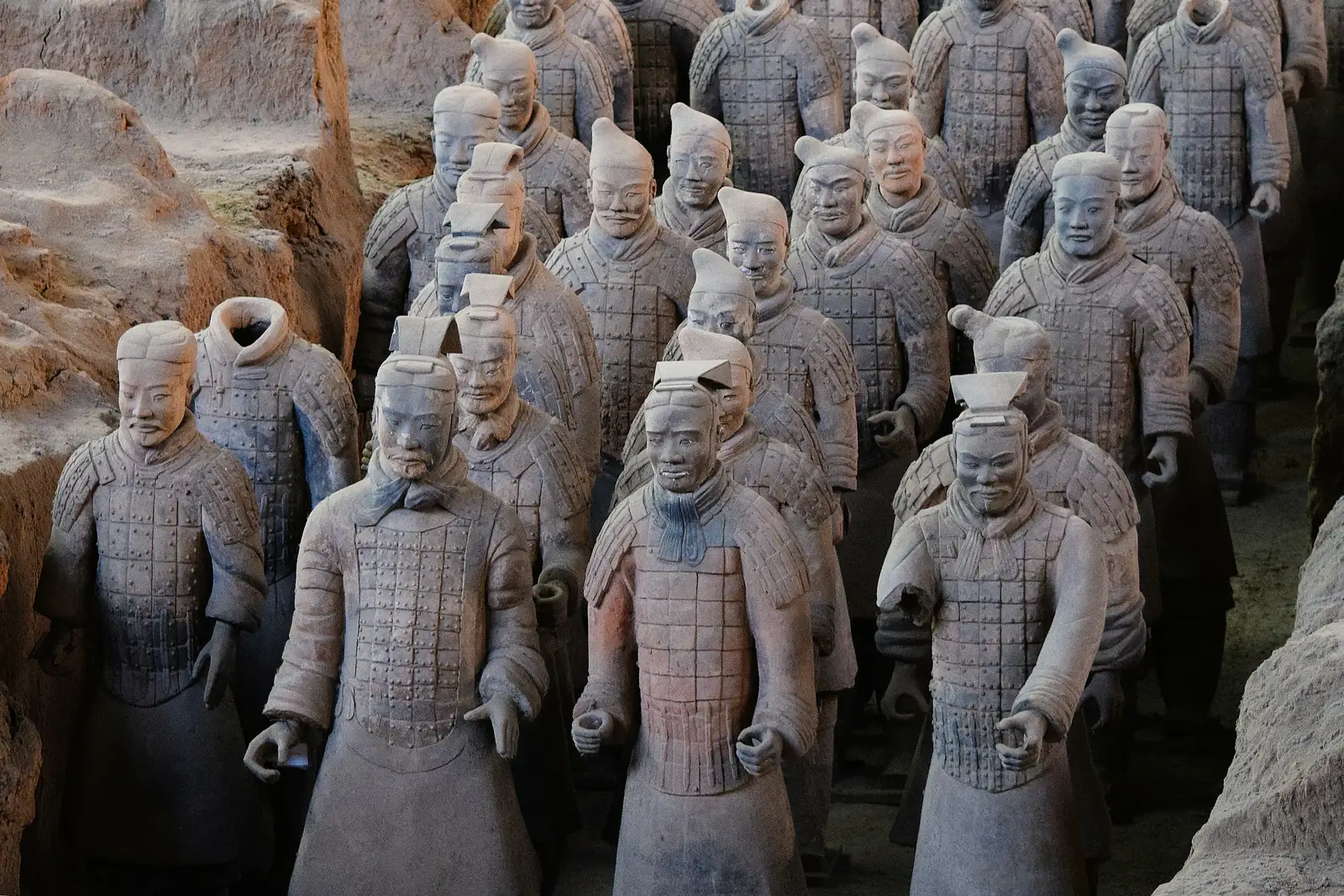
The Terracotta Warriors (also called the Terracotta Army, or Bingmayong in Chinese) are a buried clay army made to guard the tomb of Qin Shi Huang, the ruler who unified China in 221 BCE. They are one part of a much larger funerary complex that is still being excavated, and they are the single most visited reason travellers come to Xi'an.
Qin Shi Huang (259 to 210 BCE) became king of the state of Qin at the age of 13, and work on his tomb began in 246 BCE, early in his reign. By the time he died he had conquered the rival warring states, declared himself the first emperor, and standardised writing, weights, measures and coinage across his new empire. The Han dynasty historian Sima Qian, writing about a century later, recorded that around 700,000 conscripted workers built the tomb and that its burial chamber held a model of the empire with rivers of mercury. The army itself is not mentioned in his account, which is one reason the 1974 discovery was such a surprise.
How were the Terracotta Warriors discovered?
On 29 March 1974, farmers Yang Zhifa, his five brothers and their neighbour Wang Puzhi were digging a well about 1.5 km east of the emperor's burial mound when they hit fragments of clay figures. Archaeologists were called in, and the pit they had stumbled on turned out to be Pit 1, the largest of the warrior pits. Pits 2 and 3 were located by systematic drilling in 1976, and a fourth pit was found to be empty, perhaps left unfinished when the empire collapsed soon after the emperor's death. The museum built over the pits has grown in stages ever since, and excavation and restoration work are still visible on any visit today.
What do the numbers actually say?
Counts vary because much of the army is still underground. The figures below are the most commonly cited, each with its source.
| Fact | Figure | Source |
|---|---|---|
| Estimated soldiers (2007 estimate) | More than 8,000 | Wikipedia summary of excavation estimates |
| Estimated chariots and chariot horses | 130 chariots with 520 horses | Wikipedia |
| Estimated cavalry horses | 150 | Wikipedia |
| Height of a typical figure | About 1.75 m to 2 m, officers usually taller | Wikipedia |
| Bronze weapon items recovered | More than 40,000, mostly arrowheads | Wikipedia |
| Height of the burial mound | 51.3 m | UNESCO World Heritage Centre |
| Accompanying pits around the tomb | Nearly 200 | UNESCO |
| Sites within the protected property | More than 600, across 56.25 square km | UNESCO |
| Distance from Xi'an | About 35 km northeast of the city | UNESCO |
Are all the warriors different?
Studies of the figures have found that no two share exactly the same features, although scholars have identified about ten basic face forms that craftsmen worked from before adding individual details such as moustaches, hairstyles and expressions. The bodies were built in sections (legs, torso, arms, head) and assembled, which is why ranks, uniforms and poses differ while the overall build is similar. Kneeling archers, standing archers, armoured infantry, cavalrymen with their horses, charioteers and senior officers can all be told apart by their armour, headgear and hand positions.
The warriors were originally brightly painted. Pigments identified on the figures include cinnabar red, malachite green, azurite blue, bone white, charcoal black and the synthetic pigment known as Han purple. Much of that paint flaked off quickly once the figures were exposed to dry air, which is one reason excavation has moved slowly. You will see small patches of surviving paint on some figures in display cases.
A popular myth says the bronze weapons survived because Qin craftsmen used a chrome coating. A 2019 study found the chromium was contamination from nearby lacquer, and that the soil's chemistry explains the preservation.
Has the emperor's tomb been opened?
No. The burial mound of Qin Shi Huang has not been excavated. Surveys have measured high mercury levels in the soil of the mound, which many researchers see as support for Sima Qian's description of mercury rivers inside. What you can visit is the mound itself and the surrounding park (Lishan Garden), not the chamber. When people talk about "the Terracotta Warriors" they usually mean the pits about 1.5 km east of the mound, which is where the museum's main halls stand.
Why is it a UNESCO World Heritage Site?
UNESCO lists the site as the "Mausoleum of the First Qin Emperor", inscribed in 1987 under four of its cultural criteria. The listing covers the whole funerary complex, not just the warrior pits: the mound, the walled enclosures, the accompanying pits of officials, acrobats, musicians, bronze birds and stone armour, and the workers' cemeteries. For Nepali travellers, a useful comparison is Lumbini or the Kathmandu Valley's Durbar Squares: those are living heritage you walk through, while this is an active archaeological site you view from walkways above the trenches. There is even a link between the two countries' heritage: the 7th century Chinese pilgrim Xuanzang described the Ashoka pillar at Lumbini, and the pagoda built for his scriptures still stands in Xi'an (more on that below).
How do you visit the Terracotta Army museum and book tickets?
You must book a real-name, timed ticket in advance and bring the original passport you booked with. The official Emperor Qinshihuang's Mausoleum Site Museum says all visitors, including foreign visitors and those who qualify for free admission, must reserve ahead, and that the person, the ticket and the ID must match at the gate. One ticket covers both the Terracotta Army Museum and Lishan Garden (the mausoleum park) on the same day.
| Booking rule | What the official site says |
|---|---|
| Who must book | Everyone, including foreign, Hong Kong, Macao and Taiwan visitors and free-admission visitors |
| ID accepted for foreigners | Original passport (Chinese ID cards and travel permits for other groups) |
| Matching rule | Person, ticket and ID must match at entry |
| Entry system | Limited capacity, reservation and staggered time-slot entry |
| When to arrive | 30 minutes before your booked time slot |
| Validity | Same day only, with three ticket checks on the route |
| What it covers | Terracotta Army Museum plus the National Archaeological Relics Park (Lishan Garden), linked by a free shuttle bus |
| Entrance | North Gate is the only entrance; the route inside is one-way |
| Children | Must be added to an accompanying adult's booking; children 1.4 m or shorter qualify under the child policy |
| Cancellation | Possible before ticket inspection; used tickets cannot be refunded |
| Official channels | The museum's website and its WeChat official accounts |
Checked: 8 November 2026, official ticketing page of Emperor Qinshihuang's Mausoleum Site Museum. We do not print ticket prices because they are set and published by the museum; see its ticketing page for the current rate and concessions.
What are the Terracotta Warriors opening hours?
The museum runs on two seasons. The official page gives the opening time and the last ticket check, so plan to be through the gate well before that last check.
| Season | Dates | Opens | Last ticket check |
|---|---|---|---|
| Peak season | 16 March to 15 November | 8:30 | 17:00 |
| Low season | 16 November to 15 March | 8:30 | 16:30 |
| Major public holidays | As announced | Follow the museum's latest notice | |
Checked: 8 November 2026, official ticketing page. The page lists no weekly closing day, and says hours on major holidays follow its latest announcement. Low-season hours begin on 16 November 2026.
Should you book on the official site or through an app?
The official route is safest: the museum's ticketing page says visitors should reserve through its official website or its two WeChat accounts. Some international travel apps also sell timed tickets in your passport name and can be easier with a foreign card and an English interface, usually for a small service margin. Whichever you use, check three things before you pay: the date, the time slot, and that the passport number matches the passport you will carry that day. If you renewed your passport recently, book with the new one. If you are travelling as a family, add children to the adult's booking at the time of purchase, since the official page says they must be on it.
A practical point for Nepali passport holders and anyone on a visa: the passport you carry to the museum must be the same one that holds your China visa or entry stamp, because hotels, trains and attractions all check it. Entry rules depend on your nationality; see our China visa page for the current position.
Do you need a guide at the Terracotta Warriors?
You do not need one, but most first-time visitors get far more from the visit with a guide or a good audio guide. The pits are huge open halls with limited labels, and without context they can feel like "rows of statues". A guide explains why the archers kneel, how ranks are shown, what the empty trenches mean and where restorers are piecing broken figures back together. If you hire someone at the site, use the museum's own service points or a guide arranged in advance rather than people who approach you in the car park. Local Xi'an travel sites have warned about unlicensed vehicles posing as "Tourist Line 5" buses, and the same caution applies to guides.
How long does the visit take?
Plan three to four hours at the site, plus travel time each way. The official page gives about 1.5 hours as its guide visit time for the museum and Lishan Garden, but most visitors who read the displays take longer. Most visitors spend 45 minutes to an hour in Pit 1 alone, 30 to 45 minutes in Pit 2 and its display cases, 15 to 20 minutes in Pit 3, time in the exhibition hall, and another hour if they take the shuttle to Lishan Garden and the bronze chariots. With the round trip from central Xi'an, the Terracotta Warriors take a half day at minimum and often most of a day, especially if you add Huaqing Palace, which is on the same road.




What is in each pit, and which pit is best?
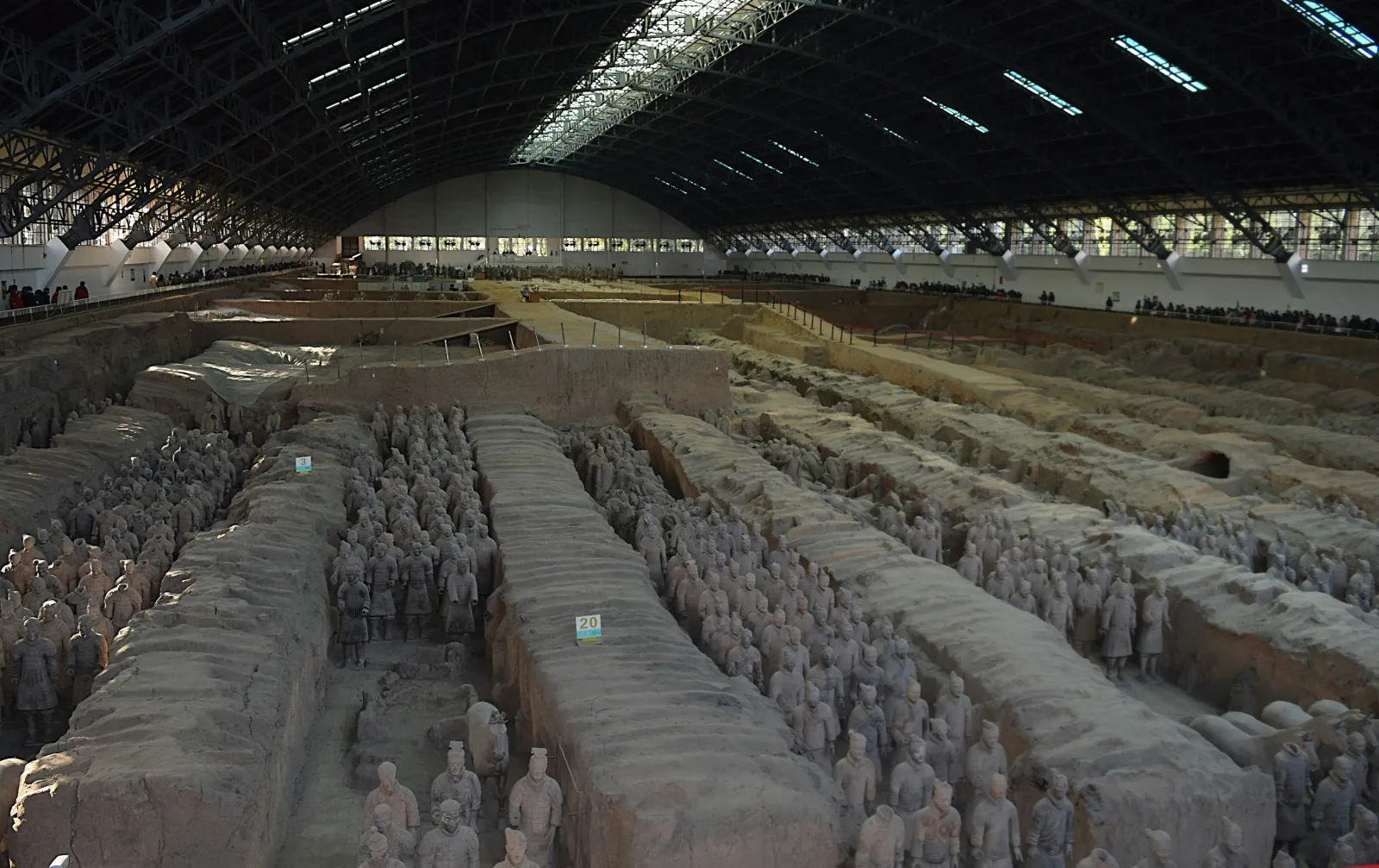
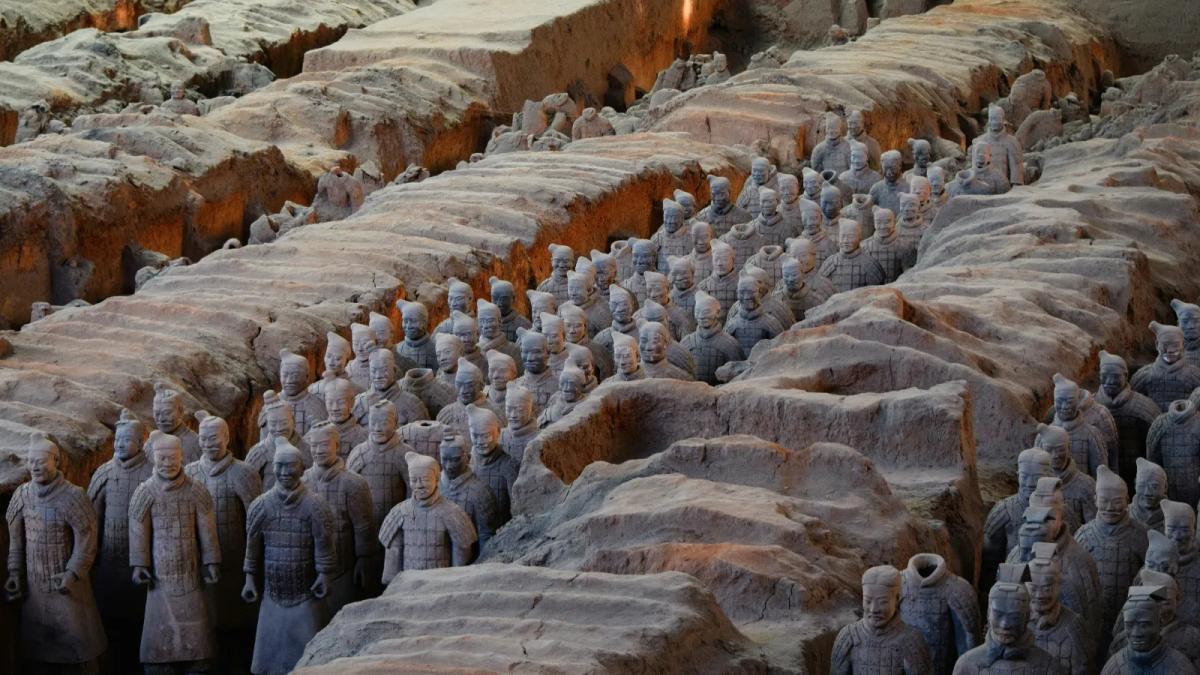
Pit 1 is the one in every photograph: an infantry army in long trenches under a vast arched roof. Pit 2 is the best place to see individual figures close up, including archers and cavalry in glass cases. Pit 3 is small but explains how the army was commanded. If you only have time for one, make it Pit 1; if you have time for all three, you will understand much more.
| Pit or hall | Found | Size | What is inside | Do not miss |
|---|---|---|---|---|
| Pit 1 | March 1974 (well digging) | About 230 m by 62 m, the largest pit | The main infantry army in battle formation, facing east across eleven parallel corridors | The view from the front (east) walkway down the trenches, and the restoration area at the back where broken figures are pieced together |
| Pit 2 | 1976 (systematic drilling) | About 6,000 square m | A mixed force of chariots, cavalry, infantry and archers; a 2016 city report estimated over 1,300 figures and horses and more than 80 chariots | Individual figures in glass cases at eye level, such as kneeling archers, a cavalryman with his horse, and senior officers |
| Pit 3 | 1976 (systematic drilling) | About 520 square m | Thought to be the command post for Pits 1 and 2, with high-ranking officers and a war chariot; 72 figures and horses in total, per a May 2025 report | The layout of officers facing each other in the corridors, which suggests a headquarters rather than a battle line |
| Pit 4 | Located by drilling | Small | Empty; filled with soil and probably never completed | Not open as a display |
| Exhibition Hall (next to Pit 2) | Opened September 2024 | Indoor gallery | A long-term display of 230 pieces or sets, about a third shown publicly for the first time when it opened | The weapons, armour and smaller finds that explain how the army was made |
| Lishan Garden (mausoleum park) | Same ticket, free shuttle | About 1.5 km from the pits | The emperor's burial mound and the bronze chariots and horses, moved here from the old exhibition hall in 2024 | The two bronze chariots with their teams of horses, finely detailed bronze models |
Sources: Pit 1 dimensions and the corridor layout from Wikipedia's Terracotta Army article (linked above); Pit 2 estimates from a 2016 Xi'an Information Network report (published figures vary); Pit 3 area and count from The Paper, May 2025; Exhibition Hall and bronze chariots move from a Travel China Guide news report of 13 September 2024. Checked: 8 November 2026.
Pit 1: the army you have seen in photographs
Pit 1 is the reason the site is famous. Walking in, you look across a hangar-sized hall at rows of infantry facing east in long corridors separated by rammed-earth walls. The timber roof that once covered them collapsed long ago, which is why many figures were found broken and had to be reassembled. At the front, the restored warriors stand complete; further back you see figures still half buried, lying where they fell, or marked with numbered tags. That contrast, between a finished army and an active dig, is what makes Pit 1 so striking. Walk the full loop of the viewing platform rather than stopping at the crowded front rail; the side walkways are quieter and give the best angles down the corridors.
Pit 2: the best close-up figures
Pit 2 is less complete visually, because much of it is still covered by the remains of the original roof, but it is where the variety of the army comes through. The glass cases around the hall hold some of the finest individual figures: a kneeling archer, a standing archer, a cavalryman beside his saddled horse, and high-ranking officers whose headgear and armour show their status. This is the pit to linger in for detail, faces and craftsmanship.
Pit 3: the command post
Pit 3 is small, U-shaped and easy to miss in a hurry, but it completes the story. The figures here face each other along the walls rather than standing in battle ranks, and there is a single war chariot. Archaeologists read this as a headquarters where officers directed the army in Pits 1 and 2. In May 2025 a visitor climbed over the barriers into Pit 3 and damaged two figures; the pit stayed open, but it is a reminder that the barriers and staff instructions exist for a reason. Stay on the walkways, and keep children close at the rails.
Which pit should you see first?
Follow the signed one-way route; the museum uses it to manage crowds. Many visitors find it helps to see the smaller pits and the display cases first and finish in Pit 1, so the scale lands at the end, but the experience is excellent in either order. What matters more is timing: arrive for the first time slot, go straight to Pit 1 while it is quiet, and then take your time in Pit 2, Pit 3 and the exhibition hall when the tour groups arrive.
How do you get to the Terracotta Warriors from Xi'an?
The site is in Lintong district, about 35 km east of the walled centre, and the trip takes roughly an hour each way by road. The main public options are Tourist Line 5 (bus 306), which since 29 August 2026 starts from the new Xi'an East railway station, or Metro Line 9 to Huaqingchi station followed by a short local bus. A taxi, ride-hailing car or private tour is simplest for families and small groups.
| Option | Route | Time (approx.) | Good for | Notes |
|---|---|---|---|---|
| Tourist Line 5 (bus 306) | Starts at Xi'an East railway station, calls at the Textile City (Fangzhicheng) hub and Huaqing Palace, ends at the Terracotta Warriors | About an hour from Fangzhicheng; longer from Xi'an East | Budget travellers, solo travellers | Runs 7:00 to 19:00; about 45 km with 28 stops; tickets are sold on board by a conductor and transit cards are not accepted, so carry cash. The route no longer starts at Xi'an Railway Station |
| Metro Line 9 plus local bus | Metro Line 9 to Huaqingchi station (Exit C), walk about 200 m, then Lintong bus 602 or 613 to the Terracotta Warriors stop | Up to about 2 hours door to door from the centre, depending on transfers | Travellers already on the metro network | Line 9 starts at Fangzhicheng, where it meets Line 1. The nearest Line 9 station to the site, Qinlingxi, is about 5 km away and needs further transfers |
| Taxi or DiDi | Door to door from your hotel | About 50 to 60 minutes | Families, couples, older travellers | Show the Chinese name 秦始皇兵马俑博物馆; agree your return plan, because queues for cars at closing time can be long |
| Private car or guided tour | Hotel pickup, often combined with Huaqing Palace | Half day to full day | First-timers who want a guide and no transfers | Check whether the timed museum ticket is included and booked in your passport name |
Checked: 8 November 2026. Bus 306 change from the Xi'an Release (the city government's news account) report of 29 August 2026 and the route adjustment report of 28 August 2026; metro and local bus link from Xi'an Bendibao (September 2024); taxi times from Trip.com's transport guide, September 2026. Bus routes in Xi'an are adjusted often, so confirm on the day in a maps app such as Amap.
Why older guides send you to the wrong station
For decades, the standard advice was to catch "bus 306" outside Xi'an Railway Station. That is now out of date. The city's announcement says the route first left the old railway station in 1994, moved its starting point to the Textile City hub in 2019, and on 29 August 2026 was extended to start at Xi'an East railway station, a new high-speed station in Baqiao district that opened on 30 June 2026 and is served by Metro Line 5. The Xi'an Railway Station is no longer on the route. If you see a vehicle there advertising "Tourist Line 5", treat it with caution: local travel sites have warned about unlicensed lookalike services, and genuine buses have uniformed staff.
Can you combine the warriors with Huaqing Palace?
Yes. Huaqing Palace (Huaqing Pool), the hot-spring palace below Mount Li, sits on the same road and is a stop on bus 306 and next to Huaqingchi metro station. Combining the two makes a full day. Most people see the Terracotta Warriors first, when energy and light are best, and stop at Huaqing Palace on the way back. Book each site separately, since they are different attractions with their own tickets.
Paying for buses and taxis
Bus 306 tickets are sold on board and transit cards are not accepted, so carry some small yuan notes. For metro rides, taxis and most other payments, set up Alipay or WeChat Pay with a foreign card before you travel; our guide to paying in China with Alipay and WeChat Pay walks through the setup for Nepali and other foreign cards. Ride-hailing through DiDi also works inside Alipay.
How do you get to Xi'an from Beijing, Chengdu or Kathmandu?
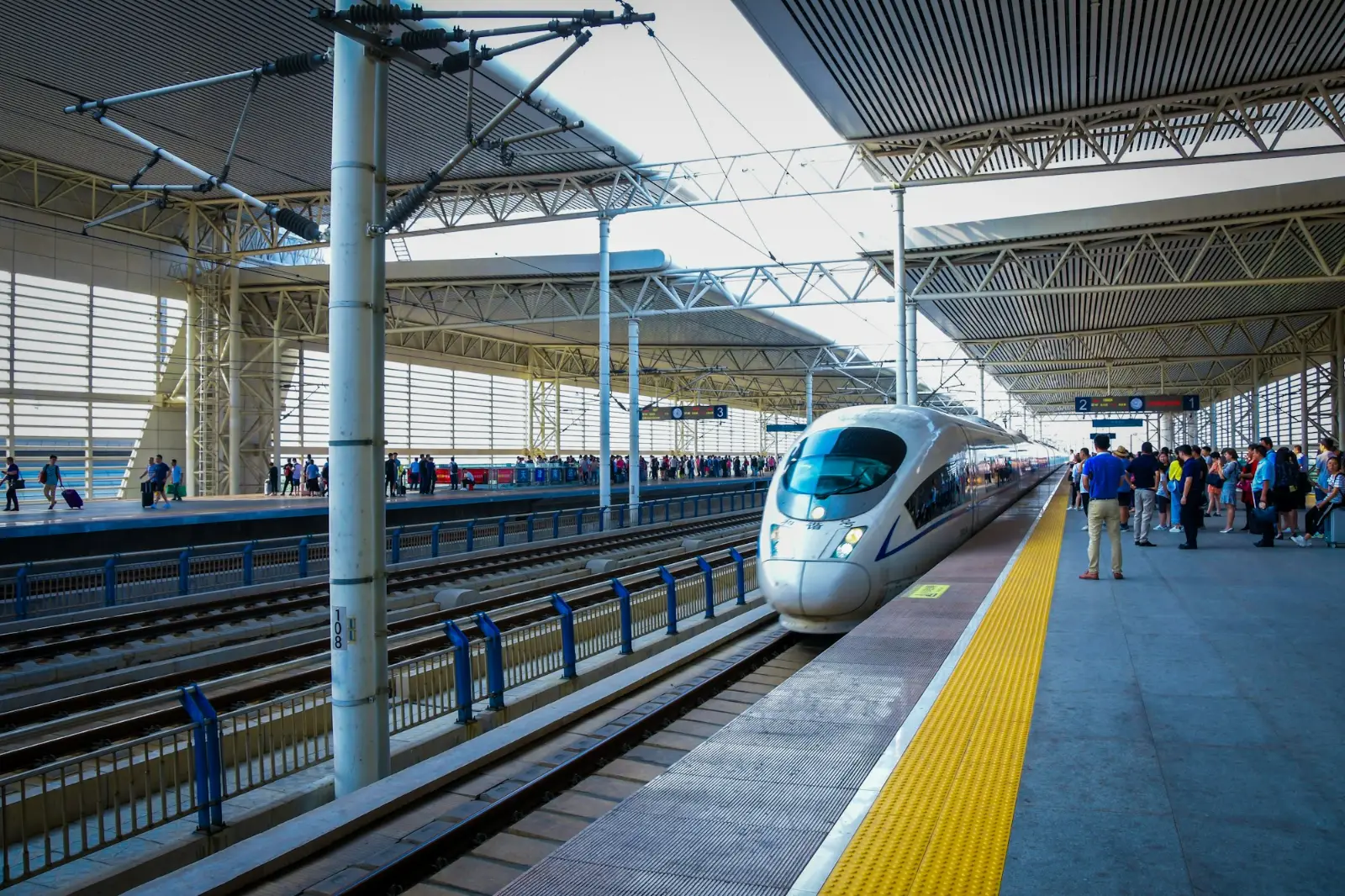
High-speed rail is the easiest way into Xi'an from most Chinese cities. The fastest G trains from Beijing West reach Xi'an North in about 4 hours 10 minutes, and the fastest trains from Chengdu take just over 3 hours. There is no direct flight from Kathmandu to Xi'an, so travellers from Nepal usually fly to a Chinese gateway such as Chengdu, Kunming or Guangzhou and continue by train or a domestic flight.
| From | Best mode | Time (approx.) | Arrives at | Notes |
|---|---|---|---|---|
| Beijing | G high-speed train from Beijing West | Fastest about 4 h 10 min; most G trains around 4 to 4.5 h | Xi'an North | More than 20 direct G trains a day; around 1,216 km of track |
| Beijing | Flight | About 2 h 20 min in the air | Xi'an Xianyang International Airport (XIY) | Add airport transfers at both ends; rail usually wins door to door |
| Chengdu | High-speed train | Fastest about 3 h 10 min; most trains about 3.5 to 4.5 h | Xi'an North | The natural link for travellers who fly into Chengdu from Kathmandu |
| Shanghai | High-speed train or flight | Rail takes most of a day; flying is often quicker | Xi'an North or XIY | Many visitors fly this leg |
| Kathmandu | Flight via a Chinese gateway | Varies with the connection | XIY, or by train from the gateway city | No direct Kathmandu to Xi'an flight; check current airline schedules for Chengdu, Kunming and Guangzhou |
Checked: 8 November 2026. Beijing times from WanderInChina's Beijing to Xi'an guide (updated July 2026), consistent with China Highlights' schedule (fastest 4 h 11 min); Chengdu times from Travel China Guide's Chengdu to Xi'an timetable (updated February 2026). Timetables change with each national timetable revision, so confirm on 12306 or your booking app.
Xi'an North is the city's main high-speed station and is on the metro, so you can reach the walled centre easily. Xi'an now also has Xi'an East station, which opened on 30 June 2026 and serves several new high-speed lines; check which station your train uses. Booking, seat classes and station procedures are explained in our step-by-step guide to China's high-speed trains, and if you are weighing which cities to pair with Xi'an, our guide to the best cities in China to visit compares Beijing, Shanghai, Chengdu and others.
A note for travellers from Nepal
Because Chengdu has had nonstop flights from Kathmandu, a common pattern is to fly into Chengdu, spend time there, then take the train north to Xi'an and on to Beijing, flying home from Beijing or back through a gateway. Flight schedules on these routes change by season, so check the airlines' own sites rather than relying on last year's timetable. Your passport and China entry permission must be in order before you fly. If you also want to plan your phone and apps before landing (Google services and WhatsApp do not work normally on mainland networks), read our explainer on which apps work in China.
What else should you see in Xi'an?
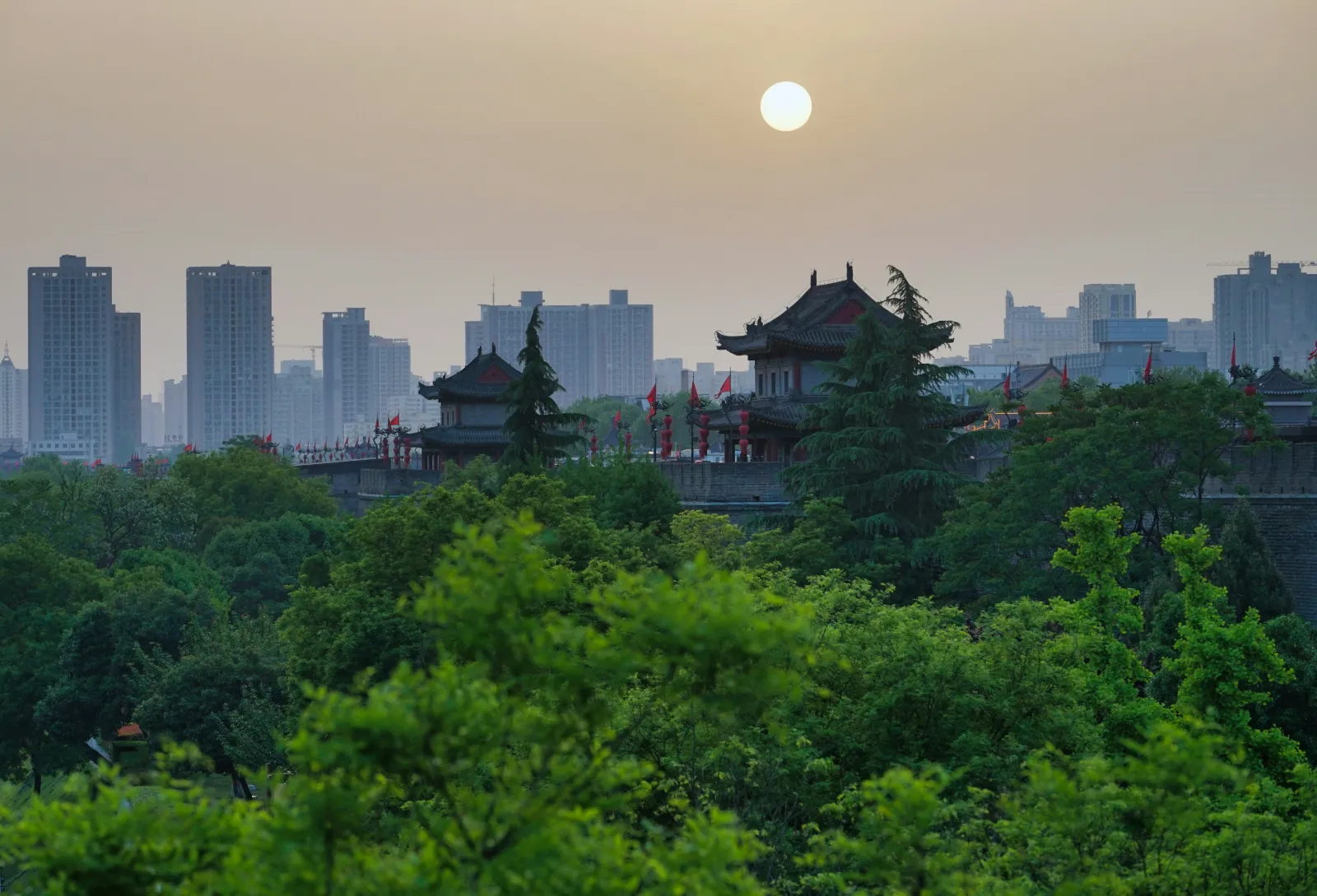
Give Xi'an itself at least one full day. The city and its surroundings were capital to several dynasties, including the Western Zhou, Western Han, Sui and Tang, and the eastern end of the Silk Road. Its five headline sights are the Ming City Wall, the Bell and Drum Towers, the Muslim Quarter, the Big Wild Goose Pagoda and the Shaanxi History Museum, all close enough to combine in a day or two.
| Sight | What it is | Key facts | Time to allow | Best time |
|---|---|---|---|---|
| Xi'an City Wall | The complete Ming dynasty wall around the old centre, with a moat and gate towers | Building began in 1370 under the Hongwu emperor; about 13.74 km around; about 12 m high and 12 to 14 m wide on top | 2 to 3 hours to cycle the loop | Late afternoon into sunset, when the gate towers light up |
| Bell Tower | Ming tower at the crossing of the four main streets | Built 1384 and moved to its present site in 1582; close to 40 m high | 30 to 45 minutes | Evening, when it is floodlit |
| Drum Tower | Ming tower at the entrance to the Muslim Quarter | Built 1380; drums named after the 24 solar terms; drum performances are part of the daily programme | 30 to 45 minutes | Before dinner in the Muslim Quarter |
| Muslim Quarter | The historic Hui Muslim neighbourhood and food streets behind the Drum Tower | Home to the Great Mosque of Xi'an, founded by tradition in 742 and largely rebuilt in its current form in 1392 | 2 to 3 hours | Evening for food; morning for a calmer mosque visit |
| Big Wild Goose Pagoda | Tang dynasty Buddhist pagoda in the Daci'en Temple complex | Built 652 under the monk Xuanzang to house scriptures he brought from India; seven storeys, 64.1 m; part of the UNESCO Silk Roads listing since 2014 | 1 to 2 hours | Late afternoon, then the plaza in the evening |
| Shaanxi History Museum | The province's main history museum, from prehistory to the Qing | About 370,000 items in the collection; closed on Mondays except public holidays, timed booking required | 2 to 3 hours | Morning, on a day you are not at the warriors |
Sources: Travel China Guide (City Wall, updated July 2026); Fortifications of Xi'an, Bell Tower, Drum Tower, Great Mosque and Big Wild Goose Pagoda on Wikipedia; Shaanxi History Museum collection from the China Services Info portal (January 2025) and Monday closure and booking from a Sina travel guide of June 2026; confirm current booking rules before you go. Checked: 8 November 2026.
Can you cycle on the Xi'an City Wall?
Yes, and it is the best way to see it. Bicycles, including tandems, are rented from nine rental points on top of the wall. Rentals run on a three-hour base period with extra time charged in short increments, and a refundable deposit is taken per bike. Bikes can be rented and returned from 8:00 to 21:00, and returned only between 21:00 and 22:00; the wall itself is open 8:00 to 22:00. A full loop of about 13.74 km takes most riders two to three hours with stops. The South Gate is the main tourist entrance. The surface is old stone and fairly bumpy, so it suits confident riders; families with small children often walk a section instead. Checked: 8 November 2026, Travel China Guide (page updated 22 July 2026).
What is the Muslim Quarter, and what should you eat there?
The Muslim Quarter (Huimin Jie) is the historic neighbourhood of Xi'an's Hui Muslim community, a web of lanes behind the Drum Tower that is now the city's most famous food street. It is also one of the easiest places in China to find halal food, which many Muslim travellers and Nepali visitors from Muslim families appreciate. Dishes to look for include roujiamo (stewed meat in a flatbread, often called a Chinese burger), biangbiang noodles (wide hand-pulled noodles), yangrou paomo (lamb soup with torn bread), persimmon cakes and cold noodles. The main lanes are crowded in the evening, so step one street back for quieter stalls.
Inside the quarter, the Great Mosque of Xi'an is one of the largest historic mosques in China, built in a Chinese temple style, with courtyards, gateways and tiled roofs rather than domes. Non-Muslim visitors can enter the courtyards and gardens, but not the prayer hall. Dress modestly (shoulders and knees covered) and avoid prayer times, especially Friday midday. Vegetarians should note that the food here is overwhelmingly meat-based; look for noodle and bread dishes and ask for no meat.
Why visit the Big Wild Goose Pagoda?
The Big Wild Goose Pagoda is a Tang dynasty brick pagoda built in 652 to store the Sanskrit scriptures that the monk Xuanzang brought back from India after his long pilgrimage. Xuanzang's journey, later fictionalised in the classic novel Journey to the West, took him through the Buddhist heartland of South Asia; he described the Ashoka pillar at Lumbini, the Buddha's birthplace in what is now Nepal. For Buddhist travellers from Nepal, the pagoda is a direct link between Xi'an and home. The temple grounds (Daci'en Temple) are a working monastery, and the large plaza to the north is lively in the evening.
Are the Bell and Drum Towers worth going inside?
They are worth a short visit, especially together. The Bell Tower stands on a roundabout at the crossing of the four main streets in the centre of the walled city, reached by an underpass, and the Drum Tower is a short walk away, at the edge of the Muslim Quarter. Historically the bell was struck in the morning and the drums in the evening to mark the time. The Drum Tower's drum performances make a good stop before dinner in the Muslim Quarter. If you are short of time, seeing both lit up from the square between them in the evening is enough.
How many days do you need in Xi'an?
Two full days is the right amount for most first-time visitors: one for the Terracotta Warriors (and Huaqing Palace if you like), and one for the City Wall, the Muslim Quarter and the Big Wild Goose Pagoda. Three days lets you add the Shaanxi History Museum and a slower pace. One day is possible but rushed.
| Time in Xi'an | What fits comfortably | Best for |
|---|---|---|
| 1 day | Terracotta Warriors in the morning; City Wall or the Bell and Drum Towers and Muslim Quarter in the evening | Travellers passing through on the Beijing to Chengdu rail line |
| 2 days | Terracotta Warriors plus Lishan Garden; the City Wall by bike, the Muslim Quarter and the Big Wild Goose Pagoda | Most first-time visitors, couples, solo travellers |
| 3 days | All of the above plus the Shaanxi History Museum, Huaqing Palace and an unhurried evening at the pagoda plaza | History lovers, families who want a slower pace |
| 4 days or more | Add a day trip such as Mount Huashan for strong hikers | Active travellers, return visitors |
Stay inside or close to the City Wall, near the Bell Tower or the South Gate, so the evening sights are a walk away and the metro is close for the trip out to Lintong. Families with young children and older travellers will find a hotel near a metro station saves a lot of walking. For how Xi'an fits into a longer route, our China itinerary guide with sample routes shows typical splits for 7, 10 and 14 day trips.
When is the best time to visit the Terracotta Warriors and Xi'an?
Spring (late March to May) and autumn (September to early November) are the best times to visit Xi'an, with mild temperatures and lower rainfall than midsummer. The pits are indoors, so you can visit in any month, but the City Wall, the Muslim Quarter and getting around are far more pleasant in shoulder seasons. Avoid China's National Day Golden Week (usually 1 to 7 October) and the Chinese New Year period if you can, when domestic visitors fill the museum.
| Month | Average high | Average low | Rain (mm) | What to expect |
|---|---|---|---|---|
| January | 5.0 °C | minus 4.4 °C | 8.8 | Cold and dry; quiet before Chinese New Year rush |
| February | 9.3 °C | minus 1.1 °C | 13.3 | Chinese New Year (6 February in 2027) brings big domestic crowds |
| March | 15.5 °C | 3.9 °C | 28.4 | Warming up; peak-season hours from 16 March |
| April | 22.1 °C | 9.2 °C | 49.6 | One of the best months; blossom in the parks |
| May | 26.9 °C | 13.9 °C | 68.0 | Very pleasant; avoid the Labour Day holiday in early May |
| June | 31.7 °C | 18.7 °C | 85.6 | Hot; go to the pits early |
| July | 32.8 °C | 21.7 °C | 103.8 | Hottest and busy with school holidays |
| August | 30.7 °C | 20.5 °C | 96.7 | Hot, humid, summer holiday crowds |
| September | 25.4 °C | 15.8 °C | 117.2 | Warm but the wettest month; pack an umbrella |
| October | 19.3 °C | 9.8 °C | 66.6 | Excellent once Golden Week ends in the first week of October |
| November | 12.6 °C | 2.8 °C | 27.9 | Cool and clear; low-season hours from 16 November |
| December | 6.6 °C | minus 2.7 °C | 6.5 | Cold, quiet, short days |
Climate: China Meteorological Administration 1991 to 2020 normals (Chang'an District station) as published on Wikipedia's Xi'an page. Holiday dates: Golden Week usually 1 to 7 October (the exact dates are announced each year); Chinese New Year 2027 on 6 February. Checked: 8 November 2026.
What about Dashain and Tihar?
Dashain and Tihar, Nepal's main festival holidays, usually fall in October and early November, which is one of the best weather windows in Xi'an. The one clash to watch is China's National Day Golden Week, usually 1 to 7 October; when Dashain falls early, try to arrive in China after the holiday ends. Late October to mid November is excellent: crowds are lower, the weather is cool and clear, and peak-season museum hours still apply until 15 November. Our month-by-month guide to the best time to visit China covers the other regions you might combine with Xi'an.
What time of day is best?
Book the first time slot of the day (the gate opens at 8:30) and go straight to Pit 1. Large tour groups usually arrive from mid morning, and the halls are at their busiest around midday. If you cannot get an early slot, a mid-afternoon slot in peak season can also be quieter, as long as you are through the gate well before the last ticket check at 17:00 (16:30 in low season). Weekends are busier than weekdays all year.
What practical tips help on a Terracotta Warriors trip?
Book early, carry your passport, start early and wear comfortable shoes. Most problems visitors have at the Terracotta Warriors come from passport mismatches, arriving after the last ticket check, or catching the wrong bus, and all three are easy to avoid.
- Passport every day: you need it for the museum gate, the train and your hotel. The name and number on your booking must match exactly.
- Arrive 30 minutes before your slot: the official page asks for this, and security plus the walk from the car park take time.
- Use the North Gate: it is the only entrance, so tell your driver.
- Keep the ticket handy: it is checked three times on the route, including for the Lishan Garden shuttle.
- Carry small cash: bus 306 does not take transit cards; Alipay and WeChat Pay work almost everywhere else.
- Wear good shoes: you will walk a few kilometres between the pits, the exhibition hall, the shuttle and the car park.
- Bring water and a snack: there are cafés on site, but a long visit is tiring, especially in summer.
- Respect the barriers: stay on the walkways and follow staff instructions; damage to figures is treated as a serious offence.
- Pick your guide carefully: use an official service point or a guide you booked in advance, not people in the car park.
- Set up apps before arrival: maps, translation, payments and ride-hailing all need to work from day one.
Tips for families, couples and older travellers
Families with children should book every child on the adult's ticket and plan a shorter route: Pit 1, the Pit 2 display cases and the shuttle ride are usually enough before attention fades. Couples and honeymooners often prefer a private car so they can add Huaqing Palace and get back to the City Wall for sunset. Older travellers and anyone with limited mobility should allow more time, use the shuttle between areas, and choose a hotel near a metro station or book a car for the day. Diaspora families meeting relatives in China, or combining Xi'an with a family visit elsewhere in Asia, will find Xi'an works best as two nights between Beijing and Chengdu on the rail line.
If you would rather have the trains, hotel, museum booking and a guide arranged as one trip, our China tour packages show how Xi'an fits alongside Beijing, Shanghai and Chengdu.
Frequently asked questions
Where are the Terracotta Warriors?
The Terracotta Warriors are in Lintong district, about 35 km northeast of central Xi'an in Shaanxi province, China. They stand in three excavated pits inside the Emperor Qinshihuang's Mausoleum Site Museum, about 1.5 km east of the burial mound of Qin Shi Huang, the first emperor of a unified China.
How far are the Terracotta Warriors from Xi'an?
The Terracotta Warriors are about 35 to 40 km from central Xi'an, roughly 50 to 60 minutes by taxi or car. Tourist Line 5 (bus 306), which since 29 August 2026 starts at Xi'an East railway station, takes about an hour from the Fangzhicheng hub. Metro Line 9 plus a local bus takes up to two hours.
Do I need to book Terracotta Warriors tickets in advance?
Yes. The Terracotta Warriors museum uses real-name, timed advance booking for all visitors, including foreigners, and you must show the original passport you booked with. Book on the museum's official website or its WeChat accounts, which the museum names as its official channels, and arrive 30 minutes before your slot. Checked 8 November 2026 on the official ticketing page.
Which pit is best at the Terracotta Warriors?
Pit 1 is the best pit at the Terracotta Warriors for scale: it holds the main infantry army in eleven long corridors and is the view in most photographs. Pit 2 is best for close-up figures such as the kneeling archer in glass cases. Pit 3, the small command post, is worth 15 minutes to complete the story.
How long does the Terracotta Warriors visit take?
A Terracotta Warriors visit takes three to four hours on site, plus about an hour each way from central Xi'an, so plan a half day at minimum. The museum's own guide time for the museum and Lishan Garden is about 1.5 hours, but most visitors take longer. Adding Huaqing Palace makes it a full day.
Can you cycle on the Xi'an City Wall?
Yes, you can cycle on the Xi'an City Wall. Single and tandem bikes are rented from nine points on top of the wall on a three-hour base period, with a deposit per bike. The full loop of about 13.74 km takes two to three hours. The wall is open 8:00 to 22:00 (checked 8 November 2026).
What is the Muslim Quarter in Xi'an?
The Muslim Quarter in Xi'an is the historic neighbourhood of the city's Hui Muslim community, behind the Drum Tower. It is famous for halal street food such as roujiamo, biangbiang noodles and yangrou paomo, and for the Great Mosque of Xi'an, founded by tradition in 742. Non-Muslims can visit the mosque courtyards but not the prayer hall.
How do I get to Xi'an from Beijing?
The best way from Beijing to Xi'an is the high-speed train from Beijing West to Xi'an North. The fastest G trains take about 4 hours 10 minutes, with more than 20 direct G trains a day. Flights take about 2 hours 20 minutes in the air, but airport transfers usually make the train quicker door to door.
Is Xi'an worth visiting?
Yes, Xi'an is worth visiting for almost any first trip to China. Beyond the Terracotta Warriors, it has a complete Ming city wall you can cycle, the Muslim Quarter's food streets, the Tang dynasty Big Wild Goose Pagoda and a major history museum. It sits on the high-speed line between Beijing and Chengdu, so two days fit easily into most routes.
Can I visit the Terracotta Warriors and Huaqing Palace on the same day?
Yes. Huaqing Palace is on the same road as the Terracotta Warriors, beside Huaqingchi metro station and on the bus 306 route, so the two make a comfortable full day from Xi'an. They are separate attractions with separate tickets, so book each one. Most visitors see the warriors first in the morning.
Terracotta Warriors kasari jane?
To reach the Terracotta Warriors from Xi'an, take a taxi or DiDi (about an hour), Tourist Line 5 (bus 306) from Xi'an East railway station or the Fangzhicheng hub, or Metro Line 9 to Huaqingchi and then local bus 602 or 613. From Kathmandu, fly to a Chinese gateway such as Chengdu, then take the high-speed train to Xi'an.