





























+977-9709047652
Explore by Country
See all 12 Thailand packages
Most popular pick
See all 12 Thailand packages
See all 8 Vietnam packages
Most popular pick
See all 8 Vietnam packages
See all 4 Indonesia (Bali) packages
Most popular pick
See all 4 Indonesia (Bali) packages
See all 3 Maldives packages
Most popular pick
See all 3 Maldives packages
See all 3 China packages
Most popular pick
See all 3 China packages
See all 2 Sri Lanka packages
Most popular pick
See all 2 Sri Lanka packages
See all 3 Malaysia packages
Most popular pick
See all 3 Malaysia packages
See all 2 Singapore packages
Most popular pick
See all 2 Singapore packages
See all 2 Kenya packages
Most popular pick
See all 2 Kenya packages
See all 4 India packages
Most popular pick
See all 4 India packages
Search Tours or Places
Blog / Maldives

Best Resorts in Maldives: How to Choose the Right One

11 min read 27 Jul 2026

Most articles about the best resorts in Maldives give you a numbered list of ten hotel names and leave you exactly where you started. The problem is that the list goes out of date faster than you would think. Resorts change owners, rebrand and refurbish constantly, and a property that topped a list two years ago may not even carry the same name today. Kuramathi, one of the most familiar names in the country, now trades as Niva Kuramathi after a rebrand. So this guide does something more useful: it explains the eight things that actually separate one Maldives resort from another, so you can judge any property yourself, including ones that do not exist yet.

There are roughly 178 operating resorts spread across the atolls, plus close to a thousand licensed guesthouses on inhabited islands, and together they hold well over 60,000 beds. Resorts account for about two thirds of them. That is a lot of choice, and almost all of it looks identical in photographs. Here is what does not show up in the photographs.

Which atoll should you choose, and why transfer time decides it

Start here, because the atoll decides your transfer, and the transfer decides how much of your holiday you actually spend on the island. Resorts in North and South Male Atoll sit within a 30 to 90 minute speedboat ride of the airport, and speedboats run 24 hours. Islands further out need a seaplane, and seaplanes fly under visual flight rules, which means daylight only, with the last departures generally mid to late afternoon. The most distant atolls use a domestic flight to a regional airport followed by a short speedboat, and domestic flights operate well into the evening.

The practical rule: if your flight lands in Male after dark and you have booked a seaplane island, you will spend that night near the airport and travel the next morning. Short trips and evening arrivals point you toward the Male atolls. Longer trips and morning arrivals open up everything else.

How good is the house reef, and does it still matter?

The house reef is the single most under researched thing people book. A good house reef means living coral within swimming distance of the beach, reachable without a boat, with an accessible entry point and a drop off close in. When it is good, you snorkel three times a day for free. When it is poor, every snorkeling session becomes a scheduled boat trip.

Be honest about the state of the reefs. The 2023 to 2024 global marine heat event was the most severe on record and hit the Maldives hard. Studies of that event found hard coral cover in the central atolls fell by more than 40 percent on average, with the worst losses on branching corals, while southern atolls such as Huvadhoo showed strikingly little damage and in places gained coral cover. Recovery is uneven and site specific. That means the right question is not whether the Maldives has good reefs, but whether that island's reef is currently healthy. Ask the resort's dive center directly, look at recent guest photos rather than brochure images, and treat any resort that will not answer as a no.
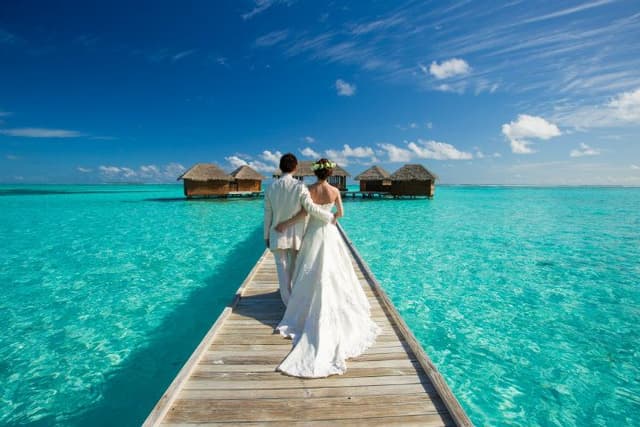
Does island size change the holiday?

Yes, more than the villa does. A small island can be walked end to end in ten minutes. It feels intimate and private, there is usually one main restaurant and one bar, and you will recognize everyone by day three. A large island has room for jungle paths, several restaurants, a proper spa, tennis courts and running tracks, and it absorbs a few hundred guests without feeling crowded. Soneva Fushi in Baa Atoll is a good example of the large, low density model, where the island is big enough that you cycle between things.

Small islands suit couples who want quiet and do not mind a fixed menu. Large islands suit families, longer stays and anyone who gets restless.

Adults only or family friendly?

This is a genuine fork, not a marketing label. Adults only resorts, of which Hurawalhi in Lhaviyani Atoll is one, set a minimum age, usually around 15 or 18. That means no kids club, no children in the pool and a quieter dining room. Family resorts run kids clubs, connecting villas, family pools and children's menus, and they are noticeably livelier.

The mismatch runs both ways. Couples booking a big family resort in school holidays are often surprised by the noise, and families booking a small romantic island find there is nothing for a seven year old to do. Check the age policy in writing before you book, because a resort that markets itself as romantic is not necessarily adults only.

All inclusive or half board?

Board basis is where the value sits. Half board typically covers breakfast and dinner, leaving lunch and all drinks separate. Full board adds lunch. All inclusive adds drinks and often more, but the definition varies enormously between resorts, from three buffet meals with house drinks at the simple end to a la carte dining across restaurants, minibar restocking, an excursion and some watersports at the top end.

The deciding factor is the island. On a remote island with a single restaurant and no way to eat elsewhere, all inclusive is almost always the sensible choice. On a large island with six restaurants, all inclusive can lock you into the ones included and make you pay again for the ones you actually wanted. Read the inclusions list line by line, and check specifically what happens with diving, spa treatments and the private beach dinner, which are almost never included.

Water villa or beach villa?

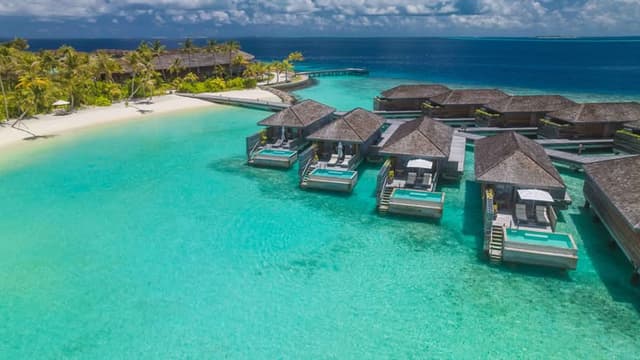
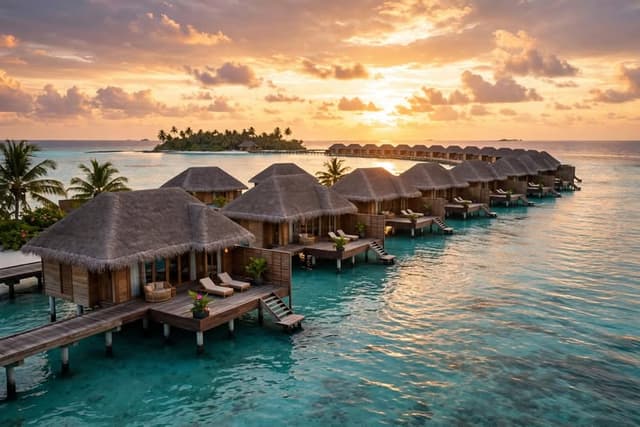
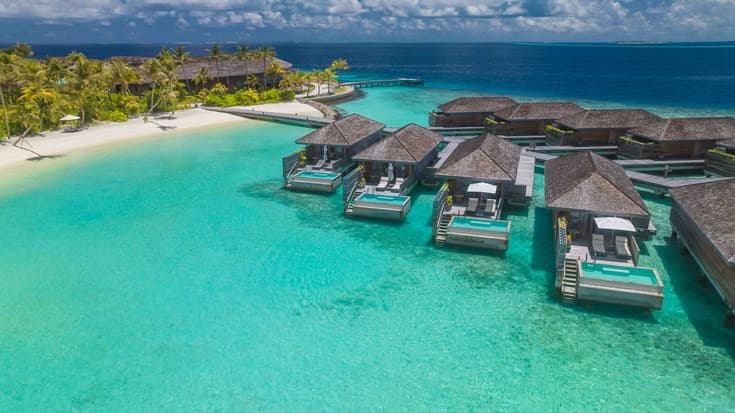
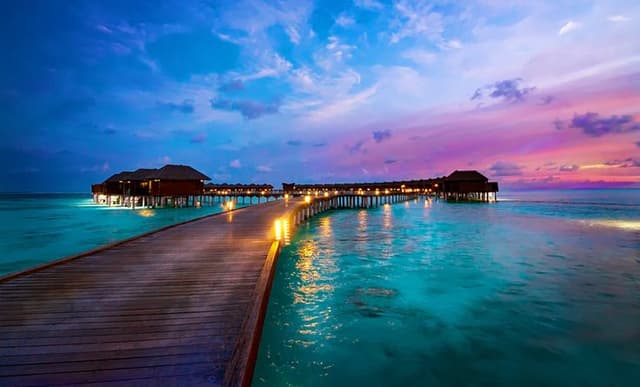
Overwater villas give you the lagoon view, the deck and the ladder into the water. Beach villas usually give more floor space, shade, a garden or plunge pool and a cooler room, and they are easier with luggage and children. Overwater villas can also sit in long rows with neighboring decks in clear view, so privacy depends on where in the row your villa sits, not on the villa category.

Also check whether the lagoon under the villa is swimmable at low tide. Some overwater rows sit over sand with very shallow water at certain times, which is fine to look at and useless to swim in.

What you wantWhat to look forWhich atoll tends to suit
A short trip or a late arrivalSpeedboat transfer running 24 hours, under 90 minutesNorth and South Male Atoll
Manta raysGuided snorkeling, permit access to protected sites, May to November stayBaa Atoll, and Ari Atoll cleaning stations
Whale sharksResort with its own dive center and a marine biologist on siteSouth Ari Atoll
Serious diving and few other boatsFull service dive center, channel dives, liveaboard accessSouthern atolls, including Laamu and Huvadhoo
A strong house reef off the beachRecent reef condition report, drop off close to shoreSouthern and outer atolls generally fared better in recent bleaching
Family space and varietyLarge island, kids club, several restaurants, connecting villasBaa, Lhaviyani and the larger Male atoll islands
Quiet and privacy for twoSmall island, low villa count, adults only policyAny atoll; island size matters more than location
Local culture and a lighter budget tierLicensed guesthouse on an inhabited islandMaafushi and the accessible local islands near Male

Do the diving credentials matter?

If you dive or want to learn, this is the difference between a good week and a wasted one. Look for a dive center run by a recognized operator, instructors teaching in your language, a nitrox fill station, and house reef dives that do not require a boat. Ask how many sites are within 30 minutes, because a resort with two nearby sites will show you the same two reefs repeatedly.

Marine life is seasonal and geographic. Hanifaru Bay in Baa Atoll, inside a UNESCO Biosphere Reserve, draws large manta aggregations from roughly May to November, peaking July to October, with access by permit through the ranger station, capped daily numbers and snorkeling only, since diving is banned during feeding events. South Ari Atoll has whale sharks close to year round. Six Senses Laamu, the only resort of its kind on remote Laamu Atoll in the south, is an example of a property that sells itself on reef and surf access rather than on villa photographs.

How do the price tiers actually differ?

Resorts here fall into broad tiers, and the differences are real but not always the ones people expect. At the accessible end you get simpler rooms, buffet dining, shared transfers and larger islands with more guests. In the middle you get better villa finishes, a choice of restaurants, private transfers and a proper spa. At the top you get low villa counts, butler service, several signature restaurants, standout design and the most remote locations.

What tier does not reliably buy you is a better reef. Some of the healthiest house reefs sit at mid tier resorts in outer atolls, and some very expensive islands sit on damaged reef. Judge the reef separately from the room. Guesthouses on local islands sit below all of this and offer a genuinely different trip: real village life, local food, cheaper diving, and none of the resort seclusion.

Resort island or local island?

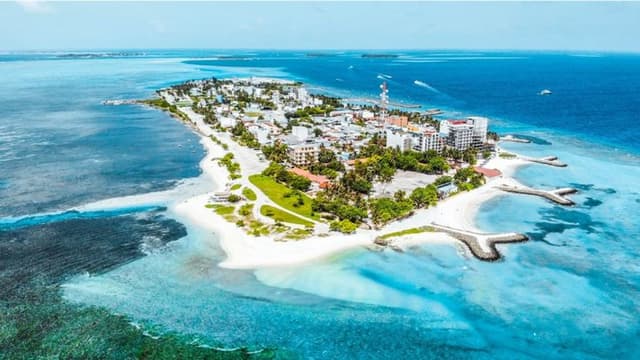
The Maldives is a Muslim country, and the rules differ by island type. On private resort islands, swimwear is normal and alcohol is served. On inhabited local islands, alcohol is not sold, visitors dress modestly away from the beach with shoulders and knees covered, and many islands designate a bikini beach for tourists. During Ramadan, local island restaurants may keep restricted daytime hours and it is polite not to eat or drink in public while people are fasting. Resort operations continue as normal.

Guesthouse tourism is now a substantial part of the industry rather than a fringe option, and plenty of travelers combine both, taking a few nights on a local island and a few on a resort. Practical details on entry are published by Maldives Immigration: a tourist visa is issued on arrival to all nationalities, and you need a machine readable passport, a return or onward ticket, a confirmed booking at a registered property and sufficient funds. Every traveler must also submit the free IMUGA Traveller Declaration within 96 hours of the flight, in both directions.

How to make the final call

  • Fix your arrival time first, then filter by transfer type. This removes half the shortlist immediately.
  • Ask the resort directly about current house reef condition and get a specific answer.
  • Confirm the age policy and the kids club situation in writing.
  • Read the board basis inclusions line by line, not the marketing summary.
  • Check where your exact villa sits, not just the villa category.
  • Book the December to April window several months ahead, as the best villas sell out early.

If you are choosing for a wedding trip specifically, the timing and villa logic shifts a little, which we cover separately in our guide to planning a Maldives honeymoon. For a straightforward island week we build a Maldives Holiday Package around your dates, and couples traveling outside a honeymoon usually start with the Maldives Couple Package. You can also browse our full range of Maldives tour packages or message us on WhatsApp and we will shortlist three islands that fit your dates, your transfer window and your reef expectations.

Frequently asked questions about choosing a Maldives resort

How do I choose the best resort in the Maldives?

Choose a Maldives resort in this order: transfer type and arrival time, house reef condition, island size, adults only or family policy, board basis, then villa type. Filtering by transfer first removes most unsuitable options straight away, because the atoll decides how you get there.

Which atoll is best for a Maldives resort stay?

No single atoll is best in the Maldives. North and South Male Atoll suit short trips and late arrivals because speedboats run 24 hours. Baa Atoll suits manta season, South Ari Atoll suits whale sharks, and the southern atolls suit divers and generally came through recent bleaching better.

Is all inclusive worth it at a Maldives resort?

All inclusive is worth it at a Maldives resort on a small or remote island with one restaurant, since there is nowhere else to eat. On a large island with several restaurants, half board often works better. Inclusions vary widely, so read the list rather than the label.

Are Maldives house reefs still good after the coral bleaching?

Maldives house reefs vary widely after the 2023 to 2024 bleaching event. Central atolls lost significant hard coral cover, while southern atolls such as Huvadhoo were far less affected. Reef health is now site specific, so ask the resort's dive center about that island's reef before booking.

Can you stay on a local island instead of a Maldives resort?

Yes. Licensed guesthouses on inhabited islands are a well established alternative to Maldives resorts, with close to a thousand operating. The rules differ: alcohol is not sold, modest dress is expected away from the beach, and swimwear is limited to designated bikini beaches.

Do you need a visa to stay at a Maldives resort?

No advance visa is required for the Maldives. A tourist visa is granted on arrival to all nationalities with a machine readable passport, a return or onward ticket, a confirmed booking at a registered property and sufficient funds. The free IMUGA Traveller Declaration must be submitted within 96 hours of your flight.

Tags
Maldives ResortsBest Resorts in MaldivesMaldives AtollsHouse ReefAll Inclusive MaldivesMaldives Travel GuideIsland Holidays
Share
G
Gomayu Team
Writer at Gomayu
Keep reading
Blog / Maldives

Best Resorts in Maldives: How to Choose the Right One

11 min read 27 Jul 2026

Most articles about the best resorts in Maldives give you a numbered list of ten hotel names and leave you exactly where you started. The problem is that the list goes out of date faster than you would think. Resorts change owners, rebrand and refurbish constantly, and a property that topped a list two years ago may not even carry the same name today. Kuramathi, one of the most familiar names in the country, now trades as Niva Kuramathi after a rebrand. So this guide does something more useful: it explains the eight things that actually separate one Maldives resort from another, so you can judge any property yourself, including ones that do not exist yet.

There are roughly 178 operating resorts spread across the atolls, plus close to a thousand licensed guesthouses on inhabited islands, and together they hold well over 60,000 beds. Resorts account for about two thirds of them. That is a lot of choice, and almost all of it looks identical in photographs. Here is what does not show up in the photographs.

Which atoll should you choose, and why transfer time decides it

Start here, because the atoll decides your transfer, and the transfer decides how much of your holiday you actually spend on the island. Resorts in North and South Male Atoll sit within a 30 to 90 minute speedboat ride of the airport, and speedboats run 24 hours. Islands further out need a seaplane, and seaplanes fly under visual flight rules, which means daylight only, with the last departures generally mid to late afternoon. The most distant atolls use a domestic flight to a regional airport followed by a short speedboat, and domestic flights operate well into the evening.

The practical rule: if your flight lands in Male after dark and you have booked a seaplane island, you will spend that night near the airport and travel the next morning. Short trips and evening arrivals point you toward the Male atolls. Longer trips and morning arrivals open up everything else.

How good is the house reef, and does it still matter?

The house reef is the single most under researched thing people book. A good house reef means living coral within swimming distance of the beach, reachable without a boat, with an accessible entry point and a drop off close in. When it is good, you snorkel three times a day for free. When it is poor, every snorkeling session becomes a scheduled boat trip.

Be honest about the state of the reefs. The 2023 to 2024 global marine heat event was the most severe on record and hit the Maldives hard. Studies of that event found hard coral cover in the central atolls fell by more than 40 percent on average, with the worst losses on branching corals, while southern atolls such as Huvadhoo showed strikingly little damage and in places gained coral cover. Recovery is uneven and site specific. That means the right question is not whether the Maldives has good reefs, but whether that island's reef is currently healthy. Ask the resort's dive center directly, look at recent guest photos rather than brochure images, and treat any resort that will not answer as a no.
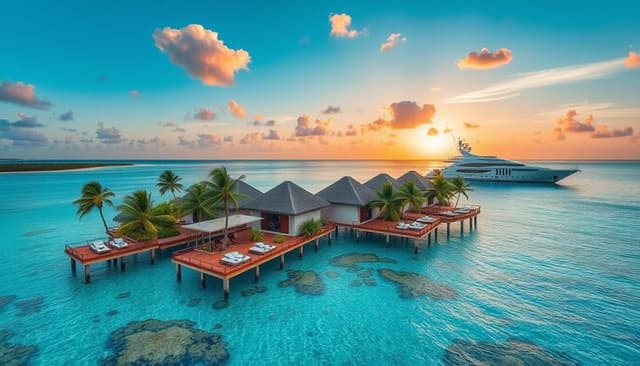
Does island size change the holiday?

Yes, more than the villa does. A small island can be walked end to end in ten minutes. It feels intimate and private, there is usually one main restaurant and one bar, and you will recognize everyone by day three. A large island has room for jungle paths, several restaurants, a proper spa, tennis courts and running tracks, and it absorbs a few hundred guests without feeling crowded. Soneva Fushi in Baa Atoll is a good example of the large, low density model, where the island is big enough that you cycle between things.

Small islands suit couples who want quiet and do not mind a fixed menu. Large islands suit families, longer stays and anyone who gets restless.

Adults only or family friendly?

This is a genuine fork, not a marketing label. Adults only resorts, of which Hurawalhi in Lhaviyani Atoll is one, set a minimum age, usually around 15 or 18. That means no kids club, no children in the pool and a quieter dining room. Family resorts run kids clubs, connecting villas, family pools and children's menus, and they are noticeably livelier.

The mismatch runs both ways. Couples booking a big family resort in school holidays are often surprised by the noise, and families booking a small romantic island find there is nothing for a seven year old to do. Check the age policy in writing before you book, because a resort that markets itself as romantic is not necessarily adults only.

All inclusive or half board?

Board basis is where the value sits. Half board typically covers breakfast and dinner, leaving lunch and all drinks separate. Full board adds lunch. All inclusive adds drinks and often more, but the definition varies enormously between resorts, from three buffet meals with house drinks at the simple end to a la carte dining across restaurants, minibar restocking, an excursion and some watersports at the top end.

The deciding factor is the island. On a remote island with a single restaurant and no way to eat elsewhere, all inclusive is almost always the sensible choice. On a large island with six restaurants, all inclusive can lock you into the ones included and make you pay again for the ones you actually wanted. Read the inclusions list line by line, and check specifically what happens with diving, spa treatments and the private beach dinner, which are almost never included.

Water villa or beach villa?

Overwater villas give you the lagoon view, the deck and the ladder into the water. Beach villas usually give more floor space, shade, a garden or plunge pool and a cooler room, and they are easier with luggage and children. Overwater villas can also sit in long rows with neighboring decks in clear view, so privacy depends on where in the row your villa sits, not on the villa category.

Also check whether the lagoon under the villa is swimmable at low tide. Some overwater rows sit over sand with very shallow water at certain times, which is fine to look at and useless to swim in.

What you wantWhat to look forWhich atoll tends to suit
A short trip or a late arrivalSpeedboat transfer running 24 hours, under 90 minutesNorth and South Male Atoll
Manta raysGuided snorkeling, permit access to protected sites, May to November stayBaa Atoll, and Ari Atoll cleaning stations
Whale sharksResort with its own dive center and a marine biologist on siteSouth Ari Atoll
Serious diving and few other boatsFull service dive center, channel dives, liveaboard accessSouthern atolls, including Laamu and Huvadhoo
A strong house reef off the beachRecent reef condition report, drop off close to shoreSouthern and outer atolls generally fared better in recent bleaching
Family space and varietyLarge island, kids club, several restaurants, connecting villasBaa, Lhaviyani and the larger Male atoll islands
Quiet and privacy for twoSmall island, low villa count, adults only policyAny atoll; island size matters more than location
Local culture and a lighter budget tierLicensed guesthouse on an inhabited islandMaafushi and the accessible local islands near Male

Do the diving credentials matter?

If you dive or want to learn, this is the difference between a good week and a wasted one. Look for a dive center run by a recognized operator, instructors teaching in your language, a nitrox fill station, and house reef dives that do not require a boat. Ask how many sites are within 30 minutes, because a resort with two nearby sites will show you the same two reefs repeatedly.

Marine life is seasonal and geographic. Hanifaru Bay in Baa Atoll, inside a UNESCO Biosphere Reserve, draws large manta aggregations from roughly May to November, peaking July to October, with access by permit through the ranger station, capped daily numbers and snorkeling only, since diving is banned during feeding events. South Ari Atoll has whale sharks close to year round. Six Senses Laamu, the only resort of its kind on remote Laamu Atoll in the south, is an example of a property that sells itself on reef and surf access rather than on villa photographs.

How do the price tiers actually differ?

Resorts here fall into broad tiers, and the differences are real but not always the ones people expect. At the accessible end you get simpler rooms, buffet dining, shared transfers and larger islands with more guests. In the middle you get better villa finishes, a choice of restaurants, private transfers and a proper spa. At the top you get low villa counts, butler service, several signature restaurants, standout design and the most remote locations.

What tier does not reliably buy you is a better reef. Some of the healthiest house reefs sit at mid tier resorts in outer atolls, and some very expensive islands sit on damaged reef. Judge the reef separately from the room. Guesthouses on local islands sit below all of this and offer a genuinely different trip: real village life, local food, cheaper diving, and none of the resort seclusion.

Resort island or local island?

The Maldives is a Muslim country, and the rules differ by island type. On private resort islands, swimwear is normal and alcohol is served. On inhabited local islands, alcohol is not sold, visitors dress modestly away from the beach with shoulders and knees covered, and many islands designate a bikini beach for tourists. During Ramadan, local island restaurants may keep restricted daytime hours and it is polite not to eat or drink in public while people are fasting. Resort operations continue as normal.

Guesthouse tourism is now a substantial part of the industry rather than a fringe option, and plenty of travelers combine both, taking a few nights on a local island and a few on a resort. Practical details on entry are published by Maldives Immigration: a tourist visa is issued on arrival to all nationalities, and you need a machine readable passport, a return or onward ticket, a confirmed booking at a registered property and sufficient funds. Every traveler must also submit the free IMUGA Traveller Declaration within 96 hours of the flight, in both directions.

How to make the final call

  • Fix your arrival time first, then filter by transfer type. This removes half the shortlist immediately.
  • Ask the resort directly about current house reef condition and get a specific answer.
  • Confirm the age policy and the kids club situation in writing.
  • Read the board basis inclusions line by line, not the marketing summary.
  • Check where your exact villa sits, not just the villa category.
  • Book the December to April window several months ahead, as the best villas sell out early.

If you are choosing for a wedding trip specifically, the timing and villa logic shifts a little, which we cover separately in our guide to planning a Maldives honeymoon. For a straightforward island week we build a Maldives Holiday Package around your dates, and couples traveling outside a honeymoon usually start with the Maldives Couple Package. You can also browse our full range of Maldives tour packages or message us on WhatsApp and we will shortlist three islands that fit your dates, your transfer window and your reef expectations.

Frequently asked questions about choosing a Maldives resort

How do I choose the best resort in the Maldives?

Choose a Maldives resort in this order: transfer type and arrival time, house reef condition, island size, adults only or family policy, board basis, then villa type. Filtering by transfer first removes most unsuitable options straight away, because the atoll decides how you get there.

Which atoll is best for a Maldives resort stay?

No single atoll is best in the Maldives. North and South Male Atoll suit short trips and late arrivals because speedboats run 24 hours. Baa Atoll suits manta season, South Ari Atoll suits whale sharks, and the southern atolls suit divers and generally came through recent bleaching better.

Is all inclusive worth it at a Maldives resort?

All inclusive is worth it at a Maldives resort on a small or remote island with one restaurant, since there is nowhere else to eat. On a large island with several restaurants, half board often works better. Inclusions vary widely, so read the list rather than the label.

Are Maldives house reefs still good after the coral bleaching?

Maldives house reefs vary widely after the 2023 to 2024 bleaching event. Central atolls lost significant hard coral cover, while southern atolls such as Huvadhoo were far less affected. Reef health is now site specific, so ask the resort's dive center about that island's reef before booking.

Can you stay on a local island instead of a Maldives resort?

Yes. Licensed guesthouses on inhabited islands are a well established alternative to Maldives resorts, with close to a thousand operating. The rules differ: alcohol is not sold, modest dress is expected away from the beach, and swimwear is limited to designated bikini beaches.

Do you need a visa to stay at a Maldives resort?

No advance visa is required for the Maldives. A tourist visa is granted on arrival to all nationalities with a machine readable passport, a return or onward ticket, a confirmed booking at a registered property and sufficient funds. The free IMUGA Traveller Declaration must be submitted within 96 hours of your flight.

Tags
Maldives ResortsBest Resorts in MaldivesMaldives AtollsHouse ReefAll Inclusive MaldivesMaldives Travel GuideIsland Holidays
Share
G
Gomayu Team
Writer at Gomayu
Keep reading