





































































































+977-9768558250
Search Tours or Places
Blog / Vietnam

Things to Do in Hoi An: Ancient Town, Beaches and Tailors

34 min read 05 Nov 2026 · Updated 16 Nov 2026
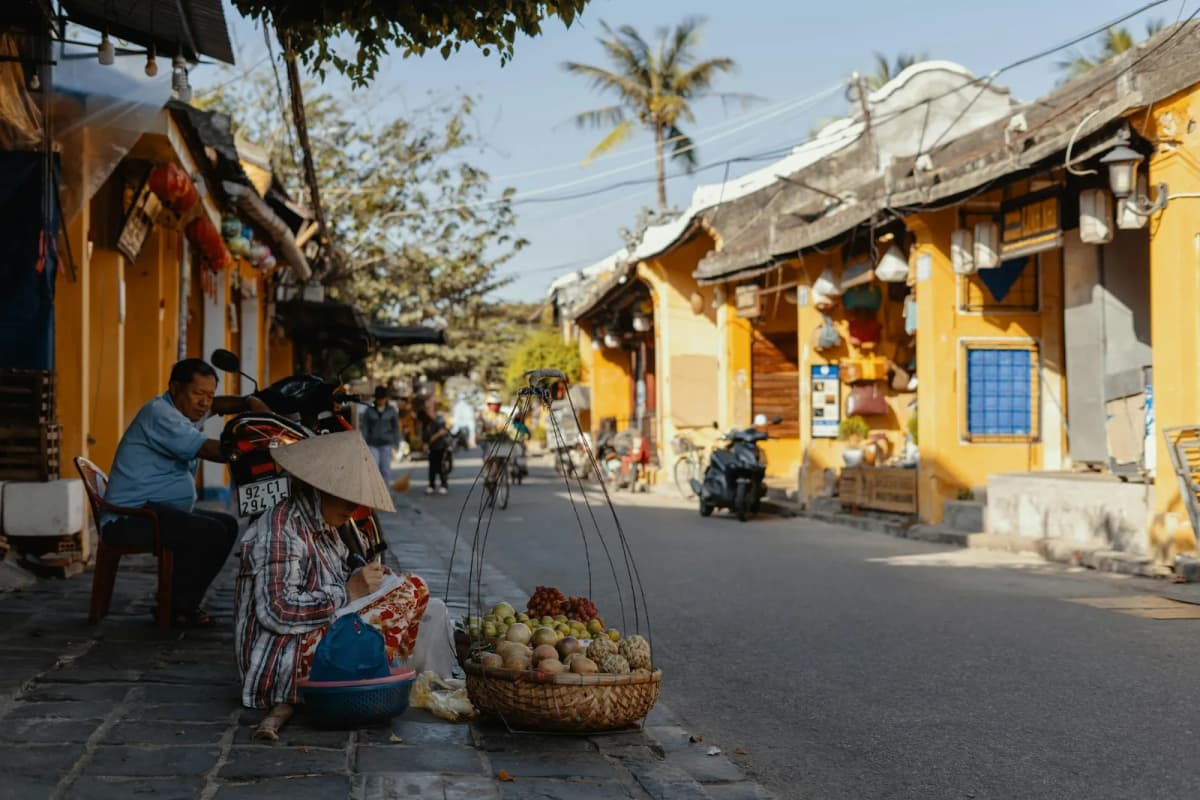
Street vendor with fruit baskets beside yellow shophouses in Hoi An Ancient Town

Short answer: The best things to do in Hoi An are walking the Ancient Town early in the morning, crossing the restored Japanese Covered Bridge, stepping inside the old merchant houses and assembly halls, taking a boat on the Thu Bon river at dusk, eating cao lau and banh mi, getting clothes tailored, cycling out to the vegetable and craft villages, and spending an afternoon at An Bang beach. Add a day trip to the My Son temple ruins, the Marble Mountains, Ba Na Hills or Hue, and avoid October and November if you can, because that is central Vietnam's flood peak.

Hoi An is small. The UNESCO-listed core is a few blocks of yellow shophouses between the river and the market, and you can cross it on foot in a short, easy walk. That is exactly why people stay longer than planned. The town rewards slow days: a coffee before the tour groups arrive, a fitting at the tailor, a bicycle ride through rice fields, a swim, then lanterns coming on along the water. This guide covers how the Ancient Town ticket works, whether the famous bridge is open, which beach to pick, how to get tailoring right, which day trips are worth it, and the months to avoid. There are no prices here because they change too often; we tell you where a ticket is needed and where to check.

If Hoi An is one stop on a bigger trip, our complete Vietnam travel guide covers money, transport and planning for the whole country.

What are the best things to do in Hoi An?

The essentials are the Ancient Town on foot, the Japanese Covered Bridge, the old houses and assembly halls, a river boat at dusk, Hoi An's own dishes, tailoring, the countryside villages and the beach. Most visitors can cover the town itself in two full days and use a third or fourth day for a beach afternoon or a trip out to My Son or the Marble Mountains.

Here is the full list at a glance, then each item in more detail.

Thing to doWhereBest time of dayTicket needed?
Walk the Ancient TownTran Phu, Nguyen Thai Hoc and Bach Dang streetsEarly morning, then again after darkYes, the Ancient Town ticket
Cross the Japanese Covered BridgeWest end of Tran Phu streetBefore 9am for photosYes, it is one of the two "iconic" sites on the ticket
Old houses and assembly hallsThroughout the Ancient TownMid morningYes, choose sites with your ticket
Boat on the Thu Bon riverBach Dang riversideDuskPaid separately to the boat operator
Full moon lantern nightOld town and both river banksEvening of the 14th lunar dayNo ticket to walk the streets
Eat cao lau, banh mi, mi QuangMarket, street stalls, family restaurantsLunch and eveningNo
Cooking class and farm visitTra Que vegetable villageMorningBooked with a class
Cycle to craft villagesThanh Ha pottery, Kim Bong carpentryMorning or late afternoonVaries by village
Basket boats in the coconut forestBay Mau, Cam ThanhMorningPaid to the operator
Get clothes tailoredShops across townOrder on day oneNo
Beach afternoonAn Bang beachAfternoonNo
Cham Islands boat tripFrom Cua Dai portFull day, March to AugustBoat transfer needed; check locally
Traditional art performanceHoai River SquareSet show timesCheck show times and entry locally

1. Walk the Ancient Town before the crowds

Lantern lit shopfronts, cyclos and walkers on a riverside street in Hoi An Ancient Town

The single best thing to do in Hoi An is to walk the old streets at around 7am, when shopkeepers are sweeping their steps and the light is soft on the yellow walls. By mid morning the main streets fill with tour groups; by late afternoon the heat eases and the lanterns start to glow.

UNESCO describes Hoi An as "an exceptionally well-preserved example of a small-scale trading port" active from the 15th to the 19th centuries, with a complex of 1,107 timber frame buildings (UNESCO World Heritage listing). The influences are mainly Chinese and Japanese, with later European touches, and you see all three in a single block: carved wooden shopfronts, tiled roofs, family altars visible through open doors and French-era shutters. The town was inscribed as a World Heritage Site in 1999.

Walk Tran Phu, then Nguyen Thai Hoc, then the riverside Bach Dang street, and cut through the little lanes between them. Look up as well as in: the roof tiles, the "eyes" carved above some doorways and the hanging lanterns all reward attention. The core is a pedestrian zone for much of the day, which is a big part of why it feels so calm compared with Hanoi or Da Nang.

2. Cross the Japanese Covered Bridge

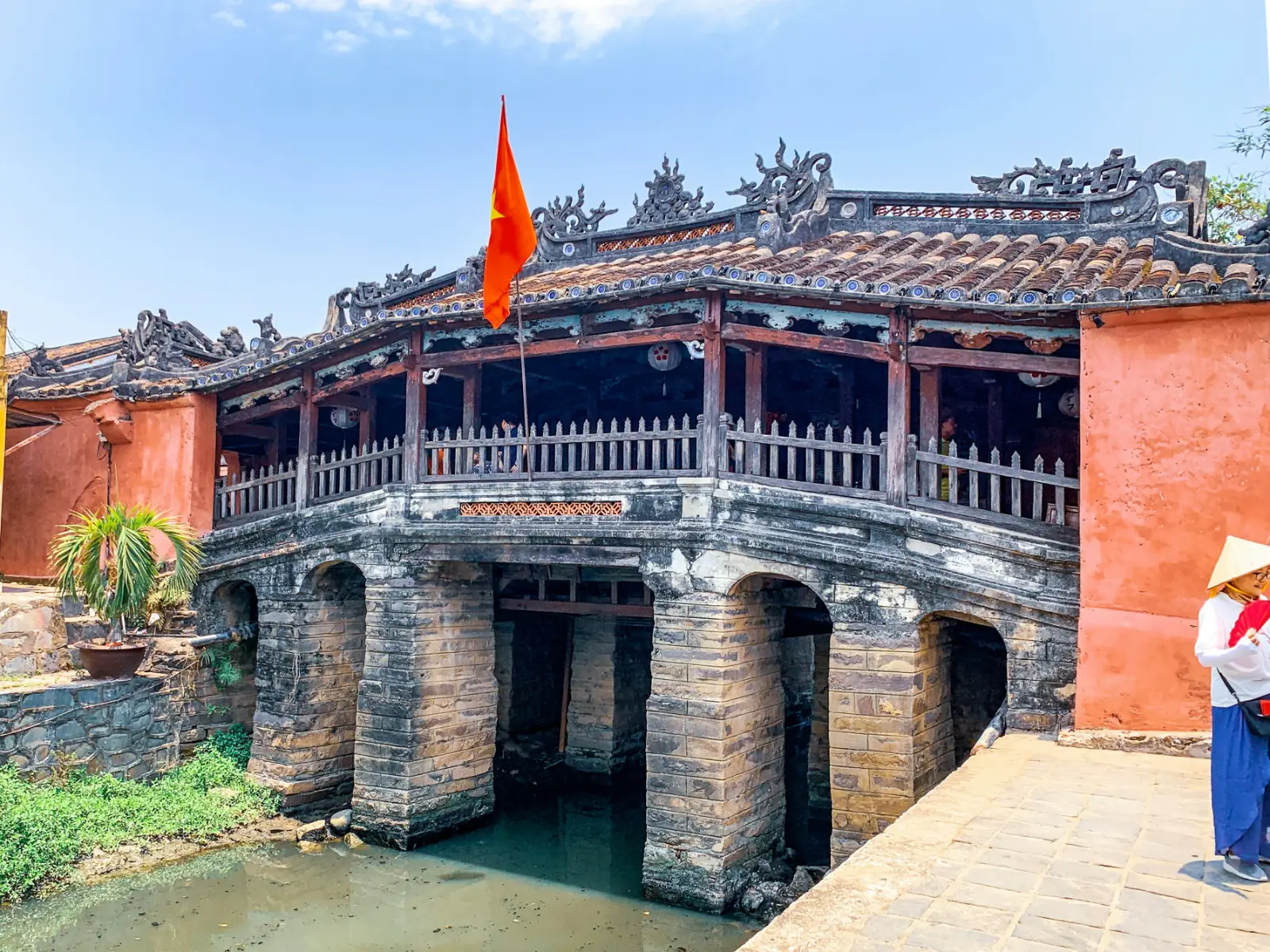
The Japanese Covered Bridge, called Chua Cau in Vietnamese, is the town's symbol and its most photographed spot. It reopened in August 2024 after a 19-month restoration and is open to visitors again. We cover its status, history and how to visit it in its own section below.

3. Step inside the old houses and assembly halls

The Ancient Town ticket is your key to the interiors, and the interiors are where Hoi An's trading history makes sense. Chinese merchant communities built assembly halls for their home provinces; families built narrow tube houses with a shop at the front, living space behind and a courtyard to let in light and air.

Good picks include the Phuc Kien (Fujian) Assembly Hall, a family old house such as Tan Ky, and Quan Cong Temple, which the city lists as one of the two "iconic" sites on the ticket alongside the bridge. The museums, such as the folk culture and history displays, come with the higher ticket option. Pick sites that interest you rather than trying to tick them all; two or three well-chosen interiors are better than eight rushed ones.

4. Take a boat on the Thu Bon river at dusk
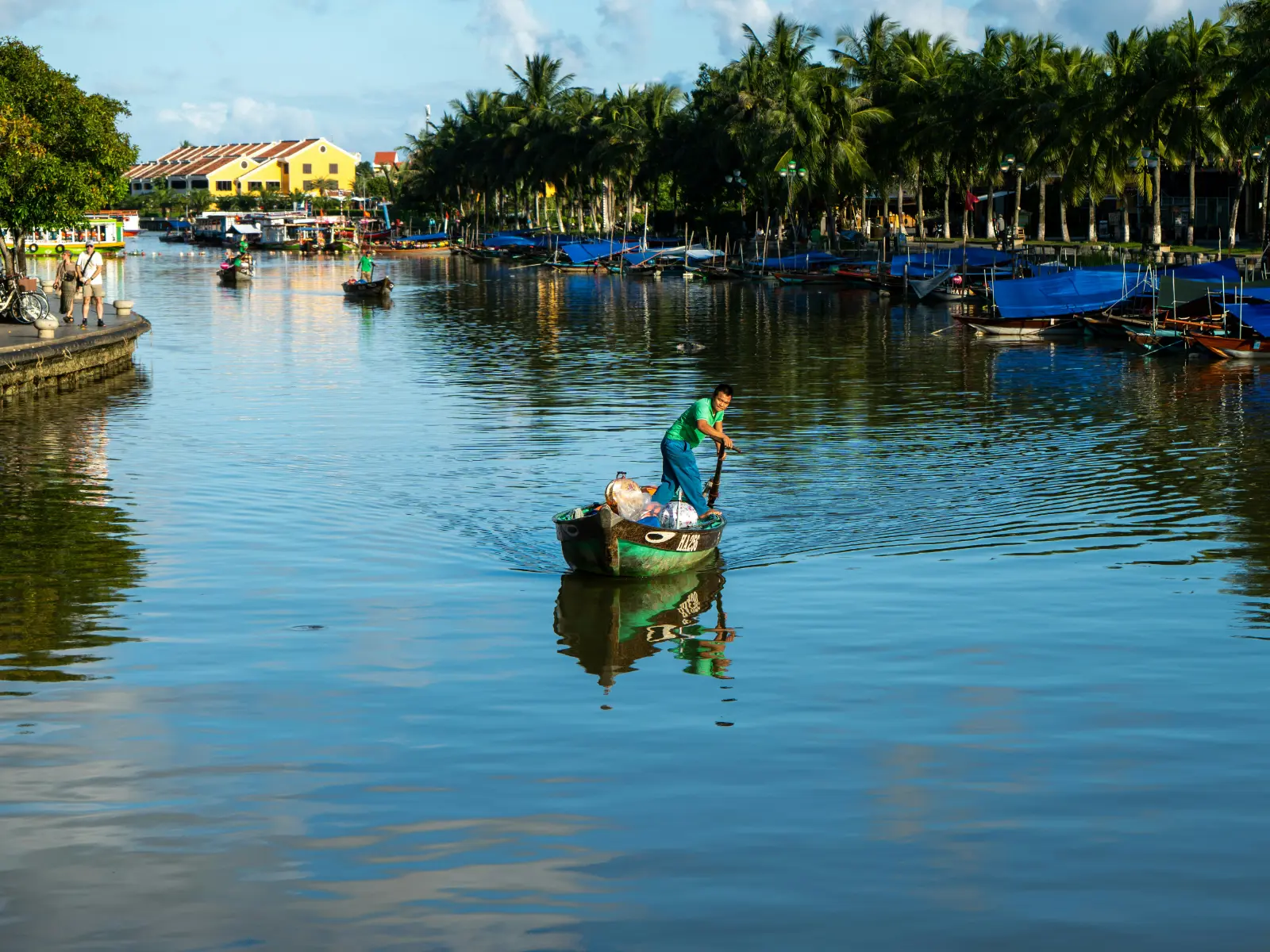
Boatman rowing a small wooden boat across the calm Thu Bon river in Hoi An

Small wooden boats wait along the Bach Dang riverside, and a short trip as the sun goes down is one of the gentlest ways to see the town. From the water you see the lit facades, the An Hoi islet opposite and the evening market stalls coming to life. Agree the length of the trip and the price with the boat owner before you step in.

The river is also why Hoi An exists. The Thu Bon carried goods down from the hills to the sea, and the port drew merchants from China, Japan and beyond. The same river is the reason the town floods in a bad wet season, which we cover in the best time section.

5. Catch a full moon lantern night

Rows of colourful silk lanterns glowing after dark in Hoi An Old Town

On the 14th day of every lunar month, the night before the full moon, the old town dims its electric lights and lets the silk lanterns and river candles take over (Vietnam Airlines, Hoi An lantern festival). It happens about once a month, not once a year, so there is a fair chance one falls inside a stay of a few nights.

We keep this short here because the event has its own detailed guide: dates, times, where to stand and the honest truth about the floating lanterns are all in our Hoi An lantern festival guide. Even on an ordinary evening, the lanterns along the streets come on at dusk, so every night in Hoi An has some of that glow.

6. Eat Hoi An's own dishes

Hoi An has dishes you will not find done the same way elsewhere in Vietnam. The famous one is cao lau: chewy, thick noodles with sliced pork, herbs, crispy crackers and very little broth. Then there is the Hoi An banh mi, a crusty baguette packed with fillings; white rose dumplings, delicate steamed parcels; and mi Quang, the turmeric-tinted noodle dish of the wider Quang region.

The central market by the river is good for a first taste, and family-run places in the side streets often beat the riverside restaurants. For a wider food plan across the country, see our guide to what to eat in Vietnam.

For Nepali and Hindu travellers: cao lau and many banh mi fillings are pork based, and beef appears in many noodle soups. Vegetarian restaurants (com chay) exist in Hoi An, and many Buddhist families in Vietnam eat vegetarian on certain lunar days, so meat-free food is familiar to local cooks. Two useful phrases: "toi an chay" (I eat vegetarian) and "khong thit bo" (no beef). Showing them written on your phone works well at busy stalls.

7. Take a cooking class at Tra Que vegetable village

Tra Que is a farming village between the old town and the beach, known for the herbs and greens that end up in Hoi An's food. Da Nang's official tourism portal describes visitors spending "a few hours becoming farmers", learning traditional growing methods and then cooking dishes such as banh xeo, the crispy rice pancake (Da Nang tourism portal, craft villages feature). It is a good half day for families with children, and a natural way to learn which herb goes with which dish before you eat your way around town.

8. Cycle to the craft villages

Hoi An is flat, and most hotels lend or rent bicycles. Two craft villages make easy rides. Thanh Ha pottery village, which the city portal says has "a history of more than 500 years", still shapes clay by hand before firing, and visitors can try making a piece themselves. Kim Bong carpentry village, across the river, keeps wood carving alive through generations of craftsmen, and visitors can try simple steps such as sanding or joinery.

A ride out through the rice fields in the late afternoon, with water buffalo in the paddies and the light going gold, is as memorable as anything inside the old town. Wear a hat, carry water and keep to the right on shared roads.

9. Ride a basket boat in the Bay Mau coconut forest
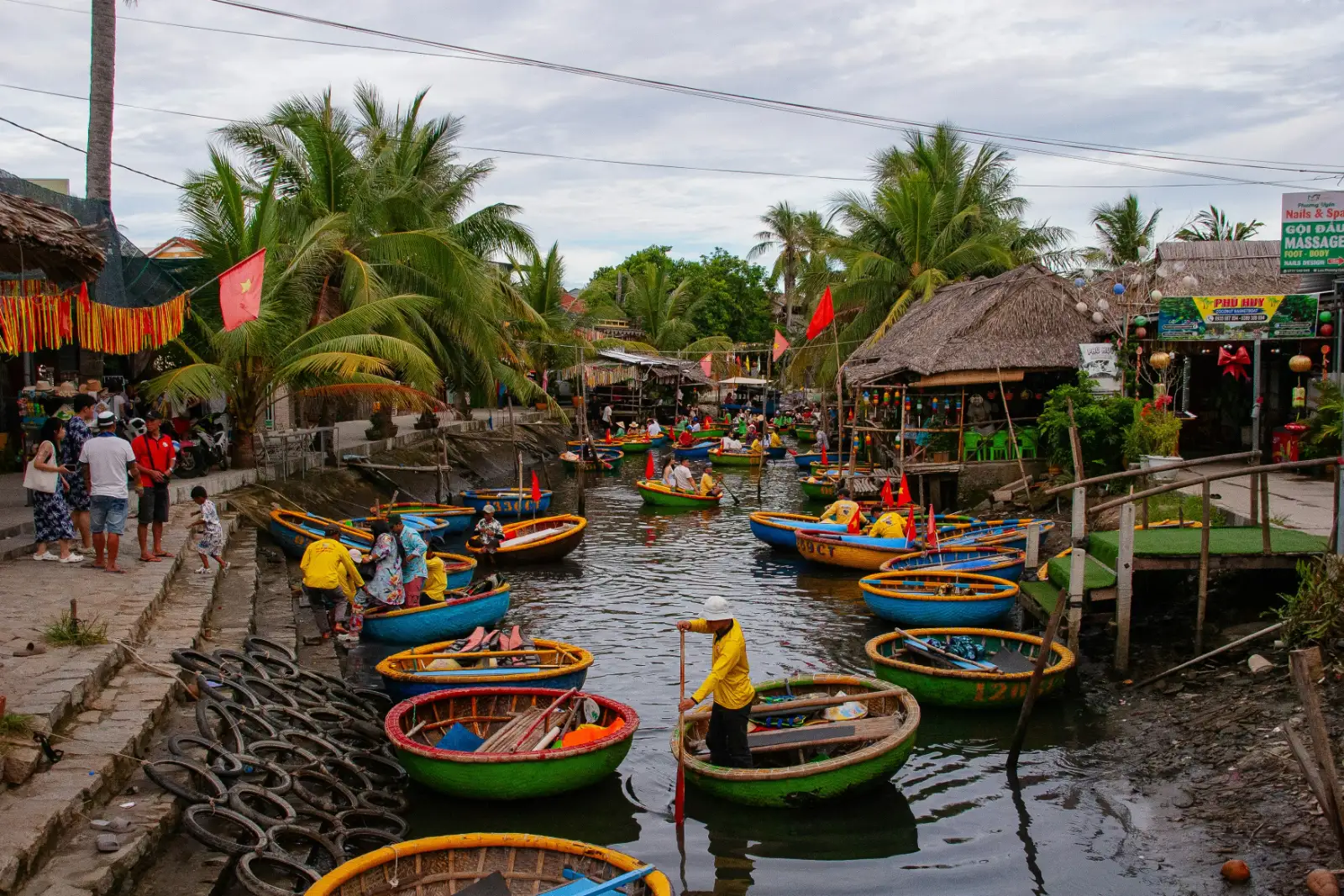
Round bamboo basket boats and paddlers on a palm lined waterway in Cam Thanh, Hoi An

In the waterways of Cam Thanh, round bamboo basket boats glide through the nipa palms of the Bay Mau coconut forest. The tourism portal notes that local fishermen also demonstrate traditional fishing methods. It can be lively and touristy at busy times, but children usually enjoy it. Go in the morning for a calmer trip. The village also has a bamboo workshop where you can make a small piece with an artisan.

10. Get clothes tailored

Hoi An's tailors are famous for turning around made-to-measure suits, dresses, shirts and coats during a short stay. It is one of the most popular things to do in Hoi An, and also where visitors most often feel disappointed, usually because they ordered too late or skipped fittings. Our full checklist is in the tailoring section below.

11. Spend an afternoon at An Bang beach

Hoi An is not only an old town; the sea is a short ride away. An Bang is the beach most visitors choose for a relaxed afternoon with a swim and dinner by the water. The comparison with Cua Dai, and the honest picture on erosion, is in the beach section below.

12. Take a boat to the Cham Islands

The Cham Islands (Cu Lao Cham) sit offshore from Hoi An and form the core of the Cu Lao Cham and Hoi An World Biosphere Reserve, recognised by UNESCO on 26 May 2009. Da Nang's tourism portal says a high-speed canoe takes about 15 to 20 minutes from Cua Dai port, and that the best time to visit is March to August, when seas are calm. From September to February, rough seas and storms can disrupt boats, so services "may not operate consistently" (Da Nang tourism portal, Cu Lao Cham). On the islands you can swim, snorkel with a life jacket, visit the marine conservation centre and Tan Hiep market.

13. Watch a traditional performance or a tea ceremony

Hoi An runs a regular traditional art programme with folk songs, dances and traditional instruments. From 7 March 2026 the venue moved from Bach Dang street to Hoai River Square, according to the city's tourism portal, and the Japanese Cultural Exhibition House on Nguyen Thi Minh Khai street hosts daily Japanese tea ceremony demonstrations. Show times change, so check at your hotel or the ticket booth on the day.

How does the Ancient Town work for visitors?
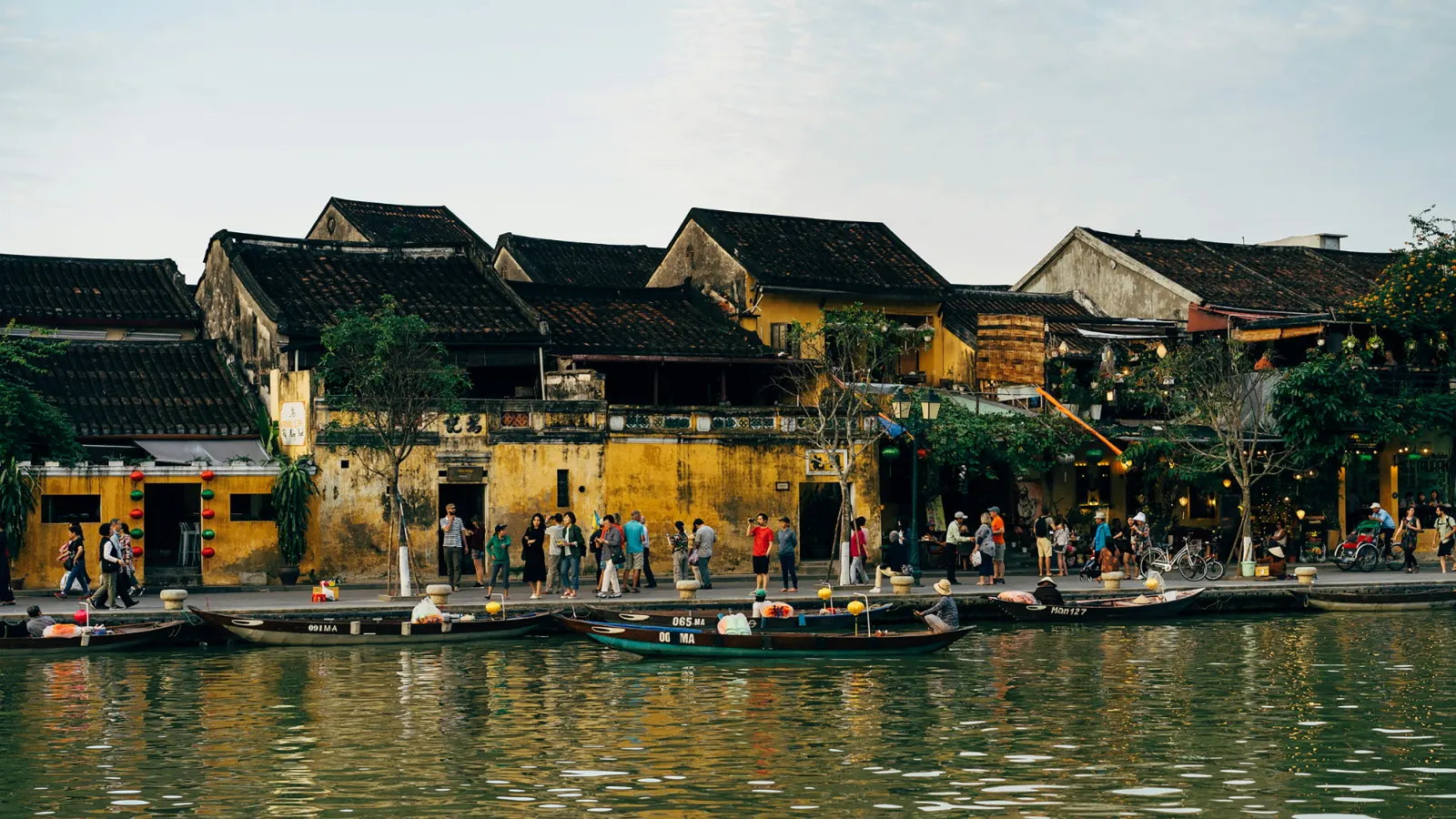
Yellow shophouses and moored wooden boats along the Hoi An riverside on a clear day

Visitors need a Hoi An Ancient Town ticket to enter the heritage area, and the ticket also lets you into a set number of heritage sites. You buy it once and keep the stub, because staff can ask to see it as you enter and leave the old town. The money goes back into conserving the buildings.

The rule that every visitor to the ancient town needs a ticket dates from 15 May 2023, when Hoi An began applying it to all domestic and international visitors (VietNamNet, April 2023). Before that, many visitors assumed walking the streets was free and only the houses charged entry, which caused confusion that you still read about in old blog posts.

What the ticket covers (as published in March 2026)

Da Nang's official tourism portal describes two ticket types (Hoi An Ancient Town entrance tickets 2026):

Ticket typeWhat it includes
Basic ticketThe shared Ancient Town space, one iconic site (the Japanese Covered Bridge or Quan Cong Temple) and two more cultural sites from the heritage system
Extended ticketThe Ancient Town, one iconic site, Hoi An's museum system and three more cultural sites
ValidityBought once and usable through your stay for up to three days
GroupsGroups of eight or more are offered a guide by the management board at no extra charge

We do not list ticket prices because they are set by the city and can change. Checked: 5 Nov 2026, Da Nang tourism portal (Danang Tourism Promotion Center), article dated March 2026.

Where to buy and how the checks work

  • Ticket points and kiosks: tickets are sold on site in the old town. The tourism portal's 2026 ticket page does not list booth locations, so ask your hotel for the nearest ticket point. On 9 February 2026 the Hoi An World Cultural Heritage Preservation Center launched smart ticketing kiosks with several languages, international card payment and on-site printing, plus QR-code audio guides along walking routes (Startup Da Nang report).
  • Keep the stub: the portal advises keeping your ticket for "entering or exiting the ancient town". Each heritage site you enter uses up one of the site visits on your ticket.
  • Pedestrian hours: the portal gives the Ancient Town's pedestrian-zone hours as 9am to 9:30pm in summer and 9am to 9pm in winter, with Phan Chau Trinh street pedestrianised in the evening. Outside those hours, expect some motorbikes in the lanes.
  • Festivals and holidays: arrangements can change around Tet and on special nights. Ask at your hotel or the ticket booth when you arrive.

Tips that make the ticket worth it

  • Use the bridge or Quan Cong Temple as your iconic site, then pick one assembly hall and one old house for contrast.
  • Visit interiors in mid morning when they are open and before the midday heat; walk the streets early and late.
  • Cover shoulders and knees for temples and assembly halls, which are active places of worship.
  • Ask before photographing people at altars.
  • If you plan several days in town, one ticket bought at the start should cover your stay, but keep it dry and safe.

Is Hoi An now part of Da Nang?

Yes, administratively. Under Vietnam's 2025 administrative reform, the former Quang Nam province merged into Da Nang city on 1 July 2025, and Hoi An now sits inside the enlarged Da Nang (VietnamPlus). The old town area is now organised into wards with names such as Hoi An, Hoi An Dong and Hoi An Tay. For visitors nothing practical changes: the same town, the same drive from Da Nang airport. You may still see "Quang Nam" on older hotel addresses, maps and booking confirmations, which is normal.


Explore Vietnam tour packages
View all →

Is the Japanese Covered Bridge open?

The Japanese Covered Bridge in Hoi An with its tiled roof and stone arches

Yes. The Japanese Covered Bridge reopened in early August 2024 after a restoration of about 19 months, and it is open to visitors as one of the two "iconic" sites on the Ancient Town ticket. Checked: 5 Nov 2026, against the Hoi An heritage preservation centre's restoration report and the Da Nang tourism portal's 2026 ticket page.

The restoration, in dates

DateWhat happened
28 December 2022Restoration work began after the walls, roof tiles and lime mortar had badly deteriorated
2023 to July 2024Walls, roof decorations and wooden structure restored; the site was not sealed off, so residents and visitors could watch the work
End of July 2024Restoration completed
3 August 2024Inauguration ceremony, held during the Hoi An and Japan cultural exchange programme
March 2026Listed by the Da Nang tourism portal as one of two iconic sites on the Ancient Town ticket

Hoi An's World Cultural Heritage Preservation Center reports that work began on 28 December 2022, finished at the end of July 2024 and was inaugurated on 3 August 2024. Wooden parts kept their original colour, and a large share of the original material was preserved and reused, including about 60% of the wood and 30% of the tiles (Hoi An heritage centre, restoration results). The brighter, cleaner look after restoration did spark debate in Vietnam; Phan Thai Binh, then a vice chairman of the Quang Nam provincial People's Committee, said that "differing opinions about the restoration's outcome are normal" (VietNamNet, August 2024). If you have seen older photos with a darker, weathered roof, expect it to look fresher today.

Why the bridge matters

The bridge spans a small creek at the western end of Tran Phu street and is traditionally credited to the Japanese merchant community, which is how it got its English name. Vietnamese reports describe it as funded by Japanese merchants about 400 years ago; UNESCO's listing refers to "a fine wooden Japanese bridge, with a pagoda on it". The Vietnamese name, Chua Cau, means "pagoda bridge", because a small temple is built into the bridge. That temple is dedicated to Bac De Tran Vu, a deity believed to control storms and floods, which feels fitting for a riverside town that floods.

How to visit the bridge well

  • Go early: before 9am you can photograph it without a crowd on the steps.
  • Use your ticket here: choose the bridge as your iconic site if it is the one place you want to step inside.
  • See it from outside too: the bridge looks best from the street and the creek bank, so walk around it rather than only through it.
  • Be patient on lantern nights: it is the most crowded spot in town on the 14th lunar night.
  • Respect the shrine: it is a working temple, so keep voices low inside.

Which beach is best near Hoi An?

Aerial view of golden sand, waves and palm trees on the coast near Hoi An

For most visitors, An Bang is the better beach near Hoi An for a relaxed afternoon, with places to eat and loungers along the sand. Cua Dai, once the town's main beach, has been badly hit by erosion for years and is now better known as the port for boats to the Cham Islands. Both have been affected by erosion, so check conditions when you arrive.

An Bang beach vs Cua Dai beach

What to compareAn Bang beachCua Dai beach
LocationNorth of the old town, an easy bicycle or taxi rideEast of the old town, near the Thu Bon river mouth
FeelRelaxed, with beach restaurants and loungersQuieter, with resorts on the southern stretch
ErosionNamed in December 2025 reporting among Hoi An beaches facing serious erosionErosion dominant since about 2000; parts cut back 3 to 5 metres in late 2025
Main use for visitorsSwimming in calm months, sunset dinnersBoats to the Cham Islands from Cua Dai port
Best monthsMarch to August, when seas are calmerMarch to August for island boats

What the erosion facts say

A study in the Vietnam Journal of Marine Science and Technology found that at Cua Dai "from the year of 2000 to present the rate of erosion was larger than that of accretion", and linked this to hard coastal structures interacting with waves and to dredging at the Thu Bon river mouth, which reduced the sand carried along the shore (Le Dinh Mau and colleagues, Vietnam Journal of Marine Science and Technology).

In late 2025 the problem got worse. Reporting in December 2025 said high tides and strong waves in early November damaged temporary embankments at Cua Dai, that parts of the beach had been cut back by 3 to 5 metres, and that Da Nang's Civil Defence Department counted nearly 3.5 km of eroded coastline in the Hoi An Dong and Hoi An Tay wards. The same report listed An Bang among Hoi An's best-known beaches facing serious erosion (Dan Tri International, December 2025). Beach widths change from season to season, so the beach you find may look different from photos online.

Is An Bang beach good for swimming?

An Bang is good for swimming in the calmer months, roughly March to August, when the East Sea is usually gentler. From September to February, waves and currents can be strong, and storms are possible. Swim only where flags and any lifeguards say it is safe, stay within your depth, and keep a close eye on children. If the sea looks rough, enjoy the sand and save the swim for another day.

If you want a wider choice of coast across the country, our guide to the best beaches in Vietnam compares the main options from north to south.

How do you get clothes tailored in Hoi An?

Order on your first day, bring a photo or a garment to copy, choose the fabric by touch, and insist on at least two fittings before you collect. Simple pieces such as shirts, linen trousers and summer dresses are the easiest wins; structured suits and winter coats need more time and more fittings to get right.

Tailoring is part of Hoi An's identity, and shops line many streets in and around the old town. Quality varies widely, and the difference between a great result and a disappointing one usually comes down to time, clear instructions and fittings, not luck. We do not quote prices: they depend on fabric, garment and shop, and they change. Compare at least two or three shops before you commit.

Tailor tips checklist

  • Order early: visit a tailor on day one of your stay, so there is time for fittings and changes before you leave.
  • Bring a reference: a well-fitting garment you own is the best guide; photos from a website or magazine work too.
  • Feel the fabric: ask what it is made of. Pure wool, linen, cotton and silk behave differently from blends; if a fabric feels synthetic, ask directly.
  • Be precise: say exactly where you want buttons, pockets, lining, collar shape and length. Write it down or sketch it.
  • Get it in writing: ask for a receipt that lists each garment, the fabric, the agreed price, any deposit and the collection date and time.
  • Insist on fittings: plan for at least two. Check the shoulders, sleeve length, the seat of trousers and how a jacket sits when you sit down.
  • Inspect the finish: look at seams, button stitching, pattern matching at the seams and the inside lining before you pay the balance.
  • Be wary of commission trips: if a driver or stranger insists on taking you to a particular shop, it may be because they earn a commission. Choose your own.
  • Plan your luggage: heavy coats and suits add weight. Check your airline baggage allowance, or ask the shop about sending items home.
  • Do not order on your last day: rushed work is where most problems happen.

How long does tailoring take in Hoi An?

It depends on the garment and how busy the shop is. Simple items can often be made quickly, but the realistic plan is to allow several days in town so there is time for the first fitting, alterations and a final check. If you only have one night in Hoi An, buy ready-made or order something simple rather than a suit.

A note for Nepali travellers: wedding season and Dashain gifts are a common reason to tailor abroad. If you want a coat, a waistcoat or a kurta-style shirt made, bring a version that already fits you well to copy, and explain clearly that you want the same fit. Shoes and leather bags can also be made to order in Hoi An, but give them extra time.

Which day trips can you take from Hoi An?

The four classic day trips from Hoi An are the My Son temple ruins (the most rewarding for history), the Marble Mountains (an easy half day on the way to Da Nang), Ba Na Hills with its Golden Bridge (a full theme-park day), and Hue (a long day, better as an overnight). Pick by interest: history, views, family fun or imperial heritage.

Day tripWhat it isTime to allowBest for
My Son SanctuaryUNESCO-listed Cham Hindu temple ruins in a jungle valleyHalf day, start earlyHistory, photography, Hindu travellers
Marble MountainsFive limestone peaks with caves and pagodas, near Da NangAt least two hours on siteEasy climbs, caves, a stop on the way to Da Nang
Ba Na HillsMountain resort at 1,487 m with record cable cars and the Golden BridgeFull dayFamilies, cooler air, photos
HueFormer imperial capital with a citadel and royal tombsLong day, or one nightHistory lovers
Cham IslandsMarine biosphere reserve offshoreFull day, March to AugustSnorkelling, quiet beaches

My Son Sanctuary

Crumbling Cham brick tower and temple ruins among jungle at My Son Sanctuary near Hoi An

My Son is a group of Cham temple ruins in a ring of hills inland from Hoi An, and the most rewarding day trip for anyone interested in history. UNESCO describes tower temples built between the 4th and 13th centuries by the Champa kingdom, mainly dedicated to Shiva, with brick towers decorated with sandstone reliefs and a layout that reflects Mount Meru, the mythical home of the gods (UNESCO, My Son Sanctuary). It was inscribed as a World Heritage Site in 1999, the same year as Hoi An.

For Nepali Hindu travellers, My Son has a special pull: you will recognise the lingam and yoni bases, the Shiva symbolism and the idea of the temple as a cosmic mountain, all far from the Himalaya. Many towers were damaged during the war, and UNESCO notes that unexploded ordnance still challenges research and restoration, so always stay on the marked paths.

  • Go early in the morning, when it is cooler and quieter; May to August are the hottest months in the area.
  • Wear good walking shoes, a hat and clothes that cover shoulders and knees.
  • A guide adds a lot, because the ruins are hard to read without context.
  • An entry ticket is required, sold at the site.

Marble Mountains

Limestone peaks of the Marble Mountains rising above pagoda roofs and houses in Da Nang

The Marble Mountains are five limestone peaks a short drive north of Hoi An, about 7 to 8 km from downtown Da Nang, named after the five elements: Thuy Son (water), Kim Son (metal), Hoa Son (fire), Tho Son (earth) and Moc Son (wood). Caves and pagodas are tucked into the rock, and Huyen Khong cave, the largest, has shafts of light falling through its open roof (Vietnam National Authority of Tourism).

Access is by stone steps, and there is a lift for part of the climb on Thuy Son. The official tourism site suggests setting aside at least two hours. At the foot of the mountains, Non Nuoc stone carving village was recognised as national intangible cultural heritage in 2014 (Da Nang tourism portal, Marble Mountains). Vietnam's state news agency lists the Ma Nhai inscriptions carved into the mountains among the UNESCO-recognised heritage of the enlarged Da Nang, alongside Hoi An Ancient Town and My Son. An entry ticket is needed.

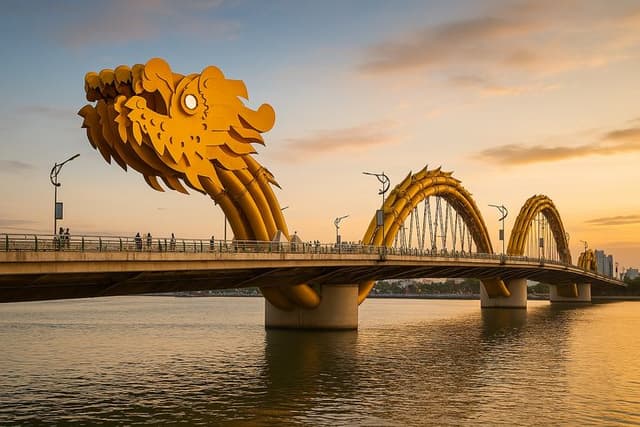
Marble Mountains combine well with a transfer between Hoi An and Da Nang. For the rest of what Da Nang offers, from the Dragon Bridge to the Son Tra peninsula, see our guide to things to do in Da Nang.

Ba Na Hills and the Golden Bridge

Cable car cabin climbing over forested hills on the way to Ba Na Hills

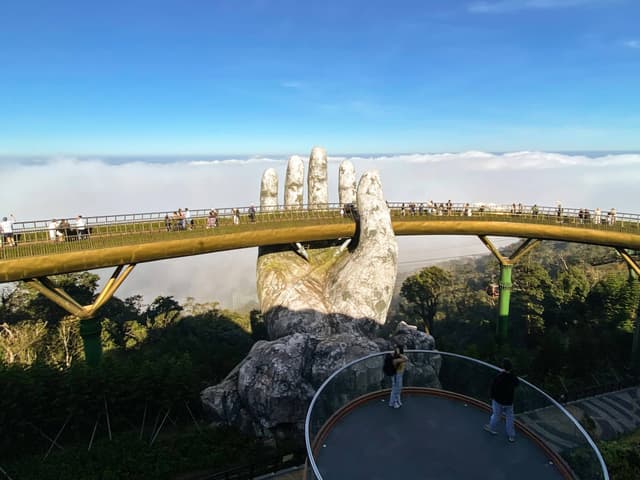
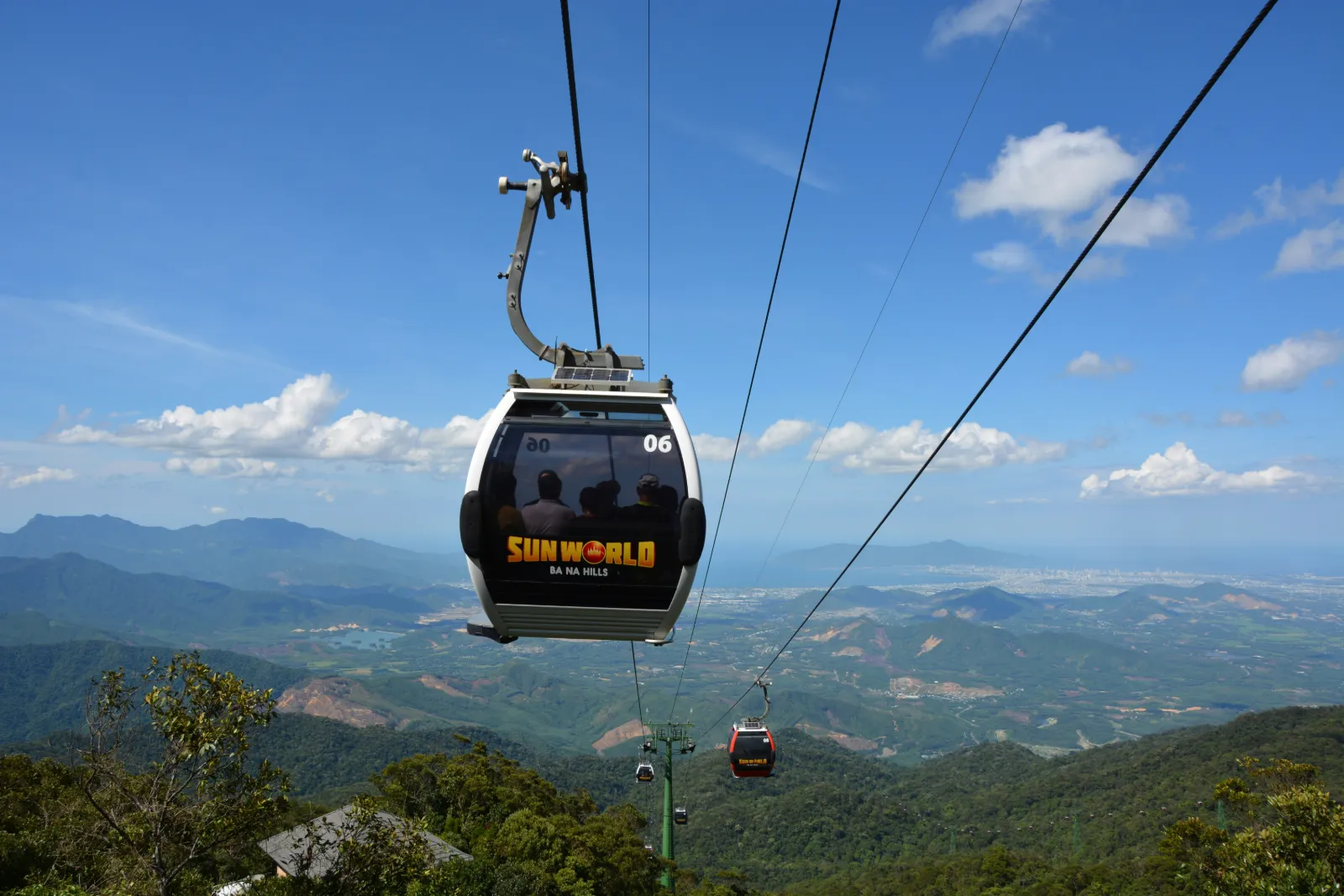
Ba Na Hills is a mountain resort and theme park in the mountains southwest of Da Nang, at 1,487 m, reached by cable cars that hold Guinness World Records for length and height gain, according to Da Nang's tourism portal. The ride up takes about 20 minutes. At the top you find the Golden Bridge held up by two giant stone hands, a French-style village, gardens, rides and noticeably cooler air.

From Hoi An it is a longer drive than from Da Nang, so plan a full day and leave early. Families with children usually enjoy it most; travellers looking for culture may prefer My Son. Our guide to the Golden Bridge in Vietnam covers how to visit and when to go.

Hue

Ngo Mon gate of the Imperial City in Hue seen across the moat

Yes, you can visit Hue from Hoi An, but it is a long day. Hoi An and Hue are about 125 km apart, and the drive takes roughly 2.5 to 3.5 hours each way depending on the vehicle and route, according to Vietnam Airlines' travel guide (Vietnam Airlines, Hoi An to Hue). Hoi An has no railway station; the train leaves from Da Nang.

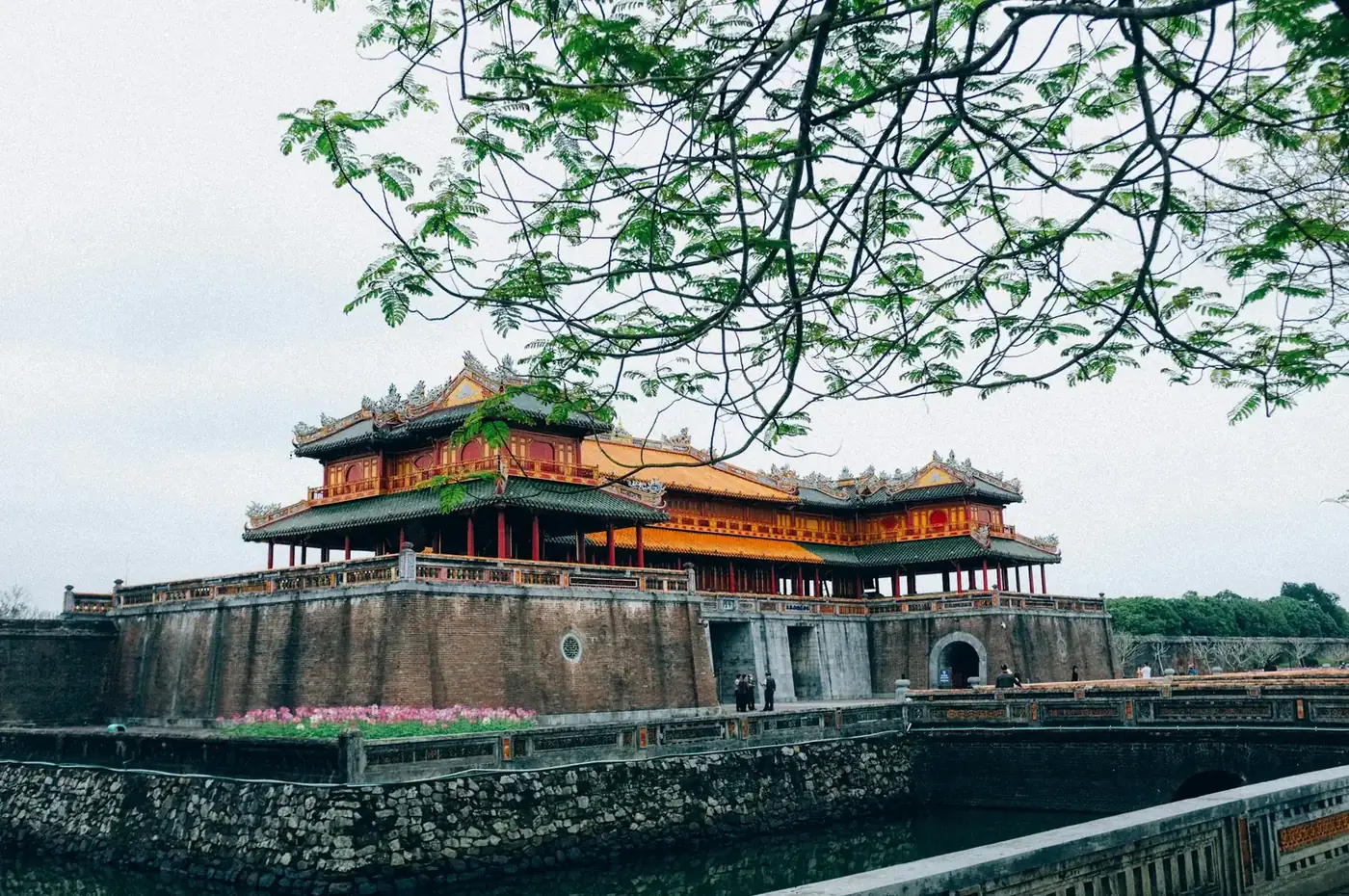
Hue was the capital of unified Vietnam from 1802 and the seat of the Nguyen emperors until 1945. Its walled citadel, the Imperial City and the royal tombs along the Perfume River form the Complex of Hue Monuments, a UNESCO World Heritage Site since 1993 (UNESCO, Hue Monuments). The road between Da Nang and Hue crosses the Hai Van Pass, one of Vietnam's most scenic drives, or runs through a tunnel if you want speed.

Our advice: if Hue matters to you, give it a night. A rushed day sees the citadel but misses the tombs and the river. Many travellers visit Hue on the way between Hanoi and Hoi An rather than as a return day trip.

How do you get to Hoi An from Da Nang or Kathmandu?

Hoi An has no airport. You fly into Da Nang International Airport, about 37 km away, and the drive takes about 45 minutes to an hour by car, taxi or minivan, or around 1.5 hours by public bus, according to Vietnam Airlines (Vietnam Airlines, does Hoi An have an airport). Da Nang city centre is a little closer than the airport.

FromHowApproximate time
Da Nang airportCar, taxi, ride hailing or minivan45 minutes to 1 hour
Da Nang airportPublic busAbout 1.5 hours
HueCar via the Hai Van Pass or tunnel; or train to Da Nang then road2.5 to 3.5 hours by road
KathmanduOne-stop flight to Vietnam, then domestic flight or road to Da NangDepends on the connection

From Nepal

There was no non-stop flight from Kathmandu to Vietnam when we last checked in October 2026, so travellers from Nepal connect once. Common hubs are Kuala Lumpur and Bangkok, both reached non-stop from Kathmandu, with onward flights to Da Nang, or a flight into Hanoi or Ho Chi Minh City followed by a short domestic hop to Da Nang. Routes change by season, so compare total journey time rather than only the first leg. Checked: 5 Nov 2026, against our own route research of 8 October 2026.

Entry rules for Vietnam change from time to time, so check the current position on our Vietnam visa page before you book.

Getting around Hoi An

  • On foot: the Ancient Town is best walked, and much of it is pedestrian-only for most of the day.
  • Bicycle: ideal for Tra Que, An Bang and the craft villages; many hotels lend them.
  • Ride hailing and taxis: useful for the beach after dark, the airport and day trips.
  • Private car with driver: the most comfortable way to do My Son, Marble Mountains or Hue, especially for families and older parents.

When is the best time to visit Hoi An?

The best time to visit Hoi An is February to April, the driest stretch of the year, with warm days and low rainfall. May to August is hot and sunny, good for the beach and the Cham Islands. September to December is the wet season, and October and November are the peak months for heavy rain and flooding, when the old town can go under water.

Central Vietnam weather by month

The World Meteorological Organization publishes long-term averages for Da Nang, a short way up the coast from Hoi An and on the same weather pattern, so we use those. These are 1991 to 2020 averages published through the WMO World Weather Information Service (WMO, Da Nang climate). Checked: 5 Nov 2026.

MonthAverage high (°C)Average rainfall (mm)Rain daysWhat to expect in Hoi An
January25.28314Mild, some drizzle; tail of the wet season
February26.3227Dry and pleasant; Tet may fall here
March28.4367One of the best months
April30.9507Warm, dry, good for everything
May33.47110Hot; beach and island season
June34.9689Hottest month; sightsee early
July34.49212Hot, mostly sunny, calm seas
August34.016714Hot, more afternoon storms
September32.039417Wet season begins; typhoon risk
October29.665821Wettest month; highest flood risk
November27.748621Very wet; floods still likely
December25.327221Wet and cooler; easing late in the month

When is the flood season in Hoi An?

The flood season in Hoi An runs roughly from September to December, with October and November the highest-risk months. October averages 658 mm of rain in Da Nang, around thirty times February's total, and heavy rain upstream can push the Thu Bon and Hoai rivers over their banks into the old town's streets.

This is not theoretical. In late October 2025 the Thu Bon river near Hoi An reached 5.62 metres at a measuring station, surpassing the historic 1964 level, according to the national weather bureau, as reported by Malay Mail (Malay Mail, 30 October 2025). On 18 November 2025 VietNamNet described the third major flood in 20 days, with some old town streets under more than a metre of water (VietNamNet, November 2025). Not every year is that severe, but if you travel in these months, keep plans flexible, watch the forecast and choose accommodation away from the riverside.

A Dashain and Tihar tip for Nepali travellers

Dashain and Tihar usually fall between late September and mid November, which is exactly when central Vietnam is at its wettest. If your holiday window is fixed around the festivals, you can still go, but build in spare days, avoid booking non-refundable boat trips to the Cham Islands, and consider combining Hoi An with northern or southern Vietnam, where the weather pattern differs. If your dates are flexible, February to April gives you dry streets, open boat services and comfortable temperatures. Our guide to the best time to visit Vietnam compares the north, centre and south month by month.

How many days to spend in Hoi An

Three nights is a comfortable minimum: two days for the town, food and tailoring, and one for the beach or a day trip. Five nights lets you add My Son, the Marble Mountains and a slow countryside day without rushing. Honeymooners and families often find Hoi An the place they wish they had given one more night.

If you would rather have flights, hotels and transfers arranged around Hoi An, Da Nang and the rest of the country, browse our Vietnam tour packages.

Frequently asked questions

What is Hoi An famous for?

Hoi An is famous for its UNESCO-listed Ancient Town, a well-preserved trading port of yellow shophouses, Chinese assembly halls and the Japanese Covered Bridge. It is also known for silk lanterns, full moon lantern nights, made-to-measure tailoring, cao lau noodles and the nearby An Bang beach.

Do you need a ticket for Hoi An Ancient Town?

Yes. Since May 2023 all visitors need a Hoi An Ancient Town ticket, which covers the old town area plus a set number of heritage sites, including one iconic site. It is valid for up to three days. Keep the stub with you, and check current options on Da Nang's official tourism portal.

Is the Japanese Covered Bridge open?

Yes. The Japanese Covered Bridge in Hoi An reopened in early August 2024 after a 19-month restoration that began in December 2022. As of 2026 it is one of the two iconic sites you can choose on the Ancient Town ticket. Go before 9am for the quietest visit.

Is An Bang beach good for swimming?

An Bang beach near Hoi An is good for swimming in the calmer months, roughly March to August. From September to February the sea can be rough, with strong waves and currents. Swim only where flags and lifeguards indicate it is safe, and note that erosion has narrowed parts of the Hoi An coastline.

How long does tailoring take in Hoi An?

Tailoring time in Hoi An depends on the garment and the shop. Simple shirts or dresses can be quick, but plan several days so there is time for at least two fittings and alterations. Order on your first day, and never leave a suit or coat until your last day.

When is the flood season in Hoi An?

The flood season in Hoi An runs roughly from September to December, with October and November the riskiest months. WMO averages for nearby Da Nang show October as the wettest month. In 2025 the Thu Bon river passed its 1964 record level near Hoi An, flooding old town streets.

How far is Hoi An from Da Nang?

Hoi An is about 37 km from Da Nang International Airport, a drive of roughly 45 minutes to an hour by car or taxi, or about 1.5 hours by public bus. Da Nang city centre is slightly closer. Hoi An has no airport or railway station of its own.

Can I visit Hue from Hoi An?

Yes, but Hue is about 125 km from Hoi An, roughly 2.5 to 3.5 hours each way by road, so a day trip is long. Staying one night in Hue lets you see the citadel, the royal tombs and the Perfume River properly. Trains to Hue leave from Da Nang.

When is the Hoi An lantern night?

The Hoi An lantern night takes place on the 14th day of every lunar month, the night before the full moon, so it happens about once a month. The old town dims its electric lights and silk lanterns take over. Check a lunar calendar for your dates, and see our lantern festival guide for details.

Is Hoi An part of Da Nang now?

Yes. Under Vietnam's 2025 administrative reform, the former Quang Nam province merged into Da Nang city on 1 July 2025, so Hoi An is now administratively part of Da Nang. For visitors nothing changes in practice, though older addresses may still say Quang Nam.

How many days do you need in Hoi An?

Three nights in Hoi An covers the Ancient Town, food, tailoring and a beach afternoon or one day trip. Five nights adds My Son, the Marble Mountains and a slow countryside day. If you plan to get clothes made, stay at least three nights for fittings.

Hoi An ma k k herne?

In Hoi An, start with the Ancient Town on foot early in the morning, the Japanese Covered Bridge, an old house and an assembly hall, and a river boat at dusk. Then add cao lau and banh mi, a tailor fitting, a bicycle ride to Tra Que, An Bang beach and a trip to My Son.

Tags
VietnamHoi AnDa Nang
Share
G
Gomayu Team
Writer at Gomayu
Keep reading
Blog / Vietnam
Things to Do in Hoi An: Ancient Town, Beaches and Tailors
34 min read 05 Nov 2026 · Updated 16 Nov 2026
Street vendor with fruit baskets beside yellow shophouses in Hoi An Ancient Town

Short answer: The best things to do in Hoi An are walking the Ancient Town early in the morning, crossing the restored Japanese Covered Bridge, stepping inside the old merchant houses and assembly halls, taking a boat on the Thu Bon river at dusk, eating cao lau and banh mi, getting clothes tailored, cycling out to the vegetable and craft villages, and spending an afternoon at An Bang beach. Add a day trip to the My Son temple ruins, the Marble Mountains, Ba Na Hills or Hue, and avoid October and November if you can, because that is central Vietnam's flood peak.

Hoi An is small. The UNESCO-listed core is a few blocks of yellow shophouses between the river and the market, and you can cross it on foot in a short, easy walk. That is exactly why people stay longer than planned. The town rewards slow days: a coffee before the tour groups arrive, a fitting at the tailor, a bicycle ride through rice fields, a swim, then lanterns coming on along the water. This guide covers how the Ancient Town ticket works, whether the famous bridge is open, which beach to pick, how to get tailoring right, which day trips are worth it, and the months to avoid. There are no prices here because they change too often; we tell you where a ticket is needed and where to check.

If Hoi An is one stop on a bigger trip, our complete Vietnam travel guide covers money, transport and planning for the whole country.

What are the best things to do in Hoi An?

The essentials are the Ancient Town on foot, the Japanese Covered Bridge, the old houses and assembly halls, a river boat at dusk, Hoi An's own dishes, tailoring, the countryside villages and the beach. Most visitors can cover the town itself in two full days and use a third or fourth day for a beach afternoon or a trip out to My Son or the Marble Mountains.

Here is the full list at a glance, then each item in more detail.

Thing to doWhereBest time of dayTicket needed?
Walk the Ancient TownTran Phu, Nguyen Thai Hoc and Bach Dang streetsEarly morning, then again after darkYes, the Ancient Town ticket
Cross the Japanese Covered BridgeWest end of Tran Phu streetBefore 9am for photosYes, it is one of the two "iconic" sites on the ticket
Old houses and assembly hallsThroughout the Ancient TownMid morningYes, choose sites with your ticket
Boat on the Thu Bon riverBach Dang riversideDuskPaid separately to the boat operator
Full moon lantern nightOld town and both river banksEvening of the 14th lunar dayNo ticket to walk the streets
Eat cao lau, banh mi, mi QuangMarket, street stalls, family restaurantsLunch and eveningNo
Cooking class and farm visitTra Que vegetable villageMorningBooked with a class
Cycle to craft villagesThanh Ha pottery, Kim Bong carpentryMorning or late afternoonVaries by village
Basket boats in the coconut forestBay Mau, Cam ThanhMorningPaid to the operator
Get clothes tailoredShops across townOrder on day oneNo
Beach afternoonAn Bang beachAfternoonNo
Cham Islands boat tripFrom Cua Dai portFull day, March to AugustBoat transfer needed; check locally
Traditional art performanceHoai River SquareSet show timesCheck show times and entry locally

1. Walk the Ancient Town before the crowds

Lantern lit shopfronts, cyclos and walkers on a riverside street in Hoi An Ancient Town

The single best thing to do in Hoi An is to walk the old streets at around 7am, when shopkeepers are sweeping their steps and the light is soft on the yellow walls. By mid morning the main streets fill with tour groups; by late afternoon the heat eases and the lanterns start to glow.

UNESCO describes Hoi An as "an exceptionally well-preserved example of a small-scale trading port" active from the 15th to the 19th centuries, with a complex of 1,107 timber frame buildings (UNESCO World Heritage listing). The influences are mainly Chinese and Japanese, with later European touches, and you see all three in a single block: carved wooden shopfronts, tiled roofs, family altars visible through open doors and French-era shutters. The town was inscribed as a World Heritage Site in 1999.

Walk Tran Phu, then Nguyen Thai Hoc, then the riverside Bach Dang street, and cut through the little lanes between them. Look up as well as in: the roof tiles, the "eyes" carved above some doorways and the hanging lanterns all reward attention. The core is a pedestrian zone for much of the day, which is a big part of why it feels so calm compared with Hanoi or Da Nang.

2. Cross the Japanese Covered Bridge

The Japanese Covered Bridge, called Chua Cau in Vietnamese, is the town's symbol and its most photographed spot. It reopened in August 2024 after a 19-month restoration and is open to visitors again. We cover its status, history and how to visit it in its own section below.

3. Step inside the old houses and assembly halls

The Ancient Town ticket is your key to the interiors, and the interiors are where Hoi An's trading history makes sense. Chinese merchant communities built assembly halls for their home provinces; families built narrow tube houses with a shop at the front, living space behind and a courtyard to let in light and air.

Good picks include the Phuc Kien (Fujian) Assembly Hall, a family old house such as Tan Ky, and Quan Cong Temple, which the city lists as one of the two "iconic" sites on the ticket alongside the bridge. The museums, such as the folk culture and history displays, come with the higher ticket option. Pick sites that interest you rather than trying to tick them all; two or three well-chosen interiors are better than eight rushed ones.

4. Take a boat on the Thu Bon river at dusk

Boatman rowing a small wooden boat across the calm Thu Bon river in Hoi An

Small wooden boats wait along the Bach Dang riverside, and a short trip as the sun goes down is one of the gentlest ways to see the town. From the water you see the lit facades, the An Hoi islet opposite and the evening market stalls coming to life. Agree the length of the trip and the price with the boat owner before you step in.

The river is also why Hoi An exists. The Thu Bon carried goods down from the hills to the sea, and the port drew merchants from China, Japan and beyond. The same river is the reason the town floods in a bad wet season, which we cover in the best time section.

5. Catch a full moon lantern night

Rows of colourful silk lanterns glowing after dark in Hoi An Old Town

On the 14th day of every lunar month, the night before the full moon, the old town dims its electric lights and lets the silk lanterns and river candles take over (Vietnam Airlines, Hoi An lantern festival). It happens about once a month, not once a year, so there is a fair chance one falls inside a stay of a few nights.

We keep this short here because the event has its own detailed guide: dates, times, where to stand and the honest truth about the floating lanterns are all in our Hoi An lantern festival guide. Even on an ordinary evening, the lanterns along the streets come on at dusk, so every night in Hoi An has some of that glow.

6. Eat Hoi An's own dishes

Hoi An has dishes you will not find done the same way elsewhere in Vietnam. The famous one is cao lau: chewy, thick noodles with sliced pork, herbs, crispy crackers and very little broth. Then there is the Hoi An banh mi, a crusty baguette packed with fillings; white rose dumplings, delicate steamed parcels; and mi Quang, the turmeric-tinted noodle dish of the wider Quang region.

The central market by the river is good for a first taste, and family-run places in the side streets often beat the riverside restaurants. For a wider food plan across the country, see our guide to what to eat in Vietnam.

For Nepali and Hindu travellers: cao lau and many banh mi fillings are pork based, and beef appears in many noodle soups. Vegetarian restaurants (com chay) exist in Hoi An, and many Buddhist families in Vietnam eat vegetarian on certain lunar days, so meat-free food is familiar to local cooks. Two useful phrases: "toi an chay" (I eat vegetarian) and "khong thit bo" (no beef). Showing them written on your phone works well at busy stalls.

7. Take a cooking class at Tra Que vegetable village

Tra Que is a farming village between the old town and the beach, known for the herbs and greens that end up in Hoi An's food. Da Nang's official tourism portal describes visitors spending "a few hours becoming farmers", learning traditional growing methods and then cooking dishes such as banh xeo, the crispy rice pancake (Da Nang tourism portal, craft villages feature). It is a good half day for families with children, and a natural way to learn which herb goes with which dish before you eat your way around town.

8. Cycle to the craft villages

Hoi An is flat, and most hotels lend or rent bicycles. Two craft villages make easy rides. Thanh Ha pottery village, which the city portal says has "a history of more than 500 years", still shapes clay by hand before firing, and visitors can try making a piece themselves. Kim Bong carpentry village, across the river, keeps wood carving alive through generations of craftsmen, and visitors can try simple steps such as sanding or joinery.

A ride out through the rice fields in the late afternoon, with water buffalo in the paddies and the light going gold, is as memorable as anything inside the old town. Wear a hat, carry water and keep to the right on shared roads.

9. Ride a basket boat in the Bay Mau coconut forest

Round bamboo basket boats and paddlers on a palm lined waterway in Cam Thanh, Hoi An

In the waterways of Cam Thanh, round bamboo basket boats glide through the nipa palms of the Bay Mau coconut forest. The tourism portal notes that local fishermen also demonstrate traditional fishing methods. It can be lively and touristy at busy times, but children usually enjoy it. Go in the morning for a calmer trip. The village also has a bamboo workshop where you can make a small piece with an artisan.

10. Get clothes tailored

Hoi An's tailors are famous for turning around made-to-measure suits, dresses, shirts and coats during a short stay. It is one of the most popular things to do in Hoi An, and also where visitors most often feel disappointed, usually because they ordered too late or skipped fittings. Our full checklist is in the tailoring section below.

11. Spend an afternoon at An Bang beach

Hoi An is not only an old town; the sea is a short ride away. An Bang is the beach most visitors choose for a relaxed afternoon with a swim and dinner by the water. The comparison with Cua Dai, and the honest picture on erosion, is in the beach section below.

12. Take a boat to the Cham Islands

The Cham Islands (Cu Lao Cham) sit offshore from Hoi An and form the core of the Cu Lao Cham and Hoi An World Biosphere Reserve, recognised by UNESCO on 26 May 2009. Da Nang's tourism portal says a high-speed canoe takes about 15 to 20 minutes from Cua Dai port, and that the best time to visit is March to August, when seas are calm. From September to February, rough seas and storms can disrupt boats, so services "may not operate consistently" (Da Nang tourism portal, Cu Lao Cham). On the islands you can swim, snorkel with a life jacket, visit the marine conservation centre and Tan Hiep market.

13. Watch a traditional performance or a tea ceremony

Hoi An runs a regular traditional art programme with folk songs, dances and traditional instruments. From 7 March 2026 the venue moved from Bach Dang street to Hoai River Square, according to the city's tourism portal, and the Japanese Cultural Exhibition House on Nguyen Thi Minh Khai street hosts daily Japanese tea ceremony demonstrations. Show times change, so check at your hotel or the ticket booth on the day.

How does the Ancient Town work for visitors?

Yellow shophouses and moored wooden boats along the Hoi An riverside on a clear day

Visitors need a Hoi An Ancient Town ticket to enter the heritage area, and the ticket also lets you into a set number of heritage sites. You buy it once and keep the stub, because staff can ask to see it as you enter and leave the old town. The money goes back into conserving the buildings.

The rule that every visitor to the ancient town needs a ticket dates from 15 May 2023, when Hoi An began applying it to all domestic and international visitors (VietNamNet, April 2023). Before that, many visitors assumed walking the streets was free and only the houses charged entry, which caused confusion that you still read about in old blog posts.

What the ticket covers (as published in March 2026)

Da Nang's official tourism portal describes two ticket types (Hoi An Ancient Town entrance tickets 2026):

Ticket typeWhat it includes
Basic ticketThe shared Ancient Town space, one iconic site (the Japanese Covered Bridge or Quan Cong Temple) and two more cultural sites from the heritage system
Extended ticketThe Ancient Town, one iconic site, Hoi An's museum system and three more cultural sites
ValidityBought once and usable through your stay for up to three days
GroupsGroups of eight or more are offered a guide by the management board at no extra charge

We do not list ticket prices because they are set by the city and can change. Checked: 5 Nov 2026, Da Nang tourism portal (Danang Tourism Promotion Center), article dated March 2026.

Where to buy and how the checks work

  • Ticket points and kiosks: tickets are sold on site in the old town. The tourism portal's 2026 ticket page does not list booth locations, so ask your hotel for the nearest ticket point. On 9 February 2026 the Hoi An World Cultural Heritage Preservation Center launched smart ticketing kiosks with several languages, international card payment and on-site printing, plus QR-code audio guides along walking routes (Startup Da Nang report).
  • Keep the stub: the portal advises keeping your ticket for "entering or exiting the ancient town". Each heritage site you enter uses up one of the site visits on your ticket.
  • Pedestrian hours: the portal gives the Ancient Town's pedestrian-zone hours as 9am to 9:30pm in summer and 9am to 9pm in winter, with Phan Chau Trinh street pedestrianised in the evening. Outside those hours, expect some motorbikes in the lanes.
  • Festivals and holidays: arrangements can change around Tet and on special nights. Ask at your hotel or the ticket booth when you arrive.

Tips that make the ticket worth it

  • Use the bridge or Quan Cong Temple as your iconic site, then pick one assembly hall and one old house for contrast.
  • Visit interiors in mid morning when they are open and before the midday heat; walk the streets early and late.
  • Cover shoulders and knees for temples and assembly halls, which are active places of worship.
  • Ask before photographing people at altars.
  • If you plan several days in town, one ticket bought at the start should cover your stay, but keep it dry and safe.

Is Hoi An now part of Da Nang?

Yes, administratively. Under Vietnam's 2025 administrative reform, the former Quang Nam province merged into Da Nang city on 1 July 2025, and Hoi An now sits inside the enlarged Da Nang (VietnamPlus). The old town area is now organised into wards with names such as Hoi An, Hoi An Dong and Hoi An Tay. For visitors nothing practical changes: the same town, the same drive from Da Nang airport. You may still see "Quang Nam" on older hotel addresses, maps and booking confirmations, which is normal.
Explore Vietnam tour packages
View all →

Is the Japanese Covered Bridge open?
The Japanese Covered Bridge in Hoi An with its tiled roof and stone arches

Yes. The Japanese Covered Bridge reopened in early August 2024 after a restoration of about 19 months, and it is open to visitors as one of the two "iconic" sites on the Ancient Town ticket. Checked: 5 Nov 2026, against the Hoi An heritage preservation centre's restoration report and the Da Nang tourism portal's 2026 ticket page.

The restoration, in dates

DateWhat happened
28 December 2022Restoration work began after the walls, roof tiles and lime mortar had badly deteriorated
2023 to July 2024Walls, roof decorations and wooden structure restored; the site was not sealed off, so residents and visitors could watch the work
End of July 2024Restoration completed
3 August 2024Inauguration ceremony, held during the Hoi An and Japan cultural exchange programme
March 2026Listed by the Da Nang tourism portal as one of two iconic sites on the Ancient Town ticket

Hoi An's World Cultural Heritage Preservation Center reports that work began on 28 December 2022, finished at the end of July 2024 and was inaugurated on 3 August 2024. Wooden parts kept their original colour, and a large share of the original material was preserved and reused, including about 60% of the wood and 30% of the tiles (Hoi An heritage centre, restoration results). The brighter, cleaner look after restoration did spark debate in Vietnam; Phan Thai Binh, then a vice chairman of the Quang Nam provincial People's Committee, said that "differing opinions about the restoration's outcome are normal" (VietNamNet, August 2024). If you have seen older photos with a darker, weathered roof, expect it to look fresher today.

Why the bridge matters

The bridge spans a small creek at the western end of Tran Phu street and is traditionally credited to the Japanese merchant community, which is how it got its English name. Vietnamese reports describe it as funded by Japanese merchants about 400 years ago; UNESCO's listing refers to "a fine wooden Japanese bridge, with a pagoda on it". The Vietnamese name, Chua Cau, means "pagoda bridge", because a small temple is built into the bridge. That temple is dedicated to Bac De Tran Vu, a deity believed to control storms and floods, which feels fitting for a riverside town that floods.

How to visit the bridge well

  • Go early: before 9am you can photograph it without a crowd on the steps.
  • Use your ticket here: choose the bridge as your iconic site if it is the one place you want to step inside.
  • See it from outside too: the bridge looks best from the street and the creek bank, so walk around it rather than only through it.
  • Be patient on lantern nights: it is the most crowded spot in town on the 14th lunar night.
  • Respect the shrine: it is a working temple, so keep voices low inside.

Which beach is best near Hoi An?

Aerial view of golden sand, waves and palm trees on the coast near Hoi An

For most visitors, An Bang is the better beach near Hoi An for a relaxed afternoon, with places to eat and loungers along the sand. Cua Dai, once the town's main beach, has been badly hit by erosion for years and is now better known as the port for boats to the Cham Islands. Both have been affected by erosion, so check conditions when you arrive.

An Bang beach vs Cua Dai beach

What to compareAn Bang beachCua Dai beach
LocationNorth of the old town, an easy bicycle or taxi rideEast of the old town, near the Thu Bon river mouth
FeelRelaxed, with beach restaurants and loungersQuieter, with resorts on the southern stretch
ErosionNamed in December 2025 reporting among Hoi An beaches facing serious erosionErosion dominant since about 2000; parts cut back 3 to 5 metres in late 2025
Main use for visitorsSwimming in calm months, sunset dinnersBoats to the Cham Islands from Cua Dai port
Best monthsMarch to August, when seas are calmerMarch to August for island boats

What the erosion facts say

A study in the Vietnam Journal of Marine Science and Technology found that at Cua Dai "from the year of 2000 to present the rate of erosion was larger than that of accretion", and linked this to hard coastal structures interacting with waves and to dredging at the Thu Bon river mouth, which reduced the sand carried along the shore (Le Dinh Mau and colleagues, Vietnam Journal of Marine Science and Technology).

In late 2025 the problem got worse. Reporting in December 2025 said high tides and strong waves in early November damaged temporary embankments at Cua Dai, that parts of the beach had been cut back by 3 to 5 metres, and that Da Nang's Civil Defence Department counted nearly 3.5 km of eroded coastline in the Hoi An Dong and Hoi An Tay wards. The same report listed An Bang among Hoi An's best-known beaches facing serious erosion (Dan Tri International, December 2025). Beach widths change from season to season, so the beach you find may look different from photos online.

Is An Bang beach good for swimming?

An Bang is good for swimming in the calmer months, roughly March to August, when the East Sea is usually gentler. From September to February, waves and currents can be strong, and storms are possible. Swim only where flags and any lifeguards say it is safe, stay within your depth, and keep a close eye on children. If the sea looks rough, enjoy the sand and save the swim for another day.

If you want a wider choice of coast across the country, our guide to the best beaches in Vietnam compares the main options from north to south.

How do you get clothes tailored in Hoi An?

Order on your first day, bring a photo or a garment to copy, choose the fabric by touch, and insist on at least two fittings before you collect. Simple pieces such as shirts, linen trousers and summer dresses are the easiest wins; structured suits and winter coats need more time and more fittings to get right.

Tailoring is part of Hoi An's identity, and shops line many streets in and around the old town. Quality varies widely, and the difference between a great result and a disappointing one usually comes down to time, clear instructions and fittings, not luck. We do not quote prices: they depend on fabric, garment and shop, and they change. Compare at least two or three shops before you commit.

Tailor tips checklist

  • Order early: visit a tailor on day one of your stay, so there is time for fittings and changes before you leave.
  • Bring a reference: a well-fitting garment you own is the best guide; photos from a website or magazine work too.
  • Feel the fabric: ask what it is made of. Pure wool, linen, cotton and silk behave differently from blends; if a fabric feels synthetic, ask directly.
  • Be precise: say exactly where you want buttons, pockets, lining, collar shape and length. Write it down or sketch it.
  • Get it in writing: ask for a receipt that lists each garment, the fabric, the agreed price, any deposit and the collection date and time.
  • Insist on fittings: plan for at least two. Check the shoulders, sleeve length, the seat of trousers and how a jacket sits when you sit down.
  • Inspect the finish: look at seams, button stitching, pattern matching at the seams and the inside lining before you pay the balance.
  • Be wary of commission trips: if a driver or stranger insists on taking you to a particular shop, it may be because they earn a commission. Choose your own.
  • Plan your luggage: heavy coats and suits add weight. Check your airline baggage allowance, or ask the shop about sending items home.
  • Do not order on your last day: rushed work is where most problems happen.

How long does tailoring take in Hoi An?

It depends on the garment and how busy the shop is. Simple items can often be made quickly, but the realistic plan is to allow several days in town so there is time for the first fitting, alterations and a final check. If you only have one night in Hoi An, buy ready-made or order something simple rather than a suit.

A note for Nepali travellers: wedding season and Dashain gifts are a common reason to tailor abroad. If you want a coat, a waistcoat or a kurta-style shirt made, bring a version that already fits you well to copy, and explain clearly that you want the same fit. Shoes and leather bags can also be made to order in Hoi An, but give them extra time.

Which day trips can you take from Hoi An?

The four classic day trips from Hoi An are the My Son temple ruins (the most rewarding for history), the Marble Mountains (an easy half day on the way to Da Nang), Ba Na Hills with its Golden Bridge (a full theme-park day), and Hue (a long day, better as an overnight). Pick by interest: history, views, family fun or imperial heritage.

Day tripWhat it isTime to allowBest for
My Son SanctuaryUNESCO-listed Cham Hindu temple ruins in a jungle valleyHalf day, start earlyHistory, photography, Hindu travellers
Marble MountainsFive limestone peaks with caves and pagodas, near Da NangAt least two hours on siteEasy climbs, caves, a stop on the way to Da Nang
Ba Na HillsMountain resort at 1,487 m with record cable cars and the Golden BridgeFull dayFamilies, cooler air, photos
HueFormer imperial capital with a citadel and royal tombsLong day, or one nightHistory lovers
Cham IslandsMarine biosphere reserve offshoreFull day, March to AugustSnorkelling, quiet beaches

My Son Sanctuary

Crumbling Cham brick tower and temple ruins among jungle at My Son Sanctuary near Hoi An

My Son is a group of Cham temple ruins in a ring of hills inland from Hoi An, and the most rewarding day trip for anyone interested in history. UNESCO describes tower temples built between the 4th and 13th centuries by the Champa kingdom, mainly dedicated to Shiva, with brick towers decorated with sandstone reliefs and a layout that reflects Mount Meru, the mythical home of the gods (UNESCO, My Son Sanctuary). It was inscribed as a World Heritage Site in 1999, the same year as Hoi An.

For Nepali Hindu travellers, My Son has a special pull: you will recognise the lingam and yoni bases, the Shiva symbolism and the idea of the temple as a cosmic mountain, all far from the Himalaya. Many towers were damaged during the war, and UNESCO notes that unexploded ordnance still challenges research and restoration, so always stay on the marked paths.

  • Go early in the morning, when it is cooler and quieter; May to August are the hottest months in the area.
  • Wear good walking shoes, a hat and clothes that cover shoulders and knees.
  • A guide adds a lot, because the ruins are hard to read without context.
  • An entry ticket is required, sold at the site.

Marble Mountains

Limestone peaks of the Marble Mountains rising above pagoda roofs and houses in Da Nang

The Marble Mountains are five limestone peaks a short drive north of Hoi An, about 7 to 8 km from downtown Da Nang, named after the five elements: Thuy Son (water), Kim Son (metal), Hoa Son (fire), Tho Son (earth) and Moc Son (wood). Caves and pagodas are tucked into the rock, and Huyen Khong cave, the largest, has shafts of light falling through its open roof (Vietnam National Authority of Tourism).

Access is by stone steps, and there is a lift for part of the climb on Thuy Son. The official tourism site suggests setting aside at least two hours. At the foot of the mountains, Non Nuoc stone carving village was recognised as national intangible cultural heritage in 2014 (Da Nang tourism portal, Marble Mountains). Vietnam's state news agency lists the Ma Nhai inscriptions carved into the mountains among the UNESCO-recognised heritage of the enlarged Da Nang, alongside Hoi An Ancient Town and My Son. An entry ticket is needed.

Marble Mountains combine well with a transfer between Hoi An and Da Nang. For the rest of what Da Nang offers, from the Dragon Bridge to the Son Tra peninsula, see our guide to things to do in Da Nang.

Ba Na Hills and the Golden Bridge
Cable car cabin climbing over forested hills on the way to Ba Na Hills

Ba Na Hills is a mountain resort and theme park in the mountains southwest of Da Nang, at 1,487 m, reached by cable cars that hold Guinness World Records for length and height gain, according to Da Nang's tourism portal. The ride up takes about 20 minutes. At the top you find the Golden Bridge held up by two giant stone hands, a French-style village, gardens, rides and noticeably cooler air.

From Hoi An it is a longer drive than from Da Nang, so plan a full day and leave early. Families with children usually enjoy it most; travellers looking for culture may prefer My Son. Our guide to the Golden Bridge in Vietnam covers how to visit and when to go.

Hue
Ngo Mon gate of the Imperial City in Hue seen across the moat

Yes, you can visit Hue from Hoi An, but it is a long day. Hoi An and Hue are about 125 km apart, and the drive takes roughly 2.5 to 3.5 hours each way depending on the vehicle and route, according to Vietnam Airlines' travel guide (Vietnam Airlines, Hoi An to Hue). Hoi An has no railway station; the train leaves from Da Nang.

Hue was the capital of unified Vietnam from 1802 and the seat of the Nguyen emperors until 1945. Its walled citadel, the Imperial City and the royal tombs along the Perfume River form the Complex of Hue Monuments, a UNESCO World Heritage Site since 1993 (UNESCO, Hue Monuments). The road between Da Nang and Hue crosses the Hai Van Pass, one of Vietnam's most scenic drives, or runs through a tunnel if you want speed.

Our advice: if Hue matters to you, give it a night. A rushed day sees the citadel but misses the tombs and the river. Many travellers visit Hue on the way between Hanoi and Hoi An rather than as a return day trip.

How do you get to Hoi An from Da Nang or Kathmandu?

Hoi An has no airport. You fly into Da Nang International Airport, about 37 km away, and the drive takes about 45 minutes to an hour by car, taxi or minivan, or around 1.5 hours by public bus, according to Vietnam Airlines (Vietnam Airlines, does Hoi An have an airport). Da Nang city centre is a little closer than the airport.

FromHowApproximate time
Da Nang airportCar, taxi, ride hailing or minivan45 minutes to 1 hour
Da Nang airportPublic busAbout 1.5 hours
HueCar via the Hai Van Pass or tunnel; or train to Da Nang then road2.5 to 3.5 hours by road
KathmanduOne-stop flight to Vietnam, then domestic flight or road to Da NangDepends on the connection

From Nepal

There was no non-stop flight from Kathmandu to Vietnam when we last checked in October 2026, so travellers from Nepal connect once. Common hubs are Kuala Lumpur and Bangkok, both reached non-stop from Kathmandu, with onward flights to Da Nang, or a flight into Hanoi or Ho Chi Minh City followed by a short domestic hop to Da Nang. Routes change by season, so compare total journey time rather than only the first leg. Checked: 5 Nov 2026, against our own route research of 8 October 2026.

Entry rules for Vietnam change from time to time, so check the current position on our Vietnam visa page before you book.

Getting around Hoi An

  • On foot: the Ancient Town is best walked, and much of it is pedestrian-only for most of the day.
  • Bicycle: ideal for Tra Que, An Bang and the craft villages; many hotels lend them.
  • Ride hailing and taxis: useful for the beach after dark, the airport and day trips.
  • Private car with driver: the most comfortable way to do My Son, Marble Mountains or Hue, especially for families and older parents.

When is the best time to visit Hoi An?

The best time to visit Hoi An is February to April, the driest stretch of the year, with warm days and low rainfall. May to August is hot and sunny, good for the beach and the Cham Islands. September to December is the wet season, and October and November are the peak months for heavy rain and flooding, when the old town can go under water.

Central Vietnam weather by month

The World Meteorological Organization publishes long-term averages for Da Nang, a short way up the coast from Hoi An and on the same weather pattern, so we use those. These are 1991 to 2020 averages published through the WMO World Weather Information Service (WMO, Da Nang climate). Checked: 5 Nov 2026.

MonthAverage high (°C)Average rainfall (mm)Rain daysWhat to expect in Hoi An
January25.28314Mild, some drizzle; tail of the wet season
February26.3227Dry and pleasant; Tet may fall here
March28.4367One of the best months
April30.9507Warm, dry, good for everything
May33.47110Hot; beach and island season
June34.9689Hottest month; sightsee early
July34.49212Hot, mostly sunny, calm seas
August34.016714Hot, more afternoon storms
September32.039417Wet season begins; typhoon risk
October29.665821Wettest month; highest flood risk
November27.748621Very wet; floods still likely
December25.327221Wet and cooler; easing late in the month

When is the flood season in Hoi An?

The flood season in Hoi An runs roughly from September to December, with October and November the highest-risk months. October averages 658 mm of rain in Da Nang, around thirty times February's total, and heavy rain upstream can push the Thu Bon and Hoai rivers over their banks into the old town's streets.

This is not theoretical. In late October 2025 the Thu Bon river near Hoi An reached 5.62 metres at a measuring station, surpassing the historic 1964 level, according to the national weather bureau, as reported by Malay Mail (Malay Mail, 30 October 2025). On 18 November 2025 VietNamNet described the third major flood in 20 days, with some old town streets under more than a metre of water (VietNamNet, November 2025). Not every year is that severe, but if you travel in these months, keep plans flexible, watch the forecast and choose accommodation away from the riverside.

A Dashain and Tihar tip for Nepali travellers

Dashain and Tihar usually fall between late September and mid November, which is exactly when central Vietnam is at its wettest. If your holiday window is fixed around the festivals, you can still go, but build in spare days, avoid booking non-refundable boat trips to the Cham Islands, and consider combining Hoi An with northern or southern Vietnam, where the weather pattern differs. If your dates are flexible, February to April gives you dry streets, open boat services and comfortable temperatures. Our guide to the best time to visit Vietnam compares the north, centre and south month by month.

How many days to spend in Hoi An

Three nights is a comfortable minimum: two days for the town, food and tailoring, and one for the beach or a day trip. Five nights lets you add My Son, the Marble Mountains and a slow countryside day without rushing. Honeymooners and families often find Hoi An the place they wish they had given one more night.

If you would rather have flights, hotels and transfers arranged around Hoi An, Da Nang and the rest of the country, browse our Vietnam tour packages.

Frequently asked questions

What is Hoi An famous for?

Hoi An is famous for its UNESCO-listed Ancient Town, a well-preserved trading port of yellow shophouses, Chinese assembly halls and the Japanese Covered Bridge. It is also known for silk lanterns, full moon lantern nights, made-to-measure tailoring, cao lau noodles and the nearby An Bang beach.

Do you need a ticket for Hoi An Ancient Town?

Yes. Since May 2023 all visitors need a Hoi An Ancient Town ticket, which covers the old town area plus a set number of heritage sites, including one iconic site. It is valid for up to three days. Keep the stub with you, and check current options on Da Nang's official tourism portal.

Is the Japanese Covered Bridge open?

Yes. The Japanese Covered Bridge in Hoi An reopened in early August 2024 after a 19-month restoration that began in December 2022. As of 2026 it is one of the two iconic sites you can choose on the Ancient Town ticket. Go before 9am for the quietest visit.

Is An Bang beach good for swimming?

An Bang beach near Hoi An is good for swimming in the calmer months, roughly March to August. From September to February the sea can be rough, with strong waves and currents. Swim only where flags and lifeguards indicate it is safe, and note that erosion has narrowed parts of the Hoi An coastline.

How long does tailoring take in Hoi An?

Tailoring time in Hoi An depends on the garment and the shop. Simple shirts or dresses can be quick, but plan several days so there is time for at least two fittings and alterations. Order on your first day, and never leave a suit or coat until your last day.

When is the flood season in Hoi An?

The flood season in Hoi An runs roughly from September to December, with October and November the riskiest months. WMO averages for nearby Da Nang show October as the wettest month. In 2025 the Thu Bon river passed its 1964 record level near Hoi An, flooding old town streets.

How far is Hoi An from Da Nang?

Hoi An is about 37 km from Da Nang International Airport, a drive of roughly 45 minutes to an hour by car or taxi, or about 1.5 hours by public bus. Da Nang city centre is slightly closer. Hoi An has no airport or railway station of its own.

Can I visit Hue from Hoi An?

Yes, but Hue is about 125 km from Hoi An, roughly 2.5 to 3.5 hours each way by road, so a day trip is long. Staying one night in Hue lets you see the citadel, the royal tombs and the Perfume River properly. Trains to Hue leave from Da Nang.

When is the Hoi An lantern night?

The Hoi An lantern night takes place on the 14th day of every lunar month, the night before the full moon, so it happens about once a month. The old town dims its electric lights and silk lanterns take over. Check a lunar calendar for your dates, and see our lantern festival guide for details.

Is Hoi An part of Da Nang now?

Yes. Under Vietnam's 2025 administrative reform, the former Quang Nam province merged into Da Nang city on 1 July 2025, so Hoi An is now administratively part of Da Nang. For visitors nothing changes in practice, though older addresses may still say Quang Nam.

How many days do you need in Hoi An?

Three nights in Hoi An covers the Ancient Town, food, tailoring and a beach afternoon or one day trip. Five nights adds My Son, the Marble Mountains and a slow countryside day. If you plan to get clothes made, stay at least three nights for fittings.

Hoi An ma k k herne?

In Hoi An, start with the Ancient Town on foot early in the morning, the Japanese Covered Bridge, an old house and an assembly hall, and a river boat at dusk. Then add cao lau and banh mi, a tailor fitting, a bicycle ride to Tra Que, An Bang beach and a trip to My Son.

Tags
VietnamHoi AnDa Nang
Share
G
Gomayu Team
Writer at Gomayu
Keep reading