
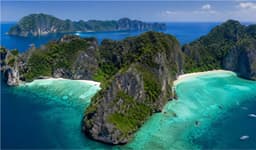

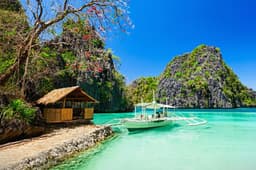
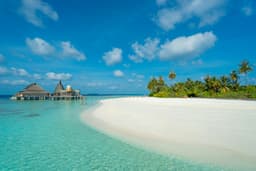



Short answer: The best things to do in the Maldives are almost all on or under the water: snorkel your house reef, swim with manta rays (Hanifaru Bay in Baa Atoll from roughly May to November) and whale sharks (South Ari Atoll, all year), take a dolphin cruise and a sandbank picnic, try water sports or surfing, and, if conditions line up, see glowing plankton on a dark night. On land, spend half a day in Malé for the coral stone Old Friday Mosque, the National Museum and the fish market, and stay at least a night or two on a local island to see everyday Maldivian life.
This guide lists 29 things to do in the Maldives, grouped by type, with where to do each one, the best months and typical 2025 to 2026 market prices. Prices quoted are general guide prices seen on local islands and from independent operators, not package prices, and most exclude the Maldives' tourism taxes, which are explained further down. Resort-run excursions usually cost noticeably more than the same trip booked from a guesthouse island.
What are the top things to do in the Maldives at a glance?
If you only have a few days, these are the experiences that most visitors rate as the highlights. The table shows where each works best and what you can expect to pay.
| # | Activity | Best place | Best months | Typical cost (guide, per person) |
|---|---|---|---|---|
| 1 | House reef snorkelling | Any resort or local island with a reef | All year (calmest December to April) | Free with own gear; gear hire about USD 5 to 15 a day |
| 3 | Manta ray snorkel | Hanifaru Bay, Baa Atoll | May to November, peak around June to October | Excursion plus conservation fee; varies by operator |
| 4 | Whale shark trip | South Ari Atoll (Dhigurah, Maamigili) | All year | About USD 90 to 130 from a guesthouse island |
| 8 | Dolphin sunset cruise | Most atolls, especially near channels | All year | About USD 25 to 45 |
| 9 | Sandbank picnic | Near Maafushi, Fulidhoo, Thoddoo and many resorts | All year (best on calm days) | Often bundled into snorkel trips of USD 35 to 80 |
| 11 | Surfing | Thulusdhoo (Cokes), North Malé Atoll | March to October | Board hire and boat trips vary by camp |
| 15 | Seaplane flight | From Velana International Airport | All year, daylight only | Usually priced as a resort transfer |
| 16 | Bioluminescent beach | Vaadhoo (Raa) and many other islands | Most often June to October, never guaranteed | Free if it appears |
| 20 | Malé city walk | Malé | All year (avoid prayer times at mosques) | Mostly free; museum entry is a small fee |
| 25 | Local island stay | Maafushi, Thulusdhoo, Dhigurah, Fulidhoo | All year | Guesthouse rates vary widely by season |
For the bigger picture on regions, budgets and transfers, start with our complete Maldives travel guide, then come back here to plan what to actually do each day.
What are the best underwater things to do in the Maldives?
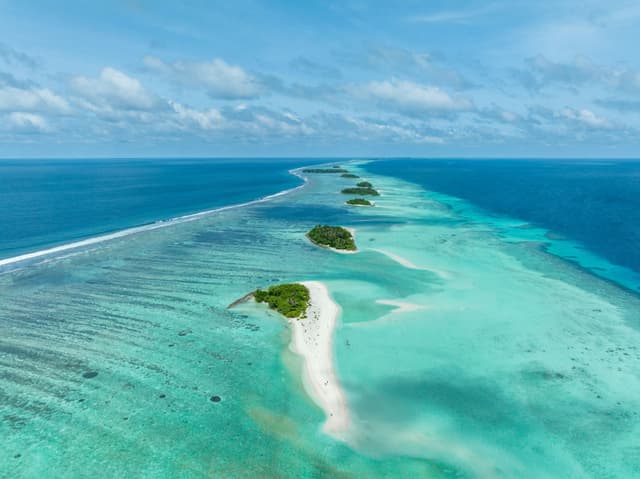
The Maldives is a chain of 26 natural atolls and around 1,190 coral islands spread across the equatorial Indian Ocean, and the reefs are the main reason people come. You do not need to be a diver: a mask, snorkel and fins are enough for most of the experiences below.
1. Snorkel your house reef
A house reef is the coral reef that surrounds the island you are staying on. On a good one you can step off the beach or a jetty ladder and, within minutes, see parrotfish, butterflyfish, moray eels, reef sharks and often hawksbill or green turtles. Quality varies a lot: some islands have a drop-off a few metres from shore, others have a wide shallow lagoon before the reef edge. If snorkelling is a priority, ask the property how far the drop-off is and whether there are marked entry points.
- Where: Most resorts and many local islands; Fulidhoo, Thoddoo and Dhigurah are known among budget travellers for easy reef access.
- When: All year. Visibility is usually best in the dry northeast monsoon, roughly December to April.
- Tip: Wear a rash guard and use mineral, reef-friendly sunscreen; never stand on coral.
2. Try scuba diving or a Discover Scuba session
Certified divers can dive channels (called kandu), submerged pinnacles (thila) and outer reef walls where sharks, rays and big schools gather. Non-divers can try a supervised Discover Scuba session in a lagoon or on a shallow reef, and many dive centres run full PADI or SSI open water courses over three to four days. Our detailed guide to diving in the Maldives covers sites, seasons and certification.
| Diving option | Who it suits | Typical guide price (local island dive centre) |
|---|---|---|
| Single boat dive | Certified divers | Around USD 50 plus equipment |
| Discover Scuba | Beginners aged 10 and up (operator rules apply) | Around USD 80 to 100 |
| Open water course | Anyone wanting certification | Varies by centre; resorts charge more |
| Liveaboard week | Keen divers covering several atolls | Varies widely by boat and route |
3. Swim with manta rays
Reef manta rays live in the Maldives all year, but where you find them depends on the monsoon. Plankton is pushed to the downwind side of the atolls, so the simple rule divers use is west side in the dry season, east side in the wet season.
| Season | Side of the atolls | Example manta sites |
|---|---|---|
| December to April (northeast monsoon) | Western sides | Rangali Madivaru (South Ari), Embudhoo Express (South Malé), Sola Corner (Raa) |
| May to November (southwest monsoon) | Eastern sides and lagoons | Hanifaru Bay (Baa), Lankan Manta Point (North Malé), Fesdhoo lagoon at night (North Ari) |
| Much of the year | Cleaning stations | Fushifaru (Lhaviyani), Maa Kandu (Addu) |
Hanifaru Bay is the headline spot. It sits inside the Baa Atoll Biosphere Reserve, which UNESCO designated in 2011 (a biosphere reserve, not a World Heritage Site, as some websites claim). In season, tide and monsoon currents trap plankton in this small bay and mantas arrive to feed, sometimes in groups of 100 or more, with whale sharks also seen. Because it is fragile, it is tightly managed:
- Snorkelling only. Scuba diving inside the bay is banned.
- Limited numbers. Boat and visitor numbers are capped and sessions are time limited, commonly reported as about 45 minutes.
- Registered guides. Visits go through licensed operators with rangers on site.
- Conservation fee. A per-person fee supports the Baa Atoll conservation fund. Reported amounts differ between sources, so confirm the current figure with your operator.
- Conduct. No touching, chasing or blocking mantas, and no flash photography.
The closest base for independent travellers is the local island of Dharavandhoo, which has a domestic airport; resorts across Baa Atoll also run trips. Sightings are never guaranteed, and the biggest feeding events tend to happen around full and new moons when currents are strongest.
4. Snorkel with whale sharks in South Ari Atoll
The southern rim of Ari Atoll, from Maamigili to Dhigurah, is one of the few places in the world where juvenile whale sharks are seen all year. It has been protected since 2009 as the South Ari Marine Protected Area, and researchers with the Maldives Whale Shark Research Programme have identified hundreds of individual sharks by their spot patterns. Sightings are frequent but never certain, so a trip of several hours searching the reef edge is normal.
| Whale shark code of conduct (South Ari) | What it means for you |
|---|---|
| Keep at least 3 metres away | Do not swim directly at the animal or cut across its path |
| No touching or riding | Touching can damage the protective skin layer |
| No flash photography | Natural light only |
| Limited swimmers per shark | Follow your guide's instructions on group size |
| Slow boats in the area | Propeller strikes are a real threat to whale sharks |
Dhigurah is the easiest local island base, and whale shark day trips from Maafushi and other Kaafu Atoll islands typically cost around USD 90 to 130 per person in 2025 to 2026. The ride is long, so take seasickness tablets if you need them.
5. Go night snorkelling with nurse sharks and rays
After dark, many reefs change character: nurse sharks rest on the sand, stingrays forage, and crabs and octopus come out. Some resorts and dive centres run guided night snorkels with torches, and a few islands gather nurse sharks and stingrays at the jetty in the evening. Only snorkel at night with a guide, and never alone.
6. Dive with tiger sharks at Fuvahmulah
Fuvahmulah, a single island atoll in the far south, is known among experienced divers for tiger sharks, which are present all year, plus thresher sharks and scalloped hammerheads (most often seen between January and April) and oceanic manta rays. The diving involves currents and blue water, so it suits advanced, shark-confident divers. The island is reached by domestic flight from Malé, roughly 1.5 hours.
7. Dive the Maldives Victory wreck
The cargo ship Maldives Victory hit the reef near the airport island of Hulhulé on 13 February 1981 and now sits upright at around 35 to 37 metres. All crew and passengers were rescued. It is one of the country's best known wreck dives and is close to Malé, but the depth and frequent current mean it is for experienced divers with deep training. The wreck was closed for some years during nearby bridge construction and reopened in 2019 with some damage.
What can you do on the water in the Maldives?
Above the reef, the lagoons and channels offer gentler experiences that work for non-swimmers, families and anyone who wants a break from snorkelling.
8. Take a dolphin sunset cruise
Spinner dolphins are common in the Maldives and often travel in pods near atoll channels in the late afternoon. A sunset cruise on a traditional wooden dhoni is one of the most popular and affordable excursions, usually 1.5 to 2 hours long. On local islands, expect to pay about USD 25 to 45 per person; resorts charge more but sometimes include drinks and snacks.
9. Picnic on a sandbank
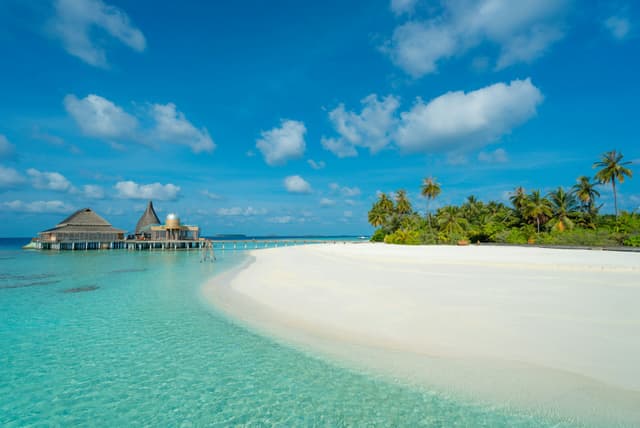
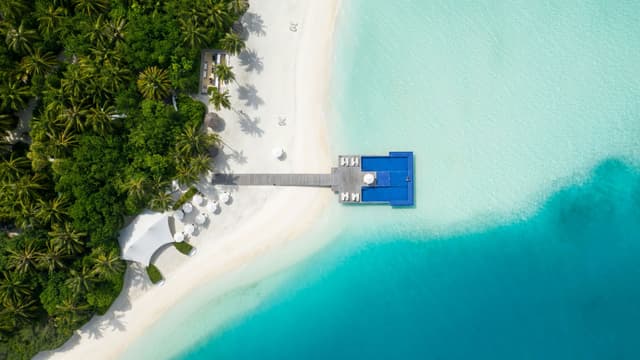
A sandbank is a strip of bare white sand surrounded by lagoon, sometimes only a few dozen metres long and changing shape with the tides. Day trips usually combine a sandbank stop with reef snorkelling and sometimes a barbecue lunch. Resorts can arrange private sandbank picnics or dinners for couples. Bring shade and water: there is usually none on the sand itself.
10. Try lagoon water sports
Shallow, sheltered lagoons make the Maldives easy for first-timers. Non-motorised sports such as kayaks and paddleboards are often included at resorts or cheap to hire, while motorised sports are charged separately. Our guide to water sports in the Maldives covers each option in more detail.
| Water sport | Typical duration | Typical guide price on local islands (2025 to 2026) |
|---|---|---|
| Kayak | 1 hour | About USD 10 (single) to 15 (double) |
| Stand up paddleboard | 1 hour | About USD 10 to 15 |
| Banana boat | 15 to 20 minutes | About USD 20 to 30 |
| Jet ski | 15 to 20 minutes | About USD 60 to 80 |
| Parasailing | 10 to 15 minutes in the air | About USD 60 to 80 |
| Windsurfing, kitesurfing, catamaran sailing | Lessons or hourly hire | Mainly at resorts with dedicated water sports centres; prices vary |
11. Surf Cokes and Chickens at Thulusdhoo
The Maldives has consistent reef breaks, and the main surf season runs from about March to October during the southwest monsoon, with July and August usually the biggest months. Thulusdhoo in North Malé Atoll is the best known surf island. Its signature wave, Cokes (named after the island's Coca-Cola bottling plant), is a fast right-hand reef break for advanced surfers only. Across the channel, Chickens is a long left-hander. Thulusdhoo is under 90 minutes from the airport by speedboat. Beginners should look for surf camps that teach on gentler breaks, or consider a surf charter boat.
12. Go night fishing on a dhoni
Fishing is part of Maldivian life, and traditional handline fishing at dusk is a relaxed outing for families and groups. Boats anchor over the reef as the sun goes down and crews show you how to use a weighted line with no rod. Snapper and grouper are common catches, and on many trips the crew or your guesthouse will cook what you catch. On local islands it typically costs about USD 30 to 50 per person for 2 to 3 hours. Ask your operator about catch-and-release for protected or undersized fish.
13. Ride the Whale Submarine from Malé
If someone in your group does not swim, the Whale Submarine is a way to see a reef from below without getting wet. It departs from Malé, with the full excursion taking about 2.5 hours including transfers and roughly 45 minutes underwater. The vessel is certified to dive to 150 metres, though the depth on each tour is set by the operator. Online listings show prices from roughly USD 120 per adult (2026) and departures on most but not all days of the week, so check the schedule before you plan around it.
14. Join a liveaboard safari
A liveaboard is a boat you sleep on for several nights while it moves between dive and snorkel sites in different atolls. It is the most efficient way to see mantas, whale sharks and channel dives in one trip, and it is also one of the few places outside resorts where alcohol is licensed. Routes typically follow the season, for example central atolls in the dry season and Baa Atoll during Hanifaru season.
Which once-in-a-lifetime experiences are worth it?
These experiences cost more or depend on luck, but they are what many people remember most.
15. Take a seaplane flight over the atolls
From the air, the atolls look like rings of turquoise and coral, and a seaplane ride is the best view you will get. Trans Maldivian Airways, which says it runs the world's largest seaplane fleet, flies de Havilland Canada DHC-6 Twin Otters from a dedicated terminal at Velana International Airport. Seaplanes fly in daylight only, so late international arrivals may need a night near the airport first. Most people experience a seaplane as a resort transfer; scenic flights can also be arranged. Baggage limits are tighter than on international flights, so check your allowance.
16. See the bioluminescent "sea of stars"
On some nights, tiny marine organisms such as dinoflagellates and ostracods give off flashes of blue light when the water is disturbed, so waves and footprints at the shoreline glow. Vaadhoo in Raa Atoll became famous for it, but the effect can appear on many islands. It is most often reported in the warmer months, roughly June to October, and is easiest to see on moonless nights away from artificial light. It is a natural event and is never guaranteed on any given date, so treat it as a bonus rather than a reason to book a specific island.
17. Eat in an underwater restaurant
Ithaa, at Conrad Maldives Rangali Island in South Ari Atoll, opened in 2005 and sits about 5 metres below the surface under a curved acrylic roof, with seating for 14. Several other resorts now have underwater dining rooms. These are premium experiences that need booking well ahead, and non-residents usually need to arrange a visit through the resort, so check availability directly.
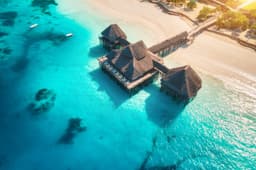
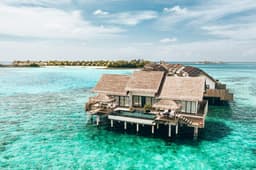
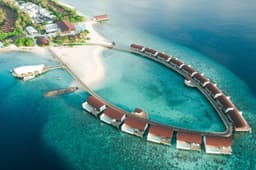
18. Stay a night in an overwater villa
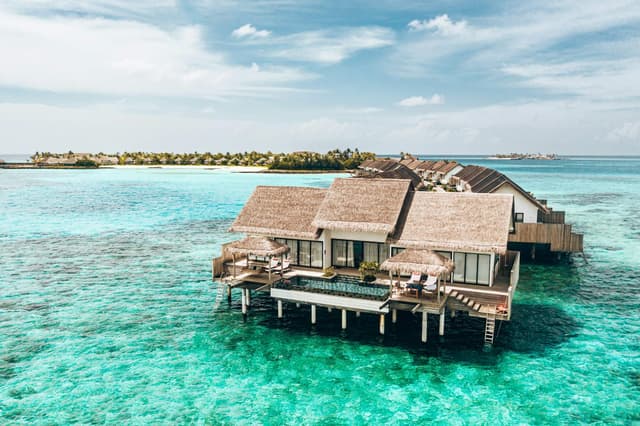
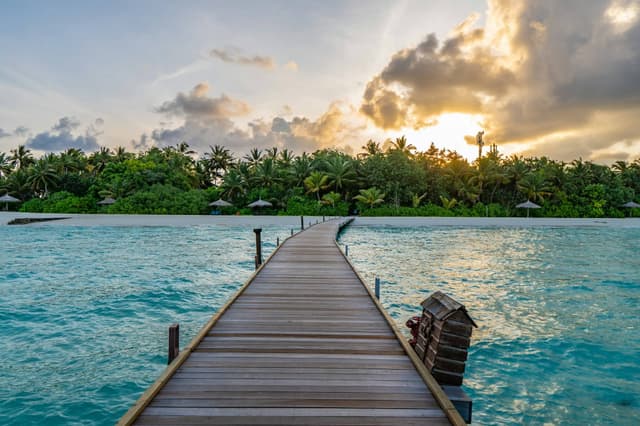
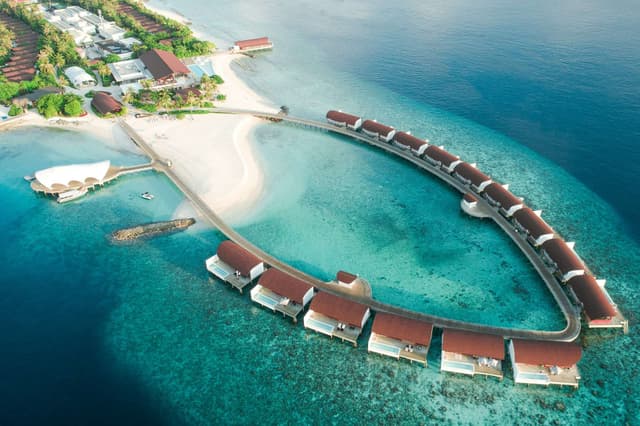
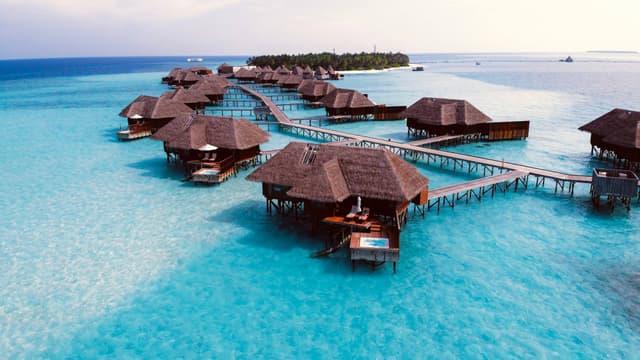
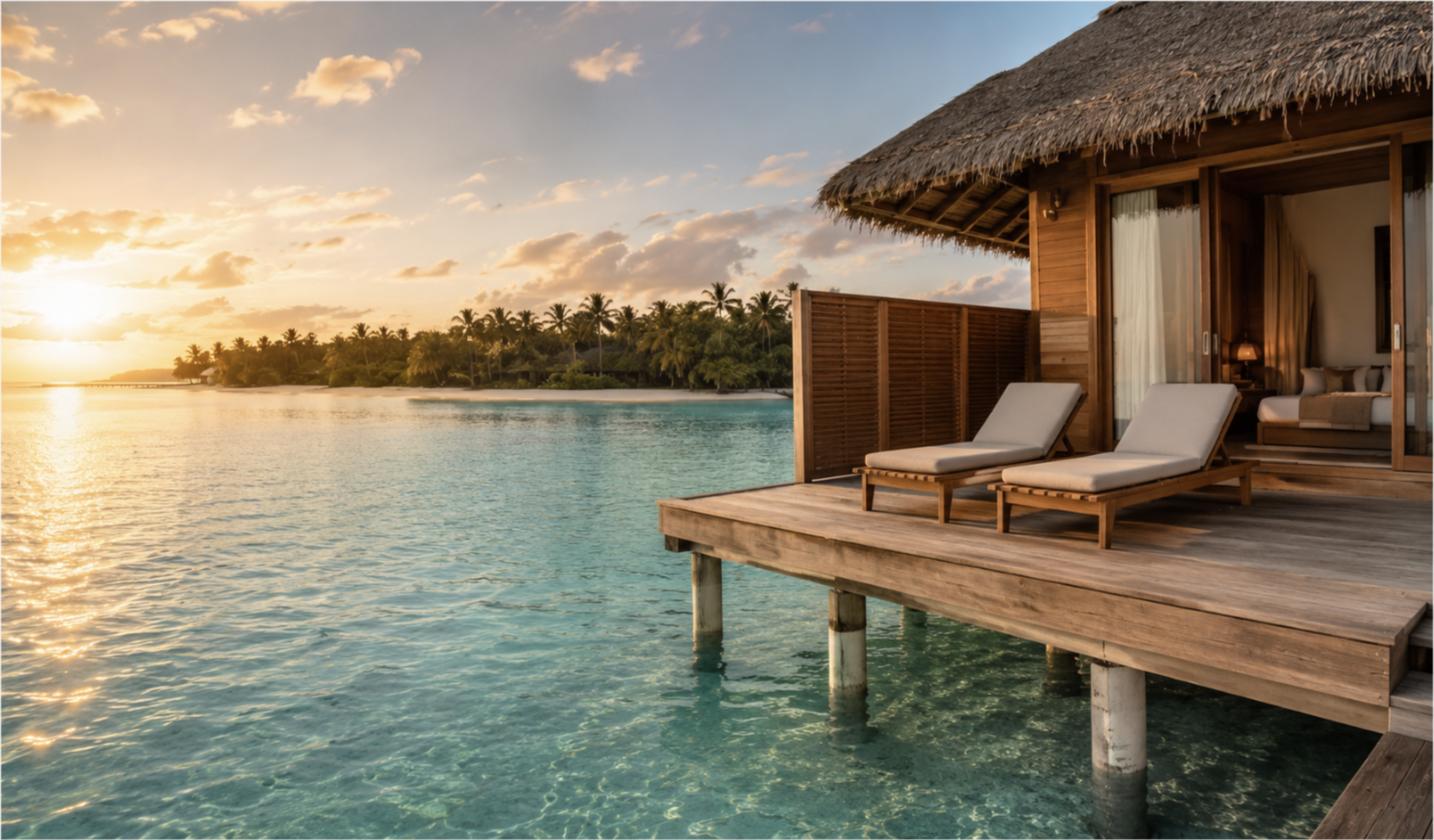
Waking up above the lagoon, with steps straight into the water, is the classic Maldives image. Overwater villas are not automatically better than beach villas, though: beach villas often have more privacy and are better for small children. Choose based on how you want to spend your days, not only on the photo.
19. Book a spa treatment or a private dinner
Many resorts have overwater spa pavilions with glass floor panels, and private beach or sandbank dinners are a popular honeymoon and anniversary add-on. Prices vary enormously by resort, so ask for the spa and dining menus with taxes included before you arrive.
What is there to do in Malé and Hulhumalé?
Malé, the capital, is one of the most densely built cities in the world and only about 2 km across, so a self-guided walk covers the main sights in a few hours. It is a good use of a layover or the first afternoon of a local island trip. Dress modestly in the city: cover shoulders and knees.
20. Visit the Old Friday Mosque (Hukuru Miskiy)
Completed in 1658 under Sultan Ibrahim Iskandar I, Hukuru Miskiy is built from carved coral stone blocks and is famous for its intricate Quranic inscriptions and lacquered woodwork. The coral stone mosques of the Maldives were added to UNESCO's World Heritage tentative list in 2008. The mosque is an active place of worship: non-Muslims normally need permission to enter, so most visitors admire the exterior, the minaret and the old cemetery with carved coral tombstones. Avoid prayer times and dress conservatively.
21. Explore the National Museum and Sultan Park
The National Museum, next to Sultan Park in central Malé, holds Buddhist-era coral carvings from before the country converted to Islam in the 12th century, royal regalia, weapons and sultanate artefacts. Entry is a small fee in Maldivian rufiyaa, and a visit takes about an hour. Opening hours are limited and it is typically closed on Fridays, so check before you go.
22. Walk through the fish market and local market
On Malé's waterfront near the main harbour, fishing boats unload skipjack and yellowfin tuna, which are cut up and sold on the spot. Mornings and late afternoons are the liveliest. The neighbouring local market sells fruit, dried fish, chillies and snacks such as betel leaf bundles. It is free to walk through; ask before photographing people.
23. Relax at the Artificial Beach and Rasfannu
Malé's man-made beaches are where residents swim, play football and gather in the evening, especially on weekends. They are good for people watching and a sunset walk, but they are public city beaches, so swim in modest clothing (shorts and a T-shirt or rash guard) rather than a bikini.
24. Spend an evening in Hulhumalé
Hulhumalé is a planned city on reclaimed land next to the airport island, linked by road to the airport and to Malé via the Sinamalé Bridge. It has a long public beach, a central park, cafes and hotels, and is a practical base before an early flight or after a late arrival. The beach is shared with residents, so cover up over swimwear. The airport is roughly 10 minutes away by taxi, and public buses run on the island.
| Malé and Hulhumalé sight | Time needed | Cost | Good to know |
|---|---|---|---|
| Hukuru Miskiy (Old Friday Mosque) | 20 to 30 minutes outside | Free to view | Entry for non-Muslims needs permission |
| National Museum | About 1 hour | Small fee in rufiyaa | Limited hours; check Friday closures |
| Fish market | 20 to 30 minutes | Free | Best in the morning or late afternoon |
| Artificial Beach and Rasfannu | As long as you like | Free | Modest swimwear only |
| Hulhumalé beach and park | Half a day | Free | Close to the airport; good for layovers |
How can you experience local island life in the Maldives?
Since guesthouse tourism was permitted on inhabited islands in 2009, travellers have been able to stay in Maldivian communities rather than only on private resort islands. It is usually much cheaper and gives a very different view of the country. To compare costs between the two styles, see our breakdown of whether the Maldives is expensive.
25. Stay on a local island
Popular local islands include Maafushi (the busiest, with many excursions), Thulusdhoo (surf), Dhigurah (whale sharks), Fulidhoo and Thoddoo (quieter, good reefs), Dharavandhoo (Hanifaru access) and Ukulhas. Getting there is by public ferry, shared speedboat or domestic flight. For example, Malé to Maafushi takes about 1.5 hours by public ferry (a fare of roughly USD 2, with no ferry on Fridays) or about 45 minutes by shared speedboat (around USD 20 one way). See our guide on how to get around the Maldives for ferries, speedboats and domestic flights.
| Local island rule | What it means in practice |
|---|---|
| No alcohol | Alcohol cannot be sold or consumed on inhabited islands; it is allowed on resorts, licensed liveaboards and licensed floating bars |
| Bikini beaches | Swimwear is fine only on designated tourist beaches, usually fenced or signposted |
| Modest dress in the village | Cover shoulders and knees away from the bikini beach |
| Friday is the main prayer day | Shops close around midday prayers and some ferries do not run |
| Ramadan | Avoid eating or drinking in public during daylight; guesthouses still serve guests |
| Public affection | Keep it low key |
Our full list of dos and don'ts in the Maldives covers etiquette in more depth.
26. Book a resort day pass or visit a floating bar
If you stay on a local island but want a taste of resort life, many resorts near Maafushi and other guesthouse islands sell day passes that usually include transfers, lunch and drinks, at about USD 110 to 160 per person on local island price lists. Floating bars are licensed boats moored offshore where guesthouse guests can buy a drink legally. Both are good options if you are mixing a budget base with one or two splurge days.
27. Try Maldivian food and watch Bodu Beru
Maldivian cooking revolves around tuna, coconut, chilli and starch. Try mas huni (tuna, coconut, onion and chilli, eaten with roshi flatbread) for breakfast, garudhiya (clear fish broth served with rice, lime and chilli), and short eats such as hedhikaa snacks in a local teashop. Many guesthouses and some resorts host bodu beru, a traditional drumming and dance performance. Resort buffets often include a Maldivian corner, so ask for it if you do not see it.
How can you help protect Maldivian reefs and turtles?
Coral bleaching, plastic and ghost nets are real threats in the Maldives. These two activities let you learn something and give something back.
28. Visit a sea turtle rescue centre
The Olive Ridley Project, a sea turtle conservation charity, treats turtles injured by abandoned fishing nets and other causes. Its Marine Turtle Rescue Centre at Coco Palm Dhuni Kolhu in Baa Atoll, opened in 2017, welcomes visitors during daytime hours, and it also runs a care centre at a resort in Raa Atoll and a larger clinical facility in Lhaviyani Atoll. You can also contribute to its turtle photo identification work by submitting clear side-on photos of the turtles you see while snorkelling. Check the Olive Ridley Project website for current visiting arrangements.
29. Join coral planting or a marine biology talk
Many resorts employ marine biologists who run reef talks, guided snorkels and coral restoration programmes, where you can help attach coral fragments to frames that are then placed on the reef. Some programmes let you follow your frame's growth online afterwards. Ask what the programme actually measures and how long it has run: the best ones publish survival rates and work with researchers.
How much do things to do in the Maldives cost, including taxes?
Activity prices on local islands are relatively modest; the bigger surprise for many travellers is the taxes. Under Maldivian law, most tourism goods and services carry Tourism Goods and Services Tax (T-GST), resort bills usually add a 10% service charge, and there is a nightly green tax per guest. The figures below are from the Maldives Ministry of Finance and the Maldives Inland Revenue Authority as of late 2025 and may change.
| Tax or charge | Rate | Since | Applies to |
|---|---|---|---|
| Tourism GST (T-GST) | 17% | 1 July 2025 (previously 16%) | Accommodation, food, drinks, excursions and other tourism services |
| Service charge | 10% | Long-standing | Most resort and hotel bills |
| Green tax (resorts, larger hotels) | USD 12 per person per night | 1 January 2025 | Resorts and hotels other than small guesthouses |
| Green tax (small guesthouses) | USD 6 per person per night | 1 January 2025 | Guesthouses and hotels with 50 or fewer rooms on inhabited islands |
| Children | Green tax exempt | Children under 2 |
When you leave from Velana International Airport, a combined departure tax and airport development fee is charged, normally included in the price of your air ticket. For tickets issued from 1 December 2024, the combined amounts are:
| Travel class | Departure tax plus airport development fee |
|---|---|
| Economy | USD 50 |
| Business | USD 120 |
| First | USD 240 |
| Private jet | USD 480 |
Official details are published by the Maldives Ministry of Finance. When comparing excursion prices, always ask whether a quote is "plus plus" (before service charge and T-GST) or all-inclusive.
When is the best time for each activity in the Maldives?
The Maldives is warm all year, typically around 26 to 31 degrees Celsius. The northeast monsoon (about December to April) is drier, sunnier and calmer, while the southwest monsoon (about May to November) brings more rain, wind and swell, but also manta season at Hanifaru and the main surf season. Our guide to the best time to visit the Maldives goes month by month.
| Activity | Best window | Notes |
|---|---|---|
| Snorkelling and diving visibility | December to April | Calmer seas, clearer water |
| Hanifaru Bay mantas | May to November | Peak roughly June to October; around full and new moons |
| Mantas on western reefs | December to April | Follow the plankton to the downwind side |
| South Ari whale sharks | All year | Calmer days make spotting easier |
| Surfing | March to October | July and August usually biggest |
| Bioluminescence | Most reports June to October | Moonless nights; never guaranteed |
| Tiger sharks at Fuvahmulah | All year | Threshers and hammerheads mostly January to April |
| Dolphin cruises and sandbanks | All year | Rougher seas can cancel trips in the wet season |
If you are travelling from South Asia, note that the long autumn festival holidays (such as Dashain and Diwali) usually fall between late September and November, at the tail end of the wetter season, and resort prices and flight demand rise around the December to January peak.
What do you need to know before you go?
A few rules catch out first-time visitors every week. Visa rules depend on your passport, so always confirm with official sources before travel.
| Topic | What to know | Official source |
|---|---|---|
| Entry | The Maldives grants a 30-day visa on arrival to visitors of all nationalities who meet entry conditions, such as a valid passport, a confirmed accommodation booking and an onward or return ticket | Maldives Immigration |
| IMUGA traveller declaration | Complete the online arrival declaration within 96 hours before your flight, one per traveller including children, and keep the QR code on your phone | imuga.immigration.gov.mv |
| Alcohol | You cannot bring alcohol into the country, even from duty free; it may be held at customs | Maldives Customs Service |
| Vapes and tobacco | Import, sale and use of vapes and e-cigarettes have been banned since 15 December 2024, so do not pack one; since 1 November 2025, anyone born on or after 1 January 2007, tourists included, cannot buy or use tobacco | Maldives Ministry of Health |
| Money | The currency is the Maldivian rufiyaa (MVR); US dollars are widely accepted at resorts and tourist businesses | Maldives Monetary Authority |
| Dress | Modest dress in Malé and on local islands; swimwear on resorts and bikini beaches |
How many things can you fit into one trip?
Most visitors stay four to seven nights. Because transfers between atolls take time and depend on weather, it is better to pick one or two bases that suit your priorities than to try to do everything. A rough guide:
| Trip length | Realistic focus |
|---|---|
| 3 to 4 nights | One resort or one local island; house reef, a dolphin cruise and a sandbank or snorkel trip |
| 5 to 7 nights | Split between a local island and a resort, or add a whale shark or manta trip in season |
| 8 nights or more | Add a second atoll, a liveaboard, surfing, or a Malé day at the start or end |
Families should check minimum ages for diving, water sports and some excursions, and look for resorts with shallow lagoons and kids clubs. Couples often prioritise a private sandbank dinner, a sunset cruise and an overwater villa night.
If you would rather have resort stays, transfers and the excursions above arranged together in one plan, you can compare options on our Maldives holiday packages page.
Frequently asked questions
What is the number one thing to do in the Maldives?
For most visitors it is snorkelling the coral reef around their island, because it needs no special training and can be done every day. In season, snorkelling with manta rays at Hanifaru Bay in Baa Atoll or whale sharks in South Ari Atoll is the standout once-in-a-lifetime experience.
Do you need to be able to swim to enjoy the Maldives?
It helps, but it is not essential. Life jackets are widely available for snorkelling trips, and non-swimmers can enjoy dolphin cruises, sandbank picnics, seaplane flights, the Whale Submarine from Malé, night fishing and spa treatments. Always tell your guide if you are not a confident swimmer.
When is manta ray season at Hanifaru Bay?
Mantas gather at Hanifaru Bay from roughly May to November, with the biggest feeding events usually between June and October, often around full and new moons. Visits are snorkel only, numbers are capped and sessions are time limited. Elsewhere in the Maldives, mantas can be seen all year on different sides of the atolls.
Can you see whale sharks in the Maldives all year?
Yes. Juvenile whale sharks live along the southern rim of South Ari Atoll throughout the year, inside the South Ari Marine Protected Area. Sightings are frequent but never guaranteed. Keep at least 3 metres away, do not touch the sharks and do not use flash photography.
Is the bioluminescent beach in the Maldives guaranteed?
No. The glowing water is caused by plankton and only appears when conditions are right. It is reported most often from about June to October and is easiest to see on dark, moonless nights. Vaadhoo in Raa Atoll is famous for it, but it can occur on many islands.
Can you drink alcohol on local islands in the Maldives?
No. Alcohol is not sold or allowed on inhabited local islands. It is available on resort islands, licensed liveaboards and licensed floating bars moored near some local islands. You also cannot bring alcohol into the country through the airport, even if bought in duty free.
Can you wear a bikini on local islands?
Only on designated bikini beaches, which are usually signposted or screened off for tourists. In the village, in Malé and on public city beaches, cover your shoulders and knees. On resort islands there are no such restrictions.
What taxes will you pay on activities in the Maldives?
Most tourism services carry 17% Tourism GST (since 1 July 2025), and resort bills usually add a 10% service charge. Accommodation also attracts a green tax of USD 12 per person per night at resorts or USD 6 at small guesthouses on inhabited islands. Ask whether prices include these.
What is the IMUGA form?
IMUGA is the Maldives' online traveller declaration. Every arriving traveller, including children, must complete it on the official immigration portal within 96 hours before their flight and keep the QR code for arrival. Using the official site directly is the safest option.
What can you do in Malé in half a day?
Walk past the coral stone Old Friday Mosque (Hukuru Miskiy), visit the National Museum beside Sultan Park, see tuna being landed at the fish market and finish at the Artificial Beach. Malé is compact and walkable. Dress modestly and avoid mosques at prayer times.
When is the surf season in the Maldives?
The main surf season runs from about March to October, with the biggest swells usually in July and August. Thulusdhoo in North Malé Atoll, home to the Cokes and Chickens breaks, is the best known surf base. Cokes is for advanced surfers only; beginners should book lessons on gentler breaks.
'/%3E%3C/svg%3E)