
















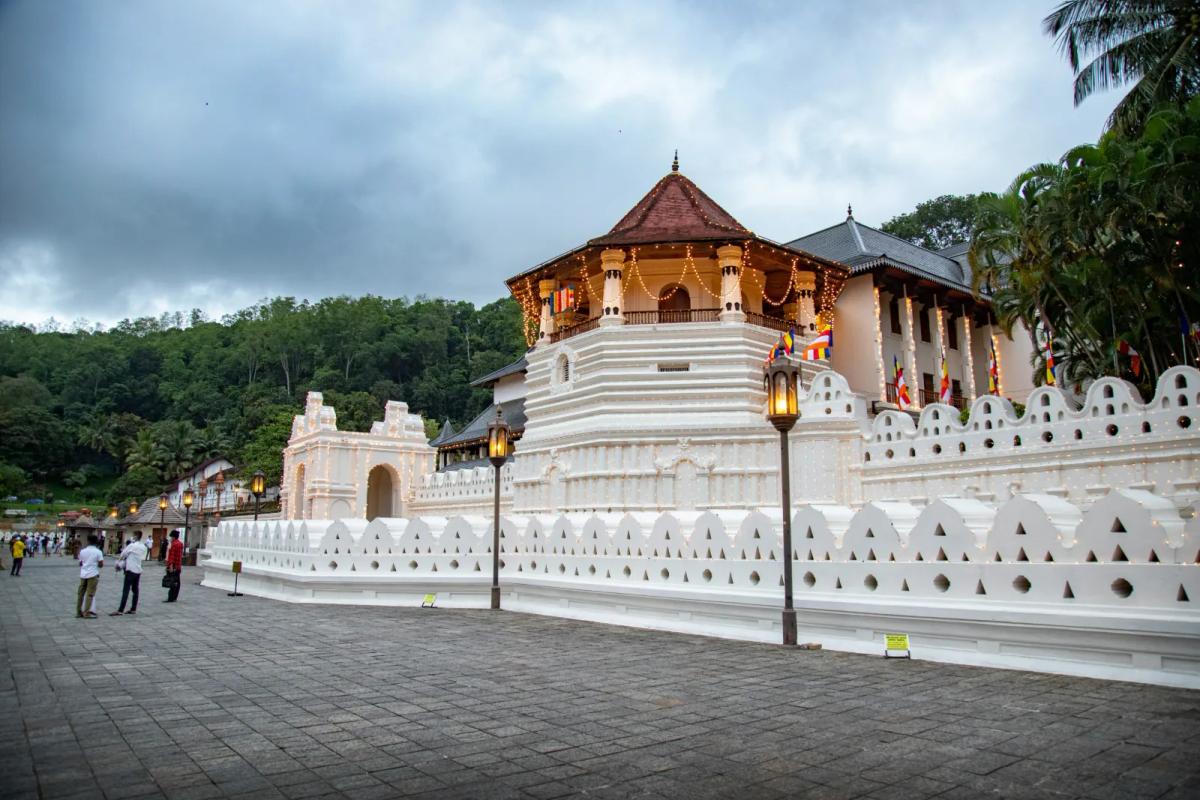
Short answer: The Temple of the Tooth in Kandy, Sri Lanka (Sri Dalada Maligawa) is the shrine that holds the island's most sacred Buddhist relic, a tooth of the Buddha, inside the old royal palace complex on the shore of Kandy Lake. It is open every day from 5:30am to 8pm, and the three daily puja ceremonies (called Thewawa) run from 5:30am to 7am, 9:30am to 11am and 6:30pm to 8pm. Cover your shoulders and knees, leave your shoes at the counter, expect a security scan, and plan your visit around a puja for the drumming and the opening of the shrine room doors. The great Esala Perahera procession honours the relic each July or August.
This guide is written for travellers from anywhere, and with an extra eye on visitors from Nepal, where the Buddha was born and where many families travel to Kandy as a pilgrimage as much as a holiday. It covers what the temple is, the official ritual times, the dress code and entry procedure, the Esala Perahera dates, the best sights in Kandy town, how to get there from Colombo (including the current rail situation), and when to go. Opening hours, ritual times and festival dates below were checked against the temple's own website and Sri Lankan news sources in November 2026. Rules at sacred sites can change at short notice, so treat the times as a guide and confirm on the day.
If you are still shaping a wider trip, our complete Sri Lanka travel guide covers the whole island, and this page goes deep on one of its essential stops.
What is the Temple of the Tooth in Kandy, Sri Lanka?
The Temple of the Tooth is the Buddhist temple in Kandy that enshrines the Sacred Tooth Relic of the Buddha, and it is the most important Buddhist site in Sri Lanka. In Sinhala it is called Sri Dalada Maligawa, which roughly means the palace of the sacred tooth. It stands within the former royal palace complex on the north shore of Kandy Lake, and it is the centrepiece of the Sacred City of Kandy, which UNESCO inscribed as a World Heritage Site in 1988 (Sacred City of Kandy).
It is not a museum piece. The temple is a working place of worship, run by a lay custodian known as the Diyawadana Nilame together with Buddhist monks of the Malwatte and Asgiri chapters, who perform the daily rituals. On a normal morning you share the corridors with families in white carrying lotus flowers, schoolchildren on a study visit, monks in saffron robes and drummers beating the hewisi rhythm that announces each ceremony. That living atmosphere is why most visitors remember Kandy more vividly than many grander monuments.
| Temple of the Tooth at a glance | Details (checked November 2026) |
|---|---|
| Official name | Sri Dalada Maligawa, Temple of the Sacred Tooth Relic |
| Location | Kandy, Central Province, Sri Lanka, beside Kandy Lake |
| Kandy elevation | About 500 m (1,640 ft) above sea level (Britannica) |
| Opening hours | Daily, 5:30am to 8pm Sri Lanka time |
| Daily puja (Thewawa) | 5:30am to 7am, 9:30am to 11am, 6:30pm to 8pm |
| Weekly ritual | Nanumura Mangallaya, Wednesdays at 9:30am |
| UNESCO status | Part of the Sacred City of Kandy, inscribed 1988 |
| Ticket covers | Temple, Dalada Museum, World Buddhist Museum, Tusker Museum, Royal Elephant Stable |
| Time needed | About 1.5 to 2 hours, longer if you stay for a full puja |
Hours, ritual times and ticket coverage come from the Sri Dalada Maligawa official FAQ.
How did the Buddha's tooth relic reach Kandy?
According to the traditional account, the relic was kept in Kalinga in eastern India after the Buddha's passing. When Kalinga came under attack, Princess Hemamali and Prince Dantha carried it to Sri Lanka, hidden for safety, during the reign of King Sirimeghavanna of Anuradhapura in the 4th century CE. The king enshrined it in the ancient capital, and from then on the relic followed the island's rulers from capital to capital: Anuradhapura, Polonnaruwa, Dambadeniya, Gampola, Kotte and finally Kandy (Temple of the Tooth, Wikipedia).
The reason it moved so often is political as much as religious. For centuries, custody of the tooth relic was seen as the right to rule Sri Lanka, so every king built the relic temple close to his palace. Kandy became the capital of the last independent Sinhalese kingdom in 1592, and it held out against the Portuguese and the Dutch until the British deposed the last Kandyan king, Sri Wickrama Rajasinha, in 1815 (Britannica).
| Period | What happened |
|---|---|
| 4th century CE | Relic arrives from Kalinga during the reign of Sirimeghavanna of Anuradhapura |
| Medieval capitals | Relic housed near the royal palaces of Polonnaruwa, Dambadeniya, Gampola and Kotte |
| Late 16th century | King Vimaladharmasuriya I builds a relic house in Kandy; Kandy becomes capital in 1592 |
| Kandyan kings | Present temple built under Vira Narendra Sinha; the octagonal Pattirippuwa added under Sri Wickrama Rajasinha |
| 1815 | British take Kandy and the kingdom ends |
| 1988 | Sacred City of Kandy inscribed on the UNESCO World Heritage List |
| 1998 | The complex is damaged in an LTTE bomb attack and later restored |
| April 2025 | Rare 10 day public exposition of the relic, Siri Dalada Vandanawa |
What will you see inside the temple complex?
The complex is larger than first-time visitors expect, and a ticket covers several buildings. The main parts are below, roughly in the order most people walk them.
- The moat and outer wall: the temple is ringed by a moat and a low white wall; the moat, like the octagon, dates from the last Kandyan king.
- The Pattirippuwa: the octagonal pavilion facing the lake, the most photographed part of the temple. It was added under King Sri Wickrama Rajasinha and is credited to the royal architect Devendra Moolacharya. Today it houses the temple library.
- The entrance tunnel: painted Kandyan murals line the way in, and at puja time the sound of drums fills the halls beyond it.
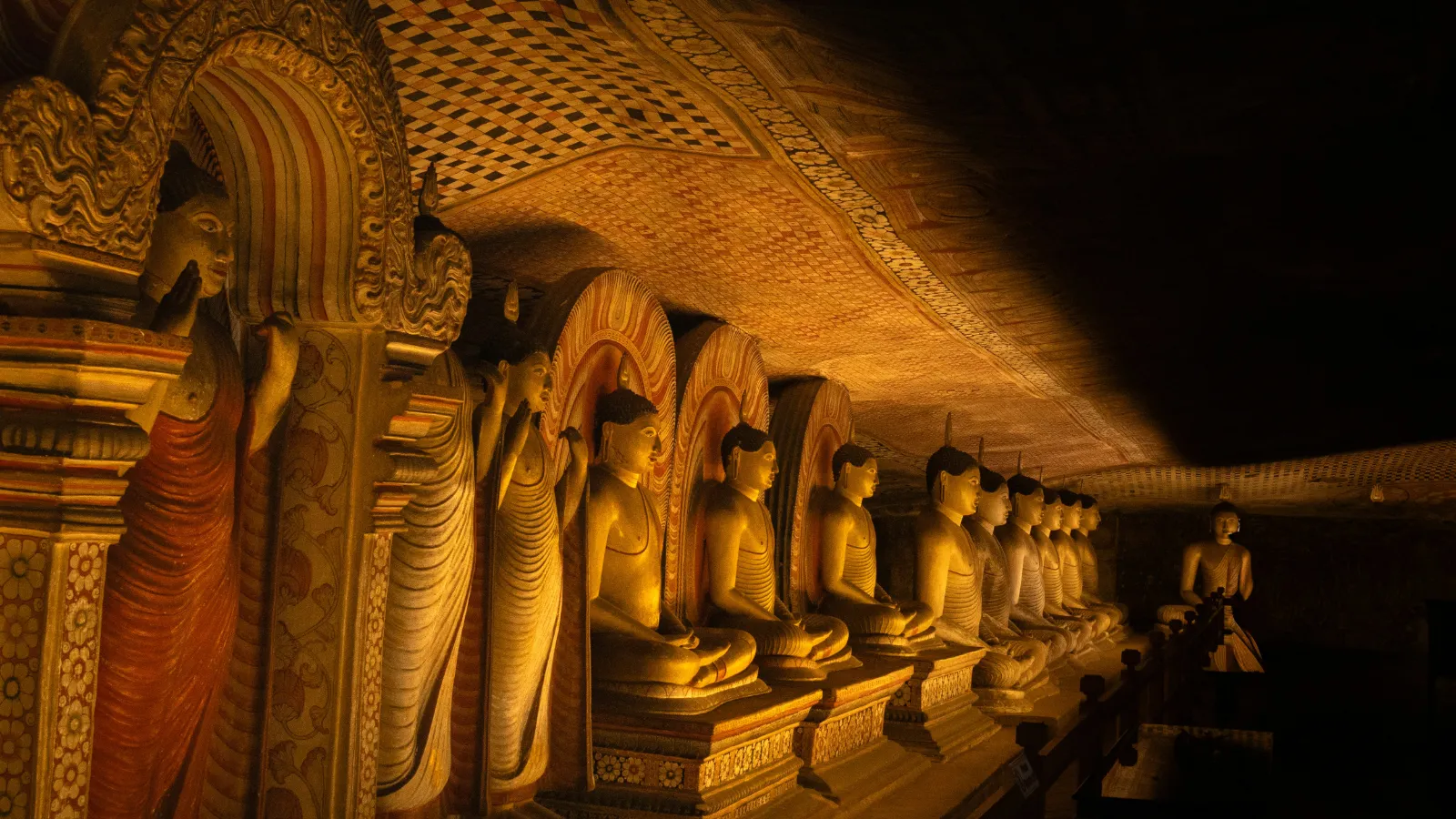
- The relic chamber: in the inner chamber, the Weda Hitana Maligawa, the relic sits inside seven nested golden caskets shaped like a stupa. Pilgrims queue past the chamber doors when they open during the puja.
- The Alut Maligawa (New Palace): a three storey addition behind the main shrine with a large shrine hall, quieter than the relic chamber and a good place to sit for a while.
- Museums: the Dalada Museum, the World Buddhist Museum and the Tusker Museum, which remembers Raja, one of the famous tuskers that carried the relic casket in the Esala Perahera.
- The former royal palace: the palace beside the temple is preserved as an archaeological museum.
Close by, but outside the main temple, are the four devales (shrines) of Kandy's guardian deities, Natha, Vishnu, Kataragama and Pattini, whose processions join the Esala Perahera every year. Hindu visitors from Nepal and India often find this side of Kandy surprising and familiar at the same time: Vishnu is honoured here, and Kataragama is identified with Skanda (Kartikeya) (Kandy Esala Perahera, Wikipedia).
Can you actually see the tooth relic?
No, not on a normal visit. What you see when the shrine room doors open during the puja is the outer golden casket, not the tooth itself. The relic is only shown to the public on very rare occasions. The most recent was the Siri Dalada Vandanawa exposition from 18 to 27 April 2025, the first in 16 years (Daily FT). It drew enormous crowds, and photography of the relic was strictly prohibited during the viewing (Daily FT). Do not plan a trip on the assumption of another exposition; none had been announced when we checked in November 2026.
Why does the Temple of the Tooth matter to Buddhists from Nepal?
For Nepali Buddhists, Kandy is one end of a story that begins at home. The Buddha was born at Lumbini in the Terai of southern Nepal, which UNESCO describes as one of the holiest places of one of the world's great religions (UNESCO, Lumbini). The tooth relic in Kandy is venerated as a physical relic of that same teacher, so many Nepali families visit both places across a lifetime.
There is also a modern link. Sri Lanka follows the Theravada tradition, and Nepal's twentieth century Theravada revival had early ties to the island: Dhammalok Mahasthavir, who founded Ananda Kuti Vihar at Swayambhu in 1943, the first Theravada monastery in modern Nepal, travelled to Sri Lanka for religious study in 1929 (Dhammalok Mahasthavir, Wikipedia). Newar and Himalayan Buddhist visitors will notice differences in ritual, but the core gestures, offering flowers, lighting lamps, walking clockwise and bowing to the Buddha, feel instantly familiar.
Buddhist context note: this is a factual note, not a pilgrimage claim. Lumbini and Kandy are separate sites with separate custodians; nothing in Kandy is formally linked to Lumbini beyond the shared veneration of the Buddha.
When are the daily puja times at the Temple of the Tooth?
The Temple of the Tooth holds three daily ritual services, called Thewawa: early morning from 5:30am to 7am, mid-morning from 9:30am to 11am, and evening from 6:30pm to 8pm, Sri Lanka time. The temple itself is open to devotees from 5:30am to 8pm every day (checked November 2026, Sri Dalada Maligawa FAQ).
| Puja box: ritual | Time (Sri Lanka, GMT+5:30) | What to expect |
|---|---|---|
| Early morning Thewawa | 5:30am to 7am | Quietest service, mostly local devotees, cool air |
| Mid-morning Thewawa | 9:30am to 11am | Busiest with tour groups and school visits |
| Evening Thewawa | 6:30pm to 8pm | Drumming, lamps and the largest crowds of pilgrims |
| Nanumura Mangallaya | Wednesdays, 9:30am | Symbolic bathing of the relic with a herbal preparation |
| Opening hours | 5:30am to 8pm daily | Arrive 30 to 45 minutes early for shoes, scan and queue |
Older guidebooks and some websites give the puja times as "dawn, noon and evening" or as single start times such as 5:30am, 9:30am and 6:30pm. The start times match; the official FAQ also gives the end times, which helps if you want to arrive mid-ritual rather than at the start. Sri Lanka is 15 minutes behind Nepal, so if your phone is still on Kathmandu time, the evening puja starts at 6:45pm Nepal time.
Which puja should you choose?
Choose the evening puja for atmosphere and the early morning one for calm. The evening service, with drums, conch and lamps against the dark lake, is the classic experience, and it pairs well with an early evening Kandyan dance show nearby. The 5:30am service rewards travellers who stay the night in Kandy: fewer visitors, cooler air and more space at the shrine doors. The 9:30am service is convenient for day visitors arriving from Colombo or Sigiriya, but it is also when coaches arrive. On Wednesdays it doubles as the Nanumura Mangallaya, when the relic is symbolically bathed with a herbal preparation and the blessed water is shared with those present.
Full moon (Poya) days are public holidays in Sri Lanka and the busiest days at the temple. If you want to see Kandy at its most devotional, go on a Poya. If you want a relaxed first visit, avoid them.
What is the dress code and etiquette at the Temple of the Tooth?
Dress modestly: shorts, sleeveless tops and revealing clothing are not permitted, so cover your shoulders and knees. Shoes, bulky bags and non-essential items are handed in at the reception booths before you enter, and every visitor and offering is screened with scanning machines. Suitable clothing is available at the entrances if you arrive underdressed (checked November 2026, Sri Dalada Maligawa FAQ).
White is not a written rule for visitors, but it is the colour Sri Lankan devotees traditionally wear to the temple, and you will see whole families dressed in it. Wearing white or other light, plain colours is a simple way to show respect, and it is what many Nepali Buddhist visitors choose anyway. Our wider guide to temple manners and other dos and don'ts in Sri Lanka explains how strictly guards apply these rules at other sites too.
Dress and etiquette checklist
- Shoulders covered: a T-shirt with sleeves, a shirt or a blouse; a shawl over a sleeveless top is the minimum.
- Knees covered: trousers, a long skirt or a sarong; men and women follow the same rule.
- White or light plain colours recommended; avoid clothes with slogans or images of the Buddha.
- Shoes off: leave them at the reception booth and collect a token. Socks help on hot or slippery floors.
- No polythene or plastic bags or containers, including for offerings.
- No pets on the premises.
- Keep bulky luggage and non-essential items out; hand them in at the reception booths.
- Walk clockwise around shrines and stupas, keep your voice low and move with the queue.
- Never point your feet at a Buddha image or sit with your back to it, and never pose for a selfie with your back to a statue.
- Cover any tattoo showing the Buddha. In 2014 a British tourist with a Buddha tattoo on her arm was deported from Sri Lanka, a case widely reported at the time (CBS News).
How does entry work for foreign visitors?
Entry for foreign visitors follows a set sequence: hand in your shoes and bags at the reception booths, collect a token, buy your ticket from the official machines, then pass the security scan before entering. The official FAQ says there are separate booths for local devotees and for foreign tourists, and that tickets are issued only by the machines at the temple: tickets or fees taken by individuals or other organisations are not valid (checked November 2026). Ignore anyone outside who offers to sell you a ticket or "skip the queue".
| Step | What happens | Tip |
|---|---|---|
| 1. Reception booth | Leave footwear, bulky bags and non-essentials; take a token | Use the foreign tourist booth |
| 2. Ticket machine | Buy the foreign visitor ticket at the temple's machines only | SAARC nationals, including Nepali passport holders, have their own ticket category; carry your passport |
| 3. Security scan | Visitors and offerings are screened | Carry only flowers, small cash and your phone |
| 4. Temple and museums | One ticket covers the temple, museums and Royal Elephant Stable | Keep the ticket until you finish the museums |
| 5. Exit and collect shoes | Return the token and collect your belongings | Note your booth number |
We do not publish ticket prices; the current categories and amounts are listed on the temple's FAQ page. Visitors with limited mobility can arrange assistance, including transport from the main entrance and use of a lift, through the temple's administration office, according to the same page. That is worth knowing if you are travelling abroad with elderly parents, which many Nepali pilgrims do.
Security has a history here. The temple was attacked by the LTTE in 1998, and scanning has been part of every visit ever since. During large events, such as the Esala Perahera, police and armed forces add extra checkpoints around the town, so allow more time.
Can you take photos inside the Temple of the Tooth?
Photography is generally tolerated in the courtyards and outer halls, but treat the relic chamber, the inner shrine and anyone at prayer as off limits unless staff clearly allow it. Follow every no-photography sign, never use flash during a puja, and never pose with your back to a Buddha statue, an altar or the relic shrine; Lonely Planet's Sri Lanka etiquette guide notes that such selfies are seen as disrespectful (Lonely Planet). Rules can be stricter at special events: during the 2025 relic exposition, photographing the relic was strictly prohibited and mobile phones were banned inside the temple. Drones are not something to attempt over a sacred, high-security site.
What offerings can you bring?
Flowers are the usual offering, especially pink and white lotus, which you will see devotees carrying in their hands. Lay them with the other offerings in front of the relic shrine rather than handing them to monks. Remember the official rule on plastic: carry flowers in your hands or in a paper or cloth wrap, not a plastic bag. For Nepali visitors used to offering rice, coins or abir at home, keep it simple here: flowers and a quiet moment of respect are perfectly appropriate.
What is the Esala Perahera, and when is it?
The Kandy Esala Perahera is the annual procession held in honour of the Sacred Tooth Relic, usually over about ten nights in July or August. A replica casket of the relic is carried through Kandy on the back of the ceremonial Maligawa tusker, surrounded by decorated elephants, Kandyan dancers, drummers, whip-crackers and fire performers, together with the processions of the four devales. It is one of the best-known religious processions in Asia, and the final nights draw hundreds of thousands of spectators.
2027 dates: not yet announced. When we checked on 9 November 2026, no official 2027 schedule had been published. The dates follow the lunar calendar and are announced each year by the temple and the authorities a few weeks before the festival: the 2025 schedule was reported on 19 June 2025 and the 2026 schedule on 25 July 2026. Use the 2025 and 2026 dates below to see how much the timing moves between years.
| Esala Perahera date box | 2025 (held) | 2026 (held) | 2027 |
|---|---|---|---|
| Kap ritual at the four devales | 25 July | Not reported in our sources | Not yet announced |
| Kumbal Perahera (first street processions) | From 30 July, five nights | 18 to 22 August | Not yet announced |
| Randoli Perahera | From 4 August | 23 to 27 August | Not yet announced |
| Final grand Randoli Perahera | 8 August (Nikini full moon) | 27 August | Not yet announced |
| Water-cutting ceremony and day perahera | Not reported in our source | 28 August | Not yet announced |
| Source | Ada Derana, 19 June 2025 | Newsfirst, 25 July 2026 | Check the temple's website from mid-2027 |
The 2026 schedule above is also listed by the Kandy Esala Perahera information site, which gives the water-cutting as 27 August; Newsfirst reports it on the morning of 28 August, ahead of the day procession. Small differences like this are common, so always check the final programme close to the date.
How does the Perahera unfold?
| Stage | What happens |
|---|---|
| Kap Situweema | A sanctified jackfruit tree is planted at each of the four devales to begin the festival |
| Devale peraheras | Five nights of processions held at the devales |
| Kumbal Perahera | From the sixth night, five nights of processions through the streets of Kandy |
| Randoli Perahera | Five nights of grander processions, ending with the final Randoli |
| Diya Kepeema | Water-cutting ceremony on the Mahaweli River at Getambe |
| Day perahera | A daytime procession that closes the festival |
Stages follow the summary in the Kandy Esala Perahera article. The procession's roots are older than the relic's arrival in Kandy: it is thought to have begun as a ritual asking the gods for rain, with the relic procession added after the tooth came to Sri Lanka.
Tips for watching the Perahera
- Book Kandy rooms months ahead for the final Randoli nights; hotels in town sell out early.
- Reserved seats along the route are widely offered. Buy only from a seller you can verify and confirm exactly where the seat is.
- Arrive early. Roads close well before the procession, and security checks slow everything down.
- Bring water, a cushion and patience: processions run for hours and start after dark.
- For families with children or elderly parents, a seated stand is far more comfortable than standing in the crowd.
- If you also want to visit the shrine, go in the morning, when the town is calmer than on procession nights.
Our month by month guide to the best time to visit Sri Lanka shows where the Perahera fits with weather on the coasts and in the hill country.
What else can you see in Kandy?
Beyond the Temple of the Tooth, Kandy's best sights are Kandy Lake, the Royal Botanic Gardens at Peradeniya, the hilltop Bahirawakanda Buddha, the Udawattakele forest and an evening Kandyan dance show. All are within a few kilometres of the temple, so two unhurried days cover the town well.
| Sight | Distance from the temple | Time needed | Best for |
|---|---|---|---|
| Kandy Lake | Next to the temple | 45 minutes to 1 hour on foot | Easy walk, views of the temple |
| Royal Botanic Gardens, Peradeniya | About 5.5 km west of the city | 2 to 3 hours | Families, garden lovers, shade |
| Bahirawakanda Buddha | About 3 km from town, uphill | 45 minutes to 1 hour | Views over Kandy, sunset |
| Udawattakele forest | Entrance 15 to 20 minutes' walk | 1 to 2 hours | Birdwatching, quiet walks |
| Kandyan dance show | In town, near the lake | About 1 hour, early evening | Culture, before the evening puja |
| Four devales and royal palace area | Beside the temple | 30 to 45 minutes | History, Hindu and Buddhist links |
Kandy is the cultural heart of our list of the best cities in Sri Lanka, and these sights are the reason it usually earns at least one full day.
Kandy Lake
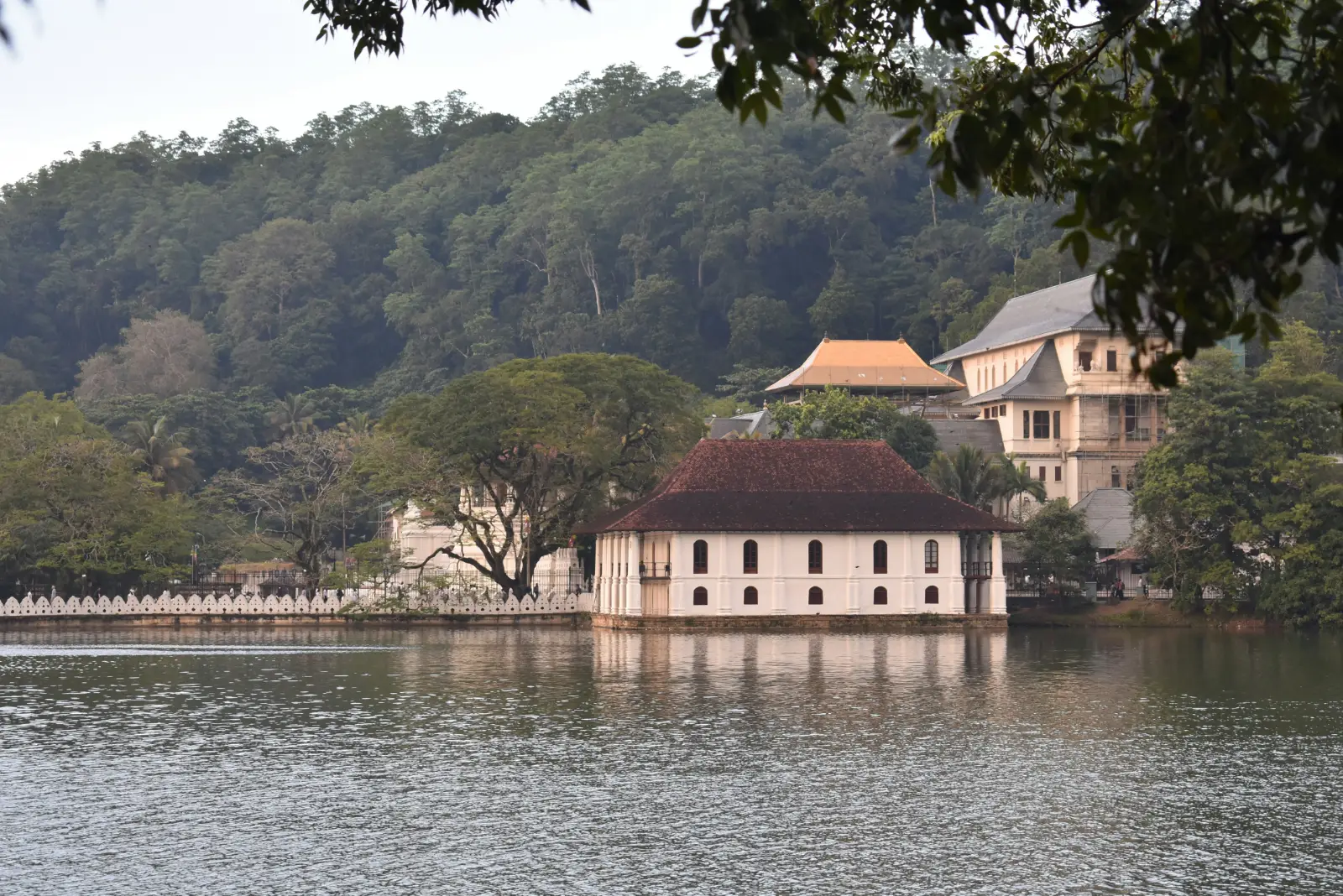
Kandy Lake is the artificial lake in the centre of town, begun in 1807 under King Sri Wickrama Rajasinha, with Deveda Moolacharya considered its architect. Locals also call it Kiri Muhuda, the Sea of Milk. The path around it is a little over 3 km, and along about half of the shore runs the Walakulu Bemma, the cloud wall, whose triangular holes once held oil lamps on festival days. The king never finished the wall before the British took the city. The white Ulpange pavilion standing in the water was the queens' bathing pavilion; the British later added a storey and used it as a library, and today it is a police post (Kandy Lake, Wikipedia). Walk it in the late afternoon, then stroll to the temple for the evening puja.
Royal Botanic Gardens, Peradeniya
The Royal Botanic Gardens at Peradeniya cover about 147 acres beside the Mahaweli River, which loops around them on three sides, less than 5.5 km west of Kandy on the Colombo road. The official site dates the gardens to 1821, on land that had earlier been a royal garden, and gives opening hours of 7:30am to 6pm, every day of the year (checked November 2026, Department of National Botanic Gardens).
Highlights include the orchid house, the spreading Java fig on the Great Lawn, the Royal Palm, Cabbage Palm and Palmyra Palm avenues, and a spice garden with cinnamon, pepper, cardamom and nutmeg. It is the best antidote to temple crowds, and the wide lawns suit children and older travellers who need shade and benches. Allow two to three hours and go in the morning before the afternoon showers that are common in the hills.
Bahirawakanda Buddha
The Bahirawakanda Vihara Buddha is an 88 foot standing Buddha statue on a hilltop about 3 km from Kandy town, roughly 650 feet above the town, and it faces the Temple of the Tooth (Central Province Tourism). A branch of the sacred Bodhi tree also grows on the summit. The road up is steep, so most visitors take a tuk tuk. Go around sunset for the view over the lake and the temple roofs, and dress as you would for the temple because this is an active vihara.
Udawattakele forest
Udawattakele is a 104 hectare forest on the ridge behind the Temple of the Tooth. It was once the royal pleasure garden, Uda Wasala Watta, meaning the garden above the royal palace, closed to the public in the Kandyan era. It became a forest reserve in 1856 and a sanctuary in 1938, and about 80 bird species have been recorded there (Udawatta Kele Sanctuary, Wikipedia). The visitor entrance is 15 to 20 minutes' walk from the temple. Go early, wear proper shoes, and do not feed the monkeys.
Kandyan cultural dance show
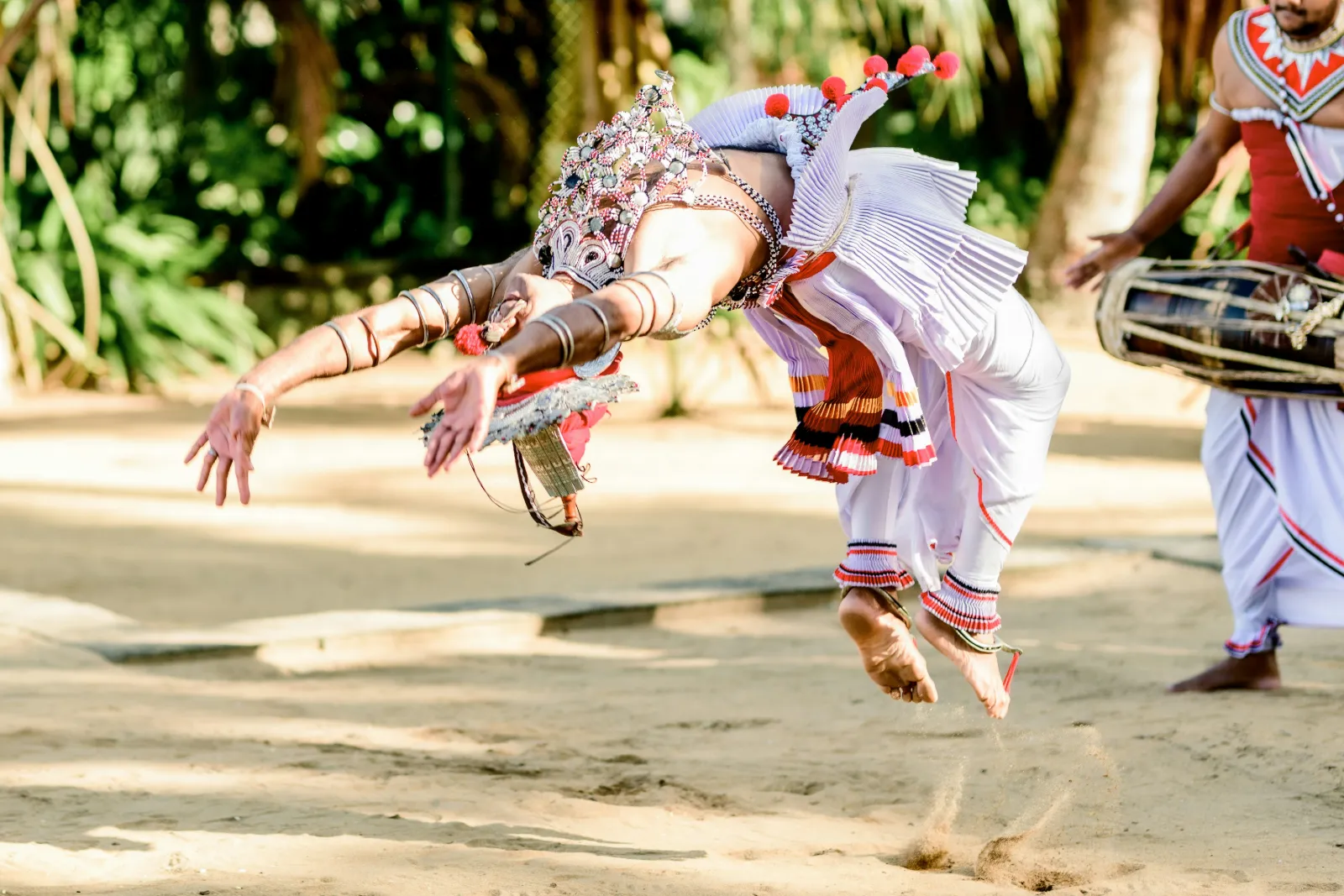
Kandy has several early evening cultural shows, such as the long-running one at the Kandy Lake Club, which preserves Kandyan dance traditions (Travel Lanka Connection). A typical programme runs about an hour with drumming, Kandyan dances with acrobatic leaps, low country dances and often a fire-walking finale, and it is timed so you can walk to the temple for the 6:30pm puja afterwards. Exact start times vary by venue and season, so check at the venue or with your hotel on the day.
The four devales and the old royal quarter
Next to the temple stand the shrines of Natha, Vishnu, Kataragama and Pattini, Kandy's guardian deities. These devales show how Buddhism and devotion to deities shared with Hinduism sit side by side in Sri Lanka, a pattern Nepali visitors will recognise from home, where Buddhist and Hindu shrines often share the same courtyard. Pair them with the former royal palace area beside the temple.
Combining Kandy with other sights
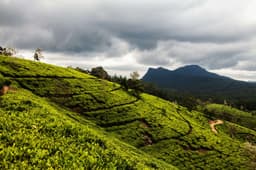
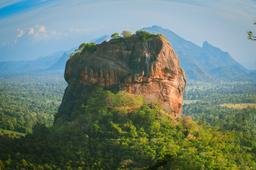
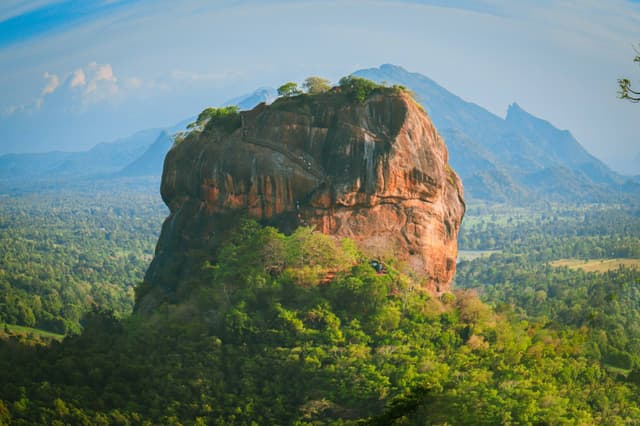
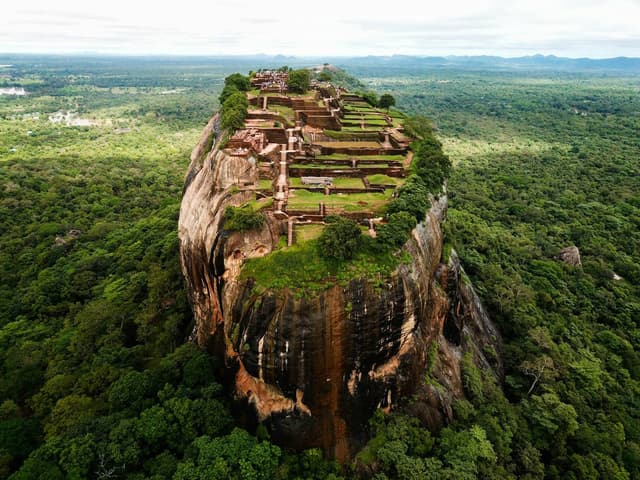
Kandy sits between the ancient cities of the north and the tea hills of the south. Many travellers come here after climbing Sigiriya Lion Rock, about 89 km and roughly 2.5 hours away by road, and continue to Nuwara Eliya or Ella afterwards. For the full picture of where Kandy fits, see our guide to places to visit in Sri Lanka.
How do you get to Kandy?
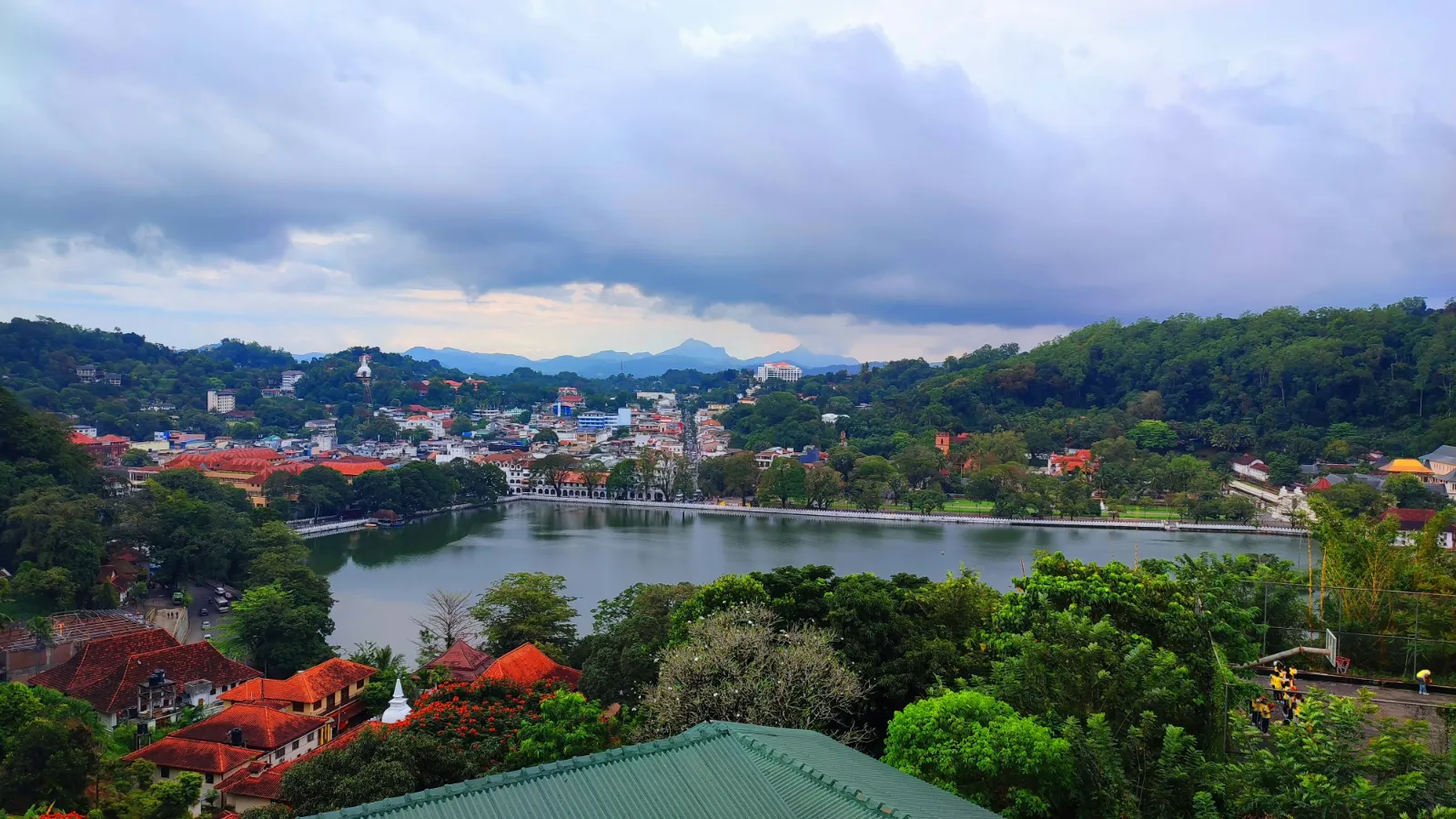
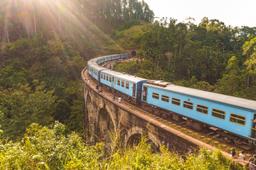
Kandy is about 115 to 120 km from Colombo, which takes about 3 to 4 hours by road because there is still no expressway all the way to the city. There is no reliable Colombo to Kandy train at the moment: since 25 October 2026 trains between Rambukkana and Peradeniya have been suspended after a landslide, and the last stretch into Kandy was already closed for bridge repairs (checked 9 November 2026). Plan on a road transfer and check the rail status before you travel.
| Route | Approximate time | Notes (checked November 2026) |
|---|---|---|
| Kathmandu (KTM) to Colombo (CMB) by air | About 3 hours 35 minutes non-stop | SriLankan Airlines runs the only non-stop, about four times a week; other days connect via India |
| Colombo airport (Katunayake) to Kandy by car | About 114 km; roughly 2 hours in light traffic, 3 hours or more at busy times | Most direct for arrivals; no need to go into Colombo city |
| Colombo city to Kandy by car | About 3 to 4 hours | Central Expressway only partly open; traffic varies |
| Colombo Fort to Kandy by train | Normally about 2.5 to 3 hours on express services | Suspended beyond Rambukkana since 25 October 2026; no reopening date announced when checked; use road instead |
| Colombo to Kandy by bus | Usually slower than by car | Long distance buses leave from central Colombo; hard work with luggage |
| Sigiriya to Kandy by car | About 2.5 hours | About 89 km; easy to combine in one trip |
| Kandy to Ella | About 4 to 5 hours by road | No through train yet; road to Nanu Oya, then train for the scenic part |
Is the Colombo to Kandy train running?
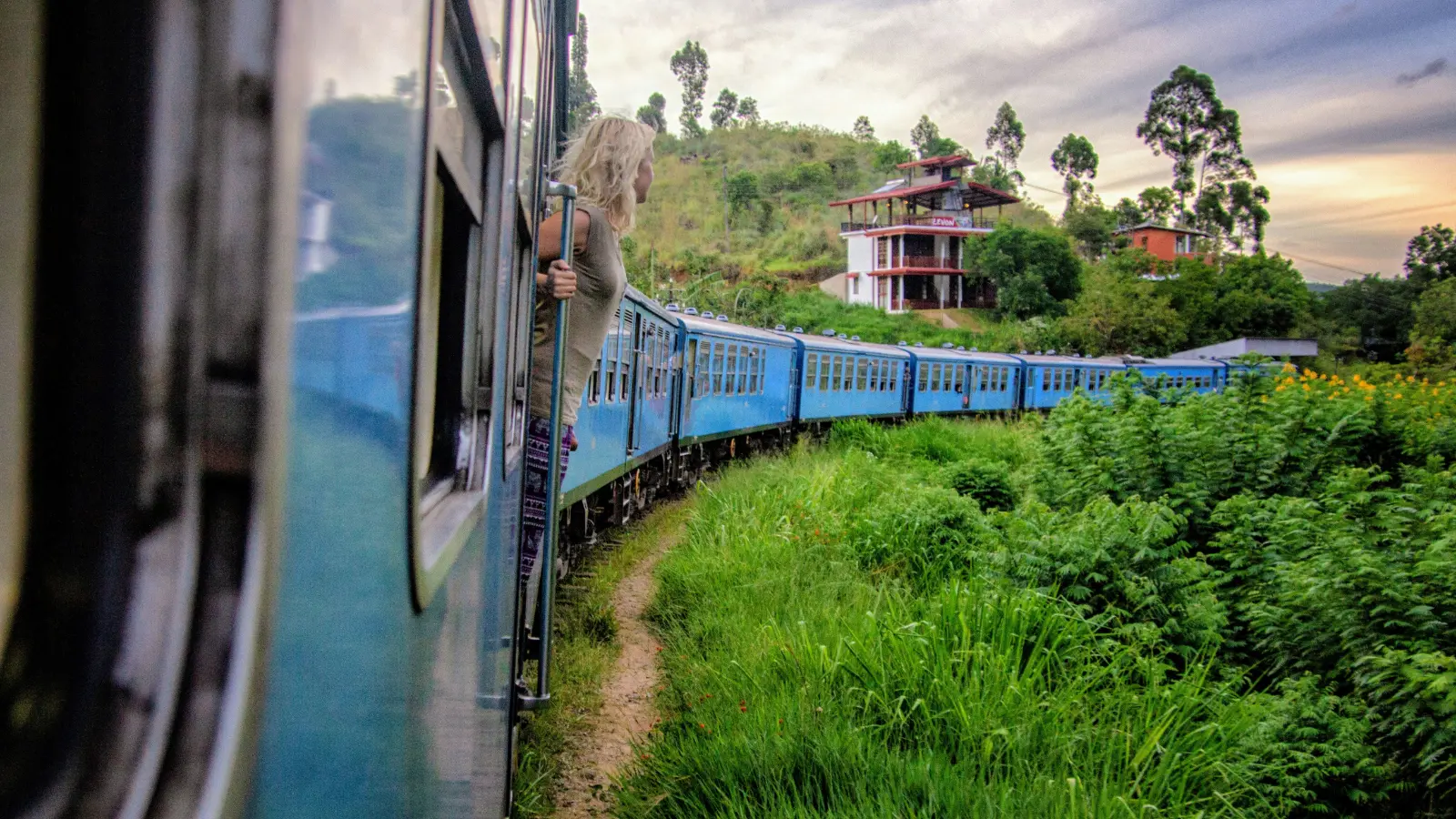
Cyclone Ditwah damaged the main railway line in November 2025, and Colombo to Kandy trains were suspended for about ten months. Services resumed to Peradeniya in early October 2026, covering 113 km of the line, but the last stretch of about six kilometres into Kandy stays closed until the damaged Peradeniya railway bridge is restored (Daily Excelsior, 2 October 2026). Sri Lanka Railways said on 1 October 2026 that it planned to resume Colombo to Kandy services in January (Newsfirst). Then a landslide near Kadigamuwa station hit the line, and the Department of Railways suspended all trains between Rambukkana and Peradeniya and Gampola from midnight on 25 October 2026 until repairs are completed and the line is confirmed safe (Newswire, 25 October 2026). When we checked on 9 November 2026 we found no announced reopening date, so the January plan for Kandy may also move. In normal times, express trains from Colombo Fort reach Kandy in about 2.5 to 3 hours (Seat61; Big World Small Pockets), though delays are common.
Our advice for now: book a road transfer to Kandy, and treat the train as a bonus. If you would like to try the rail journey, check the latest notices from Sri Lanka Railways or local news a few days before you travel, and do not build a tight plan around it. Once trains reach Peradeniya again, the botanic gardens sit right beside the end of the line, a handy stop before a short tuk tuk ride into Kandy.
Getting from Nepal to Kandy
From Kathmandu, the simplest plan is to fly to Colombo's Bandaranaike International Airport at Katunayake and drive straight to Kandy, skipping Colombo city on arrival. Our guide to the Kathmandu to Colombo flight explains the non-stop service and one-stop options via India in detail. Nepali passport holders should check the current entry rules on our Sri Lanka visa page before booking. Inside Sri Lanka, private cars with drivers, trains, buses and ride-hailing tuk tuks all reach Kandy; our guide on how to get around Sri Lanka compares them in depth.
Within Kandy, the temple, the lake, the devales and the dance shows are all walkable from the town centre. Use a tuk tuk for Bahirawakanda, Peradeniya and the Udawattakele entrance if you are short of time or travelling with older parents. Ride-hailing apps such as PickMe work in Kandy and show the trip details before you book.
When is the best time to visit Kandy and the Temple of the Tooth?
The Temple of the Tooth is open every day of the year, so the best time depends on what you want: December to March brings the most settled weather in Kandy, July or August brings the Esala Perahera, and May brings Vesak, the full moon festival of the Buddha's birth, enlightenment and passing. October is usually the wettest month in Kandy, so pack an umbrella if you travel then.
| Season | What it is like in Kandy | Good for |
|---|---|---|
| December to March | Drier, comfortable days in the hills | First visits, combining with the coast |
| April to May | Warmer, with Sinhala and Tamil New Year in April and Vesak in May | Festivals, lantern displays at Vesak |
| June to September | Mixed weather; Esala Perahera in July or August | The procession, if you book early |
| October to November | Wettest period, especially October; fewer visitors | Quieter temple visits, flexible travellers |
For Nepali travellers, the peak booking window around Dashain and Tihar usually falls in October or early November, which is one of Kandy's wetter periods. The temple is indoors and the rain usually comes in afternoon or evening bursts, so it is still a good time for a temple and culture trip, but plan beach days on the east coast rather than the south. Buddha Jayanti in Nepal and Vesak in Sri Lanka usually fall on the same full moon in April or May, so a Vesak trip lets Buddhist families mark the day in Kandy.
How long do you need in Kandy?
One full day covers the temple, the lake and a dance show; two nights is better. With two nights you can attend an early morning or evening puja without rushing, spend a morning at Peradeniya, and see Bahirawakanda at sunset. Plan about 1.5 to 2 hours inside the temple complex itself, more if you want to sit through a full puja and visit every museum.
Tips for timing an evening temple visit
- Arrive about 45 minutes before the 6:30pm puja, so there is time to hand in your shoes, buy a ticket and pass the scan.
- Use the time before the drums start to walk the outer halls and the Alut Maligawa while they are still quiet.
- Stay for the evening Thewawa (6:30pm to 8pm) to hear the drumming and see the shrine room doors open.
- Collect your shoes before closing at 8pm and walk back along the lit lake shore.
The same approach works for the morning pujas if you prefer quieter halls.
If you would rather have transport, guides and hotels arranged around the temple, the Perahera or a wider loop of the island, see our Sri Lanka tour packages.
Frequently asked questions
What is the Temple of the Tooth?
The Temple of the Tooth, or Sri Dalada Maligawa, is the temple in Kandy, Sri Lanka, that enshrines the Sacred Tooth Relic of the Buddha. It stands in the old royal palace complex beside Kandy Lake and is part of the Sacred City of Kandy, a UNESCO World Heritage Site since 1988.
What are the puja times at the Temple of the Tooth?
The Temple of the Tooth in Kandy holds three daily pujas (Thewawa): 5:30am to 7am, 9:30am to 11am and 6:30pm to 8pm, Sri Lanka time, according to the temple's official FAQ checked in November 2026. On Wednesdays the Nanumura Mangallaya ritual is held at 9:30am. The temple is open 5:30am to 8pm daily.
What should I wear to the Temple of the Tooth?
At the Temple of the Tooth, wear clothes that cover your shoulders and knees; shorts, sleeveless tops and revealing outfits are not permitted. White or light plain colours are traditional and respectful. Shoes come off before entering, and suitable clothing is available at the entrances if needed.
When is the Esala Perahera?
The Kandy Esala Perahera usually runs for about ten nights in July or August. In 2026 the street processions ran from 18 to 27 August, with the day perahera on 28 August. The 2027 dates had not been announced when we checked in November 2026; they are usually published a few weeks ahead.
Can I see the tooth relic?
Not on a normal visit to the Temple of the Tooth. During the puja the shrine room doors open and you see the golden casket that holds the relic. The tooth itself is shown only at rare expositions; the latest, Siri Dalada Vandanawa, ran from 18 to 27 April 2025, the first in 16 years.
How far is Kandy from Colombo?
Kandy is about 115 to 120 km from Colombo, roughly 3 to 4 hours by car. Express trains normally take about 2.5 to 3 hours, but when we checked in November 2026 trains were suspended beyond Rambukkana after a landslide on 25 October 2026, with no reopening date announced. Go by road and check the rail status before you travel.
Is Peradeniya Garden worth it?
Yes. The Royal Botanic Gardens at Peradeniya, about 5.5 km west of Kandy, cover around 147 acres by the Mahaweli River, with an orchid house, palm avenues, a giant Java fig and a spice garden. Allow two to three hours; it opens 7:30am to 6pm daily.
How long do I need in Kandy?
One full day in Kandy covers the Temple of the Tooth, Kandy Lake and a cultural show, but two nights is more comfortable. That gives time for a quiet early or evening puja, a morning at Peradeniya gardens and sunset at the Bahirawakanda Buddha without rushing.
Is there a cultural show in Kandy?
Yes. Kandy has early evening Kandyan dance shows, including the long-running one at the Kandy Lake Club, with drumming, Kandyan and low country dances and often a fire-walking finale. Shows last about an hour and finish in time for the evening puja at the Temple of the Tooth.
Is the Temple of the Tooth open every day?
Yes. The Temple of the Tooth in Kandy is open every day from 5:30am to 8pm. Full moon Poya days and the Esala Perahera season are the busiest times, so visit early in the morning if you prefer smaller crowds.
Danta Dhatu mandir kasto cha?
Danta Dhatu Mandir is how many Nepali speakers describe the Temple of the Tooth in Kandy, Sri Lanka. It is a calm, working Buddhist temple where you join local devotees at the daily puja, see the golden relic casket and visit museums. Dress modestly, ideally in white, and allow about two hours.