






























































Short answer: Sinulog Cebu 2027 peaks on Sunday 17 January 2027, the third Sunday of January, when the Sinulog Grand Parade rolls out of the Cebu City Sports Center (CCSC) in Cebu City. The religious feast around it, Fiesta Señor at the Basilica Minore del Santo Niño, runs from 7 to 17 January 2027, with the fluvial procession and the Solemn Foot Procession expected on Saturday 16 January. The full 2027 programme of times and routes has not been published yet, so this guide gives you what is officially confirmed, the 2026 schedule as a dated reference, and practical advice on crowds, weather, getting there from Kathmandu and what to do after the festival.
The Sinulog Festival, Cebu City's signature January event and one of the biggest festivals in the Philippines, is two events at once. One is a week and a half of Catholic devotion to the Santo Niño, the image of the Child Jesus that has been in Cebu since 1521. The other is a city-wide street party with costumed dance troupes, drums, concerts and fireworks. If you understand how the two fit together, you can plan a trip that gets the best of both and avoids the worst of the crush. For the wider country picture, our complete Philippines travel guide covers regions, money and planning basics.
Sinulog Cebu 2027 at a glance: what is confirmed so far?
Two official sources have confirmed the core 2027 dates: the Basilica Minore del Santo Niño lists Fiesta Señor 2027 as 7 to 17 January and 22 January 2027, and the Sinulog Foundation lists the Sinulog 2027 Grand Parade for Sunday 17 January at the Cebu City Sports Center. Everything else, including exact times, the parade route and grandstand tickets, was marked "coming soon" when we checked.
The table below separates what is officially confirmed from what is still pending. Checked: 18 November 2026, Basilica Minore del Santo Niño and Sinulog Foundation Inc.
| Item | Sinulog 2027 status | Official source |
|---|---|---|
| Main day (third Sunday of January) | Sunday 17 January 2027 | Sinulog Foundation homepage countdown |
| Fiesta Señor (religious feast) dates | 7 to 17 January 2027, plus 22 January 2027 | Basilica Minore del Santo Niño |
| Fiesta Señor 2027 theme | "Santo Niño: Shepherd of Humanity" | Basilica Minore del Santo Niño |
| Grand Parade venue | Cebu City Sports Center (CCSC) | Sinulog Foundation homepage |
| Full schedule of activities | Not yet published ("coming soon") | Sinulog Foundation |
| Parade route and venue maps | Not yet published ("coming soon") | Sinulog Foundation |
| Grand Parade participants | Not yet published ("coming soon") | Sinulog Foundation |
| Grandstand tickets for 2027 | Not yet on sale when checked | Sinulog Foundation, official festival site |
Sources: Basilica Minore del Santo Niño, Fiesta Señor 2027 and Sinulog Foundation Inc. If you are booking flights now, the one date you can safely build around is Sunday 17 January 2027, and arriving by Thursday 14 or Friday 15 January gives you the big weekend with a buffer.
What is the Sinulog Festival?
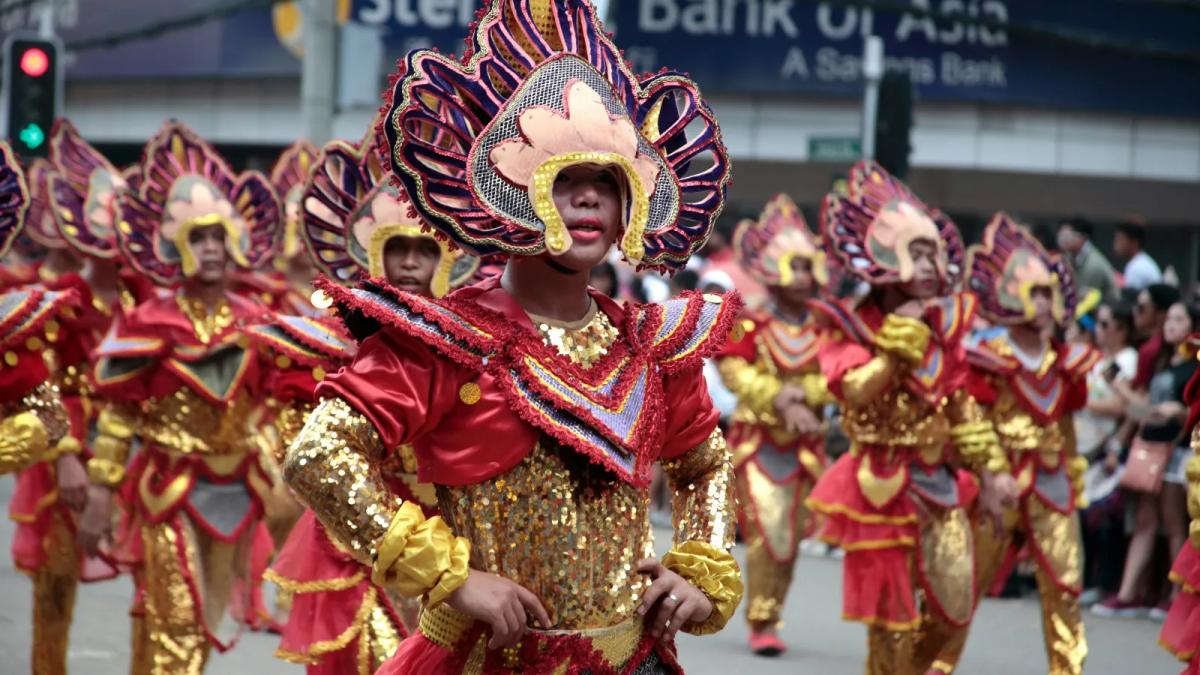
The Sinulog Festival is Cebu City's annual celebration in honour of the Santo Niño, the Child Jesus, held around the third Sunday of January. It combines Fiesta Señor, a religious feast organised by the Augustinian friars at the Basilica Minore del Santo Niño, with a civic festival run by the Sinulog Foundation and the Cebu City government, whose highlight is the Grand Parade of street dancers.
The name comes from the dance itself. According to the Sinulog Foundation's history page, "Sinulog" is derived from the Cebuano word "sulog", meaning a water current, which describes the forward and backward, flowing movement of the dance. In its simplest form the Sinulog is a prayer dance: devotees hold a candle or an image of the Santo Niño, step forward and back to a drumbeat, and raise their arms as they pray. The Basilica notes that all Fiesta Señor Masses end with the traditional Sinulog dance, so you will see the prayer version long before you see the parade version.
Why does Cebu honour the Santo Niño?
The story begins in 1521, when Ferdinand Magellan's expedition reached Cebu. The Sinulog Foundation's history page says Queen Juana, the wife of the local ruler Rajah Humabon, received the image of the Santo Niño as a gift at that time. Magellan was killed weeks later in the Battle of Mactan, and the Spanish left. When the Legazpi and Urdaneta expedition arrived on 28 April 1565, the Basilica's own history records that a sailor named Juan Camus found the image inside a house in the burned settlement. The Augustinians built their church on that spot, and it became today's Basilica Minore del Santo Niño.
That is why the Santo Niño de Cebu is often described as the oldest Catholic image in the Philippines, and why the feast carries so much weight. For many families, Sinulog is less a tourist event than an annual pilgrimage to say thank you or to ask for something specific.
How did the modern Sinulog parade start?
The parade is much newer than the devotion. The first Sinulog parade was held on 20 January 1980, organised by David Odilao, then a regional director of the Ministry of Youth and Sports Development, before the Cebu City government took it over (background from Wikipedia's Sinulog entry). Today the festival's motto is "One Beat. One Dance. One Vision.", which the 2027 organising committee confirmed it would keep, according to SunStar Cebu on 28 September 2026.
Sinulog in numbers (2026 edition)
Recent figures give a sense of scale. These are from official estimates reported by Cebu media in January 2026.
| Measure | 2026 figure | Who estimated it |
|---|---|---|
| Crowd estimate on Grand Parade day | About 5.2 million under the office's maximum occupancy count (as of 6:17 pm) | Cebu City Disaster Risk Reduction and Management Office, via SunStar |
| Devotees at the Solemn Foot Procession | About 1.9 million | Authorities, via Manila Bulletin |
| Vessels in the fluvial procession | 420 | Coast Guard Station Central Visayas, via Manila Bulletin |
| Solemn Foot Procession route length | 5.5 km, starting and ending at the Basilica | Manila Bulletin |
| Competing contingents in the Grand Parade | At least 40, including guest performers | SunStar |
| Minor injuries logged on parade day (as of 6 pm) | 152, mostly exhaustion and heat related | Authorities, via SunStar |
Sources: SunStar, 18 January 2026, Manila Bulletin, 17 January 2026 and SunStar, 18 January 2026. Crowd estimates during Philippine festivals are rough counts of people in an area across a day, not ticket sales, so treat them as a guide to how busy it gets rather than exact numbers.
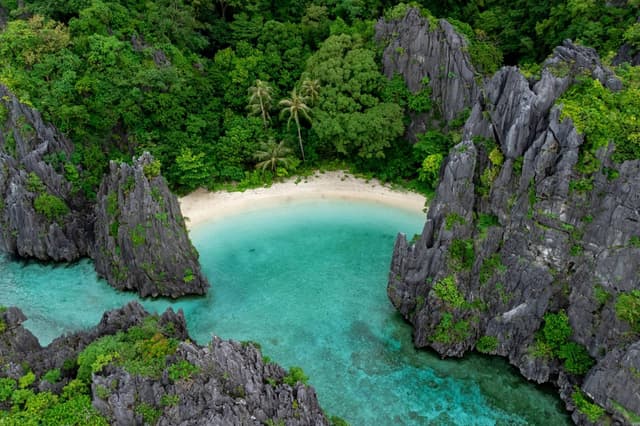
When is Sinulog 2027?
Sinulog 2027 is on Sunday 17 January 2027 for the Grand Parade and the Fiesta Señor feast day, with the wider religious celebration running from Thursday 7 January to Sunday 17 January 2027, plus one more listed date, Friday 22 January 2027. The rule never changes: the main festival day is the third Sunday of January, as the Sinulog Foundation states on its homepage.
In January 2027 the Sundays fall on the 3rd, 10th, 17th, 24th and 31st, so the third Sunday is the 17th. That matches both official sources. In 2026 the third Sunday was 18 January, which is why the 2026 schedule below sits one day later on the calendar than 2027 will.
What is still unknown is the detailed timetable. When we checked, the Sinulog Foundation listed the 2027 schedule of activities, participants and route maps as "coming soon", and its homepage countdown showed a morning start at the CCSC. Check both official pages again in December. The festival ticketing site that the Foundation links to already shows a "2027 schedule", but it repeats the 2026 weekdays (for example, it labels 8 January 2027 as a Thursday, when it is a Friday), so we have not relied on it. Checked: 18 November 2026, Sinulog Foundation Inc. and Basilica Minore del Santo Niño.
Which dates matter most for visitors?
If you only have a long weekend, these are the days to plan around, based on the confirmed 2027 dates and the pattern of the official 2026 programme.
- Thursday 7 January 2027 (expected): Fiesta Señor opens. In 2026 the opening day began with the pre-dawn Walk with Jesus and the opening Mass.
- Thursday 14 and Friday 15 January 2027 (expected): the build-up. In 2026 the equivalent days carried the Walk with Mary, the Traslacion of the image to Mandaue and Lapu-Lapu, the Festival Queen coronation and nightly shows at Fuente Osmeña and Plaza Independencia.
- Saturday 16 January 2027 (expected): the religious high point, with the fluvial procession at dawn, the re-enactment at the Basilica and the Solemn Foot Procession in the afternoon.
- Sunday 17 January 2027 (confirmed): Fiesta Señor feast day Masses and the Sinulog Grand Parade.
- Friday 22 January 2027 (confirmed date): the last date listed in the Basilica's Fiesta Señor 2027 calendar. In 2026 the equivalent day was the "Adlaw sa Hubo" Mass, when the image's festive vestments are removed.
Anything marked "expected" is our reading of the official dates and the 2026 pattern, not an announced time. Check the Basilica and Sinulog Foundation pages again in December before you lock in a day trip or a ferry.
What are the main Sinulog events?
The main Sinulog events are the Walk with Jesus and the novena Masses at the start, the Traslacion and fluvial procession of the Santo Niño image, the Solemn Foot Procession on the eve of the feast, the Pontifical Mass on the feast day, and the Sinulog Grand Parade with its ritual showdown at the CCSC. Around them run concerts, a trade fair, choir and brass band contests, and the Festival Queen pageant.
Because the 2027 timetable is not out yet, the table below uses the official 2026 programme as a dated reference, with our note on where each event should fall in 2027. Times are 2026 times. Sources: Sinulog Foundation, Sinulog 2026 Schedule of Activities and Basilica Minore del Santo Niño, Fiesta Señor 2026. Checked: 18 November 2026.
| Event | 2026 date and time (official) | Where | 2027 (expected unless stated) |
|---|---|---|---|
| Walk with Jesus (dawn procession) | Thu 8 Jan, assembly 3:30 am, walk 4:00 am | Fuente Osmeña to the Basilica | Opening day of Fiesta Señor, Thu 7 Jan |
| Opening Salvo Mass and start of novena | Thu 8 Jan, 5:00 am | Basilica Minore del Santo Niño | Thu 7 Jan |
| Novena Masses | 9 to 16 Jan, daily from early morning to evening | Basilica | Within 7 to 16 Jan |
| Opening Salvo Solemn Mass and Launching Parade | Fri 9 Jan, Mass 2:30 pm, parade 3:30 pm | Basilica to Fuente Circle to CCSC | Early in festival week |
| Walk with Mary, Misa de Traslacion, Traslacion to Mandaue City | Thu 15 Jan, 4:00 am, 5:30 am, 6:45 am | Fuente Osmeña, the Basilica, then Mandaue | Thu 14 Jan |
| Traslacion to Nuestra Señora de Regla Parish | Fri 16 Jan, 6:00 am | Mandaue to Lapu-Lapu City | Fri 15 Jan |
| Fluvial procession of the Santo Niño image | Sat 17 Jan, 6:00 am | Mactan Channel, ending at Pier Uno | Sat 16 Jan |
| Short foot procession | Sat 17 Jan, 8:00 am | Pier Uno to the Basilica | Sat 16 Jan |
| Re-enactment of the first Mass, baptism and wedding | Sat 17 Jan, 9:00 am | Basilica | Sat 16 Jan |
| Solemn Foot Procession | Sat 17 Jan, 1:00 pm (Basilica compound closed from 11:00 am) | 5.5 km loop from and back to the Basilica | Sat 16 Jan |
| Misa Pontifical, Fiesta Señor feast day | Sun 18 Jan, 6:00 am | Basilica | Sun 17 Jan (feast day confirmed) |
| Sinulog Grand Parade kick-off | Sun 18 Jan, 9:15 am | CCSC, then the city street route | Sun 17 Jan at CCSC (confirmed) |
| Grand Finale | Sun 18 Jan, 6:00 pm | CCSC | Sun 17 Jan |
| Awarding ceremonies | Mon 19 Jan, 1:00 pm | CCSC | Mon 18 Jan |
| Adlaw sa Hubo Mass | Fri 23 Jan | Basilica | Fri 22 Jan (date in Basilica calendar) |
What is the Walk with Jesus?
The Walk with Jesus is the pre-dawn procession that opens Fiesta Señor. In 2026 devotees assembled at Fuente Osmeña Circle at 3:30 am and walked to the Basilica from 4:00 am, carrying candles, before the opening Mass at 5:00 am. Police planned to deploy more than 500 personnel along the route and asked devotees not to bring backpacks, to avoid delays at the Basilica's security screening, according to SunStar on 7 January 2026. It happens before the biggest weekend crowds arrive and is a good way to feel the devotional side if you reach Cebu early.
What happens during the novena?
The novena is nine days of Masses at the Basilica leading up to the feast. Masses run from early morning into the evening, many of them at the Santo Niño Pilgrim Center, a large hall built beside the church for pilgrims, so that thousands can attend at once. Each Mass ends with the Sinulog prayer dance and the chant "Viva Pit Señor". You do not need a ticket to attend, but arrive early for the popular morning and evening Masses.
What is the Traslacion?
The Traslacion is the transfer of a Santo Niño image out of Cebu City and back by land and sea. In 2026 it left the Basilica on Thursday 15 January for the National Shrine of Saint Joseph in Mandaue City, then moved on Friday 16 January to the Nuestra Señora de Regla Parish in Lapu-Lapu City on Mactan Island. From there it returned to Cebu City by sea in the fluvial procession on Saturday morning.
What happens at the Grand Parade and ritual showdown?
The Grand Parade is the street dancing competition on the feast day. Contingents from Cebu and other provinces follow the parade route and then perform a full ritual showdown routine in front of the judges at the CCSC. Under the Sinulog Foundation's 2024 competition guidelines, each dancing contingent had 60 to 100 dancers, at least 50 musicians, and had to play live music rather than recorded tracks. Alongside the dance troupes come floats and festival queens. In 2026 the city wrapped the parade up before 8 pm, earlier than in any previous year, according to SunStar.
Where can you watch the grand parade?
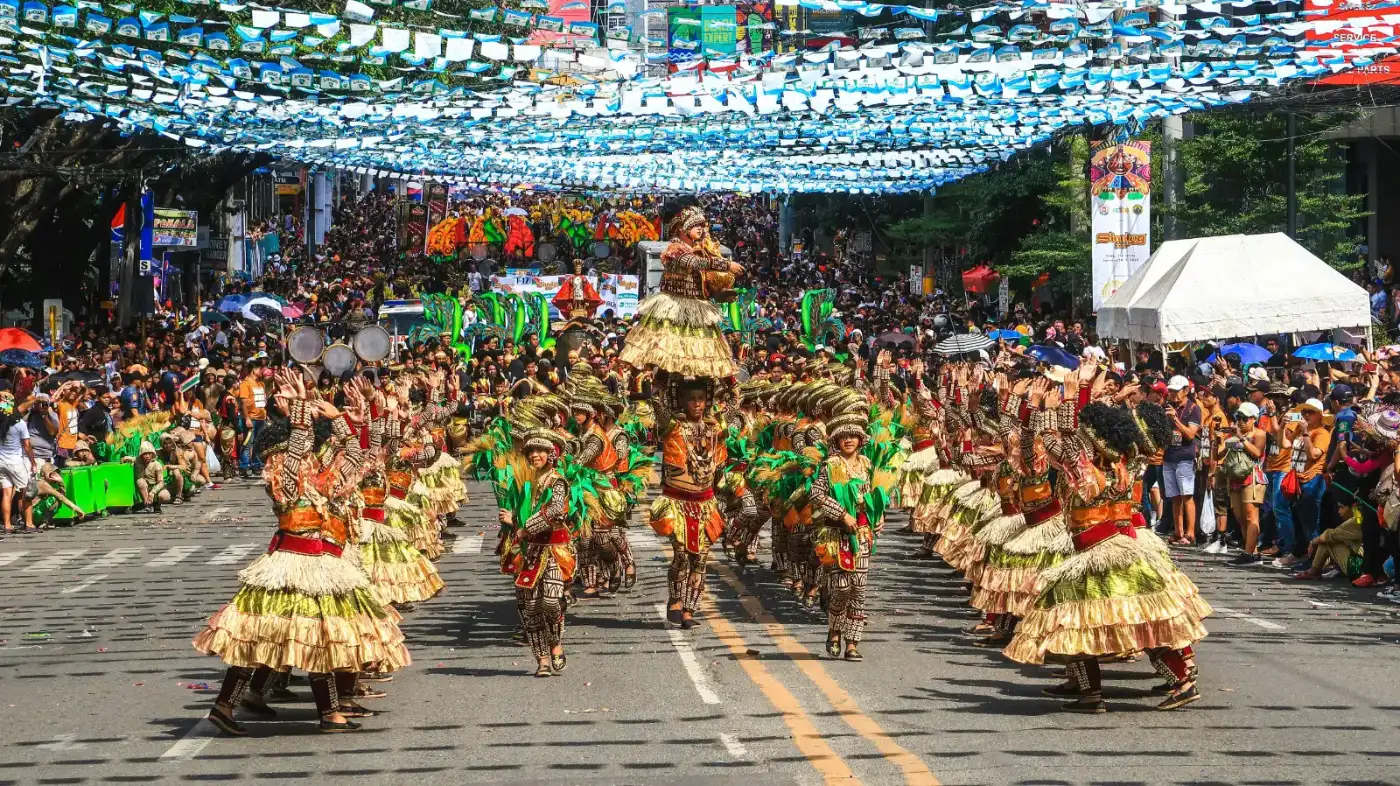
You can watch the Sinulog Grand Parade for free from the pavements along the street route, or pay for a seat inside the Cebu City Sports Center, where contingents perform their full ritual showdown routines for the judges. For 2027 the Sinulog Foundation has confirmed the CCSC as the venue; the street route has not been published yet.
What was the route in 2026?
The official 2026 traffic advisory gave this route: from the Cebu City Sports Center, along P. del Rosario Street to Imus Road, left onto General Maxilom Avenue, through Fuente Osmeña Circle, down Osmeña Boulevard, right onto R. Landon Extension and back to the CCSC. Road closures started at 4:00 am. Source: Sinulog Foundation, 2026 road closure and traffic advisory (Cebu City Transportation Office). Expect a similar loop in 2027, but wait for the official map before you book a hotel based on a street.
Why do older guides mention SRP?
Because the venue moved and moved back. In 2023 and 2024 the Grand Parade finale was held at the South Road Properties (SRP), a large reclaimed area on the coast, which gave more space but drew complaints about heat, lack of shade and limited transport. The festival returned to the CCSC in 2025, and in May 2025 the incoming mayor, Nestor Archival, confirmed that 2026 would stay there, saying the festival should go back to where it was conceived, close to the Basilica (Manila Bulletin, 20 May 2025). The 2026 parade did start and finish at the CCSC, and the Sinulog Foundation lists the CCSC again for 2027. If a blog sends you to SRP for the Cebu City Sinulog parade, it is out of date.
Which viewing option suits you?
Each way of watching has a trade-off between cost, comfort and atmosphere. This comparison uses relative terms only; ticket prices are set by the organisers each year.
| Option | What you see | Comfort | Cost | Best for |
|---|---|---|---|---|
| Grandstand seat inside the CCSC | Full ritual showdown routines, staged for the judges | A reserved seat, but long hours in the heat | Paid ticket | Photographers, families wanting a fixed spot, anyone who wants the full choreography |
| Kerbside on the street route | Contingents dancing past, shorter street routines, floats | Standing, crowded, little shade | Free | Atmosphere seekers, budget travellers |
| Near Fuente Osmeña Circle | A central, busy section of the route | Very crowded | Free | Experienced festival-goers who do not mind crowds |
| Hotel or café window on the route | Part of the parade from above | Shade, toilets, seating | Depends on the venue | Older travellers, small children |
| Live television or stream | Whole parade and the CCSC performances | Comfortable | Varies by channel or app | Anyone who also wants to attend the religious events in person |
Do you need tickets for grandstand seats?
Yes, seats inside the CCSC are ticketed. In 2026 tickets for the Grand Parade showdown were sold both on site and online, according to SunStar, and the Sinulog Foundation's website links to its ticketing page. When we checked, 2027 ticket details were still listed as "coming soon". Buy only through the Sinulog Foundation's official channels or the outlets it names, because festival weekends attract resellers. Checked: 18 November 2026, Sinulog Foundation Inc.
Tips for a good spot
- Go early: roads close from about 4:00 am and the best kerbside spots fill soon after.
- Pick shade: the parade runs through the hottest part of the day; a spot under trees or awnings matters more than a perfect angle.
- Stay on one side: crossing the route once the parade starts is slow or impossible, so choose the side that leads back to your hotel.
- Agree a meeting point: mobile networks are often congested; pick a landmark in advance.
- Expect paint and noise: drums are loud, and face paint is part of the fun in the streets around the route.
How do you handle the crowds safely?
Sinulog is generally well policed and good-natured, but the crowds are enormous, so the main risks are heat exhaustion, getting separated from your group, pickpocketing and slow movement in emergencies. Plan for those four and you will be fine. For the country-wide picture on safety, including transport and scams, read our guide on whether the Philippines is safe for travellers.
What rules applied in 2026?
Each year the city and police announce rules shortly before the festival. These were the main 2026 measures; expect similar ones in 2027 and check the final advisories in early January.
| Measure (2026) | Detail | Source |
|---|---|---|
| Alcohol ban along the Grand Parade route | Sale, distribution, possession and public drinking banned within 300 m of the route, 6 am to 8 pm on Saturday 17 and Sunday 18 January (Executive Order 051) | SunStar, 16 January 2026 |
| No backpacks advised for religious processions | Devotees asked to leave backpacks at home; security screening at Basilica entrances | SunStar, 7 January 2026 |
| Road closures | Parade route closed from 4:00 am on parade day; emergency lanes kept open | Cebu City Transportation Office via Sinulog Foundation |
| Policing | Route split into 11 sectors with ground commanders; plainclothes officers watching for thieves | SunStar, 16 January 2026 |
| Child safety | Parents urged to put contact details in children's pockets and to tag seniors and persons with disabilities | SunStar, 7 January 2026 |
A practical crowd checklist
- Carry less: a small cross-body bag or a zipped front pocket beats a backpack, both for security screening and for pickpockets.
- Keep the phone in front: snatch thefts happen in the densest crowds; use a wrist strap if you are filming.
- Write it down: put your name, your hotel and a phone number on paper in each child's pocket, as Councilor Dave Tumulak, Sinulog Foundation spokesman and chair of the city's disaster risk reduction council, urged in 2026.
- Drink water constantly: most of the 152 minor injuries logged on 2026 parade day were exhaustion and heat related. Carry water, a hat and electrolyte sachets.
- Know the exits: note side streets and first aid tents when you arrive, not when you need them.
- Use small cash: street food and water sellers rarely have change for large notes, and card machines are not always available.
- Avoid the crush points: the Basilica area during the Solemn Foot Procession and Fuente Osmeña Circle during the parade are the most packed; step back if you feel pushed.
- Keep your passport safe: leave it in the hotel safe and carry a photocopy or a photo of it.
Is Sinulog safe for families?
Yes, with planning. Many Cebuano families bring children every year. The safest approach is to watch the parade from a seat inside the CCSC or from a shaded, less central part of the route, attend a weekday novena Mass rather than the Saturday procession, and keep the day short. Very young children, older relatives and anyone with mobility problems may find the Saturday Solemn Foot Procession too crowded; watching it pass from a fixed point near your hotel is a gentler alternative.
What is the religious side of Sinulog?
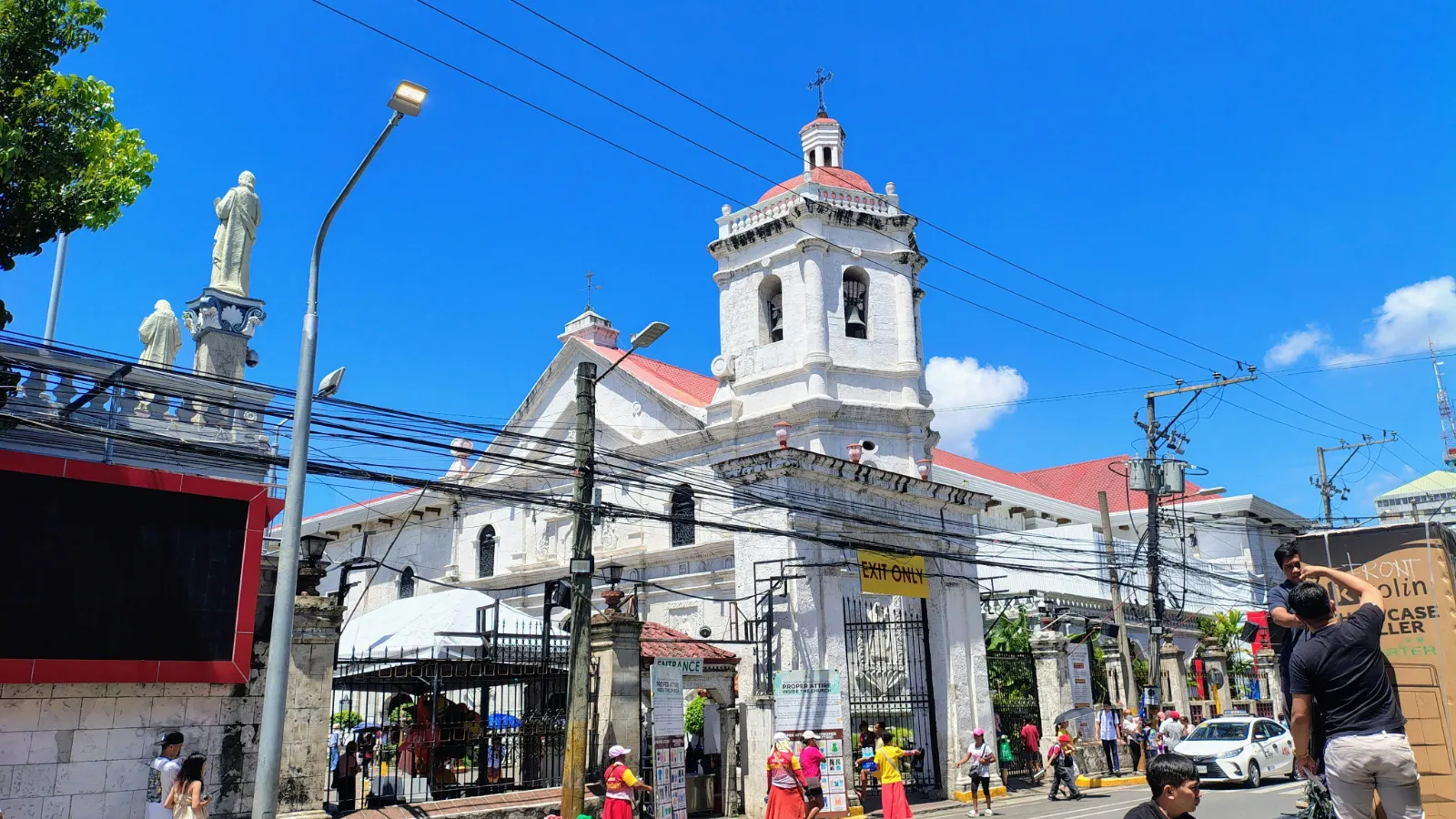
The religious side of Sinulog is Fiesta Señor, the feast of the Santo Niño de Cebu, organised by the Augustinian friars at the Basilica Minore del Santo Niño. For millions of Filipino Catholics it is a pilgrimage, and the Masses, processions and the prayer dance are acts of worship, not performances, even when they look festive.
Basilica Minore del Santo Niño
The Basilica stands on the site where the image was found in 1565. Its own history says the church and convent of the Santo Niño were founded by Fr. Andrés de Urdaneta on 28 April 1565, the day the Legazpi and Urdaneta expedition arrived, and that the Augustinians built the first chapel in the Philippines on this spot, which is why it is often called the country's oldest Roman Catholic church. The Santo Niño image is kept in a side chapel, where devotees queue to pass and pray. Next to the church is the Santo Niño Pilgrim Center, built in the 1990s to give space to the growing number of pilgrims, which hosts the biggest Masses during Fiesta Señor. Inside the Pilgrim Center, on the right side as you face the altar, is the Dagkotanan, the candle area, where you can light a red candle and pray; the Basilica's pilgrim guide says the red candles are free and any donation is optional.
Magellan's Cross
A short walk from the Basilica, a small gazebo shelters Magellan's Cross. The Basilica's page on Magellan's Cross explains that the spot commemorates the cross set up by Magellan's expedition in 1521, when Rajah Humabon, his queen and some 800 of their people were baptised, citing the chronicler Antonio Pigafetta. The site was improved in 1735 and again in 1834. During Sinulog week it is busy from dawn, so visit early on a weekday if you want a quiet look.
What does "Viva Pit Señor" mean?
You will hear "Viva Pit Señor!" everywhere. According to the Basilica's explanation, "pit" comes from "sangpit", a Cebuano word for calling out loud to a person or to God with a particular intention, and the interpretive translation is "Hail Lord, listen to our prayers!" It is a prayer of appeal, which is why devotees shout it with raised hands during the dance.
What is the Sinulog fluvial procession?
The fluvial procession is the sea procession that brings the Santo Niño image back to Cebu City across the Mactan Channel on the morning before the feast. In 2026 it set off at 6:00 am after a send-off Mass at the Nuestra Señora de Regla Parish in Lapu-Lapu City, with the Coast Guard counting 420 vessels on the water. The image lands at Pier Uno, is carried in a short foot procession to the Basilica, and is followed by a re-enactment of the first Mass, baptism and wedding of 1521 at the Basilica. Watching from the shore near the Cebu City piers is free, but access points change each year, so check the 2027 arrangements before you go.
The Solemn Foot Procession
On the eve of the feast, in the afternoon, the Santo Niño image is carried through the streets of downtown Cebu City on a 5.5 km loop that starts and ends at the Basilica. In 2026 about 1.9 million devotees joined it, according to Manila Bulletin. Many devotees walk barefoot, carry candles and pray the rosary. If you join, dress plainly, walk at the pace of the crowd and do not stop suddenly to take photos.
Can non-Catholics join Sinulog?
Yes. The Masses and processions are open to everyone, and the Grand Parade is a public festival. Visitors of other faiths, including Hindu and Buddhist travellers from Nepal, are welcome to watch and take part respectfully. What matters is respect: dress modestly at the Basilica (shoulders and knees covered is a safe choice), keep quiet during Mass, do not push into the queue for the image, and ask before photographing people who are praying. Joining the prayer dance is welcome if you do it sincerely, but you are equally welcome to simply watch.
What is the weather like in Cebu in January?
January in Cebu is warm and humid, with typical highs around 30°C and lows around 24°C, and it is not completely dry. The national weather agency, PAGASA, counts December to May as the Philippine dry season, but its 1991 to 2020 climate normals for the Mactan-Cebu airport station still show about 135 mm of rain and 12 rainy days in an average January.
The table below comes from PAGASA's climatological normals for the Mactan International Airport station, the official weather station for the Cebu area. Checked: 18 November 2026, Philippine Atmospheric, Geophysical and Astronomical Services Administration (PAGASA).
| Month | Average high | Average low | Rainfall | Rainy days | Humidity |
|---|---|---|---|---|---|
| December | 30.3°C | 24.6°C | 171.9 mm | 14 | 85% |
| January | 29.7°C | 24.0°C | 135.1 mm | 12 | 84% |
| February | 30.0°C | 24.0°C | 88.9 mm | 9 | 82% |
| March | 31.0°C | 24.6°C | 60.9 mm | 7 | 80% |
What this means for Sinulog: expect hot, sticky days with sun and passing showers, often short. Pack a light rain jacket or a small umbrella, but remember that umbrellas block other people's view in a crowd, so a hat and a poncho work better on the parade route. Nights rarely drop much below 24°C, which feels pleasantly mild to anyone flying in from a Kathmandu winter.
Do typhoons hit Cebu in January?
Typhoons are uncommon in January but not impossible. PAGASA's outlook for January 2026 expected zero or one tropical cyclone to enter the Philippine Area of Responsibility that month, and it named Eastern Visayas or Caraga as the likelier landfall areas if one formed (GMA News, 1 January 2026). The bigger practical issue is rough seas, which can delay ferries and island boat trips. Check PAGASA's forecasts in the days before you fly, and keep a spare day before your flight home. For month-by-month planning across the islands, see our guide to the best time to visit the Philippines.
How far ahead should you plan and book?
Book your Cebu hotel as soon as you decide to go, ideally as soon as you have dates, because rooms within walking distance of the Basilica and the CCSC fill early for the Sinulog weekend and are often more expensive than at other times of year. Flights into Cebu on the Thursday to Saturday before the feast are also in high demand, both from abroad and from Filipinos travelling home.
A planning timeline
| When | What to do |
|---|---|
| As soon as you decide | Fix dates around Sunday 17 January 2027; book a refundable or flexible hotel room close to where you want to be |
| Same time | Check passport validity and the entry rules for the passport you will travel on (see the entry rules section below) |
| December 2026 | Check the Sinulog Foundation and Basilica sites for the full 2027 schedule, the route map and ticket sales |
| When tickets open | Buy grandstand seats through official channels only, if you want them |
| Before you fly | Complete the Philippine eTravel registration, save your hotel address offline and check PAGASA forecasts |
| Early January 2027 | Read the city's road closure and liquor ban advisories, and plan your walking route around them |
Where should you stay?
Where you sleep shapes your whole festival experience, because traffic around the centre is heavy and many roads close on the big days.
| Area | Pros | Cons |
|---|---|---|
| Downtown near the Basilica and Colon Street | Walk to the novena, Magellan's Cross and the processions | Very crowded on Saturday and Sunday; fewer quiet, comfortable options |
| Fuente Osmeña and Capitol area | Close to the parade route, the CCSC and the evening shows | Noisy late into the night during festival week |
| Cebu IT Park and Lahug | Modern hotels and restaurants, a short ride from the action | Road closures can make getting into the centre slow on parade day |
| Mactan Island resorts | Close to the airport, beach and pool time after the festival | The bridges into Cebu City are congested on festival days; not practical for the early morning events |
A good compromise is to spend the festival nights in the city and then move to Mactan or the south for a few calm days afterwards.
How do you get to Cebu for Sinulog?
There is no direct flight from Kathmandu to Cebu, so you will fly with one stop into Mactan-Cebu International Airport (CEB), or with two stops via Manila. FlightConnections lists the shortest one-stop routings via Hong Kong, Kuala Lumpur and Singapore at roughly 7 to 9 hours of total flying time, before any layover. Checked: 18 November 2026, FlightConnections, Kathmandu to Cebu.
Mactan-Cebu International Airport is one of the Philippines' main international gateways outside Manila. Philippine media reported on 17 November 2026 that it serves 17 international destinations, naming Singapore, Hong Kong, Seoul, Osaka, Taipei, Bangkok, Kuala Lumpur, Shanghai, Hanoi, Nagoya, Brisbane, Dubai and Doha (Context.ph, 17 November 2026). Schedules change often, so check the current operator on your dates.
Routing options from Kathmandu
The table compares the usual ways to reach Cebu from Nepal. It shows routing only; fares change daily, so compare them when you book.
| Routing | How it works | Things to watch |
|---|---|---|
| Via Kuala Lumpur | Kathmandu has direct flights to Kuala Lumpur; Cebu has direct flights from Kuala Lumpur | If the two flights are on separate tickets, allow a long buffer and check the Malaysian transit rules for your passport |
| Via Singapore or Hong Kong | One-stop routings with some of the shortest total flying times | Check which carriers fly the Kathmandu leg on your dates; check transit rules for your passport |
| Via Bangkok | Kathmandu has direct flights to Bangkok; Bangkok has direct flights to Cebu | Check which Bangkok airport each flight uses; a change between Suvarnabhumi and Don Mueang on separate tickets means passing Thai immigration |
| Via Manila | Reach Manila on an international flight, then take a domestic flight to Cebu | Two stops in total from Kathmandu; Manila terminals differ by airline, so allow time for transfers |
| Via the Gulf | Kathmandu has direct flights to Dubai and Doha, both of which appear on Cebu's route list | Longer total journey; check whether the Cebu flight is non-stop or makes an intermediate stop |
If your route runs through Manila, a night or two there is worth it; our guide to things to do in Manila covers Intramuros, the bay and the food scene. And for moving around once you land, from Grab cars to ferries and domestic flights, see how to get around the Philippines.
Entry rules and eTravel
Entry requirements depend on your passport, and they can change, so check them on our Philippines visa page before you book. Arriving travellers register on the official Philippine eTravel system; use only the government site.
From the airport into Cebu City
The airport is on Mactan Island in Lapu-Lapu City, linked to Cebu City by bridges. On normal days the ride into the centre is short, but during Sinulog weekend traffic on the bridges and in the city can be very slow, and roads near the parade route close from early morning. Land on Thursday or Friday if you can, use an airport taxi or a ride-hailing app, and have your hotel's address saved offline.
Notes for travellers from Nepal
- Time difference: Cebu runs on Philippine Standard Time (UTC+8), 2 hours 15 minutes ahead of Nepal.
- Season: Sinulog lands in the middle of the Nepali winter, around the time of Maghe Sankranti, so it suits travellers who want a warm January break after the Dashain and Tihar rush is long over.
- Money: the Philippine peso (PHP) is used everywhere; carry some cash in small notes for festival days, when queues at ATMs in the centre can be long, and bring a card that works abroad as a backup.
- Diaspora tip: NRN travellers on other passports should check entry rules for that passport, not their Nepali one, on the visa page above.
- Power: the Philippines runs on 220 V and many sockets take flat two-pin plugs, so pack a universal adapter.
What else can you do in Cebu after the festival?
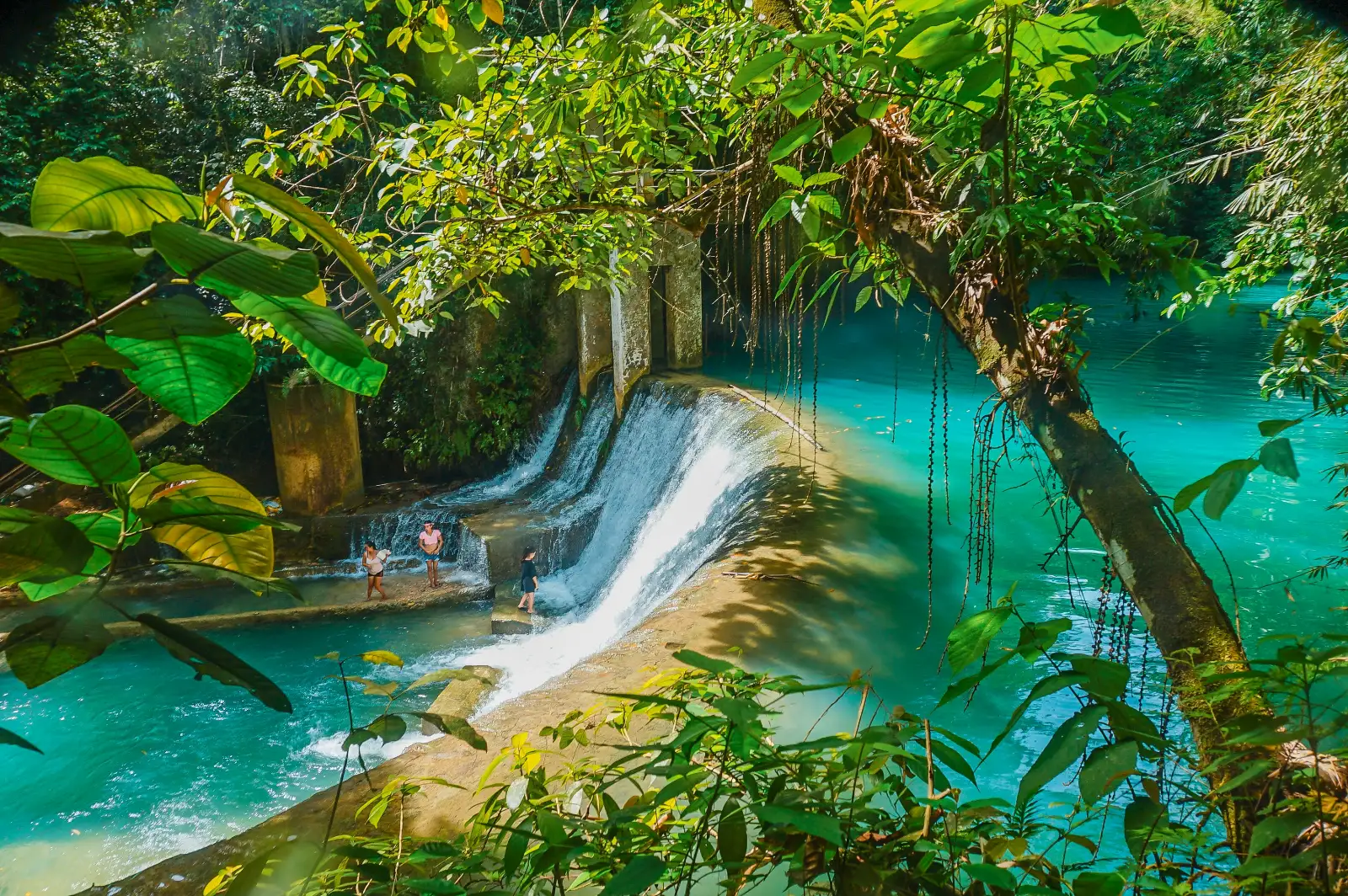
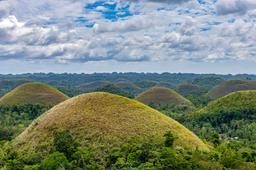
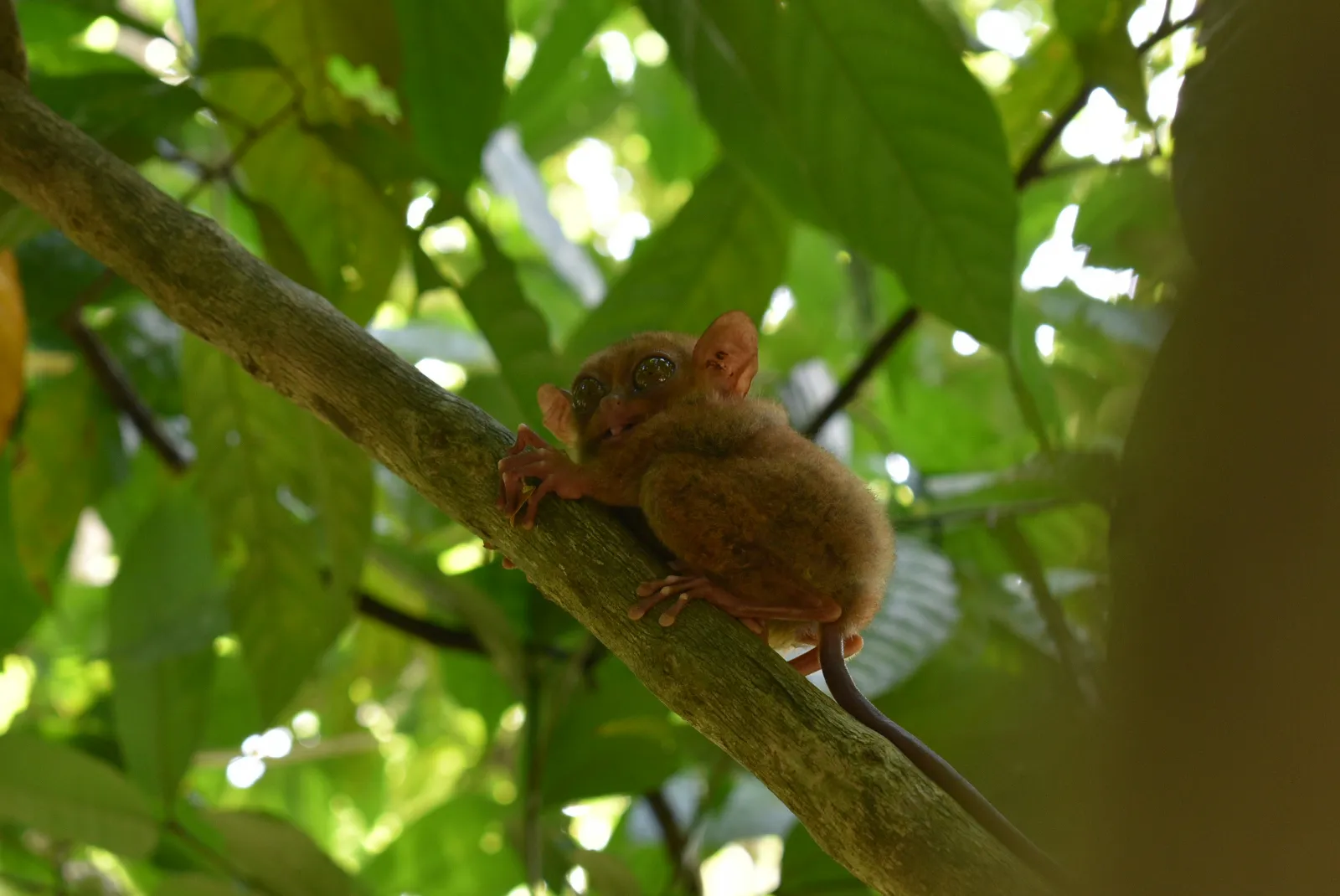
After Sinulog, most travellers head south for waterfalls and marine life, or cross to Bohol for the Chocolate Hills and tarsiers. The weekday after the feast is a good time to see Cebu City's heritage sites again without the crowds. For the full list, our parent guide to the best things to do in Cebu goes island by island.
Nearby ideas, from easy to adventurous
| Trip | What it is | Getting there | Good for |
|---|---|---|---|
| Cebu City heritage walk | Basilica, Magellan's Cross, Fort San Pedro and the Cebu Metropolitan Cathedral when the crowds have gone | On foot in downtown Cebu City | Everyone, especially first-timers |
| Moalboal | Snorkelling with a huge sardine shoal and sea turtles just off Panagsama Beach | A long drive across the island to the southwest coast | Snorkellers, divers, couples |
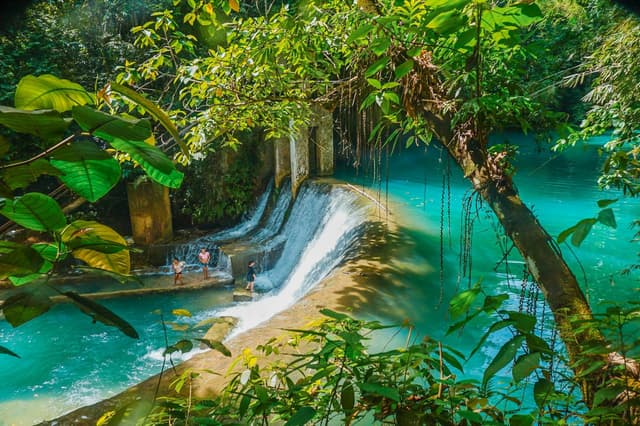
| Kawasan Falls, Badian | Turquoise pools and canyoneering with licensed guides | Near Moalboal; often combined with it | Active travellers, groups of friends |
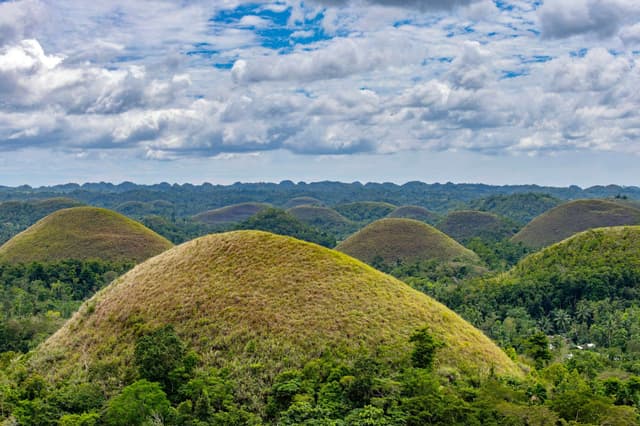
| Bohol | Chocolate Hills, tarsiers and Panglao beaches | Fast ferry from Cebu City to Tagbilaran, operated by companies such as OceanJet | Families, couples, a two-island trip |
| Mactan Island | Resort beaches and island hopping close to the airport | Short ride from the airport | A relaxing last night before the flight home |
| Oslob (see note below) | Whale shark encounters at a feeding site | Far south of Cebu Island | Only if you are comfortable with the welfare debate |
A responsible note on Oslob's whale sharks
Whale sharks gather off Oslob because they are fed by boat crews every morning. The encounters are close and almost guaranteed, but provisioning is controversial: a 2015 study in the journal PeerJ examined compliance with the local code of conduct and the behaviour of the sharks at Oslob and described the ongoing debate about how feeding affects them (Schleimer and colleagues, PeerJ, 2015). If you decide to go, follow the rules on distance, never touch the animals and do not use flash. Many travellers choose Moalboal's wild sardines and turtles instead.
Food to try during and after Sinulog
Festival week is a good time to eat like a Cebuano. Try lechon (Cebu's famous roast pork), puso (rice cooked in a woven coconut-leaf pouch), grilled skewers from street stalls and dried mangoes to take home. Vegetarians from Nepal should note that many dishes contain pork or fish sauce, so ask before you order; our guide to what to eat in the Philippines lists dishes and what is in them.
Pulling the trip together
Most travellers from Nepal combine the festival weekend with a few quieter days in the south of Cebu or on Bohol, which balances the noise and crowds of Sinulog with beaches, waterfalls and wildlife. Travellers who prefer to have hotels, transfers and the post-festival island days arranged together can compare Philippines tour packages against booking each piece themselves, and in either case it is worth deciding early, because Sinulog weekend is one of the busiest times of the year in Cebu.
Frequently asked questions
When is Sinulog 2027?
Sinulog 2027 is on Sunday 17 January 2027, the third Sunday of January, when the Grand Parade starts at the Cebu City Sports Center. The religious feast, Fiesta Señor, runs from 7 to 17 January 2027, and the Basilica also lists 22 January. The full timetable was still marked coming soon in November 2026.
What does Sinulog mean?
Sinulog comes from the Cebuano word sulog, meaning a water current, according to the Sinulog Foundation. It describes the flowing forward and backward steps of the prayer dance performed in honour of the Santo Niño, the Child Jesus, in Cebu City.
Where is the best place to watch the Sinulog parade?
For the full ritual showdown routines, a ticketed seat inside the Cebu City Sports Center is best. For free viewing with more atmosphere, pick a shaded spot along the street route, which in 2026 looped from the sports center through General Maxilom Avenue, Fuente Osmeña Circle and Osmeña Boulevard.
Is Sinulog safe for families?
Sinulog is generally safe for families who plan ahead. Use a seat at the Cebu City Sports Center or a quieter part of the route, carry water and hats, put contact details in each child's pocket, and avoid the most crowded religious processions with very young children or older relatives.
Do you need tickets for Sinulog grandstand seats?
Yes. Seats inside the Cebu City Sports Center are ticketed, and in 2026 they were sold on site and online. Watching from the street route is free. For 2027, ticket details were not yet released in November 2026, so buy only through the Sinulog Foundation's official channels.
What should you wear to Sinulog?
Wear light, breathable clothes, comfortable closed shoes, a hat and sunscreen, because Cebu is around 30°C in January. Bring a poncho rather than an umbrella. For Masses at the Basilica Minore del Santo Niño, cover your shoulders and knees, and leave backpacks at your hotel.
Is Sinulog only held in Cebu City?
The main Sinulog Festival is in Cebu City, but Kabankalan City in Negros Occidental holds its own Sinulog, and Carmen in Cebu province has its own Santo Niño festival. Other January festivals honour the Santo Niño too, notably Ati-Atihan in Aklan and Dinagyang in Iloilo.
Can non-Catholics join Sinulog?
Yes. Sinulog's Masses, processions and Grand Parade are open to everyone, including Hindu and Buddhist visitors from Nepal. Dress modestly at the Basilica, stay quiet during Mass, do not jump the queue to see the Santo Niño, and ask before photographing people at prayer.
How early should you book a hotel for Sinulog?
Book a Cebu City hotel for Sinulog as soon as you fix your dates. Rooms near the Basilica, Fuente Osmeña and the Cebu City Sports Center fill early for the festival weekend. Choose a flexible rate until the official 2027 route map is published in case you want to change areas.
What is the Sinulog fluvial procession?
The Sinulog fluvial procession is the sea procession that carries the Santo Niño image across the Mactan Channel to Cebu City on the morning before the feast. In 2026 it left at 6 am on Saturday with 420 vessels, landed at Pier Uno and was followed by a re-enactment at the Basilica.
How do you get to Cebu from Kathmandu for Sinulog?
There is no direct flight from Kathmandu to Cebu. The usual one-stop options are via Kuala Lumpur, Singapore, Hong Kong or Bangkok into Mactan-Cebu International Airport, or fly to Manila and take a domestic flight. Check entry rules on the visa page and register on eTravel before you fly.