





























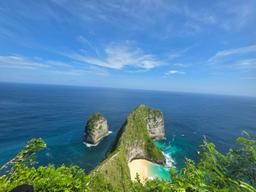


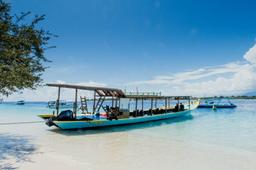




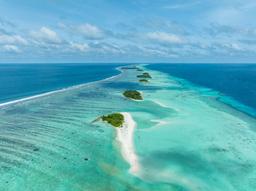
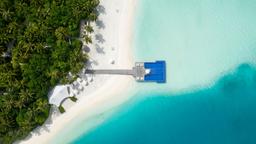
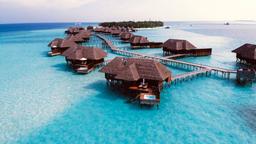






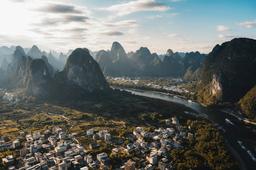








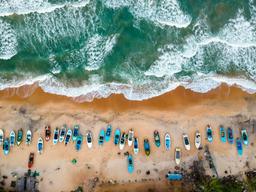





























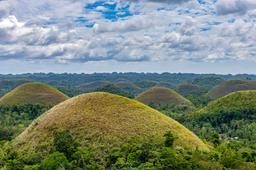
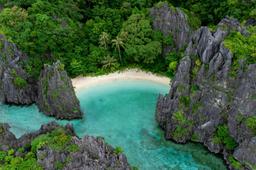
Short answer: Siargao is a teardrop-shaped island off northeastern Mindanao in the Philippines, famous for the Cloud 9 surf break, mangrove-lined Sugba Lagoon, the tide-dependent Magpupungko rock pools and a three-island hopping trip to Naked, Daku and Guyam. The biggest, cleanest surf usually runs from about August to November, while March to May brings calmer seas for island hopping and learning. There is no direct flight from Manila: most visitors fly into Sayak Airport from Cebu or Clark, or take a ferry from Surigao City to Dapa.
This guide is for surfers, beach lovers, young couples and friends who want to plan Siargao properly: which breaks suit your level, what to do if you do not surf, how the island hopping and lagoon trips work, how to actually get there in 2026, and when the weather argues against going. It does not quote tour or flight prices, which change by operator and season.
If Siargao is one stop on a longer trip, start with our Philippines travel guide for money, seasons and local customs, and see how the island compares with Palawan, Boracay, Cebu and Bohol in our round-up of the best islands in the Philippines.
| Siargao at a glance | Details |
|---|---|
| Where it is | Pacific coast of Surigao del Norte province, off the northeastern tip of Mindanao, Philippines |
| Known for | Surfing (Cloud 9), lagoons, mangroves, rock pools, island hopping and a relaxed cafe scene |
| Main base | General Luna, on the southeast coast, close to Cloud 9 and the island hopping pier |
| Protected area | Siargao Island Protected Landscapes and Seascapes (SIPLAS), declared in 1996 under Proclamation No. 902 |
| Main surf season | About August to November, with the most consistent swell in the later months |
| Calmest seas | About March to May, good for island hopping, lagoons and learning to surf |
| Airport | Sayak Airport (IAO) in Del Carmen, about 45 to 60 minutes by road from General Luna |
| By sea | Ferries from Surigao City on mainland Mindanao to Dapa port |
| From Kathmandu | No direct flight to the Philippines; connect through a regional hub to Cebu or Manila, then fly or ferry on |
| Currency | Philippine peso (PHP); carry enough cash for small cafes, boats and entrance points |
| Getting around | Rented scooter, tricycle, habal-habal (motorbike taxi) or hired van |
Why visit Siargao?
Siargao is worth visiting because it combines one of Asia's best known surf waves with genuinely varied nature: coconut forest, mangrove lagoons, offshore sandbars, rock pools and quiet villages, all within a scooter ride of a small, friendly base town. It suits travellers who want an active, outdoorsy beach holiday rather than a polished resort strip.
The island's reputation began with surfing. Cloud 9, a reef break just north of General Luna, is a hollow right-hand wave that draws travelling surfers from around the world. In 2026 it reached a new level of fame: the World Surf League added the Philippines Pro at Cloud 9 to its 2026 Championship Tour as Stop No. 11, scheduled for 31 October to 10 November 2026, and the upgrade covers the 2027 season as well. (Checked: 28 Oct 2026, Source: Spin.ph and Carve Magazine reports on the WSL schedule.) Contest surfing here is not new: the Siargao International Surfing Cup was first staged in 1996.
What keeps non-surfers happy is the landscape around the waves. Most of the island and its surrounding waters sit inside the Siargao Island Protected Landscapes and Seascapes, a protected area of almost 284,000 hectares, most of it sea, which includes about 8,272 hectares of protected mangrove forest. (Source: Philippine News Agency.) That is why a single day here can include paddleboarding in a mangrove lagoon, swimming in a rock pool at low tide and watching sunset from a coconut-lined road.
Siargao is also small enough to feel personal. General Luna has grown quickly, with cafes, surf schools and guest houses along Tourism Road, but most of the island remains farming and fishing villages linked by a single ring road. Expect simple, sometimes basic infrastructure: power and mobile data can be patchy after storms, roads outside the main stretch are quiet, and the pace is unhurried.
Who Siargao suits best
| Traveller | Why Siargao works | What to keep in mind |
|---|---|---|
| Experienced surfers | Cloud 9, Tuason, Stimpy's, Pacifico and other reef and point breaks | Sharp, shallow reef; peak swell months are also busy |
| Beginner surfers | Surf schools in General Luna and soft waves at Jacking Horse | Learn with an instructor; avoid the reef breaks until you are ready |
| Young couples and friends | Lagoons, island hopping, cafes and a sociable evening scene | Book stays early around holidays and surf events |
| Families | Calm lagoon and island days, rock pools at low tide, gentle lessons | Distances by road, limited medical facilities, scooters not ideal with small children |
| Nature lovers | Mangroves, rock pools, rivers and quiet beaches in the north | Respect protected area rules and local guides |
When is the best surf season in Siargao?
The best surf season in Siargao is roughly August to November, when Pacific swells, often generated by distant storms, reach the island's east coast and the winds tend to blow offshore at the main breaks around General Luna. Several surf guides put the most consistent window for Cloud 9 at September to November. Smaller, softer waves continue for much of the year, and April to June is usually the flattest period, which is good news for learners.
There is one honest catch: the best swell months overlap with the Philippines' main typhoon season and the start of Siargao's wettest period. PAGASA, the national weather agency, describes the national rainy season as June to November, and Siargao sits in a part of Surigao that receives some of the highest rainfall in the country. More on that in the section on when to avoid Siargao.
| Months | Typical surf | Who it suits | Other conditions |
|---|---|---|---|
| December to February | Mixed; some swell continues, but winds can turn onshore on the east coast | Intermediate surfers willing to chase conditions | Siargao's wettest months; cooler, cloudier days |
| March to May | Generally smaller, cleaner waves | Beginners and longboarders | Driest, sunniest stretch; calm seas for island hopping |
| April to June | Usually the flattest period | First-time learners | Hot; good lagoon and beach weather |
| July to August | Swell starts to build | Beginners to intermediates, depending on the day | National rainy season under way; watch the forecast |
| September to November | Peak season; most consistent and powerful waves | Intermediate and advanced surfers | Busiest time for surfers; typhoon watch needed; big contests |
Treat these as patterns, not promises. Swell depends on distant weather systems, and one week in October can be flat while a week in March is excellent. Surf forecast sites and your surf school will give you a far better picture a few days out than any monthly table.
Surf breaks by level
Siargao's surf is mostly over reef, which means shape and power but also shallow coral and sharp edges. Match the break to your ability, wear reef booties if a local recommends them, and ask about tide before you paddle out.
| Break | Where | Wave | Level | Access |
|---|---|---|---|---|
| Jacking Horse (and the inner "Little Pony") | Next to Cloud 9, General Luna | Soft, rolling peak | Beginner to intermediate | Short ride from General Luna, then paddle |
| Quiksilver | Just north of Cloud 9 | Playful right | Intermediate; beginners only when small | Paddle from the Cloud 9 area |
| Cloud 9 | Northern end of General Luna, by the boardwalk | Hollow right-hand barrel over shallow reef (also breaks left) | Advanced | Paddle from the boardwalk |
| Tuason Point | Close to Cloud 9 | Powerful, hollow left | Advanced | Short ride, then paddle |
| Stimpy's | Offshore from General Luna | Fast, hollow left | Intermediate to advanced | Boat |
| Daku Reef | Off Daku Island | Powerful right | Intermediate to advanced | Boat |
| Rock Island | Offshore, reached from General Luna or Pilar | Fast, punchy right near rocks | Intermediate to advanced | Boat |
| Pacifico | Northeast coast, about an hour from General Luna | Long right-hand point | Intermediate to advanced | Scooter or van |
Wave descriptions and levels are compiled from several surf guides (Perfect Wave, Isla Guru and Hey Explorer) and agree on the main points; local surfers will always know more than any table, so ask at your surf school or guest house each morning.
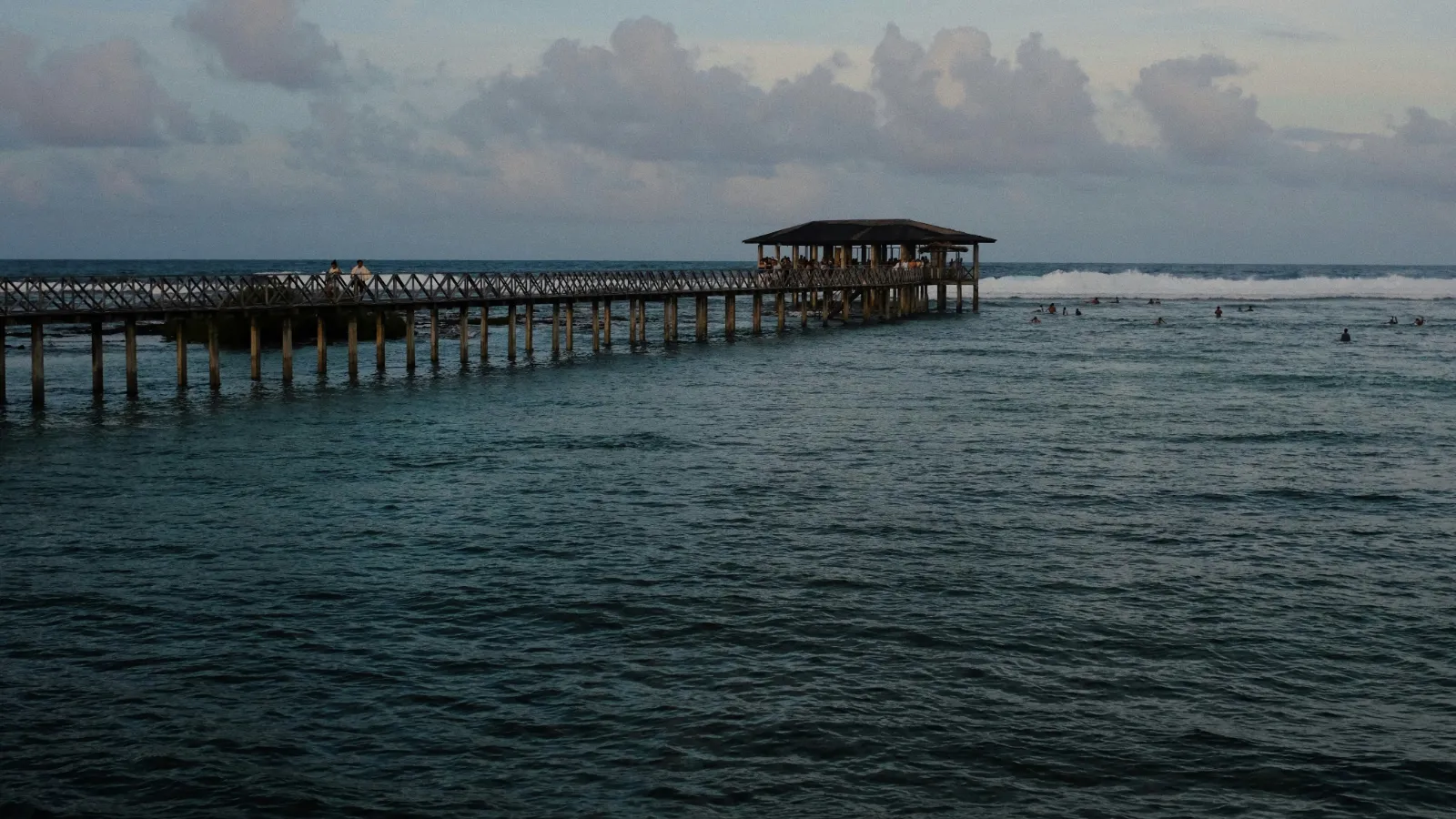
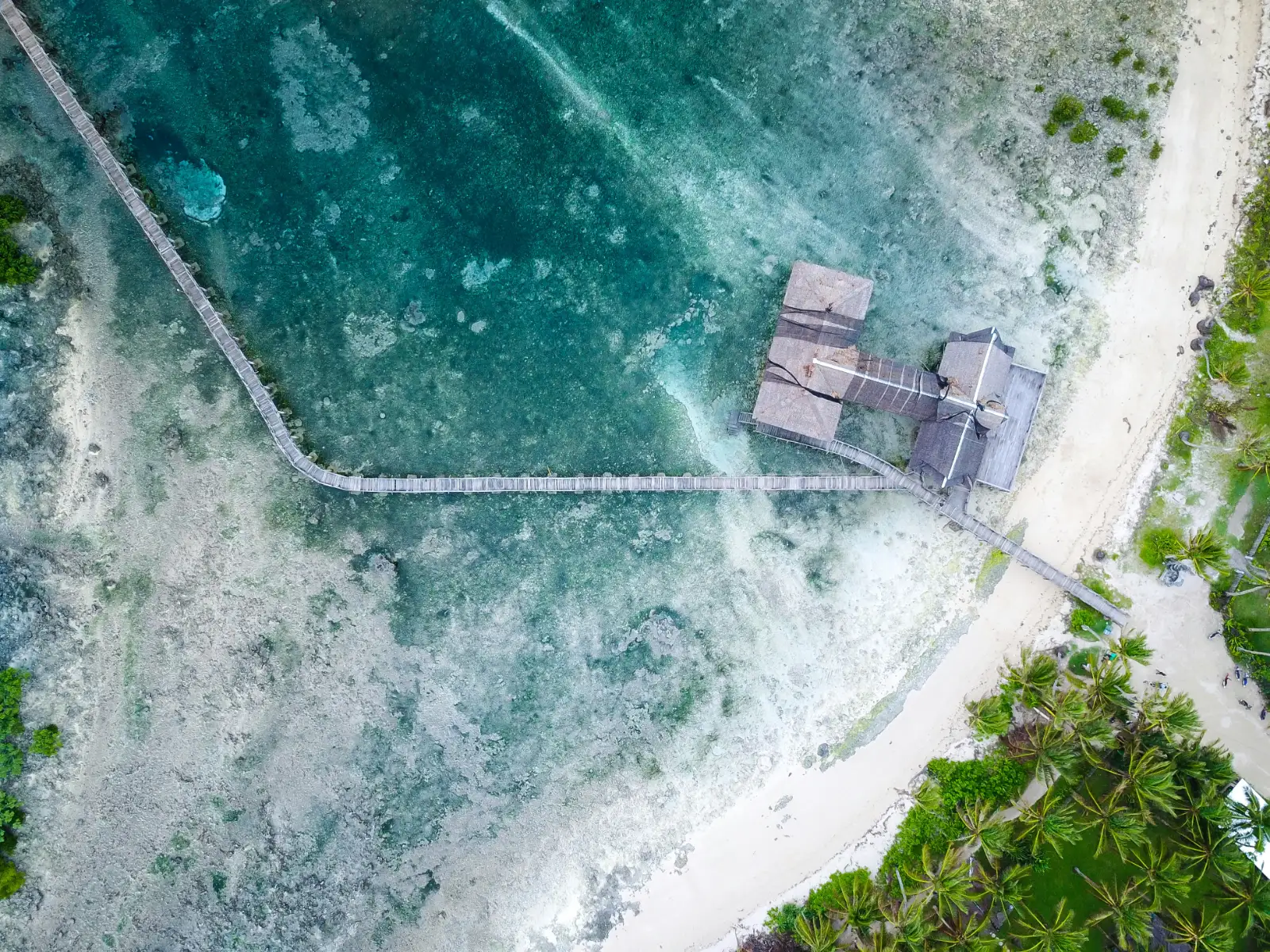
The Cloud 9 boardwalk
Even if you never paddle out, walk the Cloud 9 boardwalk. It runs out over the reef towards the break, and from there you can watch surfers drop into the wave just metres away. Early morning and late afternoon are the nicest times, both for light and for the chance of glassy conditions. During major contests the area can be busy and partly managed by event staff, so check what is open on the day.
Is Siargao good for beginner surfers?
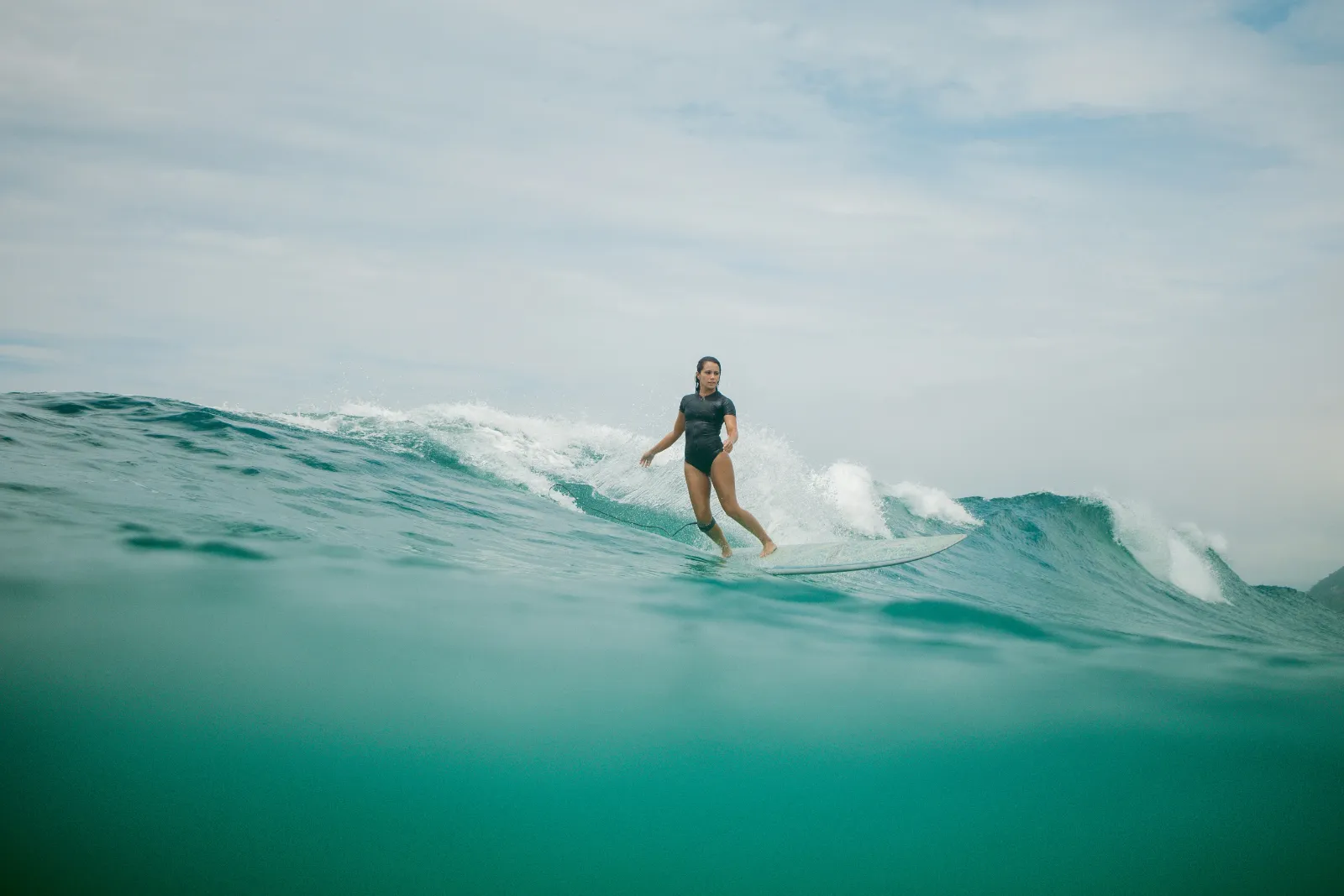
Yes, Siargao is good for beginner surfers as long as you learn at the right spot with an instructor. Jacking Horse, right beside Cloud 9, has softer waves that break over a forgiving section, and General Luna is full of surf schools and independent instructors who run lessons there and at other easy spots when conditions suit. The famous breaks, Cloud 9 included, are not for beginners.
A typical lesson starts with a short land briefing on paddling, popping up and surf etiquette, then moves to the water with the instructor pushing you into waves. Most people stand up at least briefly in the first session, then spend the next few days learning to paddle, turn and read waves for themselves.
| Beginner question | Practical answer |
|---|---|
| Where do lessons happen? | Mostly at Jacking Horse and other soft spots near General Luna, chosen by the school based on tide and swell |
| Best months to learn | March to June usually brings the smallest, friendliest waves; lessons run most of the year |
| How long is a session? | One to two hours is usually enough; your arms will tell you when to stop |
| How many lessons? | Three to five sessions over a week, with rest days, gives most people real progress |
| Best tide | Ask your instructor; reef spots can be too shallow at low tide, and Jacking Horse changes through the day |
| What to bring | Rash vest or long-sleeve top, reef-safe sunscreen, water, and booties if recommended |
A few habits help beginners progress and stay safe:
- Book the same instructor. Asking for the same person across your stay means they know your level and fix your mistakes faster.
- Do not stack lessons back to back. Paddling is tiring, and stiff shoulders on day three slow you down. Mix lesson days with lagoon or island days.
- Learn the etiquette. The surfer closest to the peak has priority. Do not paddle into the lineup at Cloud 9 or Tuason to "have a go": the reef is shallow and the crowd is experienced.
- Respect the sun. Siargao is close to the equator and the reflection off the water is intense. Long sleeves are more comfortable than reapplying sunscreen every half hour.
- Get reef cuts cleaned. Coral cuts infect easily in the tropics. Clean them properly the same day and keep them dry where you can.
Couples where only one partner surfs do well here: the surfer takes an early session while the other has breakfast at a cafe, then you spend the rest of the day on a lagoon or island trip together.
What can non-surfers do in Siargao?
Non-surfers can fill several days in Siargao without touching a board: island hopping to Naked, Daku and Guyam, a boat trip through mangroves to Sugba Lagoon, swimming in the Magpupungko rock pools at low tide, jumping into the clear water at Maasin River, photographing the coconut-lined roads and exploring the quieter beaches of the north. Many of these are combined into a "land tour" that local drivers run from General Luna.
| Activity | Where | Best timing | Good to know |
|---|---|---|---|
| Three-island hopping | From the General Luna pier | Calm, sunny days; March to May is usually best | No shade on Naked Island; bring a hat and water |
| Sugba Lagoon | Boat from Del Carmen | Morning, before most boats arrive | Visits are time-limited; small entrance and environmental fees |
| Magpupungko rock pools | East coast near Pilar | Only around low tide | Check the tide table; wear water shoes |
| Maasin River | Inland from General Luna, by the main road bridge | Any clear day | The famous bent palm has gone; there is now a jumping platform |
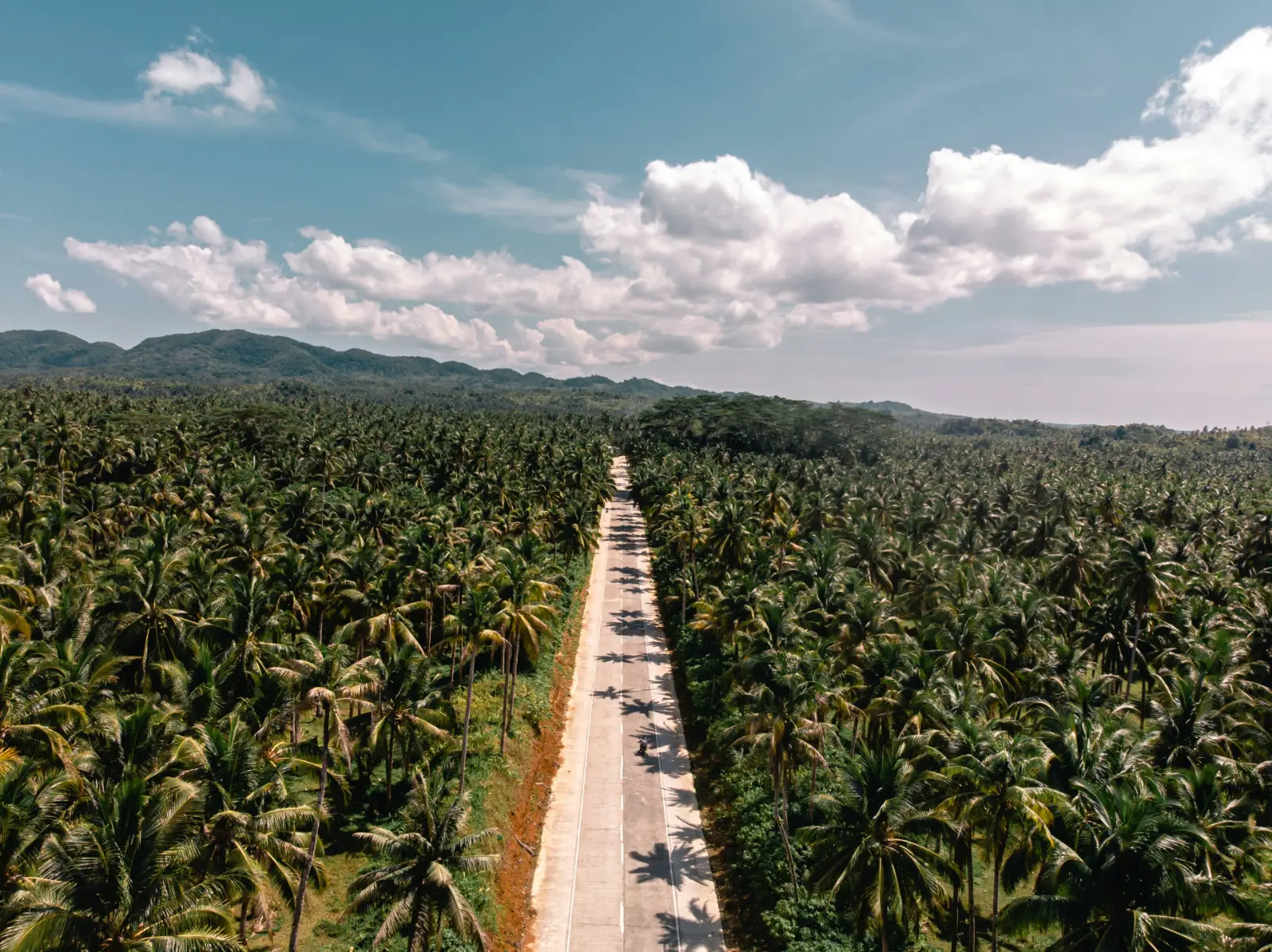
| Coconut road viewpoint | On the island's circumferential road, a short stop on the land tour | Early morning or late afternoon light | Pull over safely; it is a working road |
| Cloud 9 boardwalk | General Luna | Sunrise and late afternoon | Watch surfers up close without getting wet |
| Northern beaches and Taktak Falls | Alegria Beach, Pacifico, Taktak Falls in the far north | A full day trip in dry weather | Long ride; start early and carry cash |
| Sohoton Cove | Bucas Grande, a neighbouring island | Calm seas; a long day trip | Usually booked as a tour from General Luna |
Magpupungko rock pools: plan around the tide
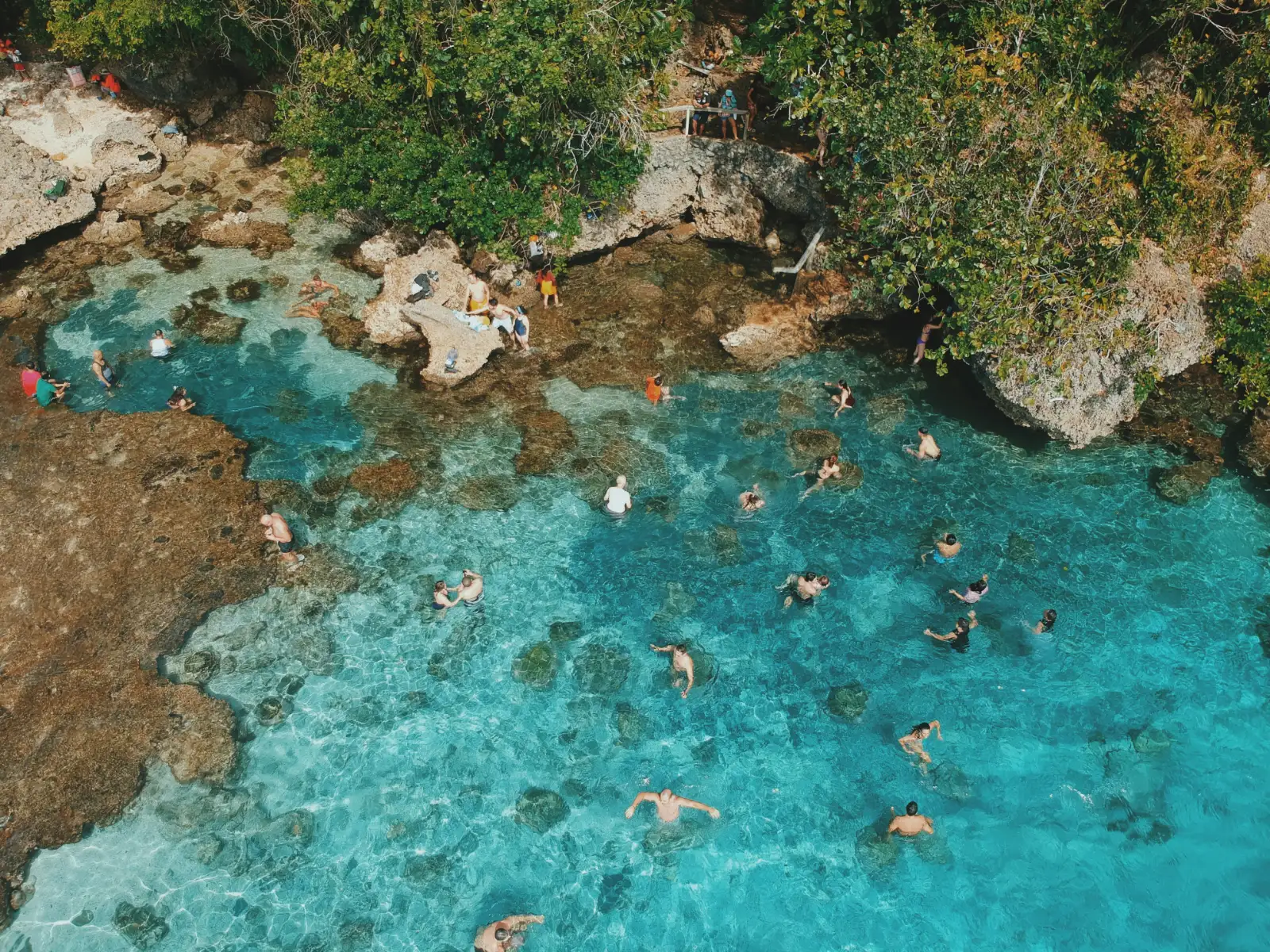
The Magpupungko rock pools near Pilar only appear at low tide. As the sea drops, a shelf of rock emerges and leaves deep, clear natural pools you can swim in and jump into; at high tide the same spot is covered by waves and there is nothing to see. Visitor guides suggest arriving roughly an hour before low tide and leaving before the water starts rising again.
- Check the tide the night before. Use a tide table for the Pilar or Surigao area, or simply ask your guest house or driver, who will know when "Magpupungko time" is that day.
- Allow travel time. It is about 45 minutes to an hour by road from General Luna, so a low tide at 9 am means an early start.
- Wear water shoes. The rocks are sharp and slippery.
- Jump with care. Water depth changes with the tide; watch where locals jump and do not jump blind.
- Watch the sea side. Waves can wash over the outer edge of the pools when the tide turns or swell is up.
A small entrance fee is collected at the site; check the amount on the day. The nearby Tayangban cave pool is often added on the same morning.
Maasin River and the coconut roads
Maasin River is a calm green river beside a bridge on the main road, about 40 minutes to an hour from General Luna depending on where you stay. For years it was known for a bent coconut palm leaning over the water that people climbed and jumped from. That tree has gone, and the community has built a jumping platform in its place. You can also hire a small boat or kayak to go upstream to quieter pools. Older blog photos of the palm are out of date, so do not plan your day around it.
Siargao's coconut roads are the other classic photo: long straight stretches of the circumferential road lined with tall palms, and a hillside viewpoint looking out over an ocean of coconut trees. Land tours usually include a stop. If you ride yourself, pull completely off the road for photos; trucks and scooters use these straights at speed.
Other non-surf ideas
- Cafe and food scene. General Luna has a surprising range of cafes, smoothie bowls, grilled seafood and Filipino home cooking. For the dishes worth trying, ask your guest house for their local favourites.
- Sunset spots. The Cloud 9 boardwalk, the General Luna beachfront and the roads above the coast all work.
- Stand-up paddleboarding. Easy in calm lagoon water, especially at Sugba.
- Slow days. Siargao rewards doing less: a hammock, a book and a fresh coconut are part of the experience.
What is the three-island hopping tour like?
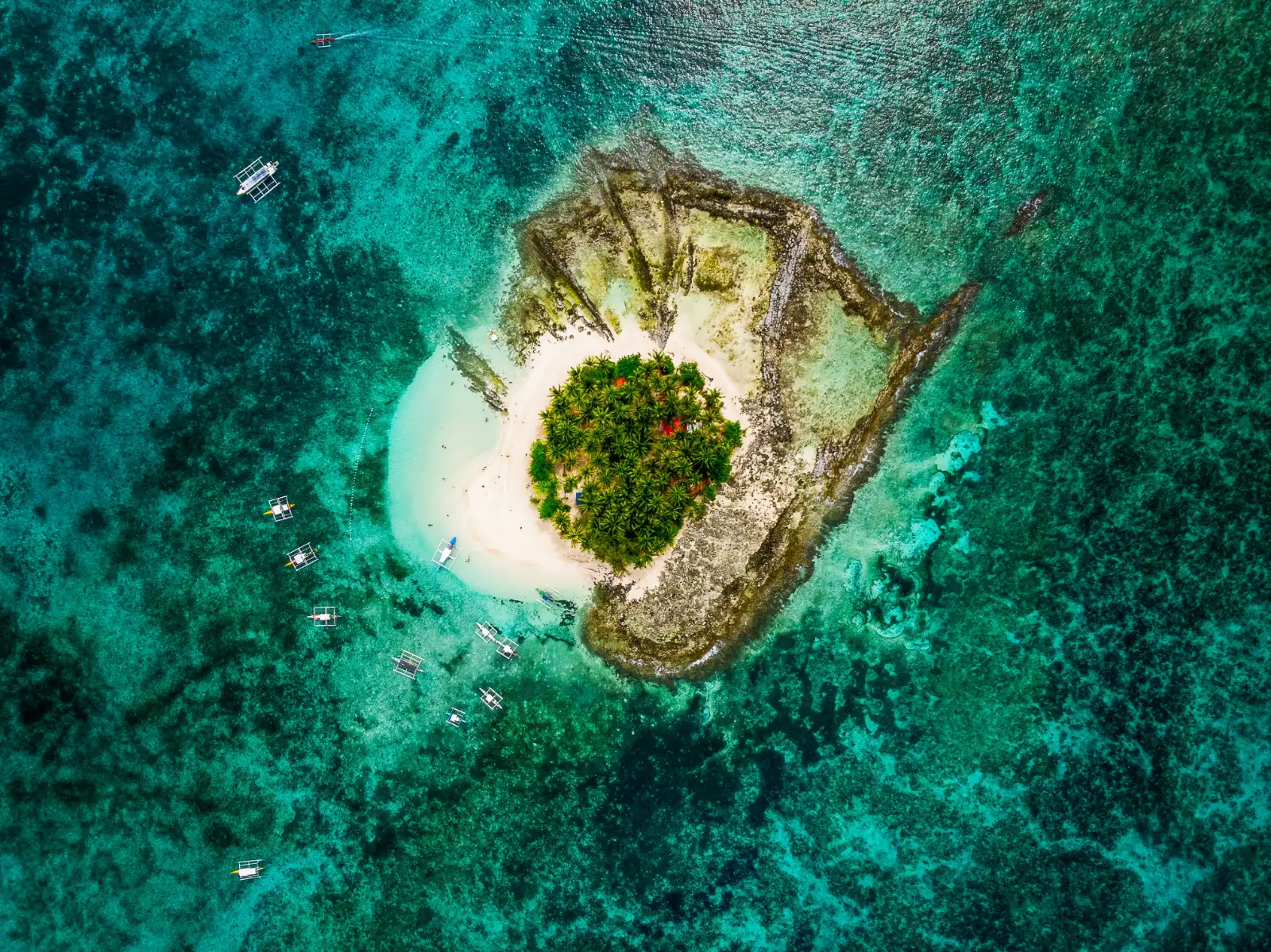
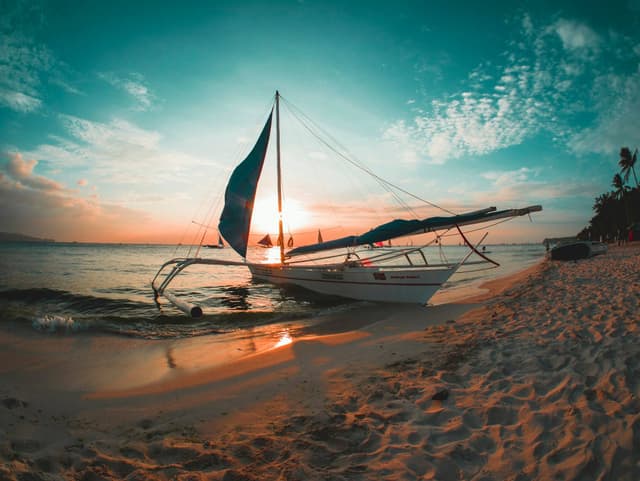
The three-island hopping tour is a relaxed day on a bangka (outrigger boat) from the General Luna pier to three small islands just offshore: Naked Island, a bare sandbar; Daku Island, the largest, with a village, palms and space for lunch; and Guyam Island, a tiny, round island covered in coconut trees. It is the most popular non-surf day in Siargao and works for almost every age and fitness level.
| Island | What it is like | What to do | Tip |
|---|---|---|---|
| Naked Island | A strip of white sand with no trees or buildings, surrounded by reef | Swim, snorkel, photos of the sandbar | No shade at all; go early and bring a hat and sun cover |
| Daku Island | The largest of the three ("daku" means big in the local language), with a community, palms and a beach | Lunch, swimming, a walk under the palms | Usually the lunch stop; respect the village and its homes |
| Guyam Island | Very small and round, with a dense cluster of coconut palms and a shallow, rocky reef | Short walk around, swimming, photos | Can sometimes be reserved for private events; you can still swim nearby |
The boat ride between stops is short, typically around 20 minutes per leg, so the day feels unhurried. Most boats leave in the morning and return in the afternoon. You can join a shared group tour arranged by your accommodation or hire a private boat for your own group, which lets you set the order and timing. A private boat suits families and couples who want to reach Naked Island before it gets busy.
What to bring:
- Reef-safe sunscreen, a rash vest or long sleeves, hat and sunglasses
- Plenty of drinking water and some snacks
- Snorkel and mask if you have them (rental is often available)
- A dry bag for your phone and cash
- Small change for any island landing fees, which are collected locally
The sea between the islands is sheltered compared with the open Pacific, but trips are cancelled or cut short in rough weather. If a typhoon or strong storm is forecast, the coast guard can suspend small boat trips. Build some flexibility into your days.
Is Sugba Lagoon worth visiting?
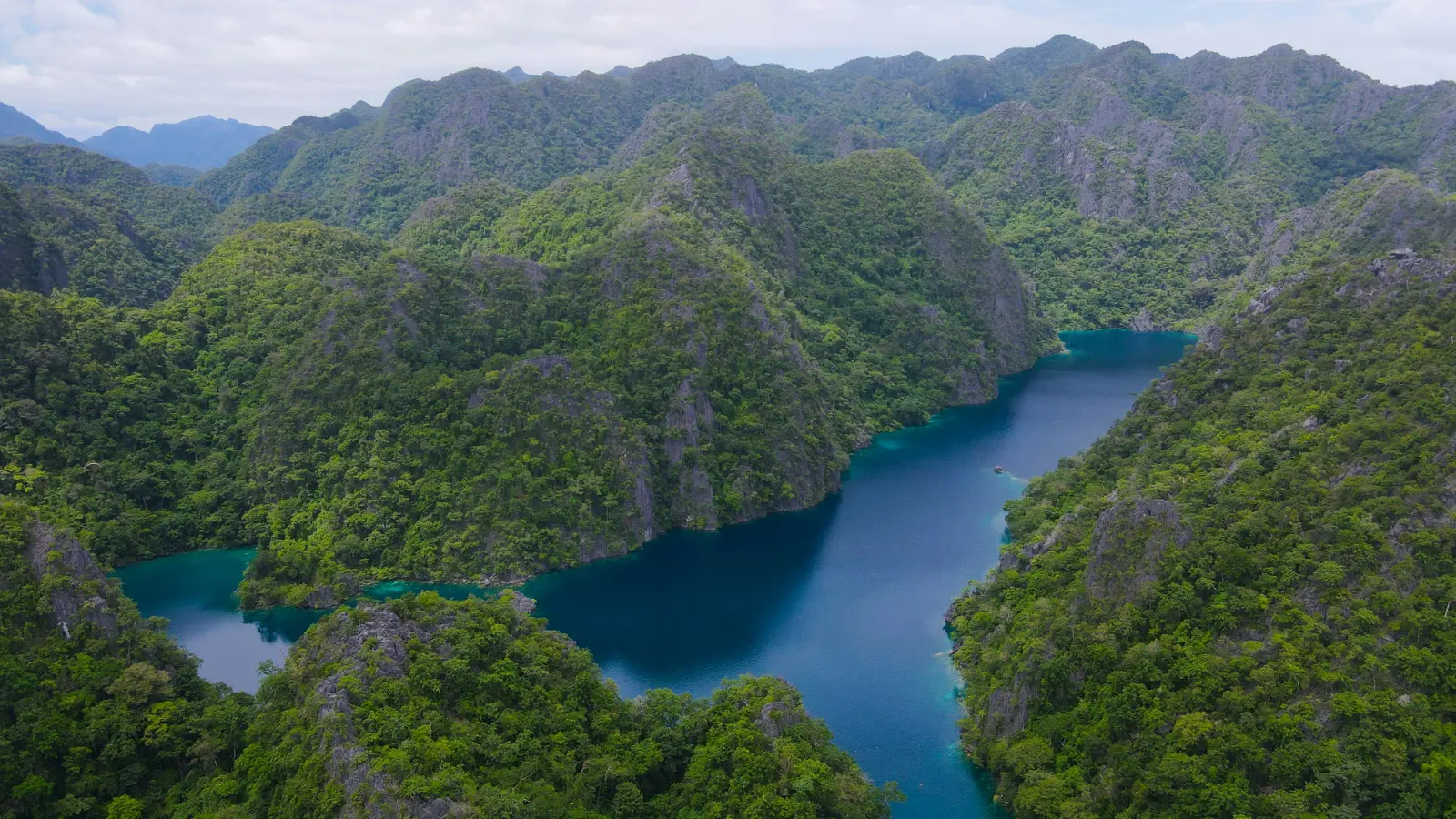
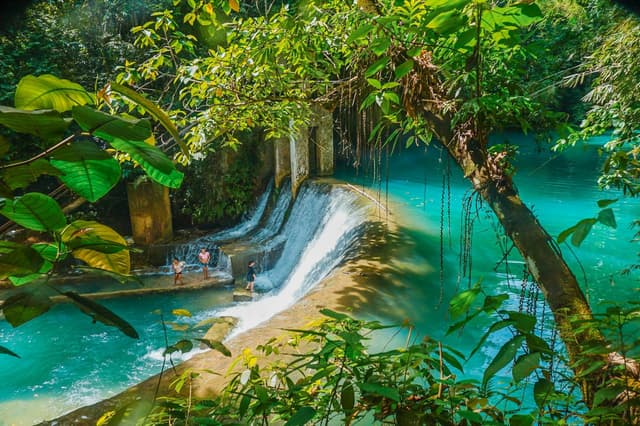
Yes, Sugba Lagoon is worth visiting, especially for non-surfers and couples. It is a sheltered, turquoise lagoon on the edge of the Del Carmen mangrove forest, reached by a short boat ride through the mangroves, with a floating platform where you can rent paddleboards and kayaks, swim, snorkel and jump off a diving board. It is one of the calmest, most photogenic places on the island.
The trip has two parts. First, the drive from General Luna to Del Carmen on the island's west side, which takes around 45 minutes. Then a boat ride of roughly 20 minutes through mangrove channels to the lagoon. You can book a tour with hotel pickup or go independently by scooter and hire a boat at the Del Carmen pier.
| Sugba Lagoon | Details |
|---|---|
| Location | Off Del Carmen, on the west side of Siargao, inside a large mangrove area |
| Getting there | Drive about 45 minutes from General Luna to Del Carmen, then a boat of about 20 minutes |
| Activities | Paddleboarding, kayaking, bamboo rafts, swimming, snorkelling, a diving board |
| Facilities | A floating platform with simple food and drinks; do not expect a full restaurant |
| Time limit | Visitor guides report a limit of about three hours per group so that boats can rotate; confirm locally |
| Fees | Small entrance and environmental fees, plus boat and equipment hire; check on the day |
| Best time | Morning, on a dry day, before most boats arrive |
| Often combined with | A stop at a nearby sandbar or a mangrove viewpoint, depending on the tour |
Is it worth it if you are short on time? If you have three days or more in Siargao, yes. If you have only two days and surf is your priority, the three-island hopping tour is easier to fit around a morning session. In heavy rain or wind, the lagoon loses much of its colour and the boat ride is less pleasant, so keep it flexible and go on the best weather day.
Sugba sits within the SIPLAS protected area. Stay on designated platforms, do not stand on or touch coral and seagrass, and take all rubbish back with you. The mangroves are a nursery for fish and a natural storm barrier for the island.
How do you get to Siargao?
You get to Siargao either by flying into Sayak Airport (IAO) in Del Carmen or by flying or sailing to Surigao City on mainland Mindanao and taking a ferry to Dapa port. In 2026 there is no direct flight from Manila: according to a route check updated in October 2026, scheduled flights to Sayak operate from Cebu, Clark and Davao, so travellers from Manila usually connect through Cebu, or travel to Clark first.
This has changed a lot recently. Cebu Pacific moved its Siargao flights from Manila to Clark at the end of March 2025. Philippine Airlines ended turboprop flights at Manila's main airport from 29 March 2026 and suspended its Clark to Siargao flights from 4 May 2026 until further notice. Sunlight Air, meanwhile, moved its Siargao service to Clark and Cebu in 2026. (Checked: 28 Oct 2026, Sources: ABS-CBN, Context.ph and Sunlight Air notices; route list from Suroy.ph, updated 27 October 2026.) Routes at small island airports change often, so always confirm on the airline's own website before booking.
| Route | How | Approximate time | Notes |
|---|---|---|---|
| Cebu to Siargao | Direct flight to Sayak (Cebgo, PAL Express, Sunlight Air) | About 1 hour | Served by the most airlines in 2026 |
| Clark to Siargao | Direct flight to Sayak (Cebgo, Sunlight Air) | About 2 hours 20 minutes to 2 hours 30 minutes | Useful from Manila if you can get to Clark, north of the city |
| Davao to Siargao | Direct flight to Sayak (Cebgo) | About 1 hour 10 minutes | Fewer flights; good for combining with Mindanao |
| Manila to Siargao | No direct flight; connect via Cebu or Clark | Plan for most of a day | Leave generous time between connections |
| Surigao City to Dapa | Ferry: fast craft or slower roll-on roll-off boats | About 1.5 to 2 hours by fast craft; around 3.5 to 4 hours on slower boats | Sailings roughly from early morning to mid-afternoon; confirm at the port |
| Cebu to Surigao City | Day or overnight ferry, then onward ferry to Dapa | Most of a day or an overnight | A slower, scenic option; weather can cancel sailings |
| Sayak Airport to General Luna | Shared van, private van, tricycle or habal-habal | About 45 to 60 minutes | Pre-arrange a transfer if you land late |
| Dapa port to General Luna | Tricycle, van or habal-habal | Varies by vehicle; confirm locally | Transport waits at the port when ferries arrive |
Flight times and operators: Suroy.ph route check (updated 27 October 2026), Sunlight Air's 2026 schedule notices and the Context.ph report on Philippine Airlines' Clark suspension. Ferry times: Suroy.ph and Ferryscanner listings. Checked: 28 Oct 2026. All of these can change with the season and the weather.
Practical tips for the flight
- Small planes, small holds. Sayak is served by turboprops, so baggage space is limited. Surfboards are carried, but board bags can be delayed or sent on a later flight when the plane is full or the day is hot. Check your airline's sports equipment rules before you pack.
- Do not cut connections fine. Domestic flights in the Philippines are delayed by weather more often than long-haul flights. Book through tickets where possible, or leave several hours (or a night in Cebu) between your international arrival and the Siargao flight.
- The terminal is being expanded. The transport department has been building a larger modular terminal at Sayak, raising pre-departure capacity from 200 to 750 passengers; officials said in October 2026 that it was due for completion that month. (Checked: 28 Oct 2026, Source: Context.ph, 19 Oct 2026.) Expect some construction and queues until it is fully open.
- Contest weeks are busy. The WSL Philippines Pro is scheduled for 31 October to 10 November 2026, and flights and rooms around General Luna fill up during that period.
From Kathmandu
There is no direct flight from Kathmandu to the Philippines. Travellers from Nepal usually connect through a regional hub such as Singapore, Kuala Lumpur, Bangkok or Hong Kong to Manila or Cebu. Flying into Cebu, where there are international connections from hubs like Singapore, can save a step, because Cebu is served by the most airlines flying to Siargao. A realistic plan is to treat the journey as two days: Kathmandu to Cebu or Manila on day one, with an overnight stop, and the short hop to Siargao the next morning. Nepali passport holders should check the current entry rules on our Philippines visa page before booking.
For moving between islands once you are in the country, our guide on how to get around the Philippines covers domestic flights, ferries and local transport in more detail.
Getting around Siargao: scooters and licences
Most visitors get around Siargao by rented scooter, but you should only ride if you are licensed and confident. The Philippine Department of Foreign Affairs states that a foreign driver's licence can be used in the Philippines for 90 days from the date of arrival; after that you need a Philippine licence from the Land Transportation Office (LTO). (Checked: 28 Oct 2026, Source: Philippine Embassy in Bern, DFA.) The Swiss Embassy's guidance adds that a licence not in English should be accompanied by an official translation, and that an International Driving Permit is recognised alongside your home licence.
- Check your licence covers motorcycles. A car-only licence does not cover a scooter. For a Nepali licence, that means the motorcycle category.
- Carry your licence and passport. Police checkpoints do operate, and your passport proves your arrival date for the 90-day rule.
- Wear a helmet. Philippine law (Republic Act No. 10054, the Motorcycle Helmet Act of 2009) requires motorcycle riders to wear a standard protective helmet. Ask the rental shop for one that fits.
- Check your travel insurance. Many policies exclude scooter accidents if you were unlicensed or not wearing a helmet.
- Ride in daylight. Roads outside General Luna are unlit at night, with dogs, livestock and potholes.
- No licence? Use tricycles, habal-habal drivers or a hired van with driver for land tours. It is easy to arrange through your accommodation.
Driving rules are set and updated by the LTO, so confirm the current position with the LTO or your embassy if you plan to ride.
When should you avoid Siargao?
Avoid Siargao, or keep your plans very flexible, when a tropical storm or typhoon is forecast to approach northeastern Mindanao, and be aware that the island's wettest months are roughly December to February. Typhoons most often affect the Philippines from about July to October, but Siargao has been hit late in the year: Super Typhoon Odette (international name Rai) made landfall on Siargao on 16 December 2021, according to PAGASA, causing severe damage.
That does not mean you should never go in the second half of the year. Many surfers deliberately visit from August to November and have excellent trips. It means booking flexible tickets, buying travel insurance that covers weather disruption and watching the forecast closely in the days before you fly.
| Period | Weather pattern | Our view |
|---|---|---|
| March to May | Driest and sunniest, calm seas | Best all-round time for non-surfers, families and learners |
| June to August | National rainy season begins; swell starts to build | Good value and fewer crowds; watch for storms |
| September to November | Peak surf; typhoon season continues nationally | Best for experienced surfers; book flexibly; busy around contests |
| December to February | Siargao's wettest months; cooler and cloudier; late-season typhoons possible | Possible but plan for rain days and some cancelled boat trips |
Why is Siargao's rainfall pattern different from much of the Philippines? PAGASA describes the national rainy season as June to November and the dry season as December to May, but it also notes that eastern Surigao is among the places that receive the greatest amount of rainfall in the country. (Source: PAGASA, Climate of the Philippines, checked 28 Oct 2026.) Commonly reproduced PAGASA climate-type maps place Surigao del Norte in a zone with no true dry season and the heaviest rain from about December to February, when the northeast monsoon blows onto the Pacific coast. For a country-wide view of seasons by region, see our guide to the best time to visit the Philippines.
How to read a typhoon warning
- Use PAGASA. PAGASA issues tropical cyclone bulletins and Tropical Cyclone Wind Signals by area. Look for Surigao del Norte or Siargao Islands in the list of affected areas.
- Expect boat suspensions. When a wind signal is raised, sea travel for small boats is usually suspended, and island hopping, Sugba trips and ferries from Surigao stop.
- Flights follow the weather. Airlines cancel or reschedule turboprop flights in strong winds. Keep your airline's contact details and booking reference handy.
- Follow local advice. Your accommodation and the local government unit will say if you need to move or stay indoors.
- Keep a buffer day. If you have an international flight home, plan to be back in Cebu or Manila at least a day before it during storm season.
Dashain and Tihar timing for Nepali travellers
For travellers from Nepal, the Dashain and Tihar holidays usually fall in October or November, which is peak surf season in Siargao and still within the national typhoon window. It is a great time for confident surfers, but families and first-time visitors who mainly want lagoons and island hopping may enjoy calmer seas by moving the trip to the spring school holidays, or pairing Siargao with a more weather-resilient island. Booking early matters in either case: the October to November surf crowd, contest weeks and the Christmas to New Year period all fill the island's limited flights and rooms.
Siargao or another island?
If you are torn between Siargao and the country's more developed beach islands, this quick comparison helps. For a deeper look at the alternatives, see our guides to the most beautiful beaches across the Philippines and things to do in Boracay.
| Factor | Siargao | Boracay |
|---|---|---|
| Main appeal | Surf, lagoons, island hopping, a laid-back village feel | A famous white sand beach, resorts, dining and nightlife |
| Swimming beach right outside your door | Not always; much of the coast is reef | Yes, White Beach is a long, easy swimming beach |
| Getting around | Spread out; scooters, tricycles and vans | Compact; walkable, with e-tricycles |
| Access | Flights from Cebu, Clark or Davao; ferry from Surigao | Flights to Caticlan or Kalibo, then a short boat |
| Best for | Surfers, active couples, nature lovers | First-timers wanting an easy beach holiday, families wanting convenience |
Many travellers combine both, or pair Siargao with Cebu, which is served by the most airlines flying to the island; our guide to things to do in Cebu shows what to fit into a stopover. When you are ready to compare complete trips, see our Philippines tour packages.
Frequently asked questions
When is surf season in Siargao?
The main surf season in Siargao runs from about August to November, when Pacific swells and favourable winds reach Cloud 9 and the other east coast breaks. September to November is usually the most consistent. Smaller waves continue most of the year, and April to June is typically the flattest period, which suits beginners.
Is Cloud 9 suitable for beginners?
No, Cloud 9 in Siargao is not suitable for beginners. It is a hollow, powerful wave breaking over shallow, sharp reef, and the lineup is full of experienced surfers. Beginners should learn at Jacking Horse next door with an instructor, and enjoy Cloud 9 from the boardwalk until they can surf reef breaks confidently.
Can you learn to surf in Siargao?
Yes, Siargao is a good place to learn to surf. General Luna has many surf schools and independent instructors who teach at softer spots such as Jacking Horse. Three to five lessons over a week, with rest days in between, gives most first-timers real progress. March to June usually brings the friendliest small waves for learning.
When can you swim at Magpupungko rock pools?
You can swim at the Magpupungko rock pools in Siargao only around low tide, when the sea drops and leaves deep natural pools on the rock shelf near Pilar. At high tide the pools are covered by waves. Check a local tide table, arrive about an hour before low tide and leave before the water rises again.
How do you get to Siargao from Manila?
There is no direct flight from Manila to Siargao in 2026. Most travellers fly from Manila to Cebu and connect to Sayak Airport, which takes about an hour from Cebu, or travel north to Clark for a direct Clark to Siargao flight. Another option is reaching Surigao City on mainland Mindanao and taking a ferry to Dapa. Always confirm current routes with the airline.
Is Siargao good for families?
Siargao is good for active families who enjoy boat trips, lagoons and nature, and older children can take gentle surf lessons with an instructor. It is less suited to families wanting a swimming beach outside the hotel, short transfers and big resort facilities. Hire a van with driver rather than scooters, and plan around tides and weather.
Do you need a licence to rent a scooter in Siargao?
Yes, you should hold a valid licence that covers motorcycles to ride a scooter in Siargao. According to the Philippine Department of Foreign Affairs, a foreign licence can be used for 90 days from arrival; after that a Philippine LTO licence is needed. Carry your licence and passport, and wear a helmet, which Philippine law requires.
Is Siargao affected by typhoons?
Yes, Siargao can be affected by typhoons. Storms most often affect the Philippines from about July to October, but Super Typhoon Odette made landfall on Siargao in December 2021. If you travel in the second half of the year, book flexible tickets, buy suitable insurance and follow PAGASA bulletins before and during your trip.
What is Siargao known for?
Siargao is known as the surfing capital of the Philippines, thanks to the Cloud 9 reef break, which hosts a World Surf League Championship Tour event in 2026. The island is also known for Sugba Lagoon, the Magpupungko rock pools, the Naked, Daku and Guyam island hopping trip, coconut-lined roads and its relaxed base town, General Luna.
Is Siargao or Boracay better for a first trip?
For most first trips to the Philippines, Boracay is easier: one long swimming beach, compact distances and plenty of facilities. Siargao is better if you want to surf, prefer a laid-back village feel and enjoy nature trips to lagoons and islands. Many travellers visit Boracay first and save Siargao for a more active second trip.
Siargao kahile jaane ramro?
Surf garna ho bhane August dekhi November samma Siargao ko waves ramro hunchha, tara yo bela typhoon ko khatara pani hunchha. Lagoon, island hopping ra surf sikna March dekhi May sabai bhanda shanta ra sukkha hunchha. (When is the best time to go to Siargao? For surfing, August to November has the best waves but also typhoon risk; for lagoons, island hopping and learning to surf, March to May is the calmest and driest.)