








































































+977-9768558250
Search Tours or Places
Blog / Travel Tips

What Does Travel Insurance Cover? A Plain Guide

32 min read 19 Nov 2026
Silhouette of a traveller waiting by a large airport window as a plane takes off

Short answer: What does travel insurance cover? At its core, emergency medical treatment abroad and, when doctors agree it is needed, medical evacuation or repatriation home. Package plans add personal accident, delayed or lost checked baggage, a lost passport, flight delay, personal liability and, in some plans, trip cancellation and cutting a trip short. Every benefit has its own limit, an excess you pay first and a list of exclusions, so what you are really covered for is what your own policy schedule and wording say.

This guide explains each part of a travel policy in plain words: what it pays for, how its limits work, what it usually leaves out, and how to read the documents before you sign. It is written from Kathmandu for Nepali travellers, families and the diaspora, but wordings work much the same way wherever you buy. We do not quote premiums and we do not name or rank insurers.

Still deciding whether to buy cover at all? Our guide to whether travel insurance is worth it for a holiday abroad works through that question. Ready to buy in Nepal? See how to buy, claim and choose travel insurance from Nepal. And if you have not picked a country yet, start with the best travel destinations for Nepalese travellers, because where you go changes which parts of a policy matter.

What does travel insurance cover?

Travel insurance covers sudden, unexpected events on a trip outside your home country: emergency medical care, evacuation, accidents, and travel problems such as delayed bags, lost passports and flight delays. It is not general health insurance, and it does not pay for anything you knew about, planned, or caused by ignoring the policy's conditions.

The proposal forms that two Nepali non-life insurers publish for their travel medical products say this directly: the policy "is not a General Health Insurance" and is intended for "a sudden and unexpected sickness or accident" while the insured is outside the home country. Consumer guides from the UK, Australia and New Zealand say the same in other words. Keep that idea in mind and most of the rules below make sense. (Checked: 18 Nov 2026, published proposal forms of two Nepali non-life insurers.)

The table lists the cover types you will meet most often, what each pays for, and the kind of event it exists for. Not every plan includes every row.

Cover typeWhat it pays for, in plain wordsExample of the event it is for
Emergency medical expensesDoctor, hospital, surgery, tests and prescribed medicine for a sudden illness or injury abroad, up to the medical limitFood poisoning in Bangkok leads to a hospital admission
Medical evacuation and repatriationMoving you to a hospital that can treat you, or home with medical support, when the insurer's doctors agree; often also return of remainsA diving injury on a remote island needs a transfer to a city hospital
Personal accidentA fixed sum if an accident causes death or a listed permanent disability; not a refund of billsA road accident causes permanent loss of sight in one eye
Checked baggage delayEssentials you buy while the airline has not delivered your checked bag, after a minimum number of hoursYour bag misses the connection in Kuala Lumpur and arrives two days late
Checked baggage lossItems in a checked bag lost for good, up to per-item and total limits, after what the airline paysA suitcase never arrives and the airline closes the case
Loss of passportReasonable costs of replacing a lost or stolen passport or getting an emergency travel documentA passport is stolen and you need an emergency document to fly home
Travel delayUsually a fixed amount once a covered flight is late beyond a set number of hoursA flight out of Kathmandu is held for many hours by fog
Trip cancellationPrepaid, non-refundable costs when you must cancel before departure for a listed reasonA parent is admitted to hospital the week before a Dashain trip abroad
Curtailment and emergency returnUnused prepaid costs and travel home when you must cut a trip short for a listed reason, such as a close relative's deathA grandparent dies in Nepal while you are in Singapore
Personal liability and legal expensesClaims against you for accidentally injuring someone or damaging their property, and some legal costsYou accidentally break expensive equipment in a hotel lobby

Medical-only plans and package plans

Most travel policies come in two shapes. A medical plan covers emergency medical expenses and personal accident. A package plan adds the travel benefits: baggage, passport, delay, liability and, in some cases, cancellation.

The two Nepali proposal forms we read list a schedule of 14 possible benefits, from personal accident and medical expenses through baggage, passport, liability, travel delay and hijack, to cancellation and curtailment, emergency return home, catastrophe, legal expenses and repatriation of family members travelling with you. Which ones you get depends on the plan and the geographic area. For Asian countries such as Thailand, Malaysia, Singapore and Vietnam, the package in that structure stops before cancellation. For SAARC countries such as India, Sri Lanka and the Maldives, only personal accident and medical expenses are listed. Two travellers who both say "I have travel insurance" may therefore hold very different contracts. (Checked: 18 Nov 2026, proposal forms of two Nepali non-life insurers; other insurers may group countries differently.)

The words you will meet in every policy

Wordings use a small set of terms again and again. The meanings below are the usual ones; your wording's definitions section is the one that counts.

TermWhat it usually meansWhy it matters
Schedule or certificateThe page with your name, dates, plan, area, limits and excessCheck every detail against your passport and trip
Policy wordingThe full terms: definitions, sections, exclusions, conditionsIt decides claims; a brochure does not
Sum insured or limitThe most the insurer pays under a section, usually per personMedical and evacuation limits protect you from large debts
Sub-limitA smaller cap inside a section, such as dental pain relief or one item of baggageA high headline limit can hide a low cap on what you care about
ExcessThe first part of each claim that you pay yourselfIt can apply per person and per section
Pre-existing conditionA condition treated, medicated or advised on within a look-back period before buyingClaims linked to it are often excluded unless declared and accepted
Assistance companyThe 24-hour emergency team working for the insurerCall it before treatment or travel changes where you can
EndorsementA written change to the standard wording, such as an added activityIt is your proof that an extra was agreed

What does medical and evacuation cover mean?

Doctors and nurses in masks wheeling a patient on a stretcher along a hospital corridor

Medical cover pays for necessary emergency treatment of a sudden illness or injury abroad, up to the medical limit, after any excess. Evacuation cover pays to move you to a place that can treat you, or home, when that is medically needed and agreed with the insurer. Together they are the part of a policy that protects you from the bill you could not pay.

What medical cover usually includes and leaves out

  • Included: doctor and hospital charges for the emergency, surgery, scans and tests, and prescribed medicine for the illness or injury.
  • Included: emergency transport to a suitable hospital. One Nepali insurer's product page lists emergency air ambulance among its benefits.
  • Included, with a small cap: emergency dental treatment, which the same page limits to immediate pain relief.
  • Left out: routine check-ups and the regular medicine you already take. That page calls its policy "strictly for sudden, unexpected emergencies and accidents".
  • Left out: treatment you travelled to get. Both Nepali forms we read exclude claims where the insured "is traveling for the purpose of obtaining treatment".
  • Left out: care that can wait until you are home. The UK Financial Ombudsman Service, which settles disputes between UK insurers and customers, describes travel policies as covering emergency treatment that cannot wait.

Who decides on evacuation?

The insurer does, guided by doctors. The US Centers for Disease Control and Prevention (CDC) says the decision to medically evacuate "is at the discretion of the insurance company", and that evacuation generally requires the traveller to be in hospital. The Nepali forms we read say the insurer may repatriate you when the treating doctor and the insurer's medical advisers agree you are fit to travel. The UK ombudsman adds that where two medically suitable options exist, it is not necessarily unfair for the insurer to choose the cheaper one. (Checked: 18 Nov 2026, CDC Yellow Book travel insurance page, last reviewed 23 April 2025; Financial Ombudsman Service.)

So evacuation cover is not a ticket home because you feel unwell. It is a medical decision, arranged by the insurer. If family members book an air ambulance on their own, the claim becomes much harder.

Why the first phone call matters

Hospitals in many destinations want payment, or a guarantee of payment, before they treat you. The UK Foreign, Commonwealth and Development Office (FCDO) says of Thailand that "all hospitals require a guarantee of payment before treating patients" (Checked: 18 Nov 2026, FCDO Thailand travel advice, health). That guarantee usually comes from the assistance company.

Some wordings make the call a condition. One Nepali insurer's product page, for example, tells its policyholders to call its assistance company immediately for hospital admissions, accidents or bills over USD 500 (Checked: 18 Nov 2026). That threshold is one policy's condition, not a general rule; other insurers set their own, so look for it in your wording. A UK policy may be judged more softly, but a Nepali policy is judged under its own wording. The safe habit: if it is serious, you or a companion call the assistance number before agreeing to treatment or paying a large bill.

How medical limits work

A medical limit is a ceiling for genuine, necessary, emergency costs, normally per person, per trip. It is not a budget to spend. Three things shape what you receive:

  • The excess. The UK ombudsman says insurers should usually deduct the excess before applying the limit, so the customer can still receive the full amount of cover. Check how your wording does it.
  • Sub-limits. A generous medical limit may carry smaller caps on dental care, outpatient visits or a family member's travel.
  • Negotiated bills. The ombudsman notes that insurers often negotiate with hospitals to reduce what they pay, which is normal when the assistance company is involved early.

Personal accident is separate. It pays a fixed sum for death or a listed permanent disability, not hospital bills, and the sum can depend on age. Two published UK policy wordings we read, for example, pay a much lower accidental death benefit for children and for travellers aged 65 and over, and one pays nothing for loss of limbs or sight from age 65. Look for age bands in the personal accident section of your own schedule. (Checked: 18 Nov 2026, two published UK policy wordings; Nepali wordings may set their own bands.)

Explore Thailand tour packages
View all →
Rows of golden pagoda sculptures among clipped hedges at Nong Nooch Tropical Garden, Pattaya

Coral Island & Nong Nooch Garden Tour

🗓 6 Days · 5 Nights
from NRs 47,500 / person
View tour →
A curved sandy beach and turquoise bay framed by trees on a Thai island

Thailand, Singapore & Malaysia Tour with Phuket

🗓 10 Days · 9 Nights
from NRs 1,09,000 / person
View tour →
Aerial view of Pattaya Beach and boats moored in the bay at dusk, Thailand

Bangkok Pattaya Tour

🗓 5 Days · 4 Nights
from NRs 37,000 / person
View tour →
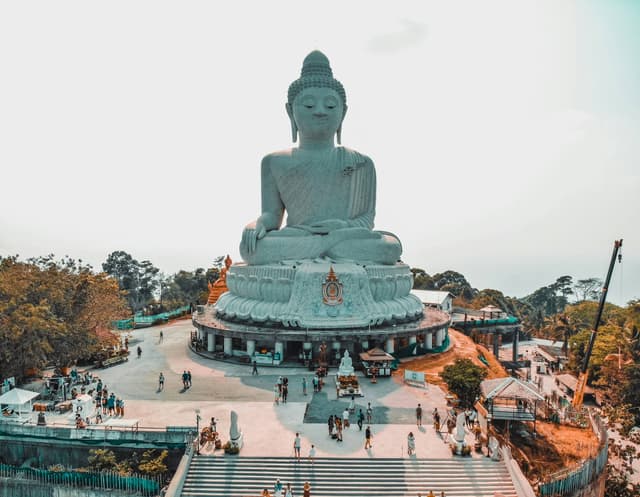
The white marble Big Buddha statue on Nakkerd Hill above Phuket, Thailand

Bangkok Pattaya Phuket Tour

🗓 7 Days · 6 Nights
from NRs 63,000 / person
View tour →
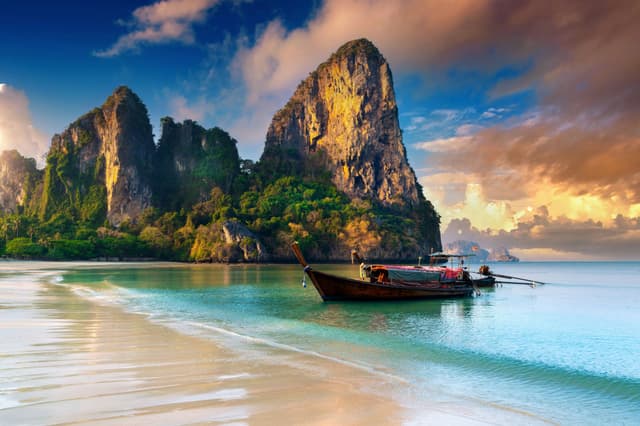
Limestone cliffs above Railay Beach in Krabi with a longtail boat at golden hour

Bangkok Krabi Tour

🗓 6 Days · 5 Nights
from NRs 53,000 / person
View tour →
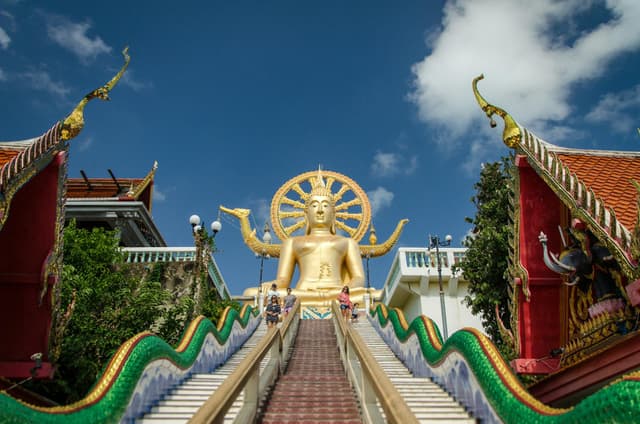
The golden Big Buddha above the dragon staircase at Wat Phra Yai, Koh Samui

Bangkok & Koh Samui Honeymoon Tour

🗓 7 Days · 6 Nights
from NRs 90,000 / person
View tour →
Aerial view of Bangkok city lights spreading to the horizon at dusk

Thailand & Vietnam Tour

🗓 8 Days · 7 Nights
from NRs 98,600 / person
View tour →
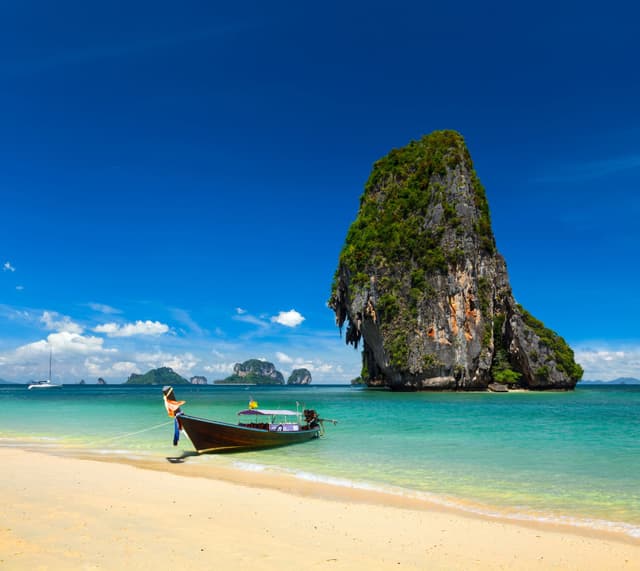
A longtail boat on a white sand beach facing a limestone sea stack in Krabi

Bangkok Phuket Krabi Tour

🗓 8 Days · 7 Nights
from NRs 77,000 / person
View tour →
Bangkok skyscrapers lit up against a deep blue night sky, Thailand

Bangkok Phuket Tour

🗓 6 Days · 5 Nights
from NRs 56,500 / person
View tour →
Longtail boats on turquoise water below the limestone cliffs of Railay Beach, Krabi

Bangkok & Krabi Tour with Free Days

🗓 8 Days · 7 Nights
from NRs 62,500 / person
View tour →
Aerial view of Tonsai Bay on Koh Phi Phi Don with boats in turquoise water

Bangkok Pattaya Phuket Krabi Tour

🗓 9 Days · 8 Nights
from NRs 81,500 / person
View tour →
The white temple of Wat Rong Khun in Chiang Rai, northern Thailand

Bangkok, Chiang Rai & Chiang Mai Tour

🗓 8 Days · 7 Nights
from NRs 82,500 / person
View tour →
The gilded spires and Chakri Maha Prasat hall of the Grand Palace in Bangkok

Thailand, Singapore & Malaysia Family Tour

🗓 11 Days · 10 Nights
from NRs 1,15,600 / person
View tour →
A Royal Caribbean cruise ship anchored off a palm lined tropical beach

Royal Caribbean Cruise Tour

🗓 6 Days · 5 Nights
View tour →
A quiet curved beach backed by palm trees and green hills on a Thai island

Bangkok & Koh Phangan Full Moon Party Tour

🗓 8 Days · 7 Nights
from NRs 73,900 / person
View tour →
Colourful longtail boats lined up on a Krabi beach beside a limestone karst

Phuket & Krabi Tour

🗓 6 Days · 5 Nights
from NRs 57,500 / person
View tour →
Wat Arun temple and its tall central prang beside the Chao Phraya River, Bangkok

Short Bangkok Tour

🗓 4 Days · 3 Nights
from NRs 35,500 / person
View tour →
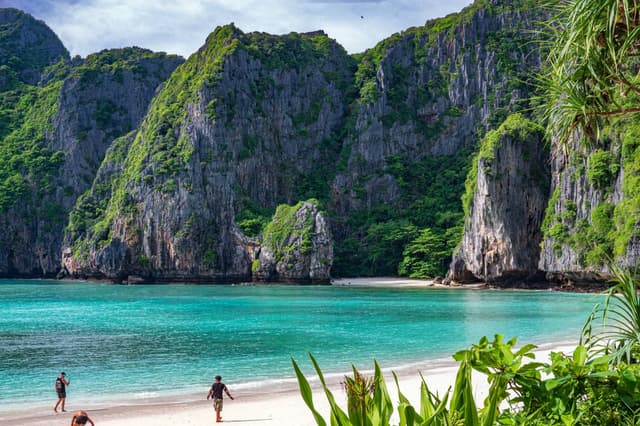
Swimmers on the white sand of Maya Bay below limestone cliffs, Koh Phi Phi Leh

Phuket, Phi Phi & Krabi Island Escape

🗓 7 Days · 6 Nights
from NRs 84,000 / person
View tour →
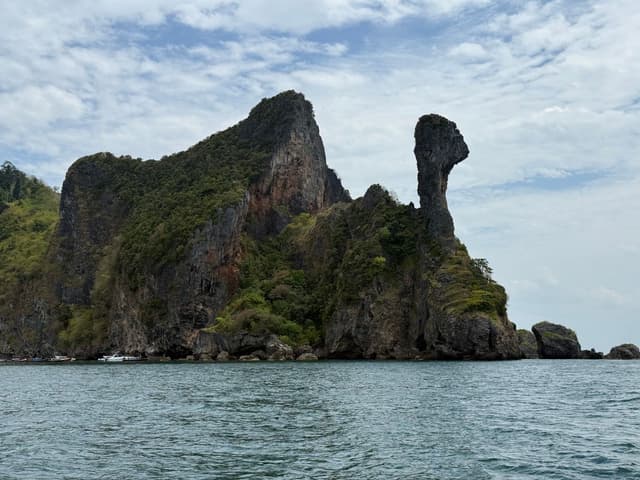
Chicken Island, a limestone rock shaped like a chicken head, off the Krabi coast

Krabi Island Tour

🗓 5 Days · 4 Nights
from NRs 44,500 / person
View tour →
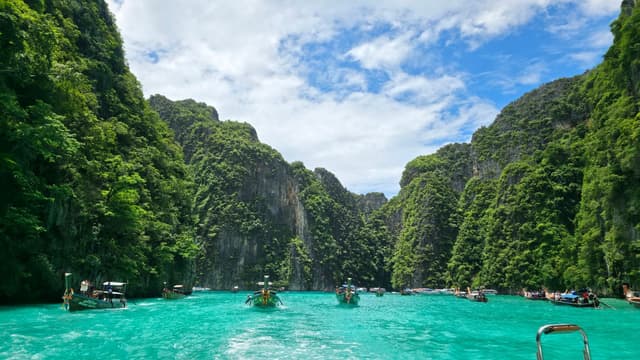
Boats in the emerald water of Pileh Lagoon between the cliffs of Koh Phi Phi Leh

Phuket Tour

🗓 5 Days · 4 Nights
from NRs 51,500 / person
View tour →
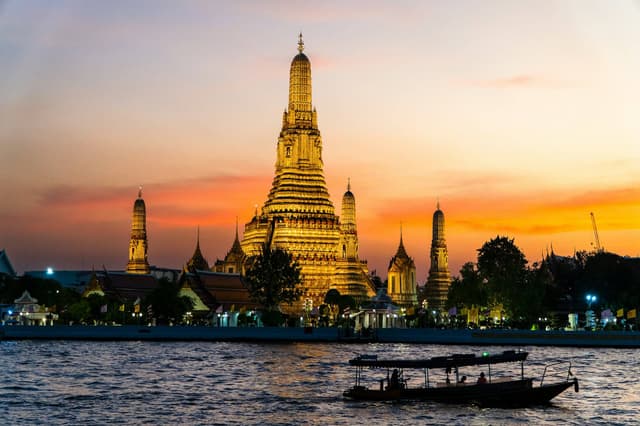
Wat Arun temple glowing at sunset above a longtail boat on the Chao Phraya River

Bangkok Family Friendly Tour

🗓 5 Days · 4 Nights
from NRs 50,500 / person
View tour →
A tandem skydiver giving a thumbs up in free fall above white clouds

Bangkok & Pattaya Skydiving Tour

🗓 6 Days · 5 Nights
from NRs 1,02,000 / person
View tour →

What do trip cancellation and delay cover?

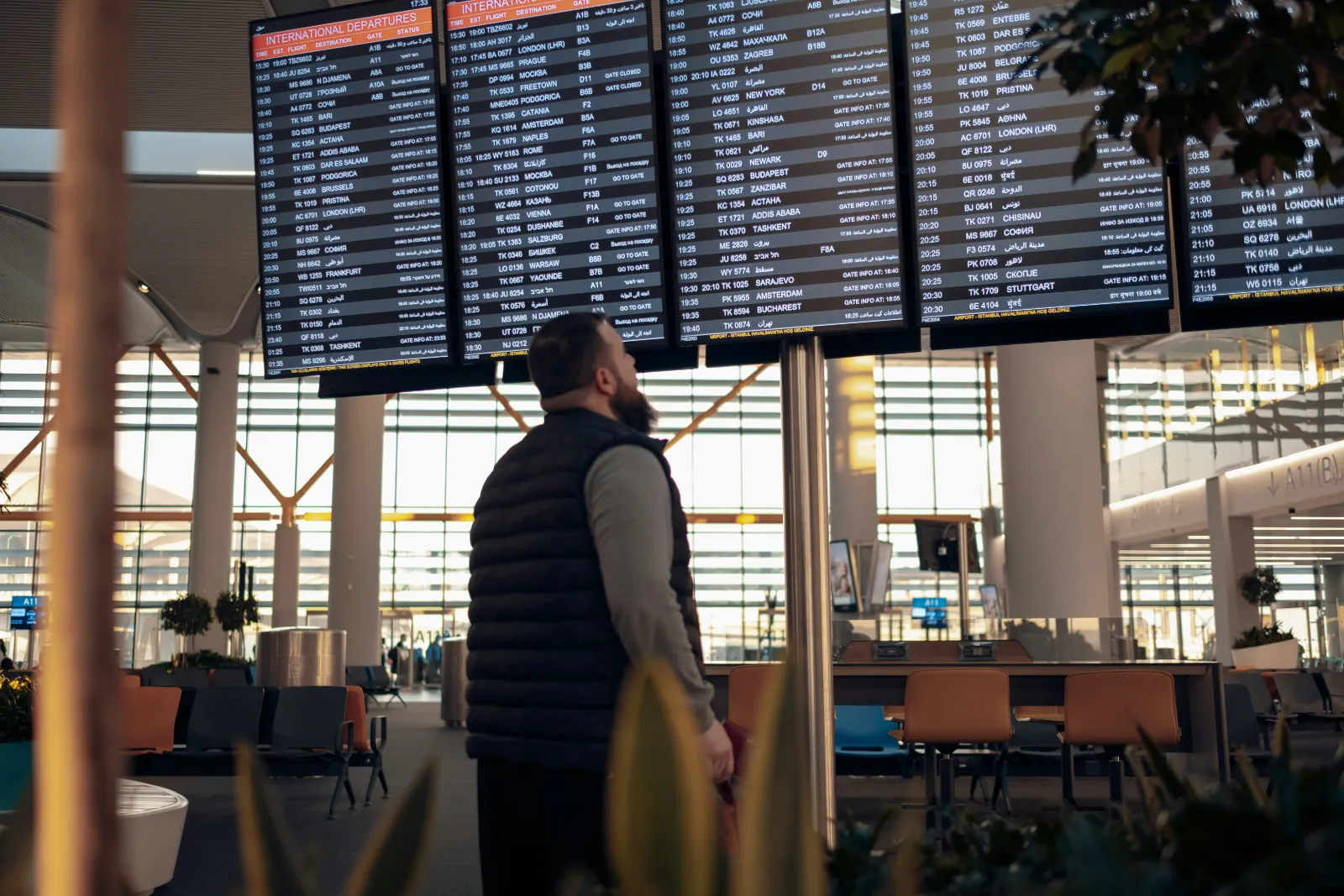
Traveller looking up at international departure screens in an airport hall while checking flights

Cancellation cover refunds prepaid, non-refundable trip costs when you cannot travel for a reason the policy lists, such as serious illness, injury or a death in the family. Delay cover usually pays a fixed amount once a covered flight is late by more than a set number of hours. Neither covers a change of mind, and neither is in every plan.

Cancellation and curtailment

Cancellation applies before you leave; curtailment applies when you must cut a started trip short. Both depend on the list of insured reasons in your wording, typically the serious illness, injury or death of you, a travelling companion or a close relative as the wording defines them. Reasons usually not on the list:

  • Changing your mind. The Insurance Council of New Zealand (ICNZ) gives this as a plain example of what insurance cannot cover, because it is not unforeseen.
  • A visa refused or not obtained. ICNZ lists failing to get the necessary visa as a failure of reasonable care.
  • An airline's commercial decisions, such as rescheduling. ICNZ says the airline should be responsible for the extra costs it causes.
  • The financial failure of an airline, hotel or travel company, a common exclusion according to both ICNZ and Australia's government money guide Moneysmart.
  • Known events already in the news when you bought the policy.

Timing matters, because cancellation cover only protects you from the day the policy starts. The UK government advises buying travel insurance "as soon as possible after booking your trip". Our pre-trip checklist places insurance in the one month out list; if cancellation matters to you, buy as soon as the big costs are paid. And in the Nepali area structure we read, cancellation is part of the package only for worldwide areas, so for a large prepaid trip to Bangkok, Bali or the Maldives, ask the insurer in writing whether it is available at all. (Checked: 18 Nov 2026, GOV.UK foreign travel insurance guidance.)

Travel delay

The UK ombudsman explains that delay cover applies when you reach the airport on time but the flight is delayed, that it is usually a fixed benefit paid for each period of delay beyond a set time, and that extra costs such as food are not usually covered. Check the minimum hours, whether the outward journey, the return or both are covered, and the proof needed. As one example, a Nepali insurer's product page describes its delay cover as applying to an outward flight from Nepal delayed by more than 12 hours; other policies use different minimums and may cover the return flight too. Some wordings also allow you to abandon a trip after a long outward delay, usually 24 hours according to the ombudsman. (Checked: 18 Nov 2026, Financial Ombudsman Service, missed departure, delay and abandonment; one Nepali insurer's product page.)

Missed connections and separate tickets

Missed connection cover is the benefit travellers assume they have and often do not. The 14-item schedule in the Nepali forms we read lists travel delay, but no separate missed-connection benefit. Policies sold elsewhere may include missed departure cover, usually only for causes outside your control and only if you left enough time. The UK ombudsman says most policies do not cover a missed departure caused by long airport security checks, and that some policies cover only the first leg of the outward journey or the first leg of the return.

For trips from Kathmandu connecting through Delhi, Doha, Dubai, Kuala Lumpur or Bangkok, this matters. On one ticket, the airline normally rebooks you. On two separate tickets, a late first flight can leave you paying for a new second one. Our first time flight tips explain how to build connection time into a booking and what to do at the transfer desk.

Is lost or delayed baggage covered?

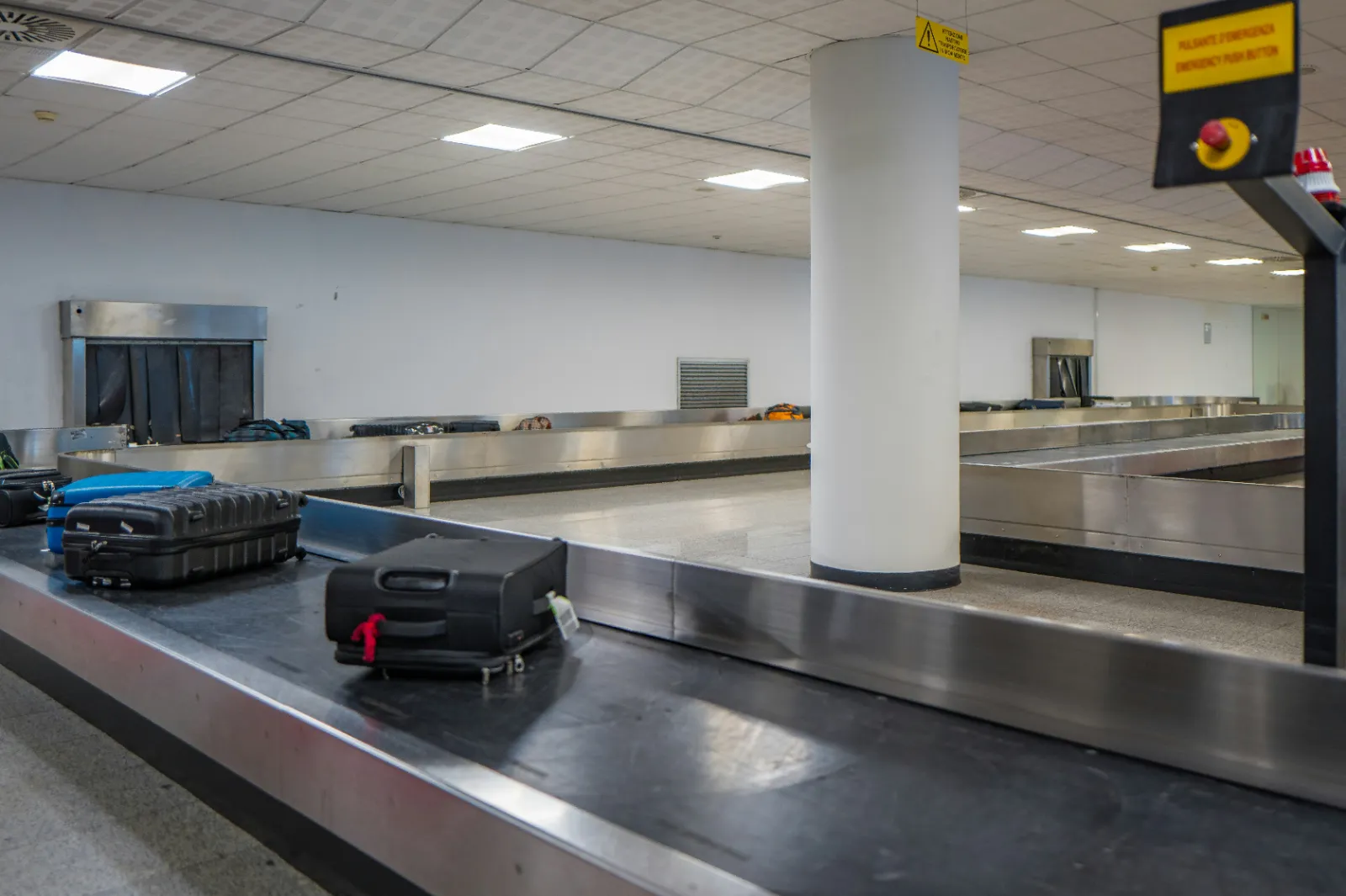
A few unclaimed suitcases on an empty airport baggage carousel in the arrivals hall

Usually yes, for checked bags, within limits, and only in plans that include baggage. A policy normally pays for essentials while a checked bag is delayed beyond set hours, and for items lost for good, after the airline's own payment and the excess. Valuables and anything left unattended are where most baggage claims fail.

The airline comes first

The airline is responsible for a checked bag that does not arrive, and the insurer will expect you to claim from it too. Before leaving the baggage hall, get a written report from the airline's baggage desk, usually called a Property Irregularity Report. Keep the bag tag receipt, boarding pass, receipts for anything you buy while you wait, and every airline message.

How baggage limits work

  • A total limit for the baggage section, per person.
  • A single-item limit. The UK government's MoneyHelper service says watches, jewellery, laptops and cameras are often excluded because they exceed the single article limit.
  • A valuables rule, sometimes excluding valuables in checked bags altogether. Carry phones, cameras, gold and jewellery in hand luggage.
  • Proof of ownership for higher-value items.
  • Extra cover by request. ICNZ says that for more than the automatic limit on a specific item, you need to tell the insurer and usually pay extra.

What "unattended" means

Almost every wording excludes loss or theft of unattended belongings, and the definition is stricter than people expect. Moneysmart tells travellers to check the insurer's definition of "unattended", and ICNZ treats leaving luggage unattended in a public place as a failure of reasonable care. The UK consumer group Which? quotes one insurer's definition: belongings are unattended when you cannot see them and are not close enough to stop someone interfering with or taking them. A phone left on a beach towel while you swim, or a bag on a café chair while you queue, can fail that test. (Checked: 18 Nov 2026, Moneysmart; ICNZ consumer guides; Which?, August 2026.)

Is theft covered?

Sometimes, depending on what was stolen. A stolen checked bag falls under baggage loss; a stolen passport under loss of passport, if your plan has it. Cash, cards and items you were carrying need personal belongings or money cover, which not every policy has. The Nepali schedules we read name loss of checked baggage and loss of passport, not general belongings, so ask before you assume a phone snatched in the street is covered.

Report any theft to the local police quickly and get a written report; ICNZ warns you may not be covered if you do not. If it is your passport, the embassy steps matter as much as the claim, and our guide on what to do if you lose your passport abroad walks through them for Nepali passport holders.

What is usually not covered?

Travel insurance usually does not cover undeclared pre-existing conditions, activities the policy does not name, accidents linked to alcohol or drugs, unattended belongings, cancellation for unlisted reasons, events already known when you bought the policy, war and unrest, travel against official government advice, and many pandemic-related claims. The exact list is in your wording's general exclusions.

ICNZ explains why: some risks are too uncertain to measure, such as pandemics or an airline collapse, and some events are foreseeable, while insurance exists to cover what is not foreseen.

Common exclusionWhat it means in practiceHow to avoid the gap
Pre-existing conditionsClaims linked to a condition treated in the look-back periodDeclare everything; get the answer in writing
General health exclusionsTravelling against a doctor's advice, awaiting treatment or test results, travelling for treatment, or a terminal prognosisAsk the insurer before booking
Hazardous activitiesActivities not named as covered, often diving, climbing, paragliding, raftingList your plans before you buy
Scooters and mopedsOften excluded, or covered only with a valid licence and helmetCheck the vehicle clause and your licence
Alcohol and drugsEvents where drinking or non-prescribed drugs contributedDrink moderately near water, heights and roads
Unattended belongingsLoss or theft when your things were out of sight or reachKeep valuables on you or locked away
Unlisted cancellation reasonsChange of mind, visa problems, unlisted work reasonsRead the list of insured reasons
Known eventsStorms, eruptions, unrest or outbreaks already public when you boughtBuy cover as soon as you book
War, terrorism and unrestLosses caused by war and, in many wordings, terrorism or unrestCheck travel advice before booking and travel
Travel against official adviceGoing where your government advises against all or all but essential travelCheck the advice of the country whose policy you hold
Pandemics and epidemicsClaims arising from a declared pandemic or epidemicAsk in writing how outbreaks are treated
Financial failureLosses when an airline, hotel or operator stops tradingUse payment methods with their own protection where available
Pregnancy limitsCover often stops at a set stage of pregnancy; routine costs excludedTell the insurer and check the cut-off against your return date
Trips longer than the maximumICNZ says you may have no cover for any of the trip, not just the extra daysChoose a plan whose trip length covers the whole journey

Sources for the table: GOV.UK foreign travel insurance guidance, Moneysmart, MoneyHelper, ICNZ consumer guides (May 2023 and August 2025) and two Nepali insurers' proposal forms. Checked: 18 Nov 2026.

Adventure activities and altitude limits

A policy that covers you on a beach may not cover you underwater, on a rope or on a rented scooter. MoneyHelper lists adventure sports, winter sports and potentially dangerous activities such as climbing and white-water rafting among the things usually not covered. ICNZ's August 2025 guide names rock climbing, scuba diving, parasailing or hang gliding, hunting, white water rafting, off piste skiing and riding a scooter or moped as commonly excluded. GOV.UK says the use or hire of quad bikes or mopeds is "not usually covered".

Trekking varies. Some wordings cover ordinary walking but exclude anything with ropes. Others stop covering above a set altitude: Which? reported in August 2026 that some policies stop covering hikes above a set elevation and that some of those caps are low. Nepali travellers used to Himalayan trails should not assume a holiday policy covers a high trek abroad.

The reverse applies to the diaspora. A Nepali outbound policy covers you outside Nepal, not on a trek at home. If you live abroad and are coming back to trek, you need a policy from your country of residence that covers Nepal, your planned altitude and rescue. The FCDO's Nepal advice tells travellers to make sure their insurance "includes cover for mountain rescue services and helicopter costs". (Checked: 18 Nov 2026, FCDO Nepal travel advice.)

Alcohol

GOV.UK says most policies do not cover events that happen after you have drunk excessive alcohol, and Which? notes that a claim can be refused if drinking contributed to the incident. A fall from a balcony after a party, or a scooter crash on the way back from a bar, is exactly where these clauses are used.

Pandemic and epidemic wording

ICNZ says claims arising from an epidemic or pandemic are generally excluded, and that some policies rely on the World Health Organization (WHO) to decide whether there is one. Its May 2023 guide adds that most New Zealand insurers by then covered COVID-19 when an individual was affected, but not costs caused by lockdowns or quarantine orders.

Two dates help you read these clauses. On 5 May 2023, WHO said COVID-19 no longer represented a public health emergency of international concern. On 19 September 2025, amendments to the International Health Regulations entered into force creating a new global alert level, a "pandemic emergency". Where a wording ties its exclusion to a pandemic declared by WHO, the trigger is a formal WHO decision. If outbreaks worry you, ask the insurer in writing how it handles them and keep the reply. (Checked: 18 Nov 2026, WHO news release of 19 September 2025; WHO statement of 5 May 2023.)

War, unrest, travel advice and known events

Moneysmart lists loss or injury from terrorism, war and some natural disasters as common exclusions, and MoneyHelper notes that a policy might not cover a trip affected by civil unrest or earthquakes. Government advice adds a second test: GOV.UK says that if you travel where the FCDO advises against all but essential travel, or all travel, "your insurance may be invalidated". For a policy bought in Nepal, read its own exclusions; for a diaspora traveller with a UK, Australian or Gulf policy, that country's travel advice usually counts.

Known events work on dates. ICNZ explains that once a storm, eruption or riot is in the news, insurers often fix a date when it became known and cover it only for policies bought before then. Buy cover when you book, not when the headlines start.

How do pre-existing conditions and age limits work?

Doctor in a white coat talking with an older male patient in a clinic room

A pre-existing condition is a health problem you had treatment, medication or advice for during a look-back period before buying; claims linked to it are usually excluded unless you declare it and the insurer accepts it. Age limits decide who can buy at all, and the Nepali wordings we checked cover travellers aged 70 and under when the policy starts.

The look-back period

How far back the insurer looks differs between markets, which is why advice written for one country can mislead in another.

SourceHow it describes the look-back
Two Nepali proposal formsAny condition for which you or travelling dependants took medication, had treatment or sought advice in the last two years
One Nepali insurer's product pageAny sickness treated, medicated or advised on in the 24 months before buying
ICNZ, New ZealandA condition needing a hospital visit in the past 12 months or regular medication, including things under investigation
CDC, United StatesConditions needing hospital care or direct medical intervention in the 90 days before departure are often excluded

Under a two-year look-back, a regular blood pressure tablet, diabetes medicine or thyroid prescription brings that condition inside the clause, even if it is well controlled. That does not make the policy useless: a broken wrist or food poisoning is still covered as an emergency. What is at risk is any claim the insurer can link to the condition.

Declare everything, and keep declaring

Both Nepali forms we read warn that benefits may not be payable if you do not fully disclose material facts, and that you should disclose when in doubt, "even if medical advice has not been sought". The CDC cites a study in which insurers fully paid only two-thirds of claims, with pre-existing illness and poor documentation as the main reasons for refusal.

If your health changes between buying and flying, the UK ombudsman says you need to tell your insurer, which may then cover the condition at no extra cost, charge more, add an exclusion or withdraw cover. Tell the insurer in writing and keep the reply. (Checked: 18 Nov 2026, Financial Ombudsman Service, change in health.)

Age limits

Both Nepali forms state the policy is valid for residents of Nepal who are 70 years and under at inception, meaning on the day cover starts. ICNZ gives under 70 or 74 as examples in New Zealand and says older travellers may still find cover at an extra premium. If a parent is close to the limit, ask the insurer before you book flights. Our checklist for travelling abroad with elderly parents from Nepal covers the doctor's letter, medicines and pacing that make a claim less likely in the first place.

How do you read a travel insurance policy before you buy?

Read the schedule first, then the definitions, then each section and the general exclusions and conditions in the full wording. A policy is a contract, and the sales page is not part of it. The Nepali forms we read add that the insurer's liability "does not commence until the proposal is accepted, premium received and policy issued", so buy early enough for that to happen before you fly.

StepWhere to lookWhat to check
1Schedule or certificateNames exactly as in passports, trip dates, plan, area, each limit and excess
2DefinitionsPre-existing condition, close relative, unattended, valuables, hazardous activity, home country
3Each benefit sectionWhat it pays and does not pay, minimum delay hours, sub-limits, proof needed
4General exclusionsAlcohol, activities, vehicles, war and unrest, pandemics, government advice
5General conditionsWhen to call the assistance company, prior approval, claim deadline, documents
6EndorsementsAny added activity, accepted condition or changed limit, in writing
  • Read the exclusions twice. Each section has its own, and a general list applies to every section.
  • Watch defined words. "Close relative" may not include a grandparent or an in-law unless the definition says so.
  • Notice "and" and "or". "Hospitalised and unable to travel" is narrower than "hospitalised or unable to travel".
  • Note the claim deadline. As one example, a Nepali insurer's product page asks for non-emergency claims within 31 days of returning to Nepal (Checked: 18 Nov 2026). Your own wording may set a different deadline, so find it before you travel.
  • Ask in writing. An email saying your condition or activity is covered is worth far more than a reassurance on the phone.

What happens in real situations? Worked scenarios

White ambulance with blue lettering parked on a tree lined street

The same policy can pay in full for one accident and nothing for a similar one, because the details decide it. These scenarios show how a typical policy is likely to treat common events; your own wording and the insurer's assessment decide each real claim.

ScenarioLikely position under a typical policyWhat usually decides it
Food poisoning in Bangkok leads to a two-night hospital stayUsually covered under emergency medical, after the excessEarly call to the assistance company, reports and receipts
A father on regular diabetes medicine is admitted with a diabetes complicationCovered only if declared and accepted; otherwise likely excludedThe look-back clause and what was declared
The same father breaks an ankle on a wet ferry rampUsually covered, as the injury is not linked to the conditionProof of how the injury happened
A scooter crash in Bali without a valid motorbike licenceOften refusedThe vehicle clause, licence and helmet
A first scuba try dive in the Maldives causes an ear injuryExcluded unless diving is named or addedThe activity list and any extension
A checked bag arrives two days late in Kuala LumpurEssentials may be paid under baggage delay, if the plan has itMinimum hours, airline report, receipts
A phone is taken from a beach towel while you swimOften refused as unattendedThe unattended definition and belongings cover
A mother is hospitalised in Kathmandu a week before a Dashain trip abroadCancellation may pay prepaid costs, if the plan includes itWhether your area's plan has cancellation, and the insured reasons
The trip is cancelled because the visa was refusedUsually not coveredVisa problems are rarely an insured reason
A late first flight makes you miss a separate ticket out of DelhiOften not coveredMissed connection cover and the separate ticket rule
Protests close the airport at your destinationDepends on the unrest exclusion and whether the event was already knownThe date you bought cover and the unrest wording
A parent turns 71 before the policy is boughtNot eligible under wordings capped at 70 and under at inceptionAge on the day cover starts

Two patterns stand out. Medical emergencies that come out of nowhere are what travel insurance does best. And most refusals trace back to something that could have been checked in advance: a condition, an activity, a licence, an unattended bag, a missing report, or a benefit that was never in the plan.

What should you look for in a policy for Asia?

There is no single best travel insurance for Asia, because the right policy depends on your route, age, health and plans. The best policy for your trip covers every country you enter, has medical and evacuation limits that suit those countries, names your activities and accepts your conditions. Use this checklist to compare any two policies without relying on a ranking.

The comparison checklist

  • Area: every country on the route, including transit countries where you leave the airport, sits inside the policy area. In the Nepali structure we read, Asian and SAARC countries are separate areas with different benefits.
  • Dates and length: cover runs for the whole trip, within the plan's maximum trip length.
  • Medical limit: enough for a serious hospital stay in the most expensive country on your route.
  • Evacuation: included, with a clear limit, including transfers from islands, ships or remote areas.
  • Payment to hospitals: the assistance company can arrange a guarantee of payment, since some hospitals in the region want one before treatment.
  • Health and age: every condition declared and accepted in writing; every traveller within the age limit on the start date.
  • Activities and vehicles: diving, snorkelling, trekking altitude, rafting and scooter riding named as covered, with the licence rule clear.
  • Cancellation: available for your area at all, with insured reasons that fit your real worries.
  • Delay and connections: the minimum hours for delay cover, and how missed connections and separate tickets are treated.
  • Baggage: total, single-item and valuables limits, and the rule on valuables in checked bags.
  • Excess: the amount, and whether it applies per person, per section or per claim.
  • Seasonal risk: how storms and floods are treated in monsoon and typhoon seasons once they are known events.
  • Assistance and claims: a 24-hour number saved on your phone and shared with family, plus the claim deadline and documents.

Some visas and entry rules ask for proof of medical insurance, and the details change, so check the current rules for your passport on our visa guides by country before you choose a policy.

Who regulates travel insurance in Nepal?

Insurers in Nepal are regulated by the Nepal Insurance Authority (NIA). The authority describes itself as an autonomous institution established under section 3 of the Insurance Act, 2079 BS, succeeding the Insurance Board (Beema Samiti), and as the sole regulatory agency for insurance business in Nepal, with a duty to protect policyholders' rights and interests. (Checked: 18 Nov 2026, NIA introduction page.)

Outbound travel and travel medical policies in Nepal are sold by licensed non-life insurers, at branches, through licensed agents and, with some insurers, online. Whoever helps you arrange cover, make sure the certificate names the licensed insurer that carries the risk. If a claim is refused and the insurer's written reasons do not satisfy you, the NIA runs a grievance handling form for complaints. The buying steps and claims process are covered in our Nepal buying guide linked at the top of this page.

Notes for the Nepali diaspora

A policy is written for residents of a particular country. The Nepali forms we read are for residents of Nepal travelling out and back, and they state that the insurance is not valid for a one way trip. If you live in the UK, Australia, the Gulf or elsewhere, buy cover in your country of residence and check it covers every country you will visit, including Nepal if you are coming home. If parents are flying from Kathmandu to visit you, they need a policy for Nepal residents with your country inside its area.

Sources we checked

All sources were checked on 18 Nov 2026. Rules and wordings change, so check again before each trip.

Frequently asked questions

What does travel insurance cover?

Travel insurance covers sudden, unexpected events on a trip abroad. The core is emergency medical treatment and medical evacuation or repatriation. Package plans add personal accident, checked baggage delay and loss, lost passport, travel delay, personal liability and, in some plans, cancellation and curtailment. Each benefit has its own limit, excess and exclusions.

Does travel insurance cover medical expenses abroad?

Yes, for emergencies. Travel insurance pays necessary treatment for a sudden illness or injury abroad, up to the medical limit and after the excess. It does not pay routine check-ups, regular medicine, treatment you travelled to get, or care that can wait until you are home. Call the assistance company before treatment where you can.

Does travel insurance cover flight delays?

Often, if your plan includes travel delay. Delay cover usually pays a fixed amount once a covered flight is late beyond a set number of hours, not every extra cost. Some plans let you abandon a trip after a long outward delay. Missed connections, especially on separate tickets, are often not covered by travel insurance.

Does travel insurance cover lost baggage?

Usually, for checked bags, in plans that include baggage. Travel insurance pays for essentials while a bag is delayed beyond set hours and for items lost for good, within total, single-item and valuables limits, after the airline's payment and the excess. Get a Property Irregularity Report before leaving the baggage hall.

Is theft covered by travel insurance?

Sometimes. A stolen checked bag falls under baggage loss and a stolen passport under loss of passport, if your plan has them. Cash, cards and items you were carrying need personal belongings or money cover, which not every travel insurance policy has. Unattended items are usually excluded, and a police report is normally required.

Are adventure sports covered by travel insurance?

Only if the policy names them. Travel insurance commonly excludes scuba diving, climbing, paragliding, rafting, off piste skiing and riding scooters or mopeds unless listed or added for an extra premium. Some policies also stop covering treks above a set altitude. List your activities before you buy and get any extension in writing.

Does travel insurance cover pre-existing conditions?

Only if you declare them and the insurer accepts them. Otherwise, claims linked to a condition treated during the look-back period, two years on the Nepali forms we read, are excluded. Declare every condition and regular medicine, report health changes before you travel, and keep the insurer's written answer.

What is not covered by travel insurance?

Travel insurance usually does not cover undeclared conditions, unnamed activities, accidents linked to alcohol or drugs, unattended belongings, cancellation for unlisted reasons, events already known when you bought, war and unrest, travel against official advice, travel company failures and many pandemic-related claims. Your wording's exclusions list is the final word.

What is the best travel insurance for Asia?

There is no single best travel insurance for Asia. The best policy for an Asian trip covers every country on your route, has medical and evacuation limits that suit them, can arrange payment guarantees with hospitals, names your activities, accepts your conditions and covers every traveller's age. Compare policies on those points, not on rankings.

Does travel insurance bought in Nepal cover a trip inside Nepal?

No. Nepali outbound travel insurance covers sudden illness or accidents while you are outside your home country, on return trips from Nepal. A Nepali living abroad who comes home to trek needs a policy from their country of residence that covers Nepal, the planned altitude and rescue.

Travel insurance le ke ke cover garcha?

Travel insurance le mukhya ma bidesh ma achanak birami huda wa chot lagda emergency upachar ra awashyak pare medical evacuation cover garcha. Package plan ma baggage, passport harauda, flight delay, liability ra kehi plan ma cancellation pani huncha. Declare nagareko purano rog, adventure activity ra raksi sanga judeko ghatana prayah cover hudaina.

Tags
NepalTravel Insurance
Share
G
Gomayu Team
Writer at Gomayu
Keep reading
Blog / Travel Tips
What Does Travel Insurance Cover? A Plain Guide
32 min read 19 Nov 2026
Silhouette of a traveller waiting by a large airport window as a plane takes off

Short answer: What does travel insurance cover? At its core, emergency medical treatment abroad and, when doctors agree it is needed, medical evacuation or repatriation home. Package plans add personal accident, delayed or lost checked baggage, a lost passport, flight delay, personal liability and, in some plans, trip cancellation and cutting a trip short. Every benefit has its own limit, an excess you pay first and a list of exclusions, so what you are really covered for is what your own policy schedule and wording say.

This guide explains each part of a travel policy in plain words: what it pays for, how its limits work, what it usually leaves out, and how to read the documents before you sign. It is written from Kathmandu for Nepali travellers, families and the diaspora, but wordings work much the same way wherever you buy. We do not quote premiums and we do not name or rank insurers.

Still deciding whether to buy cover at all? Our guide to whether travel insurance is worth it for a holiday abroad works through that question. Ready to buy in Nepal? See how to buy, claim and choose travel insurance from Nepal. And if you have not picked a country yet, start with the best travel destinations for Nepalese travellers, because where you go changes which parts of a policy matter.

What does travel insurance cover?

Travel insurance covers sudden, unexpected events on a trip outside your home country: emergency medical care, evacuation, accidents, and travel problems such as delayed bags, lost passports and flight delays. It is not general health insurance, and it does not pay for anything you knew about, planned, or caused by ignoring the policy's conditions.

The proposal forms that two Nepali non-life insurers publish for their travel medical products say this directly: the policy "is not a General Health Insurance" and is intended for "a sudden and unexpected sickness or accident" while the insured is outside the home country. Consumer guides from the UK, Australia and New Zealand say the same in other words. Keep that idea in mind and most of the rules below make sense. (Checked: 18 Nov 2026, published proposal forms of two Nepali non-life insurers.)

The table lists the cover types you will meet most often, what each pays for, and the kind of event it exists for. Not every plan includes every row.

Cover typeWhat it pays for, in plain wordsExample of the event it is for
Emergency medical expensesDoctor, hospital, surgery, tests and prescribed medicine for a sudden illness or injury abroad, up to the medical limitFood poisoning in Bangkok leads to a hospital admission
Medical evacuation and repatriationMoving you to a hospital that can treat you, or home with medical support, when the insurer's doctors agree; often also return of remainsA diving injury on a remote island needs a transfer to a city hospital
Personal accidentA fixed sum if an accident causes death or a listed permanent disability; not a refund of billsA road accident causes permanent loss of sight in one eye
Checked baggage delayEssentials you buy while the airline has not delivered your checked bag, after a minimum number of hoursYour bag misses the connection in Kuala Lumpur and arrives two days late
Checked baggage lossItems in a checked bag lost for good, up to per-item and total limits, after what the airline paysA suitcase never arrives and the airline closes the case
Loss of passportReasonable costs of replacing a lost or stolen passport or getting an emergency travel documentA passport is stolen and you need an emergency document to fly home
Travel delayUsually a fixed amount once a covered flight is late beyond a set number of hoursA flight out of Kathmandu is held for many hours by fog
Trip cancellationPrepaid, non-refundable costs when you must cancel before departure for a listed reasonA parent is admitted to hospital the week before a Dashain trip abroad
Curtailment and emergency returnUnused prepaid costs and travel home when you must cut a trip short for a listed reason, such as a close relative's deathA grandparent dies in Nepal while you are in Singapore
Personal liability and legal expensesClaims against you for accidentally injuring someone or damaging their property, and some legal costsYou accidentally break expensive equipment in a hotel lobby

Medical-only plans and package plans

Most travel policies come in two shapes. A medical plan covers emergency medical expenses and personal accident. A package plan adds the travel benefits: baggage, passport, delay, liability and, in some cases, cancellation.

The two Nepali proposal forms we read list a schedule of 14 possible benefits, from personal accident and medical expenses through baggage, passport, liability, travel delay and hijack, to cancellation and curtailment, emergency return home, catastrophe, legal expenses and repatriation of family members travelling with you. Which ones you get depends on the plan and the geographic area. For Asian countries such as Thailand, Malaysia, Singapore and Vietnam, the package in that structure stops before cancellation. For SAARC countries such as India, Sri Lanka and the Maldives, only personal accident and medical expenses are listed. Two travellers who both say "I have travel insurance" may therefore hold very different contracts. (Checked: 18 Nov 2026, proposal forms of two Nepali non-life insurers; other insurers may group countries differently.)

The words you will meet in every policy

Wordings use a small set of terms again and again. The meanings below are the usual ones; your wording's definitions section is the one that counts.

TermWhat it usually meansWhy it matters
Schedule or certificateThe page with your name, dates, plan, area, limits and excessCheck every detail against your passport and trip
Policy wordingThe full terms: definitions, sections, exclusions, conditionsIt decides claims; a brochure does not
Sum insured or limitThe most the insurer pays under a section, usually per personMedical and evacuation limits protect you from large debts
Sub-limitA smaller cap inside a section, such as dental pain relief or one item of baggageA high headline limit can hide a low cap on what you care about
ExcessThe first part of each claim that you pay yourselfIt can apply per person and per section
Pre-existing conditionA condition treated, medicated or advised on within a look-back period before buyingClaims linked to it are often excluded unless declared and accepted
Assistance companyThe 24-hour emergency team working for the insurerCall it before treatment or travel changes where you can
EndorsementA written change to the standard wording, such as an added activityIt is your proof that an extra was agreed

What does medical and evacuation cover mean?

Doctors and nurses in masks wheeling a patient on a stretcher along a hospital corridor

Medical cover pays for necessary emergency treatment of a sudden illness or injury abroad, up to the medical limit, after any excess. Evacuation cover pays to move you to a place that can treat you, or home, when that is medically needed and agreed with the insurer. Together they are the part of a policy that protects you from the bill you could not pay.

What medical cover usually includes and leaves out

  • Included: doctor and hospital charges for the emergency, surgery, scans and tests, and prescribed medicine for the illness or injury.
  • Included: emergency transport to a suitable hospital. One Nepali insurer's product page lists emergency air ambulance among its benefits.
  • Included, with a small cap: emergency dental treatment, which the same page limits to immediate pain relief.
  • Left out: routine check-ups and the regular medicine you already take. That page calls its policy "strictly for sudden, unexpected emergencies and accidents".
  • Left out: treatment you travelled to get. Both Nepali forms we read exclude claims where the insured "is traveling for the purpose of obtaining treatment".
  • Left out: care that can wait until you are home. The UK Financial Ombudsman Service, which settles disputes between UK insurers and customers, describes travel policies as covering emergency treatment that cannot wait.

Who decides on evacuation?

The insurer does, guided by doctors. The US Centers for Disease Control and Prevention (CDC) says the decision to medically evacuate "is at the discretion of the insurance company", and that evacuation generally requires the traveller to be in hospital. The Nepali forms we read say the insurer may repatriate you when the treating doctor and the insurer's medical advisers agree you are fit to travel. The UK ombudsman adds that where two medically suitable options exist, it is not necessarily unfair for the insurer to choose the cheaper one. (Checked: 18 Nov 2026, CDC Yellow Book travel insurance page, last reviewed 23 April 2025; Financial Ombudsman Service.)

So evacuation cover is not a ticket home because you feel unwell. It is a medical decision, arranged by the insurer. If family members book an air ambulance on their own, the claim becomes much harder.

Why the first phone call matters

Hospitals in many destinations want payment, or a guarantee of payment, before they treat you. The UK Foreign, Commonwealth and Development Office (FCDO) says of Thailand that "all hospitals require a guarantee of payment before treating patients" (Checked: 18 Nov 2026, FCDO Thailand travel advice, health). That guarantee usually comes from the assistance company.

Some wordings make the call a condition. One Nepali insurer's product page, for example, tells its policyholders to call its assistance company immediately for hospital admissions, accidents or bills over USD 500 (Checked: 18 Nov 2026). That threshold is one policy's condition, not a general rule; other insurers set their own, so look for it in your wording. A UK policy may be judged more softly, but a Nepali policy is judged under its own wording. The safe habit: if it is serious, you or a companion call the assistance number before agreeing to treatment or paying a large bill.

How medical limits work

A medical limit is a ceiling for genuine, necessary, emergency costs, normally per person, per trip. It is not a budget to spend. Three things shape what you receive:

  • The excess. The UK ombudsman says insurers should usually deduct the excess before applying the limit, so the customer can still receive the full amount of cover. Check how your wording does it.
  • Sub-limits. A generous medical limit may carry smaller caps on dental care, outpatient visits or a family member's travel.
  • Negotiated bills. The ombudsman notes that insurers often negotiate with hospitals to reduce what they pay, which is normal when the assistance company is involved early.

Personal accident is separate. It pays a fixed sum for death or a listed permanent disability, not hospital bills, and the sum can depend on age. Two published UK policy wordings we read, for example, pay a much lower accidental death benefit for children and for travellers aged 65 and over, and one pays nothing for loss of limbs or sight from age 65. Look for age bands in the personal accident section of your own schedule. (Checked: 18 Nov 2026, two published UK policy wordings; Nepali wordings may set their own bands.)
Explore Thailand tour packages
View all →
Rows of golden pagoda sculptures among clipped hedges at Nong Nooch Tropical Garden, Pattaya

Coral Island & Nong Nooch Garden Tour

🗓 6 Days · 5 Nights
from NRs 47,500 / person
View tour →
A curved sandy beach and turquoise bay framed by trees on a Thai island

Thailand, Singapore & Malaysia Tour with Phuket

🗓 10 Days · 9 Nights
from NRs 1,09,000 / person
View tour →
Aerial view of Pattaya Beach and boats moored in the bay at dusk, Thailand

Bangkok Pattaya Tour

🗓 5 Days · 4 Nights
from NRs 37,000 / person
View tour →
The white marble Big Buddha statue on Nakkerd Hill above Phuket, Thailand

Bangkok Pattaya Phuket Tour

🗓 7 Days · 6 Nights
from NRs 63,000 / person
View tour →
Limestone cliffs above Railay Beach in Krabi with a longtail boat at golden hour

Bangkok Krabi Tour

🗓 6 Days · 5 Nights
from NRs 53,000 / person
View tour →
The golden Big Buddha above the dragon staircase at Wat Phra Yai, Koh Samui

Bangkok & Koh Samui Honeymoon Tour

🗓 7 Days · 6 Nights
from NRs 90,000 / person
View tour →
Aerial view of Bangkok city lights spreading to the horizon at dusk

Thailand & Vietnam Tour

🗓 8 Days · 7 Nights
from NRs 98,600 / person
View tour →
A longtail boat on a white sand beach facing a limestone sea stack in Krabi

Bangkok Phuket Krabi Tour

🗓 8 Days · 7 Nights
from NRs 77,000 / person
View tour →
Bangkok skyscrapers lit up against a deep blue night sky, Thailand

Bangkok Phuket Tour

🗓 6 Days · 5 Nights
from NRs 56,500 / person
View tour →
Longtail boats on turquoise water below the limestone cliffs of Railay Beach, Krabi

Bangkok & Krabi Tour with Free Days

🗓 8 Days · 7 Nights
from NRs 62,500 / person
View tour →
Aerial view of Tonsai Bay on Koh Phi Phi Don with boats in turquoise water

Bangkok Pattaya Phuket Krabi Tour

🗓 9 Days · 8 Nights
from NRs 81,500 / person
View tour →
The white temple of Wat Rong Khun in Chiang Rai, northern Thailand

Bangkok, Chiang Rai & Chiang Mai Tour

🗓 8 Days · 7 Nights
from NRs 82,500 / person
View tour →
The gilded spires and Chakri Maha Prasat hall of the Grand Palace in Bangkok

Thailand, Singapore & Malaysia Family Tour

🗓 11 Days · 10 Nights
from NRs 1,15,600 / person
View tour →
A Royal Caribbean cruise ship anchored off a palm lined tropical beach

Royal Caribbean Cruise Tour

🗓 6 Days · 5 Nights
View tour →
A quiet curved beach backed by palm trees and green hills on a Thai island

Bangkok & Koh Phangan Full Moon Party Tour

🗓 8 Days · 7 Nights
from NRs 73,900 / person
View tour →
Colourful longtail boats lined up on a Krabi beach beside a limestone karst

Phuket & Krabi Tour

🗓 6 Days · 5 Nights
from NRs 57,500 / person
View tour →
Wat Arun temple and its tall central prang beside the Chao Phraya River, Bangkok

Short Bangkok Tour

🗓 4 Days · 3 Nights
from NRs 35,500 / person
View tour →
Swimmers on the white sand of Maya Bay below limestone cliffs, Koh Phi Phi Leh

Phuket, Phi Phi & Krabi Island Escape

🗓 7 Days · 6 Nights
from NRs 84,000 / person
View tour →
Chicken Island, a limestone rock shaped like a chicken head, off the Krabi coast

Krabi Island Tour

🗓 5 Days · 4 Nights
from NRs 44,500 / person
View tour →
Boats in the emerald water of Pileh Lagoon between the cliffs of Koh Phi Phi Leh

Phuket Tour

🗓 5 Days · 4 Nights
from NRs 51,500 / person
View tour →
Wat Arun temple glowing at sunset above a longtail boat on the Chao Phraya River

Bangkok Family Friendly Tour

🗓 5 Days · 4 Nights
from NRs 50,500 / person
View tour →
A tandem skydiver giving a thumbs up in free fall above white clouds

Bangkok & Pattaya Skydiving Tour

🗓 6 Days · 5 Nights
from NRs 1,02,000 / person
View tour →

What do trip cancellation and delay cover?
Traveller looking up at international departure screens in an airport hall while checking flights

Cancellation cover refunds prepaid, non-refundable trip costs when you cannot travel for a reason the policy lists, such as serious illness, injury or a death in the family. Delay cover usually pays a fixed amount once a covered flight is late by more than a set number of hours. Neither covers a change of mind, and neither is in every plan.

Cancellation and curtailment

Cancellation applies before you leave; curtailment applies when you must cut a started trip short. Both depend on the list of insured reasons in your wording, typically the serious illness, injury or death of you, a travelling companion or a close relative as the wording defines them. Reasons usually not on the list:

  • Changing your mind. The Insurance Council of New Zealand (ICNZ) gives this as a plain example of what insurance cannot cover, because it is not unforeseen.
  • A visa refused or not obtained. ICNZ lists failing to get the necessary visa as a failure of reasonable care.
  • An airline's commercial decisions, such as rescheduling. ICNZ says the airline should be responsible for the extra costs it causes.
  • The financial failure of an airline, hotel or travel company, a common exclusion according to both ICNZ and Australia's government money guide Moneysmart.
  • Known events already in the news when you bought the policy.

Timing matters, because cancellation cover only protects you from the day the policy starts. The UK government advises buying travel insurance "as soon as possible after booking your trip". Our pre-trip checklist places insurance in the one month out list; if cancellation matters to you, buy as soon as the big costs are paid. And in the Nepali area structure we read, cancellation is part of the package only for worldwide areas, so for a large prepaid trip to Bangkok, Bali or the Maldives, ask the insurer in writing whether it is available at all. (Checked: 18 Nov 2026, GOV.UK foreign travel insurance guidance.)

Travel delay

The UK ombudsman explains that delay cover applies when you reach the airport on time but the flight is delayed, that it is usually a fixed benefit paid for each period of delay beyond a set time, and that extra costs such as food are not usually covered. Check the minimum hours, whether the outward journey, the return or both are covered, and the proof needed. As one example, a Nepali insurer's product page describes its delay cover as applying to an outward flight from Nepal delayed by more than 12 hours; other policies use different minimums and may cover the return flight too. Some wordings also allow you to abandon a trip after a long outward delay, usually 24 hours according to the ombudsman. (Checked: 18 Nov 2026, Financial Ombudsman Service, missed departure, delay and abandonment; one Nepali insurer's product page.)

Missed connections and separate tickets

Missed connection cover is the benefit travellers assume they have and often do not. The 14-item schedule in the Nepali forms we read lists travel delay, but no separate missed-connection benefit. Policies sold elsewhere may include missed departure cover, usually only for causes outside your control and only if you left enough time. The UK ombudsman says most policies do not cover a missed departure caused by long airport security checks, and that some policies cover only the first leg of the outward journey or the first leg of the return.

For trips from Kathmandu connecting through Delhi, Doha, Dubai, Kuala Lumpur or Bangkok, this matters. On one ticket, the airline normally rebooks you. On two separate tickets, a late first flight can leave you paying for a new second one. Our first time flight tips explain how to build connection time into a booking and what to do at the transfer desk.

Is lost or delayed baggage covered?
A few unclaimed suitcases on an empty airport baggage carousel in the arrivals hall

Usually yes, for checked bags, within limits, and only in plans that include baggage. A policy normally pays for essentials while a checked bag is delayed beyond set hours, and for items lost for good, after the airline's own payment and the excess. Valuables and anything left unattended are where most baggage claims fail.

The airline comes first

The airline is responsible for a checked bag that does not arrive, and the insurer will expect you to claim from it too. Before leaving the baggage hall, get a written report from the airline's baggage desk, usually called a Property Irregularity Report. Keep the bag tag receipt, boarding pass, receipts for anything you buy while you wait, and every airline message.

How baggage limits work

  • A total limit for the baggage section, per person.
  • A single-item limit. The UK government's MoneyHelper service says watches, jewellery, laptops and cameras are often excluded because they exceed the single article limit.
  • A valuables rule, sometimes excluding valuables in checked bags altogether. Carry phones, cameras, gold and jewellery in hand luggage.
  • Proof of ownership for higher-value items.
  • Extra cover by request. ICNZ says that for more than the automatic limit on a specific item, you need to tell the insurer and usually pay extra.

What "unattended" means

Almost every wording excludes loss or theft of unattended belongings, and the definition is stricter than people expect. Moneysmart tells travellers to check the insurer's definition of "unattended", and ICNZ treats leaving luggage unattended in a public place as a failure of reasonable care. The UK consumer group Which? quotes one insurer's definition: belongings are unattended when you cannot see them and are not close enough to stop someone interfering with or taking them. A phone left on a beach towel while you swim, or a bag on a café chair while you queue, can fail that test. (Checked: 18 Nov 2026, Moneysmart; ICNZ consumer guides; Which?, August 2026.)

Is theft covered?

Sometimes, depending on what was stolen. A stolen checked bag falls under baggage loss; a stolen passport under loss of passport, if your plan has it. Cash, cards and items you were carrying need personal belongings or money cover, which not every policy has. The Nepali schedules we read name loss of checked baggage and loss of passport, not general belongings, so ask before you assume a phone snatched in the street is covered.

Report any theft to the local police quickly and get a written report; ICNZ warns you may not be covered if you do not. If it is your passport, the embassy steps matter as much as the claim, and our guide on what to do if you lose your passport abroad walks through them for Nepali passport holders.

What is usually not covered?

Travel insurance usually does not cover undeclared pre-existing conditions, activities the policy does not name, accidents linked to alcohol or drugs, unattended belongings, cancellation for unlisted reasons, events already known when you bought the policy, war and unrest, travel against official government advice, and many pandemic-related claims. The exact list is in your wording's general exclusions.

ICNZ explains why: some risks are too uncertain to measure, such as pandemics or an airline collapse, and some events are foreseeable, while insurance exists to cover what is not foreseen.

Common exclusionWhat it means in practiceHow to avoid the gap
Pre-existing conditionsClaims linked to a condition treated in the look-back periodDeclare everything; get the answer in writing
General health exclusionsTravelling against a doctor's advice, awaiting treatment or test results, travelling for treatment, or a terminal prognosisAsk the insurer before booking
Hazardous activitiesActivities not named as covered, often diving, climbing, paragliding, raftingList your plans before you buy
Scooters and mopedsOften excluded, or covered only with a valid licence and helmetCheck the vehicle clause and your licence
Alcohol and drugsEvents where drinking or non-prescribed drugs contributedDrink moderately near water, heights and roads
Unattended belongingsLoss or theft when your things were out of sight or reachKeep valuables on you or locked away
Unlisted cancellation reasonsChange of mind, visa problems, unlisted work reasonsRead the list of insured reasons
Known eventsStorms, eruptions, unrest or outbreaks already public when you boughtBuy cover as soon as you book
War, terrorism and unrestLosses caused by war and, in many wordings, terrorism or unrestCheck travel advice before booking and travel
Travel against official adviceGoing where your government advises against all or all but essential travelCheck the advice of the country whose policy you hold
Pandemics and epidemicsClaims arising from a declared pandemic or epidemicAsk in writing how outbreaks are treated
Financial failureLosses when an airline, hotel or operator stops tradingUse payment methods with their own protection where available
Pregnancy limitsCover often stops at a set stage of pregnancy; routine costs excludedTell the insurer and check the cut-off against your return date
Trips longer than the maximumICNZ says you may have no cover for any of the trip, not just the extra daysChoose a plan whose trip length covers the whole journey

Sources for the table: GOV.UK foreign travel insurance guidance, Moneysmart, MoneyHelper, ICNZ consumer guides (May 2023 and August 2025) and two Nepali insurers' proposal forms. Checked: 18 Nov 2026.

Adventure activities and altitude limits

A policy that covers you on a beach may not cover you underwater, on a rope or on a rented scooter. MoneyHelper lists adventure sports, winter sports and potentially dangerous activities such as climbing and white-water rafting among the things usually not covered. ICNZ's August 2025 guide names rock climbing, scuba diving, parasailing or hang gliding, hunting, white water rafting, off piste skiing and riding a scooter or moped as commonly excluded. GOV.UK says the use or hire of quad bikes or mopeds is "not usually covered".

Trekking varies. Some wordings cover ordinary walking but exclude anything with ropes. Others stop covering above a set altitude: Which? reported in August 2026 that some policies stop covering hikes above a set elevation and that some of those caps are low. Nepali travellers used to Himalayan trails should not assume a holiday policy covers a high trek abroad.

The reverse applies to the diaspora. A Nepali outbound policy covers you outside Nepal, not on a trek at home. If you live abroad and are coming back to trek, you need a policy from your country of residence that covers Nepal, your planned altitude and rescue. The FCDO's Nepal advice tells travellers to make sure their insurance "includes cover for mountain rescue services and helicopter costs". (Checked: 18 Nov 2026, FCDO Nepal travel advice.)

Alcohol

GOV.UK says most policies do not cover events that happen after you have drunk excessive alcohol, and Which? notes that a claim can be refused if drinking contributed to the incident. A fall from a balcony after a party, or a scooter crash on the way back from a bar, is exactly where these clauses are used.

Pandemic and epidemic wording

ICNZ says claims arising from an epidemic or pandemic are generally excluded, and that some policies rely on the World Health Organization (WHO) to decide whether there is one. Its May 2023 guide adds that most New Zealand insurers by then covered COVID-19 when an individual was affected, but not costs caused by lockdowns or quarantine orders.

Two dates help you read these clauses. On 5 May 2023, WHO said COVID-19 no longer represented a public health emergency of international concern. On 19 September 2025, amendments to the International Health Regulations entered into force creating a new global alert level, a "pandemic emergency". Where a wording ties its exclusion to a pandemic declared by WHO, the trigger is a formal WHO decision. If outbreaks worry you, ask the insurer in writing how it handles them and keep the reply. (Checked: 18 Nov 2026, WHO news release of 19 September 2025; WHO statement of 5 May 2023.)

War, unrest, travel advice and known events

Moneysmart lists loss or injury from terrorism, war and some natural disasters as common exclusions, and MoneyHelper notes that a policy might not cover a trip affected by civil unrest or earthquakes. Government advice adds a second test: GOV.UK says that if you travel where the FCDO advises against all but essential travel, or all travel, "your insurance may be invalidated". For a policy bought in Nepal, read its own exclusions; for a diaspora traveller with a UK, Australian or Gulf policy, that country's travel advice usually counts.

Known events work on dates. ICNZ explains that once a storm, eruption or riot is in the news, insurers often fix a date when it became known and cover it only for policies bought before then. Buy cover when you book, not when the headlines start.

How do pre-existing conditions and age limits work?

Doctor in a white coat talking with an older male patient in a clinic room

A pre-existing condition is a health problem you had treatment, medication or advice for during a look-back period before buying; claims linked to it are usually excluded unless you declare it and the insurer accepts it. Age limits decide who can buy at all, and the Nepali wordings we checked cover travellers aged 70 and under when the policy starts.

The look-back period

How far back the insurer looks differs between markets, which is why advice written for one country can mislead in another.

SourceHow it describes the look-back
Two Nepali proposal formsAny condition for which you or travelling dependants took medication, had treatment or sought advice in the last two years
One Nepali insurer's product pageAny sickness treated, medicated or advised on in the 24 months before buying
ICNZ, New ZealandA condition needing a hospital visit in the past 12 months or regular medication, including things under investigation
CDC, United StatesConditions needing hospital care or direct medical intervention in the 90 days before departure are often excluded

Under a two-year look-back, a regular blood pressure tablet, diabetes medicine or thyroid prescription brings that condition inside the clause, even if it is well controlled. That does not make the policy useless: a broken wrist or food poisoning is still covered as an emergency. What is at risk is any claim the insurer can link to the condition.

Declare everything, and keep declaring

Both Nepali forms we read warn that benefits may not be payable if you do not fully disclose material facts, and that you should disclose when in doubt, "even if medical advice has not been sought". The CDC cites a study in which insurers fully paid only two-thirds of claims, with pre-existing illness and poor documentation as the main reasons for refusal.

If your health changes between buying and flying, the UK ombudsman says you need to tell your insurer, which may then cover the condition at no extra cost, charge more, add an exclusion or withdraw cover. Tell the insurer in writing and keep the reply. (Checked: 18 Nov 2026, Financial Ombudsman Service, change in health.)

Age limits

Both Nepali forms state the policy is valid for residents of Nepal who are 70 years and under at inception, meaning on the day cover starts. ICNZ gives under 70 or 74 as examples in New Zealand and says older travellers may still find cover at an extra premium. If a parent is close to the limit, ask the insurer before you book flights. Our checklist for travelling abroad with elderly parents from Nepal covers the doctor's letter, medicines and pacing that make a claim less likely in the first place.

How do you read a travel insurance policy before you buy?

Read the schedule first, then the definitions, then each section and the general exclusions and conditions in the full wording. A policy is a contract, and the sales page is not part of it. The Nepali forms we read add that the insurer's liability "does not commence until the proposal is accepted, premium received and policy issued", so buy early enough for that to happen before you fly.

StepWhere to lookWhat to check
1Schedule or certificateNames exactly as in passports, trip dates, plan, area, each limit and excess
2DefinitionsPre-existing condition, close relative, unattended, valuables, hazardous activity, home country
3Each benefit sectionWhat it pays and does not pay, minimum delay hours, sub-limits, proof needed
4General exclusionsAlcohol, activities, vehicles, war and unrest, pandemics, government advice
5General conditionsWhen to call the assistance company, prior approval, claim deadline, documents
6EndorsementsAny added activity, accepted condition or changed limit, in writing
  • Read the exclusions twice. Each section has its own, and a general list applies to every section.
  • Watch defined words. "Close relative" may not include a grandparent or an in-law unless the definition says so.
  • Notice "and" and "or". "Hospitalised and unable to travel" is narrower than "hospitalised or unable to travel".
  • Note the claim deadline. As one example, a Nepali insurer's product page asks for non-emergency claims within 31 days of returning to Nepal (Checked: 18 Nov 2026). Your own wording may set a different deadline, so find it before you travel.
  • Ask in writing. An email saying your condition or activity is covered is worth far more than a reassurance on the phone.

What happens in real situations? Worked scenarios

White ambulance with blue lettering parked on a tree lined street

The same policy can pay in full for one accident and nothing for a similar one, because the details decide it. These scenarios show how a typical policy is likely to treat common events; your own wording and the insurer's assessment decide each real claim.

ScenarioLikely position under a typical policyWhat usually decides it
Food poisoning in Bangkok leads to a two-night hospital stayUsually covered under emergency medical, after the excessEarly call to the assistance company, reports and receipts
A father on regular diabetes medicine is admitted with a diabetes complicationCovered only if declared and accepted; otherwise likely excludedThe look-back clause and what was declared
The same father breaks an ankle on a wet ferry rampUsually covered, as the injury is not linked to the conditionProof of how the injury happened
A scooter crash in Bali without a valid motorbike licenceOften refusedThe vehicle clause, licence and helmet
A first scuba try dive in the Maldives causes an ear injuryExcluded unless diving is named or addedThe activity list and any extension
A checked bag arrives two days late in Kuala LumpurEssentials may be paid under baggage delay, if the plan has itMinimum hours, airline report, receipts
A phone is taken from a beach towel while you swimOften refused as unattendedThe unattended definition and belongings cover
A mother is hospitalised in Kathmandu a week before a Dashain trip abroadCancellation may pay prepaid costs, if the plan includes itWhether your area's plan has cancellation, and the insured reasons
The trip is cancelled because the visa was refusedUsually not coveredVisa problems are rarely an insured reason
A late first flight makes you miss a separate ticket out of DelhiOften not coveredMissed connection cover and the separate ticket rule
Protests close the airport at your destinationDepends on the unrest exclusion and whether the event was already knownThe date you bought cover and the unrest wording
A parent turns 71 before the policy is boughtNot eligible under wordings capped at 70 and under at inceptionAge on the day cover starts

Two patterns stand out. Medical emergencies that come out of nowhere are what travel insurance does best. And most refusals trace back to something that could have been checked in advance: a condition, an activity, a licence, an unattended bag, a missing report, or a benefit that was never in the plan.

What should you look for in a policy for Asia?

There is no single best travel insurance for Asia, because the right policy depends on your route, age, health and plans. The best policy for your trip covers every country you enter, has medical and evacuation limits that suit those countries, names your activities and accepts your conditions. Use this checklist to compare any two policies without relying on a ranking.

The comparison checklist

  • Area: every country on the route, including transit countries where you leave the airport, sits inside the policy area. In the Nepali structure we read, Asian and SAARC countries are separate areas with different benefits.
  • Dates and length: cover runs for the whole trip, within the plan's maximum trip length.
  • Medical limit: enough for a serious hospital stay in the most expensive country on your route.
  • Evacuation: included, with a clear limit, including transfers from islands, ships or remote areas.
  • Payment to hospitals: the assistance company can arrange a guarantee of payment, since some hospitals in the region want one before treatment.
  • Health and age: every condition declared and accepted in writing; every traveller within the age limit on the start date.
  • Activities and vehicles: diving, snorkelling, trekking altitude, rafting and scooter riding named as covered, with the licence rule clear.
  • Cancellation: available for your area at all, with insured reasons that fit your real worries.
  • Delay and connections: the minimum hours for delay cover, and how missed connections and separate tickets are treated.
  • Baggage: total, single-item and valuables limits, and the rule on valuables in checked bags.
  • Excess: the amount, and whether it applies per person, per section or per claim.
  • Seasonal risk: how storms and floods are treated in monsoon and typhoon seasons once they are known events.
  • Assistance and claims: a 24-hour number saved on your phone and shared with family, plus the claim deadline and documents.

Some visas and entry rules ask for proof of medical insurance, and the details change, so check the current rules for your passport on our visa guides by country before you choose a policy.

Who regulates travel insurance in Nepal?

Insurers in Nepal are regulated by the Nepal Insurance Authority (NIA). The authority describes itself as an autonomous institution established under section 3 of the Insurance Act, 2079 BS, succeeding the Insurance Board (Beema Samiti), and as the sole regulatory agency for insurance business in Nepal, with a duty to protect policyholders' rights and interests. (Checked: 18 Nov 2026, NIA introduction page.)

Outbound travel and travel medical policies in Nepal are sold by licensed non-life insurers, at branches, through licensed agents and, with some insurers, online. Whoever helps you arrange cover, make sure the certificate names the licensed insurer that carries the risk. If a claim is refused and the insurer's written reasons do not satisfy you, the NIA runs a grievance handling form for complaints. The buying steps and claims process are covered in our Nepal buying guide linked at the top of this page.

Notes for the Nepali diaspora

A policy is written for residents of a particular country. The Nepali forms we read are for residents of Nepal travelling out and back, and they state that the insurance is not valid for a one way trip. If you live in the UK, Australia, the Gulf or elsewhere, buy cover in your country of residence and check it covers every country you will visit, including Nepal if you are coming home. If parents are flying from Kathmandu to visit you, they need a policy for Nepal residents with your country inside its area.

Sources we checked

All sources were checked on 18 Nov 2026. Rules and wordings change, so check again before each trip.

Frequently asked questions

What does travel insurance cover?

Travel insurance covers sudden, unexpected events on a trip abroad. The core is emergency medical treatment and medical evacuation or repatriation. Package plans add personal accident, checked baggage delay and loss, lost passport, travel delay, personal liability and, in some plans, cancellation and curtailment. Each benefit has its own limit, excess and exclusions.

Does travel insurance cover medical expenses abroad?

Yes, for emergencies. Travel insurance pays necessary treatment for a sudden illness or injury abroad, up to the medical limit and after the excess. It does not pay routine check-ups, regular medicine, treatment you travelled to get, or care that can wait until you are home. Call the assistance company before treatment where you can.

Does travel insurance cover flight delays?

Often, if your plan includes travel delay. Delay cover usually pays a fixed amount once a covered flight is late beyond a set number of hours, not every extra cost. Some plans let you abandon a trip after a long outward delay. Missed connections, especially on separate tickets, are often not covered by travel insurance.

Does travel insurance cover lost baggage?

Usually, for checked bags, in plans that include baggage. Travel insurance pays for essentials while a bag is delayed beyond set hours and for items lost for good, within total, single-item and valuables limits, after the airline's payment and the excess. Get a Property Irregularity Report before leaving the baggage hall.

Is theft covered by travel insurance?

Sometimes. A stolen checked bag falls under baggage loss and a stolen passport under loss of passport, if your plan has them. Cash, cards and items you were carrying need personal belongings or money cover, which not every travel insurance policy has. Unattended items are usually excluded, and a police report is normally required.

Are adventure sports covered by travel insurance?

Only if the policy names them. Travel insurance commonly excludes scuba diving, climbing, paragliding, rafting, off piste skiing and riding scooters or mopeds unless listed or added for an extra premium. Some policies also stop covering treks above a set altitude. List your activities before you buy and get any extension in writing.

Does travel insurance cover pre-existing conditions?

Only if you declare them and the insurer accepts them. Otherwise, claims linked to a condition treated during the look-back period, two years on the Nepali forms we read, are excluded. Declare every condition and regular medicine, report health changes before you travel, and keep the insurer's written answer.

What is not covered by travel insurance?

Travel insurance usually does not cover undeclared conditions, unnamed activities, accidents linked to alcohol or drugs, unattended belongings, cancellation for unlisted reasons, events already known when you bought, war and unrest, travel against official advice, travel company failures and many pandemic-related claims. Your wording's exclusions list is the final word.

What is the best travel insurance for Asia?

There is no single best travel insurance for Asia. The best policy for an Asian trip covers every country on your route, has medical and evacuation limits that suit them, can arrange payment guarantees with hospitals, names your activities, accepts your conditions and covers every traveller's age. Compare policies on those points, not on rankings.

Does travel insurance bought in Nepal cover a trip inside Nepal?

No. Nepali outbound travel insurance covers sudden illness or accidents while you are outside your home country, on return trips from Nepal. A Nepali living abroad who comes home to trek needs a policy from their country of residence that covers Nepal, the planned altitude and rescue.

Travel insurance le ke ke cover garcha?

Travel insurance le mukhya ma bidesh ma achanak birami huda wa chot lagda emergency upachar ra awashyak pare medical evacuation cover garcha. Package plan ma baggage, passport harauda, flight delay, liability ra kehi plan ma cancellation pani huncha. Declare nagareko purano rog, adventure activity ra raksi sanga judeko ghatana prayah cover hudaina.
Tags
NepalTravel Insurance
Share
G
Gomayu Team
Writer at Gomayu
Keep reading