































































+977-9768558250
Search Tours or Places
Blog / Travel Tips

Wonders of Asia You Can Visit from Nepal: Famous Landmarks

34 min read 19 Nov 2026
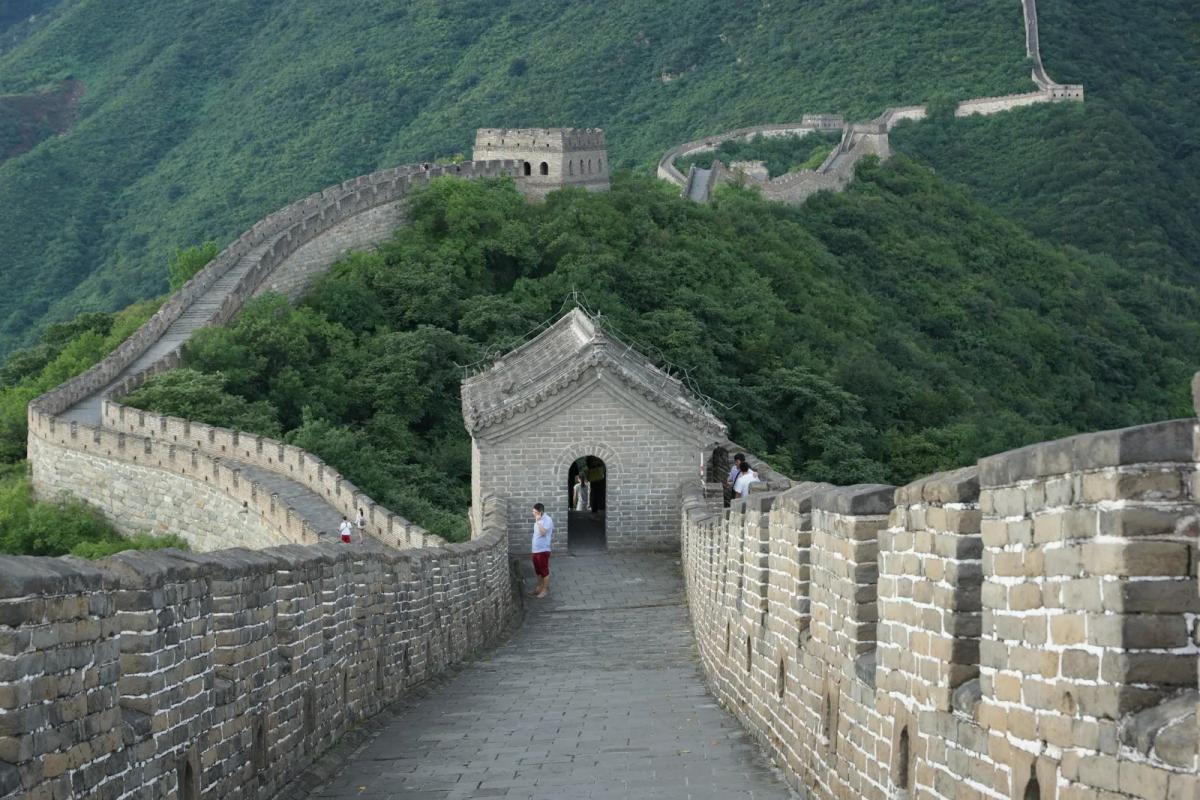
Restored Great Wall of China walkway and watchtower on a green ridge in Huairou, Beijing

Short answer: The best-known wonders of Asia within reach of Nepal are the Taj Mahal in India and the Great Wall of China, the two Asian sites you can easily visit from the 2007 "New 7 Wonders of the World" vote, plus Ha Long Bay, Komodo and the Puerto Princesa Underground River, three of the four Asian winners of the 2011 "New7Wonders of Nature" vote. Add famous landmarks such as Borobudur, Sigiriya, Wat Arun, the Terracotta Warriors, Zhangjiajie, Mount Bromo, the Burj Khalifa and the Petronas Twin Towers, and you have a list you can work through one holiday at a time from Kathmandu.

This guide puts all of them on one page, separates the popular-vote "wonders" lists from UNESCO World Heritage status, and gives each landmark the same practical notes: why it is special, the best season, how you reach it from Tribhuvan International Airport (KTM), and how much time to allow. It is written for travellers in Nepal, Nepali families abroad and anyone who wants a clear, checked list. Two East African icons, Kilimanjaro and the Masai Mara, close the list because a single connection in the Gulf puts them within reach of Kathmandu.

Checked: 18 Nov 2026. Wonder lists from new7wonders.com, World Heritage inscription years from the UNESCO World Heritage Centre (whc.unesco.org), Taj Mahal hours from tajmahal.gov.in. Flight times from Kathmandu are rounded and were cross-checked against our route guide (checked 8 Oct 2026) and FlightConnections schedule data (checked 18 Nov 2026); carriers and timings change by season. We do not list ticket prices, because they change; check the official site of each landmark before you book.

Which wonders of Asia can you visit from Nepal?

From Nepal you can realistically visit at least thirteen of Asia's most famous wonders, and two more in East Africa, on a normal holiday. Six of the Asian countries on this list (India, China, Thailand, Malaysia, Sri Lanka and the United Arab Emirates) have non-stop flights from Kathmandu, and Vietnam, Indonesia and the Philippines are one connection away. The table below compares every landmark in this guide so you can see at a glance which are UNESCO World Heritage Sites, which won a New7Wonders vote, and when to go.

Table note: UNESCO years are the year of first inscription on the World Heritage List. "New7Wonders" means the private popular-vote campaigns run by the New7Wonders Foundation (2007 for the world, 2011 for nature), not an official designation. Best months are general guidance for comfortable weather; local conditions vary year to year.

LandmarkCountryTypeUNESCO status (year)New7Wonders statusBest monthsTime neededNearest airport
Taj MahalIndiaMughal marble mausoleumWorld Heritage Site (1983)New 7 Wonders of the World (2007)October to MarchHalf a day to a full day in AgraDelhi (DEL), then road or rail to Agra
Great Wall of ChinaChinaDefensive walls and watchtowersWorld Heritage Site (1987)New 7 Wonders of the World (2007)Late April to early June, September to OctoberOne full day from BeijingBeijing Capital (PEK) or Beijing Daxing (PKX)
Ha Long BayVietnamLimestone island seascapeWorld Heritage Site (1994, extended 2000, Cat Ba Archipelago added 2023)New7Wonders of Nature (2011 vote, confirmed 2012)September to November, and springOne overnight cruiseHanoi Noi Bai (HAN)
KomodoIndonesiaIsland national park, Komodo dragonsWorld Heritage Site as Komodo National Park (1991)New7Wonders of Nature (2011 vote, confirmed 2012)April to December (dry season)Two to three days from Labuan BajoLabuan Bajo Komodo (LBJ)
Puerto Princesa Underground RiverPhilippinesNavigable river caveWorld Heritage Site as Puerto-Princesa Subterranean River National Park (1999)New7Wonders of Nature (2011 vote, confirmed 2012)November to May (dry season)A full day from Puerto Princesa cityPuerto Princesa (PPS)
BorobudurIndonesiaBuddhist temple monumentWorld Heritage Site as Borobudur Temple Compounds (1991)Not on either listApril to October (dry season)At least two hours, ideally half a dayYogyakarta International (YIA)
SigiriyaSri LankaRock citadel and gardensWorld Heritage Site as Ancient City of Sigiriya (1982)Not on either listFebruary to SeptemberHalf a dayColombo Bandaranaike (CMB)
Wat ArunThailandRiverside Buddhist templeNot inscribedNot on either listNovember to February (cool season)One to two hoursBangkok Suvarnabhumi (BKK) or Don Mueang (DMK)
Terracotta WarriorsChinaImperial tomb armyWorld Heritage Site as Mausoleum of the First Qin Emperor (1987)Not on either listLate March to May, September to early NovemberHalf a day from Xi'anXi'an Xianyang (XIY)
ZhangjiajieChinaSandstone pillar forestWorld Heritage Site as Wulingyuan Scenic and Historic Interest Area (1992)Not on either listApril to early June, September to NovemberTwo to three daysZhangjiajie Hehua (DYG)
Mount BromoIndonesiaActive volcano in a calderaNot a World Heritage Site; part of a UNESCO Biosphere Reserve (2015)Not on either listMay to October (dry season)One night near the rim and a sunriseSurabaya (SUB) or Malang (MLG)
Burj KhalifaUnited Arab EmiratesWorld's tallest buildingNot inscribedNot on either listNovember to MarchAbout two hoursDubai International (DXB)
Petronas Twin TowersMalaysiaTwin skyscrapers with skybridgeNot inscribedNot on either listAll year (indoor visit)One to two hoursKuala Lumpur (KUL)
Mount Kilimanjaro (seen from Amboseli)Tanzania, viewed from KenyaAfrica's highest mountainWorld Heritage Site as Kilimanjaro National Park, Tanzania (1987)Not on either listAny month at dawn or dusk; drier June to October and January to FebruaryOne to two nights in AmboseliNairobi (NBO), then road to Amboseli
Masai MaraKenyaSavannah wildlife reserveNot inscribedNot on either listJuly to October for the migration; good all yearTwo to three nightsNairobi (NBO), then road or light aircraft

Nepal itself holds two of the most famous places on the continent: Mount Everest, inside Sagarmatha National Park (a World Heritage Site since 1979), and Lumbini, the birthplace of the Lord Buddha (inscribed in 1997). This guide looks outward, at the wonders you fly to. If you are still deciding which country to visit first, our guide to the best travel destinations for Nepalese travellers compares the main options, and the route map of non-stop flights from Kathmandu shows which cities you can reach without changing planes.

Entry rules differ by country and by passport. Nepali passport holders need a visa or travel authorisation for most countries on this list, while Nepali citizens do not need one for India. We do not cover visa steps here; check the current rules on our visa guides before you book anything.

Which of the New 7 Wonders are in Asia?

Three of the New 7 Wonders of the World are in Asia: the Great Wall of China, the Taj Mahal in India and Petra in Jordan, which sits in West Asia. The other four are in Europe and the Americas. For travellers from Nepal, the Taj Mahal and the Great Wall are the two that fit naturally into a holiday, and both have their own sections below.

The "New 7 Wonders of the World" were announced in Lisbon on 7 July 2007 after a global public vote organised by the New7Wonders Foundation, a private Swiss-based initiative. The foundation says more than one hundred million votes were cast, choosing from 21 finalists picked by an expert panel. It was a popularity vote, not a heritage assessment. UNESCO, which runs the World Heritage List, stated in 2007 that there is "no link whatsoever" between its World Heritage programme and the campaign.

Table note: the seven winners as listed on world.new7wonders.com, checked 18 Nov 2026.

New 7 Wonders of the World (2007)CountryIn Asia?
Great Wall of ChinaChinaYes (East Asia)
Taj MahalIndiaYes (South Asia)
PetraJordanYes (West Asia)
ColosseumItalyNo
Chichén ItzáMexicoNo
Machu PicchuPeruNo
Christ the Redeemer (Cristo Redentor)BrazilNo

The "Seven Wonders of the Ancient World", such as the Great Pyramid of Giza, are a different, classical list; only the Great Pyramid still stands.

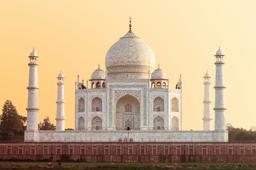
Taj Mahal, India
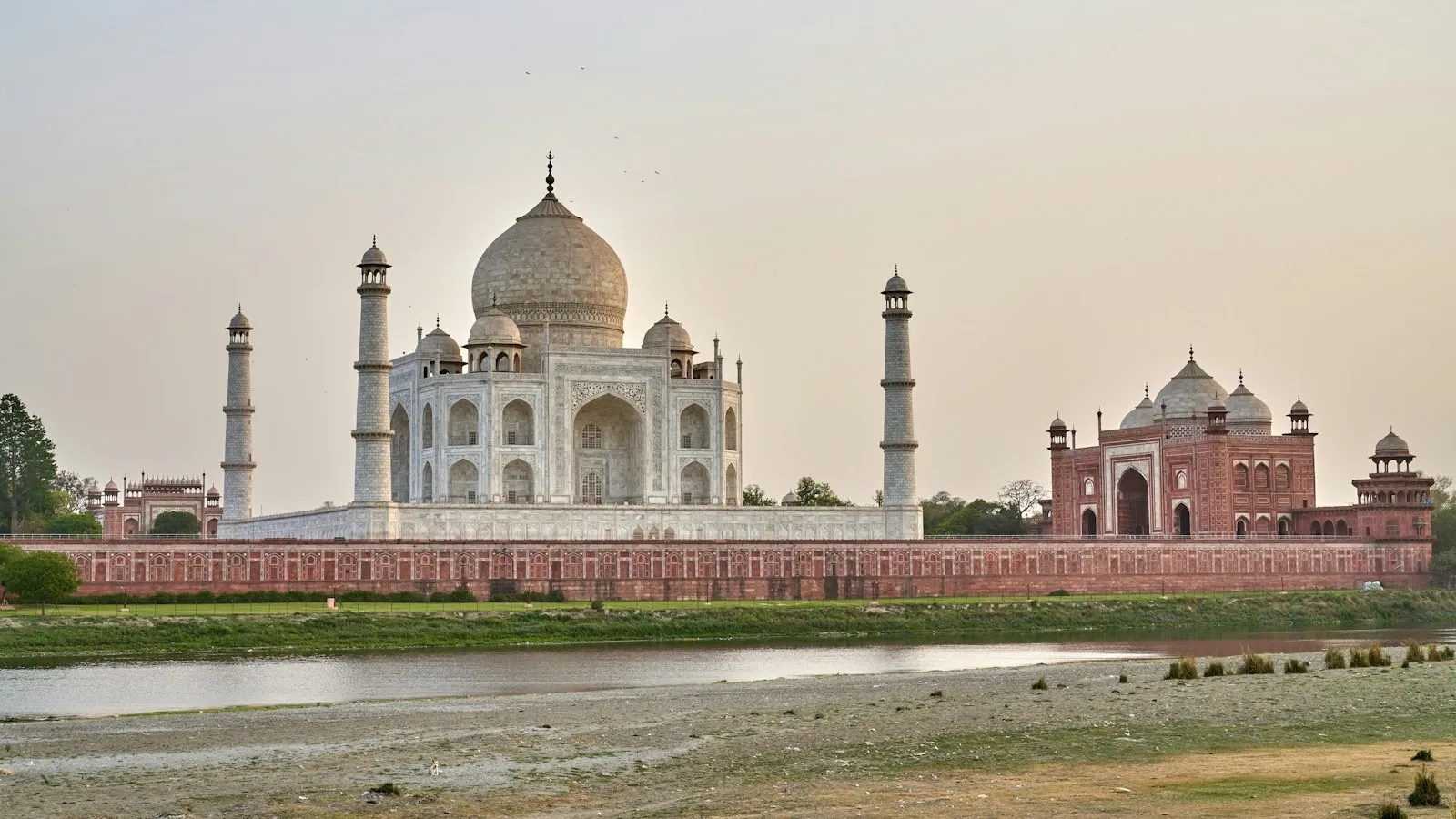
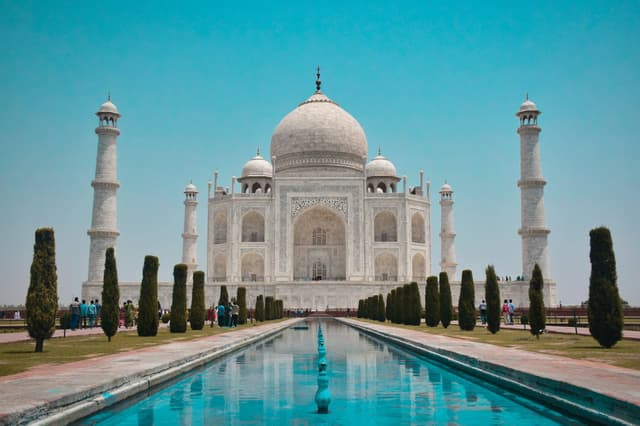
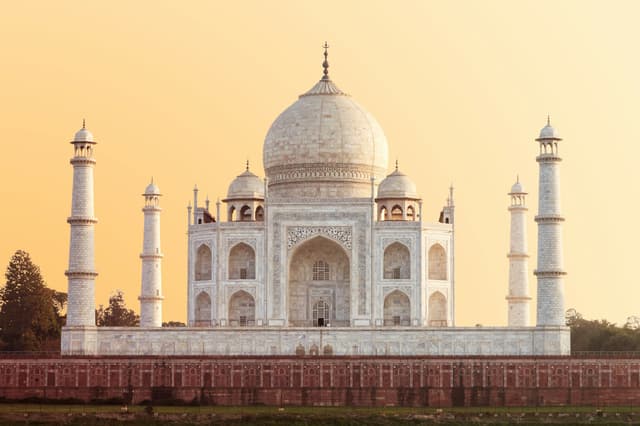
Taj Mahal seen across the Yamuna river from the Mehtab Bagh side in Agra

The Taj Mahal is a white marble mausoleum on the bank of the Yamuna River in Agra, built in the 17th century by the Mughal emperor Shah Jahan in memory of his wife Mumtaz Mahal. It is the closest of the famous wonders to Nepal, and for Nepali families it is usually the easiest "wonder of the world" to reach.

  • Why it is a wonder: UNESCO inscribed the Taj Mahal in 1983 under a single criterion, as a masterpiece of human creative genius. It is also one of the New 7 Wonders of the World from the 2007 vote.
  • Best season: October to March, when northern India is cooler and drier. Sunrise is the calmest time of day and the light on the marble is softest.
  • Opening rule: the Taj Mahal opens 30 minutes before sunrise, closes 30 minutes before sunset, and is closed for general viewing every Friday (Checked: 18 Nov 2026, tajmahal.gov.in).
  • Getting there from Kathmandu: non-stop flights to Delhi take about two hours, then Agra is a road or train journey from Delhi. Travellers from the Terai can also go overland across the open border.
  • Time needed: half a day for the Taj itself; a full day, or a night in Agra, if you add Agra Fort and the Mehtab Bagh sunset view across the river.

Our Taj Mahal visitor guide covers the gates, banned items, night viewing and how to fit Agra Fort into the same day.

Great Wall of China
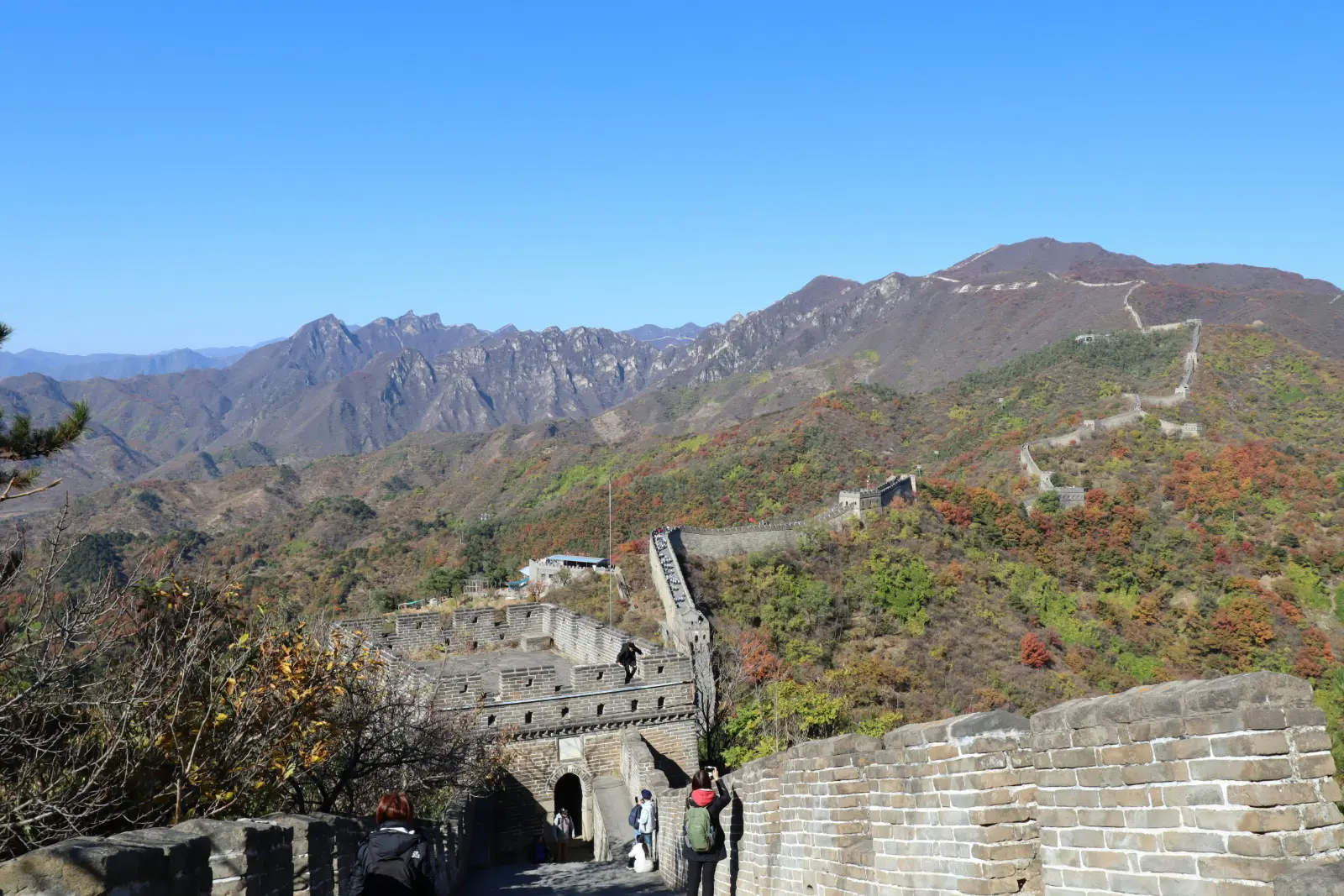
Great Wall of China climbing a steep autumn ridge with watchtowers near Beijing

The Great Wall is not one wall but a network of defensive walls, watchtowers, forts and passes built by different Chinese states and dynasties over roughly two thousand years. The restored Ming dynasty sections north of Beijing, such as Mutianyu and Badaling, are the ones most visitors walk.

  • Why it is a wonder: UNESCO inscribed the Great Wall in 1987 under five of its ten selection criteria. It is also one of the New 7 Wonders of the World from the 2007 vote, and the 2012 survey announced by China's State Administration of Cultural Heritage put the total length of all its walls at about 21,196 km (Visit Beijing, checked 18 Nov 2026).
  • Best season: late April to early June and September to October, when the weather is mild and the hills are green or turning red and gold. Dashain and Tihar holidays often land in the autumn window.
  • Getting there from Kathmandu: there is no non-stop flight from Kathmandu to Beijing. Travellers usually fly non-stop to a Chinese gateway such as Chengdu, Kunming, Guangzhou, Shenzhen, Shanghai or Hangzhou, then continue to Beijing by domestic flight or high-speed train.
  • Time needed: one full day from Beijing for a single section. Mutianyu has a cable car and chairlift, which helps families and older travellers.

Our guide to the Great Wall's facts, myths and best sections explains which stretch is worth your one free day and what the famous length figure actually measures.
Explore India tour packages
View all →

Which natural wonders of Asia are on the New7Wonders of Nature list?

Four of the seven New7Wonders of Nature are in Asia: Ha Long Bay in Vietnam, Komodo in Indonesia, the Puerto Princesa Underground River in the Philippines and Jeju Island in South Korea. The first three are within one connection of Kathmandu and appear below; Jeju is a long way north and not part of this list.

The New7Wonders of Nature came from a second popular-vote campaign by the same private foundation. It ran for about four years, started with more than 440 nominated places from over 220 countries, narrowed to 28 finalists, and announced seven provisional winners on 11 November 2011. Each winner was then confirmed separately in 2012 after the results were validated. As with the 2007 list, this is a public vote, not an official scientific or UNESCO designation, although all three Asian winners featured here are also UNESCO World Heritage Sites in their own right.

Table note: winners and confirmation dates from about.new7wonders.com announcements, checked 18 Nov 2026.

New7Wonders of Nature (2011)CountryIn Asia?Confirmed
Ha Long BayVietnamYes30 March 2012
KomodoIndonesiaYes16 May 2012
Puerto Princesa Underground RiverPhilippinesYes28 January 2012
Jeju IslandSouth KoreaYesBy 28 January 2012 (first winner confirmed)
AmazonSouth AmericaNoNot covered in this guide
Iguazu FallsArgentina and BrazilNoNot covered in this guide
Table MountainSouth AfricaNoNot covered in this guide

Ha Long Bay, Vietnam

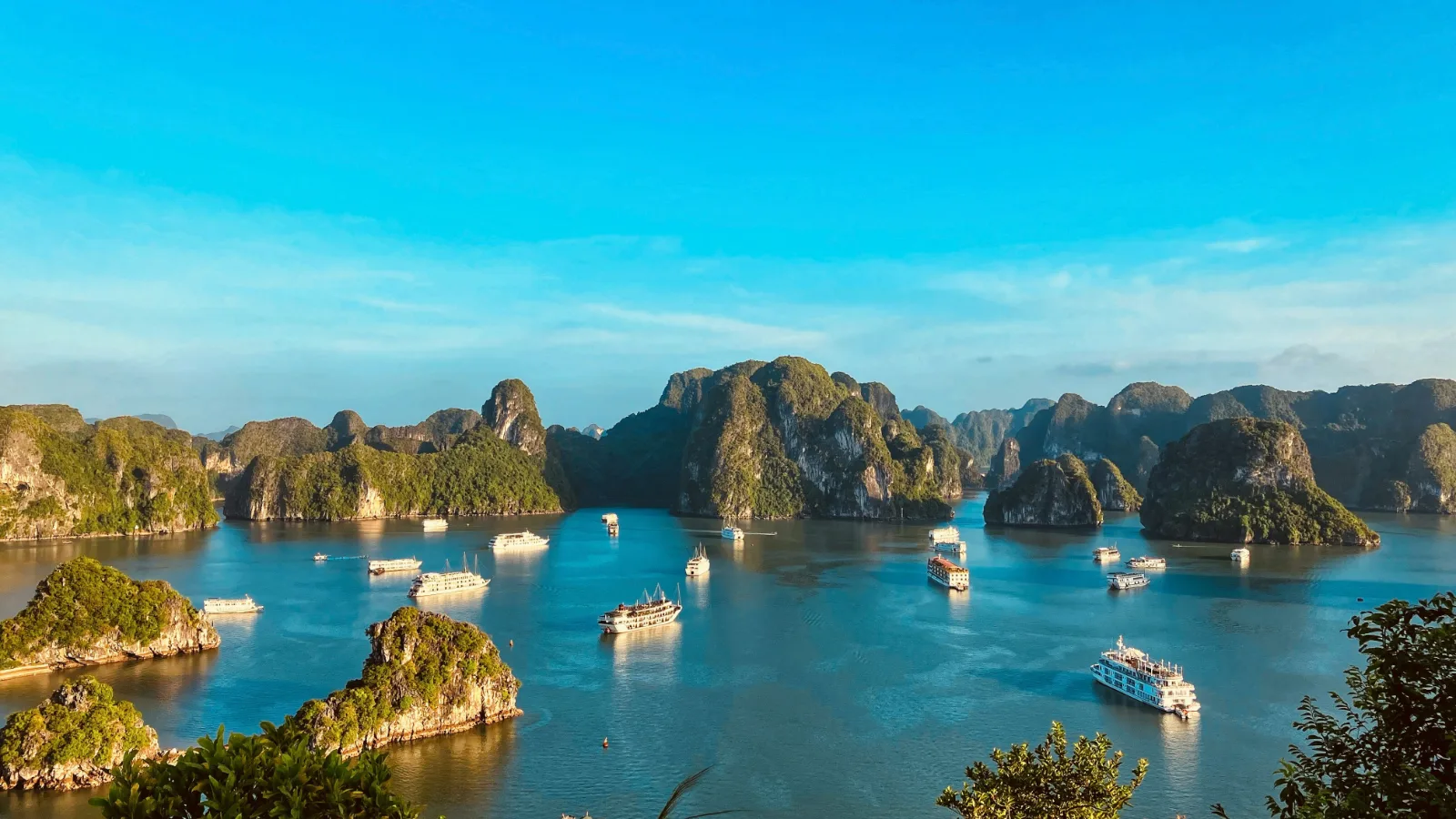
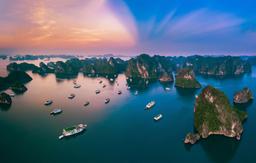
Limestone islands and cruise boats on the emerald water of Ha Long Bay, Vietnam

Ha Long Bay is a seascape of more than a thousand limestone islands and islets rising out of the Gulf of Tonkin in northeast Vietnam, about two and a half hours by road from Hanoi. Most visitors see it from a cruise boat.

  • Why it is a wonder: UNESCO first inscribed Ha Long Bay in 1994, extended it in 2000 and, in September 2023, expanded it to cover the Ha Long Bay and Cat Ba Archipelago. It was confirmed as one of the New7Wonders of Nature on 30 March 2012.
  • Best season: Vietnam's national tourism board recommends September to November, and says autumn and spring bring clear, calm days for cruising, while summer is hot with a chance of storms (Checked: 18 Nov 2026, vietnam.travel).
  • Getting there from Kathmandu: there is no non-stop flight to Vietnam. Most travellers connect in Bangkok, Kuala Lumpur, Singapore, Guangzhou or Kunming, all non-stop from Kathmandu, then transfer by road from Hanoi to the cruise piers.
  • Time needed: one overnight cruise, two days and one night, is enough for the highlights. A day trip leaves only a few hours on the water.

Our Ha Long Bay guide compares day trips and overnight cruises and explains when the quieter Lan Ha Bay is the better choice.

Komodo, Indonesia

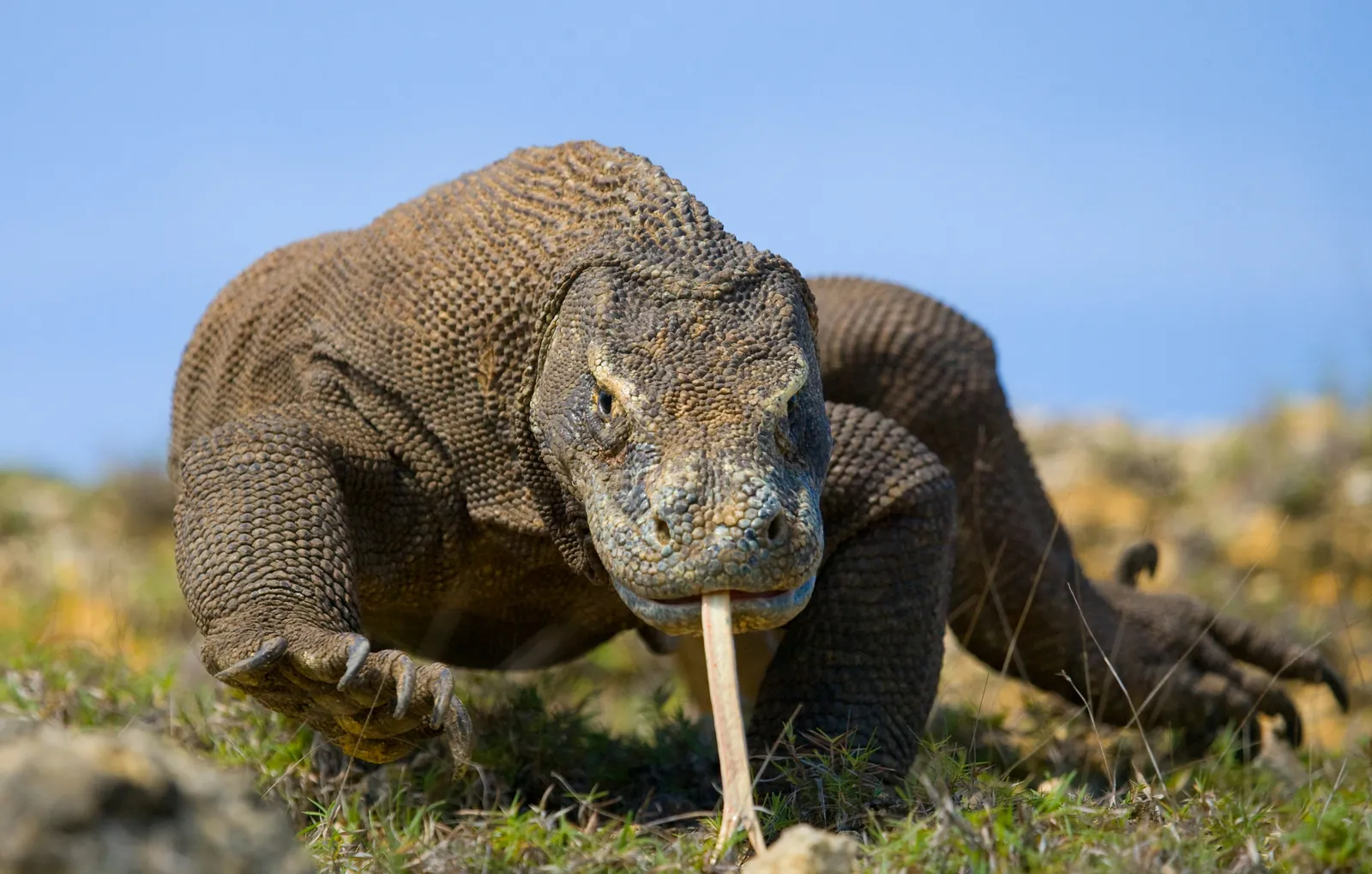
Adult Komodo dragon walking on grassland with its long tongue out in Komodo National Park

Komodo is a chain of dry, hilly islands in East Nusa Tenggara, Indonesia, best known as the home of the Komodo dragon, the largest living lizard. Visitors join ranger-led walks to see the dragons on Komodo or Rinca, climb the Padar Island viewpoint and swim at Pink Beach, all by boat from the harbour town of Labuan Bajo on Flores.

  • Why it is a wonder: Komodo National Park has been a UNESCO World Heritage Site since 1991, and "Komodo" was confirmed as one of the New7Wonders of Nature on 16 May 2012. UNESCO notes that the dragons exist nowhere else in the world: in the wild they live on Komodo, Rinca and Gili Motang inside the park and along parts of the Flores coast.
  • Best season: the dry season, which Rough Guides puts at April to December, with July and August the busiest months. For Nepali travellers, Dashain and Tihar fall in the later part of the dry season, which can work well.
  • Getting there from Kathmandu: there is no non-stop flight to Bali or Flores. Connect in Kuala Lumpur, Singapore or Bangkok to Bali, then take a short direct domestic flight to Labuan Bajo.
  • Time needed: two to three days around Labuan Bajo, as a full day boat trip or an overnight boat. Park rules change, so check the national park's official channels before you travel.

Our Komodo Island guide covers dragon safety, boat trip types and the calmest months.

Puerto Princesa Underground River, Philippines

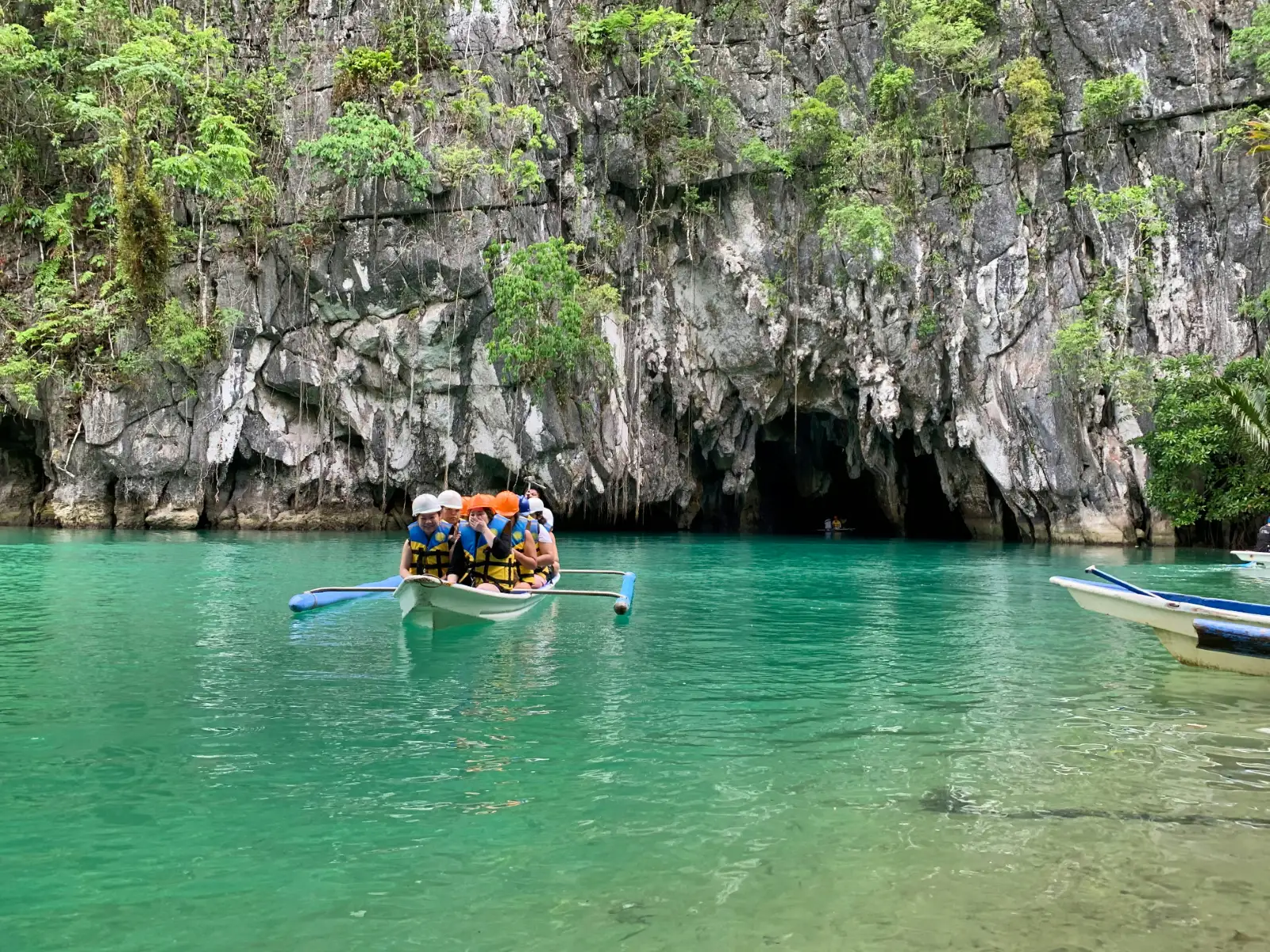
Paddle boat with visitors at the limestone cave mouth of the Puerto Princesa Underground River

The Puerto Princesa Underground River is a navigable river that flows through a limestone cave and empties directly into the sea on the island of Palawan. Visitors ride paddle boats into the cave with a guide.

  • Why it is a wonder: UNESCO inscribed the Puerto-Princesa Subterranean River National Park in 1999 for its karst landscape and its forest-to-sea ecosystem. UNESCO describes an 8.2 km underground river whose lower half is brackish and tidal. It was confirmed as one of the New7Wonders of Nature on 28 January 2012.
  • Best season: the dry season, roughly November to May, when seas are calmer for the boat ride to the cave; December to April is the busiest stretch.
  • Getting there from Kathmandu: there is no non-stop flight to the Philippines. Connect via Bangkok, Kuala Lumpur, Singapore, Hong Kong or Guangzhou to Manila, then take a domestic flight to Puerto Princesa. From the city, a road transfer north reaches the village of Sabang, where boats leave for the cave.
  • Time needed: a full day from Puerto Princesa city. Check the current booking rules locally before you go, as access to the cave is managed.

The Underground River is one stop on a bigger island trip; our guide to things to do in Palawan shows how it fits with El Nido and Coron.

Which famous landmarks are worth a trip on their own?

Borobudur, Sigiriya, Wat Arun and the Terracotta Warriors are not on either New7Wonders list, but each is a famous landmark in Asia that many travellers rank alongside the official winners. Three of them are UNESCO World Heritage Sites, which is a stronger heritage credential than a public vote. All four suit travellers who care about history, Buddhism and architecture.

Borobudur, Indonesia

Bell shaped stone stupas on the upper terraces of Borobudur temple in Central Java

Borobudur is a vast Buddhist monument in Central Java, built in the 8th and 9th centuries under the Syailendra dynasty. It rises as five square terraces topped by three circular platforms and a great central stupa, and for Nepali Buddhists it is a moving companion to Lumbini.

  • Why it is a wonder: UNESCO inscribed the Borobudur Temple Compounds, including the smaller Mendut and Pawon temples, in 1991. UNESCO notes about 2,500 square metres of carved relief panels and 72 openwork stupas, each holding a statue of the Buddha.
  • Best season: the dry season, roughly April to October.
  • Getting there from Kathmandu: fly to Indonesia through a Southeast Asian hub, then take a domestic flight to Yogyakarta International Airport (YIA). The temple is about 44 km from the airport, roughly an hour by road.
  • Time needed: at least two hours, ideally half a day. Check the current visiting rules on the official site before you go.

Sigiriya, Sri Lanka

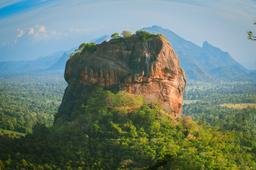
Sigiriya Lion Rock rising above the surrounding forest with distant hills in central Sri Lanka

Sigiriya is a 5th century royal citadel built on top of a granite rock that rises about 180 metres above the forests of central Sri Lanka. You climb through water gardens, past painted frescoes and between two giant lion paws to the palace ruins on the summit.

  • Why it is a wonder: UNESCO inscribed the Ancient City of Sigiriya in 1982. It was the capital of King Kassapa I, who reigned from 477 to 495 AD. The famous "Maidens of the Clouds" frescoes sit in a sheltered gallery halfway up the rock.
  • Best season: roughly February to September; October and November are the rainy months to avoid if you want clear views from the top (Responsible Travel, checked 18 Nov 2026). Climb in the cooler early morning.
  • Getting there from Kathmandu: SriLankan Airlines flies non-stop to Colombo in about 3 hours 35 minutes; from there it is a long drive inland, usually combined with Dambulla and Kandy.
  • Time needed: half a day. The climb is about 1,200 steps, so it suits reasonably fit travellers better than elderly parents.

Our guide to climbing Sigiriya Lion Rock walks through the climb stage by stage, including advice for children and older travellers.

Wat Arun, Thailand

Wat Arun, the Temple of Dawn, glowing against an orange sunset in Bangkok

Wat Arun, the Temple of Dawn, stands on the west (Thonburi) bank of the Chao Phraya River in Bangkok, almost opposite Wat Pho. Its tall central prang, a Khmer-style spire covered in porcelain and seashell mosaics, is one of the most photographed temple silhouettes in Asia.

  • Why it is a wonder: Wat Arun is not on the UNESCO list or a New7Wonders list, but it is Bangkok's signature landmark and a working royal temple.
  • Best season: the cool season from November to February, which the Tourism Authority of Thailand calls the most comfortable time to travel. For photos, go at opening time or watch the sunset from the east bank.
  • Getting there from Kathmandu: Bangkok is about 3 hours 20 minutes non-stop, with Thai Airways, Nepal Airlines and Himalaya Airlines flying to Suvarnabhumi. In the city, a short cross-river ferry from Tha Tien pier brings you to the temple.
  • Time needed: one to two hours, or a morning if you pair it with Wat Pho and the Grand Palace. Covered shoulders and knees are expected.

Our Wat Arun temple guide explains the ferry, the dress code and the best light for photographs.

Terracotta Warriors, China

Visitors looking over the Terracotta Army trenches under the arched roof of the pit hall

The Terracotta Warriors are an army of thousands of life-size clay soldiers, horses and chariots buried beside the tomb of Qin Shi Huang, the first emperor of a unified China, who died in 210 BCE. Farmers found them while digging a well in 1974, and you now view them from walkways above the excavated pits near Xi'an.

  • Why it is a wonder: UNESCO inscribed the Mausoleum of the First Qin Emperor in 1987. Excavation is still going on, so it is an active archaeological site rather than a finished museum.
  • Best season: spring (late March to May) and autumn (September to early November) are mild; midsummer is hot and crowded with school holidays.
  • Getting there from Kathmandu: there is no non-stop flight to Xi'an. Fly to a gateway such as Chengdu, Kunming or Guangzhou and continue by high-speed train or domestic flight. The site lies outside the city, in Xi'an's Lintong district, so allow time for the road transfer.
  • Time needed: half a day for the pits and museum, and two days if you want the City Wall and Muslim Quarter too.

Our Terracotta Warriors and Xi'an guide explains what you see in each pit and how booking works.

Which other natural wonders of Asia are worth seeing?

Beyond the New7Wonders of Nature list, two natural wonders of Asia stand out for travellers from Nepal: the sandstone pillar forest of Zhangjiajie in China and the volcanic caldera of Mount Bromo in Indonesia. Both reward an early start for mist, sunrise and thinner crowds.

Zhangjiajie, China

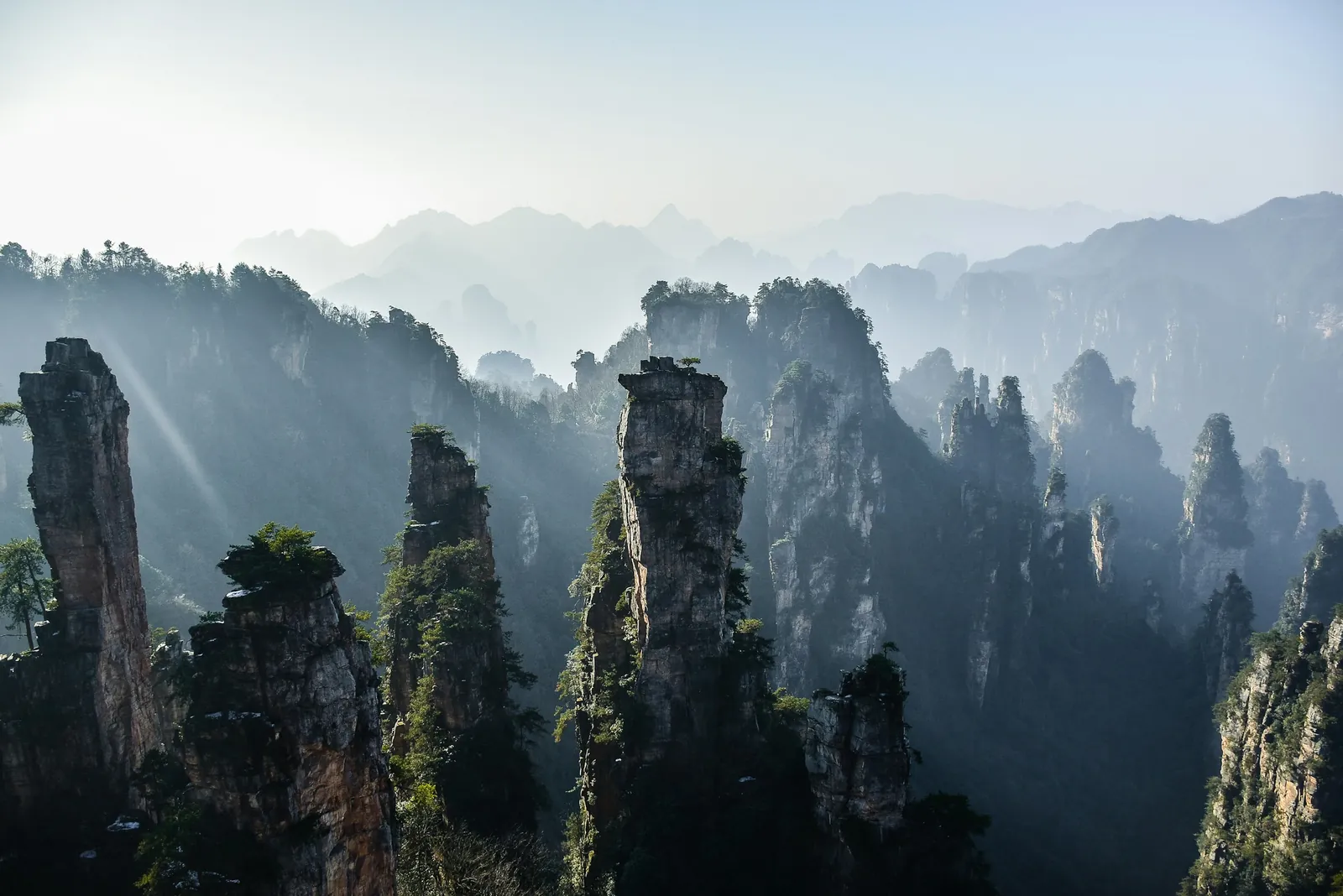
Tall sandstone pillars rising from misty forest in Zhangjiajie, Hunan province, China

Zhangjiajie National Forest Park in Hunan province is famous for its quartz sandstone pillars rising out of subtropical forest, the peaks many people now call the "Avatar mountains".

  • Why it is a wonder: the park is part of the Wulingyuan Scenic and Historic Interest Area, a UNESCO World Heritage Site since 1992, which UNESCO says holds more than 3,000 narrow quartz sandstone pillars, many over 200 metres high.
  • Best season: April to early June and September to November, when temperatures are mild and the forest is green or turning gold. October, which often overlaps with Dashain, falls inside this window.
  • Getting there from Kathmandu: fly non-stop to a Chinese gateway city, then take a domestic flight to Zhangjiajie Hehua Airport or a high-speed train.
  • Time needed: two days inside the park, plus a day for Tianmen Mountain near the city if you have it.

Our Zhangjiajie National Forest Park guide separates the forest park from Tianmen Mountain and the glass bridge.

Mount Bromo, Indonesia

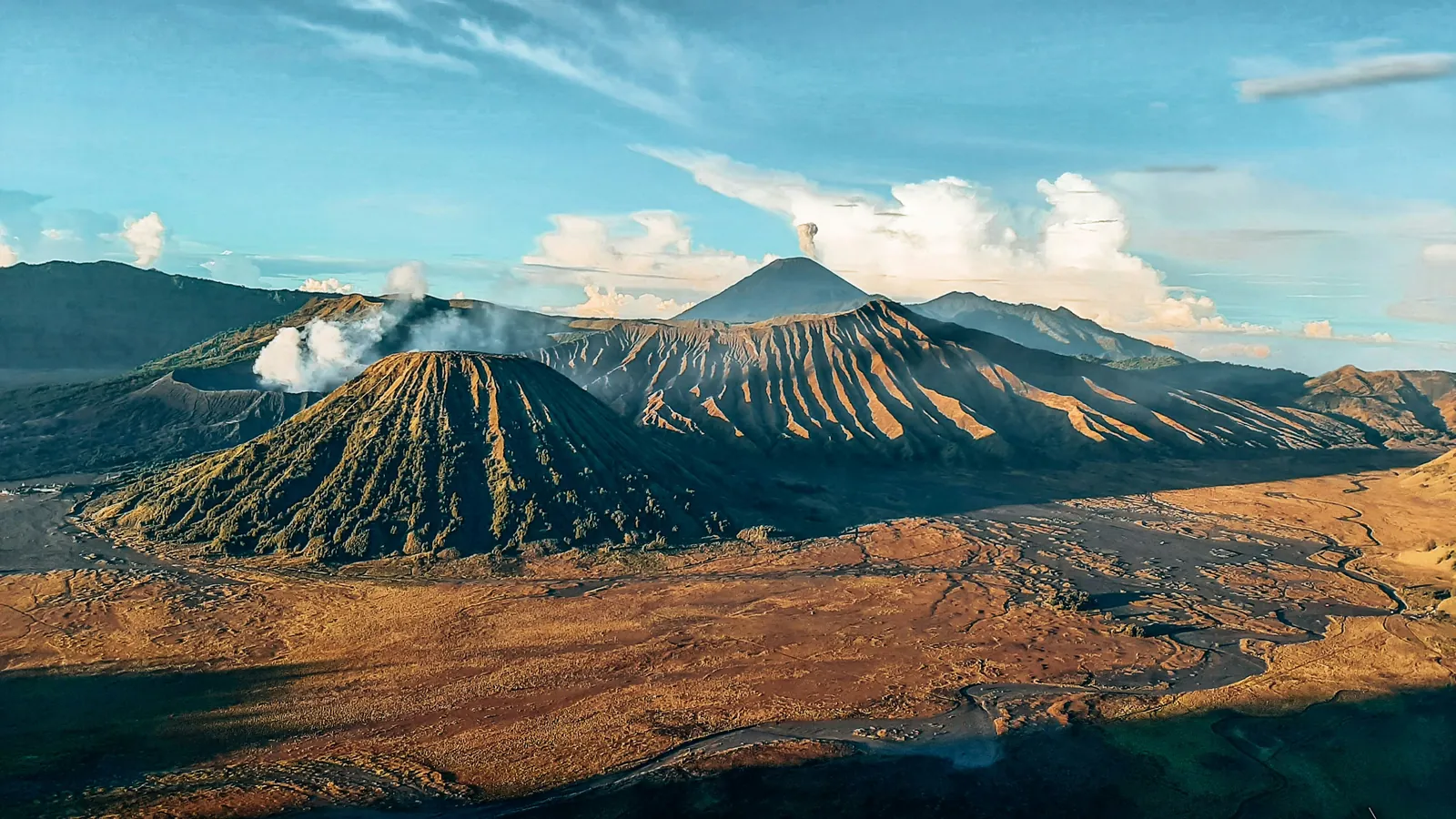
Elevated view over the Tengger caldera with smoking Mount Bromo, Batok and the Sea of Sand

Mount Bromo is an active volcano in East Java, not in Bali, rising from the floor of the huge Tengger caldera inside Bromo Tengger Semeru National Park. The classic visit is a pre-dawn drive to a rim viewpoint for sunrise over the steaming crater, then a crossing of the Sea of Sand to the crater edge.

  • Why it is a wonder: few places let you stand on a caldera rim at dawn and watch an active volcano smoke below you, with Mount Semeru, Java's highest peak, on the horizon. Bromo is not a World Heritage Site, but it lies within the Bromo Tengger Semeru Arjuno Biosphere Reserve recognised by UNESCO's Man and the Biosphere Programme in June 2015.
  • Best season: the dry season, roughly May to October, when mornings are most likely to be clear.
  • Getting there from Kathmandu: fly to Indonesia through a hub, then take a domestic flight to Surabaya or Malang (including from Bali), and transfer by road to the rim villages.
  • Time needed: one night near the rim and a sunrise start. The volcano's alert level and park access change, so check the official park status before you travel.

Our Mount Bromo sunrise guide covers the viewpoints, the crater walk and how to check whether the park is open.

Which modern landmarks of Asia stand out?

The two modern landmarks of Asia that travellers from Nepal visit most are the Burj Khalifa in Dubai and the Petronas Twin Towers in Kuala Lumpur. Neither is a heritage site, but both are engineering records you can go up, both are a single non-stop flight from Kathmandu, and both are easy wins for elderly parents and small children because lifts do all the climbing.

Burj Khalifa, Dubai

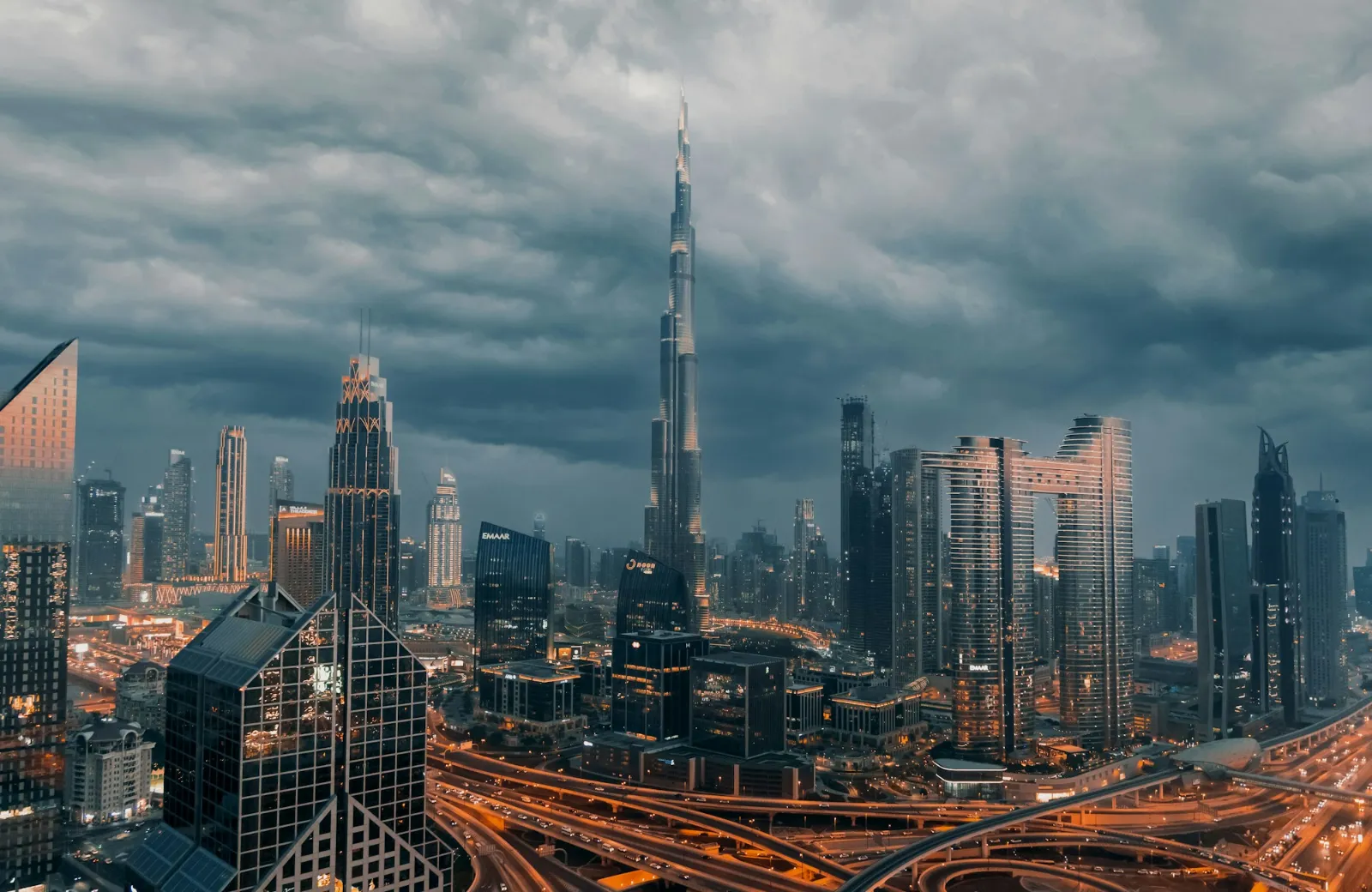
Burj Khalifa rising above the Downtown Dubai skyline under dark storm clouds

The Burj Khalifa in Downtown Dubai is the tallest building in the world at 828 metres, completed in 2010. Visitors ride high-speed lifts from The Dubai Mall to observation decks on levels 124 and 125, with a higher deck on level 148.

  • Why it is a wonder: it has held the title of the world's tallest building since it opened, and the view stretches across the city, the desert and the Gulf.
  • Best season: November to March, Dubai's cooler months. A slot just before sunset shows the city by day and by night.
  • Getting there from Kathmandu: flydubai, Himalaya Airlines and Nepal Airlines fly non-stop to Dubai in roughly four and a half to five hours. For Nepali families based in the Gulf, it is an easy outing when parents visit.
  • Time needed: about two hours including the queue and the time at the top, more if you stay for the fountain show.

Our Burj Khalifa observation deck guide explains which deck suits whom and how sunset timing works month by month.

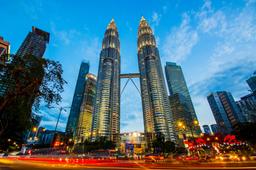
Petronas Twin Towers, Kuala Lumpur

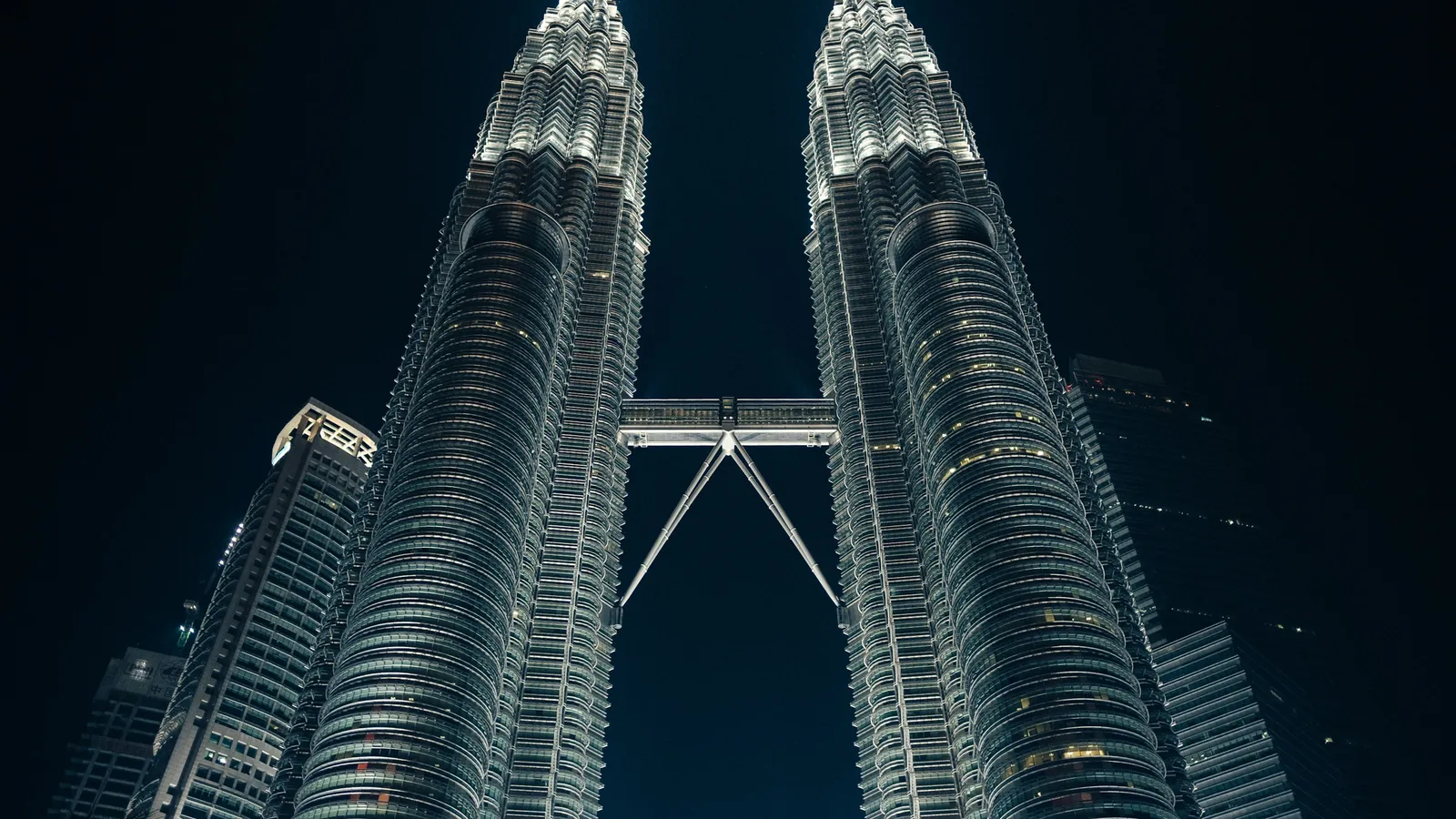
Petronas Twin Towers and their skybridge lit up at night in Kuala Lumpur

The Petronas Twin Towers are two 88-storey steel and glass towers in central Kuala Lumpur, about 452 metres tall and completed in 1998. A timed visit takes you to the double-decker Skybridge between the towers and then to the observation deck on level 86.

  • Why it is a wonder: the towers were the tallest buildings in the world until 2004 and are still the tallest twin towers anywhere.
  • Best season: all year, because the visit is indoors; Kuala Lumpur gets showers in every month, usually in the afternoon. Late afternoon on a weekday is the calmest slot.
  • Getting there from Kathmandu: Malaysia Airlines, Batik Air, Himalaya Airlines and Nepal Airlines fly non-stop to Kuala Lumpur in a little under five hours, and Kuala Lumpur is also a common connecting hub for Bali.
  • Time needed: one to two hours for the visit, plus time in KLCC Park for the evening fountain.

Our Petronas Twin Towers Skybridge guide covers booking, the opening days and the best photo spots.

Are there wonders in East Africa too?

Yes. Two of the world's great natural sights, Mount Kilimanjaro and the Masai Mara, can be seen on one Kenya safari, and both are reachable from Kathmandu with one connection through the Gulf. They are not in Asia, but a Dubai or Doha connection makes Kenya easy to reach from Kathmandu, so they belong on this list.

Mount Kilimanjaro, seen from Kenya

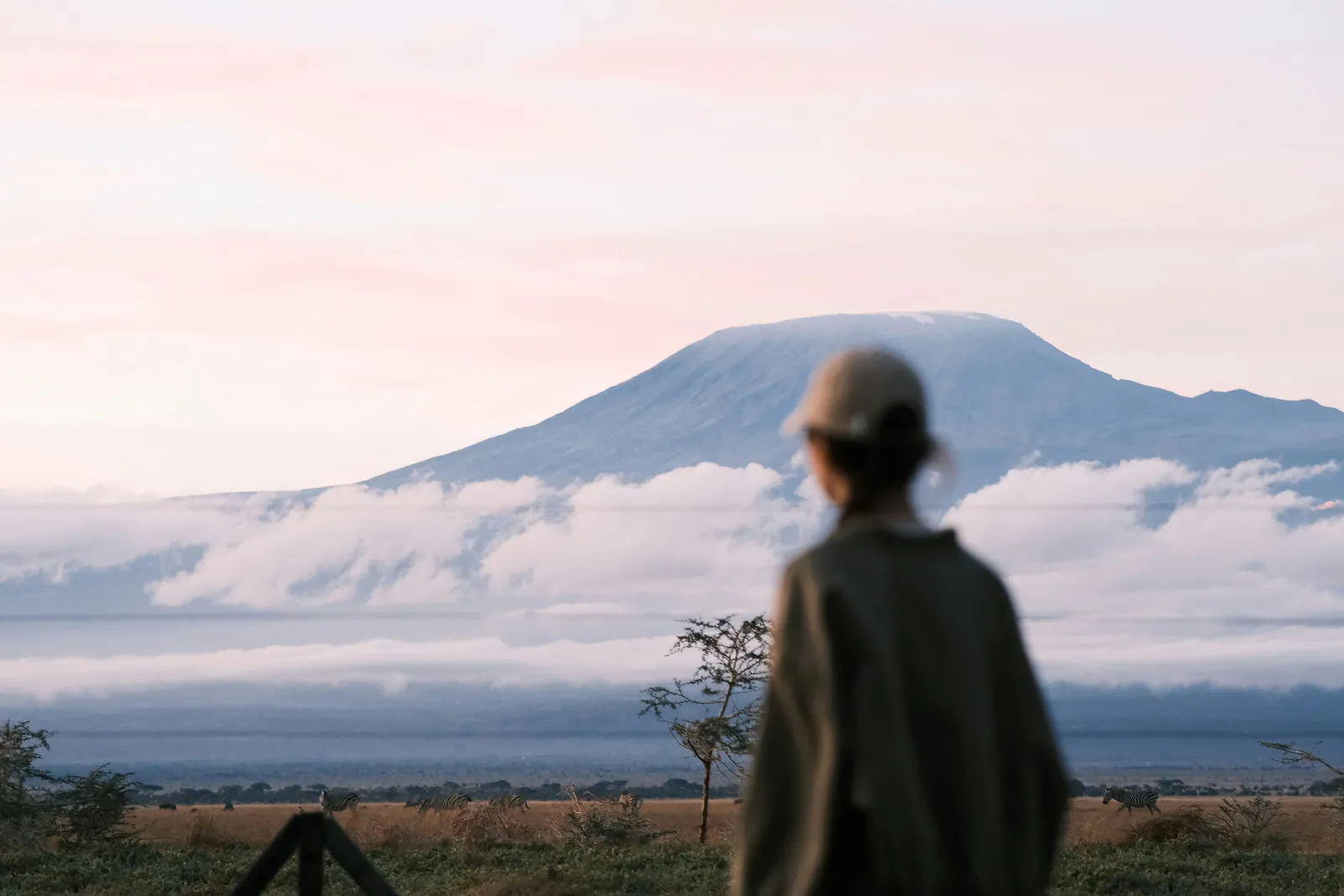
Traveller in a cap looking towards snow capped Mount Kilimanjaro from Amboseli in Kenya

Mount Kilimanjaro stands in northern Tanzania, just south of the Kenya border, but its most famous view is from Kenya's Amboseli National Park, where the snow-capped summit rises behind herds of elephants. Climbing routes all start on the Tanzanian side.

  • Why it is a wonder: Kilimanjaro is the highest mountain in Africa at 5,895 metres, according to UNESCO, and the largest free-standing volcanic mass in the world. Kilimanjaro National Park in Tanzania has been a World Heritage Site since 1987.
  • Best season: Amboseli is drier and best for wildlife from June to October and January to February, but the summit is often hidden by cloud in any month. Early morning and late afternoon give the best chance of a clear view, and the air is often clearest just after rain (SafariBookings, checked 18 Nov 2026).
  • Getting there from Kathmandu: there is no non-stop flight to Kenya. Connect through Doha, Dubai, Sharjah, Abu Dhabi, Mumbai or Istanbul to Nairobi, which makes a long travel day, then drive to Amboseli.
  • Time needed: one to two nights in Amboseli for the view. A climb is a separate, longer trip from Tanzania, and Himalayan trekkers should plan it as seriously as a high Nepal trek.

Our guide to seeing Mount Kilimanjaro from Kenya compares the Amboseli view with a climb and explains how a climb fits around a safari.

Masai Mara, Kenya

Lion and lioness resting on green grass beside a tree in the Maasai Mara, Kenya

The Maasai Mara National Reserve covers about 1,510 square kilometres of open grassland in southwest Kenya, the northern end of the Mara and Serengeti ecosystem. It is famous for big cats and for the wildebeest migration, when huge herds cross the Mara River from Tanzania.

  • Why it is a wonder: the migration is one of the largest movements of land animals on Earth, and the resident lions, cheetahs, elephants and giraffes make the reserve rewarding in any month. The Mara is not inscribed on the World Heritage List, although Tanzania's Serengeti next door is.
  • Best season: roughly July to October for the migration. Lonely Planet says it peaks in July and August, and the herds turn south again in October and November; the exact timing shifts each year with the rains.
  • Getting there from Kathmandu: connect through a Gulf hub to Nairobi, then drive to the reserve or take a light aircraft to one of the Mara airstrips.
  • Time needed: two to three nights for several game drives at dawn and dusk.

Our Masai Mara safari guide covers the migration calendar, where to stay and what you will actually see.

Which wonders can you combine in one trip?

The easiest way to see two wonders in one trip is to pick a hub you fly through anyway. Bangkok links Wat Arun with Ha Long Bay, Bali links Komodo and Mount Bromo, Beijing and Xi'an link the Great Wall with the Terracotta Warriors, and Dubai links the Burj Khalifa with a Kenya safari. The table below lists the pairings that work best from Kathmandu.

Table note: routes are based on our route guide (checked 8 Oct 2026) and FlightConnections schedule data (checked 18 Nov 2026); airlines and schedules change by season.

Trip ideaWonders you can combineHow they link from KathmanduSuits
Northern IndiaTaj Mahal with Delhi and JaipurNon-stop to Delhi, then road or rail around the Golden TriangleFirst trip abroad, elderly parents, short leave
Bangkok and northern VietnamWat Arun and Ha Long BayNon-stop to Bangkok, then a short flight to HanoiCouples, families, first-time Southeast Asia
Bali and beyondKomodo and Mount Bromo, with Borobudur for longer tripsOne stop to Bali, then short flights to Labuan Bajo and East JavaAdventurous couples, honeymooners who want more than beaches
Kuala Lumpur stopoverPetronas Twin Towers with Komodo or BaliNon-stop to Kuala Lumpur, then a direct flight to BaliFamilies who want a city break and an island
Classic ChinaGreat Wall, Terracotta Warriors and ZhangjiajieNon-stop to a Chinese gateway, then high-speed rail between citiesHistory lovers, longer holidays
Sri Lanka's Cultural TriangleSigiriya with Dambulla and KandyNon-stop to Colombo, then by road inlandFamilies, Buddhist pilgrims
Gulf and safariBurj Khalifa, Kilimanjaro view and Masai MaraNon-stop to Dubai, then a direct flight to NairobiSafari seekers, Gulf-based Nepali families
Palawan islandsPuerto Princesa Underground River with El Nido or CoronOne stop to Manila, then a domestic flight to PalawanBeach lovers, divers, honeymooners

A few practical notes from the routes above. India is the only pairing with no visa for Nepali citizens, which makes the Golden Triangle of Delhi, Agra and Jaipur the simplest wonder trip for a short Dashain break. In China, rail is usually faster door to door than flying between Beijing and Xi'an; our China high-speed rail guide explains booking and stations. In Sri Lanka, the Temple of the Tooth in Kandy adds the island's most sacred Buddhist shrine to a Sigiriya trip.

When is the best season for each?

Most wonders of Asia are at their best between October and April, which suits Nepali travellers because Dashain, Tihar and the winter school holidays all fall in that window. The main exceptions are the Indonesian sites (Komodo, Borobudur, Mount Bromo), which are best in the dry season from about April or May to October, and Sri Lanka's Sigiriya, where October and November are the wettest months to avoid.

Table note: general climate guidance for comfortable visits, drawn from official tourism boards, Rough Guides, Responsible Travel, SafariBookings, Lonely Planet and our individual landmark guides. "Dashain and Tihar fit" assumes the festivals fall between late September and mid-November, as they usually do.

LandmarkBest monthsMonths to be carefulDashain and Tihar fit
Taj MahalOctober to MarchApril to June (heat), July to September (monsoon rain)Good
Great Wall of ChinaLate April to early June, September to OctoberJuly and August (heat, crowds), winter (cold)Good, especially early in the festival window
Ha Long BaySeptember to November, and springSummer (heat, storms can stop sailings)Good
KomodoApril to December (dry season)January to March (wet season)Good, later dry season
Puerto Princesa Underground RiverNovember to MayJune to October (rough seas, cancellations)Fair; better from November
BorobudurApril to OctoberNovember to March (showers, humidity)Fair; end of the dry season
SigiriyaFebruary to SeptemberOctober and November (rainy season)Fair; expect some rain
Wat ArunNovember to FebruaryMarch to May (hottest), June to October (rainy)Good from November
Terracotta WarriorsLate March to May, September to early NovemberJuly and August (heat, school holiday crowds)Good
ZhangjiajieApril to early June, September to NovemberSummer (crowds, rain) and winter (cold)Very good
Mount BromoMay to OctoberNovember to April (rain, cloudy sunrises)Fair; rain more likely the later you go
Burj KhalifaNovember to MarchJune to September (extreme heat outdoors)Good from November
Petronas Twin TowersAll yearNone (indoor), afternoon storms any monthGood
Mount Kilimanjaro viewAny month, best at dawn and dusk; drier June to October and January to FebruaryCloud can hide the summit in any season; April is the wettest monthFair; cloud is common
Masai MaraJuly to October (migration), good all yearApril and May (long rains)Good early in the window; herds turn south again in October and November

One planning tip from experience: Dashain and Tihar are the busiest weeks for outbound travel from Kathmandu, so if your trip is tied to festival leave, choose the destination early and book flights well ahead.

Which wonders suit which traveller?

The best wonder for you depends less on fame and more on who is travelling. Elderly parents do best with lifts, boats and flat paths; trekkers and photographers want early starts and big landscapes; Buddhist pilgrims are drawn to Borobudur, Sigiriya and Kandy. Use the table below to shortlist.

TravellerBest-fit wondersWhy they workThink twice about
First trip abroadTaj Mahal, Wat Arun, Petronas Twin TowersShort non-stop flights, easy cities, simple sightseeingKomodo and Palawan, which need extra connections
Elderly parentsBurj Khalifa, Petronas Twin Towers, Ha Long Bay cruise, Taj MahalLifts to the top, seated boat sightseeing, level pathsSigiriya's steps, Bromo's cold pre-dawn start, steep Great Wall sections
Families with childrenGreat Wall at Mutianyu, Petronas Twin Towers, Terracotta Warriors, Ha Long BayCable cars, short visits, plenty to look atLong boat days in rough season
Honeymooners and couplesHa Long Bay overnight cruise, Komodo, Palawan, Burj Khalifa at sunsetScenery, privacy and memorable eveningsPeak-season crowds at the Taj Mahal at midday
Trekkers and active travellersSigiriya, Mount Bromo, Zhangjiajie, KilimanjaroClimbs, crater walks and long trailsTreating Kilimanjaro as a casual walk; it needs real altitude planning
Buddhist pilgrimsBorobudur, Sigiriya with Kandy, Wat ArunMajor Buddhist monuments and living templesVisiting during heavy rain, which limits the outdoor terraces
Wildlife loversKomodo, Masai Mara, Amboseli for KilimanjaroDragons, big cats, elephants and the migrationGoing outside the right season for the animals you want
Gulf and Malaysia based Nepali familiesBurj Khalifa, Petronas Twin Towers, Masai Mara from DubaiClose to home base, easy to host visiting parentsSummer heat in the Gulf for outdoor add-ons

How we built this list: we kept the New7Wonders winners that are realistic from Kathmandu, then added the best-known landmarks in the countries with direct or one-stop flights from Kathmandu. UNESCO years come from the World Heritage Centre's own list and wonder status from new7wonders.com; if either changes, we update the page and the "Checked" date together.

Frequently asked questions

What are the wonders of Asia?

The wonders of Asia usually means the Asian winners of the New7Wonders votes (the Great Wall, the Taj Mahal and Petra; Ha Long Bay, Komodo, the Puerto Princesa Underground River and Jeju Island) plus famous landmarks such as Borobudur, Sigiriya, Angkor Wat, the Terracotta Warriors, the Burj Khalifa and Mount Everest. There is no single official list.

Which of the 7 wonders are in Asia?

Three of the New 7 Wonders of the World are in Asia: the Great Wall of China, the Taj Mahal in India and Petra in Jordan, in West Asia. They were chosen in a global public vote announced in Lisbon on 7 July 2007. The other four winners are in Italy, Mexico, Peru and Brazil.

Is the Taj Mahal one of the 7 wonders?

Yes. The Taj Mahal in Agra was named one of the New 7 Wonders of the World in the 2007 popular vote run by the New7Wonders Foundation. Separately, UNESCO inscribed the Taj Mahal on the World Heritage List in 1983, which is the official heritage recognition.

Is the Great Wall one of the 7 wonders?

Yes. The Great Wall of China is one of the New 7 Wonders of the World from the 2007 vote. It has also been a UNESCO World Heritage Site since 1987, inscribed under five of UNESCO's ten selection criteria.

Is Ha Long Bay a wonder of the world?

Ha Long Bay in Vietnam is one of the New7Wonders of Nature, confirmed on 30 March 2012 after the 2011 public vote. It is not one of the New 7 Wonders of the World, which are monuments. UNESCO has listed Ha Long Bay since 1994 and expanded the site to include the Cat Ba Archipelago in 2023.

Is Komodo a natural wonder?

Yes. Komodo in Indonesia was confirmed as one of the New7Wonders of Nature on 16 May 2012. Komodo National Park has also been a UNESCO World Heritage Site since 1991, mainly to protect the Komodo dragon, the largest living lizard, which lives in the wild only on a few Indonesian islands.

Which wonder is closest to Nepal?

The Taj Mahal is the closest famous wonder to Nepal. From Kathmandu, a non-stop flight to Delhi takes about two hours, then Agra is a road or train journey away, and you can also go overland across the open border. Nepal's own Everest and Lumbini are, of course, closer still.

Can I see two wonders in one trip?

Yes. From Nepal the easiest pairings are Wat Arun and Ha Long Bay via Bangkok, the Great Wall and the Terracotta Warriors by high-speed rail in China, Komodo and Mount Bromo from Bali, and the Burj Khalifa with a Kenya safari via Dubai. Plan around one hub city you fly through anyway.

Which wonders are good for elderly parents?

For elderly parents travelling from Nepal, the Burj Khalifa and the Petronas Twin Towers are the easiest wonders, because lifts do all the climbing. A Ha Long Bay overnight cruise and an early morning at the Taj Mahal also work well. Sigiriya's roughly 1,200 steps and Mount Bromo's cold pre-dawn start are harder.

Are the New 7 Wonders chosen by UNESCO?

No. Both the New 7 Wonders of the World (2007) and the New7Wonders of Nature (2011) were popular votes run by the private New7Wonders Foundation. UNESCO said in 2007 that there is no link between its World Heritage programme and the campaign. UNESCO's own recognition is the World Heritage List.

Asia ka prasiddha thau kun kun hun?

Asia ka sabai bhanda prasiddha thau haru ma India ko Taj Mahal, China ko Great Wall, Vietnam ko Ha Long Bay, Indonesia ko Komodo ra Borobudur, Sri Lanka ko Sigiriya, Thailand ko Wat Arun, Dubai ko Burj Khalifa ra Malaysia ko Petronas Twin Towers parchhan. Nepal ma nai Everest ra Lumbini chhan.

Tags
NepalWonders of the World
Share
G
Gomayu Team
Writer at Gomayu
Keep reading
Blog / Travel Tips
Wonders of Asia You Can Visit from Nepal: Famous Landmarks
34 min read 19 Nov 2026
Restored Great Wall of China walkway and watchtower on a green ridge in Huairou, Beijing

Short answer: The best-known wonders of Asia within reach of Nepal are the Taj Mahal in India and the Great Wall of China, the two Asian sites you can easily visit from the 2007 "New 7 Wonders of the World" vote, plus Ha Long Bay, Komodo and the Puerto Princesa Underground River, three of the four Asian winners of the 2011 "New7Wonders of Nature" vote. Add famous landmarks such as Borobudur, Sigiriya, Wat Arun, the Terracotta Warriors, Zhangjiajie, Mount Bromo, the Burj Khalifa and the Petronas Twin Towers, and you have a list you can work through one holiday at a time from Kathmandu.

This guide puts all of them on one page, separates the popular-vote "wonders" lists from UNESCO World Heritage status, and gives each landmark the same practical notes: why it is special, the best season, how you reach it from Tribhuvan International Airport (KTM), and how much time to allow. It is written for travellers in Nepal, Nepali families abroad and anyone who wants a clear, checked list. Two East African icons, Kilimanjaro and the Masai Mara, close the list because a single connection in the Gulf puts them within reach of Kathmandu.

Checked: 18 Nov 2026. Wonder lists from new7wonders.com, World Heritage inscription years from the UNESCO World Heritage Centre (whc.unesco.org), Taj Mahal hours from tajmahal.gov.in. Flight times from Kathmandu are rounded and were cross-checked against our route guide (checked 8 Oct 2026) and FlightConnections schedule data (checked 18 Nov 2026); carriers and timings change by season. We do not list ticket prices, because they change; check the official site of each landmark before you book.

Which wonders of Asia can you visit from Nepal?

From Nepal you can realistically visit at least thirteen of Asia's most famous wonders, and two more in East Africa, on a normal holiday. Six of the Asian countries on this list (India, China, Thailand, Malaysia, Sri Lanka and the United Arab Emirates) have non-stop flights from Kathmandu, and Vietnam, Indonesia and the Philippines are one connection away. The table below compares every landmark in this guide so you can see at a glance which are UNESCO World Heritage Sites, which won a New7Wonders vote, and when to go.

Table note: UNESCO years are the year of first inscription on the World Heritage List. "New7Wonders" means the private popular-vote campaigns run by the New7Wonders Foundation (2007 for the world, 2011 for nature), not an official designation. Best months are general guidance for comfortable weather; local conditions vary year to year.

LandmarkCountryTypeUNESCO status (year)New7Wonders statusBest monthsTime neededNearest airport
Taj MahalIndiaMughal marble mausoleumWorld Heritage Site (1983)New 7 Wonders of the World (2007)October to MarchHalf a day to a full day in AgraDelhi (DEL), then road or rail to Agra
Great Wall of ChinaChinaDefensive walls and watchtowersWorld Heritage Site (1987)New 7 Wonders of the World (2007)Late April to early June, September to OctoberOne full day from BeijingBeijing Capital (PEK) or Beijing Daxing (PKX)
Ha Long BayVietnamLimestone island seascapeWorld Heritage Site (1994, extended 2000, Cat Ba Archipelago added 2023)New7Wonders of Nature (2011 vote, confirmed 2012)September to November, and springOne overnight cruiseHanoi Noi Bai (HAN)
KomodoIndonesiaIsland national park, Komodo dragonsWorld Heritage Site as Komodo National Park (1991)New7Wonders of Nature (2011 vote, confirmed 2012)April to December (dry season)Two to three days from Labuan BajoLabuan Bajo Komodo (LBJ)
Puerto Princesa Underground RiverPhilippinesNavigable river caveWorld Heritage Site as Puerto-Princesa Subterranean River National Park (1999)New7Wonders of Nature (2011 vote, confirmed 2012)November to May (dry season)A full day from Puerto Princesa cityPuerto Princesa (PPS)
BorobudurIndonesiaBuddhist temple monumentWorld Heritage Site as Borobudur Temple Compounds (1991)Not on either listApril to October (dry season)At least two hours, ideally half a dayYogyakarta International (YIA)
SigiriyaSri LankaRock citadel and gardensWorld Heritage Site as Ancient City of Sigiriya (1982)Not on either listFebruary to SeptemberHalf a dayColombo Bandaranaike (CMB)
Wat ArunThailandRiverside Buddhist templeNot inscribedNot on either listNovember to February (cool season)One to two hoursBangkok Suvarnabhumi (BKK) or Don Mueang (DMK)
Terracotta WarriorsChinaImperial tomb armyWorld Heritage Site as Mausoleum of the First Qin Emperor (1987)Not on either listLate March to May, September to early NovemberHalf a day from Xi'anXi'an Xianyang (XIY)
ZhangjiajieChinaSandstone pillar forestWorld Heritage Site as Wulingyuan Scenic and Historic Interest Area (1992)Not on either listApril to early June, September to NovemberTwo to three daysZhangjiajie Hehua (DYG)
Mount BromoIndonesiaActive volcano in a calderaNot a World Heritage Site; part of a UNESCO Biosphere Reserve (2015)Not on either listMay to October (dry season)One night near the rim and a sunriseSurabaya (SUB) or Malang (MLG)
Burj KhalifaUnited Arab EmiratesWorld's tallest buildingNot inscribedNot on either listNovember to MarchAbout two hoursDubai International (DXB)
Petronas Twin TowersMalaysiaTwin skyscrapers with skybridgeNot inscribedNot on either listAll year (indoor visit)One to two hoursKuala Lumpur (KUL)
Mount Kilimanjaro (seen from Amboseli)Tanzania, viewed from KenyaAfrica's highest mountainWorld Heritage Site as Kilimanjaro National Park, Tanzania (1987)Not on either listAny month at dawn or dusk; drier June to October and January to FebruaryOne to two nights in AmboseliNairobi (NBO), then road to Amboseli
Masai MaraKenyaSavannah wildlife reserveNot inscribedNot on either listJuly to October for the migration; good all yearTwo to three nightsNairobi (NBO), then road or light aircraft

Nepal itself holds two of the most famous places on the continent: Mount Everest, inside Sagarmatha National Park (a World Heritage Site since 1979), and Lumbini, the birthplace of the Lord Buddha (inscribed in 1997). This guide looks outward, at the wonders you fly to. If you are still deciding which country to visit first, our guide to the best travel destinations for Nepalese travellers compares the main options, and the route map of non-stop flights from Kathmandu shows which cities you can reach without changing planes.

Entry rules differ by country and by passport. Nepali passport holders need a visa or travel authorisation for most countries on this list, while Nepali citizens do not need one for India. We do not cover visa steps here; check the current rules on our visa guides before you book anything.

Which of the New 7 Wonders are in Asia?

Three of the New 7 Wonders of the World are in Asia: the Great Wall of China, the Taj Mahal in India and Petra in Jordan, which sits in West Asia. The other four are in Europe and the Americas. For travellers from Nepal, the Taj Mahal and the Great Wall are the two that fit naturally into a holiday, and both have their own sections below.

The "New 7 Wonders of the World" were announced in Lisbon on 7 July 2007 after a global public vote organised by the New7Wonders Foundation, a private Swiss-based initiative. The foundation says more than one hundred million votes were cast, choosing from 21 finalists picked by an expert panel. It was a popularity vote, not a heritage assessment. UNESCO, which runs the World Heritage List, stated in 2007 that there is "no link whatsoever" between its World Heritage programme and the campaign.

Table note: the seven winners as listed on world.new7wonders.com, checked 18 Nov 2026.

New 7 Wonders of the World (2007)CountryIn Asia?
Great Wall of ChinaChinaYes (East Asia)
Taj MahalIndiaYes (South Asia)
PetraJordanYes (West Asia)
ColosseumItalyNo
Chichén ItzáMexicoNo
Machu PicchuPeruNo
Christ the Redeemer (Cristo Redentor)BrazilNo

The "Seven Wonders of the Ancient World", such as the Great Pyramid of Giza, are a different, classical list; only the Great Pyramid still stands.

Taj Mahal, India

Taj Mahal seen across the Yamuna river from the Mehtab Bagh side in Agra

The Taj Mahal is a white marble mausoleum on the bank of the Yamuna River in Agra, built in the 17th century by the Mughal emperor Shah Jahan in memory of his wife Mumtaz Mahal. It is the closest of the famous wonders to Nepal, and for Nepali families it is usually the easiest "wonder of the world" to reach.

  • Why it is a wonder: UNESCO inscribed the Taj Mahal in 1983 under a single criterion, as a masterpiece of human creative genius. It is also one of the New 7 Wonders of the World from the 2007 vote.
  • Best season: October to March, when northern India is cooler and drier. Sunrise is the calmest time of day and the light on the marble is softest.
  • Opening rule: the Taj Mahal opens 30 minutes before sunrise, closes 30 minutes before sunset, and is closed for general viewing every Friday (Checked: 18 Nov 2026, tajmahal.gov.in).
  • Getting there from Kathmandu: non-stop flights to Delhi take about two hours, then Agra is a road or train journey from Delhi. Travellers from the Terai can also go overland across the open border.
  • Time needed: half a day for the Taj itself; a full day, or a night in Agra, if you add Agra Fort and the Mehtab Bagh sunset view across the river.

Our Taj Mahal visitor guide covers the gates, banned items, night viewing and how to fit Agra Fort into the same day.

Great Wall of China

Great Wall of China climbing a steep autumn ridge with watchtowers near Beijing

The Great Wall is not one wall but a network of defensive walls, watchtowers, forts and passes built by different Chinese states and dynasties over roughly two thousand years. The restored Ming dynasty sections north of Beijing, such as Mutianyu and Badaling, are the ones most visitors walk.

  • Why it is a wonder: UNESCO inscribed the Great Wall in 1987 under five of its ten selection criteria. It is also one of the New 7 Wonders of the World from the 2007 vote, and the 2012 survey announced by China's State Administration of Cultural Heritage put the total length of all its walls at about 21,196 km (Visit Beijing, checked 18 Nov 2026).
  • Best season: late April to early June and September to October, when the weather is mild and the hills are green or turning red and gold. Dashain and Tihar holidays often land in the autumn window.
  • Getting there from Kathmandu: there is no non-stop flight from Kathmandu to Beijing. Travellers usually fly non-stop to a Chinese gateway such as Chengdu, Kunming, Guangzhou, Shenzhen, Shanghai or Hangzhou, then continue to Beijing by domestic flight or high-speed train.
  • Time needed: one full day from Beijing for a single section. Mutianyu has a cable car and chairlift, which helps families and older travellers.

Our guide to the Great Wall's facts, myths and best sections explains which stretch is worth your one free day and what the famous length figure actually measures.
Explore India tour packages
View all →

Which natural wonders of Asia are on the New7Wonders of Nature list?

Four of the seven New7Wonders of Nature are in Asia: Ha Long Bay in Vietnam, Komodo in Indonesia, the Puerto Princesa Underground River in the Philippines and Jeju Island in South Korea. The first three are within one connection of Kathmandu and appear below; Jeju is a long way north and not part of this list.

The New7Wonders of Nature came from a second popular-vote campaign by the same private foundation. It ran for about four years, started with more than 440 nominated places from over 220 countries, narrowed to 28 finalists, and announced seven provisional winners on 11 November 2011. Each winner was then confirmed separately in 2012 after the results were validated. As with the 2007 list, this is a public vote, not an official scientific or UNESCO designation, although all three Asian winners featured here are also UNESCO World Heritage Sites in their own right.

Table note: winners and confirmation dates from about.new7wonders.com announcements, checked 18 Nov 2026.

New7Wonders of Nature (2011)CountryIn Asia?Confirmed
Ha Long BayVietnamYes30 March 2012
KomodoIndonesiaYes16 May 2012
Puerto Princesa Underground RiverPhilippinesYes28 January 2012
Jeju IslandSouth KoreaYesBy 28 January 2012 (first winner confirmed)
AmazonSouth AmericaNoNot covered in this guide
Iguazu FallsArgentina and BrazilNoNot covered in this guide
Table MountainSouth AfricaNoNot covered in this guide

Ha Long Bay, Vietnam

Limestone islands and cruise boats on the emerald water of Ha Long Bay, Vietnam

Ha Long Bay is a seascape of more than a thousand limestone islands and islets rising out of the Gulf of Tonkin in northeast Vietnam, about two and a half hours by road from Hanoi. Most visitors see it from a cruise boat.

  • Why it is a wonder: UNESCO first inscribed Ha Long Bay in 1994, extended it in 2000 and, in September 2023, expanded it to cover the Ha Long Bay and Cat Ba Archipelago. It was confirmed as one of the New7Wonders of Nature on 30 March 2012.
  • Best season: Vietnam's national tourism board recommends September to November, and says autumn and spring bring clear, calm days for cruising, while summer is hot with a chance of storms (Checked: 18 Nov 2026, vietnam.travel).
  • Getting there from Kathmandu: there is no non-stop flight to Vietnam. Most travellers connect in Bangkok, Kuala Lumpur, Singapore, Guangzhou or Kunming, all non-stop from Kathmandu, then transfer by road from Hanoi to the cruise piers.
  • Time needed: one overnight cruise, two days and one night, is enough for the highlights. A day trip leaves only a few hours on the water.

Our Ha Long Bay guide compares day trips and overnight cruises and explains when the quieter Lan Ha Bay is the better choice.

Komodo, Indonesia
Adult Komodo dragon walking on grassland with its long tongue out in Komodo National Park

Komodo is a chain of dry, hilly islands in East Nusa Tenggara, Indonesia, best known as the home of the Komodo dragon, the largest living lizard. Visitors join ranger-led walks to see the dragons on Komodo or Rinca, climb the Padar Island viewpoint and swim at Pink Beach, all by boat from the harbour town of Labuan Bajo on Flores.

  • Why it is a wonder: Komodo National Park has been a UNESCO World Heritage Site since 1991, and "Komodo" was confirmed as one of the New7Wonders of Nature on 16 May 2012. UNESCO notes that the dragons exist nowhere else in the world: in the wild they live on Komodo, Rinca and Gili Motang inside the park and along parts of the Flores coast.
  • Best season: the dry season, which Rough Guides puts at April to December, with July and August the busiest months. For Nepali travellers, Dashain and Tihar fall in the later part of the dry season, which can work well.
  • Getting there from Kathmandu: there is no non-stop flight to Bali or Flores. Connect in Kuala Lumpur, Singapore or Bangkok to Bali, then take a short direct domestic flight to Labuan Bajo.
  • Time needed: two to three days around Labuan Bajo, as a full day boat trip or an overnight boat. Park rules change, so check the national park's official channels before you travel.

Our Komodo Island guide covers dragon safety, boat trip types and the calmest months.

Puerto Princesa Underground River, Philippines
Paddle boat with visitors at the limestone cave mouth of the Puerto Princesa Underground River

The Puerto Princesa Underground River is a navigable river that flows through a limestone cave and empties directly into the sea on the island of Palawan. Visitors ride paddle boats into the cave with a guide.

  • Why it is a wonder: UNESCO inscribed the Puerto-Princesa Subterranean River National Park in 1999 for its karst landscape and its forest-to-sea ecosystem. UNESCO describes an 8.2 km underground river whose lower half is brackish and tidal. It was confirmed as one of the New7Wonders of Nature on 28 January 2012.
  • Best season: the dry season, roughly November to May, when seas are calmer for the boat ride to the cave; December to April is the busiest stretch.
  • Getting there from Kathmandu: there is no non-stop flight to the Philippines. Connect via Bangkok, Kuala Lumpur, Singapore, Hong Kong or Guangzhou to Manila, then take a domestic flight to Puerto Princesa. From the city, a road transfer north reaches the village of Sabang, where boats leave for the cave.
  • Time needed: a full day from Puerto Princesa city. Check the current booking rules locally before you go, as access to the cave is managed.

The Underground River is one stop on a bigger island trip; our guide to things to do in Palawan shows how it fits with El Nido and Coron.

Which famous landmarks are worth a trip on their own?

Borobudur, Sigiriya, Wat Arun and the Terracotta Warriors are not on either New7Wonders list, but each is a famous landmark in Asia that many travellers rank alongside the official winners. Three of them are UNESCO World Heritage Sites, which is a stronger heritage credential than a public vote. All four suit travellers who care about history, Buddhism and architecture.

Borobudur, Indonesia
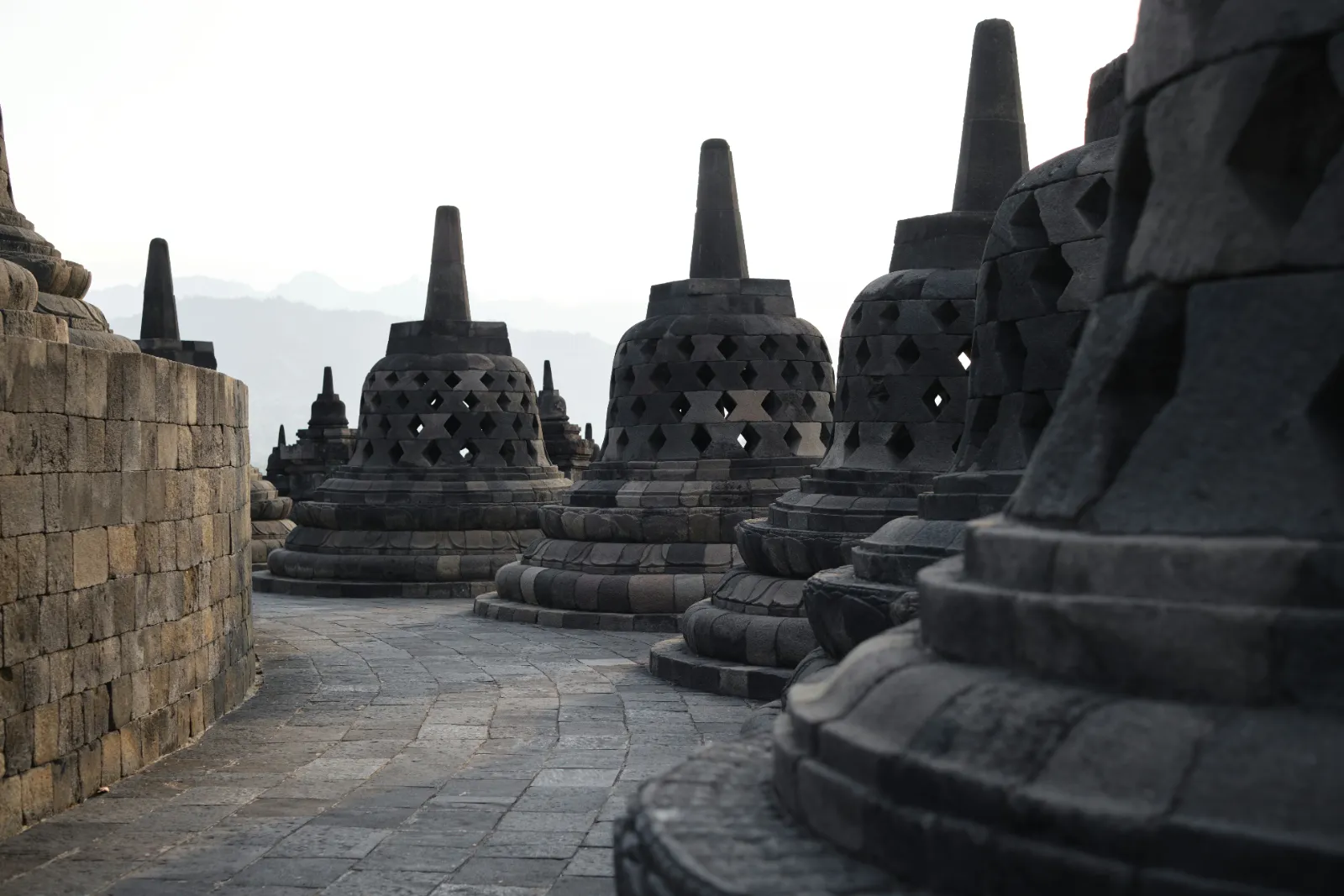
Bell shaped stone stupas on the upper terraces of Borobudur temple in Central Java

Borobudur is a vast Buddhist monument in Central Java, built in the 8th and 9th centuries under the Syailendra dynasty. It rises as five square terraces topped by three circular platforms and a great central stupa, and for Nepali Buddhists it is a moving companion to Lumbini.

  • Why it is a wonder: UNESCO inscribed the Borobudur Temple Compounds, including the smaller Mendut and Pawon temples, in 1991. UNESCO notes about 2,500 square metres of carved relief panels and 72 openwork stupas, each holding a statue of the Buddha.
  • Best season: the dry season, roughly April to October.
  • Getting there from Kathmandu: fly to Indonesia through a Southeast Asian hub, then take a domestic flight to Yogyakarta International Airport (YIA). The temple is about 44 km from the airport, roughly an hour by road.
  • Time needed: at least two hours, ideally half a day. Check the current visiting rules on the official site before you go.

Sigiriya, Sri Lanka
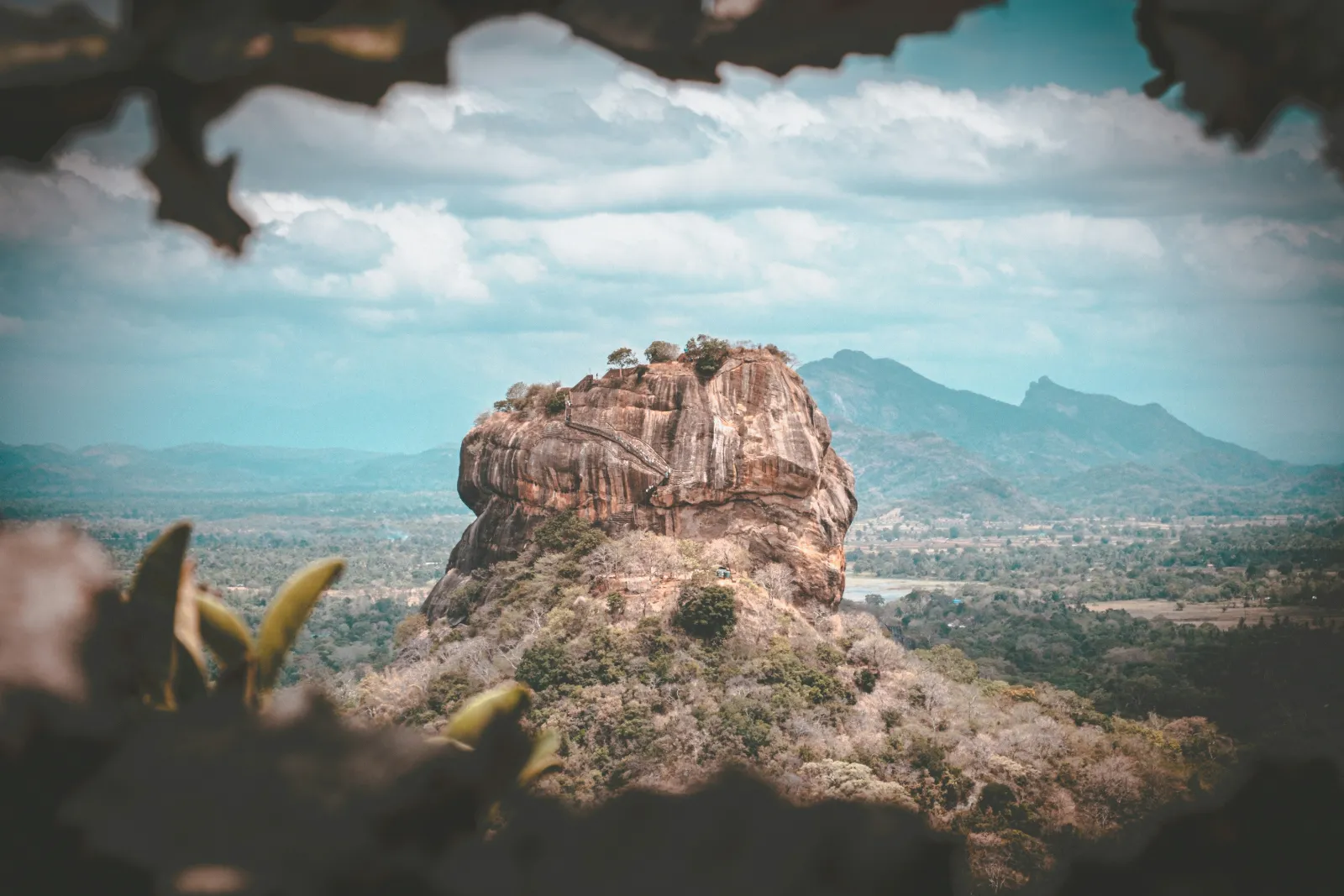
Sigiriya Lion Rock rising above the surrounding forest with distant hills in central Sri Lanka

Sigiriya is a 5th century royal citadel built on top of a granite rock that rises about 180 metres above the forests of central Sri Lanka. You climb through water gardens, past painted frescoes and between two giant lion paws to the palace ruins on the summit.

  • Why it is a wonder: UNESCO inscribed the Ancient City of Sigiriya in 1982. It was the capital of King Kassapa I, who reigned from 477 to 495 AD. The famous "Maidens of the Clouds" frescoes sit in a sheltered gallery halfway up the rock.
  • Best season: roughly February to September; October and November are the rainy months to avoid if you want clear views from the top (Responsible Travel, checked 18 Nov 2026). Climb in the cooler early morning.
  • Getting there from Kathmandu: SriLankan Airlines flies non-stop to Colombo in about 3 hours 35 minutes; from there it is a long drive inland, usually combined with Dambulla and Kandy.
  • Time needed: half a day. The climb is about 1,200 steps, so it suits reasonably fit travellers better than elderly parents.

Our guide to climbing Sigiriya Lion Rock walks through the climb stage by stage, including advice for children and older travellers.

Wat Arun, Thailand
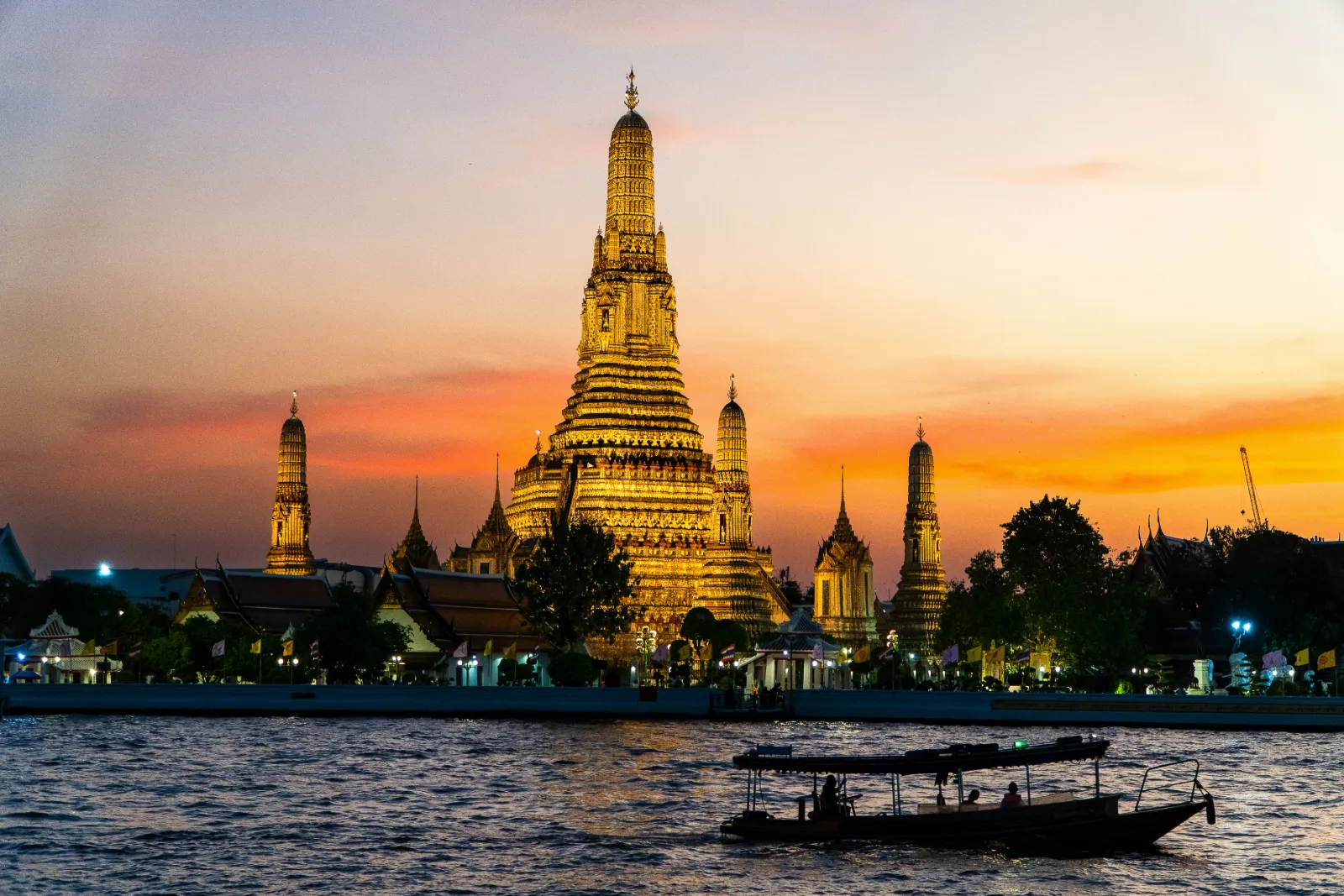
Wat Arun, the Temple of Dawn, glowing against an orange sunset in Bangkok

Wat Arun, the Temple of Dawn, stands on the west (Thonburi) bank of the Chao Phraya River in Bangkok, almost opposite Wat Pho. Its tall central prang, a Khmer-style spire covered in porcelain and seashell mosaics, is one of the most photographed temple silhouettes in Asia.

  • Why it is a wonder: Wat Arun is not on the UNESCO list or a New7Wonders list, but it is Bangkok's signature landmark and a working royal temple.
  • Best season: the cool season from November to February, which the Tourism Authority of Thailand calls the most comfortable time to travel. For photos, go at opening time or watch the sunset from the east bank.
  • Getting there from Kathmandu: Bangkok is about 3 hours 20 minutes non-stop, with Thai Airways, Nepal Airlines and Himalaya Airlines flying to Suvarnabhumi. In the city, a short cross-river ferry from Tha Tien pier brings you to the temple.
  • Time needed: one to two hours, or a morning if you pair it with Wat Pho and the Grand Palace. Covered shoulders and knees are expected.

Our Wat Arun temple guide explains the ferry, the dress code and the best light for photographs.

Terracotta Warriors, China
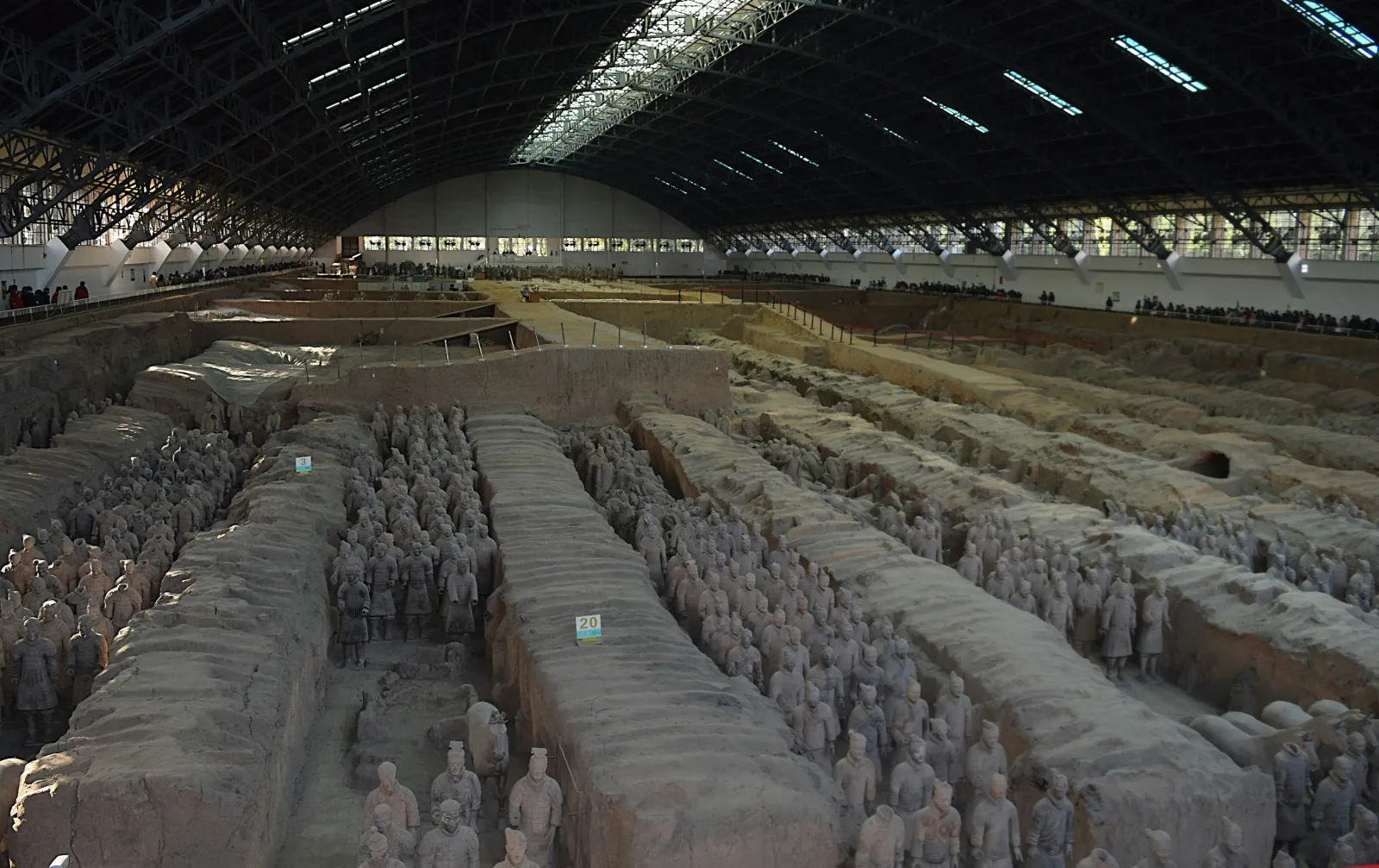
Visitors looking over the Terracotta Army trenches under the arched roof of the pit hall

The Terracotta Warriors are an army of thousands of life-size clay soldiers, horses and chariots buried beside the tomb of Qin Shi Huang, the first emperor of a unified China, who died in 210 BCE. Farmers found them while digging a well in 1974, and you now view them from walkways above the excavated pits near Xi'an.

  • Why it is a wonder: UNESCO inscribed the Mausoleum of the First Qin Emperor in 1987. Excavation is still going on, so it is an active archaeological site rather than a finished museum.
  • Best season: spring (late March to May) and autumn (September to early November) are mild; midsummer is hot and crowded with school holidays.
  • Getting there from Kathmandu: there is no non-stop flight to Xi'an. Fly to a gateway such as Chengdu, Kunming or Guangzhou and continue by high-speed train or domestic flight. The site lies outside the city, in Xi'an's Lintong district, so allow time for the road transfer.
  • Time needed: half a day for the pits and museum, and two days if you want the City Wall and Muslim Quarter too.

Our Terracotta Warriors and Xi'an guide explains what you see in each pit and how booking works.

Which other natural wonders of Asia are worth seeing?

Beyond the New7Wonders of Nature list, two natural wonders of Asia stand out for travellers from Nepal: the sandstone pillar forest of Zhangjiajie in China and the volcanic caldera of Mount Bromo in Indonesia. Both reward an early start for mist, sunrise and thinner crowds.

Zhangjiajie, China
Tall sandstone pillars rising from misty forest in Zhangjiajie, Hunan province, China

Zhangjiajie National Forest Park in Hunan province is famous for its quartz sandstone pillars rising out of subtropical forest, the peaks many people now call the "Avatar mountains".

  • Why it is a wonder: the park is part of the Wulingyuan Scenic and Historic Interest Area, a UNESCO World Heritage Site since 1992, which UNESCO says holds more than 3,000 narrow quartz sandstone pillars, many over 200 metres high.
  • Best season: April to early June and September to November, when temperatures are mild and the forest is green or turning gold. October, which often overlaps with Dashain, falls inside this window.
  • Getting there from Kathmandu: fly non-stop to a Chinese gateway city, then take a domestic flight to Zhangjiajie Hehua Airport or a high-speed train.
  • Time needed: two days inside the park, plus a day for Tianmen Mountain near the city if you have it.

Our Zhangjiajie National Forest Park guide separates the forest park from Tianmen Mountain and the glass bridge.

Mount Bromo, Indonesia
Elevated view over the Tengger caldera with smoking Mount Bromo, Batok and the Sea of Sand

Mount Bromo is an active volcano in East Java, not in Bali, rising from the floor of the huge Tengger caldera inside Bromo Tengger Semeru National Park. The classic visit is a pre-dawn drive to a rim viewpoint for sunrise over the steaming crater, then a crossing of the Sea of Sand to the crater edge.

  • Why it is a wonder: few places let you stand on a caldera rim at dawn and watch an active volcano smoke below you, with Mount Semeru, Java's highest peak, on the horizon. Bromo is not a World Heritage Site, but it lies within the Bromo Tengger Semeru Arjuno Biosphere Reserve recognised by UNESCO's Man and the Biosphere Programme in June 2015.
  • Best season: the dry season, roughly May to October, when mornings are most likely to be clear.
  • Getting there from Kathmandu: fly to Indonesia through a hub, then take a domestic flight to Surabaya or Malang (including from Bali), and transfer by road to the rim villages.
  • Time needed: one night near the rim and a sunrise start. The volcano's alert level and park access change, so check the official park status before you travel.

Our Mount Bromo sunrise guide covers the viewpoints, the crater walk and how to check whether the park is open.

Which modern landmarks of Asia stand out?

The two modern landmarks of Asia that travellers from Nepal visit most are the Burj Khalifa in Dubai and the Petronas Twin Towers in Kuala Lumpur. Neither is a heritage site, but both are engineering records you can go up, both are a single non-stop flight from Kathmandu, and both are easy wins for elderly parents and small children because lifts do all the climbing.

Burj Khalifa, Dubai
Burj Khalifa rising above the Downtown Dubai skyline under dark storm clouds

The Burj Khalifa in Downtown Dubai is the tallest building in the world at 828 metres, completed in 2010. Visitors ride high-speed lifts from The Dubai Mall to observation decks on levels 124 and 125, with a higher deck on level 148.

  • Why it is a wonder: it has held the title of the world's tallest building since it opened, and the view stretches across the city, the desert and the Gulf.
  • Best season: November to March, Dubai's cooler months. A slot just before sunset shows the city by day and by night.
  • Getting there from Kathmandu: flydubai, Himalaya Airlines and Nepal Airlines fly non-stop to Dubai in roughly four and a half to five hours. For Nepali families based in the Gulf, it is an easy outing when parents visit.
  • Time needed: about two hours including the queue and the time at the top, more if you stay for the fountain show.

Our Burj Khalifa observation deck guide explains which deck suits whom and how sunset timing works month by month.

Petronas Twin Towers, Kuala Lumpur
Petronas Twin Towers and their skybridge lit up at night in Kuala Lumpur

The Petronas Twin Towers are two 88-storey steel and glass towers in central Kuala Lumpur, about 452 metres tall and completed in 1998. A timed visit takes you to the double-decker Skybridge between the towers and then to the observation deck on level 86.

  • Why it is a wonder: the towers were the tallest buildings in the world until 2004 and are still the tallest twin towers anywhere.
  • Best season: all year, because the visit is indoors; Kuala Lumpur gets showers in every month, usually in the afternoon. Late afternoon on a weekday is the calmest slot.
  • Getting there from Kathmandu: Malaysia Airlines, Batik Air, Himalaya Airlines and Nepal Airlines fly non-stop to Kuala Lumpur in a little under five hours, and Kuala Lumpur is also a common connecting hub for Bali.
  • Time needed: one to two hours for the visit, plus time in KLCC Park for the evening fountain.

Our Petronas Twin Towers Skybridge guide covers booking, the opening days and the best photo spots.

Are there wonders in East Africa too?

Yes. Two of the world's great natural sights, Mount Kilimanjaro and the Masai Mara, can be seen on one Kenya safari, and both are reachable from Kathmandu with one connection through the Gulf. They are not in Asia, but a Dubai or Doha connection makes Kenya easy to reach from Kathmandu, so they belong on this list.

Mount Kilimanjaro, seen from Kenya
Traveller in a cap looking towards snow capped Mount Kilimanjaro from Amboseli in Kenya

Mount Kilimanjaro stands in northern Tanzania, just south of the Kenya border, but its most famous view is from Kenya's Amboseli National Park, where the snow-capped summit rises behind herds of elephants. Climbing routes all start on the Tanzanian side.

  • Why it is a wonder: Kilimanjaro is the highest mountain in Africa at 5,895 metres, according to UNESCO, and the largest free-standing volcanic mass in the world. Kilimanjaro National Park in Tanzania has been a World Heritage Site since 1987.
  • Best season: Amboseli is drier and best for wildlife from June to October and January to February, but the summit is often hidden by cloud in any month. Early morning and late afternoon give the best chance of a clear view, and the air is often clearest just after rain (SafariBookings, checked 18 Nov 2026).
  • Getting there from Kathmandu: there is no non-stop flight to Kenya. Connect through Doha, Dubai, Sharjah, Abu Dhabi, Mumbai or Istanbul to Nairobi, which makes a long travel day, then drive to Amboseli.
  • Time needed: one to two nights in Amboseli for the view. A climb is a separate, longer trip from Tanzania, and Himalayan trekkers should plan it as seriously as a high Nepal trek.

Our guide to seeing Mount Kilimanjaro from Kenya compares the Amboseli view with a climb and explains how a climb fits around a safari.

Masai Mara, Kenya
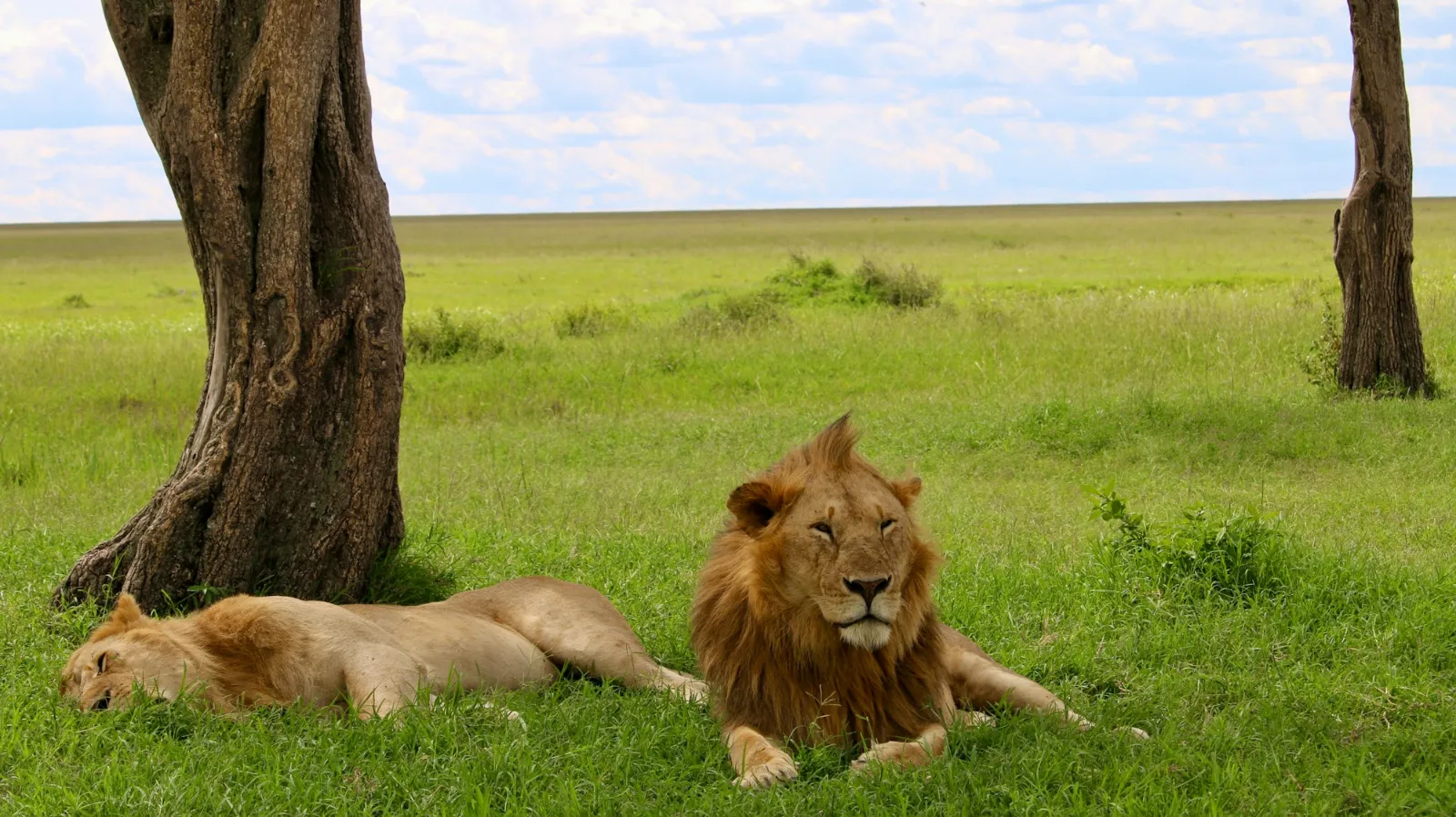
Lion and lioness resting on green grass beside a tree in the Maasai Mara, Kenya

The Maasai Mara National Reserve covers about 1,510 square kilometres of open grassland in southwest Kenya, the northern end of the Mara and Serengeti ecosystem. It is famous for big cats and for the wildebeest migration, when huge herds cross the Mara River from Tanzania.

  • Why it is a wonder: the migration is one of the largest movements of land animals on Earth, and the resident lions, cheetahs, elephants and giraffes make the reserve rewarding in any month. The Mara is not inscribed on the World Heritage List, although Tanzania's Serengeti next door is.
  • Best season: roughly July to October for the migration. Lonely Planet says it peaks in July and August, and the herds turn south again in October and November; the exact timing shifts each year with the rains.
  • Getting there from Kathmandu: connect through a Gulf hub to Nairobi, then drive to the reserve or take a light aircraft to one of the Mara airstrips.
  • Time needed: two to three nights for several game drives at dawn and dusk.

Our Masai Mara safari guide covers the migration calendar, where to stay and what you will actually see.

Which wonders can you combine in one trip?

The easiest way to see two wonders in one trip is to pick a hub you fly through anyway. Bangkok links Wat Arun with Ha Long Bay, Bali links Komodo and Mount Bromo, Beijing and Xi'an link the Great Wall with the Terracotta Warriors, and Dubai links the Burj Khalifa with a Kenya safari. The table below lists the pairings that work best from Kathmandu.

Table note: routes are based on our route guide (checked 8 Oct 2026) and FlightConnections schedule data (checked 18 Nov 2026); airlines and schedules change by season.

Trip ideaWonders you can combineHow they link from KathmanduSuits
Northern IndiaTaj Mahal with Delhi and JaipurNon-stop to Delhi, then road or rail around the Golden TriangleFirst trip abroad, elderly parents, short leave
Bangkok and northern VietnamWat Arun and Ha Long BayNon-stop to Bangkok, then a short flight to HanoiCouples, families, first-time Southeast Asia
Bali and beyondKomodo and Mount Bromo, with Borobudur for longer tripsOne stop to Bali, then short flights to Labuan Bajo and East JavaAdventurous couples, honeymooners who want more than beaches
Kuala Lumpur stopoverPetronas Twin Towers with Komodo or BaliNon-stop to Kuala Lumpur, then a direct flight to BaliFamilies who want a city break and an island
Classic ChinaGreat Wall, Terracotta Warriors and ZhangjiajieNon-stop to a Chinese gateway, then high-speed rail between citiesHistory lovers, longer holidays
Sri Lanka's Cultural TriangleSigiriya with Dambulla and KandyNon-stop to Colombo, then by road inlandFamilies, Buddhist pilgrims
Gulf and safariBurj Khalifa, Kilimanjaro view and Masai MaraNon-stop to Dubai, then a direct flight to NairobiSafari seekers, Gulf-based Nepali families
Palawan islandsPuerto Princesa Underground River with El Nido or CoronOne stop to Manila, then a domestic flight to PalawanBeach lovers, divers, honeymooners

A few practical notes from the routes above. India is the only pairing with no visa for Nepali citizens, which makes the Golden Triangle of Delhi, Agra and Jaipur the simplest wonder trip for a short Dashain break. In China, rail is usually faster door to door than flying between Beijing and Xi'an; our China high-speed rail guide explains booking and stations. In Sri Lanka, the Temple of the Tooth in Kandy adds the island's most sacred Buddhist shrine to a Sigiriya trip.

When is the best season for each?

Most wonders of Asia are at their best between October and April, which suits Nepali travellers because Dashain, Tihar and the winter school holidays all fall in that window. The main exceptions are the Indonesian sites (Komodo, Borobudur, Mount Bromo), which are best in the dry season from about April or May to October, and Sri Lanka's Sigiriya, where October and November are the wettest months to avoid.

Table note: general climate guidance for comfortable visits, drawn from official tourism boards, Rough Guides, Responsible Travel, SafariBookings, Lonely Planet and our individual landmark guides. "Dashain and Tihar fit" assumes the festivals fall between late September and mid-November, as they usually do.

LandmarkBest monthsMonths to be carefulDashain and Tihar fit
Taj MahalOctober to MarchApril to June (heat), July to September (monsoon rain)Good
Great Wall of ChinaLate April to early June, September to OctoberJuly and August (heat, crowds), winter (cold)Good, especially early in the festival window
Ha Long BaySeptember to November, and springSummer (heat, storms can stop sailings)Good
KomodoApril to December (dry season)January to March (wet season)Good, later dry season
Puerto Princesa Underground RiverNovember to MayJune to October (rough seas, cancellations)Fair; better from November
BorobudurApril to OctoberNovember to March (showers, humidity)Fair; end of the dry season
SigiriyaFebruary to SeptemberOctober and November (rainy season)Fair; expect some rain
Wat ArunNovember to FebruaryMarch to May (hottest), June to October (rainy)Good from November
Terracotta WarriorsLate March to May, September to early NovemberJuly and August (heat, school holiday crowds)Good
ZhangjiajieApril to early June, September to NovemberSummer (crowds, rain) and winter (cold)Very good
Mount BromoMay to OctoberNovember to April (rain, cloudy sunrises)Fair; rain more likely the later you go
Burj KhalifaNovember to MarchJune to September (extreme heat outdoors)Good from November
Petronas Twin TowersAll yearNone (indoor), afternoon storms any monthGood
Mount Kilimanjaro viewAny month, best at dawn and dusk; drier June to October and January to FebruaryCloud can hide the summit in any season; April is the wettest monthFair; cloud is common
Masai MaraJuly to October (migration), good all yearApril and May (long rains)Good early in the window; herds turn south again in October and November

One planning tip from experience: Dashain and Tihar are the busiest weeks for outbound travel from Kathmandu, so if your trip is tied to festival leave, choose the destination early and book flights well ahead.

Which wonders suit which traveller?

The best wonder for you depends less on fame and more on who is travelling. Elderly parents do best with lifts, boats and flat paths; trekkers and photographers want early starts and big landscapes; Buddhist pilgrims are drawn to Borobudur, Sigiriya and Kandy. Use the table below to shortlist.

TravellerBest-fit wondersWhy they workThink twice about
First trip abroadTaj Mahal, Wat Arun, Petronas Twin TowersShort non-stop flights, easy cities, simple sightseeingKomodo and Palawan, which need extra connections
Elderly parentsBurj Khalifa, Petronas Twin Towers, Ha Long Bay cruise, Taj MahalLifts to the top, seated boat sightseeing, level pathsSigiriya's steps, Bromo's cold pre-dawn start, steep Great Wall sections
Families with childrenGreat Wall at Mutianyu, Petronas Twin Towers, Terracotta Warriors, Ha Long BayCable cars, short visits, plenty to look atLong boat days in rough season
Honeymooners and couplesHa Long Bay overnight cruise, Komodo, Palawan, Burj Khalifa at sunsetScenery, privacy and memorable eveningsPeak-season crowds at the Taj Mahal at midday
Trekkers and active travellersSigiriya, Mount Bromo, Zhangjiajie, KilimanjaroClimbs, crater walks and long trailsTreating Kilimanjaro as a casual walk; it needs real altitude planning
Buddhist pilgrimsBorobudur, Sigiriya with Kandy, Wat ArunMajor Buddhist monuments and living templesVisiting during heavy rain, which limits the outdoor terraces
Wildlife loversKomodo, Masai Mara, Amboseli for KilimanjaroDragons, big cats, elephants and the migrationGoing outside the right season for the animals you want
Gulf and Malaysia based Nepali familiesBurj Khalifa, Petronas Twin Towers, Masai Mara from DubaiClose to home base, easy to host visiting parentsSummer heat in the Gulf for outdoor add-ons

How we built this list: we kept the New7Wonders winners that are realistic from Kathmandu, then added the best-known landmarks in the countries with direct or one-stop flights from Kathmandu. UNESCO years come from the World Heritage Centre's own list and wonder status from new7wonders.com; if either changes, we update the page and the "Checked" date together.

Frequently asked questions

What are the wonders of Asia?

The wonders of Asia usually means the Asian winners of the New7Wonders votes (the Great Wall, the Taj Mahal and Petra; Ha Long Bay, Komodo, the Puerto Princesa Underground River and Jeju Island) plus famous landmarks such as Borobudur, Sigiriya, Angkor Wat, the Terracotta Warriors, the Burj Khalifa and Mount Everest. There is no single official list.

Which of the 7 wonders are in Asia?

Three of the New 7 Wonders of the World are in Asia: the Great Wall of China, the Taj Mahal in India and Petra in Jordan, in West Asia. They were chosen in a global public vote announced in Lisbon on 7 July 2007. The other four winners are in Italy, Mexico, Peru and Brazil.

Is the Taj Mahal one of the 7 wonders?

Yes. The Taj Mahal in Agra was named one of the New 7 Wonders of the World in the 2007 popular vote run by the New7Wonders Foundation. Separately, UNESCO inscribed the Taj Mahal on the World Heritage List in 1983, which is the official heritage recognition.

Is the Great Wall one of the 7 wonders?

Yes. The Great Wall of China is one of the New 7 Wonders of the World from the 2007 vote. It has also been a UNESCO World Heritage Site since 1987, inscribed under five of UNESCO's ten selection criteria.

Is Ha Long Bay a wonder of the world?

Ha Long Bay in Vietnam is one of the New7Wonders of Nature, confirmed on 30 March 2012 after the 2011 public vote. It is not one of the New 7 Wonders of the World, which are monuments. UNESCO has listed Ha Long Bay since 1994 and expanded the site to include the Cat Ba Archipelago in 2023.

Is Komodo a natural wonder?

Yes. Komodo in Indonesia was confirmed as one of the New7Wonders of Nature on 16 May 2012. Komodo National Park has also been a UNESCO World Heritage Site since 1991, mainly to protect the Komodo dragon, the largest living lizard, which lives in the wild only on a few Indonesian islands.

Which wonder is closest to Nepal?

The Taj Mahal is the closest famous wonder to Nepal. From Kathmandu, a non-stop flight to Delhi takes about two hours, then Agra is a road or train journey away, and you can also go overland across the open border. Nepal's own Everest and Lumbini are, of course, closer still.

Can I see two wonders in one trip?

Yes. From Nepal the easiest pairings are Wat Arun and Ha Long Bay via Bangkok, the Great Wall and the Terracotta Warriors by high-speed rail in China, Komodo and Mount Bromo from Bali, and the Burj Khalifa with a Kenya safari via Dubai. Plan around one hub city you fly through anyway.

Which wonders are good for elderly parents?

For elderly parents travelling from Nepal, the Burj Khalifa and the Petronas Twin Towers are the easiest wonders, because lifts do all the climbing. A Ha Long Bay overnight cruise and an early morning at the Taj Mahal also work well. Sigiriya's roughly 1,200 steps and Mount Bromo's cold pre-dawn start are harder.

Are the New 7 Wonders chosen by UNESCO?

No. Both the New 7 Wonders of the World (2007) and the New7Wonders of Nature (2011) were popular votes run by the private New7Wonders Foundation. UNESCO said in 2007 that there is no link between its World Heritage programme and the campaign. UNESCO's own recognition is the World Heritage List.

Asia ka prasiddha thau kun kun hun?

Asia ka sabai bhanda prasiddha thau haru ma India ko Taj Mahal, China ko Great Wall, Vietnam ko Ha Long Bay, Indonesia ko Komodo ra Borobudur, Sri Lanka ko Sigiriya, Thailand ko Wat Arun, Dubai ko Burj Khalifa ra Malaysia ko Petronas Twin Towers parchhan. Nepal ma nai Everest ra Lumbini chhan.

Tags
NepalWonders of the World
Share
G
Gomayu Team
Writer at Gomayu
Keep reading