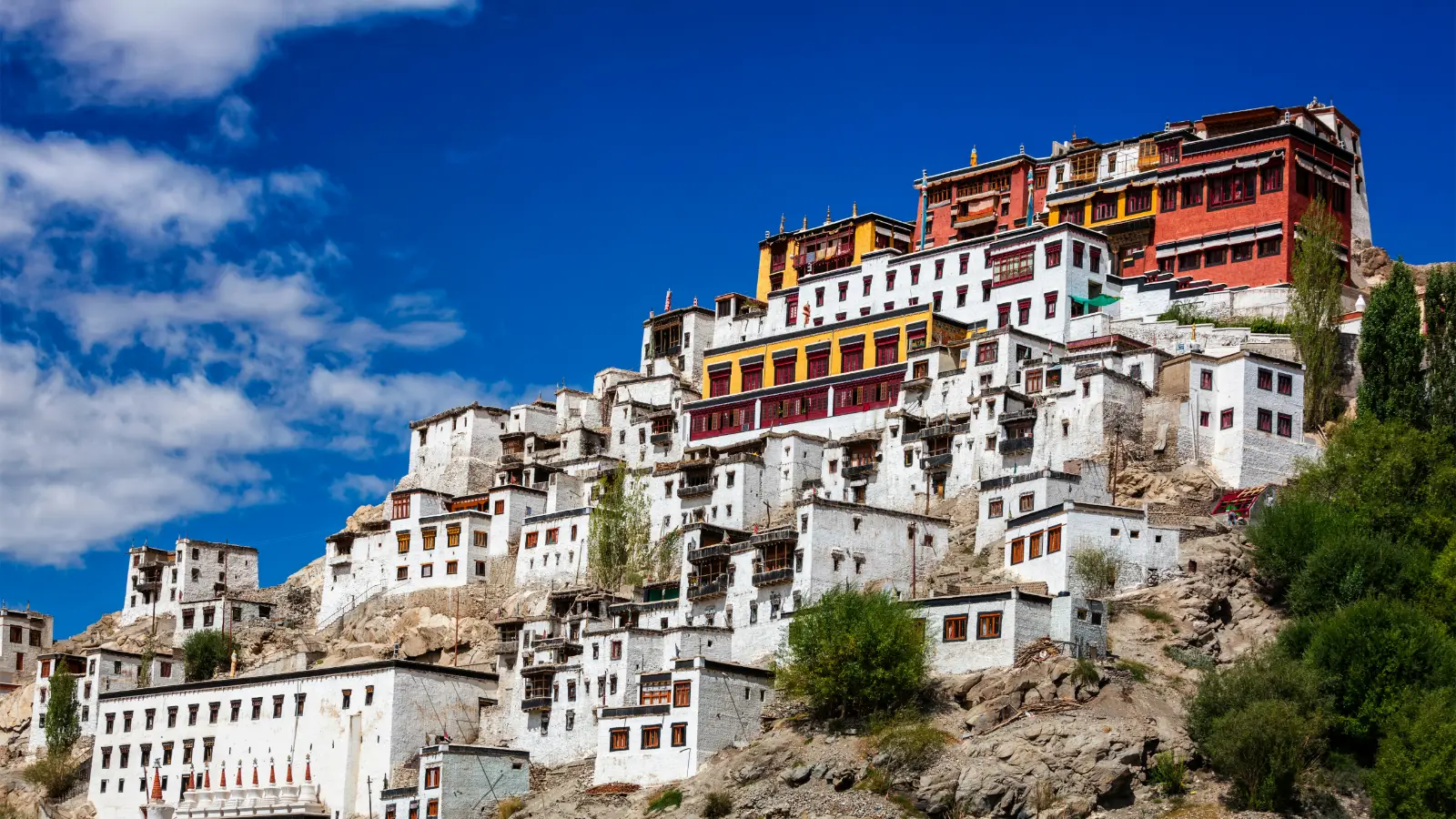










































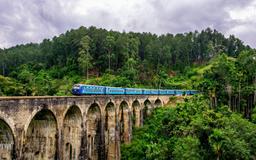
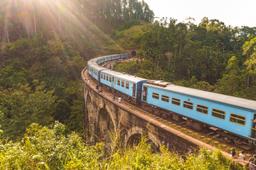
























Short answer: The Darjeeling tourist places most visitors plan around are the Tiger Hill sunrise over Kanchenjunga, a ride on the UNESCO-listed Darjeeling Himalayan Railway toy train through Batasia Loop to Ghum, and the tea estates such as Happy Valley, with Chowrasta, the Peace Pagoda, Ghum Monastery, the Himalayan Mountaineering Institute and the high-altitude zoo filling the rest of a two to four night stay. From Nepal, Darjeeling is one of the easiest trips abroad: cross the Mechi river at Kakarbhitta to Panitanki, or fly Kathmandu to Bhadrapur first, then drive up through Siliguri. For the clearest mountain views, go in October and November or from March to May.
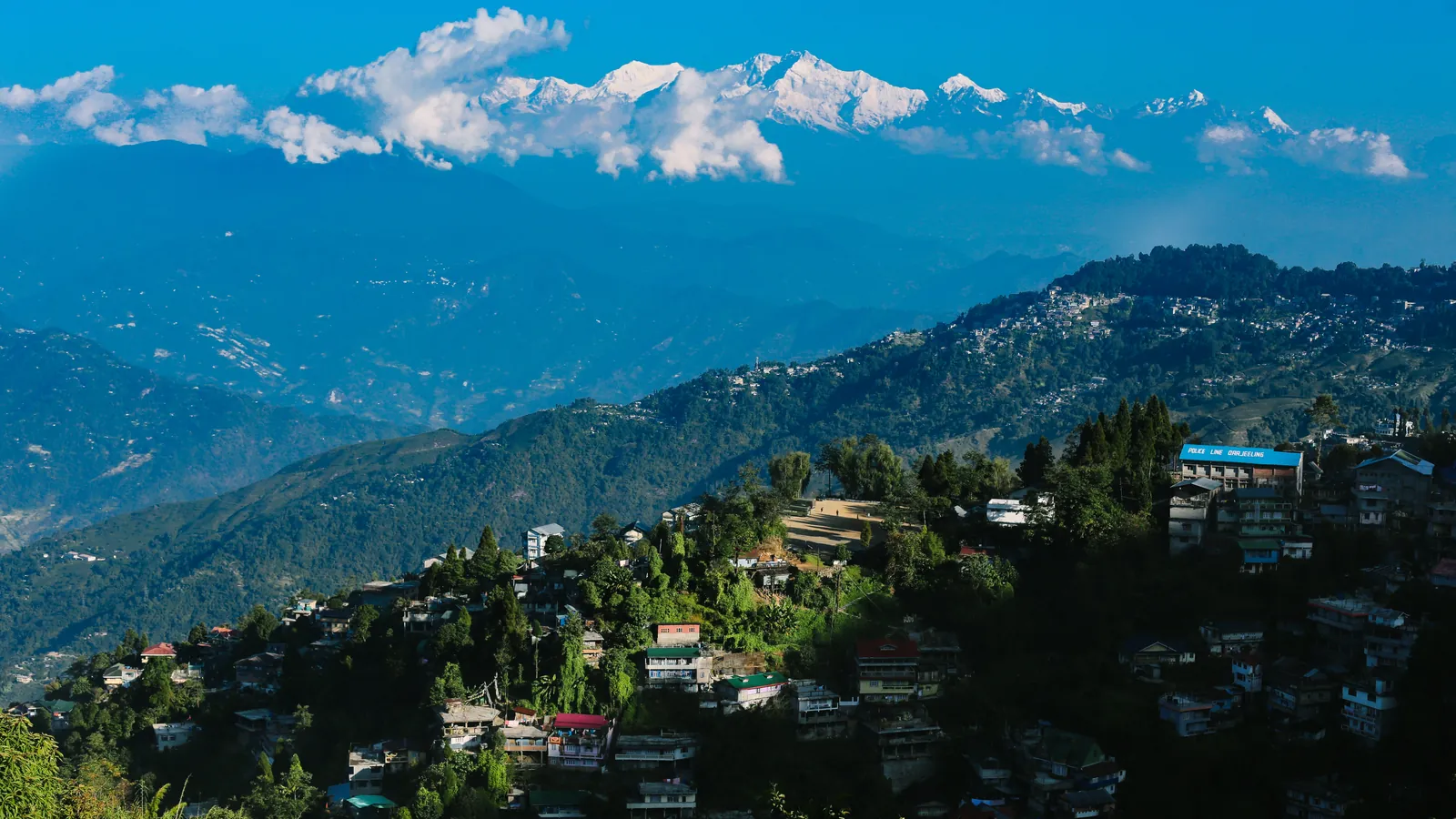
Darjeeling sits on a ridge at an average height of about 2,045 m in the hills of West Bengal, India, looking straight across at Kanchenjunga (8,586 m), the third highest mountain on earth. It is a former British hill station, a tea name known worldwide, and, for many travellers from Nepal, a place that feels surprisingly familiar: Nepali is spoken everywhere, the food is momo, thukpa and sel roti, and the festivals are Dashain, Tihar and Losar. This guide covers what to see, how the toy train and Tiger Hill actually work, the best months for Kanchenjunga, and the routes from Kathmandu and eastern Nepal. If you are planning a wider trip, our complete India travel guide covers the country as a whole.
| Darjeeling at a glance | Details |
|---|---|
| Location | Darjeeling district, West Bengal, India, close to the Nepal and Sikkim borders |
| Altitude | About 2,045 m average (town); Ghum station 2,258 m; Tiger Hill about 2,590 m |
| Signature sights | Tiger Hill sunrise, toy train and Batasia Loop, tea estates, Chowrasta, Peace Pagoda, Ghum Monastery, HMI and zoo |
| Main languages | Nepali (official in the hill areas alongside Bengali), Hindi, English, Tibetan and Lepcha in some communities |
| Nearest airport | Bagdogra (IXB), about 76 to 90 km by road |
| Nearest main railway | New Jalpaiguri (NJP) and Siliguri |
| Nearest Nepal border | Kakarbhitta (Nepal) to Panitanki (India) over the Mechi river |
| Time | India Standard Time, 15 minutes behind Nepal |
| Currency | Indian rupee (INR) |
| Best months for views | October to early December, and March to May |
Why visit Darjeeling?
Darjeeling is worth visiting for three things you cannot easily get together anywhere else: a sunrise view of Kanchenjunga, a working 19th century mountain railway, and tea gardens that produce one of the world's best known teas. Add a cool climate, colonial era streets and a strong Gorkha and Buddhist culture, and it suits families, couples, older parents and first time travellers abroad.
The town grew quickly in the 19th century. British officials identified the ridge as a possible sanatorium in 1829, the East India Company leased the land from the Chogyal of Sikkim in 1835, and Darjeeling became a municipality in 1850. Within a few decades it was a well known hill station, and the tea planters and the railway followed.
A hill town that feels close to home for Nepali travellers
For visitors from Nepal, the biggest surprise is how little feels foreign. Nepali is the everyday language of the Darjeeling hills. The West Bengal Official Language Act of 1961 recognised Nepali for official use in the Nepali speaking hill areas, and Nepali was added to the Eighth Schedule of India's Constitution in 1992. A golden statue of the Nepali poet Bhanubhakta Acharya stands on the north side of Chowrasta, the town square, and the Batasia Loop memorial honours Gorkha soldiers of the Indian Army.
Local government in the hills runs through the Gorkhaland Territorial Administration (GTA), set up in 2012 with limited autonomy within West Bengal. You do not need to know any of this to enjoy the trip, but it explains why signs, songs, food and festivals will feel familiar to anyone from Ilam, Jhapa, Dharan or Kathmandu.
Who Darjeeling suits best
- Families with children: the toy train, the zoo and the mountaineering museum are easy wins, and the town is walkable around Chowrasta.
- Couples and honeymooners: misty mornings, heritage hotels, tea estate stays and sunrise views give it a slow, romantic pace.
- Older parents: no long flights are needed from eastern Nepal, and the language barrier is small. The hill roads and early starts are the main effort.
- Diaspora visiting Nepal: a short add-on from Jhapa or Kathmandu, especially in October and November when the views are at their best.
- Global travellers: a classic Himalayan hill station that pairs well with Sikkim, Kolkata or a wider eastern India trip.
How do you get to Darjeeling from Nepal?
From Nepal, most people reach Darjeeling by road through the Kakarbhitta (Mechi) to Panitanki border crossing, then on through Siliguri or Bagdogra and up the hill road. From Kathmandu, the fastest practical way is usually a short domestic flight to Bhadrapur in Jhapa, a road transfer to Kakarbhitta, the border crossing, and then about three to four hours of driving to Darjeeling.
Darjeeling has no airport and no mainline railway station of its own. Everyone, whether coming from Nepal, Kolkata, Delhi or abroad, arrives in the plains around Siliguri first. That makes the Nepal approach unusually convenient, because Kakarbhitta sits right next to the Siliguri plains.
From Nepal via Kakarbhitta (Mechi) / Panitanki and Bagdogra
Kakarbhitta, in Mechinagar municipality of Jhapa district, is the eastern end of Nepal's Mahendra (East West) Highway. The bridge over the Mechi river leads to Panitanki in Darjeeling district, India. From Panitanki the road runs east across the plains to Bagdogra and Siliguri, then climbs to Darjeeling. Bagdogra airport is only about 21 km from Kakarbhitta, so the border, the airport and Siliguri are all within roughly an hour of each other in normal traffic.
| Route from Nepal | How it works | Approximate time | Best for |
|---|---|---|---|
| Fly Kathmandu to Bhadrapur, then road via Kakarbhitta | Domestic flight (Buddha Air and Yeti Airlines list this route), taxi to the border, cross at Kakarbhitta and Panitanki, drive via Siliguri | About 45 minutes in the air, about 30 to 45 minutes to the border, then about 4 hours to Darjeeling including the plains | Most travellers from Kathmandu, families, older parents |
| Overnight bus Kathmandu to Kakarbhitta | Long distance bus along the highway, cross on foot or by rickshaw, onward taxi or shared jeep | A long overnight ride, often well over 12 hours to Kakarbhitta, plus about 4 hours onward | Budget travellers with time |
| From Jhapa, Ilam, Morang or Sunsari by road | Drive or bus to Kakarbhitta, then the same onward route | Depends on your town; from Kakarbhitta about 4 hours to Darjeeling | Travellers from eastern Nepal |
| Via Bagdogra airport (IXB) | Fly into Bagdogra from Indian cities such as Delhi or Kolkata, then road | About 3 hours by road from Bagdogra to Darjeeling | Diaspora and global travellers arriving through India |
| Via New Jalpaiguri (NJP) railway station | Indian Railways trains from Kolkata, Delhi or Guwahati to NJP, then road or the toy train | About 3 hours by road; about 7 hours 30 minutes by toy train when it runs | Rail travellers inside India |
Checked: 27 Oct 2026, FlightStats (Yeti Airlines Kathmandu to Bhadrapur, about 45 minutes scheduled), Darjeeling district administration (darjeeling.gov.in) and darjeeling-tourism.com for road distances. Road times are typical daytime times and stretch badly in fog, rain or holiday traffic.
One thing that often confuses diaspora travellers: as far as we could confirm, there is no regular nonstop flight from Kathmandu to Bagdogra. Our list of nonstop flights from Kathmandu (checked 8 Oct 2026) shows Indian routes to Delhi, Kolkata, Varanasi, Mumbai and Bengaluru, but not Bagdogra. Flying from Kathmandu into Bagdogra means a connection through an Indian city, which is rarely quicker than Bhadrapur and the border.
Border to Darjeeling: the legs and the timings
| Leg | Approximate distance | Approximate time | Notes |
|---|---|---|---|
| Bhadrapur airport to Kakarbhitta | About 18 to 21 km | 30 to 45 minutes | Taxis wait for flights |
| Kakarbhitta to Panitanki (Mechi bridge) | The bridge itself | Usually quick on foot or by rickshaw | Allow extra time for third country nationals, who need immigration stamps on both sides |
| Panitanki to Bagdogra or Siliguri | About 20 to 35 km | About 45 minutes to 1 hour | Flat plains road; traffic heavy in Siliguri |
| Siliguri to Darjeeling | About 63 to 80 km depending on the road | About 2 hours 30 minutes to 3 hours 30 minutes | Hill Cart Road (NH 110) via Kurseong, or the Rohini road; Mirik road is longer |
| Bagdogra airport to Darjeeling | About 76 to 90 km | About 3 hours | Prepaid taxis at the airport |
| Kakarbhitta to Darjeeling (total) | Roughly 85 to 110 km, depending on the road | About 3 hours 30 minutes to 5 hours | Start early; avoid driving the hills after dark |
The district administration lists four road routes from Siliguri up to Darjeeling: via Tindharia and Kurseong (the Hill Cart Road, which the toy train follows), via Dudhia and Mirik, via Rohini, and via Pankhabari. If one is blocked by a landslide or repairs, traffic is diverted to another, so ask your driver which road is open that day. Shared jeeps and buses run mainly in daylight; local advice is to avoid the hill roads at night because of fog.
Identity, visas and border tips
Nepali citizens coming from Nepal, by land or by air, need neither a passport nor an Indian visa, but must carry a government approved document that proves Nepali nationality and carries a photograph; a passport is required if you enter or leave India to or from a third country. For flights, the Embassy of Nepal in New Delhi names a passport or a Nepali citizenship certificate. Checked: 27 Oct 2026, Bureau of Immigration, India.
Travellers of other nationalities need a valid Indian visa, and should check the Indian visa rules for their passport, including whether their visa type allows entry at a land crossing, before planning the Kakarbhitta route. See our India visa guidance. Third country nationals also need to complete Nepal exit formalities at the Kakarbhitta immigration office and Indian entry formalities at Panitanki; India reopened its eastern land crossings to third country tourists in 2024 after a Covid era closure.
- Money: you will spend Indian rupees. For Nepali citizens, Nepal Rastra Bank rules reissued in July 2026 allow INR 200 and INR 500 notes (issued after November 2016) up to INR 25,000 per person, while INR 2,000 notes remain barred. Details are in our guide to foreign currency limits from Nepal (checked 8 Oct 2026, NRB).
- Time: set your watch back 15 minutes when you cross into India.
- Timing: aim to cross in the morning so you reach Darjeeling before dark.
For trains, taxis and domestic flights once you are in India, see our guide on getting around India by train, flight and car.
Is the Tiger Hill sunrise worth it?
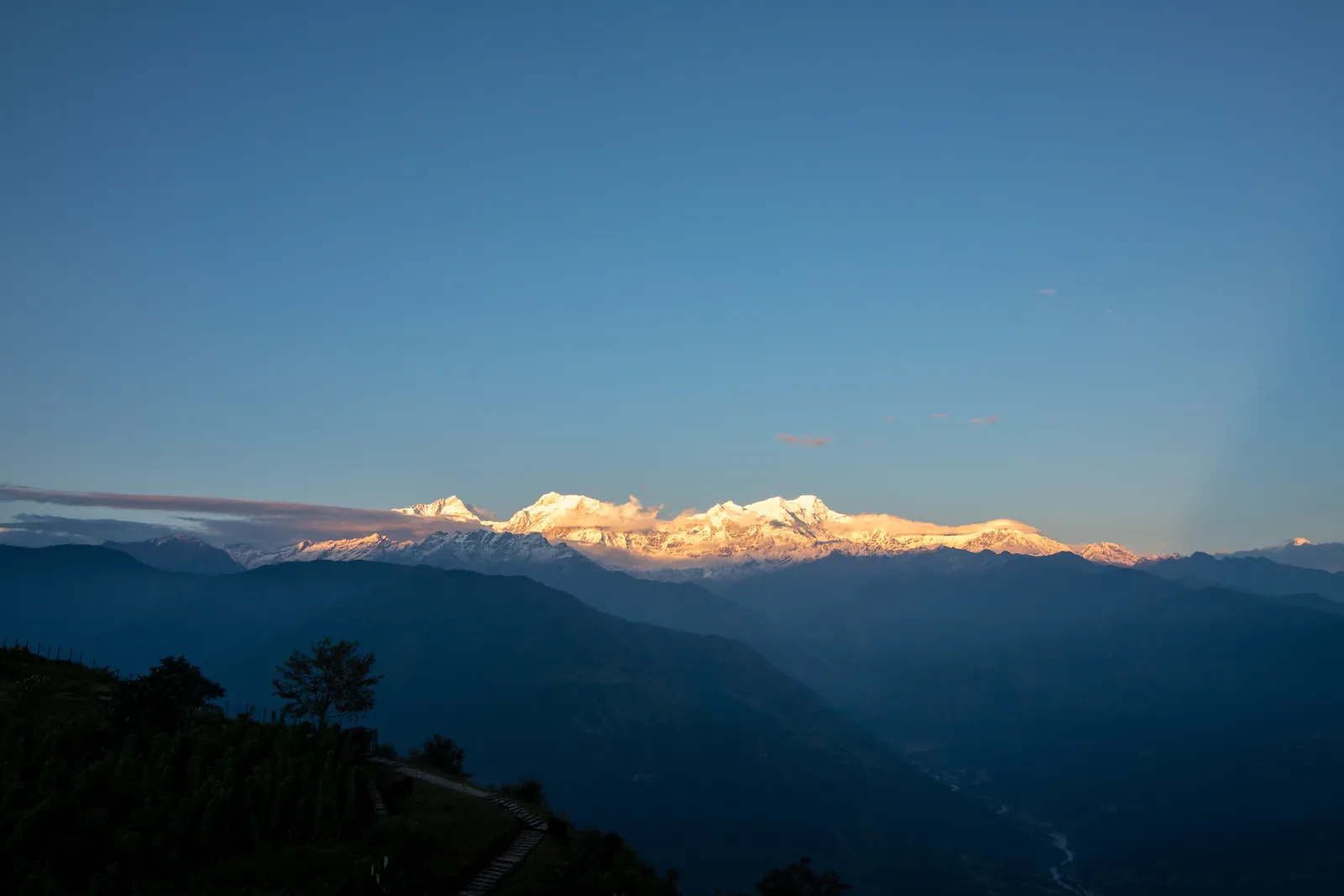
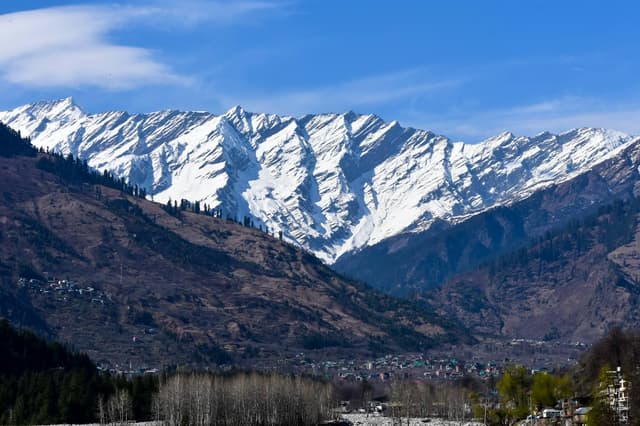
Yes, on a clear morning the Tiger Hill sunrise is the single most memorable thing to do in Darjeeling: the snows of Kanchenjunga turn pink and then gold while the valleys below are still dark, and on the best days you can pick out Everest, Makalu and Lhotse far to the west. The trade off is a very early start, cold air, crowds in peak season and no guarantee of a clear sky.
Tiger Hill stands at about 2,590 m, roughly 11 km from Darjeeling town above Ghum, next to Senchal Wildlife Sanctuary. Because Kanchenjunga is much closer than Everest, it looks far bigger; Everest is about 172 km away in a straight line and appears as a small peak on the horizon.
How a Tiger Hill morning works
- Start time: drivers usually leave Darjeeling about 90 minutes before sunrise, so roughly 3:00 am in early summer and around 4:15 to 4:45 am in midwinter (see the table below).
- Vehicle passes: since September 2019 the local police have capped the number of vehicles allowed up each morning, with coupons issued to taxi drivers the day before. Self driven private and rental cars are not allowed under the current local arrangement, so book a taxi or a seat in a shared jeep the day before.
- The walk: in peak season you may park well below the top and walk up a kilometre or more in the dark. Carry a torch.
- Viewing areas: there is an observation building with paid seating on several levels, plus open ground beside it. Facilities and charges change, so check on the day.
- The return: most taxis stop at Ghum Monastery and Batasia Loop on the way back down, which makes a neat morning loop.
Checked: 27 Oct 2026, darjeeling-tourism.com and The Telegraph (2019 report on the Tiger Hill vehicle cap). Rules on vehicle numbers and timings are set locally and can change, so confirm with your hotel or driver.
What time is sunrise at Tiger Hill?
| Month (around the 15th) | Approximate sunrise (our calculation, IST) | Typical departure from Darjeeling | Chance of a clear view |
|---|---|---|---|
| January | About 6:30 am | About 4:45 am | Good but often hazy or foggy |
| February | About 6:15 am | About 4:30 am | Fair to good |
| March | About 5:50 am | About 4:00 am | Good early in the month, haze builds |
| April | About 5:15 am | About 3:30 am | Fair; spring haze common |
| May | About 4:50 am | About 3:00 am | Fair; pre monsoon clouds |
| June | About 4:40 am | About 3:00 am | Poor; monsoon arrives |
| July | About 4:50 am | About 3:00 am | Very poor |
| August | About 5:10 am | About 3:30 am | Very poor |
| September | About 5:20 am | About 3:45 am | Poor, improving late in the month |
| October | About 5:35 am | About 4:00 am | Good, best after the rains clear |
| November | About 5:55 am | About 4:15 am | Very good, usually the clearest month |
| December | About 6:20 am | About 4:30 am | Very good, but very cold |
These sunrise times are approximate: they are our own calculation for Darjeeling in India Standard Time using the standard NOAA solar formula, rounded to the nearest 5 minutes, not an official timetable. The sun can appear a few minutes earlier or later at Tiger Hill depending on altitude, the horizon and haze. The snow peaks catch the light a few minutes before the sun itself appears, so be in position at least 20 to 30 minutes early. If you are setting alarms on a Nepali phone that has not switched networks, remember India is 15 minutes behind Nepal.
Tips for older parents and children
- Wear layers, a warm hat and gloves even in October; pre dawn temperatures at Tiger Hill are several degrees colder than in town.
- If a parent finds the walk hard, ask the driver to drop you as close as the traffic police allow, and consider the free open ground rather than climbing stairs.
- On a cloudy forecast, skip it. You can see Kanchenjunga from Chowrasta, Observatory Hill and Batasia Loop on clear mornings without the 3:30 am start.
How do you ride the Darjeeling Himalayan Railway toy train?
Most visitors ride the toy train as a short "joyride" from Darjeeling to Ghum and back, which takes about 1 hour 45 minutes to 2 hours with stops at Batasia Loop and the Ghum railway museum. The full line from New Jalpaiguri (NJP) to Darjeeling is a long day, about 7 hours 30 minutes by the timetable, and is suspended at times after landslides, so treat it as a special experience rather than transport.
The Darjeeling Himalayan Railway (DHR) was built between 1879 and 1881 and reached Darjeeling on 4 July 1881. UNESCO inscribed it as a World Heritage Site in 1999, and later extended the listing as the "Mountain Railways of India" to add the Nilgiri Mountain Railway (2005) and the Kalka Shimla Railway (2008). The narrow 2 foot (610 mm) gauge line runs 88.48 km from NJP to Darjeeling and climbs through six zigzag reverses and three loops to Ghum, at 2,258 m the highest station on the line and often described as the highest railway station in India. It is run by Northeast Frontier Railway, part of Indian Railways.
Checked: 27 Oct 2026, UNESCO World Heritage Centre, Mountain Railways of India.
Which toy train services can you ride?
| Service | Route | Approximate duration | Traction | Status note |
|---|---|---|---|---|
| Joyride (regular) | Darjeeling to Ghum and back, halts at Batasia Loop and Ghum museum | About 1 hour 45 minutes to 2 hours | Steam or diesel, depending on the departure | Runs daily; DHR reported 13 joyrides a day in June 2026, and nine regular joyrides plus four new services (13 in all) for October 2026 to January 2027 |
| Festival special joyrides | Four one way Darjeeling to Ghum runs, plus two Kurseong to Mahanadi round trips ("Red Panda" and "Mukta Dhara") | Varies | Diesel on Darjeeling to Ghum; Red Panda steam, Mukta Dhara diesel | Announced in September 2026 to run from 1 October 2026 to 3 January 2027 |
| Evening joyride | Darjeeling to Ghum, departing around 5:45 pm, back by about 7 pm | About 1 hour 15 minutes | Steam and diesel planned | Announced as planned in June 2026; we could not confirm it started, so check before planning around it |
| NJP to Darjeeling passenger (52541) and return (52540) | Full line via Siliguri Junction, Sukna, Tindharia, Kurseong, Sonada and Ghum | About 7 hours 30 minutes (timetable departure NJP 10:10, arrival Darjeeling 17:40) | Diesel | Timetabled, but suspended at times after landslides; for example from 5 July to 17 November 2024 |
Checked: 27 Oct 2026, ETV Bharat (June and September 2026 DHR reports), Outlook Traveller (September 2026), the etrain.info timetable for 52541 and Curly Tales (2024 suspension). We could not confirm today's running status of the NJP to Darjeeling train from an official page; check the National Train Enquiry System (NTES) or IRCTC before you travel.
Booking tips
- Book early: joyrides sell out in Puja, Dashain and Tihar holidays, Christmas and summer school holidays. DHR reported in 2026 that many seats were booked nearly two months ahead.
- Where to book: on IRCTC (the joyride is listed from DJ, Darjeeling, to DJRZ, Darjeeling Joyride), at Indian Railways reservation counters, or at Darjeeling station. Booking normally opens up to 60 days ahead.
- Steam or diesel: the train name tells you which. Steam is slower, smokier and far more photogenic; diesel is easier to book.
- Short on time? Do the joyride and then drive the Hill Cart Road down to Siliguri; you will see the line criss cross the road many times.
Batasia Loop
Batasia Loop, about 5 km from Darjeeling just below Ghum, is a spiral where the track circles a small hill and passes over itself to ease the gradient. It was commissioned in 1919. The garden in the middle holds a war memorial to Gorkha soldiers of the Indian Army who died after Indian independence in 1947, and on a clear day Kanchenjunga rises behind it. Joyrides stop here for photos, and taxis on the Tiger Hill run usually stop on the way back.
Which tea gardens can you visit?
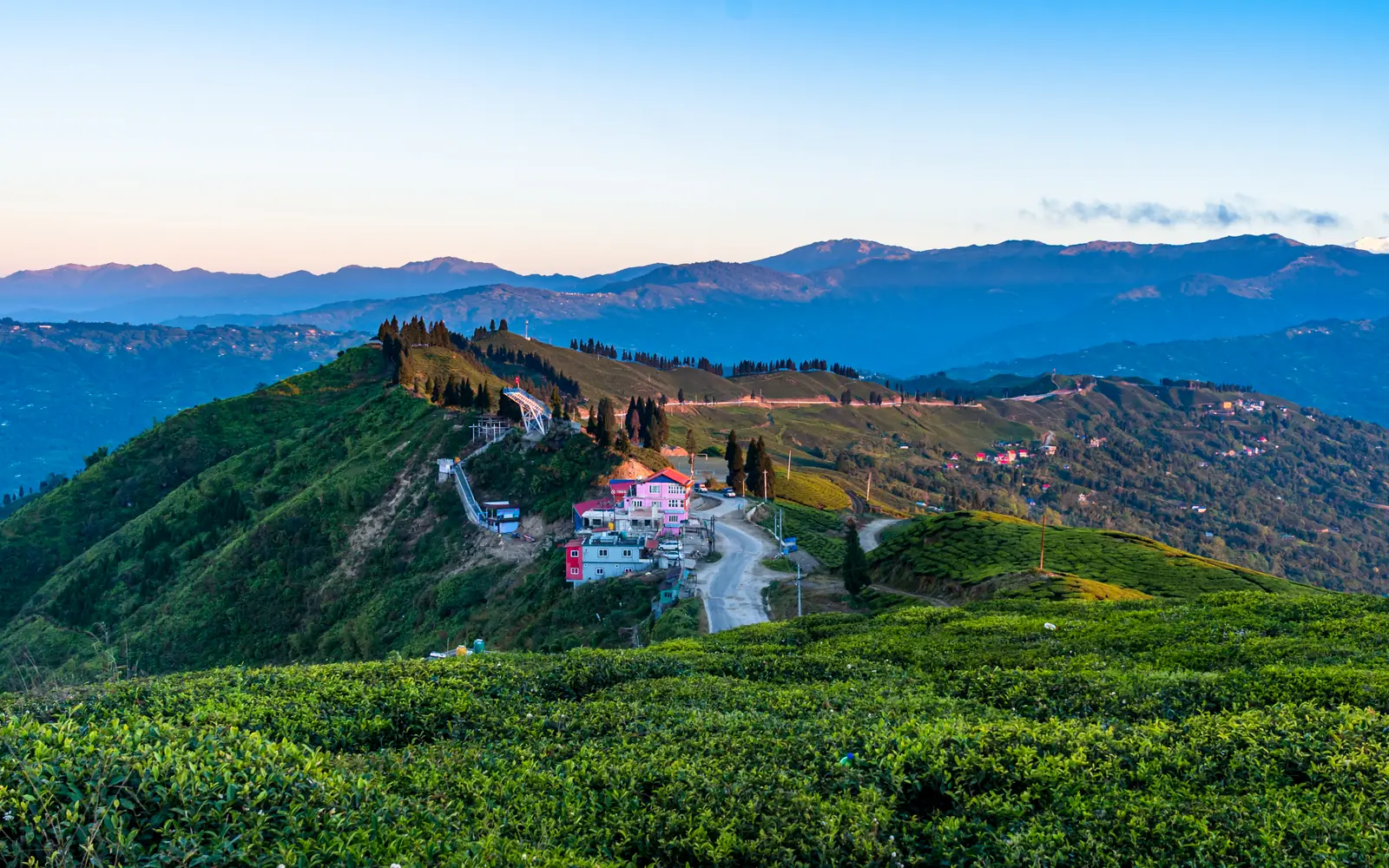
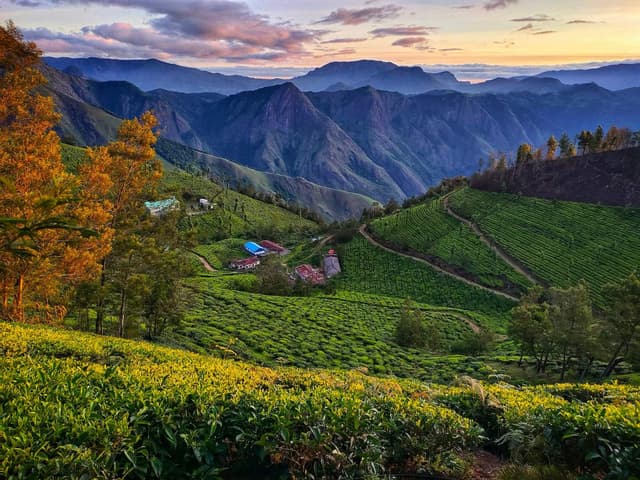
The easiest tea garden to visit from town is Happy Valley Tea Estate, established in 1854 and about 3 km north of Darjeeling, where you can walk among the bushes and see the old factory, which now works as a museum. Beyond town, estates around Kurseong, Mirik and Ghum offer walks, tastings and, in some cases, overnight stays.
Darjeeling tea was the first product registered under India's Geographical Indications Act, in 2004, and only tea grown in the registered gardens of the Darjeeling hills (around 87 gardens are registered with the Tea Board of India) can legally carry the Darjeeling name and logo. The gardens spread across the Darjeeling Sadar, Kurseong and Kalimpong hill areas.
Tea seasons ("flushes") and what you will see
| Flush | Approximate months | Tea character | What a visit looks like |
|---|---|---|---|
| First flush (spring) | Late February to April | Light, bright, floral; the most prized | Fresh green bushes, pluckers at work, factories busy |
| Second flush (summer) | May and June | Fuller body, the famous "muscatel" notes | Busy plucking season, pleasant but hazier views |
| Monsoon flush | July to September | Stronger, often used in blends | Lush but wet; road access can be disrupted |
| Autumn flush | October and November | Rounded, mellow | Clear skies, mountain backdrops, good photography |
| Dormant season | Roughly December to February | Little or no plucking | Gardens are quiet; factories may not be processing |
Checked: 27 Oct 2026, Tea Board of India presentation via FAO. Exact flush dates shift with the weather each year.
Making the most of a tea garden visit
- Go on a weekday morning in the plucking season if you want to see the factory working; processing does not run every day.
- Wear shoes with grip: garden paths are steep and slippery after rain.
- Ask before photographing workers. Many pluckers are women from local Nepali speaking families, and a friendly "namaste" in Nepali goes a long way.
- Tea estate stays near Kurseong and on the Darjeeling slopes are popular with honeymooners who want quiet mornings rather than town bustle.
- Check opening times locally: visitor hours at estates and factory museums change by season.
Which other Darjeeling tourist places should you see?
Beyond Tiger Hill, the toy train and the tea gardens, the best things to see in Darjeeling are Chowrasta and the Mall, the Peace Pagoda, Ghum Monastery, the Himalayan Mountaineering Institute and the Padmaja Naidu Himalayan Zoological Park next to it. Most of these fit into two relaxed days, and several combine naturally with the Tiger Hill morning.
| Place | What it is | Why go | Good for |
|---|---|---|---|
| Chowrasta and the Mall | Vehicle free town square on the ridge at about 2,134 m, with Mall Road looping round Observatory Hill | Mountain views on clear days, strolling, cafes, the Bhanubhakta Acharya statue | Everyone; evenings |
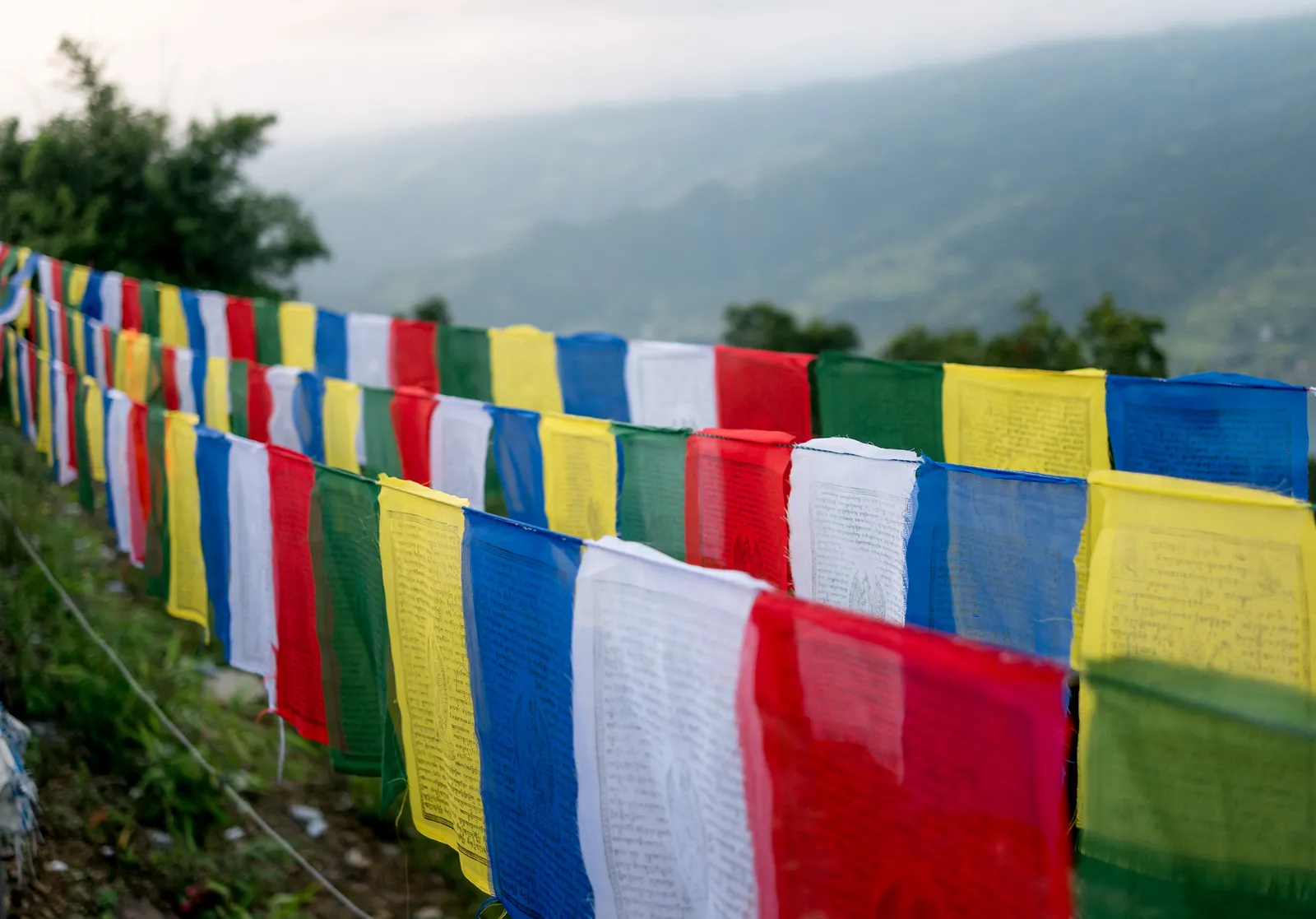
| Observatory Hill and Mahakal Temple | Small hilltop shrine above Chowrasta | Prayer flags, views, a shrine visited by Hindus and Buddhists alike | Pilgrims, photographers |
| Peace Pagoda (Japanese Peace Pagoda) | White stupa on the Jalapahar slopes, inaugurated 1 November 1992, 28.5 m tall, with four avatars of the Buddha | Calm, views of the town and range, next to a Japanese Buddhist temple | Families, Buddhist travellers |
| Ghum Monastery (Yiga Choeling) | Gelug school Tibetan Buddhist monastery in Ghum, founded by Lama Sherab Gyatso | A 15 foot (about 4.6 m) Maitreya Buddha statue, quiet prayer halls | Buddhist pilgrims, Tiger Hill return stop |
| Himalayan Mountaineering Institute (HMI) | Mountaineering school founded on 4 November 1954; Tenzing Norgay was its first Director of Field Training | Everest museum, expedition gear, Tenzing Norgay memorial | Families, trekkers, anyone from Nepal |
| Padmaja Naidu Himalayan Zoological Park | High altitude zoo at about 2,134 m, beside HMI | Red pandas, snow leopards, Himalayan wolves; conservation breeding | Children, wildlife fans |
| Happy Valley Tea Estate | Tea garden from 1854, about 3 km from town | Garden walk and old factory museum | Couples, tea lovers |
| Batasia Loop | Railway spiral and Gorkha war memorial garden below Ghum | Toy train passing, Kanchenjunga views | Everyone |
| Lloyd Botanic Garden | Old botanical garden on the slopes below town | Himalayan plants and a quiet walk | Garden lovers, slow travellers |
Himalayan Mountaineering Institute and the Tenzing Norgay link
For travellers from Nepal, HMI has a special pull. Tenzing Norgay, who reached the summit of Everest with Edmund Hillary on 29 May 1953, grew up in the Khumbu region of Nepal and settled in Darjeeling at 19. When India set up the institute on 4 November 1954, he became its first Director of Field Training. He died in Darjeeling on 9 May 1986 and was cremated in the institute grounds, where a memorial now stands. The museum's collection of early Everest equipment, photographs and relief models of the Himalaya makes a good bridge between Darjeeling and Nepal's own mountain story. HMI still runs basic and advanced mountaineering courses.
Padmaja Naidu Himalayan Zoological Park
The zoo is India's largest high altitude zoo, covering about 27 hectares at roughly 2,134 m. It is best known for conservation breeding: its snow leopard programme began in 1983 and its red panda programme in 1994, and it is the central zoo for India's red panda breeding effort. The animals are mostly Himalayan species, so it is a much better visit than a generic city zoo. The zoo and HMI are next to each other, so plan them together. Check the weekly closing day locally before you go.
Day trips and longer add-ons
- Mirik: a lake town among tea gardens on the alternative road from Siliguri. It was badly hit by landslides in October 2025, when the Dudhia bridge linking Siliguri and Mirik collapsed, so check road status before planning it.
- Kurseong: a smaller, quieter hill town on the toy train line, surrounded by tea estates.
- Kalimpong: a neighbouring hill town a few hours away by road; monasteries, nurseries and views.
- Sandakphu: at 3,636 m the highest point in West Bengal, on the Singalila Ridge along the India Nepal border, with views of Everest, Lhotse, Makalu and Kanchenjunga. Trips start from Manebhanjan, about 26 to 28 km from Darjeeling, on foot or by old Land Rovers. The route runs through Singalila National Park, which needs an entry permit, and local rules require a registered guide. The park usually closes for the monsoon from around mid June to mid September; confirm with the West Bengal Forest Department or a registered local operator.
Looking for more of the country beyond the hills? Our round up of the best places to visit in India puts Darjeeling alongside Rajasthan, Kerala, Varanasi and the Himalaya.
When is the best time to see Kanchenjunga?
The best time to see Kanchenjunga from Darjeeling is October and November, when the monsoon has washed the air clean, followed by December (clear but cold) and March to early May (pleasant, with more haze and afternoon cloud). From June to September the monsoon brings heavy rain and the mountain is usually hidden; this is also the main landslide season.
| Month | Average high | Average low | Average rainfall | Kanchenjunga visibility | Crowds |
|---|---|---|---|---|---|
| January | 11.1°C | 1.7°C | 10.8 mm | Often good in the early morning | Low |
| February | 12.4°C | 3.1°C | 11.4 mm | Fair to good | Low |
| March | 15.9°C | 6.0°C | 26.4 mm | Good, haze increasing | Moderate |
| April | 18.6°C | 9.0°C | 89.0 mm | Fair; rhododendron season | High |
| May | 19.3°C | 10.8°C | 160.3 mm | Fair; cloud builds | High (Indian summer holidays) |
| June | 19.8°C | 12.8°C | 419.1 mm | Poor | Moderate early, low later |
| July | 19.5°C | 13.4°C | 648.5 mm | Very poor | Low |
| August | 19.9°C | 13.5°C | 529.8 mm | Very poor | Low |
| September | 19.5°C | 12.7°C | 385.2 mm | Poor, improving at month end | Low |
| October | 19.4°C | 9.9°C | 78.8 mm | Good to very good | Very high (Puja, Dashain, Tihar) |
| November | 17.2°C | 6.2°C | 11.2 mm | Very good | Moderate |
| December | 13.7°C | 3.5°C | 2.8 mm | Very good, cold mornings | Moderate to high around Christmas |
Temperature and rainfall: India Meteorological Department 1991 to 2020 normals for the Darjeeling station (about 2,128 m), as reproduced on Wikipedia, checked 27 Oct 2026. Visibility ratings are our general guide, not a forecast.
Dashain and Tihar timing: plan around the crowds
October is the month many Nepali families want to travel, because Dashain and Tihar give the longest holiday of the year. It is also when West Bengal and the rest of eastern India take their Durga Puja holidays, and Darjeeling's own Nepali speaking population is celebrating too. The result is the clearest views of the year and the busiest roads, hotels and toy trains. If you are coming at this time, book rooms and joyride seats well ahead, expect slow traffic up from Siliguri, and consider the quieter weeks of November for the same views with fewer people. Our guide to the best time to visit India explains how Darjeeling's season fits the rest of the country.
Monsoon caution: landslides and road closures
Darjeeling's monsoon is heavy, and landslides are a real risk, not a footnote. In October 2025, after extreme rain, landslides killed more than 20 people in the Darjeeling hills, mostly around Mirik and Sukhia Pokhri; the Dudhia bridge between Siliguri and Mirik collapsed and NH 10 towards Sikkim was closed in several places (AIR News, 5 October 2025). In 2024, the NJP to Darjeeling toy train was suspended for about four months after a landslide damaged the track.
- If you must travel between June and early October, keep a spare day in your plan and avoid driving at night.
- Follow the district administration and West Bengal police updates, and ask your hotel which roads are open each morning.
- Travel insurance that covers trip disruption is worth having; our guide to travel insurance from Nepal explains what to look for.
What should you eat and buy in Darjeeling?
In Darjeeling, eat momo, thukpa, shaphaley, sel roti and Nepali style thali, drink first or second flush Darjeeling tea, and buy loose leaf tea with the official Darjeeling logo, woollens and Tibetan handicrafts. Much of the food is Nepali, Tibetan and Lepcha in origin, so Nepali travellers will find it comforting and global travellers will find it very different from the curries of the Indian plains.
| Try this | What it is | Notes for Nepali and global travellers |
|---|---|---|
| Momo | Steamed or fried dumplings with chicken, pork, buff or vegetable fillings | Vegetable and paneer versions are easy to find for vegetarians |
| Thukpa | Tibetan noodle soup | Perfect on cold evenings |
| Shaphaley | Tibetan fried bread filled with spiced meat or cabbage | A filling street snack |
| Sel roti | Ring shaped sweet rice bread | Made at home and sold around Dashain and Tihar |
| Churpi | Hardened yak or cow milk cheese | Familiar to anyone from the hills of Nepal; very hard, chew slowly |
| Darjeeling tea | Black, green, white and oolong teas from local gardens | Taste before you buy; first flush is lighter, second flush stronger |
| Bakery and cafe culture | Old colonial era bakeries and tea rooms around the Mall | A good break for children and older parents between sights |
Shopping: what to buy and how to buy well
- Tea: buy loose leaf tea packed in Darjeeling, and look for the Tea Board's Darjeeling logo and the garden name and flush on the pack. Cheap "Darjeeling" tea sold in bulk elsewhere is often a blend.
- Woollens: shawls, caps and jackets on the lanes around Chowrasta and the Mall; check the fibre labels carefully.
- Tibetan handicrafts: prayer wheels, singing bowls, thangka paintings and jewellery. Quality varies, so compare a few shops before buying.
- Bargaining: polite bargaining is normal at street stalls, less so in fixed price shops.
- Customs for Nepali travellers: bringing goods back to Nepal is subject to Nepal's customs allowances; keep receipts for larger purchases.
For vegetarians and anyone curious about the wider cuisine, our guide to what to eat in India covers regional dishes, safe street food habits and vegetarian ordering.
How should you plan a Darjeeling trip?
Plan at least two nights in Darjeeling, and three or four if you want a relaxed pace, a spare morning for a cloudy Tiger Hill, or an add-on to Kalimpong or Sikkim. Arrive from the plains before dark, book the toy train and your Tiger Hill taxi early, and keep one flexible day in the monsoon months.
How long to stay and what to pair it with
| Trip length in the hills | What fits comfortably | Who it suits |
|---|---|---|
| 2 nights | Tiger Hill, Batasia Loop, Ghum, joyride, Chowrasta, HMI and zoo | Travellers from eastern Nepal on a short break |
| 3 to 4 nights | The above plus a tea estate, Peace Pagoda, a spare sunrise morning, Mirik or Kurseong | Families, couples, older parents |
| 5 nights or more | Darjeeling plus Kalimpong or Gangtok in Sikkim | Honeymooners, diaspora, global travellers |
| Trekking add-on | Sandakphu on the Singalila Ridge (permit and guide needed) | Fit travellers in spring or autumn |
Combining Darjeeling with Sikkim
Gangtok, the capital of Sikkim, is a half day's drive from Darjeeling, and Kalimpong sits between them; driving time depends heavily on which road is open. Sikkim has its own permit rules. Foreign nationals need a Restricted Area Permit to enter Sikkim, and protected areas such as Tsomgo Lake, Nathu La, Yumthang and Gurudongmar need further permits, some arranged only through registered Sikkim travel agents; certain areas are closed to foreigners. Rules for Nepali citizens in protected areas also differ from those for Indian citizens. Check the latest position with Sikkim Tourism before you plan, and do not rely on getting a permit at the state border.
Practical checklist
- Pack warm layers in every season; nights are cool even in summer and cold from November to February.
- Carry some cash in rupees; cards and digital payments work in many shops, but small stalls, taxis and shared jeeps often want cash.
- Darjeeling is hilly and full of steps. Good walking shoes matter more than smart clothes.
- Altitude is moderate (about 2,000 m), so most people feel fine, but older parents should take the stairs slowly.
- Read our notes on safety in India for general advice on scams, transport and health.
If you would like a ready made plan with hotels and transfers sorted, browse our India tour packages, and use the country guide and the links above to decide what you want to see first.
Frequently asked questions
How far is Darjeeling from Kakarbhitta?
Darjeeling is roughly 85 to 110 km by road from Kakarbhitta, depending on the route. After crossing the Mechi bridge to Panitanki, you drive across the plains to Siliguri or Bagdogra and then climb the hill road. In good daytime conditions the whole trip from Kakarbhitta to Darjeeling takes about 3 hours 30 minutes to 5 hours, longer in fog, rain or festival traffic.
Do Nepali citizens need a permit for Darjeeling?
No, Nepali citizens coming from Nepal need no permit, passport or visa to visit Darjeeling town, but they must carry a government approved document that proves Nepali nationality and carries a photograph, such as a Nepali passport or citizenship certificate. A passport is needed if India is part of a trip to or from a third country. Permits come in only for side trips: Singalila National Park on the Sandakphu route needs an entry permit and a registered guide, and some protected areas in Sikkim need special permits. Check the official sources before booking those add-ons.
What time is sunrise at Tiger Hill?
By our own approximate calculation, sunrise at Tiger Hill near Darjeeling ranges from about 4:40 am in mid June to about 6:30 am in mid January, India Standard Time. In late October it is around 5:40 am and in mid November around 5:55 am, give or take a few minutes. Taxis usually leave Darjeeling about 90 minutes before sunrise, because parking and the final walk take time in peak season.
Is the Darjeeling toy train running now?
Darjeeling toy train joyrides between Darjeeling and Ghum run daily, and festival special joyrides were announced in September 2026 to run from 1 October 2026 to 3 January 2027. The full New Jalpaiguri to Darjeeling train is timetabled but has been suspended at times after landslides, so check NTES or IRCTC for the current status before you travel. Checked: 27 Oct 2026, ETV Bharat and Outlook Traveller reports.
Is Nepali spoken in Darjeeling?
Yes, Nepali is the main everyday language in Darjeeling and is officially recognised for use in the Nepali speaking hill areas of West Bengal. Hindi and English are widely understood in hotels, shops and taxis. For travellers from Nepal, ordering food, asking directions and bargaining in Nepali is completely normal.
When can you see Kanchenjunga clearly from Darjeeling?
Kanchenjunga is usually clearest from Darjeeling in October and November, followed by December and the early weeks of spring. Early mornings give the best chance on any day, because cloud tends to build by late morning. From June to September the monsoon usually hides the mountain completely.
Can you visit Darjeeling in the monsoon?
You can visit Darjeeling in the monsoon, but expect heavy rain from June to September, hidden mountain views, and a real risk of landslides and road closures. Keep a spare day, avoid driving at night, follow local updates, and check that the toy train and your chosen road route are open. Travel insurance that covers disruption is sensible.
What is the Himalayan Mountaineering Institute?
The Himalayan Mountaineering Institute in Darjeeling is a mountaineering school founded on 4 November 1954, with Everest summiteer Tenzing Norgay as its first Director of Field Training. Visitors come for its museum of Everest history and climbing equipment and for the Tenzing Norgay memorial. It sits next to the Padmaja Naidu Himalayan Zoological Park.
Is Darjeeling very cold in December?
Yes, Darjeeling is cold in December, with average highs of about 13.7°C and average lows of about 3.5°C, according to India Meteorological Department normals. Pre dawn at Tiger Hill is colder still. Pack a down or heavy jacket, a warm hat, gloves and thermal layers, especially for children and older parents.
Can you combine Darjeeling and Sikkim?
Yes, Darjeeling and Sikkim combine well, since Gangtok is a half day's drive from Darjeeling, with Kalimpong on the way. Sikkim has its own permit rules: foreign nationals need a permit to enter, and protected areas need further permits. Check the latest rules with Sikkim Tourism before you plan.
Darjeeling ghumna kun mahina ramro hunchha?
Darjeeling ghumna October ra November sabai bhanda ramro hunchha, kina bhane akash sapha hunchha ra Kanchenjunga ramrari dekhinchha. March dekhi May samma pani ramro ho. Barkha (June dekhi September) ma pahiro jane dar hunchha. In English: October and November are best for clear Kanchenjunga views, March to May is also good, and the monsoon brings landslide risk.