














































































+977-9768558250
Search Tours or Places
Blog / Kenya

Kenya vs Tanzania Safari: Which Should You Choose?

29 min read 18 Nov 2026
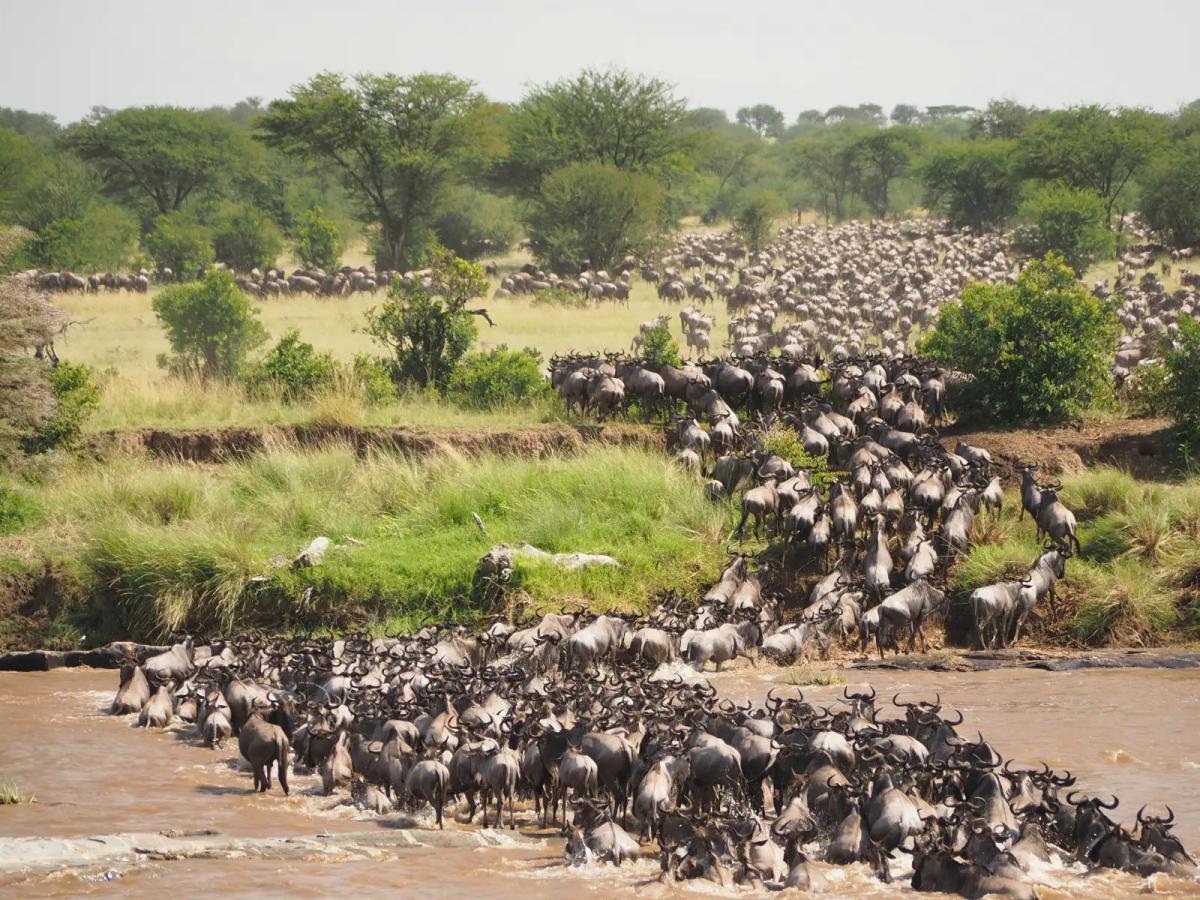
Large herd of wildebeest scrambling down a grassy bank and wading across a muddy river

Short answer: in a Kenya vs Tanzania safari decision, neither country is simply better. Kenya is the easier, usually cheaper choice for a short or first safari, with more flight options from Kathmandu, quick access from Nairobi and the Masai Mara at its best from about July to October. Tanzania wins on sheer scale and variety: the Serengeti is roughly ten times the size of the Mara, the Ngorongoro Crater has no real equivalent in Kenya, the calving season happens on Tanzania's southern plains, and Kilimanjaro climbs and Zanzibar beaches are Tanzanian. Pick by month, trip length and what you most want to see.

This guide compares the two countries park by park, month by month and route by route, for travellers starting in Nepal and for Nepalis living abroad who plan a safari from the Gulf, Europe or elsewhere. A note on where we stand: Gomayu arranges trips to Kenya but not to Tanzania, so we have tried to be plain about where Tanzania is the better pick. Sizes, rules and routes below come from official bodies, park authorities, airlines or route databases, with the date we checked them. There are no prices or park fees in this article, only relative cost words, because those figures change too often to print.

Kenya vs Tanzania safari: which is better for you?

Kenya is better if you have limited days, want a simple route from Kathmandu, or are travelling in the July to October migration window. Tanzania is better if you want space, the Ngorongoro Crater, the January to March calving season, a Kilimanjaro climb or a Zanzibar beach finish. Both sit on the same Serengeti and Mara ecosystem, see the same wildebeest herds at different times of year, and share the Maasai culture, Swahili language and East African time zone.

The quickest way to decide is to score each country against what matters to you. The table below sets out the main differences. "Edge" means the country that usually comes out ahead on that point, not a guarantee.

Table note: sizes from UNESCO, Tanzania National Parks (TANAPA) and the Maasai Mara National Reserve management plan; routes from airline and FlightConnections listings. Checked: 18 November 2026.

CriterionKenyaTanzaniaEdge
Flagship parkMasai Mara National Reserve, about 1,530 sq kmSerengeti National Park, 14,763 sq kmTanzania for size
Migration river crossingsMara River, roughly July to OctoberMara and Grumeti rivers in the northern and western Serengeti, roughly June to OctoberTie, both sides of the same river
Calving seasonDoes not happen in KenyaSouthern Serengeti and Ndutu, peak in FebruaryTanzania
Crater safariNo equivalentNgorongoro CraterTanzania
KilimanjaroViews from AmboseliThe mountain itself and all climbing routesTanzania to climb, Kenya to photograph
Beach add-onDiani, Watamu, Malindi, LamuZanzibar, including Stone TownTanzania for Zanzibar, Kenya for an easy mainland coast
Flights from KathmanduOne stop to Nairobi via Doha, Dubai, Sharjah, Abu Dhabi, Mumbai or IstanbulOne stop to Kilimanjaro via Doha or Istanbul; more choice to Dar es Salaam and ZanzibarKenya
Short safaris (2 to 4 nights)Nairobi National Park on the city edge, short flights to the MaraPossible from Arusha, but the Serengeti needs more timeKenya
CrowdingBusy in the main reserve in peak months; quieter in private conservanciesMore room to spread out across a much larger parkTanzania
Relative costGenerally cheaper, with more budget lodging near the MaraGenerally pricier for a similar number of nightsKenya
Remote wildernessSome, especially in the northSouthern parks such as Nyerere and RuahaTanzania

Where Kenya wins

  • Access and simplicity. Nairobi has non-stop flights from Doha, Dubai, Sharjah and Abu Dhabi, all of which also have non-stop flights from Kathmandu. Most Kenya safaris start and end in one city.
  • Short trips. You can see rhino, lion and giraffe in Nairobi National Park on an arrival or departure day, and a scheduled light aircraft flight from Nairobi to the Mara takes about an hour.
  • Density in a compact area. The Mara is small but packed with wildlife, so sightings come quickly, which suits first timers and families.
  • Value. Independent comparisons generally find the Mara cheaper than the Serengeti, mainly because there is more budget accommodation just outside the reserve.
  • The classic crossing photos. The Mara River crossings that appear in most migration documentaries happen in and around the Masai Mara.

Where Tanzania wins

  • Scale. The Serengeti covers 14,763 square kilometres according to TANAPA, roughly ten times the Mara. More room usually means fewer vehicles at each sighting.
  • Ngorongoro. A huge volcanic caldera with resident wildlife on its floor all year, inside a conservation area that UNESCO lists for both its natural and cultural value.
  • Calving season. From about December to March the herds gather on the short grass plains around Ndutu, and most calves are born within a few weeks in mid February. Kenya has nothing comparable at that time of year.
  • Kilimanjaro and Zanzibar. Africa's highest mountain and the Zanzibar archipelago are both in Tanzania. If either is on your list, Tanzania is the logical base.
  • Wilder southern parks. Nyerere and Ruaha are far emptier than the northern circuit, for travellers who have already done a classic safari.

For the wider picture of how these two compare with Botswana, South Africa and others, see our guide to the best safari destinations in the world.

How do the Masai Mara and the Serengeti compare?

The Masai Mara and the Serengeti are two halves of one ecosystem split by the Kenya and Tanzania border. The Serengeti is far larger and more varied; the Mara is compact, easier to reach and very rich in wildlife for its size. If you only want the river crossings in August or September, both work. If you want the migration in any other month, Tanzania is usually the better side.

UNESCO lists Serengeti National Park at 1,476,300 hectares, the same 14,763 square kilometres that TANAPA gives in its Serengeti park brochure. The Maasai Mara National Reserve's own management plan for 2023 to 2032 gives the reserve's size as 1,530 square kilometres (a section table in the same plan adds up to 1,560 square kilometres, and many guides round it to about 1,500). The same plan describes the wider protected complex, including the Serengeti and Ngorongoro, as covering more than 25,000 square kilometres. UNESCO describes the migration itself as a 1,000 kilometre annual circular trek spanning the two countries.

Table note: figures from the sources named in each row. Checked: 18 November 2026.

PointMasai Mara (Kenya)Serengeti (Tanzania)
SizeAbout 1,530 sq km (reserve management plan, 2023)14,763 sq km (UNESCO and TANAPA)
StatusNational reserve, plus surrounding community conservanciesNational park and UNESCO World Heritage site
Migration herds presentRoughly July to OctoberAll year, in different parts of the park
CalvingNoSouthern plains, peak in mid February
Usual gatewayNairobi, by road or short flightKilimanjaro or Arusha, by road through Ngorongoro or by light aircraft
Feel in peak seasonBusy in the eastern reserve; quieter in the conservancies and the westBusy around central areas and crossing points; quieter elsewhere
Relative costGenerally cheaperGenerally pricier
Best forShort trips, first safaris, July to October crossingsLonger trips, calving season, combining with Ngorongoro

Why the Mara's conservancies change the comparison

The honest weak point of the Mara is crowding in the main reserve during the migration. The reserve's management plan proposes an optimal carrying capacity of about 1 to 1.2 visitors per square kilometre, and it estimates high season densities in the Central Mara at well above two visitors per square kilometre. It puts the private conservancies to the north at roughly 0.5 to 0.6 visitors per square kilometre in high season.

These conservancies are leased from Maasai landowners. The Maasai Mara Wildlife Conservancies Association says it has 24 member conservancies covering about 450,000 acres and bringing together more than 15,000 landowners. Some, such as Naboisho, strictly monitor the number of tourists who enter, and some offer walking safaris or horse riding. Conservancy stays generally cost about the same as a Serengeti safari, so the Mara's price advantage mostly applies to the main reserve. For a fuller look at camps and conservancies, read our Masai Mara safari guide.

Amboseli vs Ngorongoro: the second park on most trips
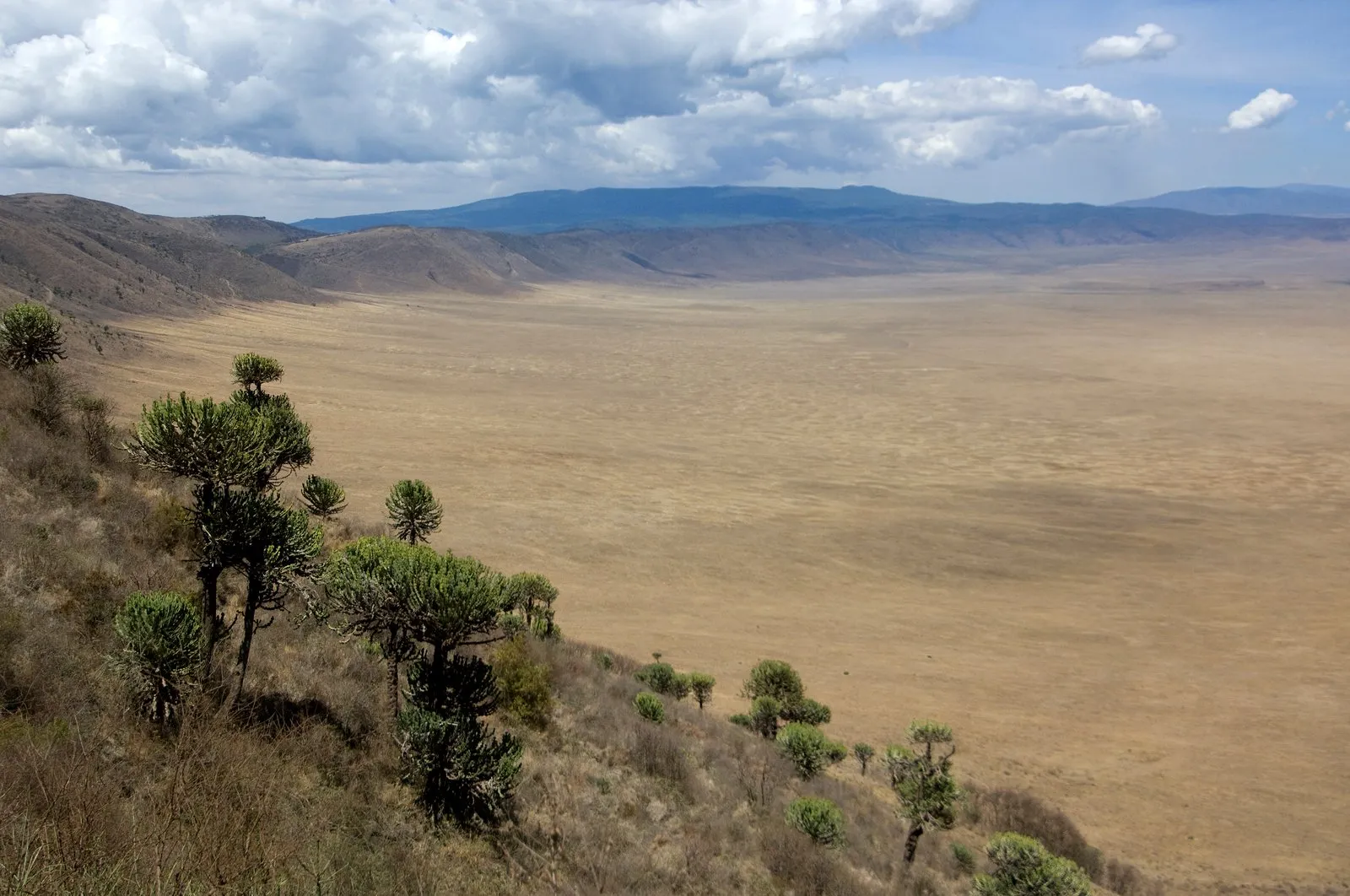
View from the crater rim down onto the wide grassy floor of Ngorongoro Crater in Tanzania

Most Kenya safaris pair the Mara with Amboseli, and most northern Tanzania safaris pair the Serengeti with the Ngorongoro Crater. They are very different experiences. Amboseli is about elephants against the backdrop of Kilimanjaro. Ngorongoro is about a volcanic bowl full of resident wildlife, including one of East Africa's better chances to see black rhino.

Table note: Amboseli size from Kenya's national biodiversity Clearing House Mechanism; road distances from the Kenya Wildlife Service (KWS) park page; Ngorongoro area from UNESCO. Checked: 18 November 2026.

PointAmboseli National Park (Kenya)Ngorongoro Conservation Area (Tanzania)
SizeAbout 392 sq km809,440 hectares (about 8,094 sq km), of which the crater is a small part
Signature sightElephant herds with Kilimanjaro behindWildlife on the crater floor, viewed from and inside the caldera
Getting thereAbout 204 km from Nairobi via Emali, or about 220 km via Namanga (KWS); airstrip at KimanaBy road from Arusha, usually on the way to or from the Serengeti
PeopleMaasai communities live around the parkMaasai pastoralists live inside the conservation area
What else is thereSwamps that draw elephants, and Kilimanjaro views at dawnOlduvai Gorge and the Laetoli footprints, key sites for human evolution

If elephants and mountain views are high on your list, Amboseli is excellent and easy to reach from Nairobi; our Amboseli National Park guide covers when the mountain is most likely to be clear. If you want a landscape you will not see anywhere else, Ngorongoro is the stronger site, and it is one of the clearest reasons to choose Tanzania.

Other parks that shape the choice

Kenya's Rift Valley lakes, such as Lake Naivasha and Lake Nakuru, are common additions to a Nairobi and Mara trip, adding hippo, rhino and birdlife. Tanzania's northern circuit adds Tarangire, known for elephants along its river in the dry months, and Lake Manyara. Tanzania's southern and western parks, Nyerere, Ruaha and Katavi, are wilder and usually reached by light aircraft, which suits a second safari more than a first one. Our Tanzania travel guide explains how those regions fit together.
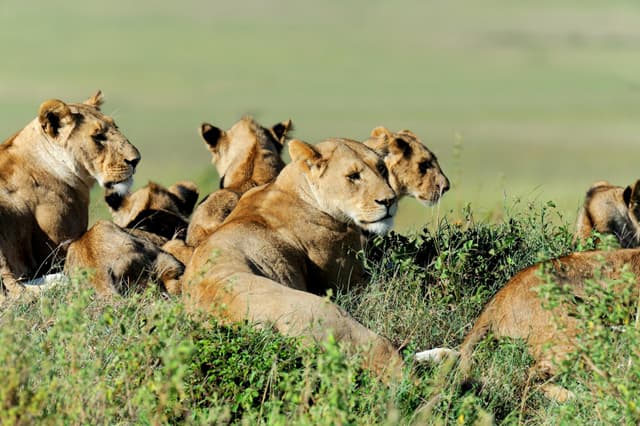
Explore Kenya tour packages
View all →

Where is the Great Migration in your travel month?
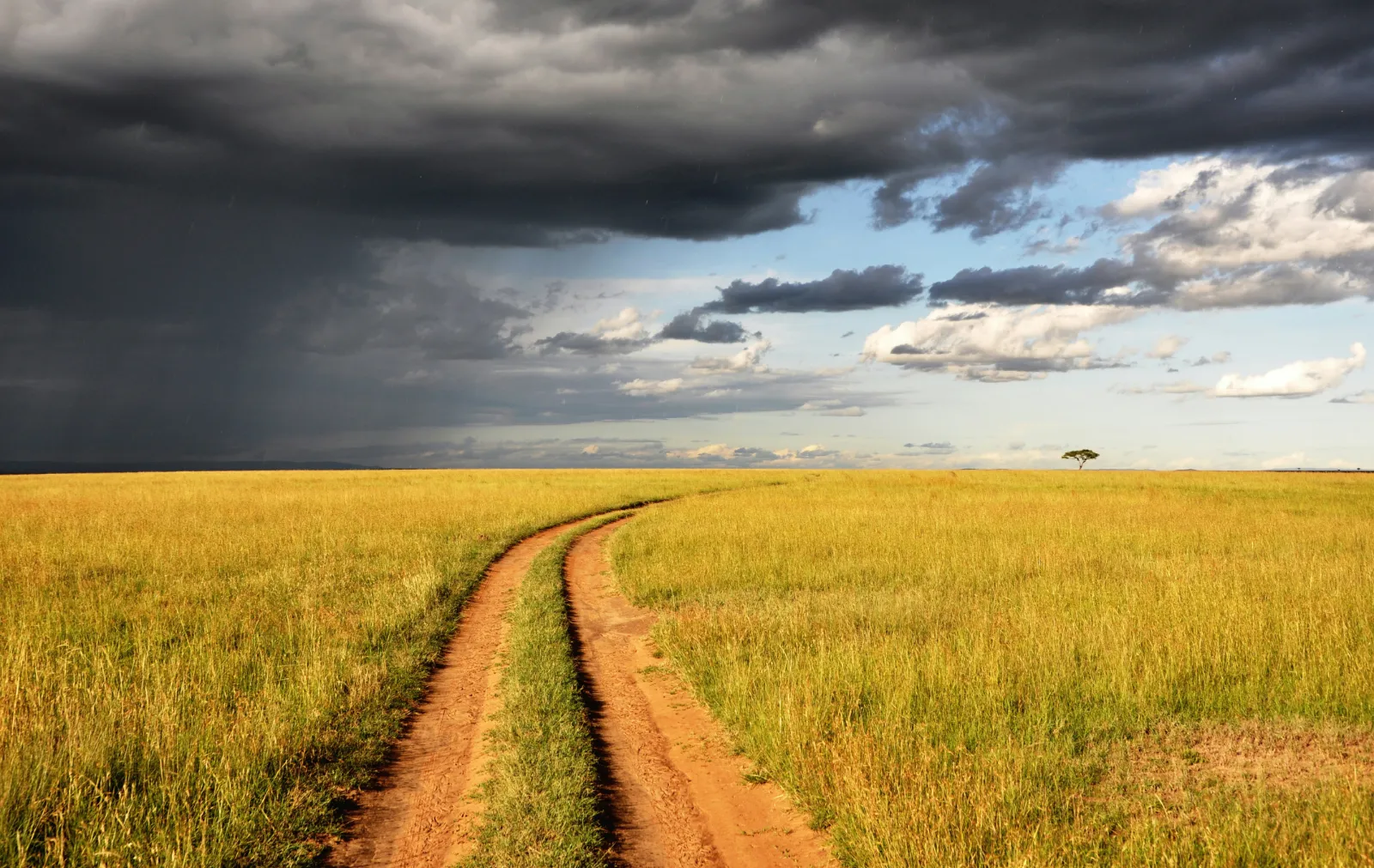
Dark rain clouds gathering over golden grassland and a dirt track in the Maasai Mara

The herds are in Kenya for roughly four months of the year and in Tanzania for the rest. From about July to October they are in the Masai Mara and the northern Serengeti, with river crossings in both. From about December to March they are on Tanzania's southern plains for the calving season. April to June and November are travel months, when the herds move through the Serengeti and are mostly in Tanzania. Rain drives the timing, so every month below can shift by weeks.

The pattern is well documented. NASA's Earth Observatory describes most wildebeest gathering around Ndutu from December to March, leaving as the dry season arrives around April and May, heading for the western corridor around May, arriving in the northern Serengeti by June or July, and returning south once the rains begin again in November. TANAPA's guidelines for the Mara River crossing point note that about four fifths of calves are born within a few weeks in mid February on the short grass plains between Naabi gate and the Ngorongoro highlands. Kenya's tourism board, Magical Kenya, places the most dramatic part of the migration in the Mara from July to October.

Table note: herd positions from NASA Earth Observatory, TANAPA and the Ngorongoro Conservation Area Authority; Mara timing from Magical Kenya. These are typical positions, not forecasts. Checked: 18 November 2026.

MonthWhere the herds usually areCountryBetter choice that month
JanuarySouthern Serengeti and Ndutu plainsTanzaniaTanzania for the herds; Kenya is quiet but good for resident game
FebruaryNdutu and the southern plains; calving peakTanzaniaTanzania, clearly
MarchSouthern plains, starting to break upTanzaniaTanzania early in the month
AprilLeaving the south, moving through central SerengetiTanzaniaNeither is at its best; rainy season in both
MayHeading into the western corridorTanzaniaTanzania for the herds; rains easing late in the month
JuneWestern corridor and Grumeti River; first herds moving northTanzaniaTanzania; Kenya only in an early year
JulyNorthern Serengeti and the Mara; crossings beginBothEither; Kenya easier for a short trip
AugustMasai Mara and northern Serengeti; crossings in both directionsBothEither; Kenya busier, Tanzania's north quieter
SeptemberMasai Mara and northern SerengetiBothEither
OctoberHerds thinning in the Mara, drifting southBothEither, with fewer guarantees late in the month
NovemberMoving south through the eastern SerengetiTanzaniaNeither is ideal for the herds; short rains
DecemberArriving back on the southern plainsTanzaniaTanzania late in the month

Our month by month guide to when the Great Migration is in Kenya goes deeper on the Mara chapter, including how unpredictable crossing days really are.

Matching the migration to Nepali holidays

  • Dashain and Tihar usually fall between late September and early November. That is the tail end of the Mara season, when herds may still be crossing but are thinning out. A Dashain safari in Kenya is still very good for resident wildlife; just do not build the trip around a guaranteed crossing.
  • Winter breaks and the Christmas and New Year period, popular with Nepalis working in the Gulf, Europe and North America, line up with the herds on Tanzania's southern plains. That is a strong argument for Tanzania in December and January.
  • Nepali New Year in mid April falls in the long rains in both countries. It is the low season: quieter and green, but with muddier roads and harder driving.
  • July to September is the peak for both the herds and international visitors. Plan early if your leave falls in these months.

Kenya's two rainy seasons, the long rains around March to May and the short rains around October to December, affect road conditions in the Mara too. Our guide to the best time to visit Kenya covers weather month by month. TANAPA describes the Serengeti's rainy season as November to April and its dry season as May to October.

The river crossing reality

No one can promise a crossing on a given day, in either country. The herds gather at the riverbank, sometimes for days, and cross when they cross. The practical advice is the same on both sides of the border: stay several nights rather than one, accept that the herds may be a few hours' drive away, and see the crossing as a bonus on top of an already excellent safari. The Mara has more camps within reach of the main crossing points; the northern Serengeti usually has fewer vehicles but is more remote and often reached by light aircraft.

Which country is easier to reach from Kathmandu?

Kenya is easier. There is no direct flight from Kathmandu to Nairobi, Kilimanjaro, Dar es Salaam or Zanzibar, but Nairobi can be reached with one stop through more hubs that Kathmandu already serves. Kilimanjaro, the gateway for the northern Tanzania safari circuit, has fewer one-stop options. Flying time alone from Kathmandu to Nairobi is about 9 hours via Doha, Dubai or Mumbai, before layovers.

Kathmandu's direct international routes include Doha, Dubai, Sharjah, Abu Dhabi, Mumbai, Delhi and Istanbul. The table below shows which of those hubs connect onward to each East African gateway with a non-stop flight. Schedules change by season, so treat this as a starting point, not a booking guide. No fares are given.

Table note: routes from FlightConnections route listings and Qatar Airways' Kilimanjaro page. Checked: 18 November 2026.

GatewayUsed forMain one-stop hubs from Kathmandu with a non-stop onward flight
Nairobi (NBO), KenyaMasai Mara, Amboseli, Nairobi National Park, Lake NakuruDoha (Qatar Airways), Dubai (Emirates, flydubai, Kenya Airways), Sharjah (Air Arabia, Kenya Airways), Abu Dhabi (Etihad), Mumbai (IndiGo, Kenya Airways), Istanbul (Turkish Airlines)
Kilimanjaro (JRO), TanzaniaSerengeti, Ngorongoro, Tarangire, Kilimanjaro climbsDoha (Qatar Airways), Istanbul (Turkish Airlines); or a short hop from Nairobi
Dar es Salaam (DAR), TanzaniaSouthern parks, coast, Zanzibar connectionsDoha (Qatar Airways), Dubai (Emirates, Air Tanzania), Mumbai (Air Tanzania, IndiGo), Istanbul (Turkish Airlines)
Zanzibar (ZNZ), TanzaniaBeaches, Stone TownDoha (Qatar Airways), Dubai (flydubai), Abu Dhabi (Etihad), Istanbul (Turkish Airlines); or a short hop from Nairobi

Two practical notes. First, Ethiopian Airlines serves Nairobi, Kilimanjaro, Dar es Salaam and Zanzibar from Addis Ababa, but it does not fly to Kathmandu, so an Addis routing means at least two stops from Nepal. Second, a route that combines different airlines on separate tickets carries the risk of a missed connection without protection; a single through ticket is safer for long journeys with tight layovers.

Entry rules and paperwork from Nepal

Kenya and Tanzania run separate entry systems: Kenya uses its own Electronic Travel Authorisation, and Tanzania issues visas through its own immigration portal. Permission to enter one does not cover the other. For Nepali passport holders, our Kenya visa page covers the Kenya side; Gomayu does not publish a Tanzania visa page, so check Tanzania's official immigration portal, and see the wider visa section for other countries on your route. Rules change, so check both shortly before you book flights.

Yellow fever paperwork is the other thing that catches travellers from Nepal. The transit airport you choose matters, and so does the flight home, because Nepal asks for proof of vaccination from travellers arriving from countries with yellow fever risk. Our guide to yellow fever and transit routes from Nepal to Kenya walks through each hub.

For Nepalis living abroad

If you live in Qatar or the UAE, you are already at one of the main hubs, with non-stop flights to Nairobi and Zanzibar, and to Kilimanjaro from Doha. That makes a combined Kenya and Tanzania trip more practical than it is from Kathmandu. From Europe, Kilimanjaro has non-stop flights from Amsterdam all year and from some other cities, such as London Gatwick, in season, and Nairobi is also well served, which narrows Kenya's access advantage. Families meeting relatives who are flying from Kathmandu often find Nairobi the simplest meeting point.

Which suits a short safari or a first safari?
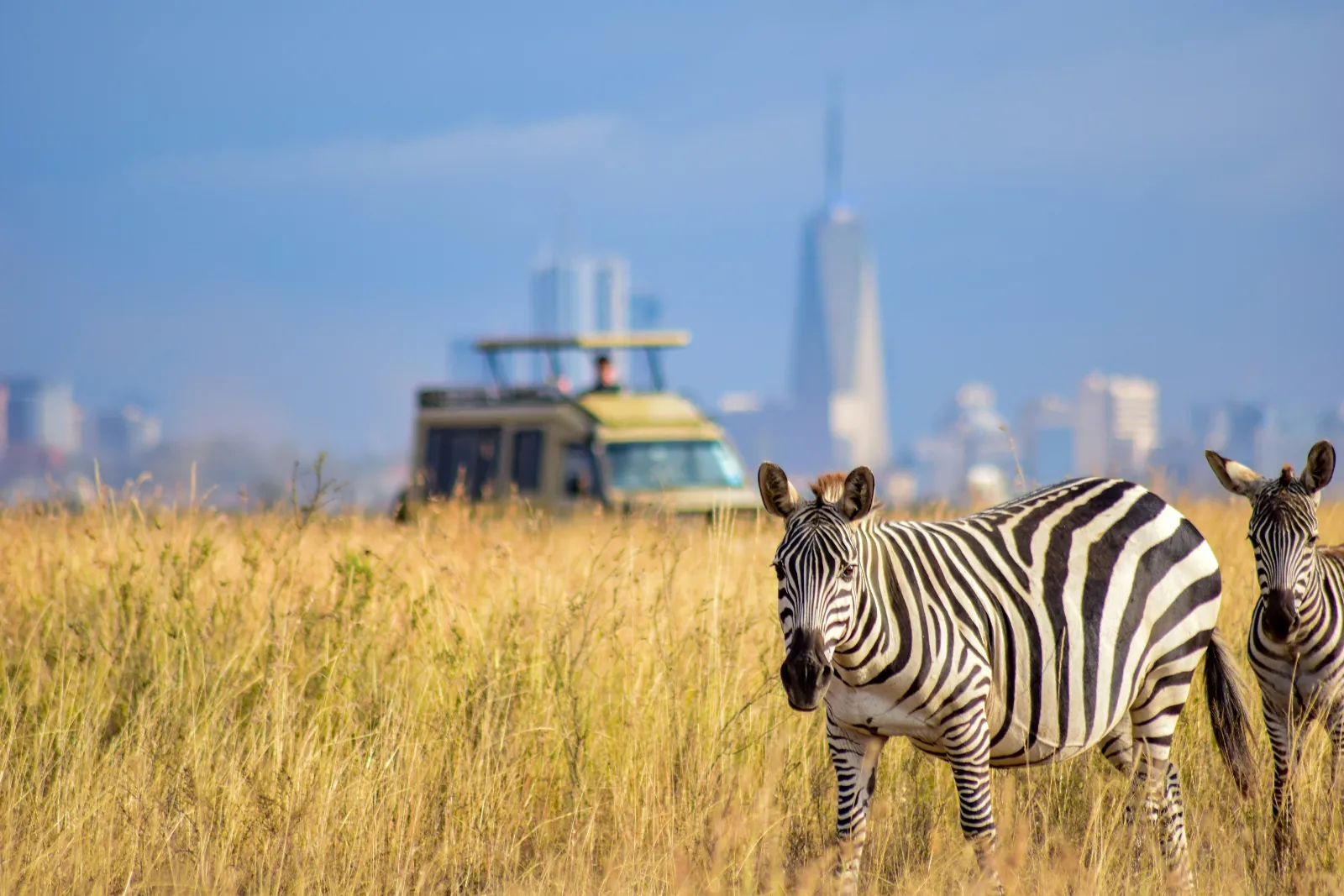
Zebras in golden grass at Nairobi National Park with a safari vehicle and city towers behind

Kenya usually suits a short or first safari better. With three to five nights, Kenya lets you combine Nairobi National Park with the Mara or Amboseli without long transfers. Tanzania works well for a first safari too, but its northern circuit is spread out and rewards a longer trip of a week or more. With fewer than five nights, choose Kenya; with seven or more, Tanzania becomes a strong option.

Kenya's short-safari advantages

  • Nairobi National Park. KWS says the park measures 117 square kilometres and sits about 8 to 10 kilometres from Nairobi's central business district. It holds four of the Big Five (not elephants), including black rhino, and three named lion prides. Gates open at 6am and close at 6pm. It is the easiest first game drive anywhere in East Africa; our Nairobi National Park guide has the details.
  • Fly-in Mara. Scheduled light aircraft from Nairobi's Wilson Airport reach the Mara airstrips in about an hour on Safarilink's published timetable, which turns a long road day into a short hop.
  • Amboseli by road. KWS lists Amboseli at about 204 to 220 kilometres from Nairobi depending on the gate, with a tarmac airstrip at Kimana for light aircraft.

When Tanzania still makes sense for a first safari

  • You have a week or more and want the classic northern circuit: Tarangire, Ngorongoro and the Serengeti.
  • You are travelling between December and March and want the calving season rather than a quiet Mara.
  • You plan to end with Zanzibar or start with a Kilimanjaro climb.

Table note: suggested fit by trip length, based on the access details above. This is a guide to which country fits, not an itinerary.

Time on safariKenya fitTanzania fit
1 dayStrong: Nairobi National ParkWeak: day trips are possible near Arusha, but the big parks need overnight stays
2 to 4 nightsStrong: the Mara, or Amboseli, with a short flight or road transferFair: Tarangire and Ngorongoro, without the Serengeti
5 to 7 nightsStrong: Mara plus Amboseli or a Rift Valley lakeStrong: a compact northern circuit including the Serengeti
8 nights or moreGood: add a conservancy, the north or the coastVery strong: full northern circuit, or a southern park, plus Zanzibar

First-safari tips that apply to both

  • Choose a guide over a fancier camp. A good guide with a radio network finds far more than a beginner.
  • Expect early starts and cold mornings in open vehicles, then hot middays. Neutral clothing, a warm layer and binoculars matter more than gear; our safari packing list works for both countries.
  • Older parents and young children do better with fewer, longer stays and short flights instead of long road days.
  • For budgeting in relative terms, read what drives the cost of a Kenya safari: the same factors, such as season, camp location and fly-in versus road, apply in Tanzania.

Where do Kilimanjaro and Zanzibar fit in?

Both are in Tanzania, and they are two of the strongest reasons to choose it. Kilimanjaro, at 5,895 metres, is the highest point in Africa, and every climbing route is on the Tanzanian side. Zanzibar's beaches and Stone Town have no exact match in Kenya. Kenya offers views of Kilimanjaro from Amboseli and its own good beaches at Diani, Watamu and Lamu, so it covers the photograph and the beach, but not the climb or the island.

Kilimanjaro: climb in Tanzania, view from Kenya
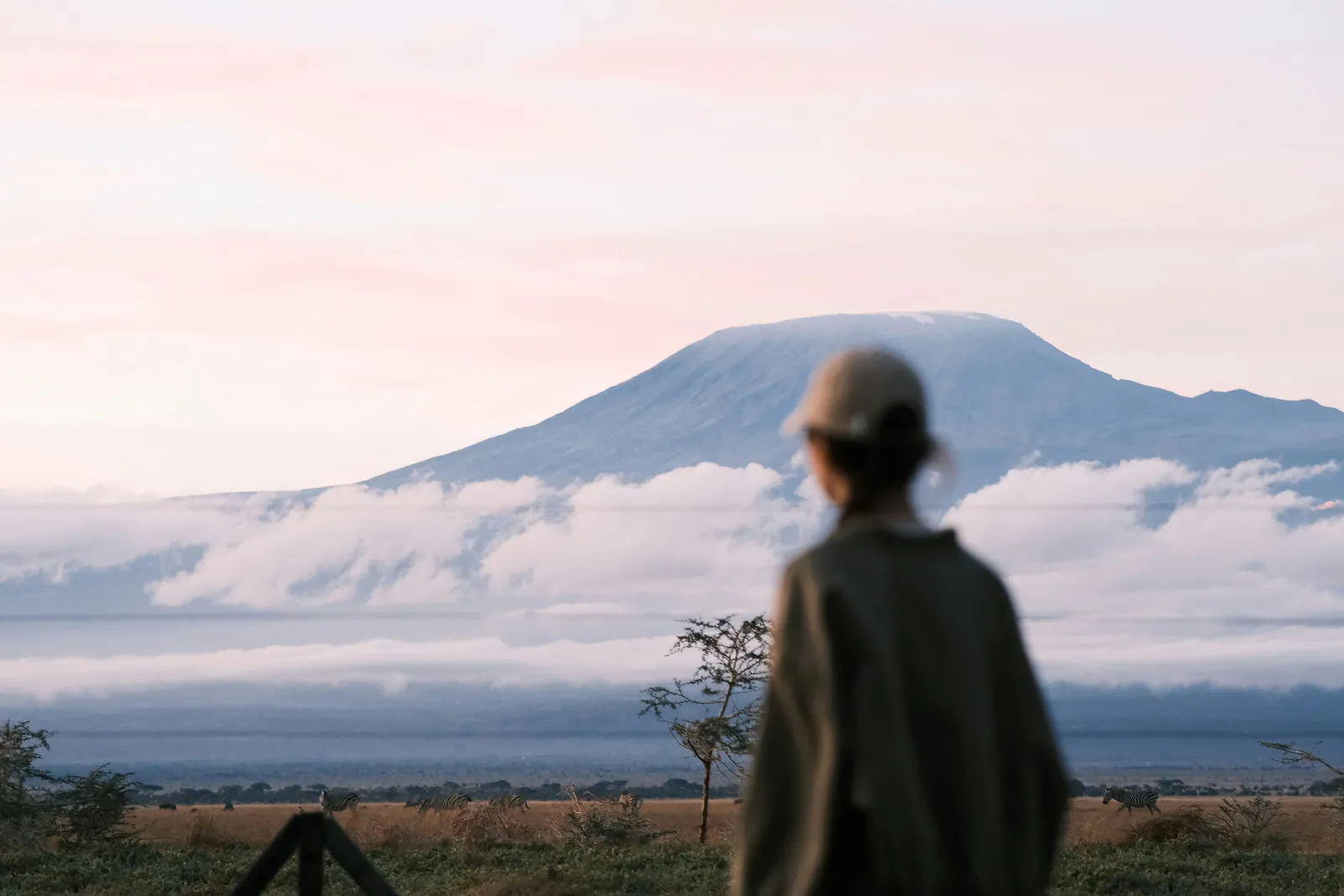
Traveller in a cap looking towards snow capped Mount Kilimanjaro above the clouds from Amboseli

UNESCO gives Kilimanjaro's summit as 5,895 metres and describes it as the highest point in Africa. The mountain is entirely in Tanzania, close to the Kenyan border, and Kilimanjaro National Park protects everything above the tree line plus the montane forest belt. That is why Amboseli, on the Kenyan side, has some of the most famous views of it: the KWS park page describes wildlife viewing beneath the iconic backdrop of the mountain. The summit is often clearest early in the morning, and cloud can hide it for whole days.

For trekkers from Nepal, the comparison is useful: Kilimanjaro's summit is higher than Everest Base Camp, but most climbers reach it in fewer days than a typical Everest Base Camp trek takes, which leaves less time to acclimatise. Longer routes give more acclimatisation days. Nepali trekkers who have done high routes at home still need to respect the speed of ascent. Our guide to Mount Kilimanjaro from Kenya explains the viewing options in Amboseli and the climbing basics.

Zanzibar vs Diani: which beach finish?
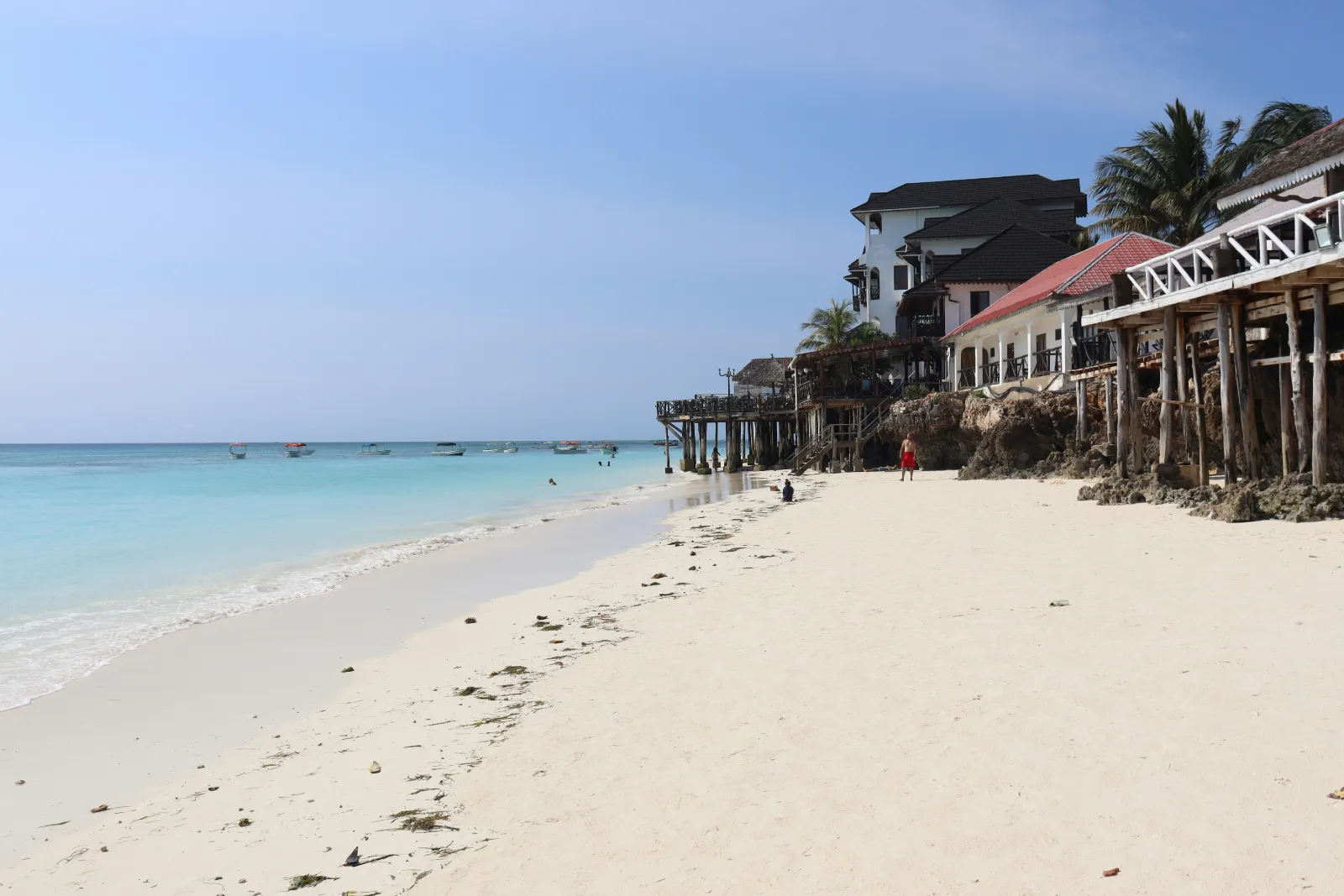
White sand beach and turquoise water lined with low buildings at Nungwi, Zanzibar

Zanzibar is the better-known beach and culture finish, thanks to Stone Town, a UNESCO World Heritage site since 2000 that UNESCO describes as a Swahili trading town shaped by Arab, Indian and European influences. Kenya's Diani is a long white beach on the mainland south of Mombasa, simpler to add to a Kenya-only trip because it stays inside one country and one entry system.

Table note: Stone Town status from UNESCO; Zanzibar insurance rule from Tanzania's embassy notices; flight links from FlightConnections; malaria risk from the UK's National Travel Health Network and Centre (NaTHNaC). Checked: 18 November 2026.

PointDiani and the Kenya coastZanzibar (Tanzania)
TypeMainland coast with long beachesIsland archipelago
CultureSwahili coast; Lamu's old town further northStone Town, UNESCO World Heritage since 2000
From NairobiShort domestic flight to Ukunda (Diani) or MombasaNon-stop flights from Nairobi to Zanzibar
PaperworkStays within your Kenya entryNeeds Tanzania entry; Zanzibar has required inbound travel insurance for foreign visitors since 1 October 2024, issued by the Zanzibar Insurance Corporation
DressModest dress away from the beach, especially in Lamu and old MombasaPredominantly Muslim; cover shoulders and knees in Stone Town and villages
MalariaRisk on the coast; ask your doctorNaTHNaC lists a high risk below 1,800 m, including Zanzibar
EdgeSimplicity on a Kenya-only tripAtmosphere, history and choice of beaches

Our guide to the best beaches in Kenya compares Diani, Watamu, Malindi and Lamu, and our list of things to do in Tanzania covers Zanzibar's beaches, spice farms and Stone Town.

Can you combine both countries?
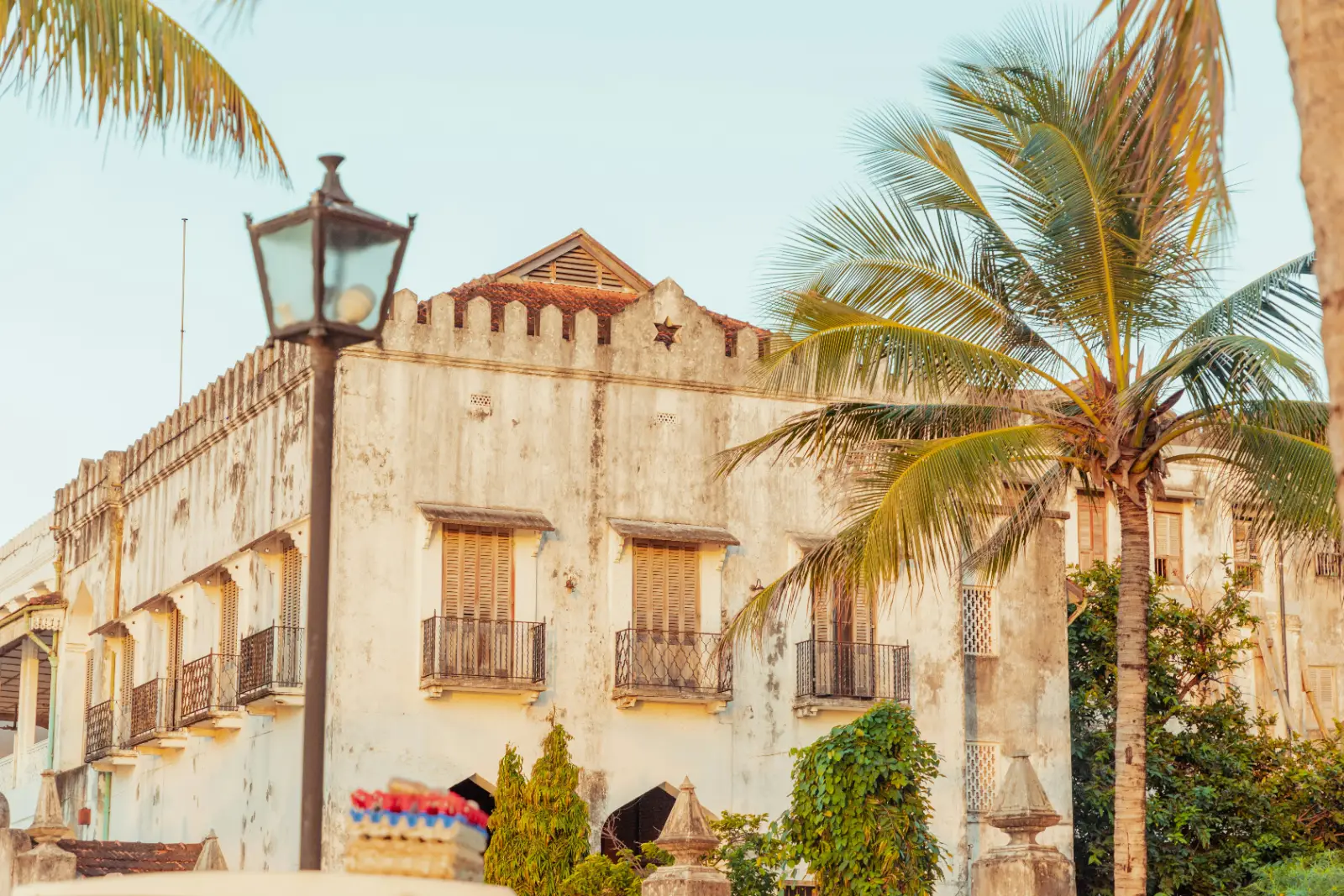
Weathered stone building with shuttered windows, iron balconies and a palm tree in Stone Town, Zanzibar

Yes, and many travellers do. The three common ways are a short flight from Nairobi to Kilimanjaro, a road crossing at the Namanga border post between Nairobi and Arusha, or a Kenya safari followed by a flight from Nairobi to Zanzibar for the beach. What you cannot normally do is drive straight from the Mara into the Serengeti, because there is no regular tourist crossing between the two parks.

The three practical routes

  • Fly Nairobi to Kilimanjaro. Kenya Airways, Precision Air and Flightlink fly non-stop between the two airports, and the fastest flight takes about an hour, with roughly four flights a day according to FlightConnections. This is the cleanest link between a Mara safari and a northern Tanzania safari.
  • Drive through Namanga. The Namanga One Stop Border Post, first opened in October 2017, puts both countries' border services together on the main Nairobi to Arusha road. The Kenya Revenue Authority says it cut clearance time for goods to about an hour. It suits travellers combining Amboseli with Arusha or Kilimanjaro, but expect a long road day.
  • Safari in Kenya, beach in Zanzibar. Nairobi has non-stop flights to Zanzibar, so a Mara or Amboseli safari can end on the island without a separate Tanzania safari.

Why you cannot drive from the Mara into the Serengeti

The two parks meet at the border, and the herds cross freely, but vehicles do not. The EastAfrican reported in April 2017 that the Bologonja crossing between the northern Serengeti and the Mara area had been closed since 1977, after the original East African Community broke up. We found no official notice that it is open to tourist vehicles today, so treat it as closed unless current official sources say otherwise. In practice, combining the two parks means flying via Nairobi and Kilimanjaro or using light aircraft and a formal border post, which adds time and usually cost.

Table note: combination options, based on the routes and rules above. Checked: 18 November 2026.

CombinationHow it linksSuitsWatch out for
Masai Mara plus Serengeti and NgorongoroFly Nairobi to Kilimanjaro, then road or light aircraftMigration lovers with 10 days or moreTwo entry systems, more transfers, higher overall cost
Amboseli plus Arusha, Tarangire or a Kilimanjaro climbRoad through NamangaTrekkers and road travellersA long road day and a border stop
Kenya safari plus ZanzibarFly Nairobi to ZanzibarHoneymooners, couples, families wanting a beach finishTanzania entry and Zanzibar's insurance rule
Kenya safari plus DianiDomestic flightSimplest safari and beach in one countryLess of an island feel than Zanzibar

Health checks when you combine

Health rules matter more when you cross between the two countries. Tanzania asks for a yellow fever certificate from travellers over 1 year old arriving from countries with risk of yellow fever transmission, including those who transited for more than 12 hours through such a country, according to NaTHNaC's Tanzania page. Kenya is one of those countries, so a Kenya to Tanzania trip needs the certificate. NaTHNaC's Kenya page recommends yellow fever vaccination for travellers to Kenya aged 9 months and older, including those visiting the game reserves, though generally not for trips limited to Nairobi and Mombasa, and describes a high malaria risk in Kenya (very low in Nairobi city and above 2,500 metres) and in all areas of Tanzania below 1,800 metres, including Zanzibar. Ask your doctor or a travel clinic in good time about vaccines and malaria prevention; the WHO and NaTHNaC country pages are the places to check the current rules.

On Ebola: Kenya confirmed its first case of Bundibugyo virus disease, a form of Ebola disease, on 6 October 2026, in a Kenyan who had travelled home from the Democratic Republic of the Congo through Uganda, according to WHO Africa. The WHO outbreak update of 6 November 2026 put Kenya's total at nine confirmed cases, including two deaths, all linked to that first case. On 11 November 2026 WHO Africa reported that the last patient had gone home and that a 42-day countdown would start on 12 November; if no new case is recorded, Kenya can be declared free of the outbreak on 23 December 2026. WHO advises against restricting travel to or trade with affected countries, and the WHO and European Centre for Disease Prevention and Control updates we checked did not list Tanzania. Check the latest WHO outbreak news and your own government's travel advice before you go. Checked: 18 November 2026.

So which should you choose?

Choose Kenya if you have under a week, are travelling between July and October, want the simplest route from Kathmandu, or want a first safari with quick sightings and a sensible budget. Choose Tanzania if you have more time, are travelling between December and March, want Ngorongoro or the Serengeti's open space, or plan to climb Kilimanjaro or end on Zanzibar. Combine both if you have ten days or more and want the full migration story.

  • Honeymooners and couples: Kenya safari plus Zanzibar is hard to beat; Kenya plus Diani is the simpler alternative.
  • Families with children or older parents: Kenya, for short transfers, Nairobi National Park and fly-in options.
  • Photographers chasing crossings: either country from July to September, with several nights near the river.
  • Trekkers from Nepal: Tanzania for Kilimanjaro, then a short safari in Tarangire or Ngorongoro, or a flight to Nairobi for the Mara.
  • Repeat safari travellers: Tanzania's southern parks or a Mara conservancy for space and fewer vehicles.
  • Short Dashain or Tihar break: Kenya, with realistic expectations about late season crossings.

If Kenya fits your dates and style, our Kenya travel guide covers regions, seasons and practical planning in more depth, and the Kenya tour packages page shows how Kenya trips are usually put together. If Tanzania is the better fit, start with the official park sources linked above and Tanzania's official immigration portal.

Frequently asked questions

Is Kenya or Tanzania better for safari?

Neither is better for everyone. Kenya suits short trips, first safaris and the July to October migration in the Masai Mara, with easier flights from Kathmandu. Tanzania suits longer trips, the Ngorongoro Crater, the January to March calving season in the southern Serengeti, Kilimanjaro climbs and Zanzibar. Choose by month and trip length.

Is the Masai Mara better than the Serengeti?

The Masai Mara is compact, easier to reach and very dense in wildlife, so it suits short Kenya safaris. The Serengeti is about ten times larger at 14,763 square kilometres, quieter overall and hosts the migration all year. For August crossings both work well; for the rest of the year, the Serengeti usually has the herds.

Where is the Great Migration in August?

In August the Great Migration is usually in Kenya's Masai Mara and Tanzania's northern Serengeti, with herds crossing the Mara River in both directions. It is one of the most reliable months, but crossings still depend on rain and the herds' behaviour, so plan several nights near the river rather than one day.

Which is cheaper, Kenya or Tanzania safari?

A Kenya safari is generally cheaper than a Tanzania safari for a similar number of nights, mainly because the Masai Mara has more budget lodging just outside the reserve and shorter transfers from Nairobi. Mara conservancy stays cost roughly the same as the Serengeti, and season matters as much as the country in either case.

Can I do Kenya and Tanzania in one trip?

Yes. Most travellers fly Nairobi to Kilimanjaro, a flight of about an hour, or cross by road at the Namanga One Stop Border Post. There is no regular tourist road crossing straight from the Masai Mara into the Serengeti. Kenya and Tanzania have separate entry systems, and Tanzania asks arrivals from Kenya for a yellow fever certificate.

Which is better for a first safari?

Kenya is usually better for a first safari with under a week, because Nairobi National Park, Amboseli and fly-in Masai Mara stays keep transfers short. Tanzania is an excellent first safari if you have seven nights or more for the Serengeti and Ngorongoro, or want the calving season between December and March.

Is Kenya easier to reach from Nepal?

Yes. Kenya is easier to reach from Nepal because Nairobi is one stop from Kathmandu via Doha, Dubai, Sharjah, Abu Dhabi, Mumbai or Istanbul, with about 9 hours of flying time before layovers. Tanzania's Kilimanjaro airport is one stop only via Doha or Istanbul, or via Nairobi. There is no direct flight to either country.

Where can I see Kilimanjaro on safari?

The best-known safari views of Kilimanjaro are from Amboseli National Park in Kenya, where elephants graze below the mountain across the border. The mountain itself, 5,895 metres high according to UNESCO, is in Tanzania, and all climbing routes start there. Cloud often hides the summit, so early mornings give the best chance.

Which has better beaches, Kenya or Tanzania?

Tanzania's Zanzibar has the more famous beach and culture combination, with Stone Town, a UNESCO World Heritage site. Kenya's Diani, Watamu and Lamu are excellent and easier to add to a Kenya-only safari. Zanzibar needs Tanzania entry and mandatory inbound travel insurance, so Kenya's coast is the simpler choice.

Do I need a yellow fever vaccine for a Kenya and Tanzania safari?

Most travellers combining Kenya and Tanzania will need yellow fever paperwork. Tanzania asks for a certificate from travellers arriving from risk countries, which includes Kenya, and Nepal asks for one from travellers returning from risk countries. The certificate is valid from 10 days after vaccination, so ask your doctor well before you travel.

Kenya ki Tanzania safari kun ramro?

For a short Kenya vs Tanzania safari from Nepal, Kenya is usually the easier choice: more flights from Kathmandu, Nairobi National Park and the Masai Mara crossings from July to October. Tanzania is better for the Serengeti, Ngorongoro, the January to March calving season, Kilimanjaro and Zanzibar, especially with a week or more.
Tags
KenyaTanzaniaSafariGreat MigrationMasai Mara
Share
G
Gomayu Team
Writer at Gomayu
Keep reading
Blog / Kenya
Kenya vs Tanzania Safari: Which Should You Choose?
29 min read 18 Nov 2026
Large herd of wildebeest scrambling down a grassy bank and wading across a muddy river

Short answer: in a Kenya vs Tanzania safari decision, neither country is simply better. Kenya is the easier, usually cheaper choice for a short or first safari, with more flight options from Kathmandu, quick access from Nairobi and the Masai Mara at its best from about July to October. Tanzania wins on sheer scale and variety: the Serengeti is roughly ten times the size of the Mara, the Ngorongoro Crater has no real equivalent in Kenya, the calving season happens on Tanzania's southern plains, and Kilimanjaro climbs and Zanzibar beaches are Tanzanian. Pick by month, trip length and what you most want to see.

This guide compares the two countries park by park, month by month and route by route, for travellers starting in Nepal and for Nepalis living abroad who plan a safari from the Gulf, Europe or elsewhere. A note on where we stand: Gomayu arranges trips to Kenya but not to Tanzania, so we have tried to be plain about where Tanzania is the better pick. Sizes, rules and routes below come from official bodies, park authorities, airlines or route databases, with the date we checked them. There are no prices or park fees in this article, only relative cost words, because those figures change too often to print.

Kenya vs Tanzania safari: which is better for you?

Kenya is better if you have limited days, want a simple route from Kathmandu, or are travelling in the July to October migration window. Tanzania is better if you want space, the Ngorongoro Crater, the January to March calving season, a Kilimanjaro climb or a Zanzibar beach finish. Both sit on the same Serengeti and Mara ecosystem, see the same wildebeest herds at different times of year, and share the Maasai culture, Swahili language and East African time zone.

The quickest way to decide is to score each country against what matters to you. The table below sets out the main differences. "Edge" means the country that usually comes out ahead on that point, not a guarantee.

Table note: sizes from UNESCO, Tanzania National Parks (TANAPA) and the Maasai Mara National Reserve management plan; routes from airline and FlightConnections listings. Checked: 18 November 2026.

CriterionKenyaTanzaniaEdge
Flagship parkMasai Mara National Reserve, about 1,530 sq kmSerengeti National Park, 14,763 sq kmTanzania for size
Migration river crossingsMara River, roughly July to OctoberMara and Grumeti rivers in the northern and western Serengeti, roughly June to OctoberTie, both sides of the same river
Calving seasonDoes not happen in KenyaSouthern Serengeti and Ndutu, peak in FebruaryTanzania
Crater safariNo equivalentNgorongoro CraterTanzania
KilimanjaroViews from AmboseliThe mountain itself and all climbing routesTanzania to climb, Kenya to photograph
Beach add-onDiani, Watamu, Malindi, LamuZanzibar, including Stone TownTanzania for Zanzibar, Kenya for an easy mainland coast
Flights from KathmanduOne stop to Nairobi via Doha, Dubai, Sharjah, Abu Dhabi, Mumbai or IstanbulOne stop to Kilimanjaro via Doha or Istanbul; more choice to Dar es Salaam and ZanzibarKenya
Short safaris (2 to 4 nights)Nairobi National Park on the city edge, short flights to the MaraPossible from Arusha, but the Serengeti needs more timeKenya
CrowdingBusy in the main reserve in peak months; quieter in private conservanciesMore room to spread out across a much larger parkTanzania
Relative costGenerally cheaper, with more budget lodging near the MaraGenerally pricier for a similar number of nightsKenya
Remote wildernessSome, especially in the northSouthern parks such as Nyerere and RuahaTanzania

Where Kenya wins

  • Access and simplicity. Nairobi has non-stop flights from Doha, Dubai, Sharjah and Abu Dhabi, all of which also have non-stop flights from Kathmandu. Most Kenya safaris start and end in one city.
  • Short trips. You can see rhino, lion and giraffe in Nairobi National Park on an arrival or departure day, and a scheduled light aircraft flight from Nairobi to the Mara takes about an hour.
  • Density in a compact area. The Mara is small but packed with wildlife, so sightings come quickly, which suits first timers and families.
  • Value. Independent comparisons generally find the Mara cheaper than the Serengeti, mainly because there is more budget accommodation just outside the reserve.
  • The classic crossing photos. The Mara River crossings that appear in most migration documentaries happen in and around the Masai Mara.

Where Tanzania wins

  • Scale. The Serengeti covers 14,763 square kilometres according to TANAPA, roughly ten times the Mara. More room usually means fewer vehicles at each sighting.
  • Ngorongoro. A huge volcanic caldera with resident wildlife on its floor all year, inside a conservation area that UNESCO lists for both its natural and cultural value.
  • Calving season. From about December to March the herds gather on the short grass plains around Ndutu, and most calves are born within a few weeks in mid February. Kenya has nothing comparable at that time of year.
  • Kilimanjaro and Zanzibar. Africa's highest mountain and the Zanzibar archipelago are both in Tanzania. If either is on your list, Tanzania is the logical base.
  • Wilder southern parks. Nyerere and Ruaha are far emptier than the northern circuit, for travellers who have already done a classic safari.

For the wider picture of how these two compare with Botswana, South Africa and others, see our guide to the best safari destinations in the world.

How do the Masai Mara and the Serengeti compare?

The Masai Mara and the Serengeti are two halves of one ecosystem split by the Kenya and Tanzania border. The Serengeti is far larger and more varied; the Mara is compact, easier to reach and very rich in wildlife for its size. If you only want the river crossings in August or September, both work. If you want the migration in any other month, Tanzania is usually the better side.

UNESCO lists Serengeti National Park at 1,476,300 hectares, the same 14,763 square kilometres that TANAPA gives in its Serengeti park brochure. The Maasai Mara National Reserve's own management plan for 2023 to 2032 gives the reserve's size as 1,530 square kilometres (a section table in the same plan adds up to 1,560 square kilometres, and many guides round it to about 1,500). The same plan describes the wider protected complex, including the Serengeti and Ngorongoro, as covering more than 25,000 square kilometres. UNESCO describes the migration itself as a 1,000 kilometre annual circular trek spanning the two countries.

Table note: figures from the sources named in each row. Checked: 18 November 2026.

PointMasai Mara (Kenya)Serengeti (Tanzania)
SizeAbout 1,530 sq km (reserve management plan, 2023)14,763 sq km (UNESCO and TANAPA)
StatusNational reserve, plus surrounding community conservanciesNational park and UNESCO World Heritage site
Migration herds presentRoughly July to OctoberAll year, in different parts of the park
CalvingNoSouthern plains, peak in mid February
Usual gatewayNairobi, by road or short flightKilimanjaro or Arusha, by road through Ngorongoro or by light aircraft
Feel in peak seasonBusy in the eastern reserve; quieter in the conservancies and the westBusy around central areas and crossing points; quieter elsewhere
Relative costGenerally cheaperGenerally pricier
Best forShort trips, first safaris, July to October crossingsLonger trips, calving season, combining with Ngorongoro

Why the Mara's conservancies change the comparison

The honest weak point of the Mara is crowding in the main reserve during the migration. The reserve's management plan proposes an optimal carrying capacity of about 1 to 1.2 visitors per square kilometre, and it estimates high season densities in the Central Mara at well above two visitors per square kilometre. It puts the private conservancies to the north at roughly 0.5 to 0.6 visitors per square kilometre in high season.

These conservancies are leased from Maasai landowners. The Maasai Mara Wildlife Conservancies Association says it has 24 member conservancies covering about 450,000 acres and bringing together more than 15,000 landowners. Some, such as Naboisho, strictly monitor the number of tourists who enter, and some offer walking safaris or horse riding. Conservancy stays generally cost about the same as a Serengeti safari, so the Mara's price advantage mostly applies to the main reserve. For a fuller look at camps and conservancies, read our Masai Mara safari guide.

Amboseli vs Ngorongoro: the second park on most trips

View from the crater rim down onto the wide grassy floor of Ngorongoro Crater in Tanzania

Most Kenya safaris pair the Mara with Amboseli, and most northern Tanzania safaris pair the Serengeti with the Ngorongoro Crater. They are very different experiences. Amboseli is about elephants against the backdrop of Kilimanjaro. Ngorongoro is about a volcanic bowl full of resident wildlife, including one of East Africa's better chances to see black rhino.

Table note: Amboseli size from Kenya's national biodiversity Clearing House Mechanism; road distances from the Kenya Wildlife Service (KWS) park page; Ngorongoro area from UNESCO. Checked: 18 November 2026.

PointAmboseli National Park (Kenya)Ngorongoro Conservation Area (Tanzania)
SizeAbout 392 sq km809,440 hectares (about 8,094 sq km), of which the crater is a small part
Signature sightElephant herds with Kilimanjaro behindWildlife on the crater floor, viewed from and inside the caldera
Getting thereAbout 204 km from Nairobi via Emali, or about 220 km via Namanga (KWS); airstrip at KimanaBy road from Arusha, usually on the way to or from the Serengeti
PeopleMaasai communities live around the parkMaasai pastoralists live inside the conservation area
What else is thereSwamps that draw elephants, and Kilimanjaro views at dawnOlduvai Gorge and the Laetoli footprints, key sites for human evolution

If elephants and mountain views are high on your list, Amboseli is excellent and easy to reach from Nairobi; our Amboseli National Park guide covers when the mountain is most likely to be clear. If you want a landscape you will not see anywhere else, Ngorongoro is the stronger site, and it is one of the clearest reasons to choose Tanzania.

Other parks that shape the choice

Kenya's Rift Valley lakes, such as Lake Naivasha and Lake Nakuru, are common additions to a Nairobi and Mara trip, adding hippo, rhino and birdlife. Tanzania's northern circuit adds Tarangire, known for elephants along its river in the dry months, and Lake Manyara. Tanzania's southern and western parks, Nyerere, Ruaha and Katavi, are wilder and usually reached by light aircraft, which suits a second safari more than a first one. Our Tanzania travel guide explains how those regions fit together.

Explore Kenya tour packages
View all →

Where is the Great Migration in your travel month?

Dark rain clouds gathering over golden grassland and a dirt track in the Maasai Mara

The herds are in Kenya for roughly four months of the year and in Tanzania for the rest. From about July to October they are in the Masai Mara and the northern Serengeti, with river crossings in both. From about December to March they are on Tanzania's southern plains for the calving season. April to June and November are travel months, when the herds move through the Serengeti and are mostly in Tanzania. Rain drives the timing, so every month below can shift by weeks.

The pattern is well documented. NASA's Earth Observatory describes most wildebeest gathering around Ndutu from December to March, leaving as the dry season arrives around April and May, heading for the western corridor around May, arriving in the northern Serengeti by June or July, and returning south once the rains begin again in November. TANAPA's guidelines for the Mara River crossing point note that about four fifths of calves are born within a few weeks in mid February on the short grass plains between Naabi gate and the Ngorongoro highlands. Kenya's tourism board, Magical Kenya, places the most dramatic part of the migration in the Mara from July to October.

Table note: herd positions from NASA Earth Observatory, TANAPA and the Ngorongoro Conservation Area Authority; Mara timing from Magical Kenya. These are typical positions, not forecasts. Checked: 18 November 2026.

MonthWhere the herds usually areCountryBetter choice that month
JanuarySouthern Serengeti and Ndutu plainsTanzaniaTanzania for the herds; Kenya is quiet but good for resident game
FebruaryNdutu and the southern plains; calving peakTanzaniaTanzania, clearly
MarchSouthern plains, starting to break upTanzaniaTanzania early in the month
AprilLeaving the south, moving through central SerengetiTanzaniaNeither is at its best; rainy season in both
MayHeading into the western corridorTanzaniaTanzania for the herds; rains easing late in the month
JuneWestern corridor and Grumeti River; first herds moving northTanzaniaTanzania; Kenya only in an early year
JulyNorthern Serengeti and the Mara; crossings beginBothEither; Kenya easier for a short trip
AugustMasai Mara and northern Serengeti; crossings in both directionsBothEither; Kenya busier, Tanzania's north quieter
SeptemberMasai Mara and northern SerengetiBothEither
OctoberHerds thinning in the Mara, drifting southBothEither, with fewer guarantees late in the month
NovemberMoving south through the eastern SerengetiTanzaniaNeither is ideal for the herds; short rains
DecemberArriving back on the southern plainsTanzaniaTanzania late in the month

Our month by month guide to when the Great Migration is in Kenya goes deeper on the Mara chapter, including how unpredictable crossing days really are.

Matching the migration to Nepali holidays

  • Dashain and Tihar usually fall between late September and early November. That is the tail end of the Mara season, when herds may still be crossing but are thinning out. A Dashain safari in Kenya is still very good for resident wildlife; just do not build the trip around a guaranteed crossing.
  • Winter breaks and the Christmas and New Year period, popular with Nepalis working in the Gulf, Europe and North America, line up with the herds on Tanzania's southern plains. That is a strong argument for Tanzania in December and January.
  • Nepali New Year in mid April falls in the long rains in both countries. It is the low season: quieter and green, but with muddier roads and harder driving.
  • July to September is the peak for both the herds and international visitors. Plan early if your leave falls in these months.

Kenya's two rainy seasons, the long rains around March to May and the short rains around October to December, affect road conditions in the Mara too. Our guide to the best time to visit Kenya covers weather month by month. TANAPA describes the Serengeti's rainy season as November to April and its dry season as May to October.

The river crossing reality

No one can promise a crossing on a given day, in either country. The herds gather at the riverbank, sometimes for days, and cross when they cross. The practical advice is the same on both sides of the border: stay several nights rather than one, accept that the herds may be a few hours' drive away, and see the crossing as a bonus on top of an already excellent safari. The Mara has more camps within reach of the main crossing points; the northern Serengeti usually has fewer vehicles but is more remote and often reached by light aircraft.

Which country is easier to reach from Kathmandu?

Kenya is easier. There is no direct flight from Kathmandu to Nairobi, Kilimanjaro, Dar es Salaam or Zanzibar, but Nairobi can be reached with one stop through more hubs that Kathmandu already serves. Kilimanjaro, the gateway for the northern Tanzania safari circuit, has fewer one-stop options. Flying time alone from Kathmandu to Nairobi is about 9 hours via Doha, Dubai or Mumbai, before layovers.

Kathmandu's direct international routes include Doha, Dubai, Sharjah, Abu Dhabi, Mumbai, Delhi and Istanbul. The table below shows which of those hubs connect onward to each East African gateway with a non-stop flight. Schedules change by season, so treat this as a starting point, not a booking guide. No fares are given.

Table note: routes from FlightConnections route listings and Qatar Airways' Kilimanjaro page. Checked: 18 November 2026.

GatewayUsed forMain one-stop hubs from Kathmandu with a non-stop onward flight
Nairobi (NBO), KenyaMasai Mara, Amboseli, Nairobi National Park, Lake NakuruDoha (Qatar Airways), Dubai (Emirates, flydubai, Kenya Airways), Sharjah (Air Arabia, Kenya Airways), Abu Dhabi (Etihad), Mumbai (IndiGo, Kenya Airways), Istanbul (Turkish Airlines)
Kilimanjaro (JRO), TanzaniaSerengeti, Ngorongoro, Tarangire, Kilimanjaro climbsDoha (Qatar Airways), Istanbul (Turkish Airlines); or a short hop from Nairobi
Dar es Salaam (DAR), TanzaniaSouthern parks, coast, Zanzibar connectionsDoha (Qatar Airways), Dubai (Emirates, Air Tanzania), Mumbai (Air Tanzania, IndiGo), Istanbul (Turkish Airlines)
Zanzibar (ZNZ), TanzaniaBeaches, Stone TownDoha (Qatar Airways), Dubai (flydubai), Abu Dhabi (Etihad), Istanbul (Turkish Airlines); or a short hop from Nairobi

Two practical notes. First, Ethiopian Airlines serves Nairobi, Kilimanjaro, Dar es Salaam and Zanzibar from Addis Ababa, but it does not fly to Kathmandu, so an Addis routing means at least two stops from Nepal. Second, a route that combines different airlines on separate tickets carries the risk of a missed connection without protection; a single through ticket is safer for long journeys with tight layovers.

Entry rules and paperwork from Nepal

Kenya and Tanzania run separate entry systems: Kenya uses its own Electronic Travel Authorisation, and Tanzania issues visas through its own immigration portal. Permission to enter one does not cover the other. For Nepali passport holders, our Kenya visa page covers the Kenya side; Gomayu does not publish a Tanzania visa page, so check Tanzania's official immigration portal, and see the wider visa section for other countries on your route. Rules change, so check both shortly before you book flights.

Yellow fever paperwork is the other thing that catches travellers from Nepal. The transit airport you choose matters, and so does the flight home, because Nepal asks for proof of vaccination from travellers arriving from countries with yellow fever risk. Our guide to yellow fever and transit routes from Nepal to Kenya walks through each hub.

For Nepalis living abroad

If you live in Qatar or the UAE, you are already at one of the main hubs, with non-stop flights to Nairobi and Zanzibar, and to Kilimanjaro from Doha. That makes a combined Kenya and Tanzania trip more practical than it is from Kathmandu. From Europe, Kilimanjaro has non-stop flights from Amsterdam all year and from some other cities, such as London Gatwick, in season, and Nairobi is also well served, which narrows Kenya's access advantage. Families meeting relatives who are flying from Kathmandu often find Nairobi the simplest meeting point.

Which suits a short safari or a first safari?

Zebras in golden grass at Nairobi National Park with a safari vehicle and city towers behind

Kenya usually suits a short or first safari better. With three to five nights, Kenya lets you combine Nairobi National Park with the Mara or Amboseli without long transfers. Tanzania works well for a first safari too, but its northern circuit is spread out and rewards a longer trip of a week or more. With fewer than five nights, choose Kenya; with seven or more, Tanzania becomes a strong option.

Kenya's short-safari advantages

  • Nairobi National Park. KWS says the park measures 117 square kilometres and sits about 8 to 10 kilometres from Nairobi's central business district. It holds four of the Big Five (not elephants), including black rhino, and three named lion prides. Gates open at 6am and close at 6pm. It is the easiest first game drive anywhere in East Africa; our Nairobi National Park guide has the details.
  • Fly-in Mara. Scheduled light aircraft from Nairobi's Wilson Airport reach the Mara airstrips in about an hour on Safarilink's published timetable, which turns a long road day into a short hop.
  • Amboseli by road. KWS lists Amboseli at about 204 to 220 kilometres from Nairobi depending on the gate, with a tarmac airstrip at Kimana for light aircraft.

When Tanzania still makes sense for a first safari

  • You have a week or more and want the classic northern circuit: Tarangire, Ngorongoro and the Serengeti.
  • You are travelling between December and March and want the calving season rather than a quiet Mara.
  • You plan to end with Zanzibar or start with a Kilimanjaro climb.

Table note: suggested fit by trip length, based on the access details above. This is a guide to which country fits, not an itinerary.

Time on safariKenya fitTanzania fit
1 dayStrong: Nairobi National ParkWeak: day trips are possible near Arusha, but the big parks need overnight stays
2 to 4 nightsStrong: the Mara, or Amboseli, with a short flight or road transferFair: Tarangire and Ngorongoro, without the Serengeti
5 to 7 nightsStrong: Mara plus Amboseli or a Rift Valley lakeStrong: a compact northern circuit including the Serengeti
8 nights or moreGood: add a conservancy, the north or the coastVery strong: full northern circuit, or a southern park, plus Zanzibar

First-safari tips that apply to both

  • Choose a guide over a fancier camp. A good guide with a radio network finds far more than a beginner.
  • Expect early starts and cold mornings in open vehicles, then hot middays. Neutral clothing, a warm layer and binoculars matter more than gear; our safari packing list works for both countries.
  • Older parents and young children do better with fewer, longer stays and short flights instead of long road days.
  • For budgeting in relative terms, read what drives the cost of a Kenya safari: the same factors, such as season, camp location and fly-in versus road, apply in Tanzania.

Where do Kilimanjaro and Zanzibar fit in?

Both are in Tanzania, and they are two of the strongest reasons to choose it. Kilimanjaro, at 5,895 metres, is the highest point in Africa, and every climbing route is on the Tanzanian side. Zanzibar's beaches and Stone Town have no exact match in Kenya. Kenya offers views of Kilimanjaro from Amboseli and its own good beaches at Diani, Watamu and Lamu, so it covers the photograph and the beach, but not the climb or the island.

Kilimanjaro: climb in Tanzania, view from Kenya

Traveller in a cap looking towards snow capped Mount Kilimanjaro above the clouds from Amboseli

UNESCO gives Kilimanjaro's summit as 5,895 metres and describes it as the highest point in Africa. The mountain is entirely in Tanzania, close to the Kenyan border, and Kilimanjaro National Park protects everything above the tree line plus the montane forest belt. That is why Amboseli, on the Kenyan side, has some of the most famous views of it: the KWS park page describes wildlife viewing beneath the iconic backdrop of the mountain. The summit is often clearest early in the morning, and cloud can hide it for whole days.

For trekkers from Nepal, the comparison is useful: Kilimanjaro's summit is higher than Everest Base Camp, but most climbers reach it in fewer days than a typical Everest Base Camp trek takes, which leaves less time to acclimatise. Longer routes give more acclimatisation days. Nepali trekkers who have done high routes at home still need to respect the speed of ascent. Our guide to Mount Kilimanjaro from Kenya explains the viewing options in Amboseli and the climbing basics.

Zanzibar vs Diani: which beach finish?

White sand beach and turquoise water lined with low buildings at Nungwi, Zanzibar

Zanzibar is the better-known beach and culture finish, thanks to Stone Town, a UNESCO World Heritage site since 2000 that UNESCO describes as a Swahili trading town shaped by Arab, Indian and European influences. Kenya's Diani is a long white beach on the mainland south of Mombasa, simpler to add to a Kenya-only trip because it stays inside one country and one entry system.

Table note: Stone Town status from UNESCO; Zanzibar insurance rule from Tanzania's embassy notices; flight links from FlightConnections; malaria risk from the UK's National Travel Health Network and Centre (NaTHNaC). Checked: 18 November 2026.

PointDiani and the Kenya coastZanzibar (Tanzania)
TypeMainland coast with long beachesIsland archipelago
CultureSwahili coast; Lamu's old town further northStone Town, UNESCO World Heritage since 2000
From NairobiShort domestic flight to Ukunda (Diani) or MombasaNon-stop flights from Nairobi to Zanzibar
PaperworkStays within your Kenya entryNeeds Tanzania entry; Zanzibar has required inbound travel insurance for foreign visitors since 1 October 2024, issued by the Zanzibar Insurance Corporation
DressModest dress away from the beach, especially in Lamu and old MombasaPredominantly Muslim; cover shoulders and knees in Stone Town and villages
MalariaRisk on the coast; ask your doctorNaTHNaC lists a high risk below 1,800 m, including Zanzibar
EdgeSimplicity on a Kenya-only tripAtmosphere, history and choice of beaches

Our guide to the best beaches in Kenya compares Diani, Watamu, Malindi and Lamu, and our list of things to do in Tanzania covers Zanzibar's beaches, spice farms and Stone Town.

Can you combine both countries?

Weathered stone building with shuttered windows, iron balconies and a palm tree in Stone Town, Zanzibar

Yes, and many travellers do. The three common ways are a short flight from Nairobi to Kilimanjaro, a road crossing at the Namanga border post between Nairobi and Arusha, or a Kenya safari followed by a flight from Nairobi to Zanzibar for the beach. What you cannot normally do is drive straight from the Mara into the Serengeti, because there is no regular tourist crossing between the two parks.

The three practical routes

  • Fly Nairobi to Kilimanjaro. Kenya Airways, Precision Air and Flightlink fly non-stop between the two airports, and the fastest flight takes about an hour, with roughly four flights a day according to FlightConnections. This is the cleanest link between a Mara safari and a northern Tanzania safari.
  • Drive through Namanga. The Namanga One Stop Border Post, first opened in October 2017, puts both countries' border services together on the main Nairobi to Arusha road. The Kenya Revenue Authority says it cut clearance time for goods to about an hour. It suits travellers combining Amboseli with Arusha or Kilimanjaro, but expect a long road day.
  • Safari in Kenya, beach in Zanzibar. Nairobi has non-stop flights to Zanzibar, so a Mara or Amboseli safari can end on the island without a separate Tanzania safari.

Why you cannot drive from the Mara into the Serengeti

The two parks meet at the border, and the herds cross freely, but vehicles do not. The EastAfrican reported in April 2017 that the Bologonja crossing between the northern Serengeti and the Mara area had been closed since 1977, after the original East African Community broke up. We found no official notice that it is open to tourist vehicles today, so treat it as closed unless current official sources say otherwise. In practice, combining the two parks means flying via Nairobi and Kilimanjaro or using light aircraft and a formal border post, which adds time and usually cost.

Table note: combination options, based on the routes and rules above. Checked: 18 November 2026.

CombinationHow it linksSuitsWatch out for
Masai Mara plus Serengeti and NgorongoroFly Nairobi to Kilimanjaro, then road or light aircraftMigration lovers with 10 days or moreTwo entry systems, more transfers, higher overall cost
Amboseli plus Arusha, Tarangire or a Kilimanjaro climbRoad through NamangaTrekkers and road travellersA long road day and a border stop
Kenya safari plus ZanzibarFly Nairobi to ZanzibarHoneymooners, couples, families wanting a beach finishTanzania entry and Zanzibar's insurance rule
Kenya safari plus DianiDomestic flightSimplest safari and beach in one countryLess of an island feel than Zanzibar

Health checks when you combine

Health rules matter more when you cross between the two countries. Tanzania asks for a yellow fever certificate from travellers over 1 year old arriving from countries with risk of yellow fever transmission, including those who transited for more than 12 hours through such a country, according to NaTHNaC's Tanzania page. Kenya is one of those countries, so a Kenya to Tanzania trip needs the certificate. NaTHNaC's Kenya page recommends yellow fever vaccination for travellers to Kenya aged 9 months and older, including those visiting the game reserves, though generally not for trips limited to Nairobi and Mombasa, and describes a high malaria risk in Kenya (very low in Nairobi city and above 2,500 metres) and in all areas of Tanzania below 1,800 metres, including Zanzibar. Ask your doctor or a travel clinic in good time about vaccines and malaria prevention; the WHO and NaTHNaC country pages are the places to check the current rules.

On Ebola: Kenya confirmed its first case of Bundibugyo virus disease, a form of Ebola disease, on 6 October 2026, in a Kenyan who had travelled home from the Democratic Republic of the Congo through Uganda, according to WHO Africa. The WHO outbreak update of 6 November 2026 put Kenya's total at nine confirmed cases, including two deaths, all linked to that first case. On 11 November 2026 WHO Africa reported that the last patient had gone home and that a 42-day countdown would start on 12 November; if no new case is recorded, Kenya can be declared free of the outbreak on 23 December 2026. WHO advises against restricting travel to or trade with affected countries, and the WHO and European Centre for Disease Prevention and Control updates we checked did not list Tanzania. Check the latest WHO outbreak news and your own government's travel advice before you go. Checked: 18 November 2026.

So which should you choose?

Choose Kenya if you have under a week, are travelling between July and October, want the simplest route from Kathmandu, or want a first safari with quick sightings and a sensible budget. Choose Tanzania if you have more time, are travelling between December and March, want Ngorongoro or the Serengeti's open space, or plan to climb Kilimanjaro or end on Zanzibar. Combine both if you have ten days or more and want the full migration story.

  • Honeymooners and couples: Kenya safari plus Zanzibar is hard to beat; Kenya plus Diani is the simpler alternative.
  • Families with children or older parents: Kenya, for short transfers, Nairobi National Park and fly-in options.
  • Photographers chasing crossings: either country from July to September, with several nights near the river.
  • Trekkers from Nepal: Tanzania for Kilimanjaro, then a short safari in Tarangire or Ngorongoro, or a flight to Nairobi for the Mara.
  • Repeat safari travellers: Tanzania's southern parks or a Mara conservancy for space and fewer vehicles.
  • Short Dashain or Tihar break: Kenya, with realistic expectations about late season crossings.

If Kenya fits your dates and style, our Kenya travel guide covers regions, seasons and practical planning in more depth, and the Kenya tour packages page shows how Kenya trips are usually put together. If Tanzania is the better fit, start with the official park sources linked above and Tanzania's official immigration portal.

Frequently asked questions

Is Kenya or Tanzania better for safari?

Neither is better for everyone. Kenya suits short trips, first safaris and the July to October migration in the Masai Mara, with easier flights from Kathmandu. Tanzania suits longer trips, the Ngorongoro Crater, the January to March calving season in the southern Serengeti, Kilimanjaro climbs and Zanzibar. Choose by month and trip length.

Is the Masai Mara better than the Serengeti?

The Masai Mara is compact, easier to reach and very dense in wildlife, so it suits short Kenya safaris. The Serengeti is about ten times larger at 14,763 square kilometres, quieter overall and hosts the migration all year. For August crossings both work well; for the rest of the year, the Serengeti usually has the herds.

Where is the Great Migration in August?

In August the Great Migration is usually in Kenya's Masai Mara and Tanzania's northern Serengeti, with herds crossing the Mara River in both directions. It is one of the most reliable months, but crossings still depend on rain and the herds' behaviour, so plan several nights near the river rather than one day.

Which is cheaper, Kenya or Tanzania safari?

A Kenya safari is generally cheaper than a Tanzania safari for a similar number of nights, mainly because the Masai Mara has more budget lodging just outside the reserve and shorter transfers from Nairobi. Mara conservancy stays cost roughly the same as the Serengeti, and season matters as much as the country in either case.

Can I do Kenya and Tanzania in one trip?

Yes. Most travellers fly Nairobi to Kilimanjaro, a flight of about an hour, or cross by road at the Namanga One Stop Border Post. There is no regular tourist road crossing straight from the Masai Mara into the Serengeti. Kenya and Tanzania have separate entry systems, and Tanzania asks arrivals from Kenya for a yellow fever certificate.

Which is better for a first safari?

Kenya is usually better for a first safari with under a week, because Nairobi National Park, Amboseli and fly-in Masai Mara stays keep transfers short. Tanzania is an excellent first safari if you have seven nights or more for the Serengeti and Ngorongoro, or want the calving season between December and March.

Is Kenya easier to reach from Nepal?

Yes. Kenya is easier to reach from Nepal because Nairobi is one stop from Kathmandu via Doha, Dubai, Sharjah, Abu Dhabi, Mumbai or Istanbul, with about 9 hours of flying time before layovers. Tanzania's Kilimanjaro airport is one stop only via Doha or Istanbul, or via Nairobi. There is no direct flight to either country.

Where can I see Kilimanjaro on safari?

The best-known safari views of Kilimanjaro are from Amboseli National Park in Kenya, where elephants graze below the mountain across the border. The mountain itself, 5,895 metres high according to UNESCO, is in Tanzania, and all climbing routes start there. Cloud often hides the summit, so early mornings give the best chance.

Which has better beaches, Kenya or Tanzania?

Tanzania's Zanzibar has the more famous beach and culture combination, with Stone Town, a UNESCO World Heritage site. Kenya's Diani, Watamu and Lamu are excellent and easier to add to a Kenya-only safari. Zanzibar needs Tanzania entry and mandatory inbound travel insurance, so Kenya's coast is the simpler choice.

Do I need a yellow fever vaccine for a Kenya and Tanzania safari?

Most travellers combining Kenya and Tanzania will need yellow fever paperwork. Tanzania asks for a certificate from travellers arriving from risk countries, which includes Kenya, and Nepal asks for one from travellers returning from risk countries. The certificate is valid from 10 days after vaccination, so ask your doctor well before you travel.

Kenya ki Tanzania safari kun ramro?

For a short Kenya vs Tanzania safari from Nepal, Kenya is usually the easier choice: more flights from Kathmandu, Nairobi National Park and the Masai Mara crossings from July to October. Tanzania is better for the Serengeti, Ngorongoro, the January to March calving season, Kilimanjaro and Zanzibar, especially with a week or more.
Tags
KenyaTanzaniaSafariGreat MigrationMasai Mara
Share
G
Gomayu Team
Writer at Gomayu
Keep reading