











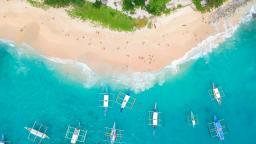




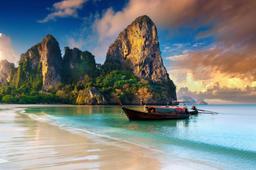
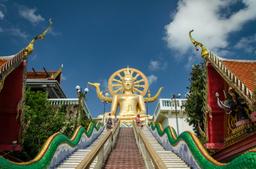
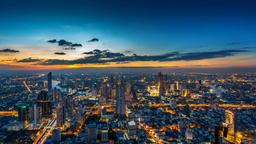









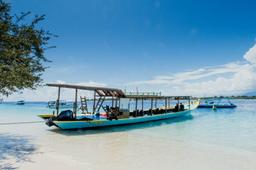




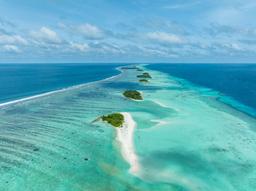
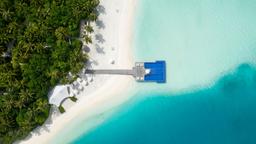
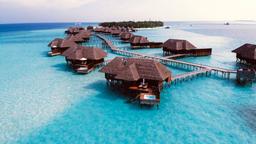




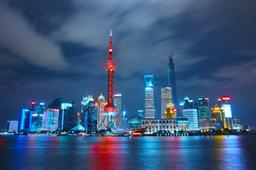

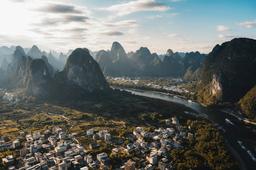
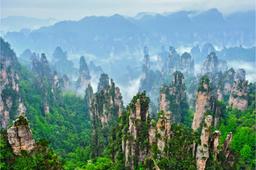
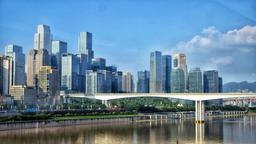




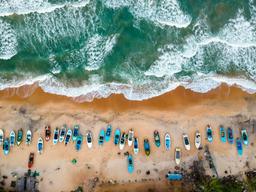
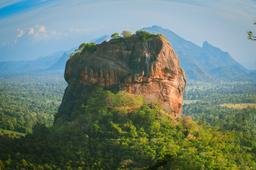
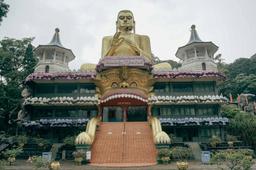



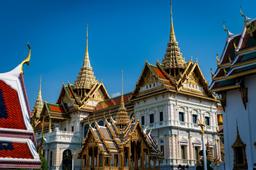














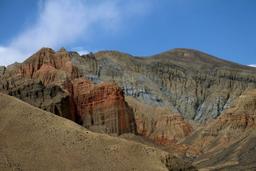




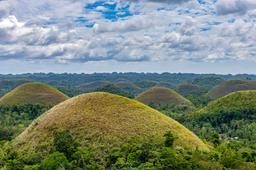
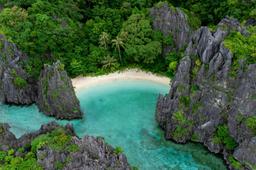
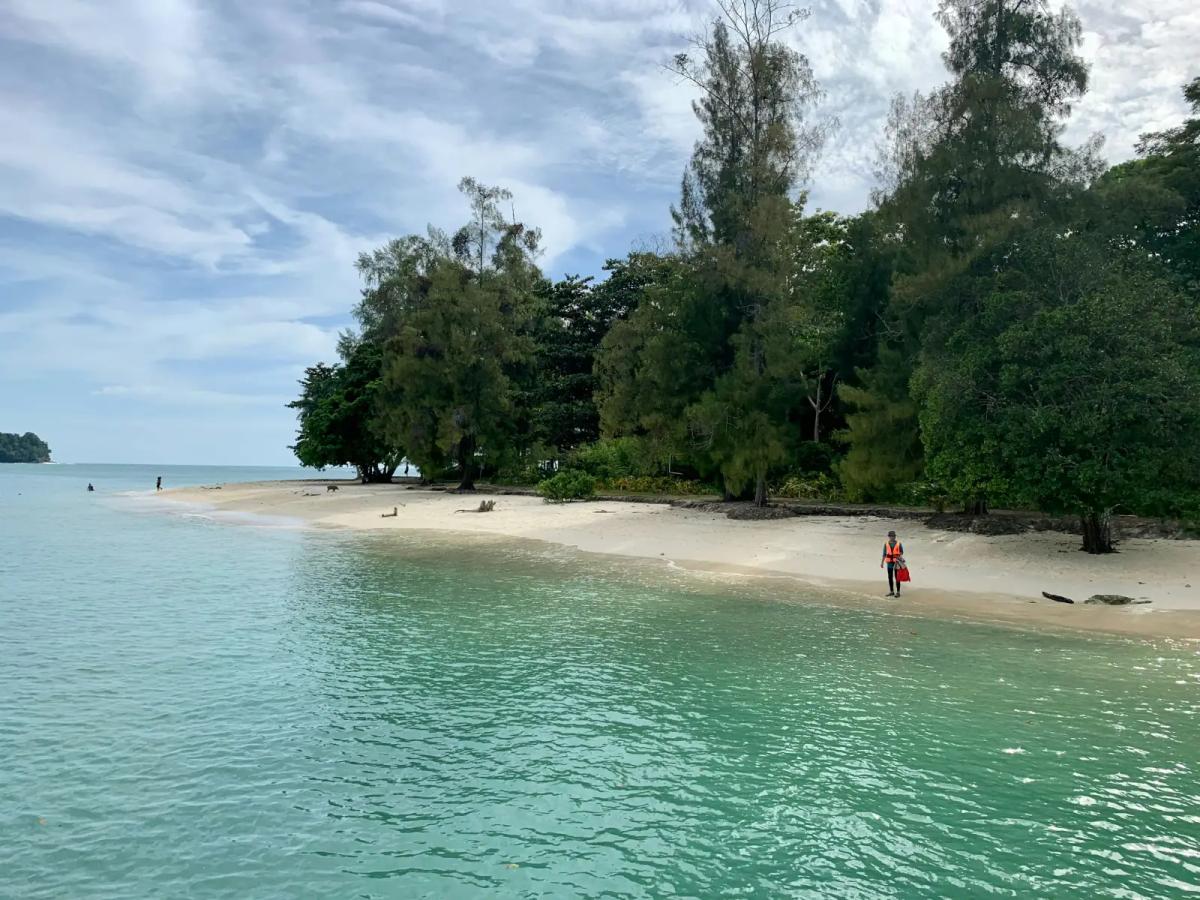
Short answer: in the Thailand vs Malaysia choice, pick Thailand if you want the most famous beaches, a nonstop city like Bangkok, Thai food and a long menu of easy island hops. Pick Malaysia if you want halal food everywhere, English that works almost anywhere, a calmer and more family friendly city in Kuala Lumpur, and a mix of heritage towns, highlands and rainforest. Both are easy from Kathmandu with nonstop flights, both cost roughly the same on the ground, and the right one often depends on your travel month, because their island seasons do not line up.
This guide is for anyone deciding between the two for a holiday: first time travellers from Nepal, honeymooners, families with children, Nepali workers' relatives visiting Malaysia, and the Nepali diaspora flying in from the Gulf, Australia, the UK or the US. It compares beaches, cities, food (including halal, vegetarian and no beef eating), family attractions, month by month weather from the two national weather services, routing from Kathmandu, and how to see both countries in one trip. There are no prices here, only relative costs, because fares and rates change every week. Everything time sensitive is dated, and the sources are official where they exist.
If you want the full picture of one country before comparing, start with our Malaysia travel guide and our Thailand travel guide, then come back here to decide.
Thailand vs Malaysia: which is better for a holiday?
Neither is better for everyone. Thailand is better for a classic beach and party holiday, for variety of islands and for street food as a sport. Malaysia is better for travellers who want halal food without searching, a quieter and more organised city break, theme parks for children and rainforest. For a first trip abroad from Nepal, both work well, and the deciding factor is usually what you want to do on day three, not day one.
Think of it this way. Thailand has built its whole economy around visitors for decades, so almost everything a tourist might want is already packaged and easy: island boats, cooking classes, night markets, elephant sanctuaries, beach clubs. Malaysia is a more everyday country where tourism sits alongside normal life. That makes it calmer, often cleaner around the main sights, and less tiring, but it also means fewer famous beach towns and a quieter nightlife outside Kuala Lumpur and Penang.
The table below sums up the main differences. Read it as a starting point, then use the sections that follow to check the detail that matters to you.
| Criteria | Thailand | Malaysia | Edge |
|---|---|---|---|
| Nonstop flights from Kathmandu | Yes, to Bangkok Suvarnabhumi (scheduled about 3 h 30 min) | Yes, to Kuala Lumpur KLIA (scheduled about 4 h 35 min to 4 h 55 min) | Thailand, slightly shorter |
| Time difference from Nepal | 1 h 15 min ahead (UTC+7) | 2 h 15 min ahead (UTC+8) | Even |
| Beaches and islands | Andaman and Gulf coasts, very wide choice | Langkawi and Penang on the west, Redang, Perhentian and Tioman on the east, plus Borneo | Thailand |
| Capital city | Bangkok: huge, busy, temples, river, markets | Kuala Lumpur: smaller, greener, malls and towers, easier pace | Depends on taste |
| Halal food | Available, especially in Bangkok and the south | The norm in Malay restaurants, JAKIM certification is easy to check | Malaysia |
| Vegetarian and no beef eating | Good, with "jay" vegetarian stalls and dedicated restaurants | Very good thanks to South Indian restaurants and temple food | Malaysia, narrowly |
| Families with young children | Safari World, SEA LIFE Bangkok, Pattaya water parks | Legoland Malaysia, Sunway Lagoon, Genting SkyWorlds, Aquaria KLCC | Malaysia |
| Nightlife | Bangkok, Pattaya, Phuket, Koh Phangan | Mostly Kuala Lumpur and Penang, quieter elsewhere | Thailand |
| English in daily life | Common in tourist areas, patchy outside them | Widely spoken, signs often in Malay and English | Malaysia |
| Shopping | Markets and bargain fashion (Chatuchak, Pratunam) | Big malls in Kuala Lumpur, duty free Langkawi | Depends on taste |
| Cost on the ground | Similar overall, islands like Phuket and Samui pricier | Similar overall, alcohol noticeably pricier | Even |
| Rainforest and wildlife | Khao Sok and national parks | Taman Negara, Borneo orangutans, Mount Kinabalu | Malaysia |
Flight times are scheduled block times for nonstop flights, from airline schedule data checked on 27 October 2026 for Kuala Lumpur and on 17 November 2026 for Bangkok (Airportia flight records for Thai Airways TG320 and Malaysia Airlines MH115). Time differences are fixed: Nepal is UTC+5:45.
Who should pick which, in one line each:
- Honeymooners: Thailand for postcard islands and resort choice (see our Thailand honeymoon guide); Malaysia, with Langkawi or Redang in season, if you want quieter beaches and halal dining (see our Malaysia honeymoon ideas).
- Families with small children: Malaysia, for theme parks, easy English and a calmer capital.
- Friends' groups and solo travellers: Thailand, for nightlife, backpacker infrastructure and island hopping.
- Muslim travellers: Malaysia, where halal is the default rather than something to search for.
- Vegetarian and Hindu travellers: both work; Malaysia's Indian community makes it a little easier.
- Diaspora and relatives of workers in Malaysia: Malaysia, combined with a family visit, then add Thailand if time allows.
- Budget travellers: either; the bigger saving comes from picking the right month and area, not the country.
It is a similar decision to the ones we cover in Malaysia vs Singapore and Bali vs Thailand: the better country is the one that fits your month, your group and the kind of days you enjoy.
How do the beaches and islands compare?
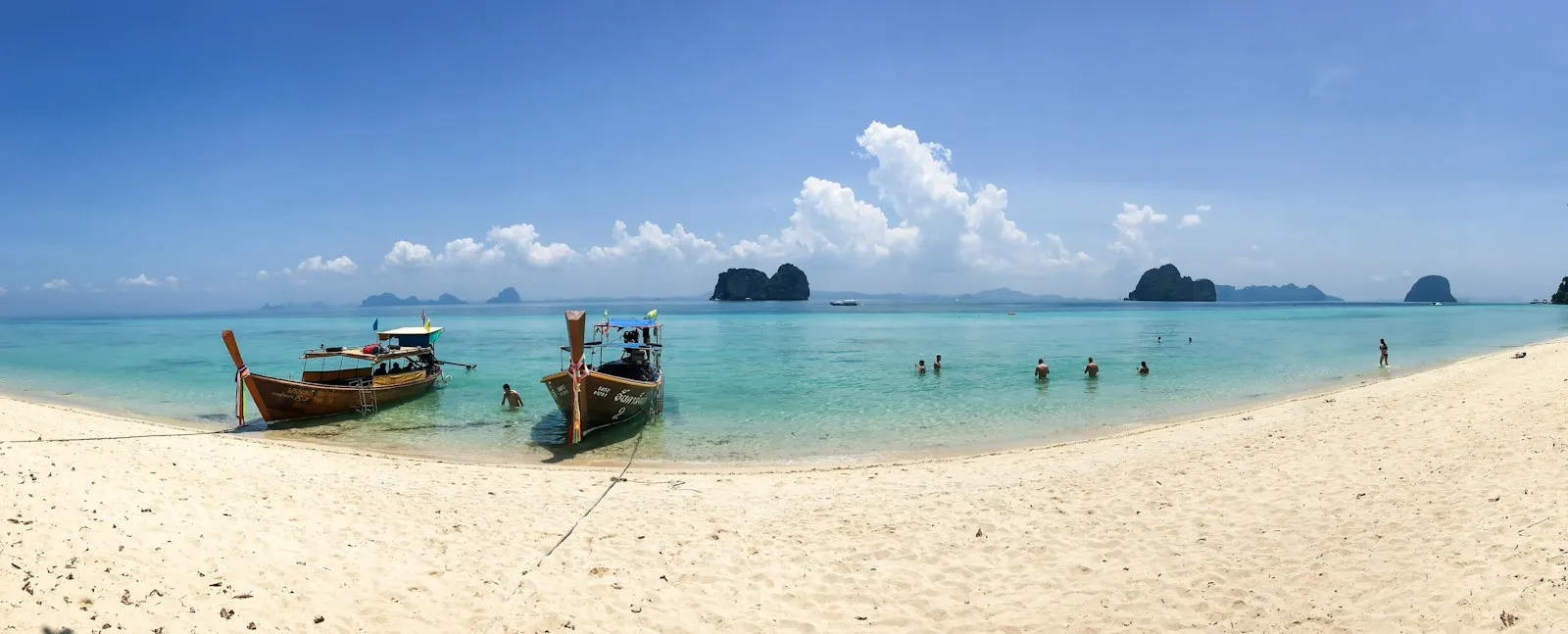
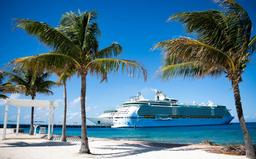
Thailand wins on beaches for most people: more islands, more famous scenery and more choice at every level from simple bungalows to big resorts. Malaysia's beaches are good and often quieter, but the best of them (the east coast islands) are seasonal and close for part of the year. The bigger point is timing: each country has two coasts with opposite wet seasons, so in almost any month there is a good beach somewhere, but not everywhere.
Thailand's two coasts
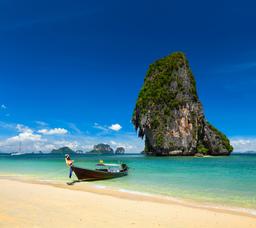
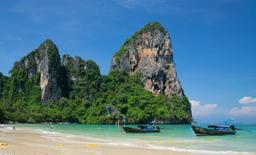
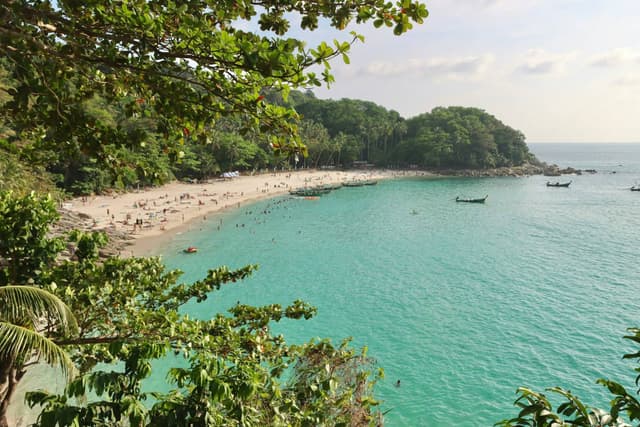
Thailand's southern beaches sit on two seas. The Andaman coast on the west covers Phuket, Krabi (Ao Nang and Railay), the Phi Phi islands, Koh Lanta and, further south near the Malaysian border, Koh Lipe. This is the dramatic side, with limestone cliffs rising out of green water. It is driest from about December to March and wettest from May to October, when the southwest monsoon brings rough seas and some boat trips stop.
The Gulf of Thailand coast on the east covers Koh Samui, Koh Phangan and Koh Tao, plus Pattaya and Koh Larn nearer Bangkok. Its rainy peak comes later, from about October to December, when the northeast monsoon pushes rain onto the lower Gulf. That is why Koh Samui is a good choice in July or August, when Phuket is at its wettest.
Two national park rules are worth knowing because they catch people out. Maya Bay on Koh Phi Phi Leh closes every year from 1 August to 30 September, and the Similan and Surin islands close for about five months over the monsoon (16 May to 14 October in 2025, according to the Thai government's Public Relations Department). Check the current year's dates with the Department of National Parks before you plan a day trip. Our guide to the best islands in Thailand goes island by island.
Malaysia's two coasts and Borneo
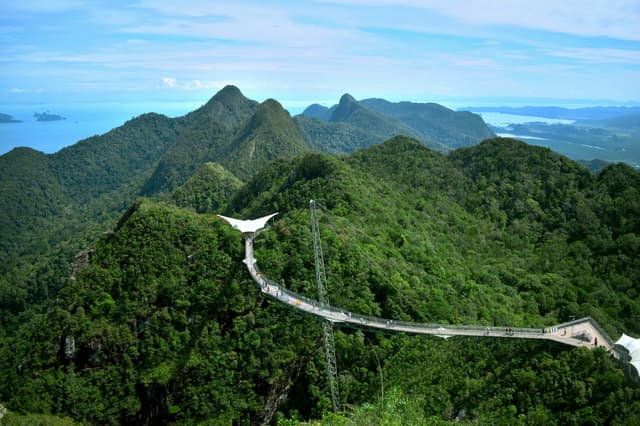
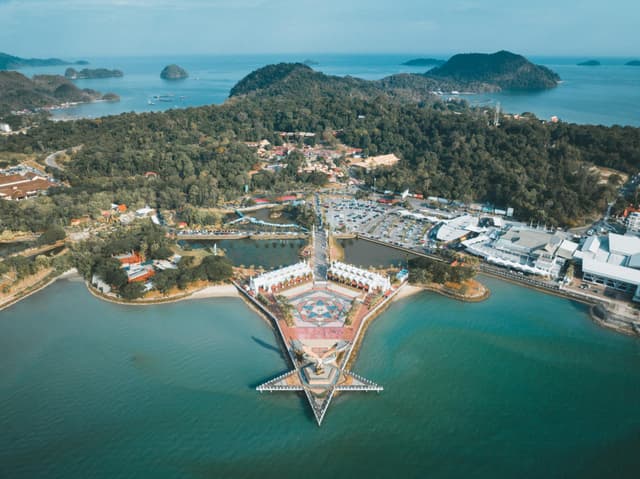
Malaysia's beach choice splits the same way. The west coast faces the Strait of Malacca and the Andaman Sea: Langkawi, an island group close to the Thai border, and Penang, where Batu Ferringhi is the main beach. They stay open all year, but they are at their best from December to March; from about August to October Langkawi and Penang get their heaviest rain (1991 to 2020 station normals, see the weather section below). The sea is rarely as clear as on the east coast, and Penang is more a food and heritage stop than a beach one. Our Langkawi travel guide covers the island in detail.
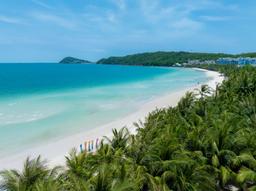
The east coast of Peninsular Malaysia faces the South China Sea and has the country's best water: Redang, the Perhentians, Tioman and Kapas. These islands are excellent for snorkelling and quiet beach days from roughly April to September. From about November to March the northeast monsoon hits this coast hard, and boat services and many island resorts close or scale back. The Malaysian Meteorological Department (MetMalaysia) declared the 2026 to 2027 northeast monsoon started on 27 October 2026 and expects it to continue until March 2027, with three to five episodes of continuous heavy rain forecast between November and January.
Malaysian Borneo (Sabah and Sarawak) adds island parks off Kota Kinabalu and famous diving off Sabah's east coast. One safety note: the UK Foreign, Commonwealth and Development Office (FCDO) advises against all but essential travel to the islands and dive sites off eastern Sabah from Sandakan to Tawau because of the threat of kidnapping; this does not apply to mainland Sabah (FCDO Malaysia travel advice, last updated 19 March 2026).
The table below puts the main beach areas side by side by season. It is a guide to typical conditions, not a forecast.
| Beach area | Country and coast | Usually best | Usually wettest or closed | Feel |
|---|---|---|---|---|
| Phuket, Krabi, Phi Phi, Koh Lanta | Thailand, Andaman | December to March | May to October | Big choice, busy, dramatic cliffs |
| Koh Samui, Koh Phangan, Koh Tao | Thailand, Gulf | February to August | October to December | Resorts, diving, Full Moon Party |
| Pattaya and Koh Larn | Thailand, upper Gulf | November to March | August to October | Close to Bangkok, lively, family water parks |
| Langkawi | Malaysia, west | December to March | August to October (wettest) | Relaxed, cable car, duty free |
| Penang (Batu Ferringhi) | Malaysia, west | December to March | September and October (wettest) | Food and heritage first, beach second |
| Redang, Perhentian, Tioman | Malaysia, east | April to September | November to March (many closures) | Clear water, quiet, simple to mid range |
Verdict on beaches: Thailand, especially if you travel between December and March and want the Andaman scenery, or between June and August for the Gulf islands. Malaysia's east coast islands are a strong pick from April to September, and they are usually less crowded than their Thai equivalents. For a fuller rundown of Malaysia's coast, see our guide to the best beaches in Malaysia.
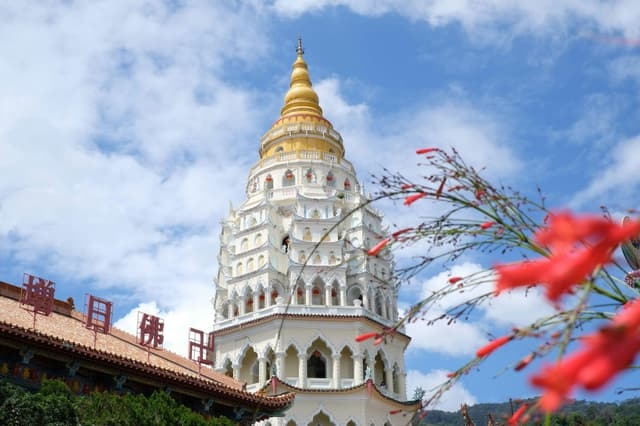
How do Bangkok and Kuala Lumpur compare?
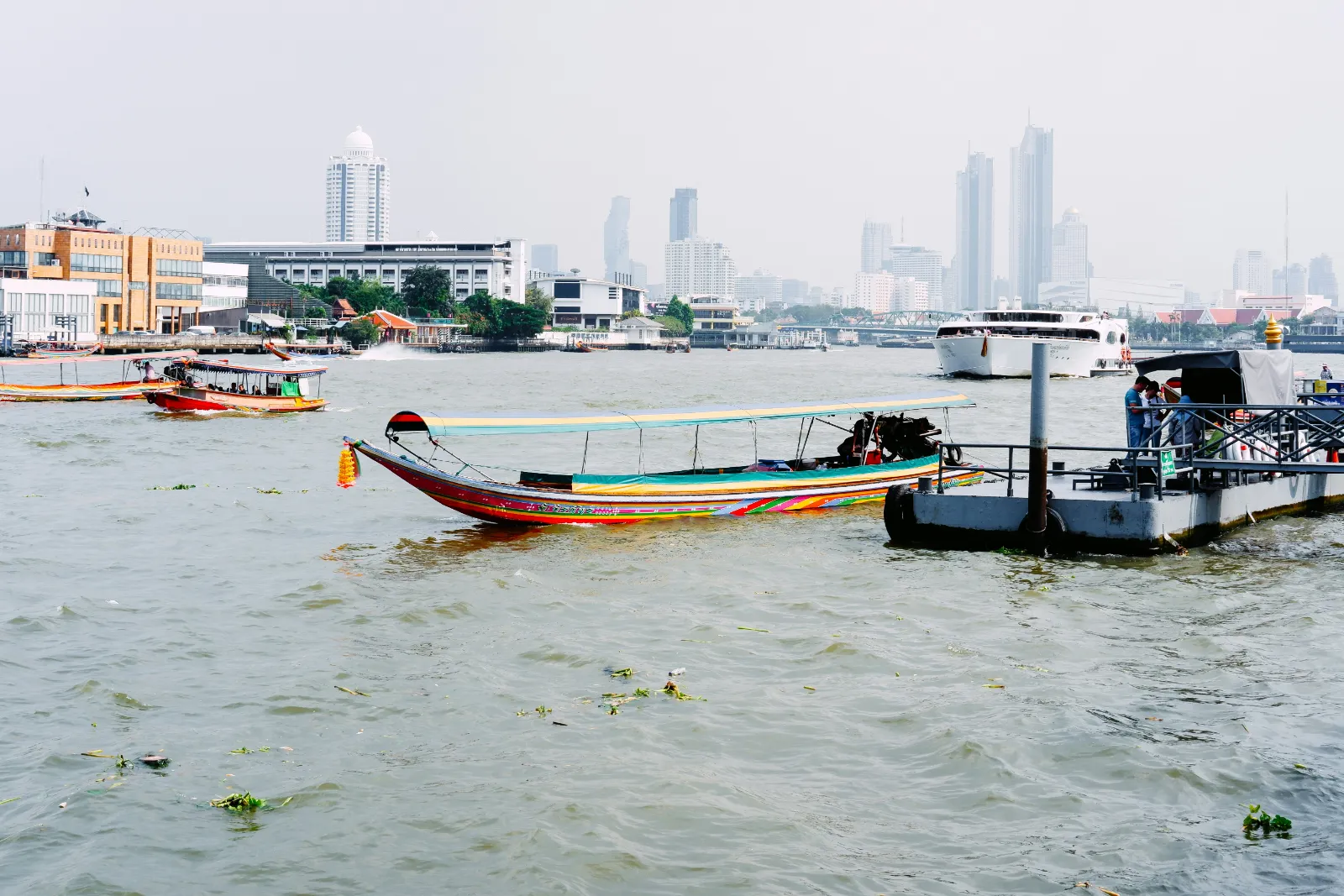
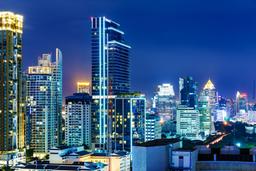
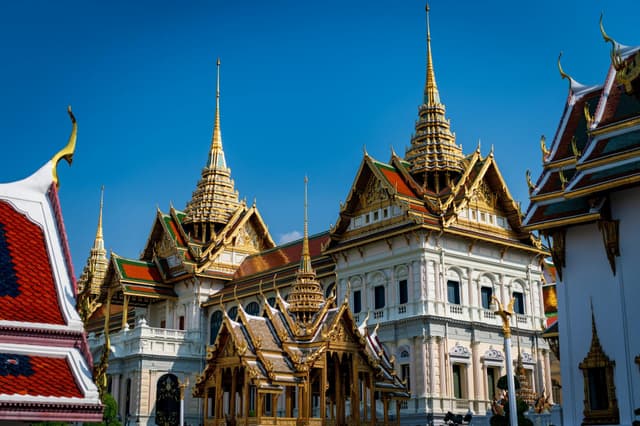
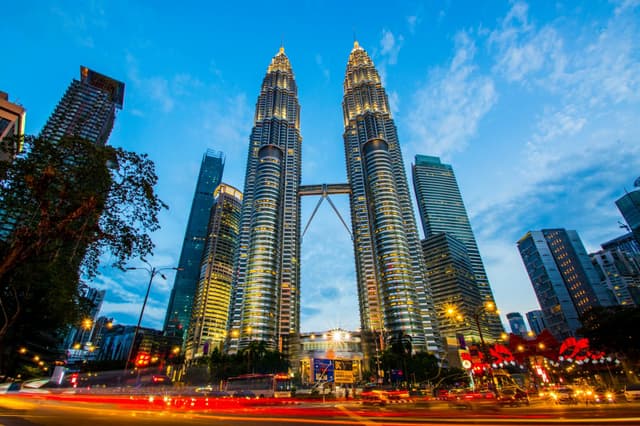
Bangkok is the more exciting city and Kuala Lumpur is the easier one. Bangkok has the grander sights (the Grand Palace, Wat Pho, Wat Arun), the river, the markets and a food scene that runs almost all night. Kuala Lumpur is smaller and calmer, with the Petronas Twin Towers, Batu Caves, big air conditioned malls and a centre you can learn in a day. If the city is the main event, choose Bangkok; if the city is a comfortable base between other places, Kuala Lumpur is less tiring.
Bangkok rewards three or four days. The old royal quarter on Rattanakosin island, the riverside temples, the Chao Phraya ferries, Chatuchak Weekend Market and the evening food streets give you a lot to see, but traffic is heavy and the heat is serious from March to May. The BTS Skytrain and MRT metro are the way to beat the roads. Our area by area guide to Bangkok breaks the city into manageable pieces.
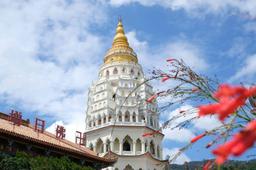
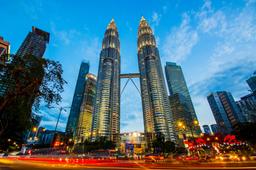
Kuala Lumpur works in two or three days. The Petronas Twin Towers and KLCC Park, Merdeka Square and the Sultan Abdul Samad Building, Bukit Bintang's malls and food streets, and Batu Caves just north of the city cover most first visits. The LRT, MRT, monorail and KTM trains link most sights, and ride hailing is simple. Batu Caves matters to many Nepali Hindu travellers: its huge golden statue of Lord Murugan and the Temple Cave make it a major Hindu pilgrimage site, busiest at the Thaipusam festival. Our list of things to do in Kuala Lumpur has the details.
| City detail | Bangkok | Kuala Lumpur |
|---|---|---|
| Arrival airport from Kathmandu | Suvarnabhumi (BKK) for Thai Airways; Bangkok's second airport, Don Mueang (DMK), mainly serves low cost airlines | KLIA Terminal 1 for the nonstop airlines |
| Airport to city by rail | Airport Rail Link from Suvarnabhumi into the city | KLIA Ekspres to KL Sentral, about 28 minutes |
| Signature sights | Grand Palace, Wat Pho, Wat Arun, Chao Phraya River | Petronas Twin Towers, Batu Caves, Merdeka Square |
| Pace | Fast, crowded, 24 hour feel | Calmer, organised, mall centred |
| Getting around | BTS Skytrain, MRT, river boats, ride hailing | LRT, MRT, monorail, KTM, ride hailing |
| Best for | Temples, markets, street food, nightlife | Shopping, families, Hindu and Muslim heritage, food courts |
| Language on the street | Thai; English in tourist areas | Malay, English widely used, plus Chinese and Tamil |
| Currency | Thai baht (THB) | Malaysian ringgit (MYR) |
| Easy side trips | Ayutthaya, floating markets, Pattaya | Genting Highlands, Malacca, Putrajaya |
The KLIA Ekspres journey time is from the operator (kliaekspres.com), as checked for our Kathmandu to Kuala Lumpur flight guide on 27 October 2026.
A practical difference for Nepali travellers: Kuala Lumpur often feels more familiar. Many Nepalis live and work in Malaysia, Nepali is heard in parts of the city, and Hindu temples, Indian restaurants and Deepavali lights (around the same time as Tihar) are part of daily life. Bangkok feels more foreign, which many travellers enjoy for exactly that reason.
Verdict on cities: Bangkok for sightseeing and energy, Kuala Lumpur for comfort, families and an easier first city abroad.
Which is easier for food, halal and vegetarian?
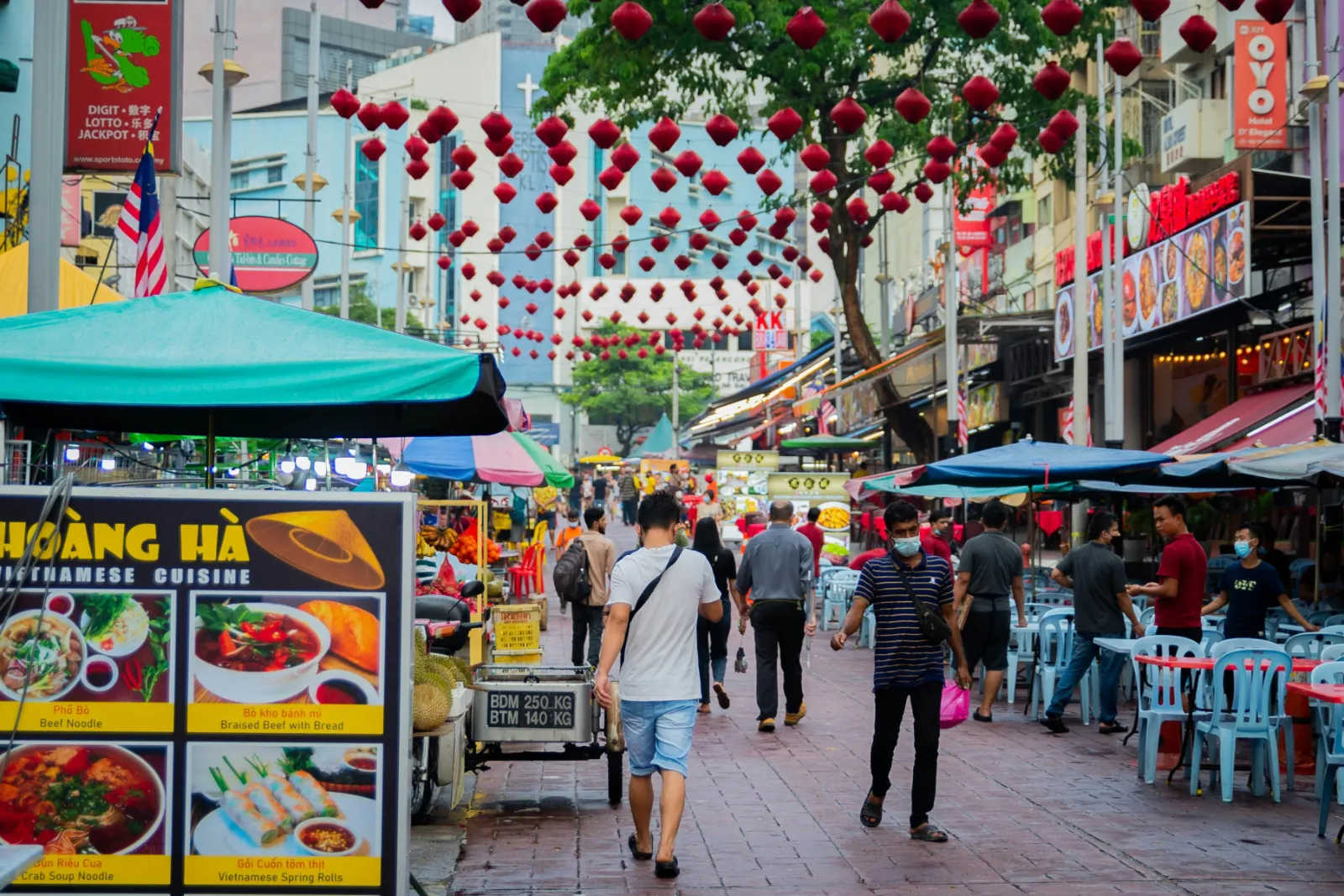
Malaysia is easier for halal food and slightly easier for vegetarian and no beef eating; Thailand is the more famous food destination overall. In Malaysia, most Malay restaurants and many chains are halal, and you can check certification on an official government portal. In Thailand, halal food is available but you look for it, and vegetarians rely on "jay" food and dedicated restaurants. Both countries feed vegetarians and Hindu travellers well once you know the words.
Halal food
Islam is the faith of about 63.5% of Malaysia's population according to the 2020 national census by the Department of Statistics Malaysia, and halal food is the default in Malay restaurants, hawker stalls run by Malay or Indian Muslim cooks, and many international chains. Halal certification is run by JAKIM, the Department of Islamic Development Malaysia, through the official Halal Malaysia portal, which has a search tool to verify the halal status of food premises and products. Chinese restaurants and some food courts are often not halal, so if it matters to you, look for the certificate or ask.
In Thailand, halal certification is issued by the Central Islamic Committee of Thailand, whose halal affairs office runs halal.or.th. You will find halal restaurants near mosques in Bangkok, in many tourist areas of Phuket and Krabi, and widely in the far south, where Muslim communities are large. It works well with a little planning, but a halal meal is not on every corner the way it is in Malaysia.
Vegetarian and no beef eating
For vegetarians, Thailand's best friend is "jay" (also spelled "je" or "jeh") food: a strict vegetarian style from Chinese Buddhist tradition, usually shown with a yellow flag or sign with red lettering. Jay food leaves out meat, fish sauce, dairy and eggs, and often garlic and onion too. The Thai word for ordinary vegetarian is "mangsawirat". Ask for dishes "mai sai nam pla" (no fish sauce), because fish sauce turns up in many curries and salads that look vegetarian. Phuket's Vegetarian Festival, usually held in late September or October, turns much of the island's food jay for nine days.
Malaysia has an advantage in its large South Indian community. Banana leaf rice, thosai, idli and vegetarian thali style meals are easy to find in Brickfields (Kuala Lumpur's Little India), in Penang's Little India in George Town, and near most Hindu temples. Many of these restaurants are fully vegetarian. For travellers from Nepal this is often comfort food, and it is a reliable way to eat well without worrying about ingredients.
For Hindu travellers who avoid beef, both countries need a little care:
- Thailand: most Thai food uses pork, chicken or seafood, but beef appears in some noodle soups (boat noodles and beef noodle shops), some curries and grilled meat stalls. "Mai gin neua wua" means "I don't eat beef".
- Malaysia: Malay cooking uses beef in dishes such as rendang and some satay, so ask before you order. Chinese food in Malaysia, as in Thailand, leans to pork and chicken. South Indian vegetarian restaurants are the simplest option.
- Both: hotel breakfasts in both countries label dishes well, and staff in tourist areas understand "no beef".
| Diet | Thailand | Malaysia |
|---|---|---|
| Halal | Available, especially near mosques and in the south; look for the Thai halal logo | Default in Malay restaurants; verify on the JAKIM Halal Malaysia portal |
| Vegetarian | Jay stalls, vegetarian restaurants; watch for fish sauce | South Indian vegetarian restaurants, Chinese vegetarian shops |
| No beef | Mostly easy; check noodle soups and curries | Mostly easy; check Malay dishes like rendang and satay |
| Spice level | Often very hot; ask for "mai phet" (not spicy) | Varies; sambal usually served on the side |
| Street food culture | Night markets, food streets, stalls everywhere | Hawker centres and food courts, Penang is the highlight |
Our guides to Bangkok street food and what to eat in Malaysia name the dishes worth trying, and Penang, often called Malaysia's food capital, is covered in our things to do in Penang guide.
Verdict on food: Malaysia for halal and for the easiest vegetarian and no beef meals; Thailand for food as the highlight of the trip.
Which is better for families?
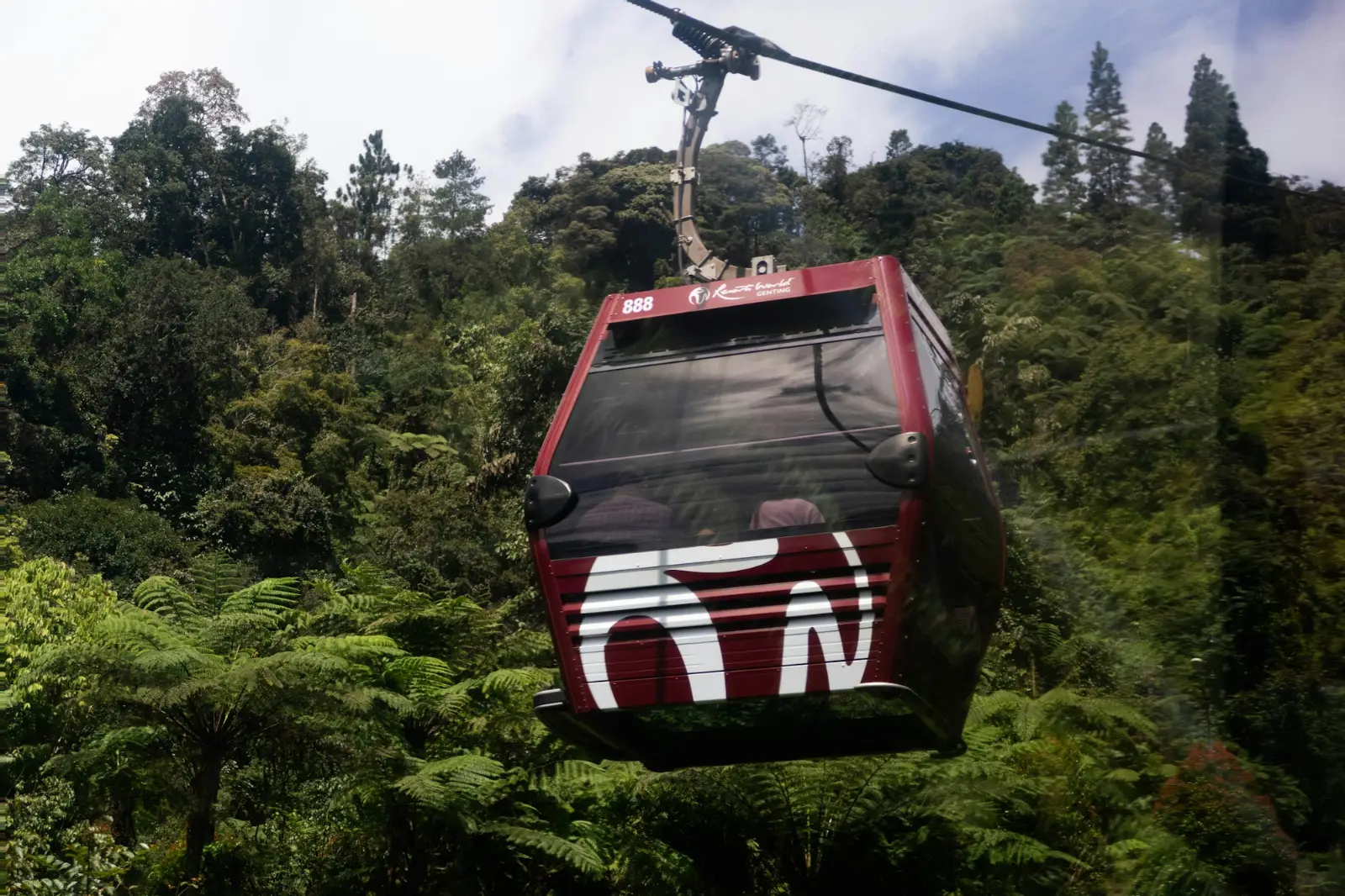
Malaysia is the easier family destination, especially with young children: English is widely understood, Kuala Lumpur is calmer than Bangkok, and the theme parks are a bigger draw. Thailand is a great family trip too, particularly a Bangkok and Pattaya combination or a resort holiday in Phuket, but it asks a little more of parents in heat, traffic and crowds.
Malaysia's family highlights:
- Legoland Malaysia Resort in Johor, near the Singapore border, with a theme park and water park aimed at younger children.
- Sunway Lagoon near Kuala Lumpur, a water park and theme park in one.
- Genting SkyWorlds and the cooler air of Genting Highlands, reached by cable car.
- Aquaria KLCC and KL Bird Park in Kuala Lumpur.
- Langkawi for an easy beach, the cable car and boat trips, and Penang for street art and Escape Penang's outdoor adventure park.
Thailand's family highlights:
- Safari World on the edge of Bangkok, and SEA LIFE Bangkok Ocean World under Siam Paragon mall.
- Pattaya, roughly two hours from Bangkok by road, with Ramayana Water Park, Columbia Pictures Aquaverse and day trips to Koh Larn.
- Phuket and Krabi resorts with kids' clubs, calm bays in the dry season and short boat trips.
A few family practicalities make the difference. Bangkok's heat peaks in April, when the Thai Meteorological Department's 1991 to 2020 normal for the mean daily maximum in Bangkok is 35.6°C; that is a hard month for small children. Malaysia is hot and humid all year but rarely as fierce, and the highlands give a cooler break. Pavements and road crossings in both capitals can be awkward with prams; plan on taxis or ride hailing for short hops. In both countries, choose a hotel near a rail station to cut down on traffic time.
Thinking about Nepali school holidays: the Dashain and Tihar break in October and early November is the busiest booking window from Kathmandu. That timing is wet almost everywhere: October is the rainiest month of the year in Penang and Langkawi, the Gulf islands and Malaysia's east coast are entering their wettest weeks, and Thailand's Andaman side only improves through November. City breaks in Bangkok and Kuala Lumpur, with indoor plans for afternoon storms, are the safer family choice at that time. Our Malaysia with family guide has ages and ideas by park.
Verdict for families: Malaysia for young children and first family trips abroad; Thailand for families with older children who want beaches, boats and a livelier holiday.
Which has better weather in your travel month?
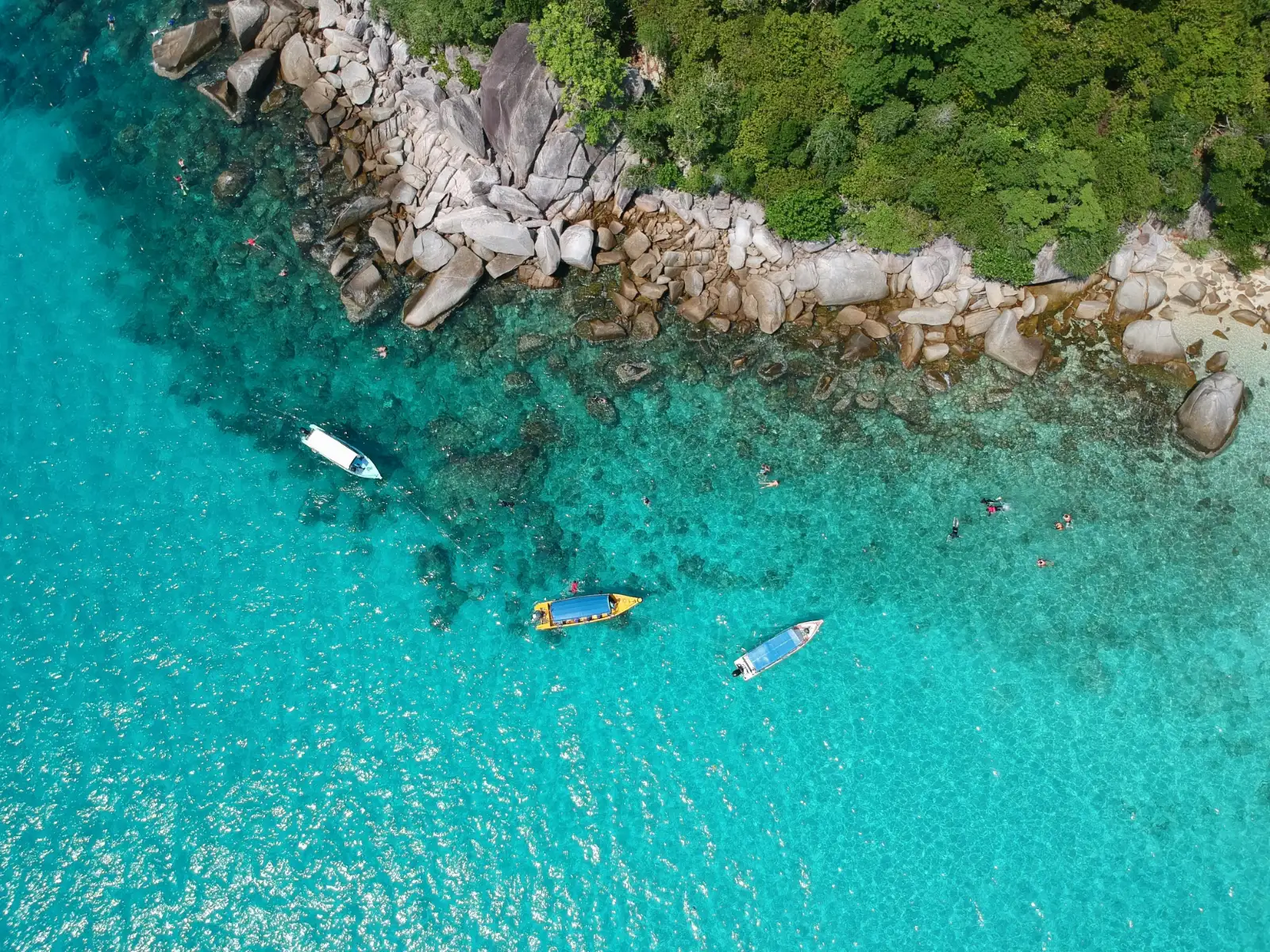
Neither country has better weather all year; each has a best month for each coast. From December to March, Thailand's Andaman coast, Bangkok, Penang and Langkawi are at their best. From April to September, Malaysia's east coast islands and Thailand's Gulf islands are the stronger choice. Kuala Lumpur is the odd one out: it gets heavy showers in every month, with the least rain from June to August. October and November are the trickiest months in both countries, because the west coast of Malaysia is at its wettest and the rain then shifts to the eastern coasts.
The table below uses official climate normals. For Thailand, the figures are the Thai Meteorological Department's (TMD) average monthly rainfall for 1991 to 2020, taken from its official three month climate outlooks issued in 2026. TMD's "Southern east coast" covers the Gulf side, including the Koh Samui area, and "Southern west coast" covers the Andaman side, including Phuket and Krabi. For Malaysia, the figures are the World Meteorological Organization (WMO) 1991 to 2020 station normals for Subang airport (Kuala Lumpur) and Bayan Lepas airport (Penang); Langkawi follows the Penang pattern, with its rainiest months from August to October. Malaysia's east coast islands are described in words, using MetMalaysia's monsoon announcements for 2026, because we could not reach MetMalaysia's climate data pages when we checked. In the inter-monsoon periods, MetMalaysia says the storms come mainly in the late evening and early night, especially in the west and interior of the peninsula.
| Month | Bangkok rain (mm) | Thai Andaman coast rain (mm) | Thai Gulf coast rain (mm) | Kuala Lumpur rain (mm) | Penang rain (mm) | Malaysia east coast islands |
|---|---|---|---|---|---|---|
| January | 21.8, dry | 50.2, dry | 112.0, easing | 226.7, showery | 80.3, dry | Northeast monsoon, most island services closed |
| February | 17.7, dry | 30.2, driest | 44.2, dry | 192.8, showery | 85.8, dry | Northeast monsoon, mostly closed |
| March | 48.6, hot | 103.6, dry to showery | 89.8, good | 270.4, wet | 145.5, showers rising | Monsoon ending; islands start reopening |
| April | 95.0, hottest | 162.2, showers rising | 85.9, good | 301.5, inter-monsoon storms | 188.4, wet | Season opening |
| May | 207.1, rains begin | 300.6, wet | 132.6, fair | 229.9, wet | 229.1, wet | Island season |
| June | 195.8, wet | 335.5, wet | 118.7, fair | 145.8, least rain | 163.5, fair | Island season |
| July | 183.4, wet | 349.4, wet | 119.6, fair | 165.2, drier | 189.8, fair | Peak island season |
| August | 211.7, wet | 419.2, very wet | 130.6, fair | 174.3, drier | 246.3, wet | Peak island season |
| September | 325.8, wettest | 429.2, wettest | 147.0, fair | 220.3, wet | 316.4, very wet | Season winding down |
| October | 244.2, wet | 368.8, very wet | 253.6, wet | 283.8, inter-monsoon storms | 336.6, wettest | Northeast monsoon began 27 October in 2026 |
| November | 43.5, drying | 193.1, improving | 361.4, wettest | 355.8, wettest | 232.8, wet | Northeast monsoon, closures |
| December | 12.1, dry | 91.5, good | 296.0, wet | 280.6, wet | 116.5, drying | Heaviest rain episodes forecast November to January |
Sources: TMD three month climate predictions issued between January and October 2026 (normal baseline 1991 to 2020); WMO 1991 to 2020 climate normals for Subang and Bayan Lepas; MetMalaysia announcements, as reported by The Star (inter-monsoon from 29 March 2026), Malay Mail (southwest monsoon from 14 May 2026, expected to last until September) and The Vibes (northeast monsoon from 27 October 2026, expected until March 2027). Checked: 18 November 2026.
How to read it, month by month:
- December to February: best for Bangkok, Phuket, Krabi, Langkawi and Penang. Avoid planning around Malaysia's east coast islands.
- March and April: good on most Thai beaches, still fairly dry in Penang and Langkawi in March, very hot in Bangkok, and stormy in Kuala Lumpur, where April is one of the wettest months. Mid April brings Thailand's Songkran water festival (13 to 15 April), which falls right on top of Nepali New Year, a fun bonus for many families.
- May to September: Malaysia's east coast islands and Thailand's Gulf islands are the safer beach picks. Bangkok and Kuala Lumpur still work, with showers.
- October and November (Dashain and Tihar): both countries are at their least reliable for beaches. October is the wettest month in Penang and Langkawi and November in Kuala Lumpur, so plan city days with indoor options. Bangkok dries out quickly in November, and the Andaman side improves through the month.
TMD's November 2026 to January 2027 outlook also warns that tropical cyclones may pass near southern Thailand in November and that the east coast may see flash floods. If you are travelling in the next few weeks, follow the TMD and MetMalaysia forecasts. For the full month by month detail, see our guides to the best time to visit Thailand and the best time to visit Malaysia.
Verdict on weather: December to March favours Thailand's Andaman coast, with Penang and Langkawi a good Malaysian match; June to August favours Malaysia's east coast; in October and November, city breaks with indoor plans are the safest choice in both countries, and Bangkok has the edge in November.
Which is easier to reach from Kathmandu?
Both are easy, with nonstop flights from Tribhuvan International Airport. Bangkok is the shorter flight at about three and a half hours scheduled; Kuala Lumpur takes about four and three quarter hours and has more airlines on the route. In practice, the choice of country should come from what you want to do there, not from the flight.
| Route detail | Kathmandu to Bangkok | Kathmandu to Kuala Lumpur |
|---|---|---|
| Nonstop airlines | Thai Airways; Nepal Airlines, with irregular operations; FlightConnections also lists a Thai Lion Air schedule to Don Mueang from October 2026, so confirm it is operating | Malaysia Airlines, Batik Air Malaysia, Himalaya Airlines, Nepal Airlines |
| Scheduled flight time | About 3 h 20 min to 3 h 30 min | About 4 h 35 min to 4 h 55 min |
| Arrival airport | Suvarnabhumi (BKK); Don Mueang (DMK) for the Thai Lion Air schedule | KLIA Terminal 1 |
| Busiest booking period | October (Dashain and Tihar) | October (Dashain and Tihar), plus steady worker traffic all year |
Route data: our Kathmandu to Bangkok flight guide (checked 12 October 2026) and Kathmandu to Kuala Lumpur flight guide (checked 27 October 2026); Thai Airways TG320 and Malaysia Airlines MH115 confirmed operating on 16 and 17 November 2026 on Airportia; airline lists per route checked on FlightConnections on 18 November 2026 (Malaysia Airlines, Batik Air, Himalaya Airlines and Nepal Airlines to Kuala Lumpur). Schedules change by season, so confirm with the airline before you book. The full details, including terminals and airport transfers, are in our guides to the Kathmandu to Bangkok flight and the Kathmandu to Kuala Lumpur flight.
Entry rules are different for each country and differ again by passport. Nepali passport holders and Nepali diaspora travelling on other passports should check our Thailand visa guide and Malaysia visa guide, which are kept up to date. Both countries also use an online arrival card that most visitors must submit before arrival: the Thailand Digital Arrival Card (TDAC) and the Malaysia Digital Arrival Card (MDAC). Use only these official government sites; copycat sites exist for both.
The UK FCDO updated its Thailand entry requirements page on 12 October 2026 with new information for travellers entering by land or air, a reminder that rules move. Check your own passport's position close to departure.
Verdict on access: a draw. Bangkok is a little quicker, Kuala Lumpur has more flight options.
Which costs less once you are there?
Overall, Thailand and Malaysia cost about the same for a typical holiday, and the area you choose matters more than the country. Thai islands such as Phuket, Koh Samui and Phi Phi are noticeably pricier than Bangkok or the mainland. In Malaysia, Kuala Lumpur and Penang are good value, Langkawi is mid range, and Borneo costs more once you add guides and internal flights. Alcohol is noticeably pricier in Malaysia than in Thailand, while Langkawi's duty free status makes it the exception.
| Spending area | Thailand | Malaysia |
|---|---|---|
| Street food and hawker meals | Cheap | Cheap |
| Mid range hotels in the capital | Good value, very wide choice | Good value |
| Beach resorts | Wide range; popular islands pricier in peak season | Fewer options; east coast islands simple to mid range |
| City transport | Cheap rail and ride hailing; taxis can be slow in traffic | Cheap rail and ride hailing |
| Attractions and theme parks | Moderate | Theme parks are the bigger family spend |
| Alcohol | Moderate | Pricier, except on duty free Langkawi |
| Shopping | Cheapest for market fashion and bargaining | Strong for malls and branded goods; duty free Langkawi |
Both countries use their own currency, the Thai baht and the Malaysian ringgit; Nepali rupees are not widely exchanged in either country, so travellers from Nepal usually carry US dollars to exchange on arrival. For honest daily budget detail, read our guides Is Thailand expensive? and Is Malaysia expensive?
Verdict on cost: even. Choose a mainland base in either country to stretch your money further, and avoid peak festival weeks if price matters most.
Can you combine both in one trip?
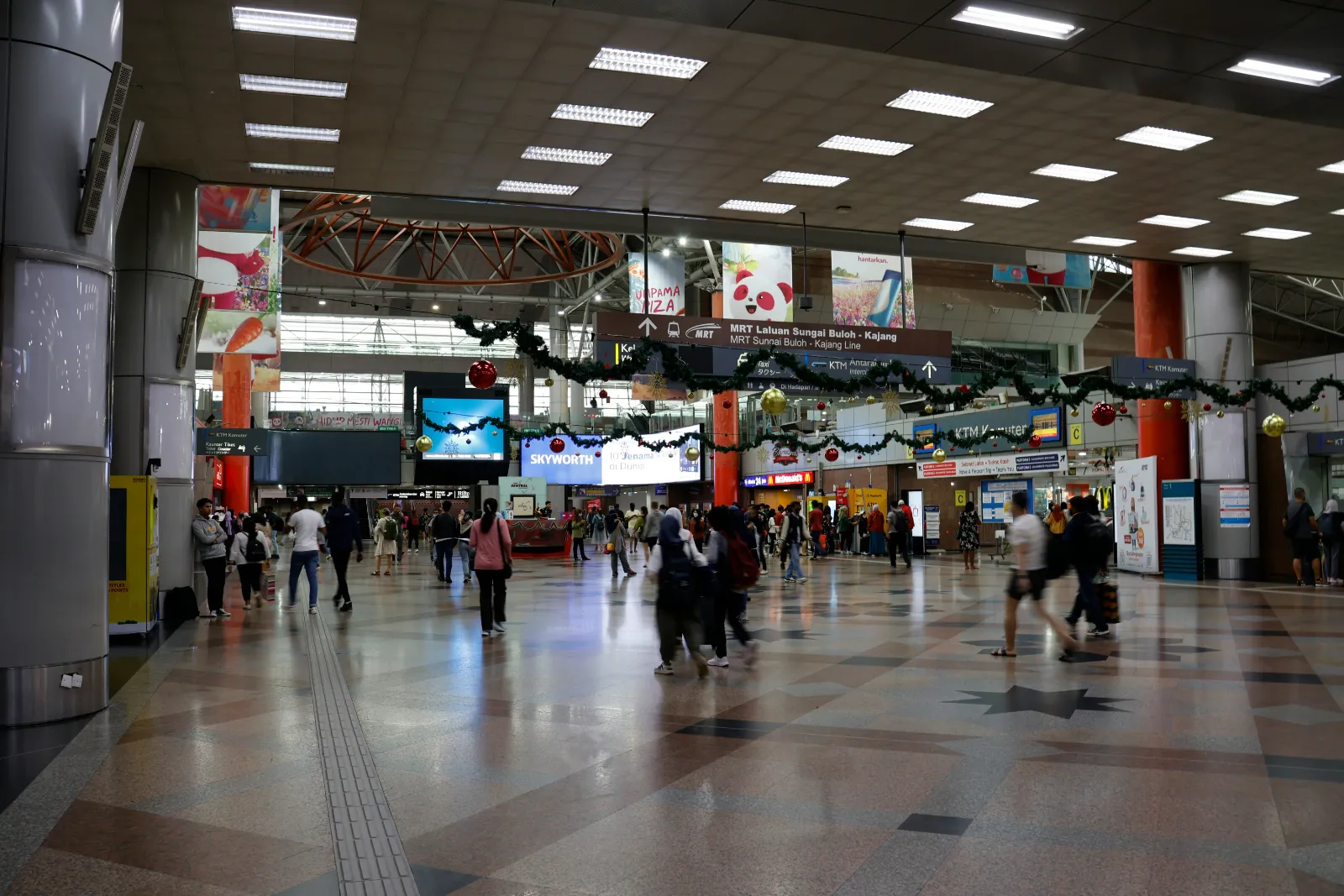
Yes, and from Kathmandu it is easier than most people think, because both capitals have nonstop flights home. The simplest plan is an open jaw ticket: fly Kathmandu to Kuala Lumpur, travel north, and fly Bangkok to Kathmandu, or the other way round. Between the two countries, a short flight is the practical choice for most travellers; the overland train is possible but slower and comes with a travel advisory you should read first.
By air
Kuala Lumpur and Bangkok are linked by many daily nonstop flights. FlightConnections lists about 67 flights a week between Suvarnabhumi and Kuala Lumpur (Malaysia Airlines, Thai Airways and Thai Vietjet Air) and about 88 a week between Don Mueang and Kuala Lumpur (AirAsia, Batik Air and Thai AirAsia), with a flight time of about 2 hours 20 minutes to 2 hours 25 minutes (checked: 18 November 2026). Check which Bangkok airport your flight uses, because Suvarnabhumi and Don Mueang are far apart.
By train
The rail route runs Kuala Lumpur to Bangkok via the border station at Padang Besar:
- Malaysia: KTMB's ETS electric trains run up the west coast from KL Sentral via Ipoh and Butterworth (for Penang) to Padang Besar, which KTMB itself describes as a border town with access to Thailand (ktmb.com.my, checked 18 November 2026).
- The border: short State Railway of Thailand (SRT) shuttle trains connect Padang Besar with Hat Yai Junction in southern Thailand.
- Thailand: SRT's long distance trains, including Special Express 45 and 46, run between Bangkok's Krung Thep Aphiwat Central Terminal and Padang Besar or Hat Yai, mostly overnight.
Two cautions are important. First, this line is exposed to floods: in late November 2025, flooding around Hat Yai suspended the Padang Besar to Hat Yai service and southern trains, and SRT resumed Special Express 45 and the Hat Yai to Padang Besar shuttles only on 7 and 8 December 2025 (SRT announcement reported by Nation Thailand, 7 December 2025). KTMB's occasional through train from KL Sentral to Hat Yai, branded MySawasdee, was also halted after those floods; KTMB said it would return from 30 January 2026 on selected dates (reported by Carz Malaysia). Second, the UK FCDO advises against all but essential travel to Pattani, Yala and Narathiwat provinces, the Chana, Thepa, Na Thawi and Saba Yoi districts of southern Songkhla, and on the Hat Yai to Padang Besar train line, because of regular attacks in the provinces by the border with Malaysia (FCDO Thailand travel advice, updated 12 October 2026, checked 18 November 2026). The FCDO notes that travelling against its advice can invalidate travel insurance, which matters for diaspora travellers on British passports; check your own government's advice too.
We could not reach the State Railway of Thailand's own website on 18 November 2026, so check the current timetable and any suspension notices with SRT and KTMB directly before planning a rail crossing. For most holidaymakers, especially families, flying between the two countries is simpler and avoids the advisory area entirely. Our guide on how to get around Thailand covers Thai trains and domestic flights in more detail.
Sample shapes for a combined trip
Without turning this into a day by day plan, these combinations work well from Kathmandu:
| Trip style | Malaysia part | Thailand part | Best months |
|---|---|---|---|
| Cities and shopping | Kuala Lumpur and Genting | Bangkok | November to March |
| Beach and city, west side | Kuala Lumpur and Langkawi or Penang | Phuket or Krabi, then Bangkok | December to March |
| Island summer | Kuala Lumpur and Redang or Tioman | Koh Samui, then Bangkok | June to August |
| Family visit plus holiday | Time with relatives in Malaysia | Bangkok and Pattaya | Any month, beach choice by season |
Ten days or more is comfortable for both countries; with a week, most travellers enjoy one country more than a rushed two. If Malaysia is your main stop, our Malaysia tour packages page shows how trips there are usually put together, from city stays to Langkawi and the islands, and the Singapore vs Thailand comparison helps if you are weighing a three country route.
Frequently asked questions
Is Thailand better than Malaysia?
Thailand is better for famous beaches, island hopping, nightlife and Bangkok's big city energy. Malaysia is better for halal food, easy English, family theme parks and a calmer capital. For a first trip from Nepal, both are good choices; decide by your travel month and the kind of holiday your group wants.
Which is cheaper, Thailand or Malaysia?
Thailand and Malaysia cost about the same for a typical holiday. Street food is cheap in both. Thai islands such as Phuket and Koh Samui are pricier than Bangkok, while alcohol is noticeably pricier in Malaysia except on duty free Langkawi. Your area and month matter more than the country.
Which has better beaches, Thailand or Malaysia?
Thailand has the better and wider beach choice, from Phuket, Krabi and Phi Phi on the Andaman coast to Koh Samui on the Gulf. Malaysia's east coast islands, such as Redang and Tioman, have superb clear water from about April to September but largely close in the northeast monsoon.
Is Malaysia or Thailand better for families?
Malaysia is usually easier for families with young children, thanks to Legoland Malaysia, Sunway Lagoon, Genting SkyWorlds, widely spoken English and a calmer Kuala Lumpur. Thailand suits families with older children who want beaches and boat trips, and Bangkok plus Pattaya has good parks such as Safari World and Ramayana Water Park.
Which is better for a honeymoon, Thailand or Malaysia?
Thailand is the classic honeymoon choice for its island resorts in Krabi, Phi Phi and Koh Samui, and the wider range of romantic stays. Malaysia suits couples who prefer quiet beaches in Langkawi or Redang, halal dining and fewer crowds. Our honeymoon guides for each country list the best areas by season.
Which is easier to reach from Nepal, Thailand or Malaysia?
Both have nonstop flights from Kathmandu. Thailand is slightly quicker, with Thai Airways flying to Bangkok in about three and a half hours scheduled. Malaysia takes about four and three quarter hours but has more airlines, including Malaysia Airlines, Batik Air Malaysia, Himalaya Airlines and Nepal Airlines. Check each country's entry rules for your passport.
Can I travel from Malaysia to Thailand by train?
Yes. KTMB's ETS trains run from KL Sentral to Padang Besar on the border, SRT shuttles continue to Hat Yai, and SRT trains run on to Bangkok. However, the UK FCDO advises against all but essential travel on the Hat Yai to Padang Besar line, and floods have suspended it before, so most holidaymakers fly instead.
Which is better in December, Thailand or Malaysia?
In December, Thailand is usually the better beach choice: Bangkok and the Andaman coast (Phuket, Krabi) are drying out, while Malaysia's east coast islands are in the northeast monsoon. Malaysia still works well in December for Penang and Langkawi, which are drying out, and for Kuala Lumpur between showers. Thailand's Gulf islands, such as Koh Samui, are often wet in December.
Which is better for shopping, Thailand or Malaysia?
Thailand is better for markets and bargain fashion, with Chatuchak Weekend Market, Pratunam and MBK in Bangkok. Malaysia is better for large, air conditioned malls in Kuala Lumpur's Bukit Bintang and KLCC areas, and for duty free shopping on Langkawi. Our Bangkok shopping guide covers the Thai side in detail.
Do Nepali passport holders need a visa for Thailand and Malaysia?
Entry rules for Nepali passport holders are different for Thailand and Malaysia and change from time to time, so check our Thailand visa and Malaysia visa pages before booking. Both countries also ask most visitors to submit an online arrival card, the Thailand TDAC and the Malaysia MDAC, on official government sites only.
Thailand ki Malaysia kun ramro?
Thailand is better if you want beaches, islands, nightlife and Bangkok's sights. Malaysia is better for families, halal and Indian vegetarian food, easy English and a calmer Kuala Lumpur. From Kathmandu both have nonstop flights. In October or November choose the cities; from December to March, Thailand's Andaman beaches shine.