





























































































+977-9768558250
Search Tours or Places
Blog / India

Places to Visit in Delhi: Old Delhi, Monuments and Markets

34 min read 16 Nov 2026 · Updated 18 Nov 2026
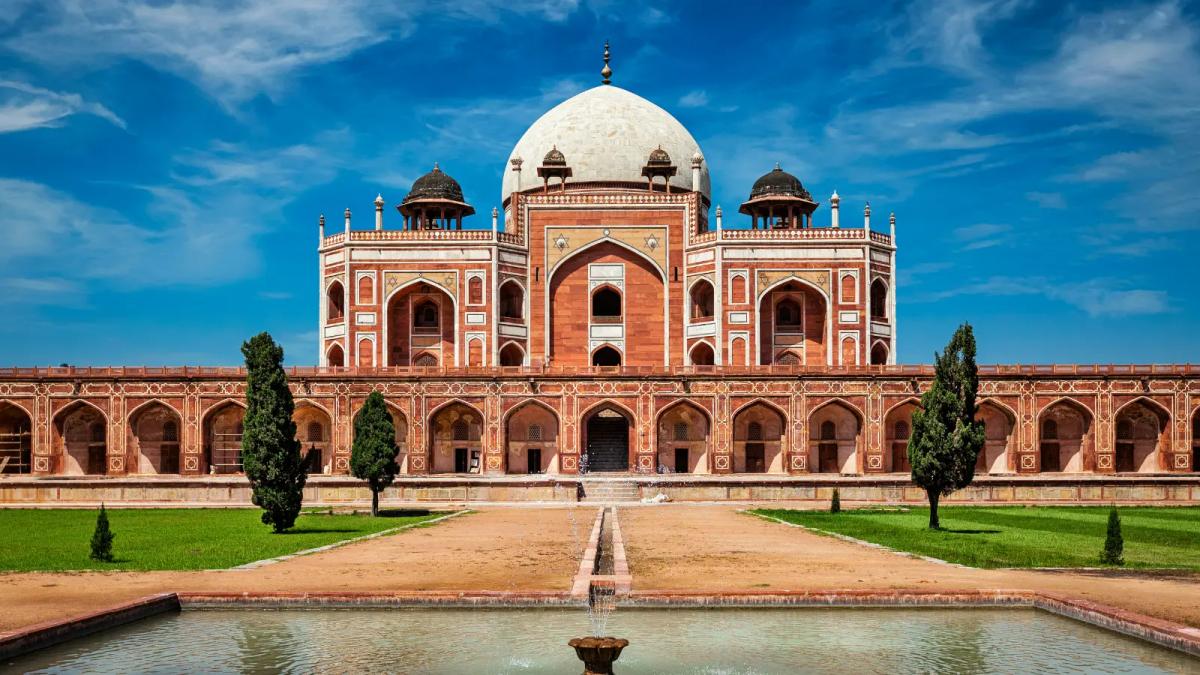
Humayun's Tomb in Delhi seen across its Mughal garden, fountain and long water channel

Short answer: The top places to visit in Delhi are the Red Fort, Jama Masjid and the lanes of Chandni Chowk in Old Delhi; Humayun's Tomb, Qutub Minar, India Gate with Kartavya Path and Lodhi Garden in New Delhi; and the city's great places of worship: Akshardham, the Lotus Temple and Gurudwara Bangla Sahib. Add Dilli Haat INA for crafts and regional food. Three of these (Red Fort, Humayun's Tomb and Qutub Minar) are UNESCO World Heritage Sites. Almost every sight sits near a Delhi Metro station, so you can group them by area and see the essentials in two full days. One important update for 2026: the Red Fort no longer closes on Mondays, while Akshardham and the Lotus Temple still do.

Delhi is the first stop in India for a huge number of travellers. Families visiting relatives, pilgrims heading to Haridwar or Varanasi, students, and holidaymakers starting the Golden Triangle all land here, and from Nepal it is the shortest international hop most people make: a Kathmandu to Delhi flight takes about 1 hour 30 minutes to 2 hours and arrives at Terminal 3 of Indira Gandhi International Airport. This guide lists the Delhi sights worth your time, grouped by area, with the nearest metro station, the best time of day, how long to allow and which days each one is closed. It also covers Akshardham's phone and bag rules, the winter air-quality season, where to shop, and what you can realistically see on a long layover. It is written for global travellers, Nepali travellers and the Nepali diaspora alike. For the wider country, start with our complete India travel guide.

Every opening day and rule below was checked on the official page of the site or the authority that runs it, and where official sources disagree, we say so. Treat each "Checked" note as a snapshot and confirm on the day you go.

What are the top places to visit in Delhi?

The top places to visit in Delhi fall into four clusters: Old Delhi (Red Fort, Jama Masjid, Chandni Chowk), central New Delhi (India Gate, Kartavya Path, Gurudwara Bangla Sahib, Lodhi Garden, Humayun's Tomb), South Delhi (Qutub Minar, Lotus Temple, Dilli Haat INA) and East Delhi across the Yamuna (Akshardham). Planning by cluster is the single biggest time saver in a city where a short distance on the map can take an hour by road.

The table below is the planner. "Time to allow" is our estimate for an unhurried visit, not counting travel. Metro station names are as the Delhi Metro Rail Corporation (DMRC) signs them, with the line colour in brackets.

Table note: Delhi sights by area with nearest metro. Checked: 16 Nov 2026, Delhi Tourism, ASI, Akshardham, Bahá'í House of Worship and NDMC official pages (linked in each section below).

#SightAreaNearest metro (line)Best time of dayTime to allow
1Red Fort (Lal Qila)Old DelhiLal Quila (Violet)Morning, at opening2 to 3 hours
2Jama MasjidOld DelhiJama Masjid (Violet) or Chawri Bazar (Yellow)Mid morning, outside prayer times45 minutes to 1 hour
3Chandni ChowkOld DelhiChandni Chowk (Yellow)Late morning to early afternoon, Monday to Saturday2 to 3 hours with food
4India Gate and National War MemorialCentral New DelhiCentral Secretariat (Yellow, Violet) or Khan Market (Violet)Early evening1 to 1.5 hours
5Kartavya PathCentral New DelhiCentral Secretariat (Yellow, Violet)Early morning or evening45 minutes (walk)
6Humayun's TombNizamuddinJLN Stadium (Violet)Morning or late afternoon light1.5 to 2 hours
7Qutub MinarMehrauli, South DelhiQutab Minar (Yellow), then a short cab or auto rideMorning or late afternoon1.5 to 2 hours
8Lotus TempleKalkaji, South DelhiKalkaji Mandir (Violet, Magenta)Morning, Tuesday to Sunday1 hour
9AkshardhamEast DelhiAkshardham (Blue)Afternoon into the evening water show3 to 4 hours
10Gurudwara Bangla SahibConnaught Place areaRajiv Chowk (Yellow, Blue) or Shivaji Stadium (Airport Express)Any time; evening is atmospheric45 minutes to 1 hour
11Lodhi GardenLodhi Road, centralJor Bagh (Yellow) or Khan Market (Violet)Early morning or late afternoon1 hour
12Dilli Haat INASouth DelhiINA (Yellow, Pink)Late afternoon into dinner1.5 to 2 hours

If you only have time for three, most first-time visitors are happiest with one Mughal monument (Humayun's Tomb or the Red Fort), one walk through Old Delhi, and one place of worship that is still in daily use, such as Bangla Sahib or Akshardham. That mix shows you the history, the street life and the living faith of the city in a single day. If you are still deciding how long to stay, our guide to how many days you need in India helps you balance Delhi against the rest of the trip.

Which Delhi sights are UNESCO World Heritage Sites?

Delhi has three UNESCO World Heritage Sites: Humayun's Tomb and the Qutb Minar complex, both inscribed in 1993, and the Red Fort Complex, inscribed in 2007, according to the list of India's World Heritage Sites published by the Press Information Bureau (PIB). All three are run by the Archaeological Survey of India (ASI) and use the same ticketing system.

Table note: Delhi's World Heritage Sites. Inscription years per the PIB list of India's World Heritage Sites; descriptions per the UNESCO pages for the Red Fort Complex, Humayun's Tomb and Qutb Minar and its Monuments. Checked: 16 Nov 2026.

SiteInscribedBuiltWhy UNESCO lists it
Qutb Minar and its Monuments1993Early 13th century onwardA 72.5 metre red sandstone tower, with the Alai Darwaza gate (1311), the Quwwatu'l Islam mosque and an iron pillar in its courtyard
Humayun's Tomb1993Around 1570The first garden tomb on the Indian subcontinent, whose ideas led to the Taj Mahal about 80 years later
Red Fort Complex200717th century, for Shah JahanThe palace fort of Shahjahanabad, seen as the high point of Mughal architectural creativity, together with the older Salimgarh Fort

Children under 15 enter ASI monuments free, and citizens of SAARC and BIMSTEC countries, including Nepal, pay the Indian rate. The dated fee table is in the closures section below.

What should you see in Old Delhi?

In Old Delhi, see the Red Fort, Jama Masjid and the main street of Chandni Chowk with its side lanes, and eat your way through the area's street food and sweet shops. All four sit within walking distance of each other in the walled city Shah Jahan called Shahjahanabad, and two metro lines serve them: the Violet Line (Lal Quila and Jama Masjid stations) and the Yellow Line (Chandni Chowk and Chawri Bazar stations).

Old Delhi is busy, loud and crowded, and that is the point. Wear closed shoes, keep your phone in a front pocket, and give it a full morning or afternoon. Most shops close on Sundays (Chandni Chowk station on the Yellow Line is the easiest way in).

Red Fort (Lal Qila)
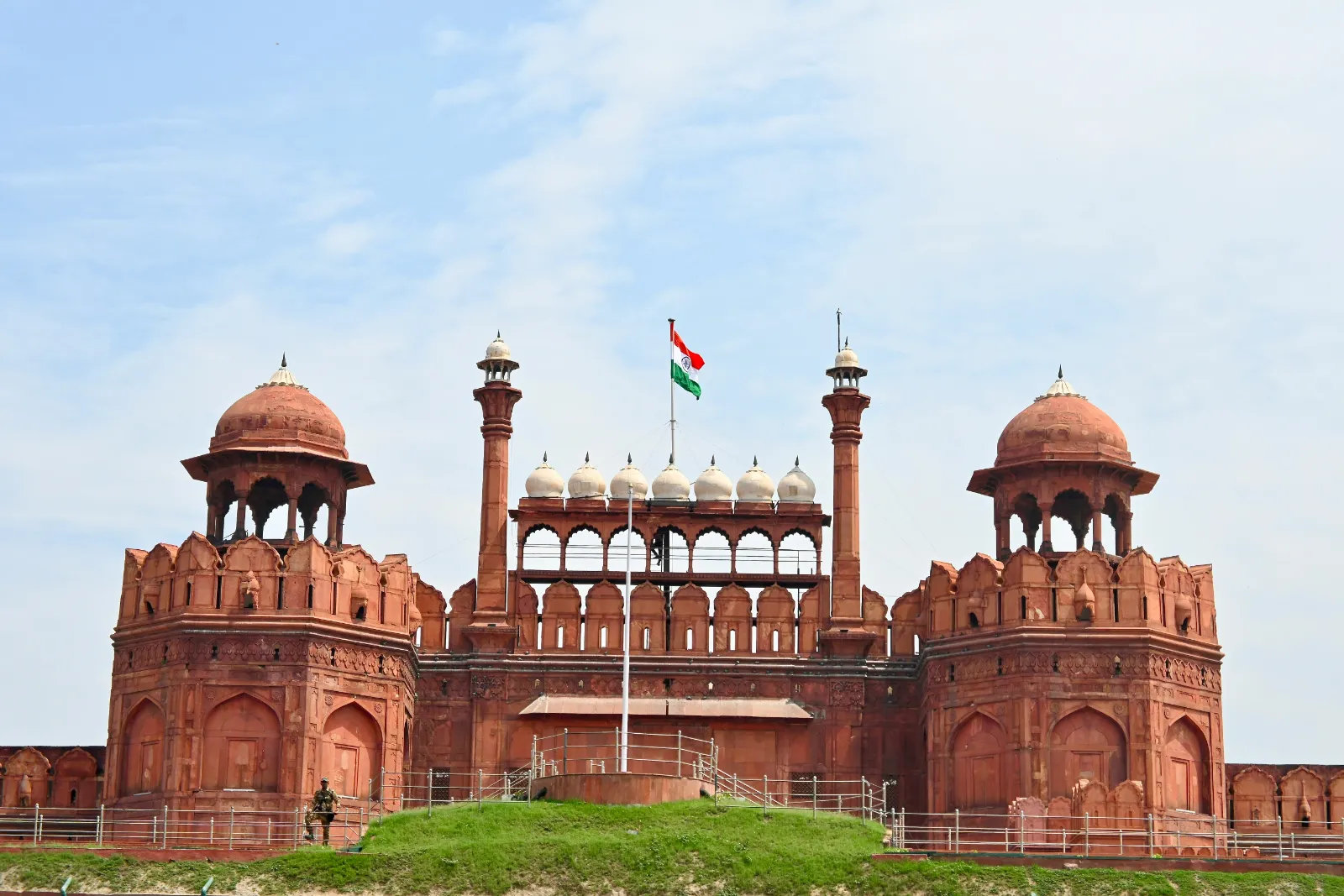
Red sandstone walls, domed towers and the Indian flag above the Red Fort in Old Delhi

The Red Fort is Delhi's most important monument: the palace fort of the Mughal emperor Shah Jahan, a UNESCO World Heritage Site, and the place where India's Prime Minister addresses the nation every Independence Day, 15 August. You enter through the Lahori Gate, walk through the covered Chhatta Chowk bazaar, and then cross wide lawns to the Diwan-i-Aam (hall of public audience), the Diwan-i-Khas (hall of private audience) and the row of marble pavilions that UNESCO notes are joined by a water channel called the Nahr-i-Behisht. Museums inside the fort cover the Mughal period and India's freedom struggle.

Opening days have changed. The Red Fort used to close every Monday. Under an ASI order dated 13 February 2026, it is now open on all seven days of the week, a senior ASI official told Business Standard. Many older guides still say Monday is closed. The fort does close for national events: in 2026 the ASI shut it to the public from 15 July to 15 August for Independence Day preparations, as Deccan Herald reported, and in December 2025 it closed for about ten days while it hosted a UNESCO meeting.

  • Hours: the ASI lists "Sunrise to Sunset" on its Red Fort page. Checked: 16 Nov 2026, ASI.
  • Nearest metro: Lal Quila (Violet Line), a short walk to the Lahori Gate.
  • Best time: right at opening, before school groups and the midday sun.
  • Time to allow: 2 to 3 hours, more if you visit the museums.
  • Facilities listed by the ASI: light and sound show, audio guide, ramps, Braille signage, drinking water and toilets.

Jama Masjid
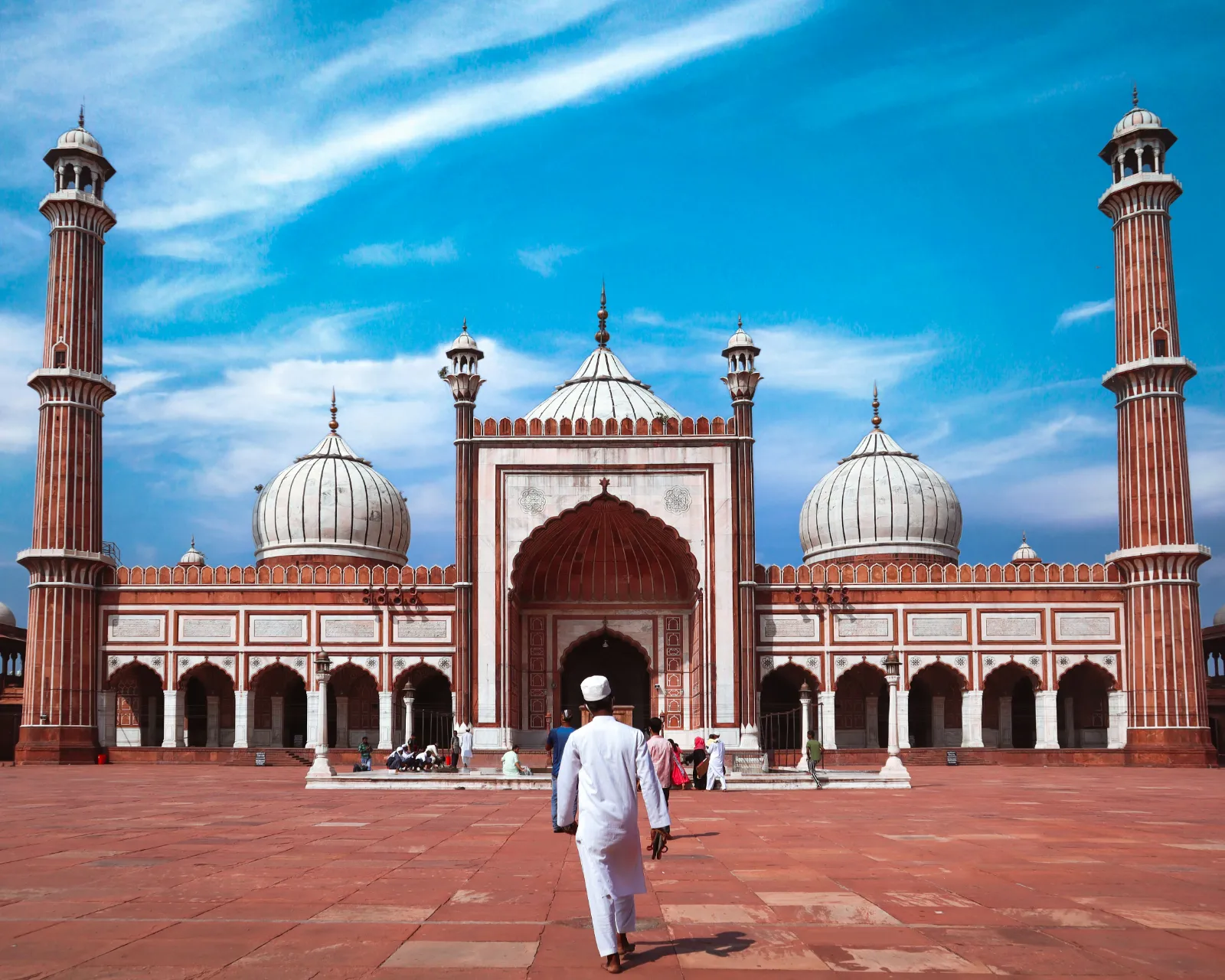
Visitor in white crossing the red stone courtyard of Jama Masjid toward its domes and minarets

Jama Masjid is Old Delhi's great congregational mosque, built in Shah Jahan's reign a short walk from the Red Fort, and it is open to visitors every day outside prayer times. Its vast red sandstone courtyard, framed by two tall minarets and three white marble domes, is one of the most photographed spaces in the city, and the steps outside lead straight into the food lanes of Matia Mahal.

Delhi Tourism lists the mosque as open on all days of the week for tourists from the morning until sunset, with visits paused at prayer times; after sunset only worshippers may enter. It gives different tourist hours for foreign and Indian visitors, lists free entry for Indian visitors and an entry charge for foreign tourists, and notes that robes can be hired at the northern gate. Dress modestly with shoulders and knees covered, take off your shoes before entering the courtyard, and avoid Friday midday prayers. Gate practice on visitor and camera charges has changed over the years and sources disagree, so ask at the entrance which rate applies to you before you go in or start taking photos. Checked: 16 Nov 2026, Delhi Tourism.

Chandni Chowk
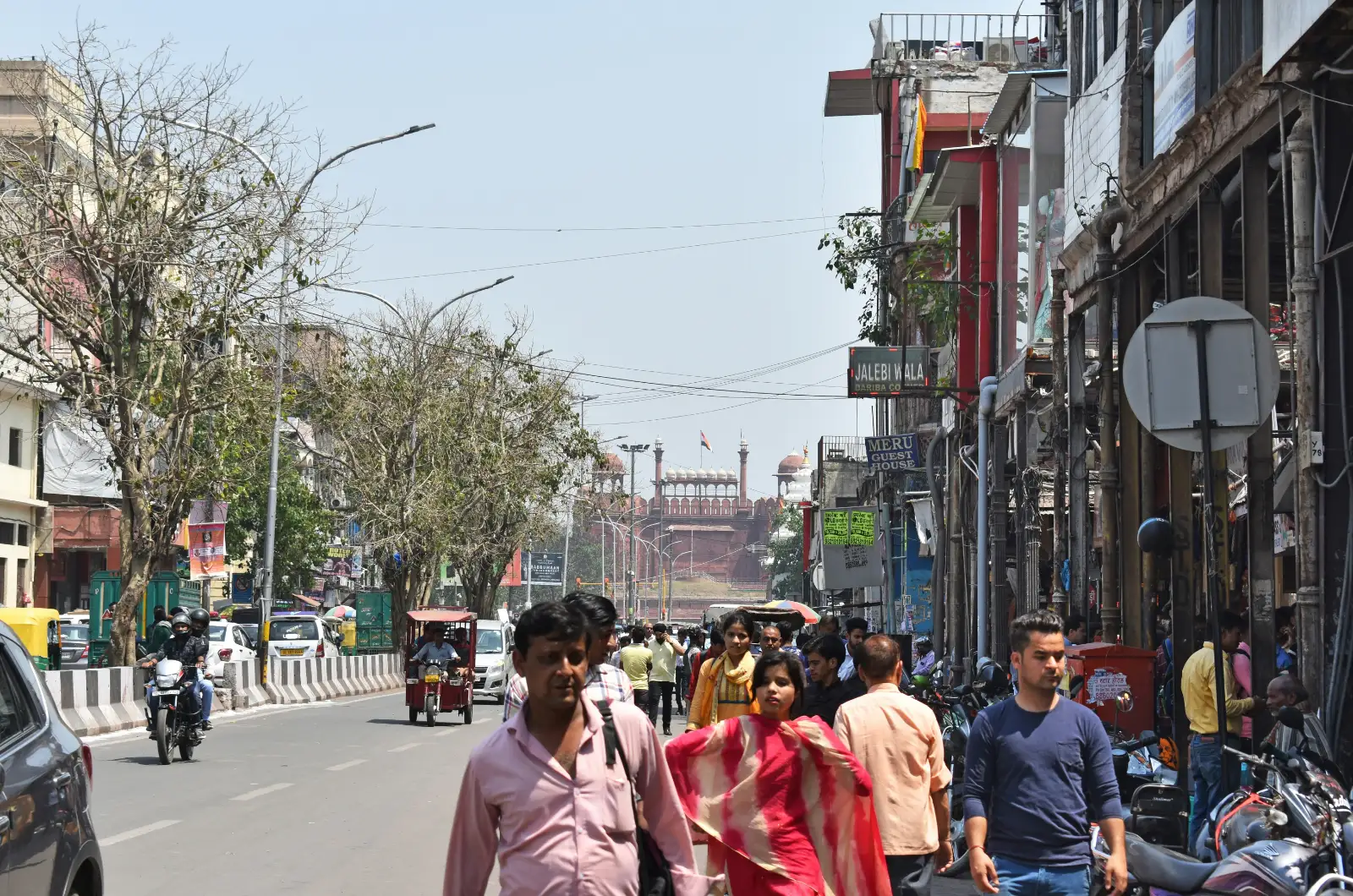
Busy Chandni Chowk street in Old Delhi with the Red Fort visible at the far end

Chandni Chowk is the main street of Old Delhi, running about 1.3 km from the Red Fort to Fatehpuri Masjid, with hundreds of shops, temples, a gurdwara and food stalls along it and a maze of specialist lanes behind it. The main road was redeveloped and, under a June 2021 notification reported by Business Today, motor vehicles are barred from 9 am to 9 pm, which makes walking much easier than it used to be (local reporting says the rule is not always enforced, so still watch for scooters).

Along the main street you pass the Digambar Jain Lal Mandir near the Red Fort end, Gurudwara Sis Ganj Sahib, and Fatehpuri Masjid at the far end. The lanes off it each have a trade: Kinari Bazar for wedding trims, Dariba Kalan for silver, Paranthe Wali Gali for stuffed flatbreads, and Khari Baoli, past Fatehpuri Masjid, for spices and dry fruit. A cycle-rickshaw ride down the main street is the classic way to see it; agree the route and fare before you sit down.

What should you eat in Old Delhi?
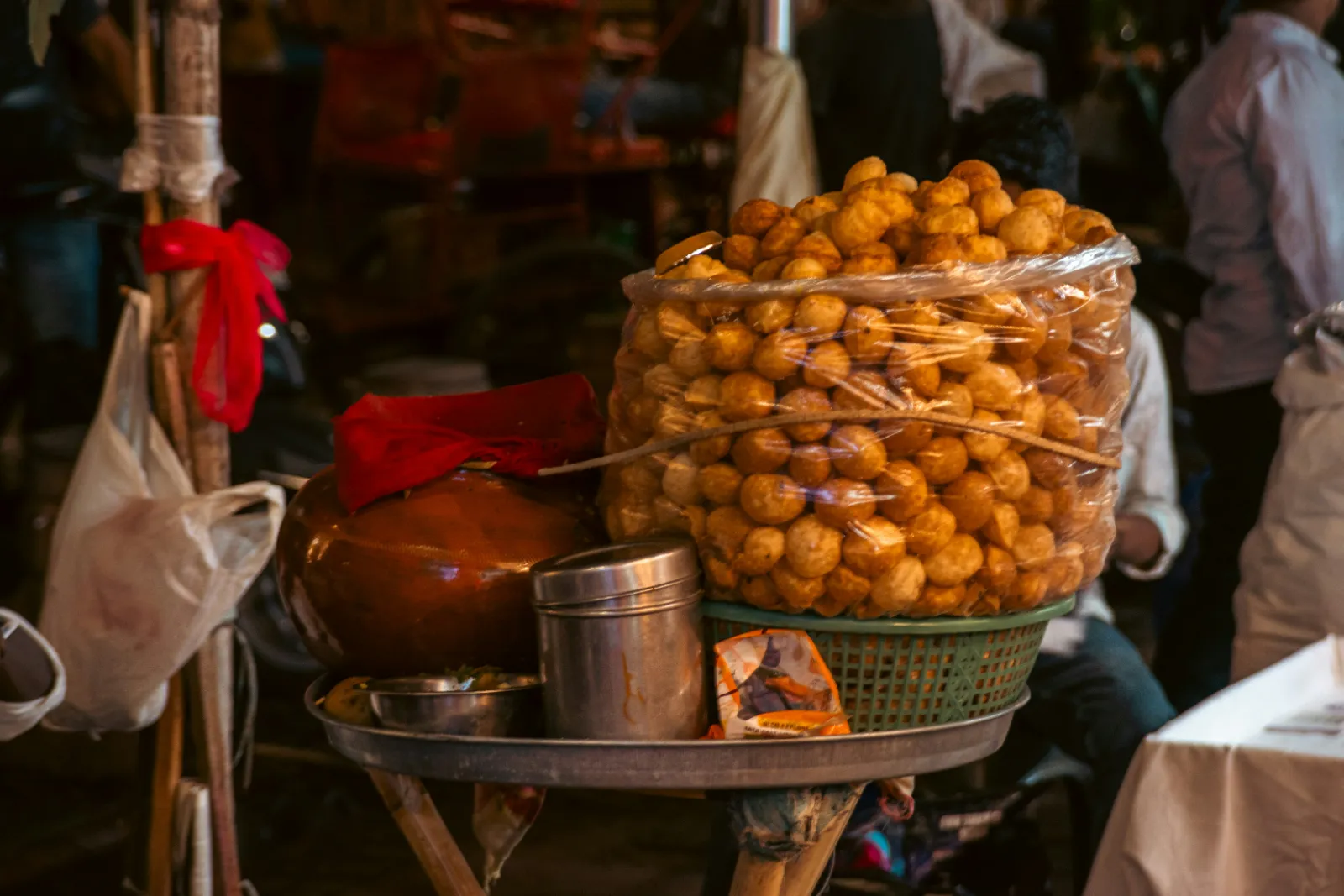
Gol gappe stall in Chandni Chowk with a big bag of crisp puris ready to serve

In Old Delhi, eat chaat, gol gappe, stuffed parathas, chole bhature, jalebi and the kebabs around Jama Masjid. Gol gappe (pani puri) will be familiar to Nepali visitors as a close cousin of panipuri at home, though the Delhi version usually comes with a sharper, mintier water. Vegetarian travellers are well served on Chandni Chowk itself, while the lanes south of Jama Masjid, around Matia Mahal, are known for meat dishes.

Choose stalls that are busy, where food is cooked or fried in front of you, and drink sealed bottled water. If you have a sensitive stomach, start with hot, freshly fried items and leave the chutney-heavy chaat for later in the trip. For a dish by dish guide to the whole country, see what to eat in India.
Explore India tour packages
View all →

Which monuments should you prioritise in New Delhi?

In New Delhi, prioritise Humayun's Tomb first, then Qutub Minar, then the India Gate and Kartavya Path axis, with Lodhi Garden as a calm add-on. Humayun's Tomb and Qutub Minar are UNESCO sites and need a proper visit; India Gate is best as a short evening stop; Lodhi Garden fits into any gap of an hour. The British-built centre of New Delhi was laid out in the early 20th century, so here you are moving between Mughal and Sultanate monuments and a planned imperial capital.

Distances are bigger than in Old Delhi. Group Humayun's Tomb with Lodhi Garden and India Gate on one day, and pair Qutub Minar with the Lotus Temple or Dilli Haat on another.

Humayun's Tomb

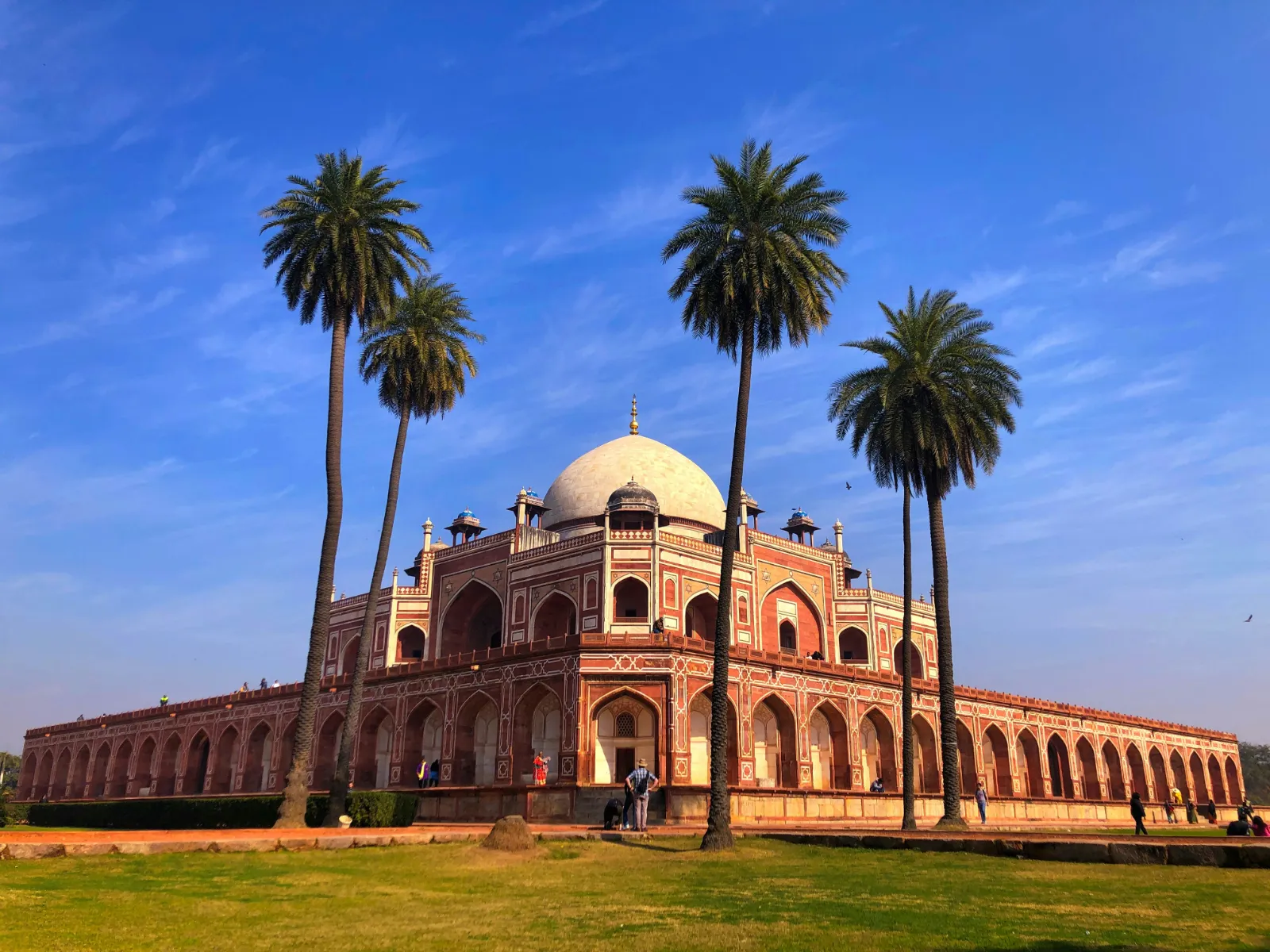
Tomb of Humayun in red sandstone and white marble framed by tall palm trees, Delhi

Humayun's Tomb is the monument most visitors rate as Delhi's finest: a red sandstone and white marble mausoleum completed around 1570 in a walled Persian-style garden, and in UNESCO's words "the first garden-tomb on the Indian subcontinent". Its double dome, raised platform and water channels clearly point ahead to the Taj Mahal in Agra, built about 80 years later. The complex covers 27.04 hectares and, according to UNESCO, also includes Isa Khan's garden tomb, the Nila Gumbad, the Barber's Tomb and the Arab Serai, so allow time to wander beyond the main building.

Delhi Tourism lists Humayun's Tomb as open daily, sunrise to sunset, with JLN Stadium as the nearest metro station. It is an ASI ticketed monument. Checked: 16 Nov 2026, Delhi Tourism.

Qutub Minar

Qutub Minar rising between ruined stone arches of the Qutub complex in Mehrauli under blue sky

Qutub Minar is a 72.5 metre red sandstone victory tower begun in the early 13th century, the centrepiece of a UNESCO-listed complex in Mehrauli in South Delhi. Around it stand the ruins of the Quwwatu'l Islam mosque, which UNESCO describes as the oldest in northern India, the iron pillar in its courtyard, the carved Alai Darwaza gateway from 1311, and the tomb of Iltutmish. You cannot climb the tower, but the carving at its base and the ruined arches are the real reward.

The ASI lists the hours as "Sunrise to 8:00 pm" on its Qutub Minar page, with no weekly closed day, and a cafeteria, audio guides, ramps and toilets on site. Checked: 16 Nov 2026, ASI. Qutub Minar is also the major sight closest to the airport, which makes it the natural first choice on a layover.

India Gate, Kartavya Path and the National War Memorial

India Gate war memorial arch standing above green lawns under a clear sky in New Delhi

India Gate is a 42 metre war memorial arch designed by Edwin Lutyens at the eastern end of Kartavya Path, the ceremonial boulevard (formerly Rajpath) that runs west to Rashtrapati Bhavan, the President's residence. According to Delhi Tourism, the arch bears the names of about 13,500 soldiers who died in the First World War, it is open 24 hours, and some areas close to visitors after dark. Just east of it, the National War Memorial honours soldiers who have died since independence; the Ministry of Tourism's Incredible India page lists no entry fee and gives its hours as 9 am to 7:30 pm from November to March and 9 am to 8:30 pm from April to October.

The lawns around India Gate are where Delhi families come out on winter evenings, with ice cream carts and balloon sellers, and it is the easiest place in the city to see local life without paying a ticket. Kartavya Path is the venue of the Republic Day parade on 26 January, so expect closures and rehearsals in the weeks before it.

Lodhi Garden

Domed stone tomb with traces of blue tilework above the green lawns of Lodhi Garden

Lodhi Garden is a large public park in central New Delhi where 15th and 16th century tombs of the Sayyid and Lodi dynasties stand among lawns, old trees and walking paths. It is the city's favourite place for a morning walk, and a good antidote after a hectic morning in Old Delhi. The domed tombs and the mosque gateway known as Bara Gumbad are open to wander around, and the park sits between Khan Market and Lodhi Road, so cafes are a few minutes away.

The New Delhi Municipal Council lists Lodhi Garden as open from 6 am to 8 pm between 1 October and 31 March and from 5 am to 8 pm between 1 April and 30 September, per its gardens page. Checked: 16 Nov 2026, NDMC.

Which temples and spiritual sites are worth visiting?

The spiritual sites most worth visiting in Delhi are Swaminarayan Akshardham, the Lotus Temple (the Bahá'í House of Worship) and Gurudwara Bangla Sahib, together with Jama Masjid in Old Delhi. Each is in active use, each welcomes visitors of every faith, and each has its own rules on dress, shoes and photography, which are listed below. Visiting them respectfully is one of the most rewarding things you can do in the city, especially for families and pilgrims arriving from Nepal.

Akshardham

Carved sandstone Akshardham temple in Delhi seen across its long formal gardens and palms

Swaminarayan Akshardham is a vast Hindu temple complex on the east bank of the Yamuna, built in carved pink sandstone and white marble. The Ministry of Tourism's Incredible India page describes a main temple with 234 pillars, 9 domes and 20 spires, about 20,000 sculptures, a boat ride through dioramas of ancient Indian life, and an evening water show at the step well. Entry to the temple complex itself is free; the exhibitions and the water show are ticketed.

Akshardham is closed every Monday, and it has the strictest entry rules of any sight in Delhi. Phones are not allowed inside at all, so plan how you will meet up with your group before you hand them in.

Table note: Akshardham visitor rules. Checked: 16 Nov 2026, official Akshardham visitor information. The Ministry of Tourism's Incredible India page gives an opening time of 9:30 am; we follow the temple's own page.

RuleWhat the official page says
Open daysTuesday to Sunday; closed every Monday
Entry timesFirst entry 10:00 am, last entry 6:30 pm
Not allowedMobile phones, cameras, pen drives, music players and other electronics; luggage; umbrellas; toys; food and drink; tobacco and alcohol; weapons, pets and drones
AllowedWallets, ladies' purses and passports; baby food and water bottles subject to checks
CloakroomFree for visitors, open from 10:00 am to gate closing; switch electronics off before depositing; no money or valuables; deposits at the owner's risk
Dress codeShoulders, chest, back and upper arms covered; lower wear below the knee; sarongs on sale at the entrance
Water showAfter sunset (listed as 7:30 pm at the time of checking)

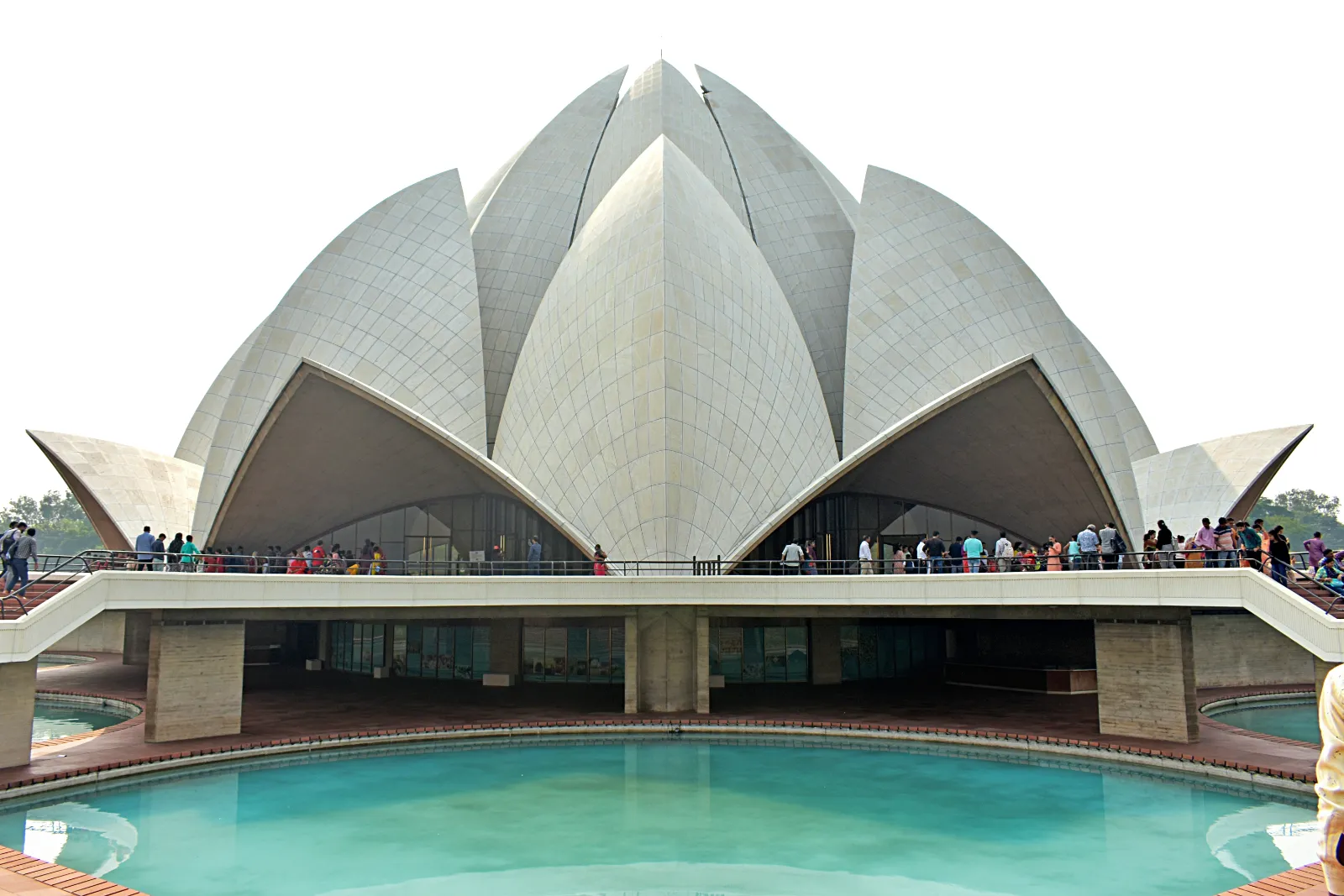
Lotus Temple (Bahá'í House of Worship)

White petal shaped Lotus Temple in Delhi with visitors on the terrace above a blue pool

The Lotus Temple is the Bahá'í House of Worship for the Indian subcontinent, a white marble building shaped like a half-open lotus flower, surrounded by pools and gardens in Kalkaji, South Delhi. It is open to people of all faiths for silent prayer and reflection, and the experience inside is simply quiet: no sermons, no rituals, just a large calm hall.

According to the temple's own Plan a Visit page, it is open Tuesday to Sunday from 8:30 am to 6:00 pm and closed on Mondays. Short prayer sessions of 10 to 15 minutes are held at 10 am, 12 noon, 3 pm and 5 pm. Photography is allowed in the grounds but not inside the prayer hall or the Information Centre, shoes are left at the shoe room, food, drinks and large bags are not allowed, and modest dress is suggested. The prayer hall may close when it is overcrowded on Sundays and public holidays, or in heavy rain. Checked: 16 Nov 2026, Bahá'í House of Worship.

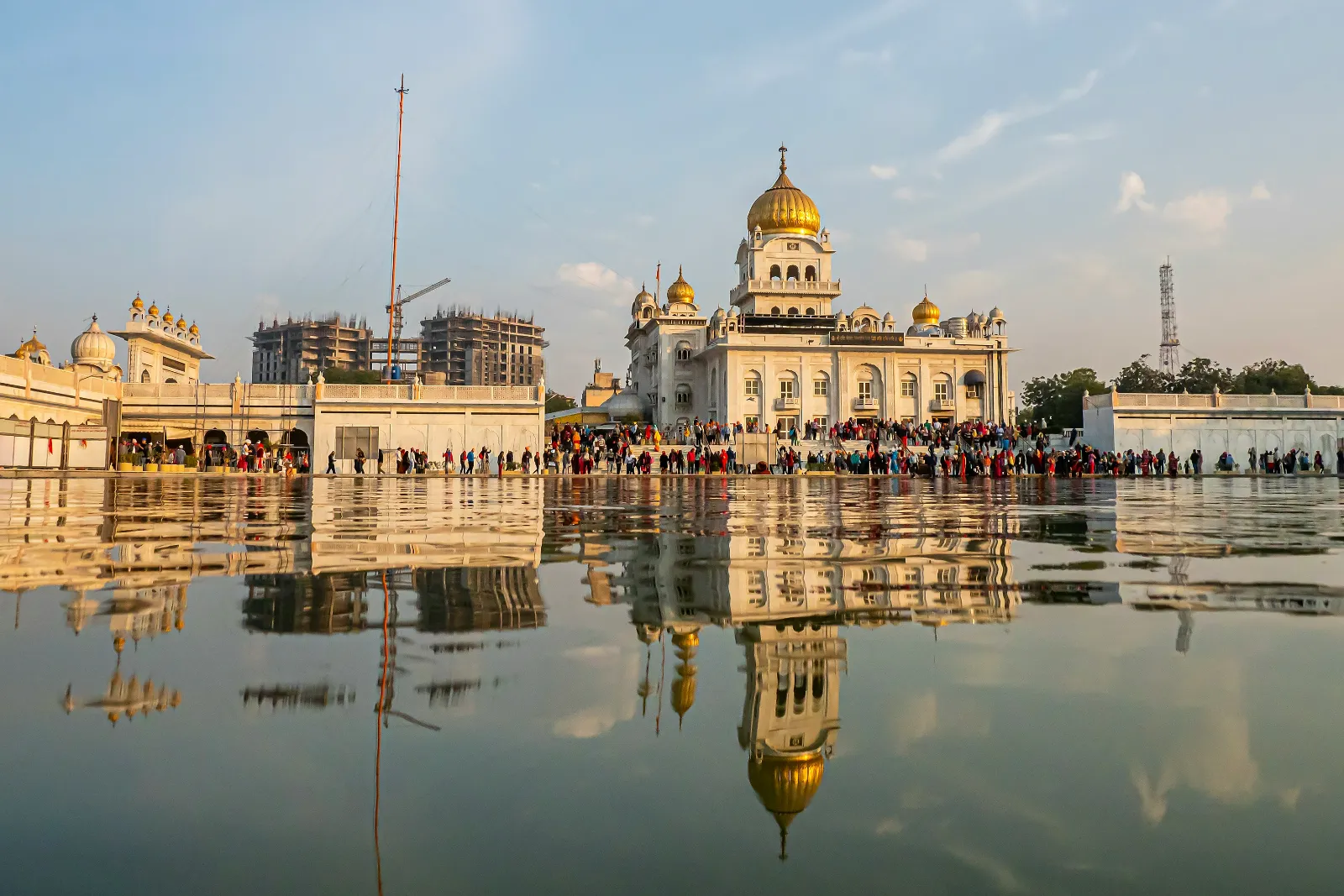
Gurudwara Bangla Sahib

Golden dome of Gurudwara Bangla Sahib reflected in its sacred pool with worshippers along the edge

Gurudwara Bangla Sahib is Delhi's best-known Sikh shrine, a white marble gurdwara with a golden dome and a large sacred pool (sarovar), a few minutes from Connaught Place. The Ministry of Tourism's Incredible India page says it is open 24x7 and explains that in 1664 Guru Har Krishan, the eighth Sikh Guru, stayed here during a smallpox and cholera outbreak and helped the sick with fresh water from the well. Volunteers serve free langar meals to thousands of people every day, and visitors are welcome to sit and eat.

Cover your head (scarves are usually available near the entrance), remove your shoes and wash your feet before entering, and do not bring tobacco or alcohol. Walking the path around the sarovar in the evening, when the dome is lit and kirtan plays, is one of the calmest experiences in central Delhi. Checked: 16 Nov 2026, Incredible India.

Where should you shop in Delhi?

Shop at Dilli Haat INA for crafts from across India, in Chandni Chowk and its lanes for spices, sweets, silver and wedding fabrics, at Janpath and Sarojini Nagar for bargain clothes, and at Khan Market and Connaught Place for books, cafes and branded stores. The main thing to plan around is each market's weekly closing day, because a closed market can take a whole afternoon out of a short trip.

Table note: Delhi shopping areas. Weekly closing days are from a local market guide (LBB, 2025 edition) and are general rules; individual shops and restaurants can differ. Dilli Haat timings from Delhi Tourism. Checked: 16 Nov 2026.

MarketBest forUsual weekly closing dayNearest metro (line)
Dilli Haat INACrafts, handloom, regional food stallsOpen daily, 11 am to 8 pmINA (Yellow, Pink)
Chandni ChowkFabrics, sweets, street food, wedding shoppingSundayChandni Chowk (Yellow)
Chawri BazarWedding cards, paper and brasswareSundayChawri Bazar (Yellow)
Janpath (Tibetan Market)Souvenirs, jewellery, cheap clothingSundayJanpath (Violet) or Rajiv Chowk (Yellow, Blue)
Khan MarketBookshops, cafes, boutiquesSunday for some smaller stores; restaurants usually openKhan Market (Violet)
Sarojini NagarBudget fashion and export surplusMondaySarojini Nagar (Pink)
Lajpat NagarEthnic wear, fabrics, household goodsMondayLajpat Nagar (Violet, Pink)
Karol BaghClothing, jewellery, wedding wearMondayKarol Bagh (Blue)

Dilli Haat INA

Shoppers walking under colourful bunting between craft stalls at the Dilli Haat craft market in Delhi

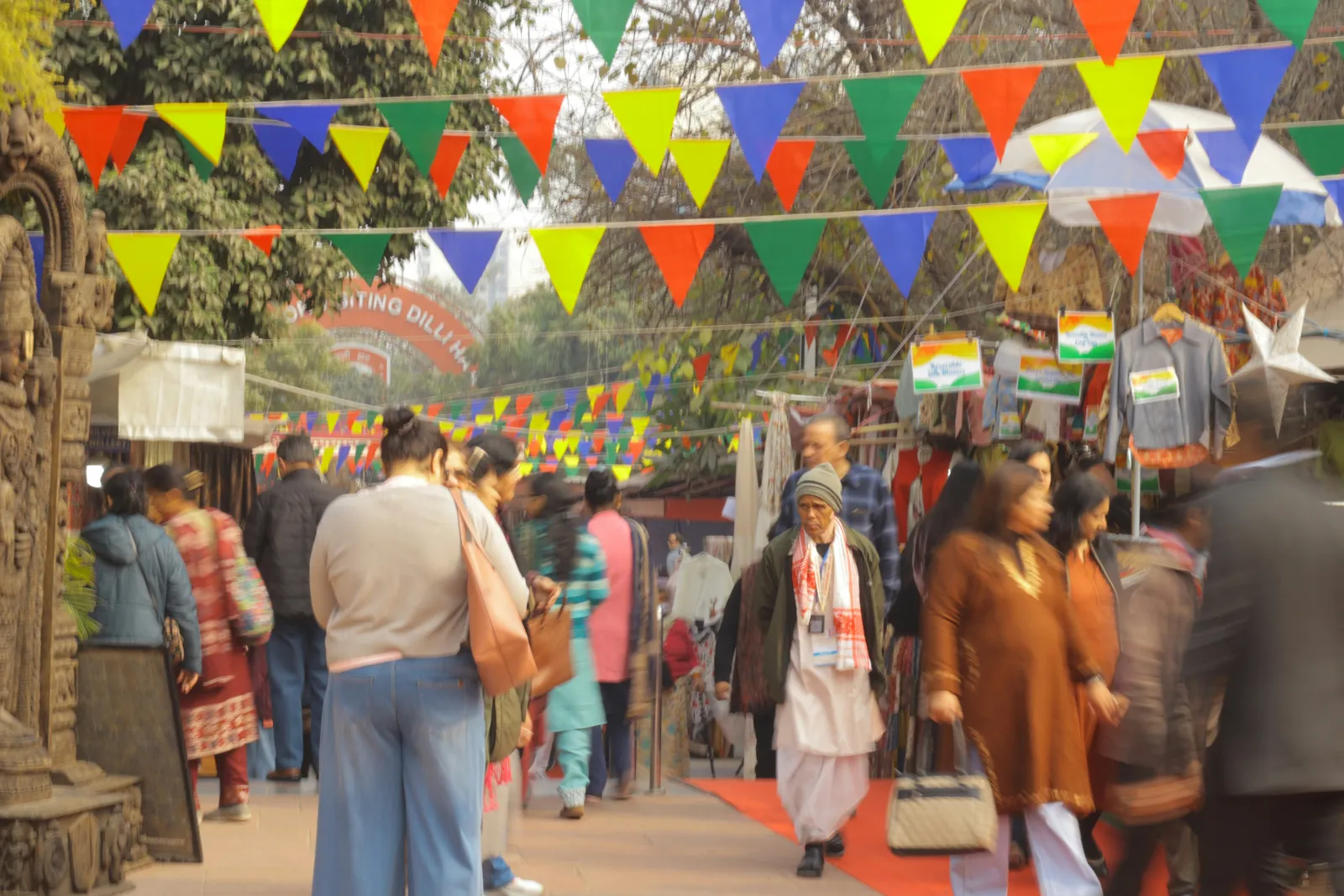
Dilli Haat INA is an open-air crafts bazaar where artisans from across India sell directly from rented stalls, with a food court of regional dishes beside it. Delhi Tourism says stalls rotate among registered craftspeople roughly every 15 days, so the selection changes, and lists the hours as daily from 11:00 am to 8:00 pm, with tickets sold at the gate. Checked: 16 Nov 2026, Delhi Tourism.

Prices are generally fixed or close to it, which makes Dilli Haat less tiring than street markets for family shopping. The food stalls are run state by state, and Delhi Tourism names Sikkim's momos among the regional dishes, a familiar taste for Nepali visitors who want something close to home after a few days of North Indian food.

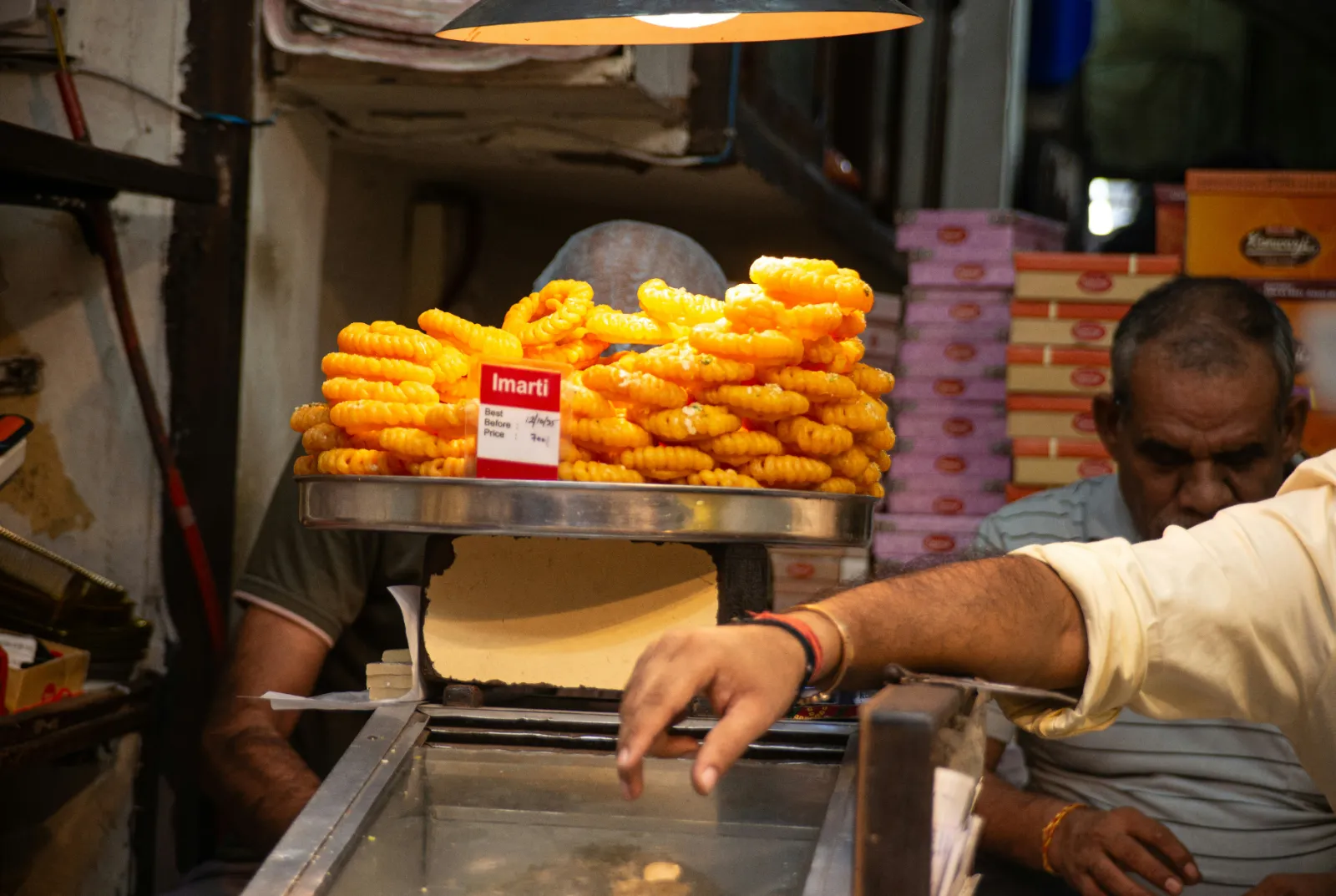
Chandni Chowk bazaars and sweet shops

Tray of orange imarti sweets on the counter of a traditional sweet shop in Chandni Chowk

For gifts to take home, Chandni Chowk's sweet shops and spice lanes are hard to beat. Boxed mithai such as imarti, jalebi, soan papdi and kaju barfi travel reasonably well for a short flight, and Khari Baoli's spice and dry fruit wholesalers sell in quantities that suit large families. Ask the shop to pack sweets in a sealed box, and check the "best before" label, since many fresh sweets last only a few days.

For wedding shopping, go on a weekday and go early: Saturdays in the wedding season are very crowded.

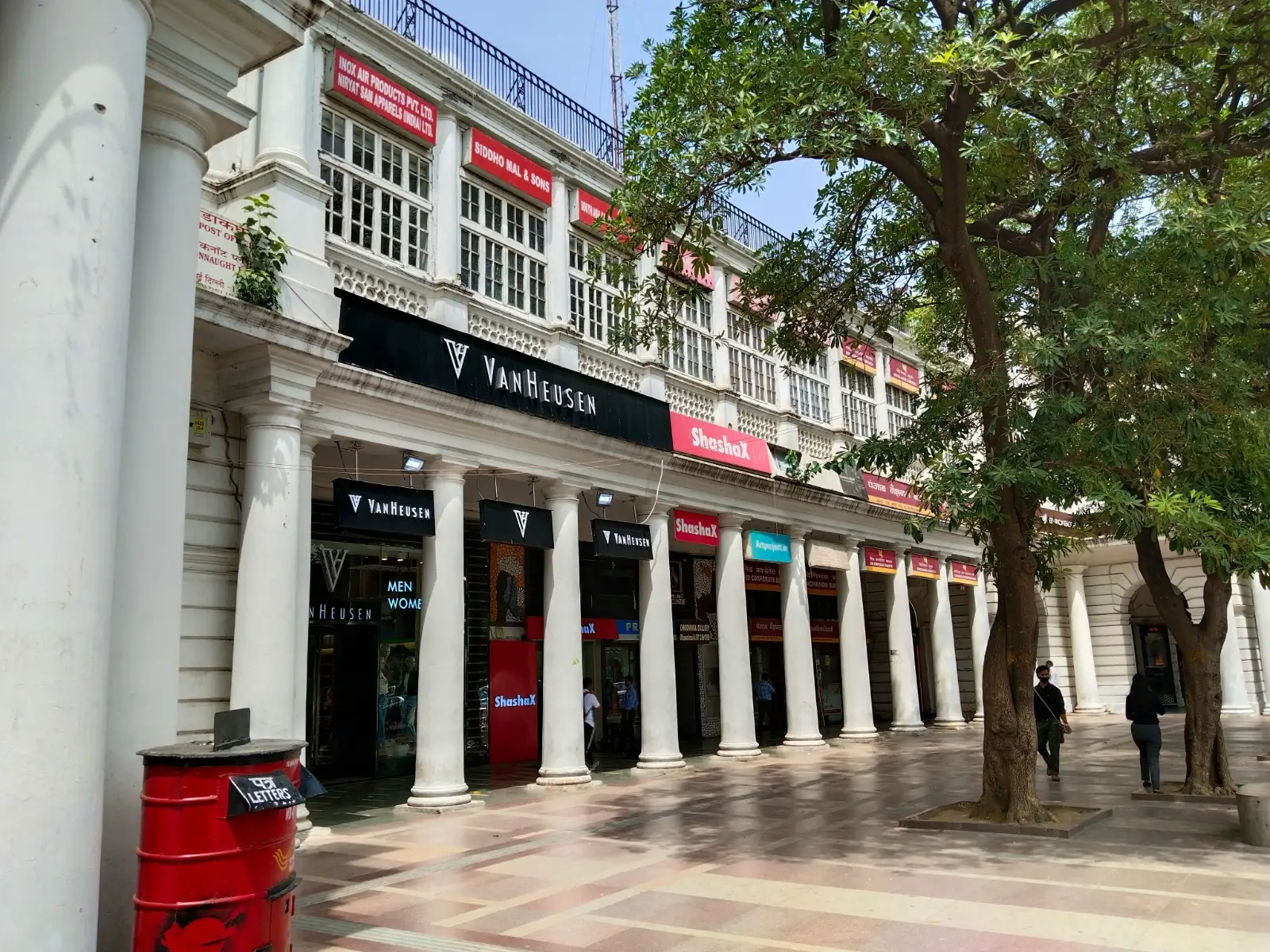
Connaught Place, Janpath, Khan Market and Sarojini Nagar

White Georgian colonnade with shopfronts and shady trees at Connaught Place, New Delhi

Connaught Place is the ring of white colonnades at the centre of New Delhi, with branded stores, restaurants and Palika Bazaar beneath it; Janpath, just south, has the Tibetan Market's souvenir stalls. Khan Market is small and upmarket, Sarojini Nagar is the busiest bargain clothing market, so bargain firmly and go on a weekday morning. All four combine easily with Bangla Sahib, Lodhi Garden or India Gate.

How do you get around Delhi by metro?

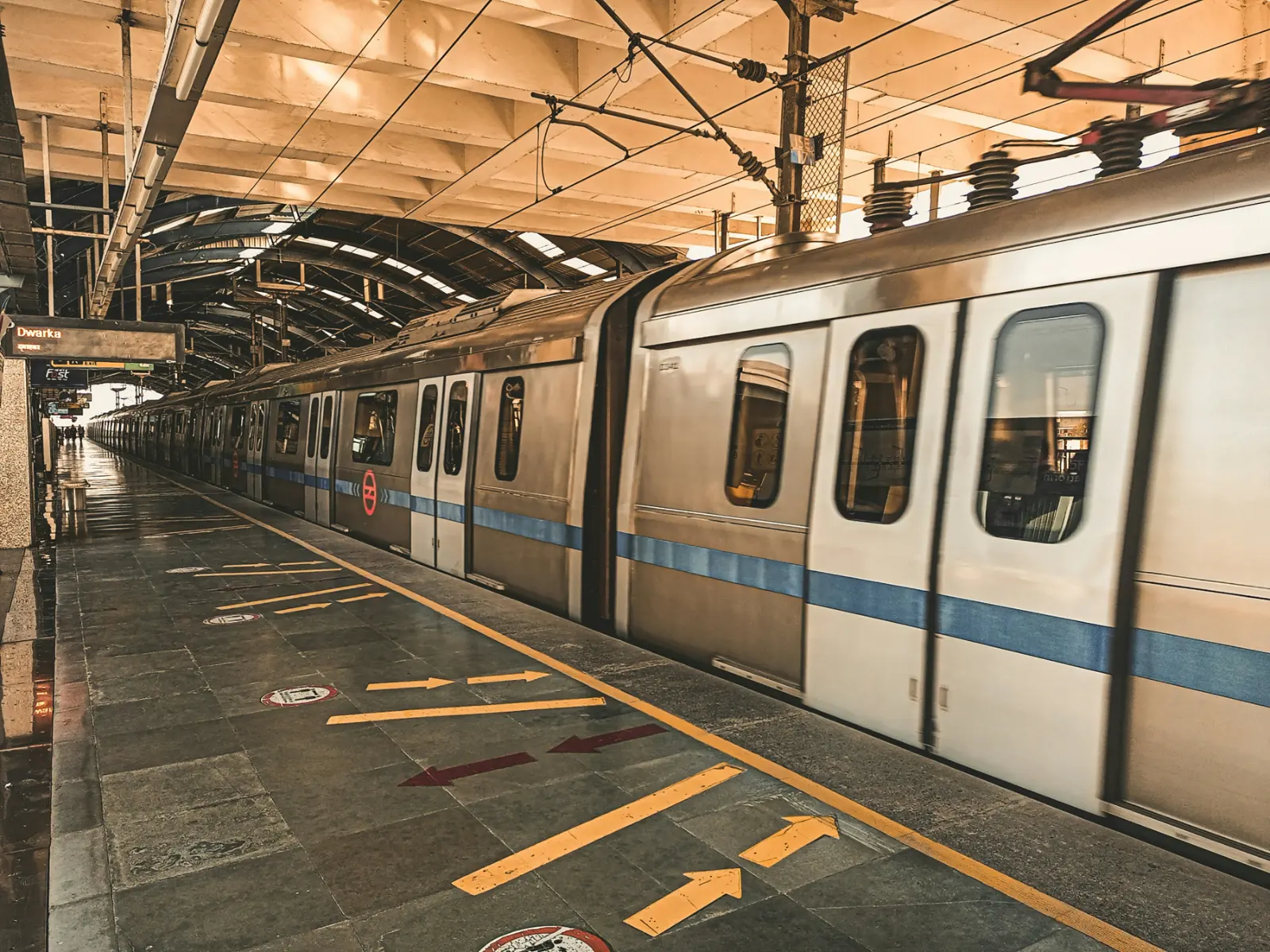
Delhi Metro Blue Line train at an elevated station platform with a Dwarka direction sign

The easiest way to get around Delhi is the Delhi Metro: clean, air-conditioned, cheap, and with a station within walking distance or a short auto ride of every sight in this guide. Buy a QR ticket in the official DMRC app or at the station counter, follow the line colours, and use app cabs or auto-rickshaws for the last stretch.

The Delhi Metro is India's largest metro network: an August 2026 Business Today report puts it at 416.5 km across 12 lines and 303 stations (see our guide on how to get around India for other cities). Every station has airport-style security screening, so allow a few extra minutes and keep bags small. The first coach of each train is reserved for women. Trains run from early morning until late evening, but first and last train times differ by line and station, so check the DMRC app the night before an early start.

Table note: metro lines useful for sightseeing. Stations per Delhi Tourism, the sites' own pages and DMRC line maps. Checked: 16 Nov 2026.

LineUseful stations for visitorsSights served
YellowChandni Chowk, Chawri Bazar, Rajiv Chowk, Central Secretariat, Jor Bagh, INA, Qutab MinarOld Delhi, Connaught Place, Bangla Sahib, Kartavya Path, Lodhi Garden, Dilli Haat, Qutub Minar
VioletLal Quila, Jama Masjid, Janpath, Central Secretariat, Khan Market, JLN Stadium, Lajpat Nagar, Kalkaji MandirRed Fort, Jama Masjid, India Gate, Humayun's Tomb, Lotus Temple
BlueRajiv Chowk, Karol Bagh, AkshardhamConnaught Place, Karol Bagh, Akshardham
MagentaTerminal 1 IGI Airport, Hauz Khas, Kalkaji Mandir, Okhla NSIC, Botanical GardenDomestic Terminal 1, Lotus Temple
PinkINA, Lajpat Nagar, Sarojini NagarDilli Haat, markets
Airport Express (Orange)IGI Airport (Terminal 3), Delhi Aerocity, Dhaula Kuan, Shivaji Stadium, New DelhiFast link from the international terminal to central Delhi; Shivaji Stadium is the stop for Bangla Sahib

Practical tips that save time:

  • From the airport: flights from Kathmandu land at Terminal 3. The Airport Express runs from the terminal to New Delhi station in roughly 15 to 20 minutes, where you change to the Yellow Line for Old Delhi or Connaught Place.
  • Interchanges: most visitors change at Rajiv Chowk (Yellow, Blue), Central Secretariat (Yellow, Violet) or Hauz Khas (Yellow, Magenta).
  • Last mile: e-rickshaws and auto-rickshaws wait outside most stations. Agree the fare first or use an app cab.
  • Avoid the rush: weekday mornings and early evenings are packed on the Yellow and Blue Lines. With luggage or small children, travel between about 11 am and 4 pm.

Which sights are closed on which days?

Akshardham and the Lotus Temple are closed every Monday, and most Old Delhi shops close on Sunday. The Red Fort, Humayun's Tomb, Qutub Minar, Jama Masjid, Bangla Sahib, India Gate, Lodhi Garden and Dilli Haat INA are open every day, subject to prayer times, state events and security closures. So Monday is a good day for the ASI monuments and Old Delhi, and a bad day for Akshardham and the Lotus Temple.

Table note: Delhi closing days and hours. Checked: 16 Nov 2026 on the official source shown in each row. Delhi sights close at short notice for state visits, national days and security reasons; confirm on the day.

SightWeekly closed dayHours (as listed)Source
Red FortNone since February 2026 (was Monday)Sunrise to sunsetASI; ASI order of 13 Feb 2026
Humayun's TombNoneSunrise to sunsetDelhi Tourism
Qutub MinarNoneSunrise to 8:00 pmASI
AkshardhamMondayFirst entry 10:00 am, last entry 6:30 pmAkshardham
Lotus TempleMonday8:30 am to 6:00 pmBahá'í House of Worship
Jama MasjidNone (closed to tourists at prayer times)Morning to sunset for touristsDelhi Tourism
Gurudwara Bangla SahibNoneOpen 24x7Incredible India
India GateNoneOpen 24 hours; some areas closed after darkDelhi Tourism
National War MemorialNone listed9 am to 7:30 pm (Nov to Mar); 9 am to 8:30 pm (Apr to Oct)Incredible India
Lodhi GardenNone6 am to 8 pm (Oct to Mar); 5 am to 8 pm (Apr to Sep)NDMC
Dilli Haat INANone11:00 am to 8:00 pmDelhi Tourism
Chandni Chowk shopsSunday (most shops)Varies by shopLocal market guide (LBB)

What do ASI monument tickets cost?

The three ASI sites in this guide use one fee structure, and Nepali citizens pay the same rate as Indian visitors because Nepal is a SAARC and BIMSTEC member. Online tickets are a little cheaper than cash at the counter. In January 2026 the ASI also opened online booking for more than 170 monuments through apps on the ONDC network, The Week reported.

Table note: ASI entry fees per person for the Red Fort and Qutub Minar, as listed on the ASI Red Fort and Qutub Minar pages linked above. Checked: 16 Nov 2026, ASI. Delhi Tourism lists the same cash rates for Humayun's Tomb. Fees can change; confirm before you go.

VisitorOnlineCash
Indian citizensINR 35INR 40
SAARC and BIMSTEC citizens (including Nepal)INR 35INR 40
Other foreign visitorsINR 550INR 600
Children below 15FreeFree

Nepali visitors should carry the passport or citizenship certificate they travelled with, because counters may ask for proof of nationality before selling the SAARC rate ticket.

When is the best time to visit Delhi, and how bad is the air?

The best time to visit Delhi is from late October to March, when days are dry and comfortable for walking, with February and March usually the most pleasant of all. The trade-off is air quality: from late October into December, Delhi's air often falls into the "Very Poor" or "Severe" bands, and from December to February dense fog can delay trains and early flights. April to June is very hot, and July to September brings monsoon rain. The ASI's Red Fort page gives November to March as the best season to visit.

For travellers from Nepal this matters because the Dashain and Tihar holidays, the peak travel window for families, usually fall between late September and November, overlapping the start of Delhi's post-Diwali pollution season. On 6 November 2026, the Commission for Air Quality Management invoked Stage 3 of the Graded Response Action Plan (GRAP) across Delhi NCR after Delhi's Air Quality Index reached 380, in the "Very Poor" band, News On AIR reported. Check the live reading before you plan a day of outdoor sightseeing.

Table note: India's National Air Quality Index bands, used by the Central Pollution Control Board (CPCB). Ranges as published; checked: 16 Nov 2026.

AQI bandRangeWhat it means for a sightseeing day
Good0 to 50No changes needed
Satisfactory51 to 100Fine for most people
Moderate101 to 200Sensitive people may notice it on long walks
Poor201 to 300Shorten long outdoor walks; children and older travellers rest more
Very Poor301 to 400Favour indoor sights and metro travel; consider a well-fitted mask
Severe401 to 500Keep outdoor time short, especially with asthma, heart conditions, small children or elderly relatives

On high-AQI days, swap a long Old Delhi walk for shorter visits such as the Red Fort museums, Akshardham's exhibitions and Bangla Sahib. Anyone with asthma or a heart or lung condition should talk to their doctor before a November trip. For the whole country month by month, see our guide to the best time to visit India.

For time of day, the rule is simple: monuments in the morning, gardens and markets in the late afternoon, and India Gate, Bangla Sahib or the Akshardham water show after dark.

What can you see in Delhi on a long layover?

On a layover of about 8 hours or more at Delhi airport, you can realistically see one sight cluster, such as Qutub Minar or central New Delhi, and still be back in time for your onward flight. With less time than that, stay at the airport or in Aerocity next door. The numbers that decide it are immigration on arrival, traffic in both directions, and getting back to the terminal early for your next international flight, which airlines generally ask you to do about three hours before departure.

Leaving the airport means passing Indian immigration. Nepali citizens flying in from Kathmandu do not need a visa for India but must carry an accepted photo ID, and a passport is needed when you fly on to a third country; see our guide on whether Nepalis need a passport for India. Many other passports, including many held by the Nepali diaspora, need an Indian visa to leave the airport, and foreign nationals must also complete India's e-Arrival Card; see our India visa page and check the official site for your passport before you fly.

Table note: layover options from Terminal 3. Time estimates are our own guidance for daytime traffic and assume you have cleared immigration; they are not a schedule. Checked: 16 Nov 2026.

Time between flightsRealistic optionHow to get there
Under 6 hoursStay airside, or eat in Delhi Aerocity just outside the airportAirport Express one stop to Delhi Aerocity, or a short cab
6 to 8 hoursOne nearby stop: Qutub Minar, the closest UNESCO site to the airportApp cab or prepaid taxi both ways
8 to 10 hoursCentral New Delhi: Gurudwara Bangla Sahib, then India Gate and Kartavya PathAirport Express to Shivaji Stadium or New Delhi, then a short cab
10 to 14 hoursTwo clusters: Humayun's Tomb and Lodhi Garden, or Old Delhi (Red Fort, Jama Masjid, Chandni Chowk)Airport Express to New Delhi, then the Yellow Line, or a cab with a driver
OvernightSleep in Aerocity and visit one cluster in the morningAirport Express or hotel transfer

Two warnings. From roughly December to February, dense fog can delay flights and road traffic in the mornings, so leave more buffer than you think you need. And check closing days first: a Monday layover is the wrong day for Akshardham and the Lotus Temple, and a Sunday layover is a quiet day in Chandni Chowk.

How does Delhi fit into a wider India trip?

Delhi is the natural start and end of most North India trips, because it has the best flight connections from Kathmandu and the rest of the world and fast trains and roads to Agra and Jaipur. Two full days in Delhi, then Agra and Jaipur, is the classic loop known as the Golden Triangle; our Golden Triangle guide explains the order and timing of each leg.

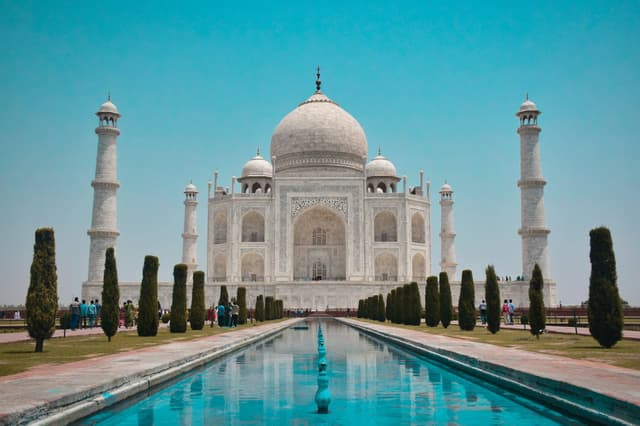
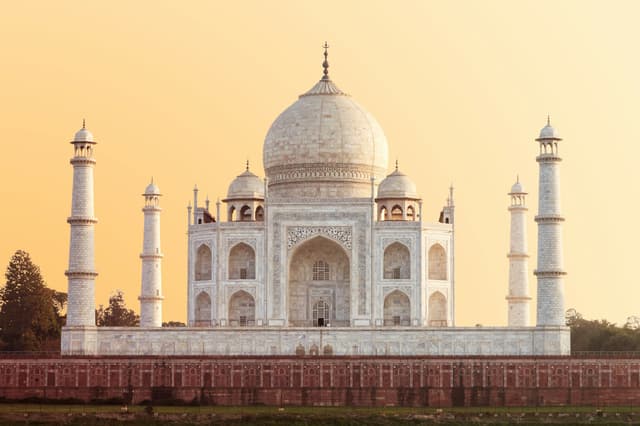
From Delhi, Agra is the most popular onward stop. The Gatimaan Express takes under two hours, and seeing the Taj Mahal at sunrise needs an overnight there; our Taj Mahal and Agra guide has the visiting days and rules. Jaipur, the pink-walled capital of Rajasthan, is the third corner; see our guide to things to do in Jaipur. Haridwar, Rishikesh and Varanasi are also reached from Delhi by train or a short flight, which is why so many pilgrim groups from Nepal pass through the city. For the rest of the country, see our pick of the best places to visit in India.

Money: India uses the Indian rupee (INR). Nepali rupees are generally not accepted in Delhi shops, so carry Indian rupees or a card that works in India. For reference, Nepal's rupee is pegged to the Indian rupee at NPR 1.60 to INR 1 (INR 100 to NPR 160), a fixed rate in place since 1993, Onlinekhabar explains. Many Delhi stalls prefer UPI phone payments, so keep small notes for street food, rickshaws and shoe counters.

Safety: Delhi's sights are busy and generally safe for visitors who take normal city precautions: watch for pickpockets in crowds, use app cabs or prepaid taxis at night, and be wary of strangers offering "help" with tickets near the big monuments. Our guide to whether India is safe for travellers covers scams, women travellers and emergency numbers.

If you would rather have the Delhi, Agra and Jaipur logistics arranged for you, you can browse our India tour packages.

Frequently asked questions

Which day is the Red Fort closed?

Since February 2026 the Red Fort in Delhi has no weekly closed day. An ASI order dated 13 February 2026 ended the old Monday closure, and the fort is open on all seven days, sunrise to sunset. It still closes for national events, such as the weeks before Independence Day on 15 August (15 July to 15 August in 2026), so check before you go.

Are phones allowed in Akshardham?

No. Akshardham in Delhi does not allow mobile phones, cameras, pen drives or other electronics inside the complex. Visitors deposit them at the free cloakroom before joining the security check queue. Wallets, ladies' purses and passports are allowed, while luggage, food and drink are not. Akshardham is also closed every Monday.

Is the Delhi metro easy for tourists?

Yes. The Delhi Metro is the easiest way for tourists to get around Delhi: lines are colour coded, signs and announcements are in English and Hindi, and there is a station near every major sight. Buy a QR ticket in the official DMRC app or at the counter, avoid weekday rush hours, and use an auto or app cab for the last short stretch.

What is the best time to visit Delhi?

The best time to visit Delhi is from late October to March, when the weather is dry and cool enough for sightseeing, with February and March usually the most pleasant. November and December bring the worst air pollution, and December to February can bring dense morning fog. April to June is very hot, and July to September is the monsoon.

Is Delhi's air quality bad in November?

Often, yes. Delhi's air quality usually worsens after Diwali, and November readings regularly fall into the "Very Poor" (301 to 400) or "Severe" (401 to 500) bands of India's Air Quality Index. On 6 November 2026, Stage 3 of the Graded Response Action Plan was invoked at an AQI of 380. Check the live CPCB reading and plan more indoor visits on bad days.

Can I see Delhi in one day?

You can see Delhi's highlights in one long day if you pick two areas: for example, Old Delhi (Red Fort, Jama Masjid, Chandni Chowk) in the morning and Humayun's Tomb and India Gate in the afternoon and evening. Two full days is more comfortable, and three lets you add Qutub Minar, Akshardham and the Lotus Temple without rushing.

Is Chandni Chowk safe?

Chandni Chowk in Old Delhi is generally safe for visitors during the day, but it is extremely crowded, so pickpocketing is the main risk. Keep your phone and wallet in a front pocket or zipped bag, carry little cash, agree rickshaw fares before you start, and eat at busy stalls. Go Monday to Saturday, because most shops close on Sunday.

Which Delhi sights are UNESCO World Heritage Sites?

Delhi has three UNESCO World Heritage Sites: Humayun's Tomb and Qutb Minar and its Monuments, both inscribed in 1993, and the Red Fort Complex, inscribed in 2007. All three are run by the Archaeological Survey of India, open every day, and use the same ticket rates, with SAARC and BIMSTEC citizens, including Nepalis, paying the Indian rate.

How far is Delhi airport from the city centre?

Delhi's Indira Gandhi International Airport is roughly 15 to 20 minutes from New Delhi station on the Airport Express metro line, which starts at Terminal 3, where flights from Kathmandu arrive. By taxi or app cab, central Delhi is usually under an hour outside peak traffic, but evening rush hour and winter fog can make it much longer.

What can I do near Delhi airport on a layover?

Near Delhi airport, the simplest layover options are eating or resting in Delhi Aerocity, one Airport Express stop from Terminal 3, or visiting Qutub Minar, the closest UNESCO site to the airport. With 8 to 10 hours you can reach Bangla Sahib and India Gate. You must clear Indian immigration to leave the airport, so check the entry rules for your passport first.

Can Nepali travellers pay in Nepali rupees in Delhi?

Generally no. Delhi shops, taxis and monuments price everything in Indian rupees (INR), so Nepali travellers should carry Indian rupees or a card that works in India. Nepal's rupee is pegged at NPR 1.60 to INR 1. Keep small notes for street food, rickshaws and shoe counters, since many stalls otherwise prefer UPI phone payments.

Are Akshardham and the Lotus Temple open on Mondays?

No. Both Akshardham and the Lotus Temple in Delhi are closed every Monday, according to their official visitor pages. On a Monday, visit the Red Fort, Humayun's Tomb, Qutub Minar, Jama Masjid, Bangla Sahib, Lodhi Garden or Dilli Haat instead, all of which are open every day.

Tags
India
Share
G
Gomayu Team
Writer at Gomayu
Keep reading
Blog / India
Places to Visit in Delhi: Old Delhi, Monuments and Markets
34 min read 16 Nov 2026 · Updated 18 Nov 2026
Humayun's Tomb in Delhi seen across its Mughal garden, fountain and long water channel

Short answer: The top places to visit in Delhi are the Red Fort, Jama Masjid and the lanes of Chandni Chowk in Old Delhi; Humayun's Tomb, Qutub Minar, India Gate with Kartavya Path and Lodhi Garden in New Delhi; and the city's great places of worship: Akshardham, the Lotus Temple and Gurudwara Bangla Sahib. Add Dilli Haat INA for crafts and regional food. Three of these (Red Fort, Humayun's Tomb and Qutub Minar) are UNESCO World Heritage Sites. Almost every sight sits near a Delhi Metro station, so you can group them by area and see the essentials in two full days. One important update for 2026: the Red Fort no longer closes on Mondays, while Akshardham and the Lotus Temple still do.

Delhi is the first stop in India for a huge number of travellers. Families visiting relatives, pilgrims heading to Haridwar or Varanasi, students, and holidaymakers starting the Golden Triangle all land here, and from Nepal it is the shortest international hop most people make: a Kathmandu to Delhi flight takes about 1 hour 30 minutes to 2 hours and arrives at Terminal 3 of Indira Gandhi International Airport. This guide lists the Delhi sights worth your time, grouped by area, with the nearest metro station, the best time of day, how long to allow and which days each one is closed. It also covers Akshardham's phone and bag rules, the winter air-quality season, where to shop, and what you can realistically see on a long layover. It is written for global travellers, Nepali travellers and the Nepali diaspora alike. For the wider country, start with our complete India travel guide.

Every opening day and rule below was checked on the official page of the site or the authority that runs it, and where official sources disagree, we say so. Treat each "Checked" note as a snapshot and confirm on the day you go.

What are the top places to visit in Delhi?

The top places to visit in Delhi fall into four clusters: Old Delhi (Red Fort, Jama Masjid, Chandni Chowk), central New Delhi (India Gate, Kartavya Path, Gurudwara Bangla Sahib, Lodhi Garden, Humayun's Tomb), South Delhi (Qutub Minar, Lotus Temple, Dilli Haat INA) and East Delhi across the Yamuna (Akshardham). Planning by cluster is the single biggest time saver in a city where a short distance on the map can take an hour by road.

The table below is the planner. "Time to allow" is our estimate for an unhurried visit, not counting travel. Metro station names are as the Delhi Metro Rail Corporation (DMRC) signs them, with the line colour in brackets.

Table note: Delhi sights by area with nearest metro. Checked: 16 Nov 2026, Delhi Tourism, ASI, Akshardham, Bahá'í House of Worship and NDMC official pages (linked in each section below).

#SightAreaNearest metro (line)Best time of dayTime to allow
1Red Fort (Lal Qila)Old DelhiLal Quila (Violet)Morning, at opening2 to 3 hours
2Jama MasjidOld DelhiJama Masjid (Violet) or Chawri Bazar (Yellow)Mid morning, outside prayer times45 minutes to 1 hour
3Chandni ChowkOld DelhiChandni Chowk (Yellow)Late morning to early afternoon, Monday to Saturday2 to 3 hours with food
4India Gate and National War MemorialCentral New DelhiCentral Secretariat (Yellow, Violet) or Khan Market (Violet)Early evening1 to 1.5 hours
5Kartavya PathCentral New DelhiCentral Secretariat (Yellow, Violet)Early morning or evening45 minutes (walk)
6Humayun's TombNizamuddinJLN Stadium (Violet)Morning or late afternoon light1.5 to 2 hours
7Qutub MinarMehrauli, South DelhiQutab Minar (Yellow), then a short cab or auto rideMorning or late afternoon1.5 to 2 hours
8Lotus TempleKalkaji, South DelhiKalkaji Mandir (Violet, Magenta)Morning, Tuesday to Sunday1 hour
9AkshardhamEast DelhiAkshardham (Blue)Afternoon into the evening water show3 to 4 hours
10Gurudwara Bangla SahibConnaught Place areaRajiv Chowk (Yellow, Blue) or Shivaji Stadium (Airport Express)Any time; evening is atmospheric45 minutes to 1 hour
11Lodhi GardenLodhi Road, centralJor Bagh (Yellow) or Khan Market (Violet)Early morning or late afternoon1 hour
12Dilli Haat INASouth DelhiINA (Yellow, Pink)Late afternoon into dinner1.5 to 2 hours

If you only have time for three, most first-time visitors are happiest with one Mughal monument (Humayun's Tomb or the Red Fort), one walk through Old Delhi, and one place of worship that is still in daily use, such as Bangla Sahib or Akshardham. That mix shows you the history, the street life and the living faith of the city in a single day. If you are still deciding how long to stay, our guide to how many days you need in India helps you balance Delhi against the rest of the trip.

Which Delhi sights are UNESCO World Heritage Sites?

Delhi has three UNESCO World Heritage Sites: Humayun's Tomb and the Qutb Minar complex, both inscribed in 1993, and the Red Fort Complex, inscribed in 2007, according to the list of India's World Heritage Sites published by the Press Information Bureau (PIB). All three are run by the Archaeological Survey of India (ASI) and use the same ticketing system.

Table note: Delhi's World Heritage Sites. Inscription years per the PIB list of India's World Heritage Sites; descriptions per the UNESCO pages for the Red Fort Complex, Humayun's Tomb and Qutb Minar and its Monuments. Checked: 16 Nov 2026.

SiteInscribedBuiltWhy UNESCO lists it
Qutb Minar and its Monuments1993Early 13th century onwardA 72.5 metre red sandstone tower, with the Alai Darwaza gate (1311), the Quwwatu'l Islam mosque and an iron pillar in its courtyard
Humayun's Tomb1993Around 1570The first garden tomb on the Indian subcontinent, whose ideas led to the Taj Mahal about 80 years later
Red Fort Complex200717th century, for Shah JahanThe palace fort of Shahjahanabad, seen as the high point of Mughal architectural creativity, together with the older Salimgarh Fort

Children under 15 enter ASI monuments free, and citizens of SAARC and BIMSTEC countries, including Nepal, pay the Indian rate. The dated fee table is in the closures section below.

What should you see in Old Delhi?

In Old Delhi, see the Red Fort, Jama Masjid and the main street of Chandni Chowk with its side lanes, and eat your way through the area's street food and sweet shops. All four sit within walking distance of each other in the walled city Shah Jahan called Shahjahanabad, and two metro lines serve them: the Violet Line (Lal Quila and Jama Masjid stations) and the Yellow Line (Chandni Chowk and Chawri Bazar stations).

Old Delhi is busy, loud and crowded, and that is the point. Wear closed shoes, keep your phone in a front pocket, and give it a full morning or afternoon. Most shops close on Sundays (Chandni Chowk station on the Yellow Line is the easiest way in).

Red Fort (Lal Qila)

Red sandstone walls, domed towers and the Indian flag above the Red Fort in Old Delhi

The Red Fort is Delhi's most important monument: the palace fort of the Mughal emperor Shah Jahan, a UNESCO World Heritage Site, and the place where India's Prime Minister addresses the nation every Independence Day, 15 August. You enter through the Lahori Gate, walk through the covered Chhatta Chowk bazaar, and then cross wide lawns to the Diwan-i-Aam (hall of public audience), the Diwan-i-Khas (hall of private audience) and the row of marble pavilions that UNESCO notes are joined by a water channel called the Nahr-i-Behisht. Museums inside the fort cover the Mughal period and India's freedom struggle.

Opening days have changed. The Red Fort used to close every Monday. Under an ASI order dated 13 February 2026, it is now open on all seven days of the week, a senior ASI official told Business Standard. Many older guides still say Monday is closed. The fort does close for national events: in 2026 the ASI shut it to the public from 15 July to 15 August for Independence Day preparations, as Deccan Herald reported, and in December 2025 it closed for about ten days while it hosted a UNESCO meeting.

  • Hours: the ASI lists "Sunrise to Sunset" on its Red Fort page. Checked: 16 Nov 2026, ASI.
  • Nearest metro: Lal Quila (Violet Line), a short walk to the Lahori Gate.
  • Best time: right at opening, before school groups and the midday sun.
  • Time to allow: 2 to 3 hours, more if you visit the museums.
  • Facilities listed by the ASI: light and sound show, audio guide, ramps, Braille signage, drinking water and toilets.

Jama Masjid

Visitor in white crossing the red stone courtyard of Jama Masjid toward its domes and minarets

Jama Masjid is Old Delhi's great congregational mosque, built in Shah Jahan's reign a short walk from the Red Fort, and it is open to visitors every day outside prayer times. Its vast red sandstone courtyard, framed by two tall minarets and three white marble domes, is one of the most photographed spaces in the city, and the steps outside lead straight into the food lanes of Matia Mahal.

Delhi Tourism lists the mosque as open on all days of the week for tourists from the morning until sunset, with visits paused at prayer times; after sunset only worshippers may enter. It gives different tourist hours for foreign and Indian visitors, lists free entry for Indian visitors and an entry charge for foreign tourists, and notes that robes can be hired at the northern gate. Dress modestly with shoulders and knees covered, take off your shoes before entering the courtyard, and avoid Friday midday prayers. Gate practice on visitor and camera charges has changed over the years and sources disagree, so ask at the entrance which rate applies to you before you go in or start taking photos. Checked: 16 Nov 2026, Delhi Tourism.

Chandni Chowk

Busy Chandni Chowk street in Old Delhi with the Red Fort visible at the far end

Chandni Chowk is the main street of Old Delhi, running about 1.3 km from the Red Fort to Fatehpuri Masjid, with hundreds of shops, temples, a gurdwara and food stalls along it and a maze of specialist lanes behind it. The main road was redeveloped and, under a June 2021 notification reported by Business Today, motor vehicles are barred from 9 am to 9 pm, which makes walking much easier than it used to be (local reporting says the rule is not always enforced, so still watch for scooters).

Along the main street you pass the Digambar Jain Lal Mandir near the Red Fort end, Gurudwara Sis Ganj Sahib, and Fatehpuri Masjid at the far end. The lanes off it each have a trade: Kinari Bazar for wedding trims, Dariba Kalan for silver, Paranthe Wali Gali for stuffed flatbreads, and Khari Baoli, past Fatehpuri Masjid, for spices and dry fruit. A cycle-rickshaw ride down the main street is the classic way to see it; agree the route and fare before you sit down.

What should you eat in Old Delhi?

Gol gappe stall in Chandni Chowk with a big bag of crisp puris ready to serve

In Old Delhi, eat chaat, gol gappe, stuffed parathas, chole bhature, jalebi and the kebabs around Jama Masjid. Gol gappe (pani puri) will be familiar to Nepali visitors as a close cousin of panipuri at home, though the Delhi version usually comes with a sharper, mintier water. Vegetarian travellers are well served on Chandni Chowk itself, while the lanes south of Jama Masjid, around Matia Mahal, are known for meat dishes.

Choose stalls that are busy, where food is cooked or fried in front of you, and drink sealed bottled water. If you have a sensitive stomach, start with hot, freshly fried items and leave the chutney-heavy chaat for later in the trip. For a dish by dish guide to the whole country, see what to eat in India.

Explore India tour packages
View all →

Which monuments should you prioritise in New Delhi?

In New Delhi, prioritise Humayun's Tomb first, then Qutub Minar, then the India Gate and Kartavya Path axis, with Lodhi Garden as a calm add-on. Humayun's Tomb and Qutub Minar are UNESCO sites and need a proper visit; India Gate is best as a short evening stop; Lodhi Garden fits into any gap of an hour. The British-built centre of New Delhi was laid out in the early 20th century, so here you are moving between Mughal and Sultanate monuments and a planned imperial capital.

Distances are bigger than in Old Delhi. Group Humayun's Tomb with Lodhi Garden and India Gate on one day, and pair Qutub Minar with the Lotus Temple or Dilli Haat on another.

Humayun's Tomb
Tomb of Humayun in red sandstone and white marble framed by tall palm trees, Delhi

Humayun's Tomb is the monument most visitors rate as Delhi's finest: a red sandstone and white marble mausoleum completed around 1570 in a walled Persian-style garden, and in UNESCO's words "the first garden-tomb on the Indian subcontinent". Its double dome, raised platform and water channels clearly point ahead to the Taj Mahal in Agra, built about 80 years later. The complex covers 27.04 hectares and, according to UNESCO, also includes Isa Khan's garden tomb, the Nila Gumbad, the Barber's Tomb and the Arab Serai, so allow time to wander beyond the main building.

Delhi Tourism lists Humayun's Tomb as open daily, sunrise to sunset, with JLN Stadium as the nearest metro station. It is an ASI ticketed monument. Checked: 16 Nov 2026, Delhi Tourism.

Qutub Minar
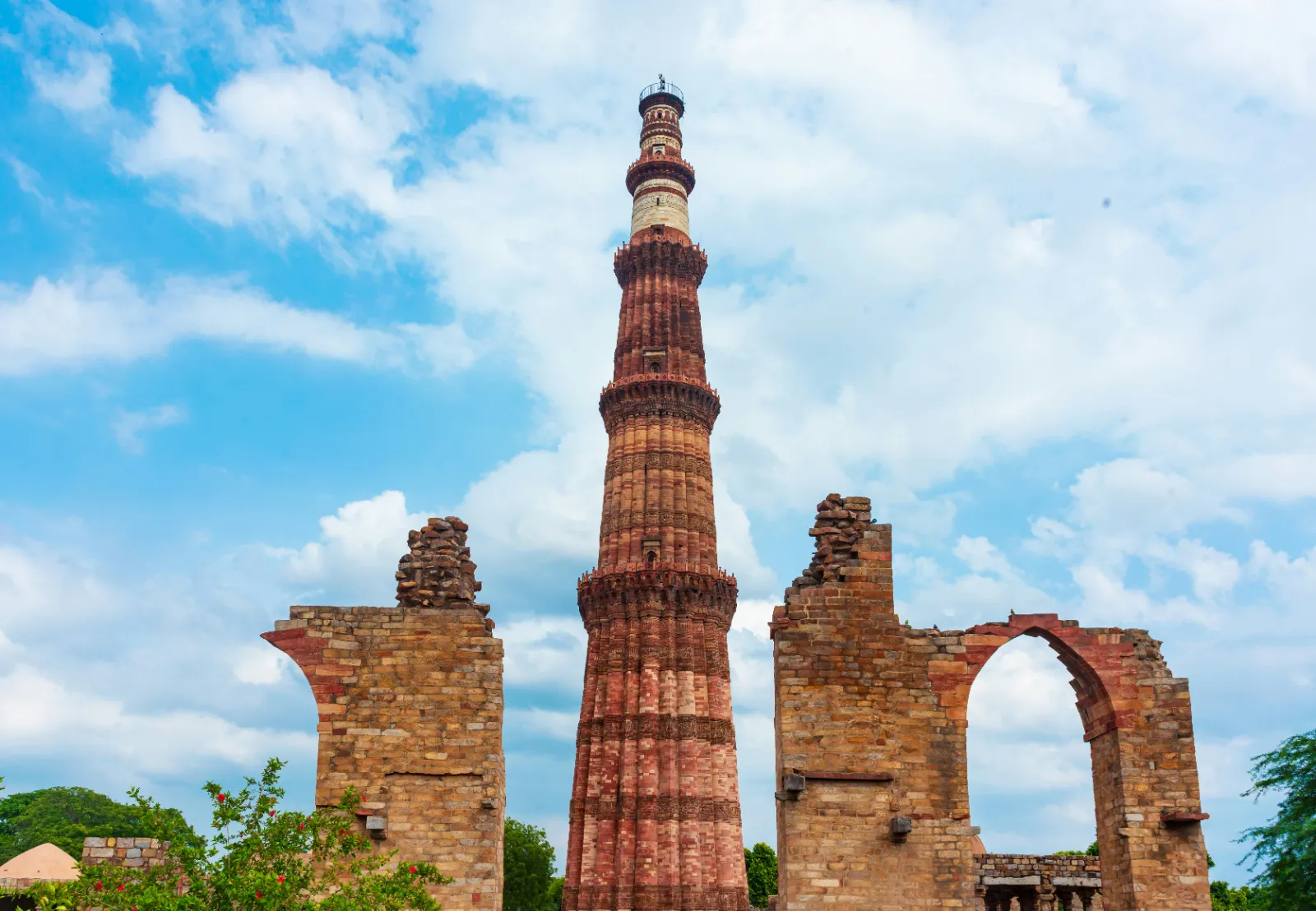
Qutub Minar rising between ruined stone arches of the Qutub complex in Mehrauli under blue sky

Qutub Minar is a 72.5 metre red sandstone victory tower begun in the early 13th century, the centrepiece of a UNESCO-listed complex in Mehrauli in South Delhi. Around it stand the ruins of the Quwwatu'l Islam mosque, which UNESCO describes as the oldest in northern India, the iron pillar in its courtyard, the carved Alai Darwaza gateway from 1311, and the tomb of Iltutmish. You cannot climb the tower, but the carving at its base and the ruined arches are the real reward.

The ASI lists the hours as "Sunrise to 8:00 pm" on its Qutub Minar page, with no weekly closed day, and a cafeteria, audio guides, ramps and toilets on site. Checked: 16 Nov 2026, ASI. Qutub Minar is also the major sight closest to the airport, which makes it the natural first choice on a layover.

India Gate, Kartavya Path and the National War Memorial
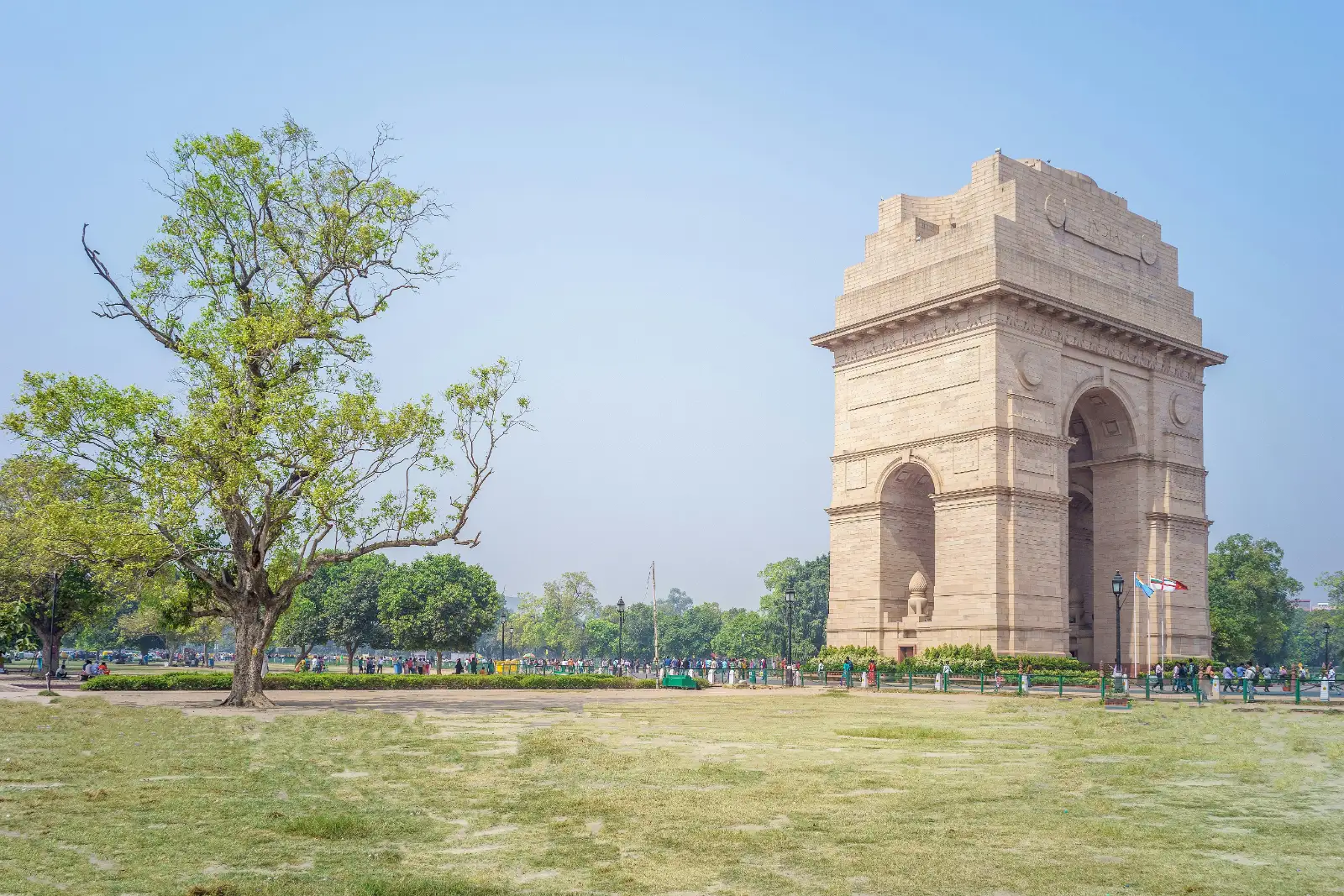
India Gate war memorial arch standing above green lawns under a clear sky in New Delhi

India Gate is a 42 metre war memorial arch designed by Edwin Lutyens at the eastern end of Kartavya Path, the ceremonial boulevard (formerly Rajpath) that runs west to Rashtrapati Bhavan, the President's residence. According to Delhi Tourism, the arch bears the names of about 13,500 soldiers who died in the First World War, it is open 24 hours, and some areas close to visitors after dark. Just east of it, the National War Memorial honours soldiers who have died since independence; the Ministry of Tourism's Incredible India page lists no entry fee and gives its hours as 9 am to 7:30 pm from November to March and 9 am to 8:30 pm from April to October.

The lawns around India Gate are where Delhi families come out on winter evenings, with ice cream carts and balloon sellers, and it is the easiest place in the city to see local life without paying a ticket. Kartavya Path is the venue of the Republic Day parade on 26 January, so expect closures and rehearsals in the weeks before it.

Lodhi Garden
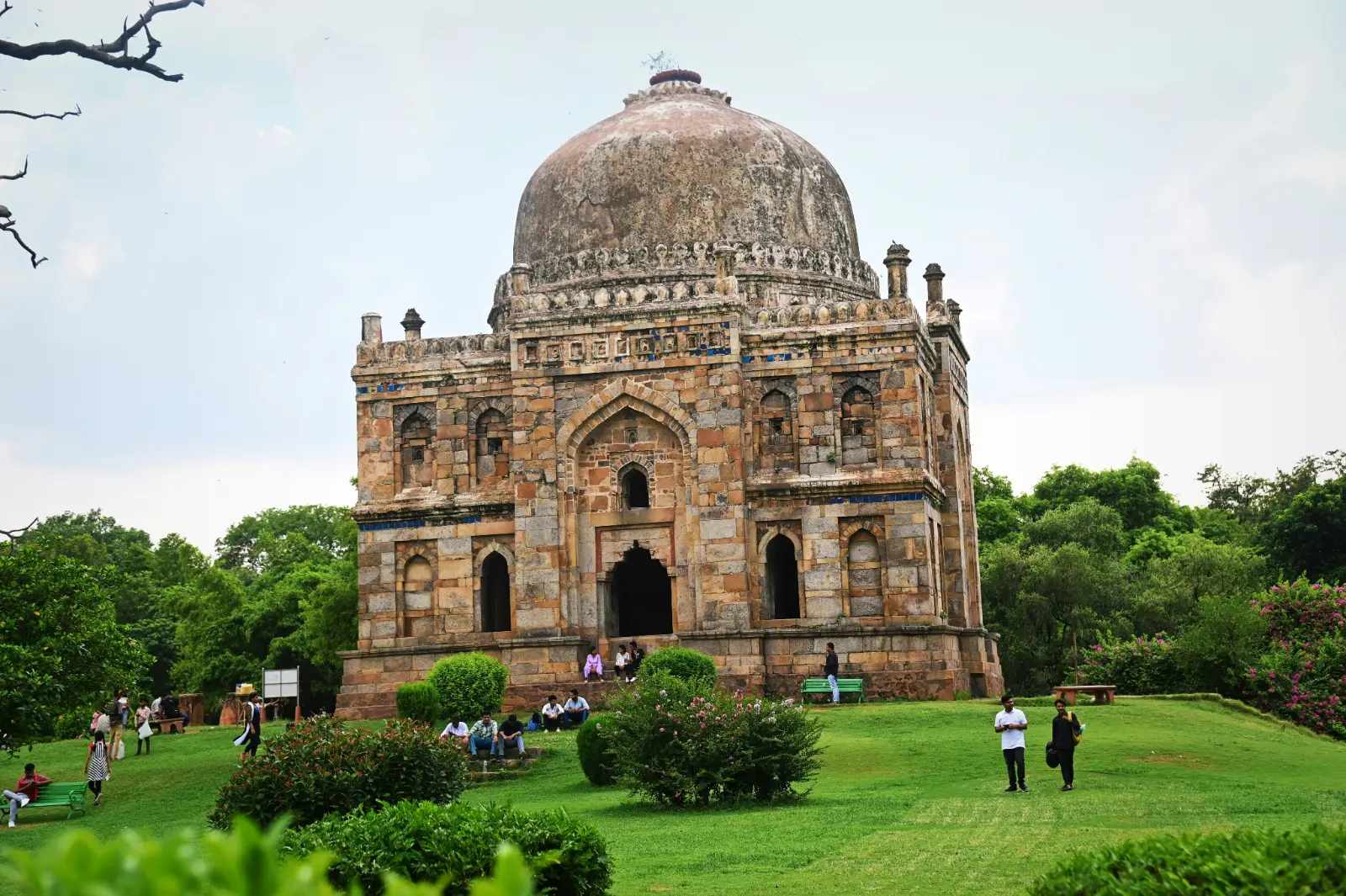
Domed stone tomb with traces of blue tilework above the green lawns of Lodhi Garden

Lodhi Garden is a large public park in central New Delhi where 15th and 16th century tombs of the Sayyid and Lodi dynasties stand among lawns, old trees and walking paths. It is the city's favourite place for a morning walk, and a good antidote after a hectic morning in Old Delhi. The domed tombs and the mosque gateway known as Bara Gumbad are open to wander around, and the park sits between Khan Market and Lodhi Road, so cafes are a few minutes away.

The New Delhi Municipal Council lists Lodhi Garden as open from 6 am to 8 pm between 1 October and 31 March and from 5 am to 8 pm between 1 April and 30 September, per its gardens page. Checked: 16 Nov 2026, NDMC.

Which temples and spiritual sites are worth visiting?

The spiritual sites most worth visiting in Delhi are Swaminarayan Akshardham, the Lotus Temple (the Bahá'í House of Worship) and Gurudwara Bangla Sahib, together with Jama Masjid in Old Delhi. Each is in active use, each welcomes visitors of every faith, and each has its own rules on dress, shoes and photography, which are listed below. Visiting them respectfully is one of the most rewarding things you can do in the city, especially for families and pilgrims arriving from Nepal.

Akshardham
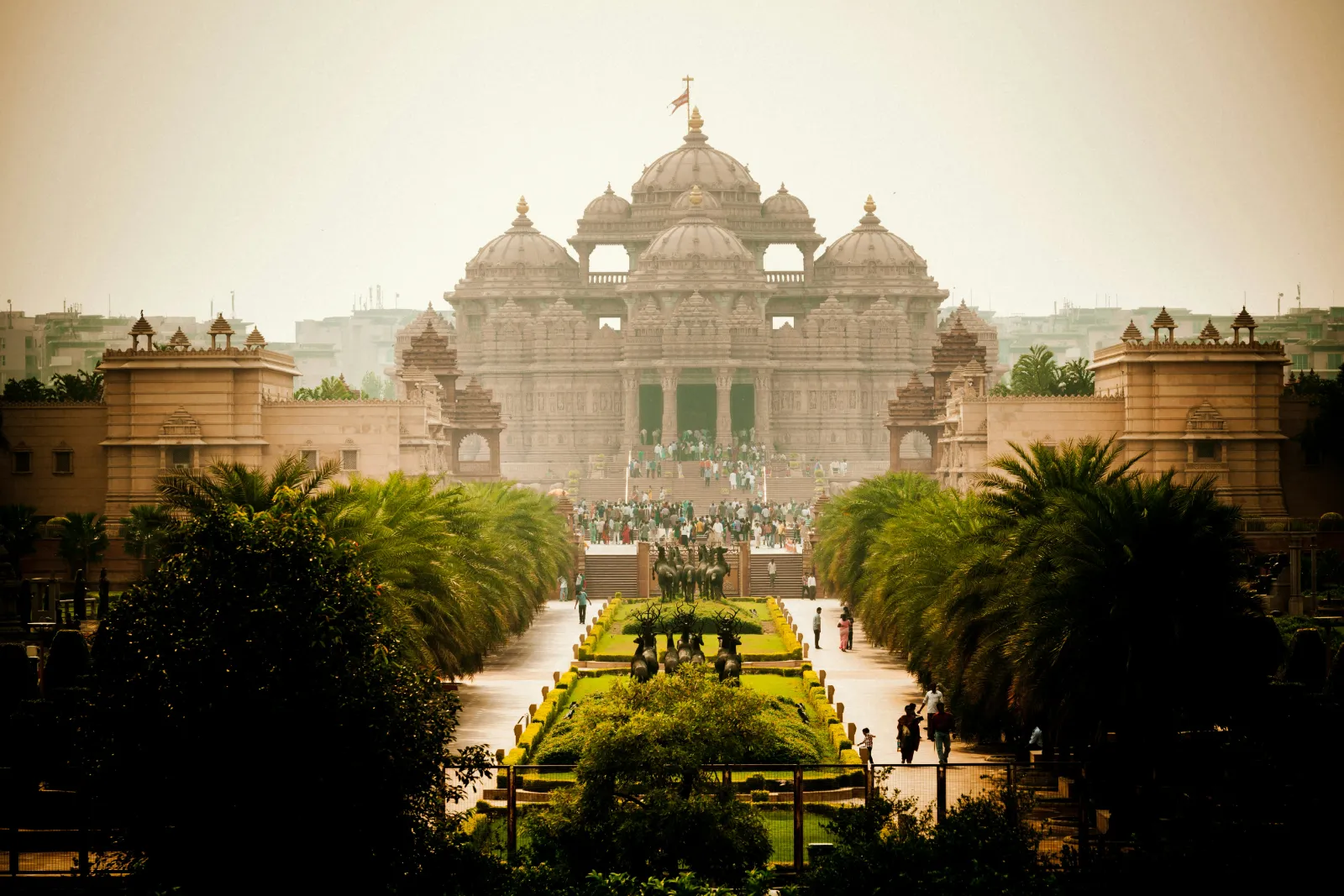
Carved sandstone Akshardham temple in Delhi seen across its long formal gardens and palms

Swaminarayan Akshardham is a vast Hindu temple complex on the east bank of the Yamuna, built in carved pink sandstone and white marble. The Ministry of Tourism's Incredible India page describes a main temple with 234 pillars, 9 domes and 20 spires, about 20,000 sculptures, a boat ride through dioramas of ancient Indian life, and an evening water show at the step well. Entry to the temple complex itself is free; the exhibitions and the water show are ticketed.

Akshardham is closed every Monday, and it has the strictest entry rules of any sight in Delhi. Phones are not allowed inside at all, so plan how you will meet up with your group before you hand them in.

Table note: Akshardham visitor rules. Checked: 16 Nov 2026, official Akshardham visitor information. The Ministry of Tourism's Incredible India page gives an opening time of 9:30 am; we follow the temple's own page.

RuleWhat the official page says
Open daysTuesday to Sunday; closed every Monday
Entry timesFirst entry 10:00 am, last entry 6:30 pm
Not allowedMobile phones, cameras, pen drives, music players and other electronics; luggage; umbrellas; toys; food and drink; tobacco and alcohol; weapons, pets and drones
AllowedWallets, ladies' purses and passports; baby food and water bottles subject to checks
CloakroomFree for visitors, open from 10:00 am to gate closing; switch electronics off before depositing; no money or valuables; deposits at the owner's risk
Dress codeShoulders, chest, back and upper arms covered; lower wear below the knee; sarongs on sale at the entrance
Water showAfter sunset (listed as 7:30 pm at the time of checking)

Lotus Temple (Bahá'í House of Worship)
White petal shaped Lotus Temple in Delhi with visitors on the terrace above a blue pool

The Lotus Temple is the Bahá'í House of Worship for the Indian subcontinent, a white marble building shaped like a half-open lotus flower, surrounded by pools and gardens in Kalkaji, South Delhi. It is open to people of all faiths for silent prayer and reflection, and the experience inside is simply quiet: no sermons, no rituals, just a large calm hall.

According to the temple's own Plan a Visit page, it is open Tuesday to Sunday from 8:30 am to 6:00 pm and closed on Mondays. Short prayer sessions of 10 to 15 minutes are held at 10 am, 12 noon, 3 pm and 5 pm. Photography is allowed in the grounds but not inside the prayer hall or the Information Centre, shoes are left at the shoe room, food, drinks and large bags are not allowed, and modest dress is suggested. The prayer hall may close when it is overcrowded on Sundays and public holidays, or in heavy rain. Checked: 16 Nov 2026, Bahá'í House of Worship.

Gurudwara Bangla Sahib
Golden dome of Gurudwara Bangla Sahib reflected in its sacred pool with worshippers along the edge

Gurudwara Bangla Sahib is Delhi's best-known Sikh shrine, a white marble gurdwara with a golden dome and a large sacred pool (sarovar), a few minutes from Connaught Place. The Ministry of Tourism's Incredible India page says it is open 24x7 and explains that in 1664 Guru Har Krishan, the eighth Sikh Guru, stayed here during a smallpox and cholera outbreak and helped the sick with fresh water from the well. Volunteers serve free langar meals to thousands of people every day, and visitors are welcome to sit and eat.

Cover your head (scarves are usually available near the entrance), remove your shoes and wash your feet before entering, and do not bring tobacco or alcohol. Walking the path around the sarovar in the evening, when the dome is lit and kirtan plays, is one of the calmest experiences in central Delhi. Checked: 16 Nov 2026, Incredible India.

Where should you shop in Delhi?

Shop at Dilli Haat INA for crafts from across India, in Chandni Chowk and its lanes for spices, sweets, silver and wedding fabrics, at Janpath and Sarojini Nagar for bargain clothes, and at Khan Market and Connaught Place for books, cafes and branded stores. The main thing to plan around is each market's weekly closing day, because a closed market can take a whole afternoon out of a short trip.

Table note: Delhi shopping areas. Weekly closing days are from a local market guide (LBB, 2025 edition) and are general rules; individual shops and restaurants can differ. Dilli Haat timings from Delhi Tourism. Checked: 16 Nov 2026.

MarketBest forUsual weekly closing dayNearest metro (line)
Dilli Haat INACrafts, handloom, regional food stallsOpen daily, 11 am to 8 pmINA (Yellow, Pink)
Chandni ChowkFabrics, sweets, street food, wedding shoppingSundayChandni Chowk (Yellow)
Chawri BazarWedding cards, paper and brasswareSundayChawri Bazar (Yellow)
Janpath (Tibetan Market)Souvenirs, jewellery, cheap clothingSundayJanpath (Violet) or Rajiv Chowk (Yellow, Blue)
Khan MarketBookshops, cafes, boutiquesSunday for some smaller stores; restaurants usually openKhan Market (Violet)
Sarojini NagarBudget fashion and export surplusMondaySarojini Nagar (Pink)
Lajpat NagarEthnic wear, fabrics, household goodsMondayLajpat Nagar (Violet, Pink)
Karol BaghClothing, jewellery, wedding wearMondayKarol Bagh (Blue)

Dilli Haat INA

Shoppers walking under colourful bunting between craft stalls at the Dilli Haat craft market in Delhi

Dilli Haat INA is an open-air crafts bazaar where artisans from across India sell directly from rented stalls, with a food court of regional dishes beside it. Delhi Tourism says stalls rotate among registered craftspeople roughly every 15 days, so the selection changes, and lists the hours as daily from 11:00 am to 8:00 pm, with tickets sold at the gate. Checked: 16 Nov 2026, Delhi Tourism.

Prices are generally fixed or close to it, which makes Dilli Haat less tiring than street markets for family shopping. The food stalls are run state by state, and Delhi Tourism names Sikkim's momos among the regional dishes, a familiar taste for Nepali visitors who want something close to home after a few days of North Indian food.

Chandni Chowk bazaars and sweet shops
Tray of orange imarti sweets on the counter of a traditional sweet shop in Chandni Chowk

For gifts to take home, Chandni Chowk's sweet shops and spice lanes are hard to beat. Boxed mithai such as imarti, jalebi, soan papdi and kaju barfi travel reasonably well for a short flight, and Khari Baoli's spice and dry fruit wholesalers sell in quantities that suit large families. Ask the shop to pack sweets in a sealed box, and check the "best before" label, since many fresh sweets last only a few days.

For wedding shopping, go on a weekday and go early: Saturdays in the wedding season are very crowded.

Connaught Place, Janpath, Khan Market and Sarojini Nagar
White Georgian colonnade with shopfronts and shady trees at Connaught Place, New Delhi

Connaught Place is the ring of white colonnades at the centre of New Delhi, with branded stores, restaurants and Palika Bazaar beneath it; Janpath, just south, has the Tibetan Market's souvenir stalls. Khan Market is small and upmarket, Sarojini Nagar is the busiest bargain clothing market, so bargain firmly and go on a weekday morning. All four combine easily with Bangla Sahib, Lodhi Garden or India Gate.

How do you get around Delhi by metro?
Delhi Metro Blue Line train at an elevated station platform with a Dwarka direction sign

The easiest way to get around Delhi is the Delhi Metro: clean, air-conditioned, cheap, and with a station within walking distance or a short auto ride of every sight in this guide. Buy a QR ticket in the official DMRC app or at the station counter, follow the line colours, and use app cabs or auto-rickshaws for the last stretch.

The Delhi Metro is India's largest metro network: an August 2026 Business Today report puts it at 416.5 km across 12 lines and 303 stations (see our guide on how to get around India for other cities). Every station has airport-style security screening, so allow a few extra minutes and keep bags small. The first coach of each train is reserved for women. Trains run from early morning until late evening, but first and last train times differ by line and station, so check the DMRC app the night before an early start.

Table note: metro lines useful for sightseeing. Stations per Delhi Tourism, the sites' own pages and DMRC line maps. Checked: 16 Nov 2026.

LineUseful stations for visitorsSights served
YellowChandni Chowk, Chawri Bazar, Rajiv Chowk, Central Secretariat, Jor Bagh, INA, Qutab MinarOld Delhi, Connaught Place, Bangla Sahib, Kartavya Path, Lodhi Garden, Dilli Haat, Qutub Minar
VioletLal Quila, Jama Masjid, Janpath, Central Secretariat, Khan Market, JLN Stadium, Lajpat Nagar, Kalkaji MandirRed Fort, Jama Masjid, India Gate, Humayun's Tomb, Lotus Temple
BlueRajiv Chowk, Karol Bagh, AkshardhamConnaught Place, Karol Bagh, Akshardham
MagentaTerminal 1 IGI Airport, Hauz Khas, Kalkaji Mandir, Okhla NSIC, Botanical GardenDomestic Terminal 1, Lotus Temple
PinkINA, Lajpat Nagar, Sarojini NagarDilli Haat, markets
Airport Express (Orange)IGI Airport (Terminal 3), Delhi Aerocity, Dhaula Kuan, Shivaji Stadium, New DelhiFast link from the international terminal to central Delhi; Shivaji Stadium is the stop for Bangla Sahib

Practical tips that save time:

  • From the airport: flights from Kathmandu land at Terminal 3. The Airport Express runs from the terminal to New Delhi station in roughly 15 to 20 minutes, where you change to the Yellow Line for Old Delhi or Connaught Place.
  • Interchanges: most visitors change at Rajiv Chowk (Yellow, Blue), Central Secretariat (Yellow, Violet) or Hauz Khas (Yellow, Magenta).
  • Last mile: e-rickshaws and auto-rickshaws wait outside most stations. Agree the fare first or use an app cab.
  • Avoid the rush: weekday mornings and early evenings are packed on the Yellow and Blue Lines. With luggage or small children, travel between about 11 am and 4 pm.

Which sights are closed on which days?

Akshardham and the Lotus Temple are closed every Monday, and most Old Delhi shops close on Sunday. The Red Fort, Humayun's Tomb, Qutub Minar, Jama Masjid, Bangla Sahib, India Gate, Lodhi Garden and Dilli Haat INA are open every day, subject to prayer times, state events and security closures. So Monday is a good day for the ASI monuments and Old Delhi, and a bad day for Akshardham and the Lotus Temple.

Table note: Delhi closing days and hours. Checked: 16 Nov 2026 on the official source shown in each row. Delhi sights close at short notice for state visits, national days and security reasons; confirm on the day.

SightWeekly closed dayHours (as listed)Source
Red FortNone since February 2026 (was Monday)Sunrise to sunsetASI; ASI order of 13 Feb 2026
Humayun's TombNoneSunrise to sunsetDelhi Tourism
Qutub MinarNoneSunrise to 8:00 pmASI
AkshardhamMondayFirst entry 10:00 am, last entry 6:30 pmAkshardham
Lotus TempleMonday8:30 am to 6:00 pmBahá'í House of Worship
Jama MasjidNone (closed to tourists at prayer times)Morning to sunset for touristsDelhi Tourism
Gurudwara Bangla SahibNoneOpen 24x7Incredible India
India GateNoneOpen 24 hours; some areas closed after darkDelhi Tourism
National War MemorialNone listed9 am to 7:30 pm (Nov to Mar); 9 am to 8:30 pm (Apr to Oct)Incredible India
Lodhi GardenNone6 am to 8 pm (Oct to Mar); 5 am to 8 pm (Apr to Sep)NDMC
Dilli Haat INANone11:00 am to 8:00 pmDelhi Tourism
Chandni Chowk shopsSunday (most shops)Varies by shopLocal market guide (LBB)

What do ASI monument tickets cost?

The three ASI sites in this guide use one fee structure, and Nepali citizens pay the same rate as Indian visitors because Nepal is a SAARC and BIMSTEC member. Online tickets are a little cheaper than cash at the counter. In January 2026 the ASI also opened online booking for more than 170 monuments through apps on the ONDC network, The Week reported.

Table note: ASI entry fees per person for the Red Fort and Qutub Minar, as listed on the ASI Red Fort and Qutub Minar pages linked above. Checked: 16 Nov 2026, ASI. Delhi Tourism lists the same cash rates for Humayun's Tomb. Fees can change; confirm before you go.

VisitorOnlineCash
Indian citizensINR 35INR 40
SAARC and BIMSTEC citizens (including Nepal)INR 35INR 40
Other foreign visitorsINR 550INR 600
Children below 15FreeFree

Nepali visitors should carry the passport or citizenship certificate they travelled with, because counters may ask for proof of nationality before selling the SAARC rate ticket.

When is the best time to visit Delhi, and how bad is the air?

The best time to visit Delhi is from late October to March, when days are dry and comfortable for walking, with February and March usually the most pleasant of all. The trade-off is air quality: from late October into December, Delhi's air often falls into the "Very Poor" or "Severe" bands, and from December to February dense fog can delay trains and early flights. April to June is very hot, and July to September brings monsoon rain. The ASI's Red Fort page gives November to March as the best season to visit.

For travellers from Nepal this matters because the Dashain and Tihar holidays, the peak travel window for families, usually fall between late September and November, overlapping the start of Delhi's post-Diwali pollution season. On 6 November 2026, the Commission for Air Quality Management invoked Stage 3 of the Graded Response Action Plan (GRAP) across Delhi NCR after Delhi's Air Quality Index reached 380, in the "Very Poor" band, News On AIR reported. Check the live reading before you plan a day of outdoor sightseeing.

Table note: India's National Air Quality Index bands, used by the Central Pollution Control Board (CPCB). Ranges as published; checked: 16 Nov 2026.

AQI bandRangeWhat it means for a sightseeing day
Good0 to 50No changes needed
Satisfactory51 to 100Fine for most people
Moderate101 to 200Sensitive people may notice it on long walks
Poor201 to 300Shorten long outdoor walks; children and older travellers rest more
Very Poor301 to 400Favour indoor sights and metro travel; consider a well-fitted mask
Severe401 to 500Keep outdoor time short, especially with asthma, heart conditions, small children or elderly relatives

On high-AQI days, swap a long Old Delhi walk for shorter visits such as the Red Fort museums, Akshardham's exhibitions and Bangla Sahib. Anyone with asthma or a heart or lung condition should talk to their doctor before a November trip. For the whole country month by month, see our guide to the best time to visit India.

For time of day, the rule is simple: monuments in the morning, gardens and markets in the late afternoon, and India Gate, Bangla Sahib or the Akshardham water show after dark.

What can you see in Delhi on a long layover?

On a layover of about 8 hours or more at Delhi airport, you can realistically see one sight cluster, such as Qutub Minar or central New Delhi, and still be back in time for your onward flight. With less time than that, stay at the airport or in Aerocity next door. The numbers that decide it are immigration on arrival, traffic in both directions, and getting back to the terminal early for your next international flight, which airlines generally ask you to do about three hours before departure.

Leaving the airport means passing Indian immigration. Nepali citizens flying in from Kathmandu do not need a visa for India but must carry an accepted photo ID, and a passport is needed when you fly on to a third country; see our guide on whether Nepalis need a passport for India. Many other passports, including many held by the Nepali diaspora, need an Indian visa to leave the airport, and foreign nationals must also complete India's e-Arrival Card; see our India visa page and check the official site for your passport before you fly.

Table note: layover options from Terminal 3. Time estimates are our own guidance for daytime traffic and assume you have cleared immigration; they are not a schedule. Checked: 16 Nov 2026.

Time between flightsRealistic optionHow to get there
Under 6 hoursStay airside, or eat in Delhi Aerocity just outside the airportAirport Express one stop to Delhi Aerocity, or a short cab
6 to 8 hoursOne nearby stop: Qutub Minar, the closest UNESCO site to the airportApp cab or prepaid taxi both ways
8 to 10 hoursCentral New Delhi: Gurudwara Bangla Sahib, then India Gate and Kartavya PathAirport Express to Shivaji Stadium or New Delhi, then a short cab
10 to 14 hoursTwo clusters: Humayun's Tomb and Lodhi Garden, or Old Delhi (Red Fort, Jama Masjid, Chandni Chowk)Airport Express to New Delhi, then the Yellow Line, or a cab with a driver
OvernightSleep in Aerocity and visit one cluster in the morningAirport Express or hotel transfer

Two warnings. From roughly December to February, dense fog can delay flights and road traffic in the mornings, so leave more buffer than you think you need. And check closing days first: a Monday layover is the wrong day for Akshardham and the Lotus Temple, and a Sunday layover is a quiet day in Chandni Chowk.

How does Delhi fit into a wider India trip?

Delhi is the natural start and end of most North India trips, because it has the best flight connections from Kathmandu and the rest of the world and fast trains and roads to Agra and Jaipur. Two full days in Delhi, then Agra and Jaipur, is the classic loop known as the Golden Triangle; our Golden Triangle guide explains the order and timing of each leg.

From Delhi, Agra is the most popular onward stop. The Gatimaan Express takes under two hours, and seeing the Taj Mahal at sunrise needs an overnight there; our Taj Mahal and Agra guide has the visiting days and rules. Jaipur, the pink-walled capital of Rajasthan, is the third corner; see our guide to things to do in Jaipur. Haridwar, Rishikesh and Varanasi are also reached from Delhi by train or a short flight, which is why so many pilgrim groups from Nepal pass through the city. For the rest of the country, see our pick of the best places to visit in India.

Money: India uses the Indian rupee (INR). Nepali rupees are generally not accepted in Delhi shops, so carry Indian rupees or a card that works in India. For reference, Nepal's rupee is pegged to the Indian rupee at NPR 1.60 to INR 1 (INR 100 to NPR 160), a fixed rate in place since 1993, Onlinekhabar explains. Many Delhi stalls prefer UPI phone payments, so keep small notes for street food, rickshaws and shoe counters.

Safety: Delhi's sights are busy and generally safe for visitors who take normal city precautions: watch for pickpockets in crowds, use app cabs or prepaid taxis at night, and be wary of strangers offering "help" with tickets near the big monuments. Our guide to whether India is safe for travellers covers scams, women travellers and emergency numbers.

If you would rather have the Delhi, Agra and Jaipur logistics arranged for you, you can browse our India tour packages.

Frequently asked questions

Which day is the Red Fort closed?

Since February 2026 the Red Fort in Delhi has no weekly closed day. An ASI order dated 13 February 2026 ended the old Monday closure, and the fort is open on all seven days, sunrise to sunset. It still closes for national events, such as the weeks before Independence Day on 15 August (15 July to 15 August in 2026), so check before you go.

Are phones allowed in Akshardham?

No. Akshardham in Delhi does not allow mobile phones, cameras, pen drives or other electronics inside the complex. Visitors deposit them at the free cloakroom before joining the security check queue. Wallets, ladies' purses and passports are allowed, while luggage, food and drink are not. Akshardham is also closed every Monday.

Is the Delhi metro easy for tourists?

Yes. The Delhi Metro is the easiest way for tourists to get around Delhi: lines are colour coded, signs and announcements are in English and Hindi, and there is a station near every major sight. Buy a QR ticket in the official DMRC app or at the counter, avoid weekday rush hours, and use an auto or app cab for the last short stretch.

What is the best time to visit Delhi?

The best time to visit Delhi is from late October to March, when the weather is dry and cool enough for sightseeing, with February and March usually the most pleasant. November and December bring the worst air pollution, and December to February can bring dense morning fog. April to June is very hot, and July to September is the monsoon.

Is Delhi's air quality bad in November?

Often, yes. Delhi's air quality usually worsens after Diwali, and November readings regularly fall into the "Very Poor" (301 to 400) or "Severe" (401 to 500) bands of India's Air Quality Index. On 6 November 2026, Stage 3 of the Graded Response Action Plan was invoked at an AQI of 380. Check the live CPCB reading and plan more indoor visits on bad days.

Can I see Delhi in one day?

You can see Delhi's highlights in one long day if you pick two areas: for example, Old Delhi (Red Fort, Jama Masjid, Chandni Chowk) in the morning and Humayun's Tomb and India Gate in the afternoon and evening. Two full days is more comfortable, and three lets you add Qutub Minar, Akshardham and the Lotus Temple without rushing.

Is Chandni Chowk safe?

Chandni Chowk in Old Delhi is generally safe for visitors during the day, but it is extremely crowded, so pickpocketing is the main risk. Keep your phone and wallet in a front pocket or zipped bag, carry little cash, agree rickshaw fares before you start, and eat at busy stalls. Go Monday to Saturday, because most shops close on Sunday.

Which Delhi sights are UNESCO World Heritage Sites?

Delhi has three UNESCO World Heritage Sites: Humayun's Tomb and Qutb Minar and its Monuments, both inscribed in 1993, and the Red Fort Complex, inscribed in 2007. All three are run by the Archaeological Survey of India, open every day, and use the same ticket rates, with SAARC and BIMSTEC citizens, including Nepalis, paying the Indian rate.

How far is Delhi airport from the city centre?

Delhi's Indira Gandhi International Airport is roughly 15 to 20 minutes from New Delhi station on the Airport Express metro line, which starts at Terminal 3, where flights from Kathmandu arrive. By taxi or app cab, central Delhi is usually under an hour outside peak traffic, but evening rush hour and winter fog can make it much longer.

What can I do near Delhi airport on a layover?

Near Delhi airport, the simplest layover options are eating or resting in Delhi Aerocity, one Airport Express stop from Terminal 3, or visiting Qutub Minar, the closest UNESCO site to the airport. With 8 to 10 hours you can reach Bangla Sahib and India Gate. You must clear Indian immigration to leave the airport, so check the entry rules for your passport first.

Can Nepali travellers pay in Nepali rupees in Delhi?

Generally no. Delhi shops, taxis and monuments price everything in Indian rupees (INR), so Nepali travellers should carry Indian rupees or a card that works in India. Nepal's rupee is pegged at NPR 1.60 to INR 1. Keep small notes for street food, rickshaws and shoe counters, since many stalls otherwise prefer UPI phone payments.

Are Akshardham and the Lotus Temple open on Mondays?

No. Both Akshardham and the Lotus Temple in Delhi are closed every Monday, according to their official visitor pages. On a Monday, visit the Red Fort, Humayun's Tomb, Qutub Minar, Jama Masjid, Bangla Sahib, Lodhi Garden or Dilli Haat instead, all of which are open every day.
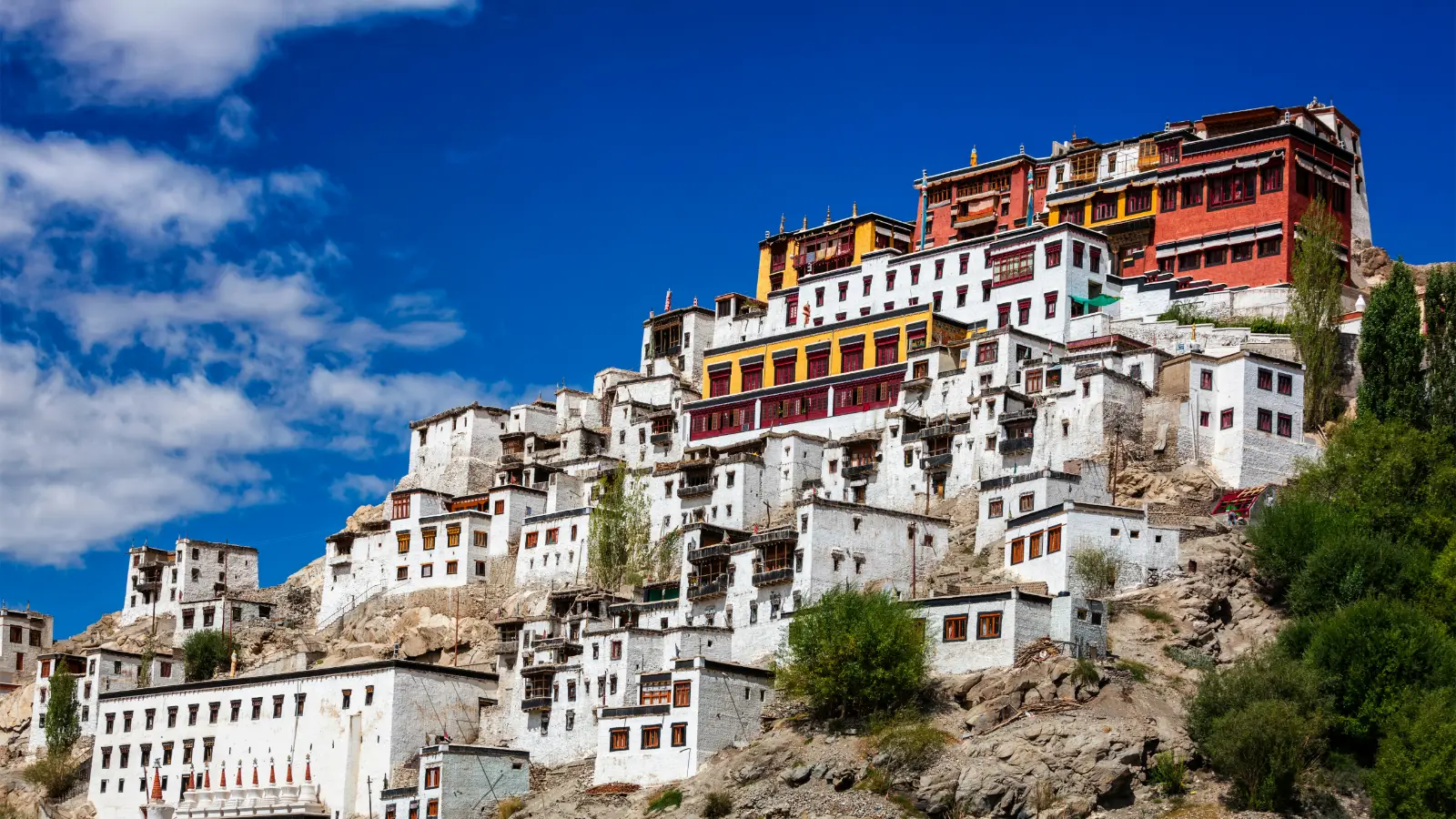
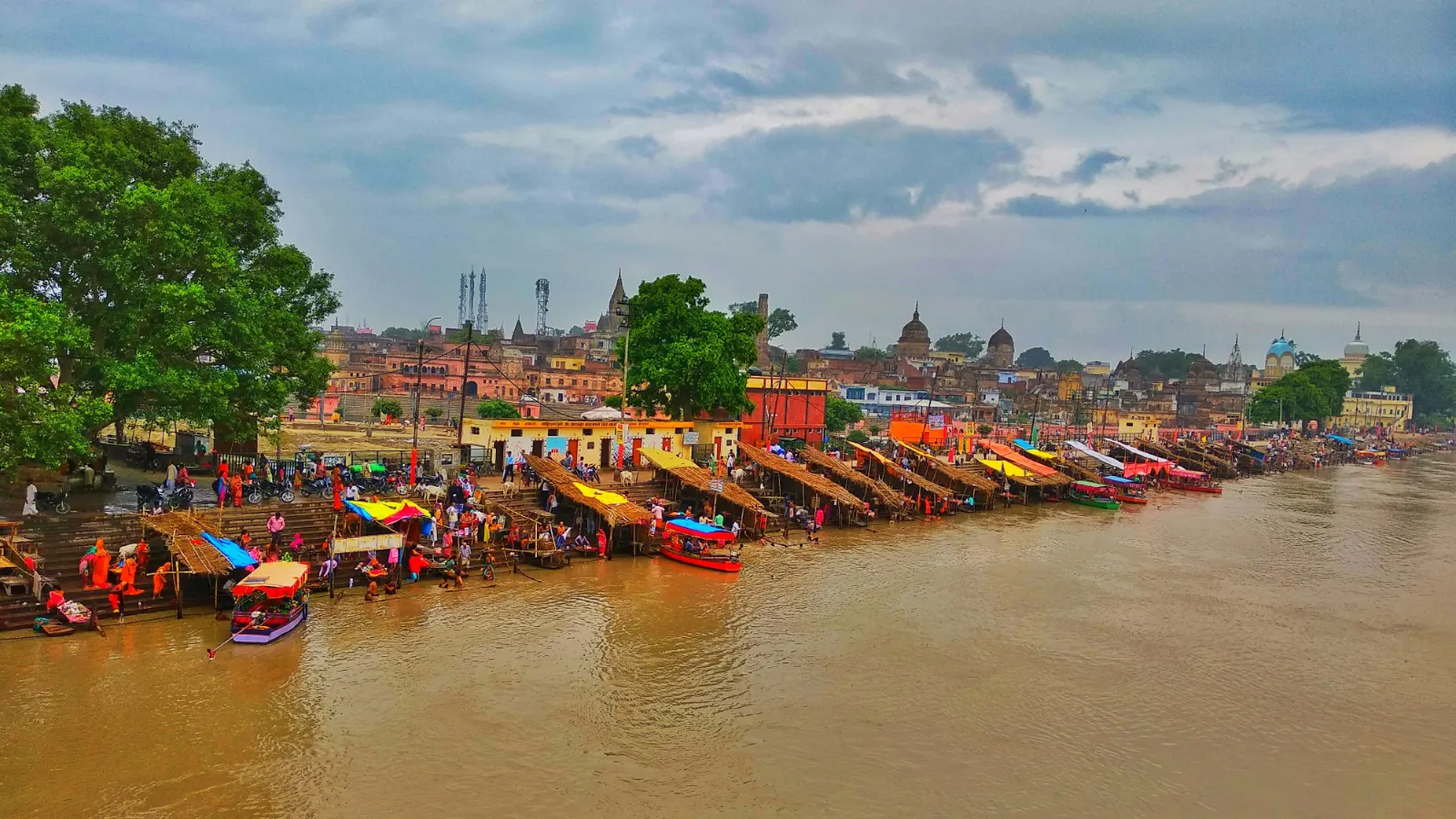
Tags
India
Share
G
Gomayu Team
Writer at Gomayu
Keep reading